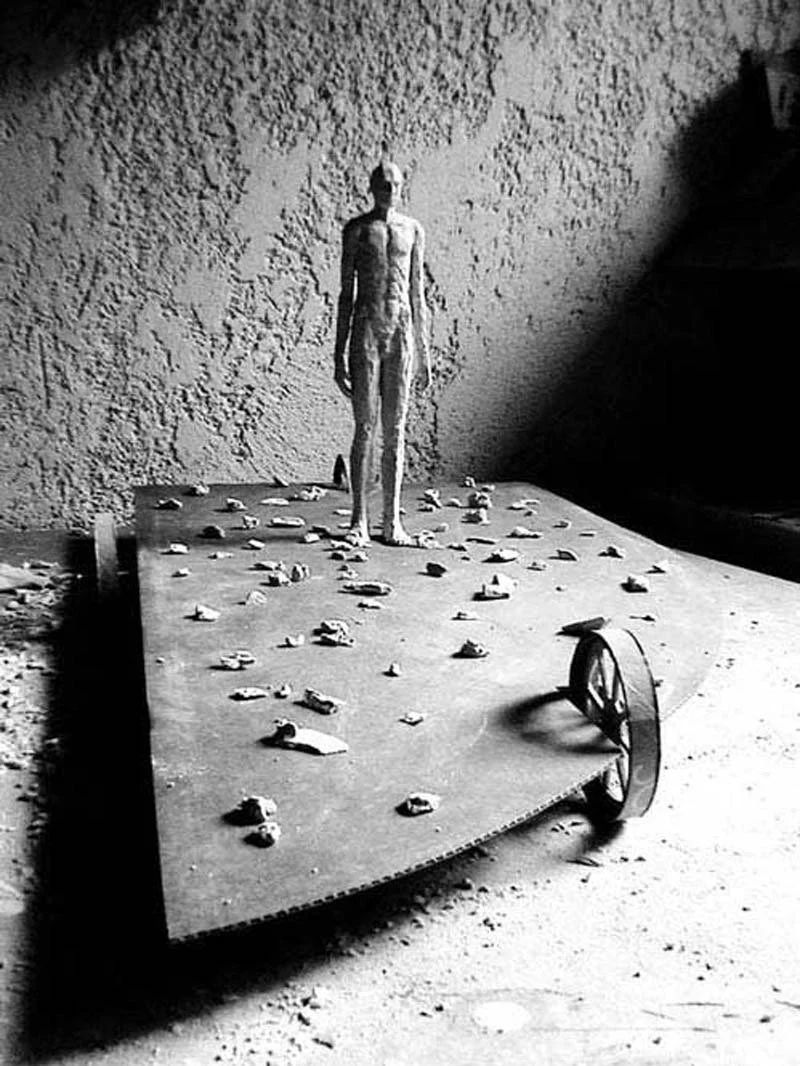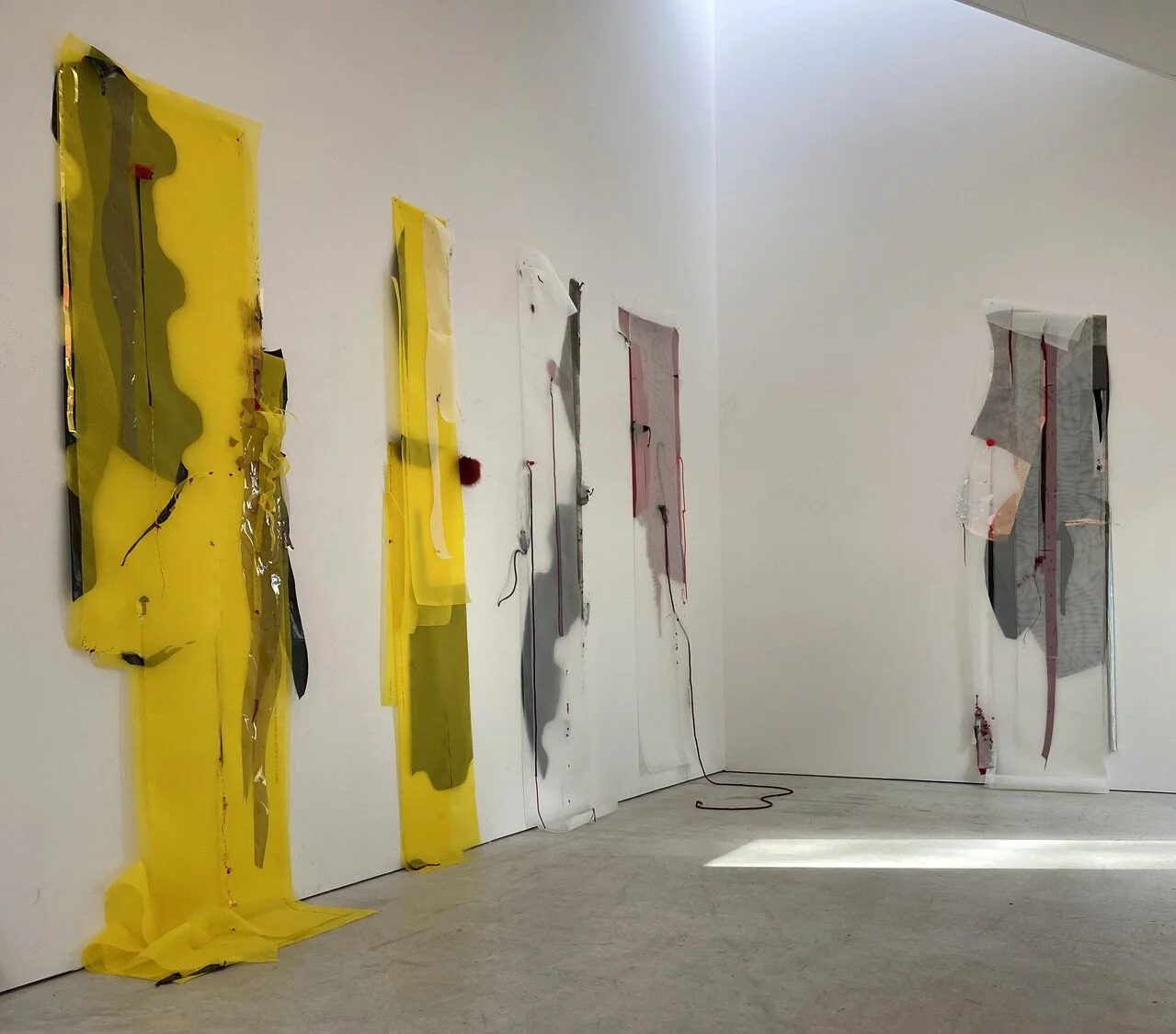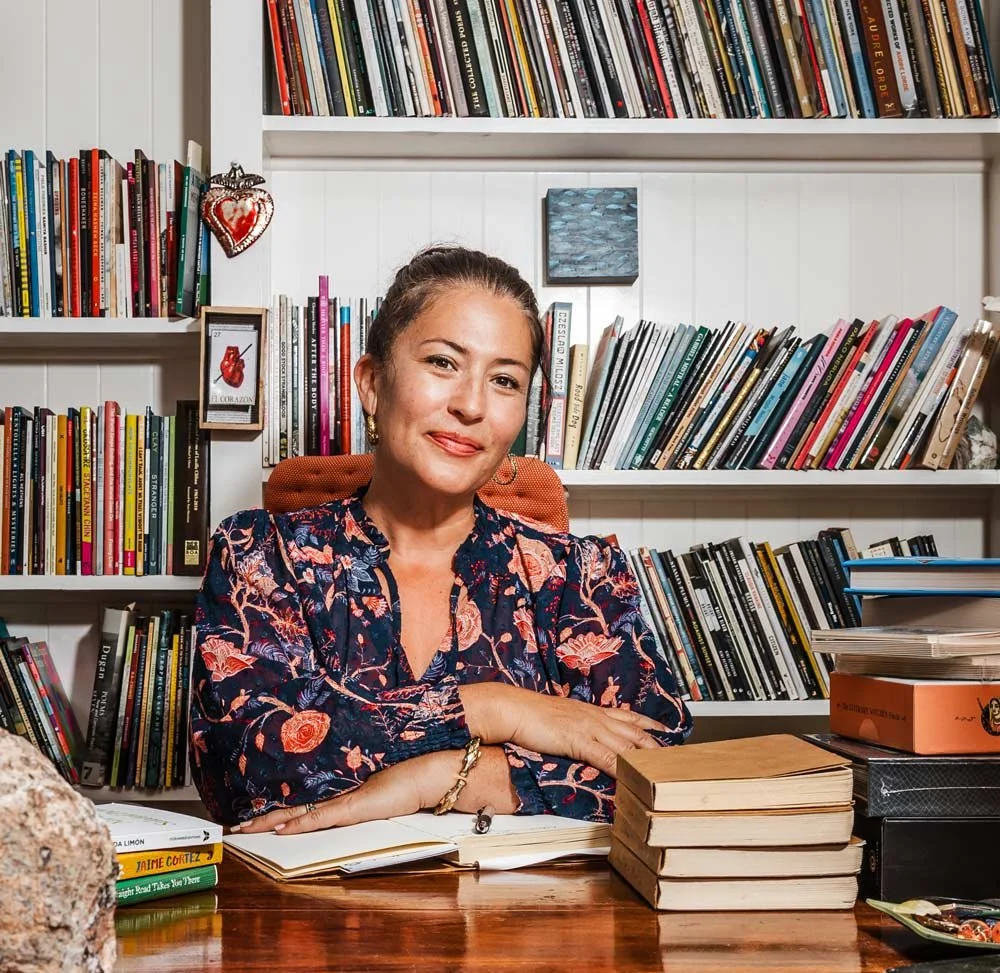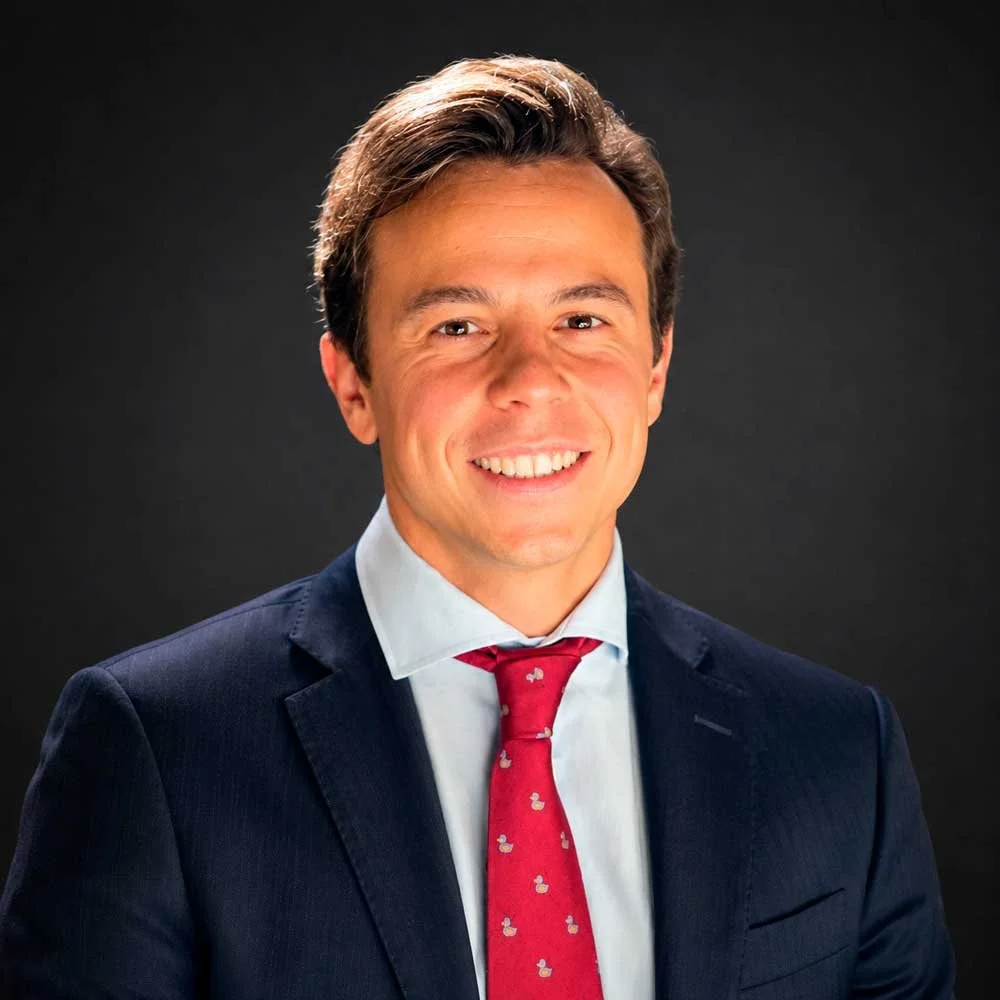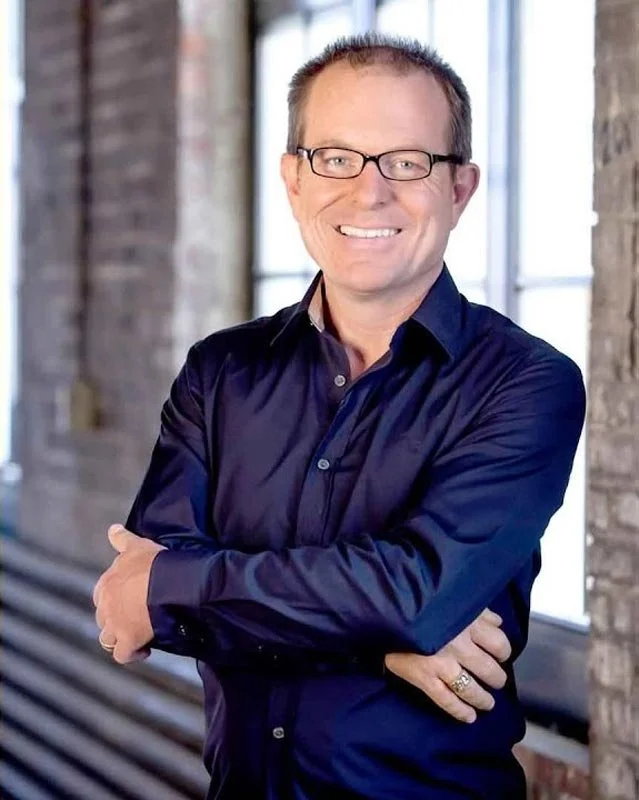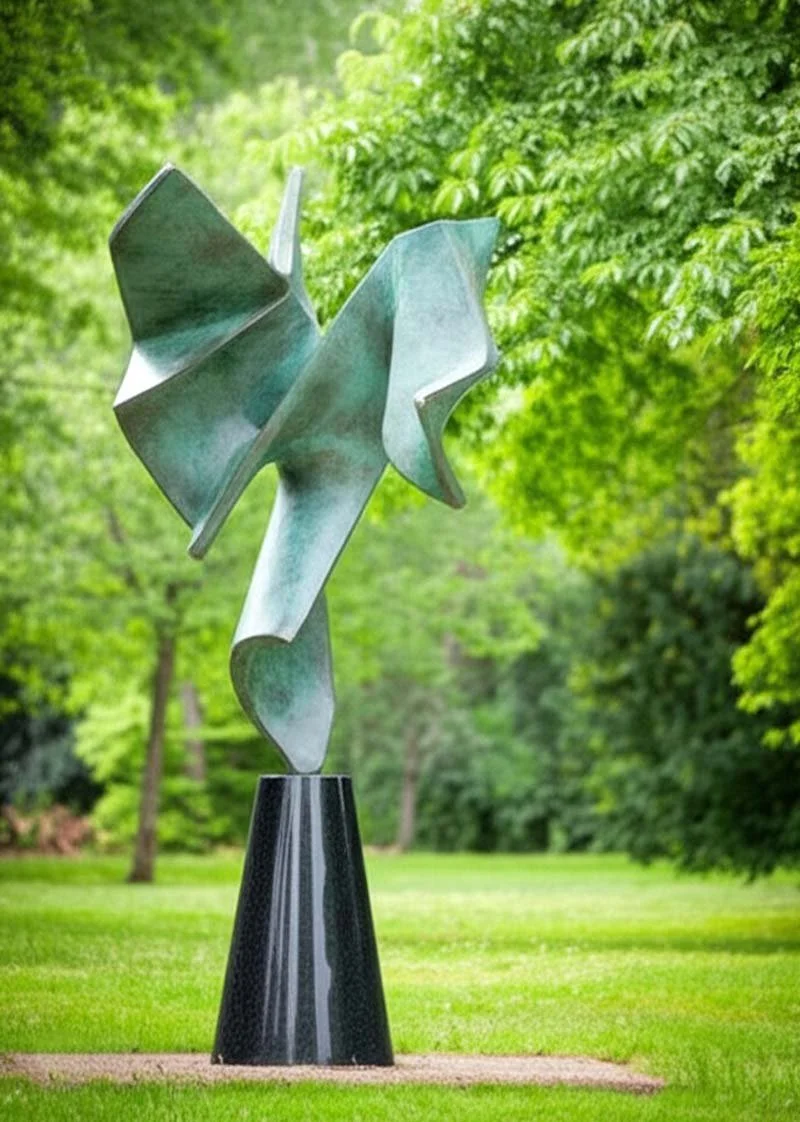


Flavius Valone Pisapia, an Italian artist born in 1981 in Bucharest, began his artistic career creating sculptures in various materials, mainly stone, brass, and ceramic. He created a series of bronzes, featured in his solo show, Embodiments of Infinity, after working closely with a foundry in India. In his art practice, he continues to develop unique models for bronze and stone large-scale commissions made by studios in the USA and Italy. His artwork is collected internationally by corporate and private clients. His work has been included in several online group shows at Sculpturesite Gallery. @flavius_pisapia_sculpture
How has your background in Romania contributed to your artistic identity? Born in Bucharest, I grew up in a small town in the Romanian countryside, followed by a nine-month stay in Italy before leaving for Italy again at 16. As a child, I was deeply immersed in Romanian traditions and crafts, specifically Christian traditions and handmade objects. My Romanian grandparents were both craft people. My grandfather was an excellent custom shoe maker, and my grandmother was an artist making intricate and delicate crocheting works. This was my foundation in beautiful handmade objects. Moving home has become part of my artist statement, “Since my early childhood, I have moved home and country, collecting impressions of organic forms which find their way into my art—experiences of displacement and adaptation that have taught me art can be a source of stability and healing.”
When did you first fall in love with art and realize you wanted to be an artist? For you, what is the importance of the arts? When I was a child, I watched my father painting on very large canvases, including landscapes and figures. His paintings on the walls had an impact on me as a nine-year-old during our stay in Campania, Italy. However, I only gradually realized that I wanted to be an artist and started my art practice at age 35. By then, I had tried many different paths and circled back to art after an artistic therapy MA course of four years full-time at Tobias School of Art and Therapy in the UK.
As an artist, I aim to not only create beautiful objects but also works serving as a mediation between the spiritual and material realms. Through engagement with the arts, people can achieve a more complete and balanced development of thinking, feeling, and willing than through purely intellectual pursuits alone.
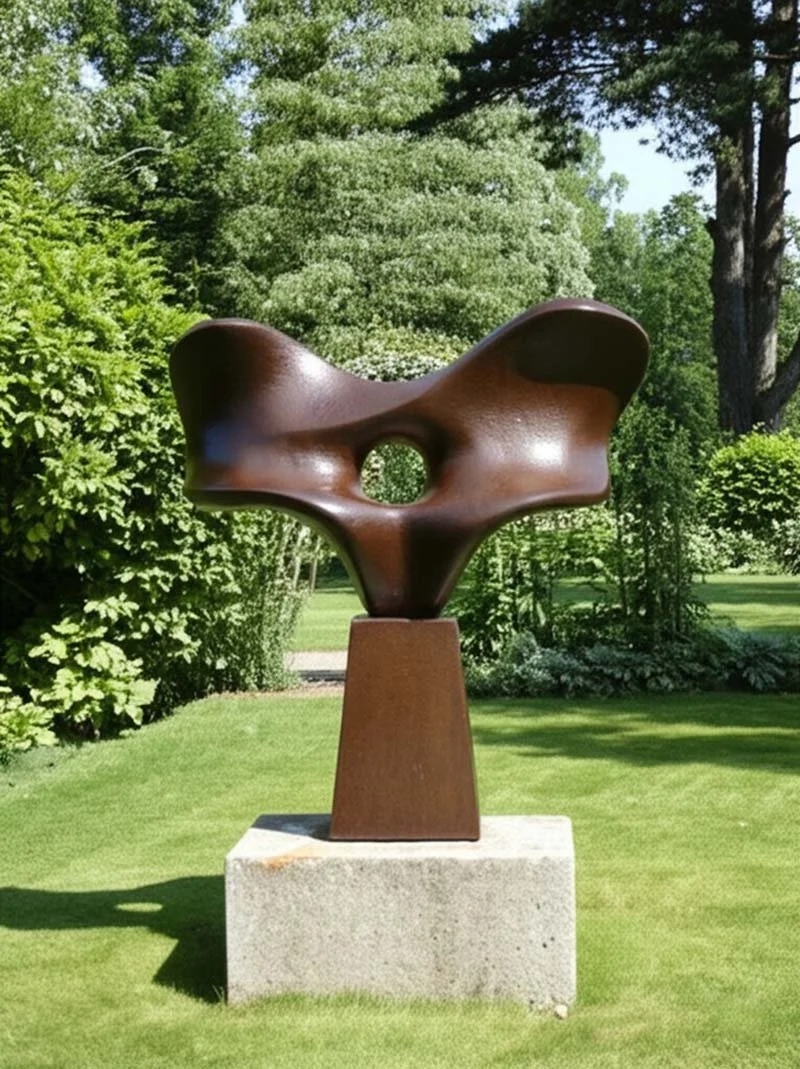
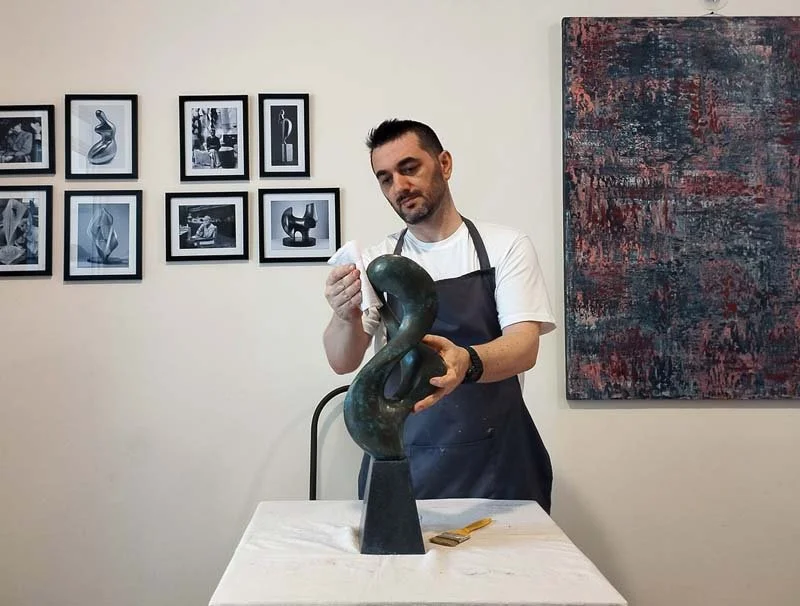
What does your typical day in the studio look like? Walk us through your studio and your most used materials and tools. My art practice is grounded in spiritual study and practice, particularly meditation, which is essential for my state of mind and comes before engaging with the materials in my studio. When in my home studio, which is a terrace surrounded by palm trees and visited by birds and squirrels, I start with basic handmade elements like a saddle plane or hyperboloid plane in clay on which I build. I like to create sculptures that surprise me, that feel fresh, like a new discovery. Therefore, I don't use pencil sketches, but start “clay sketches” directly. I also don't use any tools to start with. Later, I might use traditional hand tools such as a loop tool to carve the sculpture, and when dry, sandpaper. After a few weeks of drying, the works are bisque-fired in a gas kiln at my studio. These are then patinated and form my portfolio as well as models for larger commission works in bronze or marble.
What projects are you at work on at the moment? And what themes or ideas are currently driving your work? Currently, I am working on a six-piece sculpture series entitled “The Self Series: A Journey of Inner Transformation”, graphite-patinated ceramic on white marble bases, for an exhibition later this year. The process before creating a series is something I call intentional artful living, which includes specific meditations, study, nature experiences, and art observation. These are attuning practices that help me find inspiration in a process where I bring myself into a state of “at-one-ment.” I prepare in this way, integrating life, art, and spirituality for weeks or months before creating a series. When I'm ready to create, it usually happens quickly and spontaneously, like an intense improvisation over several long work days.
I usually work in a series, where I follow a "red thread" or a theme in the metamorphic evolution of a minimum of three to twelve forms in one series. I follow a Goethean fourfold art observation approach in order to discover what has manifested in each form and in each series before finding words to name and describe the experience. This process is the basis for coming up with the name of each sculpture and the series description text. I enter the process with the immediacy of my will to create the sculpture and end by thinking about it to understand it in retrospect.
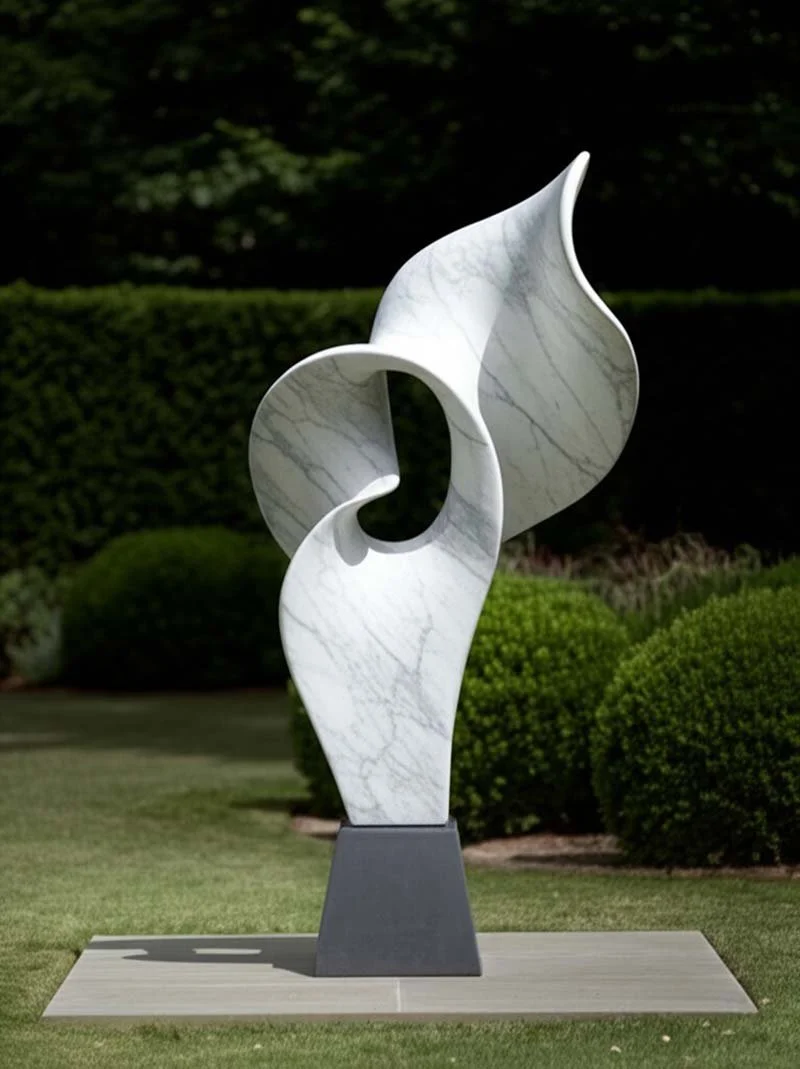
What do you hope people feel when they experience your art? What are you trying to express? I hope my organic abstract sculptures give viewers a way to mirror themselves on a deeper level, reflecting their inner life. I create art with a spiritual context, endeavoring to engage viewers in self-reflection through art observation—all in individual freedom. The visible form serves as a gateway to its intangible dimension. The viewer enriches the work by adding their experience of energy, feeling, and thought to it. My visual language of organic abstraction allows endless variations, with content emerging from an Anthroposophical view that encompasses the wisdom of the human spirit. I'm drawn to the hyperboloid plane for its creative possibilities and because it's a dynamic geometric form embodying the "Christ Principle"—a living balance between opposing forces of concavity and convexity. Drawing from my art therapy background, I hope my sculptures offer healing and harmony, trusting people will find their own way into forms that speak for themselves.
Which artists, past or present, would you like to meet? And why? Henry Moore, Constantin Brancusi, and Jean Arp are some of the artists I admire for pushing boundaries or reframing sculpture and seeking essence and beauty in organic forms. On my monthly sculpture blog, together with writer and eurythmist Sahya Samson, we explore a range of artists and engage in art observations and art journal activities as part of the writing process that serves to encounter great artists of the past.
Do you draw inspiration from music, art, or other disciplines? I draw inspiration for my art from Goethean nature observation, threefold social studies, art therapy, Anthroposophy, and travel. The organic forms I create are deeply connected to natural processes, such as metamorphosis, as well as life stories that give the works personal and social meaning. After five years of travelling to different art residencies and studios in India, my work culminated in a solo show entitled Embodiments of Infinity. The Cube Gallery Goa exhibition in 2021 consisted of 52 works encompassing bronze and ceramic sculptures, and oil and acrylic paintings, as well as mixed media drawings, a body of work created by natural and cultural experiences. I recently added Anthropocracy (Antropocrazia)to my studies, which is a social field of studies as researched by the Italian mathematician and social reformer Nicolò Giuseppe Bellia, based on Rudolf Steiner's Threefold Social Order and Philosophy of Freedom. I recently made a sculpture series inspired by this social reform.
A great thing about living in Goa is… Living in a coastal town in Goa reminds me of my time near the Amalfi Coast in Italy, watching my father paint on his terrace. This place is great for its natural beauty, expansive spaces, and serene coastal lifestyle. The seaside environment offers a sense of possibility and adventure.
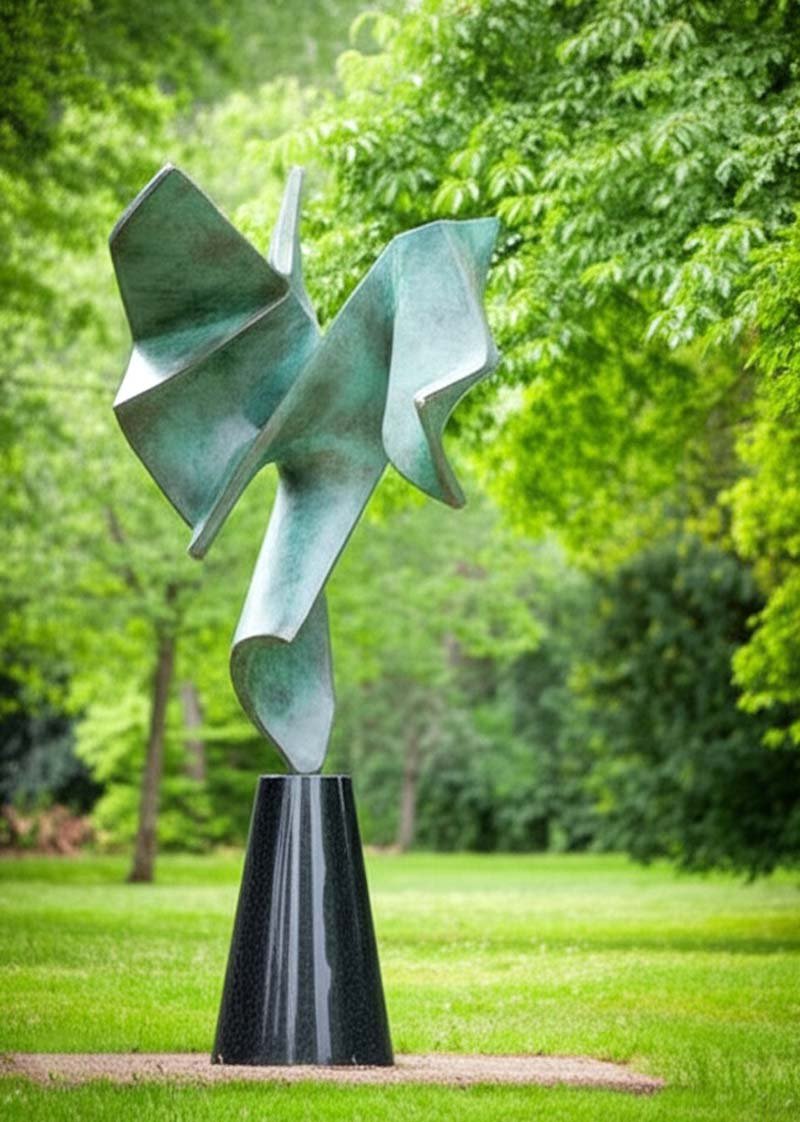
An example of how living in Goa has inspired my work is the Expedition Series. The Expedition Series, 2022, inspired by sea voyages, is about meeting life's challenges with courage and purpose. It connects to the idea by J.W. Goethe, “Character is formed in the stormy billows of the world.” The series was presented in an online group exhibition by Sculpturesite Gallery, USA, entitled “Variations On A Curve,” alongside works by established sculptors Meadmore, Erdman, and Slusky.
Can you describe a project that challenged you creatively or emotionally—and how you worked through it? When I started art making, I tried many different media. Oil painting was one of them. This medium was difficult for me to enter into, especially when the painting took on a paste-like, almost sculptural relief quality. This frustrating experience led me to work exclusively with watercolor, which I appreciate and am able to access much more for its color purity and transparency. I enjoy wet-on-wet watercolor very much and also spread the joy of this art through teaching workshops here in Goa and through my online courses.
In sculpture making, I've found harder stones, such as granite, really challenging to carve into directly and embody the fluidic forms I envisage. I much prefer softer stones like alabaster for direct work, but my absolute favorite is stoneware clay. This is the primary material I use in my practice, and I love its softness and the possibility of both taking substance off and adding it on. I also teach clay sculpture locally here in Goa, with an emphasis on awareness and wellbeing.
Tell us about important teachers/mentors/collaborators in your life. After trying different career paths and roles in Italy and the UK, I turned fully to art in 2014, learning sculpture from practicing artists and mentors in the UK. My greatest inspiration was my teacher Gertraud Goodwin at Hoathly Hill Sculpture Studio in the UK. Also, my teacher, Maria Albiez, at Tobias School of Art and Therapy in the UK. Rudolf Steiner's artistic impulse is also a great source of inspiration in my life. From the website of Tobias School of Art, UK: “Our Vision is a holistic, client-centred approach to transpersonal arts counselling supporting mental, spiritual, and creative well-being. Our programme enables students to explore authentic self-expression and to deepen their human potential by building on existing strengths.”
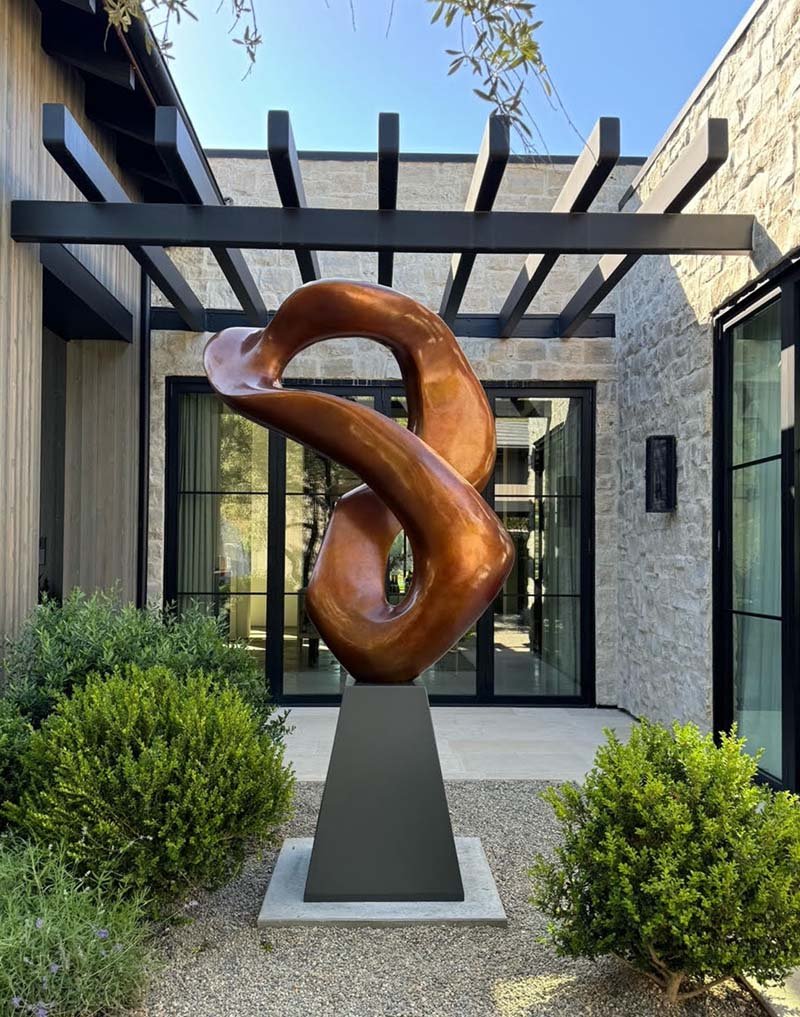
Sustainability in the art world is an important issue. Can you share a memory or reflection about the beauty and wonder of the natural world? Does being in nature inspire your art or your process? I am aware of the responsibility of transforming natural materials by imbuing them with the human spirit. As an artist, I am grateful to be part of nature's further progress and evolution. As I mostly work on large commissions, I don't maintain an inventory of smaller bronzes. My daily clay practice is eco-friendly and sustainable in this way. Two major bronze commissions have been “Knowledge”, Trees Series, 2023, and “Sempre” Musical Series, 2024. These monumental projects have shown me that my handmade forms scale well and complement the modern architecture of the clients. You can watch the installation of Sempre in an inspiring video documentation by Source Art on Instagram.
AI is changing everything - the way we see the world, creativity, art, our ideas of beauty and the way we communicate with each other and our imaginations. What are your reflections about AI and technology? What is the importance of human art and handmade creative works over industrialized creative practices? I believe Artists as culture makers will increasingly need to learn to distinguish what is healthy from what is unhealthy. The moment of creation requires human intuition. The human hand transforms matter, makes choices in composition, and imbues a sculpture with life. Mistakes and imperfections tell human stories that algorithms cannot. AI can be a challenge and temptation if used to create, or it can be positive if used as post-production assistance. Those rooted in an understanding of nature and spirit will never work in virtual reality or create artwork using software. It is useful only as a tool, for example, to enlarge the work with 3D scanning and printing.
Exploring ideas, art and the creative process connects me to… Both sides of reality, where one is smaller and the other larger, the dialogue creates a bridge between physical and spiritual. Both are needed and are complementary to each other; one cannot do without the other.