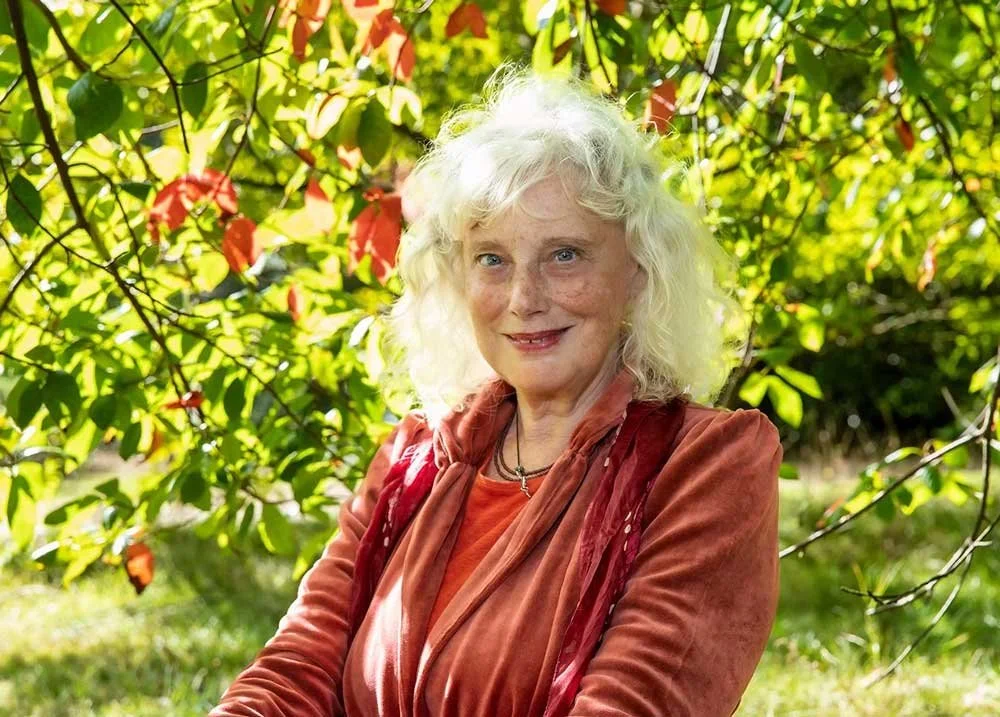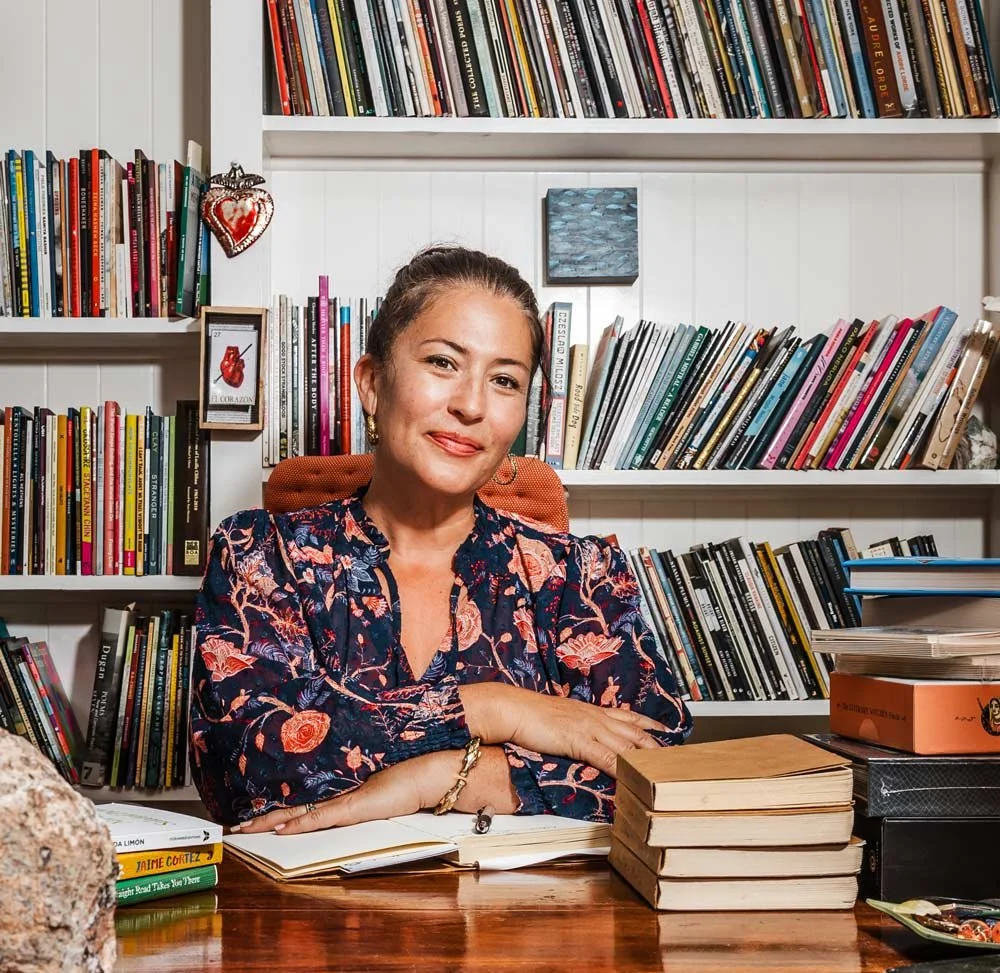


Born in Minneapolis, Ellen Richman attended the University of Minnesota department of design before receiving her BFA from the University of Minnesota department of fine art in 1995. Upon graduation she continued her color studies in Playa del Carmen, Q.Roo Mexico, where her paintings were informed by the full spectrum of light. Color became the singular defining element in her work as she continued to experiment with saturated hues and chromatic divergence.
She developed a program in Abstract Painting based on her formalist ideas at the Minnetonka Center for the Arts in Minneapolis MN, where she was faculty from 2006-2019.
She juried, curated and produced annual abstract exhibits for the school.
Her work is featured in the corporate collections of Deloitte, Raymond James, Boston Scientific and the Bentson Foundation among many others.
Commissions include; Northmarq Capital, the Indianapolis Westin Hotel and private collectors.
Ellen recently designed artistic rugs for BOCCARA art in Paris. She has been exhibited, published and collected locally, nationally and internationally.
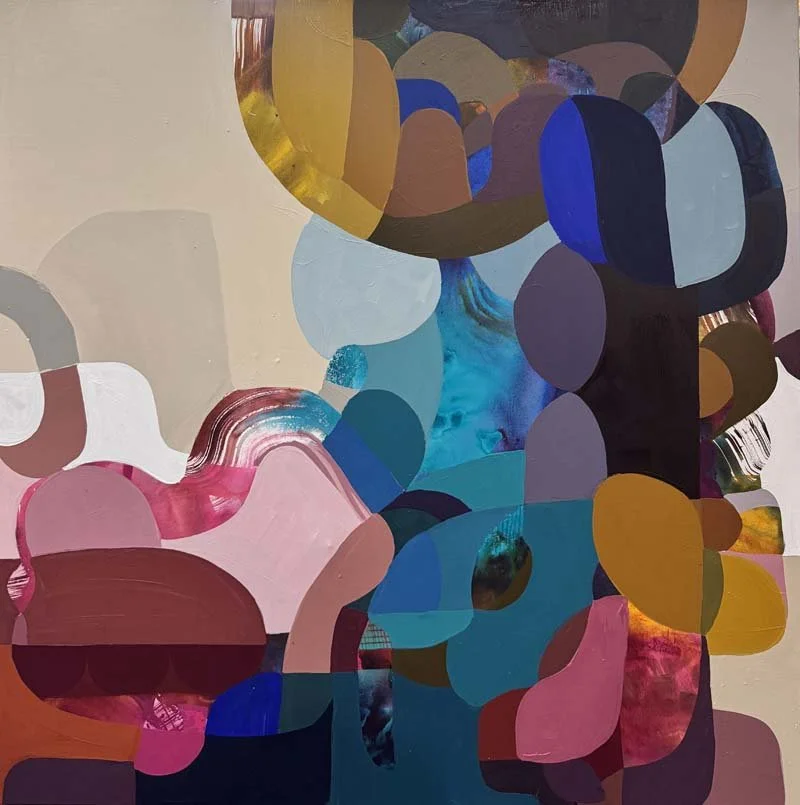
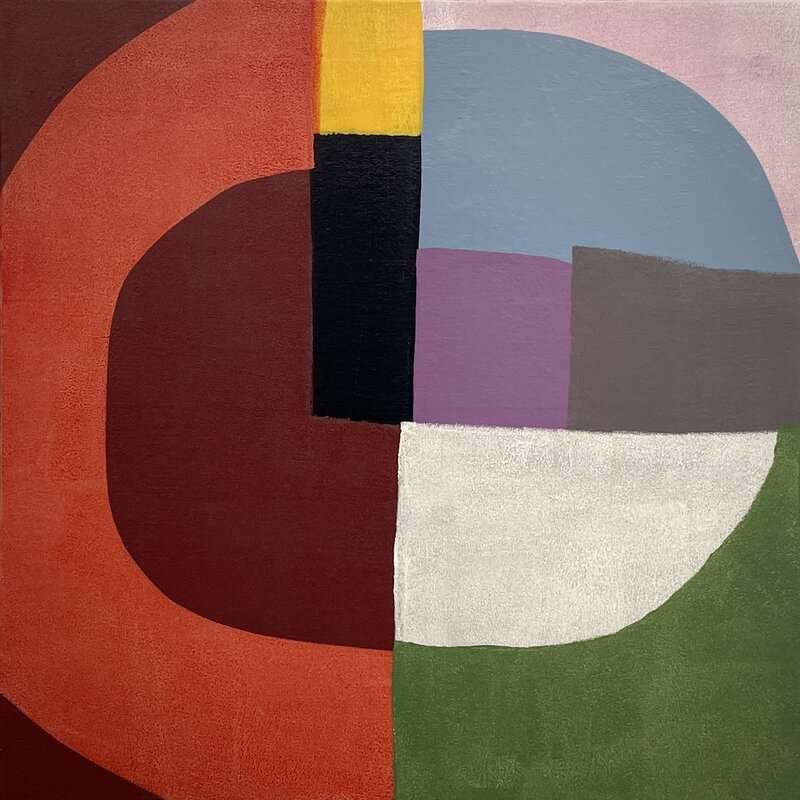
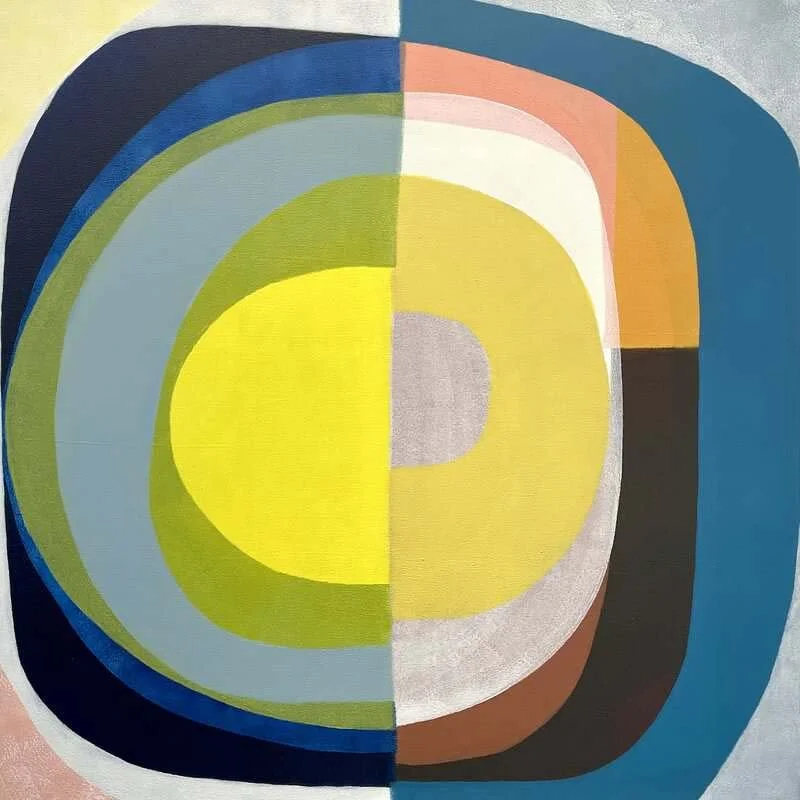
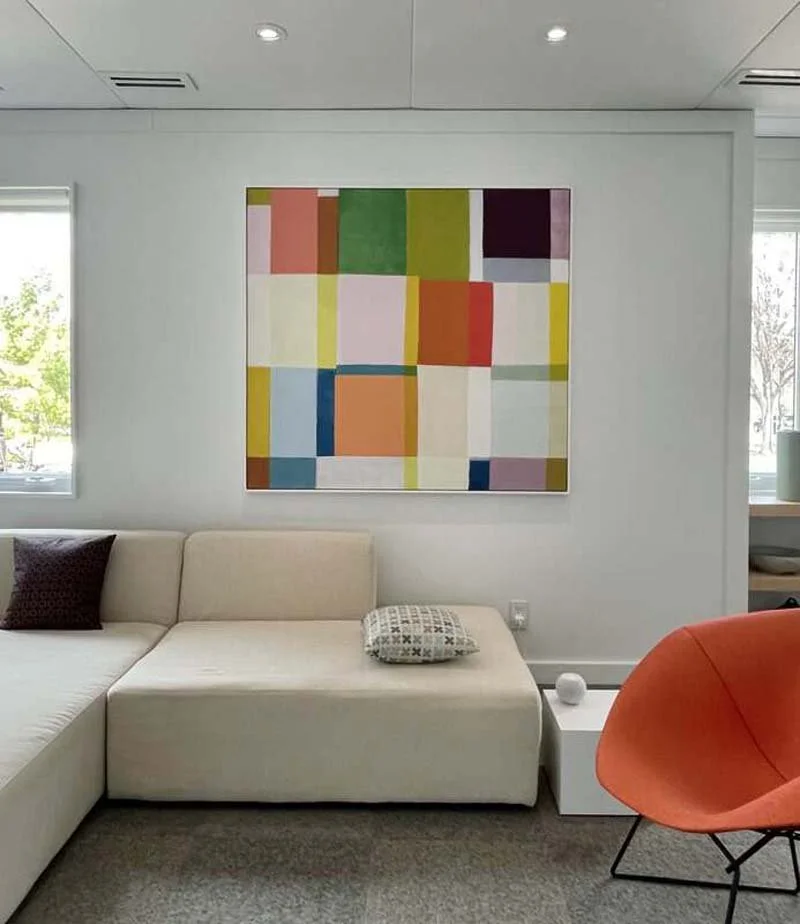
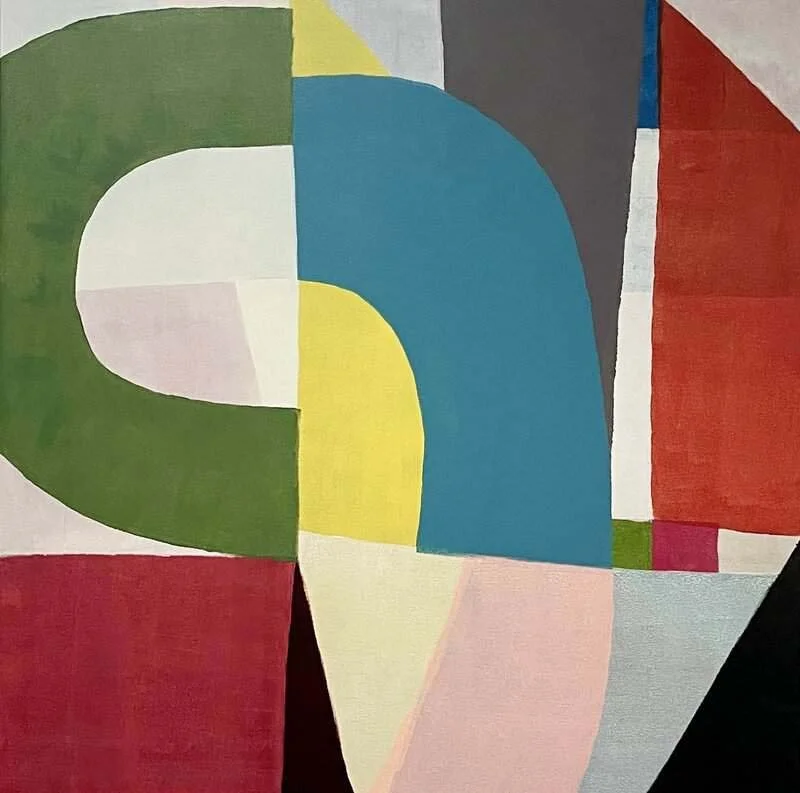
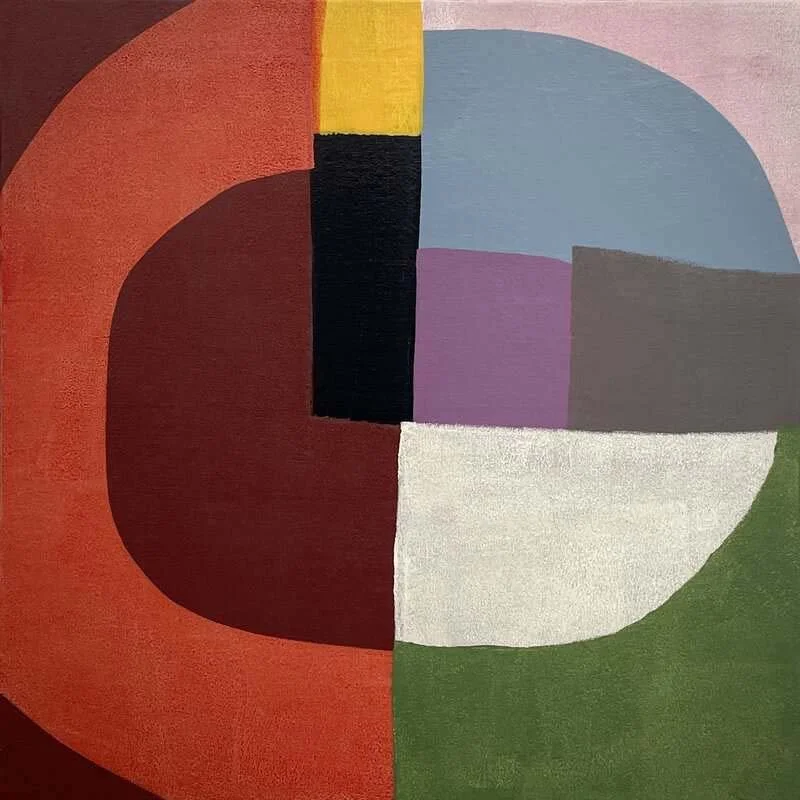
Ellen employs a reductive form of abstraction which emphasizes the plasticity and two dimensionality of painting. Considerations of the visual elements color, form and space drive the meaning of her work. It interests her how this universal language continues to be an exploration. Informed by geometric and organic patterns, Ellen is inspired by how the interaction of color affects mood, emotion and the subconscious mind. Her intent is to create a minimal integrated effective image of unencumbered space. @ellen.richman
Can you discuss the impact of your childhood experiences on your artwork? I was born and raised in Minneapolis, MN.
My mother was an artist, and my older sister and I spent most of our free time creating in our arts and crafts room. In addition to other art museums, we were especially fortunate to have the Walker Art Center in Minneapolis, a progressive and world-renowned institution for contemporary art. I frequently visited the WAC, marveling at Alexander Calder's mobiles and the works of numerous abstract artists, including Frank Stella, Donald Judd, Sol LeWitt, Mark Rothko, Agnes Martin, the Albers, Eva Hesse, Robert Motherwell, and Ellsworth Kelly. This early exposure significantly influenced my art and my worldview.
When did you first fall in love with art and realize you wanted to be an artist? For you, what is the importance of the arts? My love for color and design began long before I realized I wanted to pursue art professionally, as I didn't initially consider it a realistic path. I first attended design school before art school. However, upon entering the studio arts building at the University of Minnesota, I instinctively knew it was the right fit and changed my major.
I believe art is a nourishing, universal language that connects, enlightens, cultivates understanding, and fosters personal expression.
What does your typical day in the studio look like? Walk us through your studio and your most used materials and tools. I typically begin my studio work mid to late morning from my home studio, which saves considerable commuting time. My initial process involves setting up and observing where I left off. Returning to the studio after a break, whether 15 minutes or two days, offers a fresh perspective. I like to take time to look and decide on the direction, working with both instincts and observations. Paintings feel different on various days, and since I don't plan my work in advance, there's always a challenge in understanding what the painting needs next, embracing the risk, and being surprised by the outcome. It is like a dance between me and the work. I primarily use brushes and have worked with oil paint and a palette knife as a scraper. More recently, I've been painting in acrylic, incorporating sponges to achieve thin, transparent layers.
What projects are you at work on at the moment? And what themes or ideas are currently driving your work? Currently, I've started a new series on canvas. I work in series, where each painting corresponds or relates to the others. When one painting progresses in an interesting way, it often guides the others. As one painting becomes actualized, it provides direction for the rest.
Throughout the summer, I focused on circular forms. My typical themes involve geometric forms, both organic and straight-edged, and lately, I've been experimenting with new forms that combine both.
What do you hope people feel when they experience your art? What are you trying to express? I hope viewers find joy when they experience my art. I strive to express something real, authentic, and beautiful.
Which artists, past or present, would you like to meet? And why? I would love to meet Eva Hesse, as I admire her brave and original creativity. I'd also like to discuss color studies with Josef Albers and talk about shape and form with Ellsworth Kelly in his studio. Carmen Herrera is another artist I'd be honored to meet. The list is extensive because I stand on the shoulders of countless great artists who have broken barriers and persevered with their unique vision, creativity, and experimentation.
Do you draw inspiration from music, art, or other disciplines? I believe all disciplines overlap. I listen to music while I paint, and the mood of the music, the day, my swirling thoughts, the movie I watched the night before, what I may have seen and conversations I've had all inspire my work.
A great thing about living in Minneapolis is… A great thing about living in Minneapolis is that it's a very progressive cultural city that strongly supports the arts, with a large artistic community across visual arts, theater, music, and culinary arts. The city is also literally very green and is especially wonderful if you love nature, parks, lakes, and open outdoor spaces.
Can you describe a project that challenged you creatively or emotionally—and how you worked through it? I've had several solo exhibits that challenged me both creatively and emotionally due to tight production timelines, as I prefer not to rush my art. In these overwhelming times, I worked through it by being determined, prioritizing the show, committing to producing the best possible work, and seeking support and assistance when needed.
Tell us about important teachers/mentors/collaborators in your life. A pivotal mentor in my life was Professor David Feinberg at the University of Minnesota. He recognized my talent, particularly my use of color, when I was a sculpture major he insisted I take another painting class. With his encouragement, I continued painting and it became my primary art form. He emphasized the visual elements of a painting over its intent, which was transformative for me. I eventually developed my own abstract painting class based on the formalist ideas I learned from him.
Sustainability in the art world is an important issue. Can you share a memory or reflection about the beauty and wonder of the natural world? Does being in nature inspire your art or your process? I live on a park, and every morning before I begin my work, I take a meditative three-mile walk around Lake Nokomis. I am inspired and filled with the beauty of nature as I clear my mind and simply observe the water, clouds, birds, and feel the wind and sunlight.
AI is changing everything - the way we see the world, creativity, art, our ideas of beauty and the way we communicate with each other and our imaginations. What are your reflections about AI and technology? What is the importance of human art and handmade creative works over industrialized creative practices? I believe AI has made many things easier, and I appreciate its assistance as an encyclopedia. I am excited about its potential advancements to help people. However, I don't think AI has a place in making real art. To me, it is similar to how a giclee or a printed canvas compares to an authentic painting; it might be suitable for commercial purposes like a poster or wallpaper. The beauty of a painting lies in the human being creating it, making decisions, and expressing themselves. Painting is a human endeavor because of the intent behind the work, the level of abstract thought involved, and the cultural context surrounding it.
Exploring ideas, art and the creative process connects me to… my own inner nature, humanity, and the world.