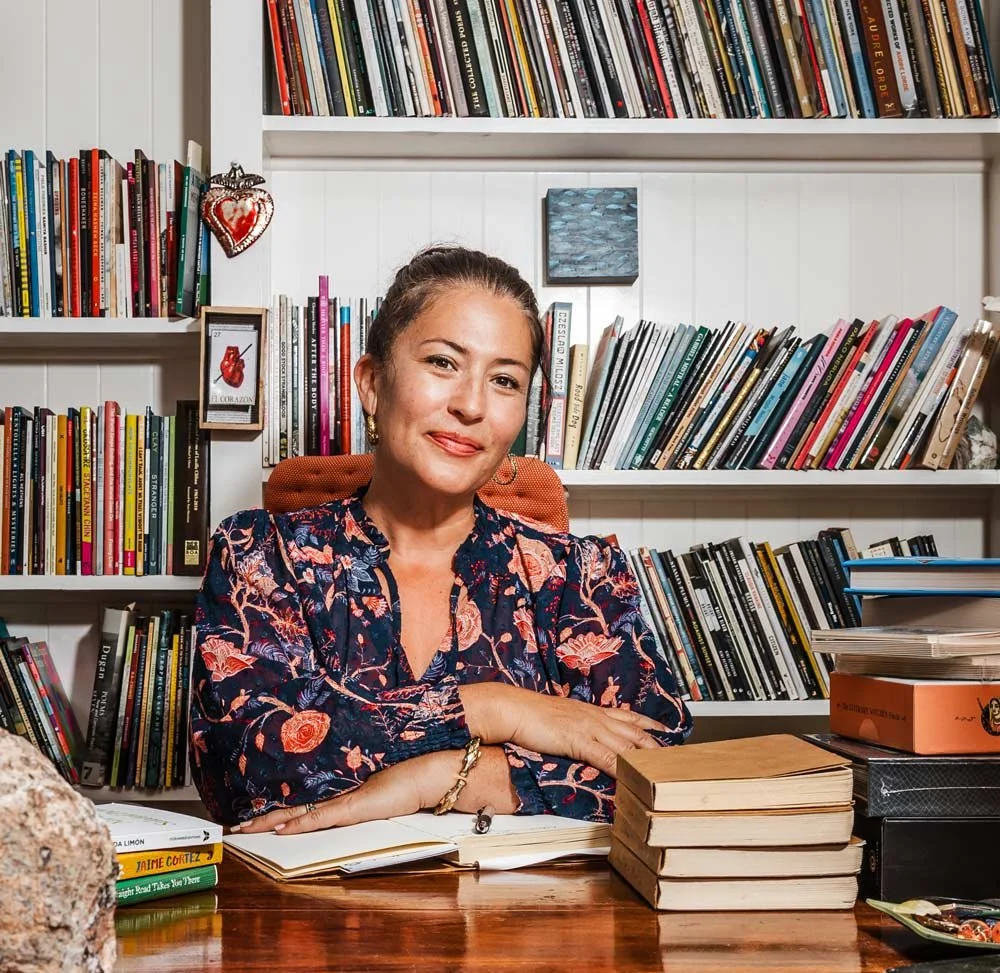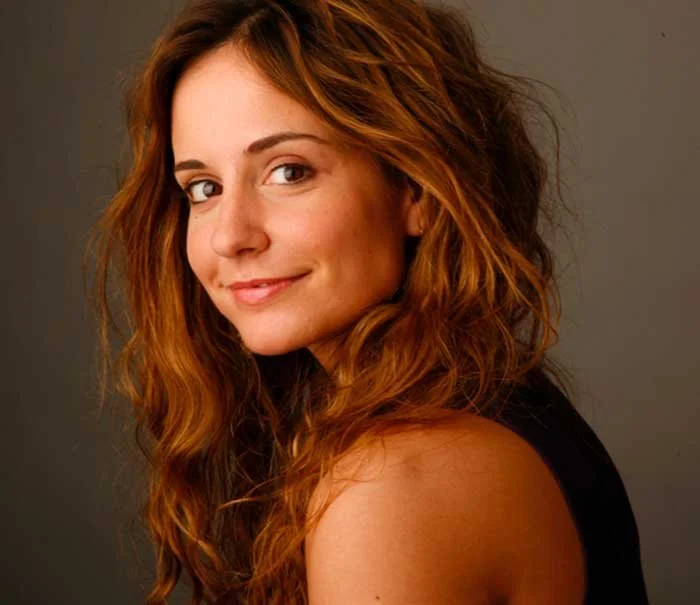


Erin Milan grew up in a small Kansas town. She studied painting at Azusa Pacific University in Los Angeles and received a Bachelor of Arts with an emphasis in studio art.
Milan’s high realism figurative oil paintings explore desire, nourishment, and loss, and what it feels like to be human. Her work has recently been exhibited at RJD Gallery in New York, the Wausau Museum of Contemporary Art, Abend Gallery, the Salmagundi Club, and Suzanne Zahr near Seattle for a solo exhibit. @erinmilanart
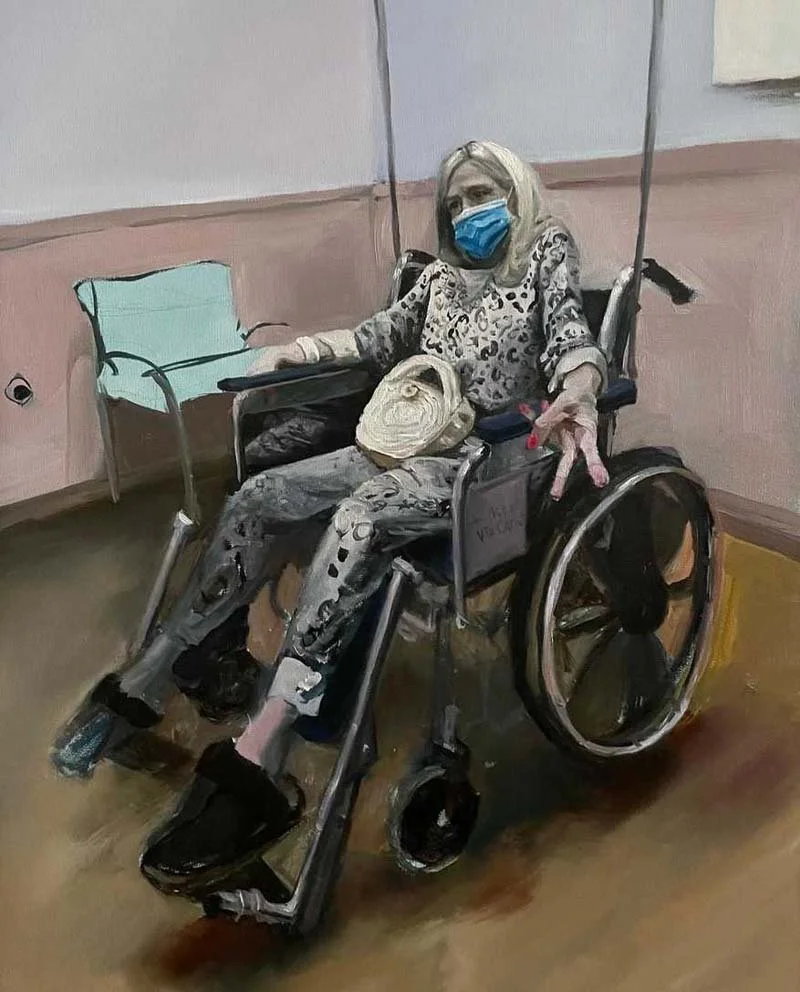
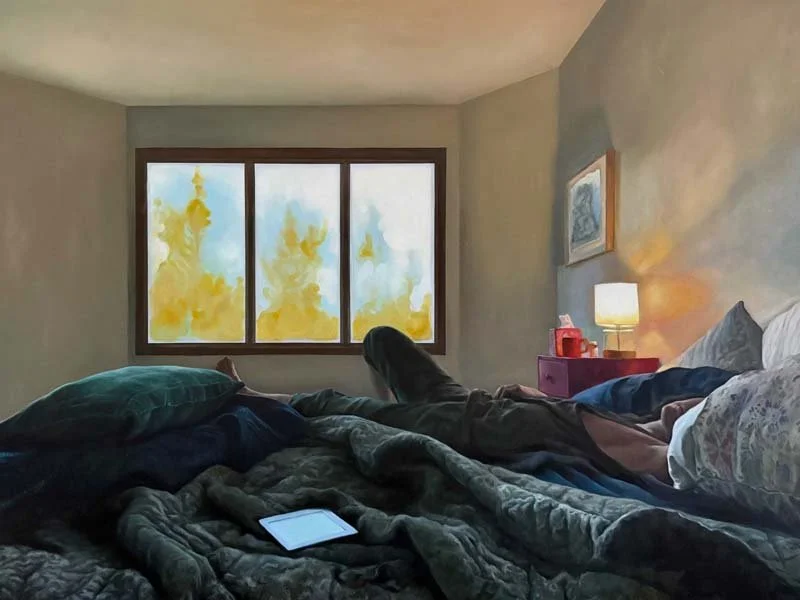
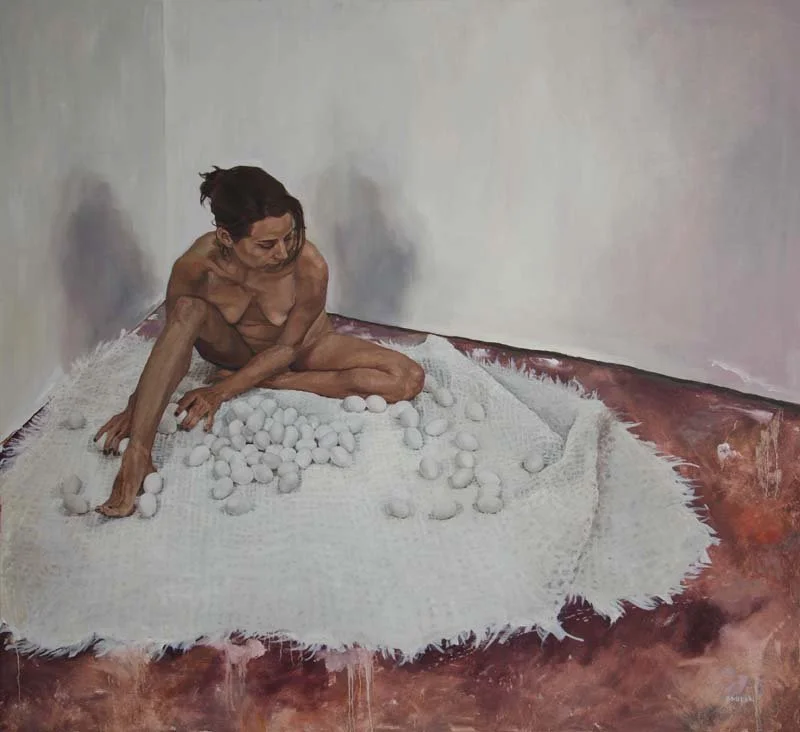
Can you discuss the impact of your childhood experiences on your artwork? I grew up in the country, a mile outside of a town of 4,000 in rural Kansas. My earliest years were spent truly idyllically: looking up at a sky of stars undiluted by light pollution, running through meadows of daffodils my dad had planted, and exploring the pond or the creek that wound its way through our 20 acres. You'll think I'm making it up, but I actually had a cow named Daisy that I would walk around singing to. So I'd say nature, not culture, really influenced my early years. My parents, however, were soulful people, and they valued music and theater especially, so we often took trips into "the big city" of Wichita to hear the symphony or see a musical. They were also avid readers. I suppose my love of visual art came so naturally and seamlessly that I don't even know when or how it started; it was always there. You know, that Picasso thing about all children being artists... I loved drawing and painting, and I was obsessed with paper for a good long while. I came into town Saturday mornings with my dad sometimes to his office, and I remember raiding his construction company's supply room for colored paper, those cool glue sticks with the plastic tube you filled with water, and tape, staples, clips, and whatever else I could find. Talk about flow state. Although my early years weren't spent explicitly thinking or learning about visual art (especially not formally), I do recognize that there was a love of beauty and mystery, and depth that was very much present in me, and in both my parents.
When did you first fall in love with art and realize you wanted to be an artist? For you, what is the importance of the arts? Art classes were a hugely important part of my education in terms of my own happiness and focus all through K-12, but I also did a lot of other activities that I loved, namely marching band and theater. I was also a total English student and really got lost in high school literature. Frankenstein: great; Wuthering Heights: suck it.
When it came time to choose a university and a major, it then became clear to me that painting was going to be the thing. I had used oil paints for the first time in my senior art class and really never looked back. Although I considered pursuing music or writing, I felt such comfort and electricity in the physical act of painting. Unlike writing, where I felt totally at the mercy of my own brain and whatever it could squeeze out of my imagination in any given moment, I could come into the studio and rely on the materials themselves to begin opening things up in me. Like so many other painters, I just never get tired of the sensual nature of my materials--the smell of the paint, the creamy texture, the soft or stiffness of my brushes, the way my conditioner soap makes a little puff of fragrant incense when I knock it off a dry brush before starting my session... These things are so totally grounding as well as invigorating that I couldn't resist them.
Now that I've been an oil painter for 25 years, I've had lots of time to consider the importance of the arts. Indeed, this question became not only theoretical but extremely practical for me when I hit a major creative and career block simultaneously last summer. I found myself needing to answer this question in a vitally personal way, or hang up my brushes and try something else. What it came down to is this: all art is an attempt to come to terms with what being human feels like, and we need art in our lives because art makes our lives better, richer, more meaningful. Art helps us connect not only to ourselves and other humans, but to this invisible "magic" that is the fabric of being. No need to remind me that Dead Poets Society gave me this answer over 30 years ago. Some lessons you need to learn over and over again.
What does your typical day in the studio look like? Walk us through your studio and your most used materials and tools. I am currently extremely busy parenting my three teenage children. My mornings and afternoons consist of driving them and supporting them in their activities. I've had to refine my painting practice to work within smaller hours and to be able to withstand interruptions. I usually do a workout (running or lifting) after the morning school run, then I change into painting clothes and come into the studio, which is a sunny front room in my home. I read a Mary Oliver poem and do any minor tidying, and then I'm down to painting. At the moment, I have seven large boards that are fully prepped (primed and the image transferred), which makes getting straight to work easier. I work off of photographs, and I have a mini freezer in my studio to keep mixed paints wet longer. I have a palette of seven colors that I stick to these days, which makes mixing my colors go very smoothly because it is predictable. I find that the more I can avoid "reinventing the wheel", the more productive I can be. Certainly, there are seasons when I am working much more experimentally, but currently, I am grateful that most choices outside of the day's problem-solving within whatever section I'm working with have already been made. I am trying some new techniques to allow for interruptions at the moment, including using my tape for straight edges, but fully letting one side dry before retaping and painting the abutting edge once the first side is totally dry. This means I don't blend those edges, which frankly feels a little scandalous, but it helps me work within the amount of time I have. I use mainly Gamblin oil paints, but I have certain colors I only get from other brands, like transparent oxide-red lake, which I get from Old Holland. I tend to use cheap brushes that I can replace every month or so. My very favorite painting product in the world is "The Masters" brush cleaner and preserver. In the last few years, I have painted primarily on Ampersand gesso boards and panels because I find that shipping them is safer than canvas or linen. I have a robust playlist of sad songs that I listen to while I paint, or I listen to audiobooks or podcasts. I need a little something in my ear to take the edge off. Painting is still scary after all these years!
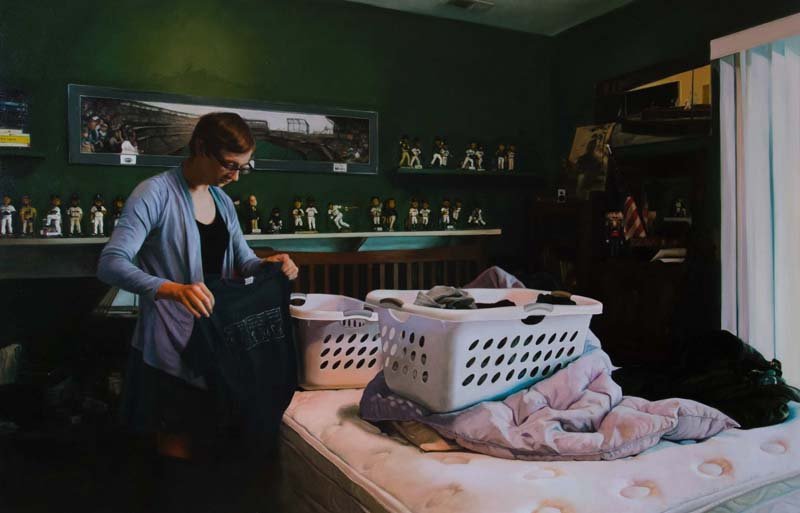
What projects are you at work on at the moment? And what themes or ideas are currently driving your work? As I mentioned above, I have seven paintings planned and prepped. One is complete, and I'm midway through the second. The reference photos are printed, the panels are primed, and the images have been transferred using a projector. I don't always project my images, but for these works, I was less interested in finding the image by drawing and more excited to get straight to painting. The images are all self-portraits of me in our bed, with different linens and blankets, and the light pouring in from uncovered windows. Initially, I really only wanted an excuse to paint bedding in light. Years ago, I made a portrait of my young son Jack reading in a bed of colorful, tangled linens. It hangs in our living room, and I found myself walking by it and longingly thinking, "I wish I could make that painting again... it was so fun." At some point, it occurred to me that as an artist I *could* actually just make a painting like that again! So I shot these images and went ahead and ordered the panels for them, feeling truthfully a little nervous because I wasn't sure why I wanted to make so many or what they "meant." The only thing I could really get was that I wanted to lean into this vibe of "sleepy and horny", to be a bit crude, and that the subject matter itself felt profoundly soothing. Harry Styles once gave an interview and said that his music is all about "having sex and feeling sad." I've been making a lot of sad work in the last years (I did a body of work based on photos of my mom going through cancer treatment and eventually dying), so perhaps it's time for something new. I don't particularly think this work is very erotic, but there is, to me at least, an underlying tone of desire. I also had a chance to visit the Art Institute of Chicago last spring and see Monet's Haystacks in person. So that is now my justification for making so many... well, Monet did it. Seriously though, I've been a painter for a long time now, and during this season of life which for me is so busy and full of life outside the studio, and internally a bit about getting back on my feet again after the pandemic and the death of my mom, I am allowing myself to paint something that feels soothing, interesting, and peaceful. I wonder what I will think of the work 10 years from now.
What do you hope people feel when they experience your art? What are you trying to express? I want people to feel gently accepted in their own humanity when they look at my work. I want the work to be truthful and not necessarily optimistic, but to have a tenderness and reverence for this crazy human life we are all finding ourselves in day after day. I tend to gravitate to really specific images: THAT pink cup your friend always has, THAT beauty product all of us white women of a certain age are using, THAT set of mismatching pillowcases because you couldn't be bothered to find a match when you made the bed. I have piles of recycling waiting to be carried out and unfinished walls, I have wrinkles and moles and body hair, I have the actual clothes my friend or my mom was wearing when I snapped her pic that Tuesday, featured in my work. These banal, real objects of our existence are important to me. There is an old movie called Shall We Dance? with Jennifer Lopez and Richard Gere. In the film, Gere's wife, played by Susan Sarandon, is talking to her husband about the importance of marriage and says this line: "We need a witness to our lives... in a marriage, you're promising to care about everything... You're saying, 'Your life will not go unnoticed because I will notice it. Your life will not go unwitnessed because I will be your witness'". I feel like this witness with every painting I make.
Which artists, past or present, would you like to meet? And why? Don't tell anyone, but I have a major art crush on Daniel Sprick. He actually lives in Colorado, where I am now. I passed him going up the stairs at an art opening a few years ago, but was too nervous to introduce myself.
Do you draw inspiration from music, art, or other disciplines? Yes, I get inspiration from all of these sources, because as I've said, I do believe no matter the discipline, art is fundamentally about exploring the human experience. Mostly, I'd say I get inspired by great TV, perhaps because it is also a visual medium, but it is different enough from painting that I can turn off that part of my brain. And of course, it is at its best when firing on all cylinders of artistry: music, acting, writing, etc. Lately, I can't get the show Andor out of my head; I think of it at least once a day, and Dying for Sex, which was heartbreaking and hysterical.
A great thing about living in Colorado is… Honestly, I am mostly stranded in the suburbs here! Which I love as much as I love my minivan, truth be told. They really fit the time of life my family is in now. And the weather in Denver is fantastic: lots of sun but not shy on drama with the snow and thunderstorms. When my weekends and evenings open up a bit more as my kids can drive themselves, I'd love to make time to go into town and to Boulder. There are some great galleries here.
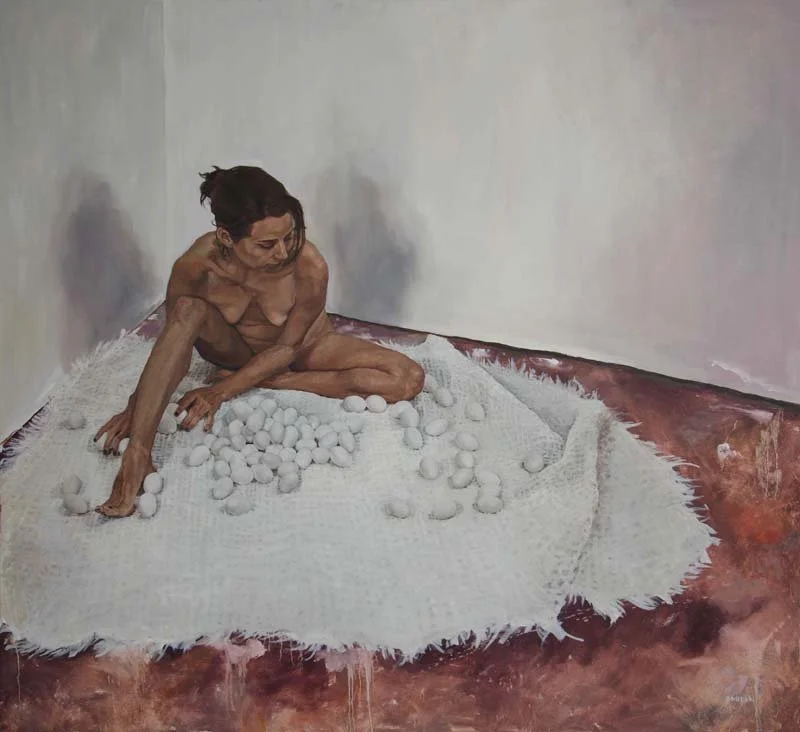
Can you describe a project that challenged you creatively or emotionally—and how you worked through it? I've been through many periods of challenge over my career. Every time I've decided to push my technique forward or experiment with a new subject matter, it is a challenge. Close to ten years ago, I was coming back to painting after a long break to have babies, and I created some very small figurative pieces with food and a nude woman. I entered them into a few shows and was rejected. I remember sitting at dinner with my husband, and he said, "Well, this is good data for you, Erin." I gave myself a day or so of disappointment, and then I started really looking at the work critically, and kind of comparing it to similar work that I loved. (Incidentally, comparing your work to other painters' work isn't always great advice. I think it's valuable at certain parts of the process and terribly detrimental at others). What I realized at that time was that my work didn't feel "undeniable." I kept seeing these incredible paintings by Lee Price and Aleah Chapin, and Alyssa Monks that you just couldn't take your eyes off of. I decided to bump the size of my work drastically, and I also really honed in on the aspects of painting that I felt I was good at and that I enjoyed. I wasn't good at and didn't enjoy making things up on the canvas; my work was strongest when I had a strong reference that I could deviate from in small ways, but that had already solved the problems of overall composition and tone. This led me to shoot the photos for my Vanitas series, which was super fun. We bought cartons and cartons of eggs and spread them around, doing the same with apples and oranges for the pieces with models. I felt that this allowed me to access this kind of magic realism or absurdity I wanted in the subject matter, but it was a much more fun and ultimately successful way to paint.
Contrarily, the work I did of my mom while she was dying was a very new way of painting for me. Very little was planned out, other than selecting the best of the photos I took of the experience. I had taken them not intending to paint, but just as a way to witness (here we are again with that) this profoundly upsetting and still at times beautiful experience she was having. It was a way to process all these huge emotions. I traveled out to see her and help her through important appointments or surgeries, taking photos along the way, and when I got home to my studio, I found I simply couldn't concentrate on the highly realistic, large-scale figurative interiors I had on my easel. Instead, I ordered small boards and painted very immediately from the photographs of my mom. I had very little thought or goal for a finished painting; it was a painting to survive.
Tell us about important teachers/mentors/collaborators in your life. My high school art teachers, Mrs. Cox and Joe, were phenomenal. They were encouraging and kind and empathetic, and they allowed us to experiment however we wanted. Joe famously wanted us to learn about the processes of art making in a hands-on way; I remember in a jewelry-making class asking him a question about how to heat the metal, and he asked me if I'd tried getting another student to help me figure it out first (LOL). But that kind of just-freaking-going-for-it, even while using serious mats, created a confidence and sense of possibility that you could problem solve anything to get from point A to B, which is really very important in the studio. I had a painting instructor in college, Guy Kinnear, who taught me a *ton* of technique. He has also continued to be an inspiration from afar, because he has never stopped making art himself. Via social media, I have watched him switch media, change up his techniques, but continue to make amazing work throughout many stages of parenting and middle age. I took a workshop from Lee Price several years ago, and several of the techniques she showed me I still use in the studio every day. At that time, I wanted to learn how to paint very realistically, and she made that happen. She also generously gives me advice on career or studio issues from time to time if I'm really stuck on something. Felicia Forte's Instagram has changed the way I think about the entire creative process in many ways, mainly with her emphasis on listening to your intuition and what feels good in the studio as a way to find your voice and even your technique.
Sustainability in the art world is an important issue. Can you share a memory or reflection about the beauty and wonder of the natural world? Does being in nature inspire your art or your process? Two summers ago, I became utterly enamored with gardening. Apparently, this is a common middle-aged thing, and when I would exclaim to friends about my AMAZING plants, it felt a little bit like telling everyone you know that you've just discovered this incredible band, The Beatles. Nonetheless, being outside in the dirt and the air with my plants sort of brought me back to life. I don't know that it directly influenced my work, although I did attempt a few "plant portraits," but it made me feel like I could breathe again, and it brought me joy I hadn't felt in a little while. I would say that strength absolutely helped me simply persevere through some nasty creative blocks and career doubts.
AI is changing everything - the way we see the world, creativity, art, our ideas of beauty and the way we communicate with each other and our imaginations. What are your reflections about AI and technology? What is the importance of human art and handmade creative works over industrialized creative practices? Boy, AI. I think essentially Bob Ross had it right when he embraced "happy accidents" in painting. And happy accidents to me seem to be a fundamentally human feature. I think we will always want and need art made by humans. At the same time, my husband is in tech, and AI certainly has some upsides in that industry (possibly with fatal downsides as well; time will tell). It's Pandora's box, however, and nothing in me thinks we're going to be able to reverse or meaningfully staunch the incoming flood of AI. It's too profitable. One of my favorite book series, The Expanse, posits that "the usual state of nature is recovering from the last disaster." I'm basically holding onto this hope that, despite the disasters of climate change, political unrest and corruption, corporate greed (in all of which AI is playing a starring role), life will persevere. Whether or not that will include humans is a question mark. Essentially, it's hold-onto-your-butts,-people, time. I think human-made art is going to be a balm and perhaps a guiding light as we're hurtled into the future.
Exploring ideas, art and the creative process connects me to… myself, other humans, and the invisible magic of existence.