

While some cities draft budgets for multibillion-dollar seawalls, others face the unceasing sounds of melting ice. As the physical and financial walls of climate adaptation rise, we are forced to reexamine how we live. Today, we hear from those demanding environmental justice and actionable design. Imagine buildings that function like trees, or systems that regenerate rather than destroy the soil.
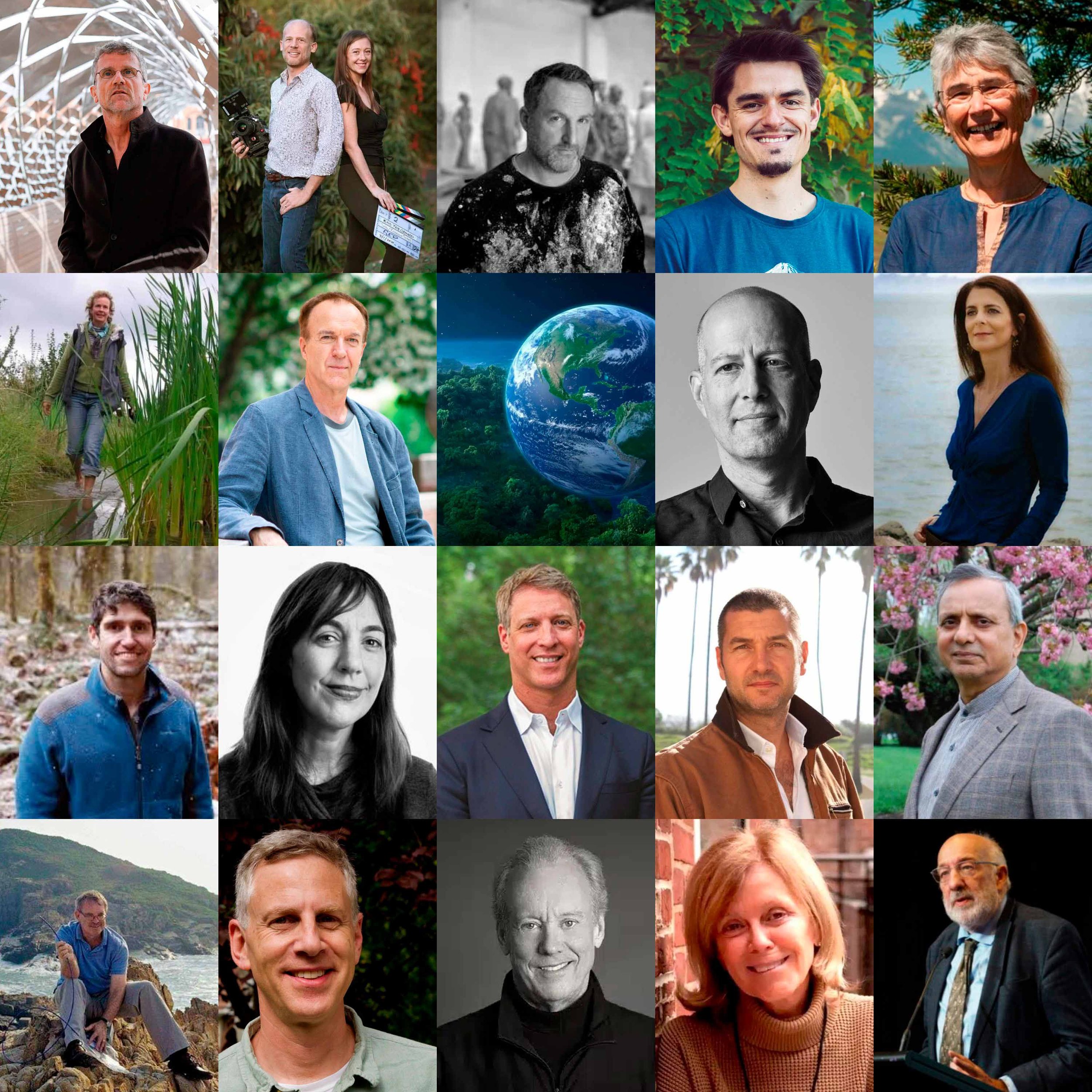
We explore solutions with environmental journalists Abrahm Lustgarten, Jon Gertner, Liza Featherstone and documentary filmmaker Rebecca Tickell. They are joined by scientists and writers Bill Hare, Rob Nixon, Euan Nisbet and Roland Geyer. To construct a new way forward, we hear from advocates, architects and visionaries, including William McDonough, Carlo Ratti, Jason deCaires Taylor, Jane Madgwick, Paul Shrivastava, Osprey Orielle Lake, Ron Gonen, Louis De Jaeger, Kathleen Rogers and Yolanda Kakabadse. They remind us that the Earth possesses a profound intelligence, if only we choose to listen.
ABRAHM LUSTGARTEN
Senior Reporter ProPublica · Author of On The Move: The Overheating Earth and the Uprooting of America
So a lot of my reporting is based on a body of research that looks at the ideal habitat that humans have lived in on the planet for about 6,000 years. And that ideal zone is shifting. As it is shifting, it is leaving large parts of the world and its population outside of that ideal zone. And so that is where we can say that one in three or one in two people on the planet, and roughly one in two people in the United States as well, will find themselves in degrading environmental conditions that in the past have led to migration. So we really don't know how many of those people will move.
But if we talk about two to six billion people facing that difficult decision, then we can assume there will be a very large era of mass movement of people to some degree. And the trend then globally, but also in the United States, is that many of those people will move to cities. We will see an increasing urbanization, which is demographically what we have already seen for many decades now. And so that would intensify. I think a lot of the conversation around climate migration is about where people will go.
And that is a really important part of the conversation. But as you are alluding to, also half of the conversation is about where people will leave from and what happens to those communities. I think adapting to these changes requires both. When you drill down and get really into the nuts and bolts of it, a lot of the conversation is about urban planning and sustainability planning and what that means for cities. And it means different things whether you are on the growing or the shrinking, contracting end of the spectrum.
So New York will ultimately build a seawall that it estimates now will cost somewhere in the order of 120 billion dollars. And the fact is that many cities in the United States will not be able to afford that, especially smaller ones and especially southern ones.
JON GERTNER
Journalist · Historian · Author of The Ice at the End of the World · The Idea Factory: Bell Labs and the Great Age of American Innovation
In my reporting on Greenland, I at one point spent a week camping out at a glacier with two scientists, David Holland and his wife Denise. We stayed right by a glacier known as Jakobshavn, which is actually one of the fastest moving glaciers in the world and one of the largest in Greenland. Like a lot of glaciers in Greenland, it is coming apart. It is moving lots of ice off of Greenland and into the ocean, and that in turn is raising sea levels.
Camping by Jakobshavn's calving front is akin to camping on a spot overlooking a river, except in this case, the river is many miles wide and clogged with both large icebergs and shattered ice. The sun never sets in summer. The visitors watch the glacier's calving front with a constant sense of expectation. It rumbles ominously sometimes during the night with a sound like distant thunder.
In daytime, it tends to emit an occasional and sharp rifle crack. The recoil of a split somewhere deep within itself where the evidence that a small chunk of ice has been shed. Though the calving front seems high at 300 feet, the glacier actually descends below the mélange and the fjord another 3,000 feet or so. Jakobshavn is among the deepest fjords and glaciers in the world.
Therefore, a true calving event—one that cleaves the glacier from top to bottom—is bigger and more explosive. Not a rumble, not a crack, and unleashes the energy of several atomic bombs. One morning a few years back, David and Denise Holland awoke at 3:00 am to capture on video the breaking of a massive iceberg that measured twice the length of the Empire State Building. It was very noisy, very spectacular.
This area happens to be called new land, that is land that was covered in ice as recently as 20 or 30 years ago, but has now been unveiled thanks to the recession of the ice sheet and glacier. Gray, colorless and devoid of vegetation, new land is grim. A place that exists before life arrives. As it is, new land makes simple tasks unpleasant.
When a wind blows down from the ice sheet, microparticles of till, a fine rock flour ground down by the glacier, kicks up into the air. Meanwhile, what seems like wind, in fact is just water running far off and nearby. Hard to place but difficult to ignore. An enormous, unceasing white noise, which is merely the sound of ice melting all day, all night, everywhere.
BILL HARE
Founder & CEO of Climate Analytics · Physicist · Climate Scientist
So, it is pretty tough going. And the other thing that really worries me down here, particularly sitting in Western Australia where I grew up, is that we are seeing a really rapid onset of climate impacts. I would say that outside of the high Arctic, the kind of changes happening here on the land and on the oceans offshore here are more rapid and more extensive than I know anywhere else in the world. It really is a serious problem. And so the things that people have an image about Australia—its environment, its space, its oceans—are on the front line of climate change. Of course, other places are really suffering as well, and I don't want to diminish that, but that is one of my own deep personal concerns that if we don't crack on and limit warming to something close to the Paris Agreement's limit of one and a half degrees, then we are going to see systems unravel and collapse that people really like and love. It won't just be here; it will be in many places.
ROB NIXON
Author of Slow Violence and the Environmentalism of the Poor · Professor of Environmental Humanities at Princeton
So in 1995, I taught my first environmental justice course with Rachel Carson, Derek Jarman and Ken Saro-Wiwa. Since then, I have been teaching in this field for about 25 years. Environmental justice, for those who may be familiar with it, is basically looking at inequalities in access to resources and unequal burdens of harm, unequal burdens of toxicity, for instance. It is both, do communities have access to leisure, to green spaces, to the resources that the wealthy have and why, and how can we redistribute the fallout of our actions as societies more equally so that we don't have zip codes where children are disproportionately likely to get asthma from emissions?
Also, in relation to climate, low-lying islands, the designations of the Sahel, how they are disproportionately burdened with the carbon-intensive commodity lives that people in the rich nations have been living for a long time. So that was basically the arc of my thinking. I started in the environment, then I moved to postcolonial studies, and now I am in a sort of dialectical movement. I think inspired by Ken Saro-Wiwa, I found a way to reconcile those two concerns.
LOUIS DE JAEGER
Eco-entrepreneur · Landscape Designer · Co-founder of Food Forest Institute
Yeah, it can be confusing to hear all these labels or words, but they actually come back to the same thing, and that is the regeneration of land. The Earth started as one big rock and soil did not exist. And without soil you can't really grow trees or any crops whatsoever. Microorganisms made these rocks into soil, and it took millions of years to create soils like we have them today. And with the way we are farming today, we are actually plundering that bank account.
We are depleting soils super fast, and it is predicted that in less than 25 years, 90 percent of our soils will be degraded. That is really alarming because I like to have food, and I guess you like food too. Everybody needs food to survive, so in 2050 that might be a problem if we don't change the way we handle the soil. So what do we have to do instead?. Instead of extracting things, we have to build the soil.
There are different techniques and ways of gardening or agriculture that build the soil. One of the most well-known techniques is organic farming, but because it got a label and got rules, people also started to hollow out those rules. So there is very good organic farming, and some people are also doing a little bit of extractive organic farming. And then you have biodynamic farming, which farms together with the phases of the moon and works more energetically.
A lot of these things are actually scientifically proven right now, but for some, it sounds esoterical. But the nice thing with biodynamic farming is that they use zero pesticides. Never, ever; they only use plant preparations. So for me, if I could choose only one type of food, it would be biodynamic, and you can see it with the Demeter label. And then of course you have permaculture, agroecology, regenerative, organic, and they basically are brothers and sisters from each other.
KATHLEEN ROGERS
President of EarthDay.org
And the big focus is educating people on this really sounds like a narrow little topic, except that we all like to eat. And so it is at the heart; other than breathing, our next big thing is eating. Teaching people the importance of organic, the importance of regenerating soils, which by the way is as important if not more important than organic. And getting the conversation going about standards because there really aren't any standards in the regenerative agriculture world that you can hang your hat on.
It is about the conversation. It is about encouraging people to understand that our soils, in the next 30 years we could lose viability in a huge percentage, 30, 40, 50 percent of our soils if we don't get it together. And it is not a hysterical statement. It is coming from local farmers who are seeing it. Think of the Dust Bowl days. Think of Ireland and the potato famine. It was all about growing the wrong way, and drought and other things that were brought on by your own mistakes, and diverting rivers and cutting forests, and basically disturbing the ecosystem to the point where it just collapses. We talk about that in terms of biodiversity all the time, but we have only recently started to talk about it in terms of soil, the dirt, the stuff that we depend on.
REBECCA TICKELL
Documentary Filmmaker · Producer · Environmental Activist
Kiss the Ground · Common Ground · Groundswell
There is such an intelligence to nature that it knows how to be resilient. We thought that we could go in and do it better, and when we did that, we tried to mechanize this entire system. We industrialized it into this linear system that doesn't make any sense. We are growing animals to grow food that we can't eat so that we can ship it halfway around the world. It is a system that doesn't make sense.
The way that we heal, and the way that we regenerate, and the way that we stabilize the climate and reverse climate change, it literally is one inch and one acre at one hectare at a time. It is through communities waking up to the power of soil and the power of biodiversity to be able to not only sequester carbon for all of us. The oceans can't handle any more carbon absorption; it is acidifying and heating. The only place that we can take that terraton of carbon that we have emitted is to put it back into the soil. When we do that, you create thriving ecosystems.
You create biodiversity, you create water infiltration, which can help massively to reduce the catastrophes from flooding. It helps reverse desertification, so it staves off droughts through being able to hold water like a sponge. And it promotes biodiversity. And that is how we have resilience, through not having just one of everything, because when you have just one thing, you are susceptible to any kind of disease or blight coming in and wiping you completely out. It is through that genetic diversity that allows for nature to thrive and move around the nutrients that it needs.
Often we go in and we just want to spray Roundup on everything instead of getting curious about what the weeds are trying to tell us about what this soil needs, or what these insects are trying to tell us about this particular environment. It is about learning how to give up this idea that we need to control nature and instead learning how to use nature as stewards of that land to be able to manage it in nature's image. The biggest change that needs to happen is here. It is in our minds that it can be done, and it can be done within five to ten years. We can stabilize the climate through regenerative agriculture and through how we choose to eat and through how we choose to protect what is wild and biodiverse. And that is what our films talk about.
BEN GOLDFARB
PEN/E.O. Wilson Literary Science Writing Award-winning Author of Crossings: How Road Ecology Shapes the Future
I got really fascinated around 2014. I was living in Seattle, working as a journalist, and I was looking for something to write about. Somebody sent me this advertisement for a beaver workshop. I didn't know what a beaver workshop entailed, but it sounded cool. So I went to this beaver gathering, and it was amazing.
It was one scientist after another talking about all of beavers' ecological benefits. Of course, these are animals who build dams, and those dams create ponds and wetlands. And those ponds and wetlands are filtering out water pollution, attenuating floods and mitigating against drought. There are these little reservoirs; they are fighting wildfire and they are providing habitat for all kinds of endangered species. They are sequestering carbon.
Beavers are kind of saving the planet in so many ways, despite our best efforts to kill them. They are saving us in spite of ourselves. That was just a really beautiful story because both humans and beavers are compelled to build, right where we are both constantly modifying our environment to maximize our own food and shelter. And yet we are doing it in a way that is fundamentally inimical to all other forms of life. We are stomping out biodiversity everywhere you turn, whereas beavers are building in a way that promotes all other forms of life. They are these incredible agents of biodiversity, conservation and restoration.
JANE MADGWICK
Ecologist · CEO of Plantlife · Fmr. CEO of Wetlands International · Co-author of Water Lands: A vision for the world’s wetlands and their people
I was always more fascinated about anything to do with water and wetlands. They are really fascinating places and they are so central to people's culture, to art, as well as in very many practical ways to human survival. Once I started to work with wetlands, I was hooked. So the last 30 years, water and wetlands has been my focus. I love trees and forests, but I think it pales into insignificance compared with what wetlands have to offer.
And Wetlands International, well, it is quite an old organization; it is more than 60 years now. And it is the only global NGO which focuses on one kind of ecosystem. So it is interesting. And that is because wetlands have been under pressure for a very long time. The signs of wetlands disappearing, being lost and the impacts of that were noticed a long time ago.
So WWF, for example, was born out of concern over wetlands like the Doñana wetland in Spain. Initially, I think the organization was very science-based; it was very focused on species and sites. The organization evolved in the last 20 or 30 years especially, and in the last ten years, really to see wetlands not as just special places or sites needing protection, but really as water systems and the landscape. They are all about the health of the landscape and of the planet and are linked with people's wellbeing in many different ways, as well as biodiversity and of course, as well as the climate.
Being the biggest water stores, but also the carbon stores, much the biggest terrestrial carbon stores. The fate of wetlands is really linked with the changes in the climate and our possibilities to reverse the negative changes, as well as the possibility to provide enough food and water for a growing population. The condition of wetlands is linked to all of that. That is why our organization and the work we do with many partners has really come into the foreground and has become more relevant as this has been realized.
MIA FUNK
Artist · Writer · Host of The Creative Process and One Planet Podcast
Did you know that 75 percent of the world's 120 million people displaced by conflict now live in zones with extreme climate hazards? Imagine the scale of that migration set against the backdrop of our own lagging infrastructure. Right now, the US plastic recycling rate remains stuck at just nine percent. And even in Europe, the growth of the circular plastics economy recently crashed to just 1.2 percent. So I really feel like we are witnessing history written in water and ice.
Global sea level rise has accelerated to 4.2 millimeters per year, which means the Greenland ice sheet shed another 139 gigatons of ice in 2025. And the heat isn't just above ground either, because 80 percent of studied coral reefs suffered moderate to severe bleaching in recent heat waves. Did you know that atmospheric methane has surged past 1,940 parts per billion, and that small unmapped wetlands contribute nearly 25 percent of those non-forested emissions? And despite their impact, we are still destroying them. The world has lost 411 million hectares of wetlands since 1970.
Currently, 40 percent of the Earth's soils are degraded. And so policy, it just isn't keeping pace. Many people assume progressive states are leading the way, but today, New York is lagging behind its public renewables mandate, seeing only a nine percent drop in emissions since 1990. So these numbers aren't just a ledger of what we have lost. They are indicators, I believe, of what we must do to repair and restore. By facing the facts, we can shift from extraction to regeneration, moving beyond crisis and inertia, and engineer a flourishing, resilient ecological future.
*
Thank you, Jason, for joining us during World Oceans Month. We felt it was very apt to bring you on because your work is powerful and beautiful, but not just for the boldness and innovation of creating underwater museums and sculpture parks. By collaborating with marine life you create these living sculptures, that for me personally, it makes me reflect on our relationship with the sea, and I think it also inspires people to conserve and protect it.
JASON DECAIRES TAYLOR
Sculptor · Environmentalist · Creator of Underwater Museums
Certainly. I hope it achieves that objective. They are meant to work on many different levels, that first and foremost, they are meant to introduce more people to our marine environment. Two-thirds of our planet is blue and underwater, and yet so little is understood about it. So for me, it has been quite interesting to use art as a way to explore this incredible space. Whilst at the same time, working with nature, working with marine life to actually create the patinas, the surfaces, the textures and the forms. Underwater is a really exciting place to work. There have been many, many different surprises along the way. I first started off in the West Indies on an island called Grenada, which is a tropical reef system. And I expected the works to be sort of colonized. I knew, obviously, hard corals took a very long time to get established to build their calcium skeletons, but actually they were colonized within days. We saw white little calcareous worms, pink coralline algae and green algae literally appeared sort of overnight. And then they had these incredible sponges, you know, you see a lot of sponges on the reefs and you don't really take a lot of notice.
But actually, some of the formations and the patterns blanketed the sculptures with a network of capillaries and veins and these incredible sort of scarlet reds and pinks. And it was something that I had no idea would colonize in such a way. Sponges are really interesting because they actually filter water, so they almost like breathe the water in and then exhale it out once they have taken the nutrients. And for me that was when the work sort of really became living and part of the ecosystem. I thought it was a kind of a really nice metaphor that we are nature, we are part of the system and we are all connected. And I think we lose sight of that a lot.
WILLIAM MCDONOUGH
Architect · Designer · Co-author of Cradle to Cradle: Remaking the Way We Make Things · Chief Executive of McDonough Innovation · Founder of William McDonough + Partners
I was born in Tokyo and I grew up mostly in Hong Kong and in the Puget Sound, Washington state. So as a child, I used to hear the farmers come to collect our sewage at night and they would wake us up. My mother would sing us back to sleep telling stories about poop and honey wagons and the night soil. And it is so romantic when you are a little kid, you are three years old and your mother is singing you songs in Japanese about poop. It is fantastic.
So I always thought that the farms and the cities were one thing. That has held with me. I still do. So I see a sewage treatment plant and say, that is not a sewage treatment plant. That should be a fertilizer factory and change our language, change the lenses we used to see. It is actually a nutrient management system on a technical level because there is phosphate in there. Why would we send ships to Algeria to get phosphate when it is right there in front of us? You see? So waste equals food.
And my grandparents lived in a log cabin in the Puget Sound. My grandfather had been a lumberjack. So they lived in this beautiful oak grove place in a log cabin and my grandmother was a weaver. They composted and grew food and shared with neighbors and took care of everything because they had been to the Second World War. With rationing and also preserving, you know, cans and canning your own food really for as well and using everything. So my life started out with people being really careful about nutrient management and materials.
And as I grew older and finally ended up in the States, I started seeing people leaving the showers running after the gym or just throwing stuff away all the time. And it didn't make sense to me because I didn't understand the concept of away. And so away had gone away as far as I could tell. So waste equals food. So then I won some competitions when I became an architect. I decided I would design buildings like trees, because why not have buildings that could sequester carbon or fix nitrogen or work from the sun and export energy to neighbors, things like that.
EUAN NISBET
Professor of Earth Sciences at Royal Holloway University of London
UN Environment Programme's International Methane Emissions Observatory Scientific Oversight Committee
And of the two major greenhouse gases, CO2 is the one everyone thinks about. But methane is a very interesting gas. What happened in the 1980s was methane was rising very fast in the air, and that was largely leaks from the gas industry. And to some extent from the coal industry as well, plus of course more cows and all sorts of things like that. But as we introduce more cows we wipe out lots of wild animals and they make methane too. And then methane stabilized in the late 1990s and early 2000s.
And then it took off again, but this time it has taken off in a very different way. And we think that largely the recent rise has been driven by warming wetlands, especially in the tropics but also in Canada and the Russian Arctic, Siberia. And as you warm up the planet, although some areas get drier, a warmer world is actually a wetter world. You evaporate more water and more water falls, so it is going to rain like crazy in places like Uganda or Kenya, which is what it is doing right now. And then these wetlands spread. And if the wetlands are hotter, they also make more methane.
And you can tell that by a rather clever trick, the different types of carbon. Most of the carbon in us, you know, we are carbon, is something called carbon 12. That is normal carbon, but about one percent of carbon is carbon 13. That is also perfectly ordinary natural carbon. There is also, you probably know about carbon 14 that the archeologists use for dating. That is made up at the top of the atmosphere, and that is radioactive.
But carbon 13 is normal, it is about a percent of normal carbon. But the ratio of 12 to 13 varies depending on who made the methane. So if it is a wetland or a cow, there is a lot of 12. But if the methane comes from a gas field or a fire or a coal mine, it tends to be a little bit richer in the 13. And so for 200 years, as humans started burning fossil fuels, the methane in the air got a bit richer in carbon 13. But since 2007, it has been getting richer and quite quickly richer in carbon 12.
That tells you it is biological sources. And a lot of that growth has been happening in the tropics, not all of it, and that suggests that it is tropical wetlands initially, also probably nowadays northern wetlands as well. Plus, of course, cows. And it is the biology that is doing this. But it looks like an Earth feedback. We warm up the planet, the Earth gives off more methane and warms us up more. And that is feedback. You push it one way and then something pushes it even further. That is actually probably the biggest challenge to the Paris Agreement hopes now.
ROLAND GEYER
Professor of Industrial Ecology · UC Santa Barbara · Author of The Business of Less
So it was trying to find business models to help, you know, reuse and recycling become widespread activities. And to be honest, well, as we know, it didn't really happen, right? Reuse and recycling are still sadly not widespread activities. In some industries, like metals recycling, we do that a lot. We know how to do that. But when it comes to plastics, the numbers are fairly poor. Much better in Europe, but in the US and Canada the plastic recycling rate is nine percent. So it is really sad.
And reuse, you know, we all love the idea of reuse, but we still haven't quite figured out how to sort of make that happen. So my hope is that this sort of renewed enthusiasm created through the Ellen MacArthur Foundation and their rebranding of reuse and recycling into the circular economy, that that will maybe finally help us to get off that linear production consumption model and on a truly circular path. I have, in a way, been there the first time around. I have been there in the 1990s where we got very excited about reuse and recycling, and of course it has been around for much, much longer.
I mean, in a way, reuse and recycling has been around probably as long as humankind has been, and then it didn't quite happen, and so now we are back thinking about circular models. My hope is that now policy is involved, so policymakers are involved at national levels, at even international levels. And hopefully that will, again, we are talking about the levers that really bring about that change. I think the combination of companies thinking again about circularity and households thinking about it, but now also with policy support, that might bring about that change that I think we all sort of desire but haven't quite figured out how to make it happen.
RON GONEN
Founder & CEO of Closed Loop Partners · Circular Economy Investor
Fmr. Deputy Commissioner of Sanitation · Recycling & Sustainability · NYC
Author of The Waste-Free World
Well, the first thing is to start with the recognition that unless a plastic has value in the recycling stream, and there are some plastics that have a lot of value. So like PET, which is for your beverage container, HDPE, which is laundry and cleaning products. They actually have a lot of value in the recycling system. So recognize that some plastics have value, some plastics don't. The plastics that do have value, we need to make sure that there is the infrastructure in place to get them collected and get them back into products.
And the plastics that don't have value, I think that we need to tell the producers, if you can't invest in building markets for this plastic, then you need to stop using it. Because otherwise it is just creating an environmental hazard that is too expensive for society. I think all of this gets down to who is going to pay. Who is going to pay? If you put a product into the market that is not recyclable or into a market that doesn't have recycling infrastructure, there is a cost to that that somebody has to pay.
And I think the sooner we get down to who is going to be responsible for it. The sooner we will see that nobody wants to raise their hand, the sooner we will get to a place where people just say, you know what, let's find an alternative. Or stop using it because nobody wants to pay to handle it. As opposed to what happens today, which is the cost is passed off to the taxpayer in many cases, or even worse, ends up in our oceans.
PAUL SHRIVASTAVA
Co-President of The Club of Rome · Professor of Management & Sustainability
I am in full agreement. Climate change is here. It is already causing devastation to the most vulnerable populations. We are living with an extractive mindset, as you pointed out, and we need to change from that extractive mindset to a regenerative mindset. And we need to change from the North Star of economic growth to a vision of eco civilizations. So those are the two main principles that I want to propose and that the Club of Rome suggests that we try to transform our current organization towards regenerative living and eco civilization.
CARLO RATTI
Architect · Engineer · Director of MIT's Senseable City Lab
Curator of Venice Biennale’s 19th Int’l Architectural Exhibition
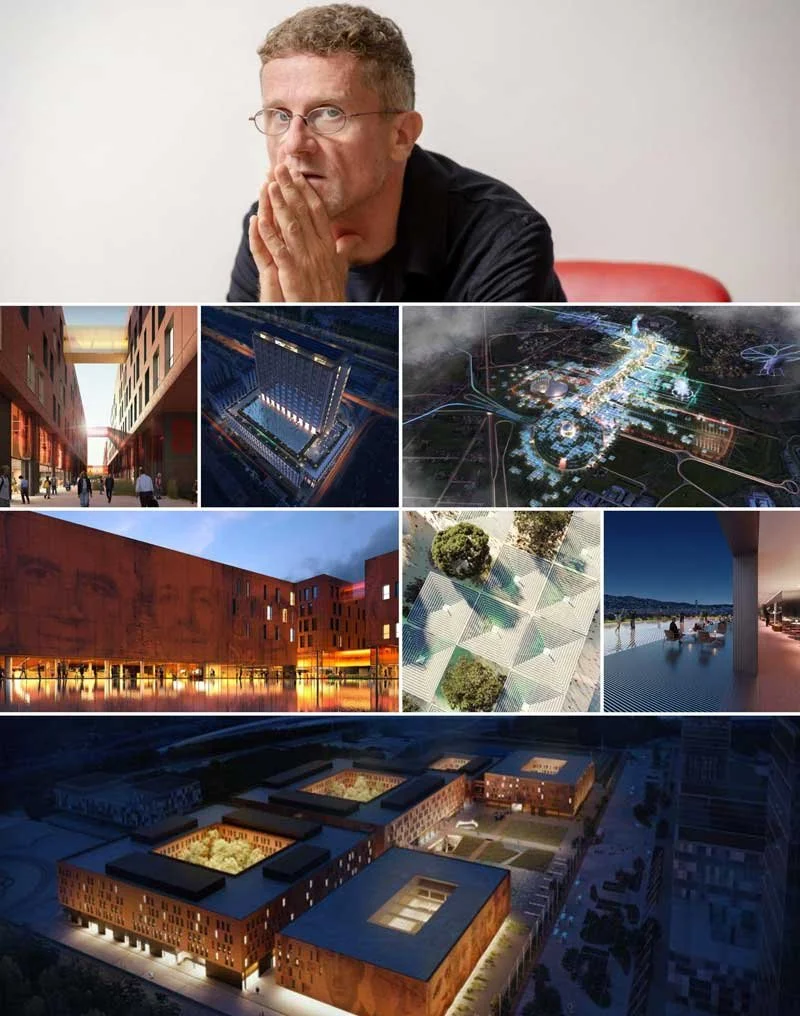
Well, today we can actually play with the complexity of nature and I think it is an example of how to blend past in future. But an example of what I was saying before, like how we can look at the design architecture as a way to try new things and like nature, you learn from our mistakes. Learn from what does well, what is successful, and again, use this in order to tackle the biggest problem you mentioned, which is adaptation. Now architecture has engaged with climate change for a long time. We can go back to the 1990s. There was a beautiful book at the time by Richard Rogers called Cities for a Small Planet.
But that has been from the beginning about mitigation. Now today, mitigation is still important. Mitigation is about reducing emissions, but adaptation is becoming imperative. Now we know the climate has already changed. We know that change actually is faster than you expected just a few years ago. And so adaptation becomes vital. And that is about how you rebuild Los Angeles. How can you fix the issue of flooding in Valencia and many of other things. We have been dealing with the other extreme events we have been facing in recent years.
OSPREY ORIELLE LAKE
Founder of WECAN · Author of The Story is in Our Bones · Uprisings for the Earth: Reconnecting Culture with Nature
Founder & Executive Director of the Women's Earth & Climate Action Network International
Yeah, I have been really very fortunate to work very closely with a lot of indigenous leaders, and I have had a lot of indigenous mentors over the years because in the process of this work of working to protect water, land, climate and communities, that naturally has led me to indigenous leadership because of their incredible care for the natural systems and their worldviews. And I will say that it is so important to highlight that 80 percent of all the biodiversity left on Earth is in the lands and hands of indigenous peoples. So I think we have a tremendous amount to learn from them about their stewardship, but also about their cultural lifeways and things that we have really lost in our modern society.
And I think it is so important that we uplift indigenous values, indigenous rights, and also understand wherever we live, we are living on indigenous lands. How can we really respect that those lands often have been stolen from indigenous peoples and really learn about the indigenous peoples in the communities where we live because they are continuing to work and struggle to protect their territories, their lands and the forest and waters for all of us.
LIZA FEATHERSTONE
Environmental Journalist · Contributing Editor at The Nation · Author
So the big victory was that in New York State we have passed the Build Public Renewables Act which mandates and requires the New York State Power Authority to build its own publicly funded renewables. Renewable energy, wind and solar. And this was a long, long hard-fought victory. And to say how it happened, we need to think back to the early Bernie days, just after the Bernie Sanders 2016 presidential campaign. Obviously people were very disappointed that Bernie Sanders didn't win.
But a lot of people were also very politicized by that campaign and by that moment. And so a lot of people were joining DSA, Democratic Socialists of America. At the same time, a lot of young people were becoming very aware and very anxious and disturbed and deeply depressed by the climate crisis.
YOLANDA KAKABADSE
Former Minister of Environment for Ecuador · Former President of WWF International
Yes. The rights of nature. The rights of nature is a wonderful concept that Ecuador has in its constitution, and that very often puts pressure on decision makers of development work. In respecting these rights for nature, laws force these decision makers to take action in prevention and not as a reconstruction as we have always done. Very often we have seen around us during these last decades that we damage something, thinking that afterwards I will do something about it. I will reconstruct.
The laws of nature don't allow you to rebuild life as it was before. It is much more productive, more efficient and more sensible to prevent damage. And of course it is cheaper. When we prevent the destruction of any ecosystem or place of nature, it is much cheaper than investing later on in reconstructing it.