

I think first of all that in order to have disillusion, you need to have illusion and I really want to sort of take a stand in the name of being a delusional person, you know? I do think illusions are necessary to our sense of creativity, and we need to fall in love with extreme projects, and we need to have ideas that are sometimes unsustainable. We need to dream big in order to be creative and feel alive. The illusions that are a part of Aqua are larger illusions. They're illusions that have to do with my adult life. They're connected to nature and the presence or absence of water, the illusion that we can keep sustaining a city even though the water has run out.
And connecting those with larger illusions that have to do with film and creating projects that are my own but are also intrinsically of the city itself. Los Angeles is a dream city in many ways, and you kind of have to try and have your own dream without getting bruised too badly. So in a book about water, the main stories that have come up that I wasn't expecting to discover in such a dense way were stories about theft, obviously, and nature being sort of dried up in places that I didn't know about. So when I embarked upon this journey to follow the aqueduct, I didn't think I would find some of these stories. Where the water went, who owned it and what they did with it became very much part of what I was becoming obsessed with.
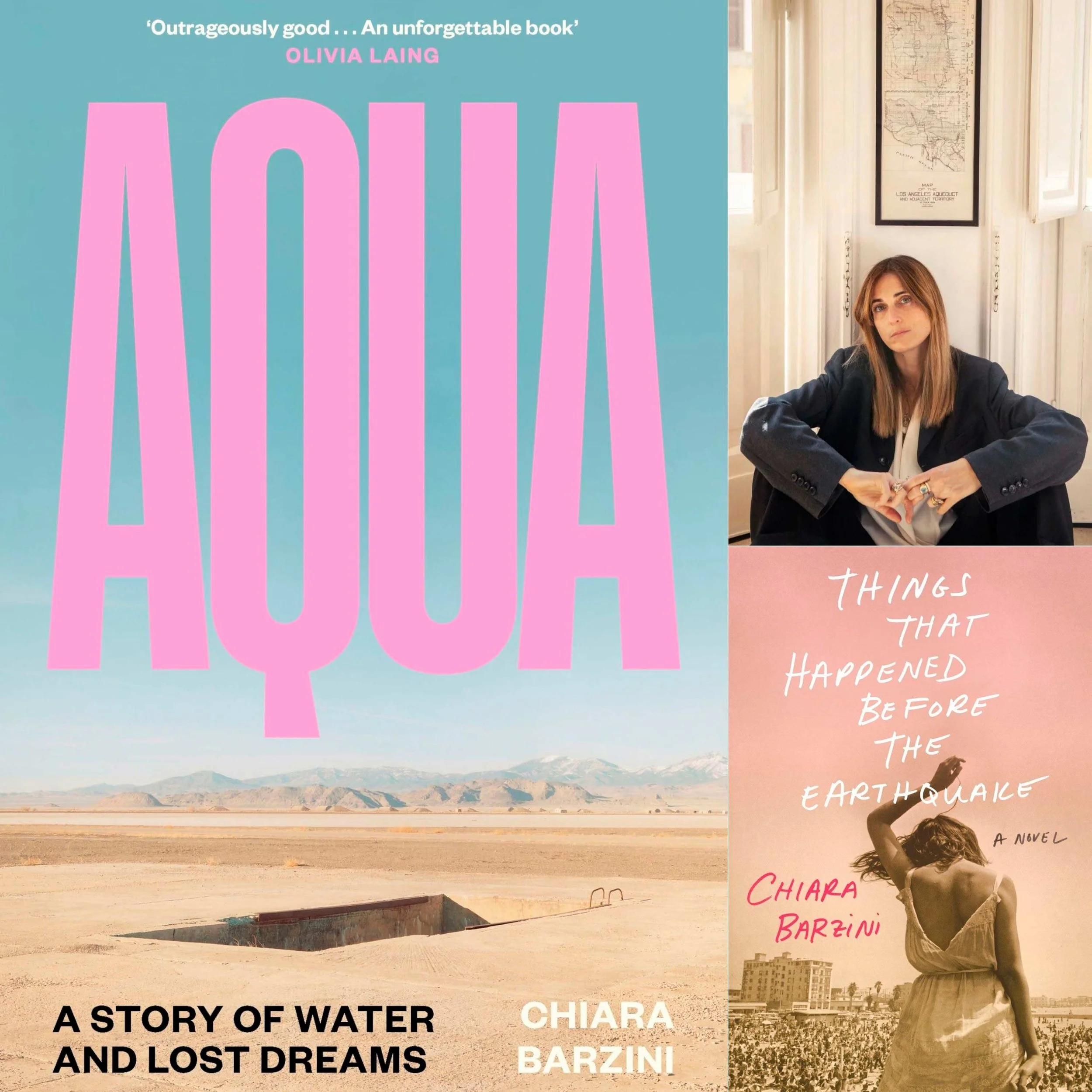
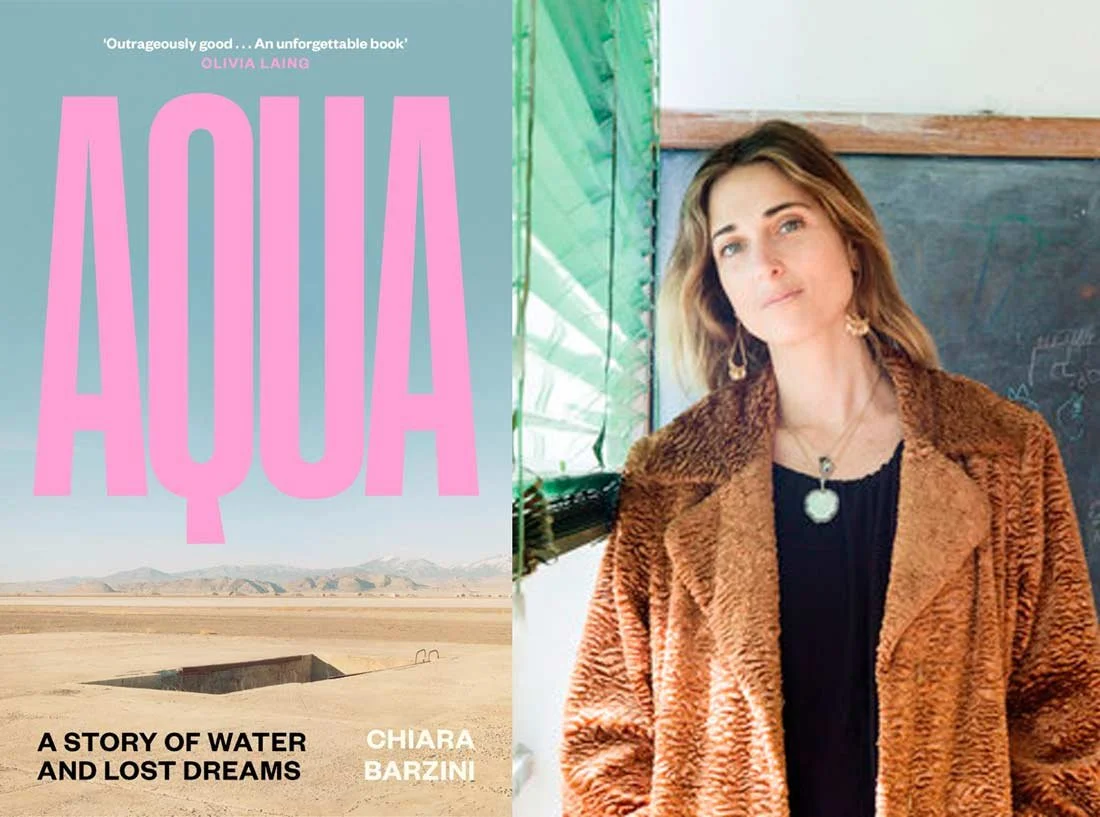
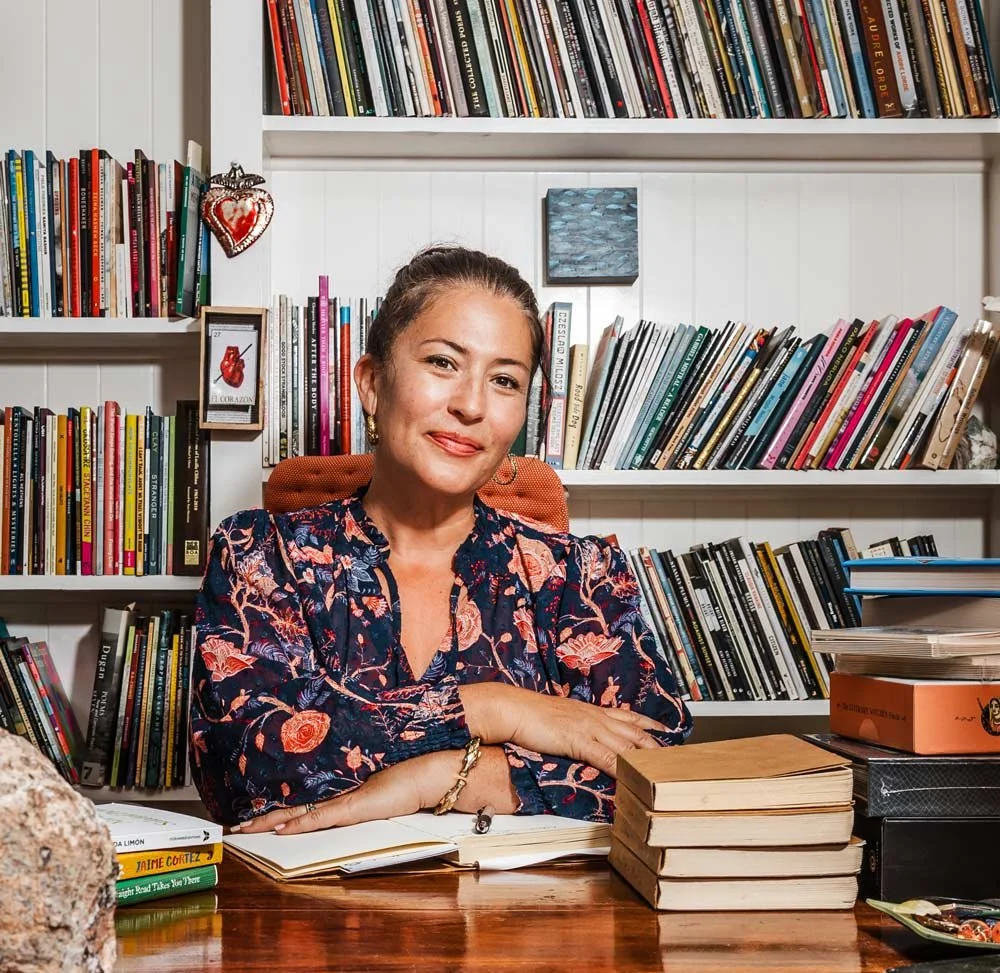
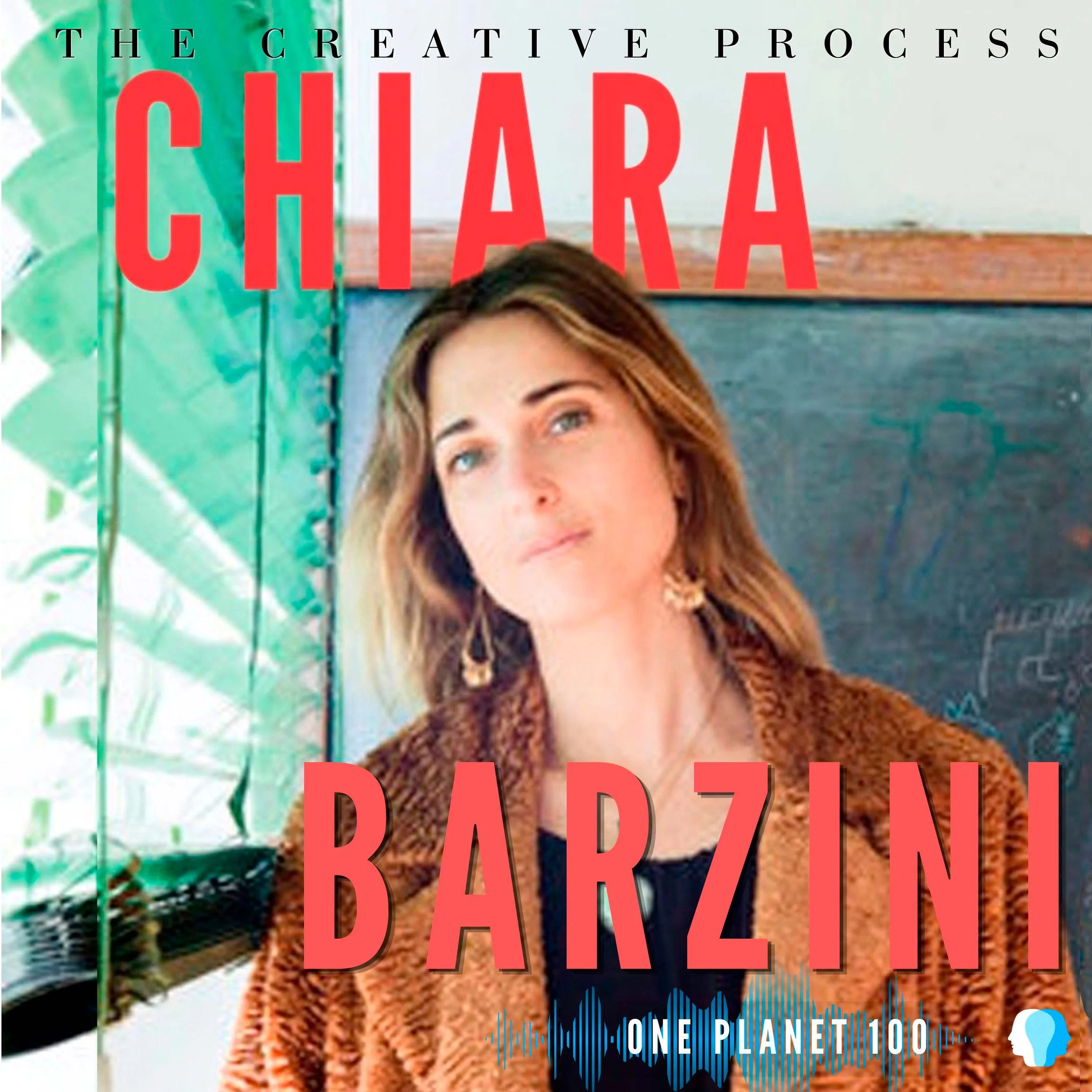
My guest today, Chiara Barzini, has spent her life navigating the literal and cultural fault lines between Italy and California. Today we will discuss her book, Aqua: A Story of Water and Lost Dreams, and her life as an artist living between two countries. In her acclaimed 2017 novel, Things That Happened Before the Earthquake, she wrote about arriving in the San Fernando Valley just weeks after a catastrophic natural disaster and the illusions of the '90s.
In Aqua, she examines nature, the California water crisis and the broken dreams of the Hollywood machine. We talk about family, film, art as an act of faith and our collective ecological coming of age, where the end of empire meets the end of abundance, and the consequences of hypercapitalism and colonialism. What does it mean to stare our illusions in the eye and find the courage to imagine a better future?
Chiara Barzini, welcome to The Creative Process and One Planet Podcast.
CHIARA BARZINI
Thank you, Mia. I'm really very honored to be here. I love your podcast.
THE CREATIVE PROCESS
Well, thank you. We want to dive right into Aqua, the theme. I love water. I'm so inspired by water. But in your life, there are rivers running through your life, and of course, in Aqua itself, the Tiber, Los Angeles River. Before we branch out to those, could we go back a little bit to the source, those people and places that formed you?Who is Chiara Barzini—mother, daughter, dreamer, writer and filmmaker? You're many things. Do you remember the young Chiara and what it was like to be her and experience the world for the first time?
CHIARA BARZINI
Yes, I was very lucky that I actually grew up very close to nature and close to water and close to a sort of rural part of Rome that today completely has been— But at the time there was a kind of Etruscan area not far from my house called the Park of Veio, which was very, very magical and very formative. Sorry, there's a Roman ambulance in the background.
THE CREATIVE PROCESS
So I have to say, kind of like the beginnings of your books. There's always a kind of crisis or disaster.
CHIARA BARZINI
There's always a crisis. There's constantly a crisis, absolutely. So I think that that kind of access to the city and the countryside merging into each other really was formative for the young Chiara, and always finding a way of paying attention to nature within urban contexts and vice versa.
And of course, I was so enthralled by these Etruscan stories that were so close to my house but from thousands of years earlier. So I was very curious about the sense of magic that permeated everything that they left behind. I think a sense of kinship towards lost civilizations and their incursions with contemporary nature and cities is definitely one of the most formative feelings that I can evoke from my childhood.
THE CREATIVE PROCESS
Yes, it's true. I think it's something that I can relate to. Talking about the extent of the Roman Empire. I'm looking at Roman ruins just across the street from me. the travels of the Romans, they have left these wonders. In our minds when we live in these older cities, we're living among the ruins. We're living with history.
It's something going to Los Angeles (maybe the newness isn't really new because it erased other cultures and other histories). But going to Los Angeles, which appears so new. The sense of an end of empire, which is really also at the heart of Aqua, is something maybe Americans can't hold in their mind. We are really at this stage where they are trying to understand it, and we see it's the cause of so much panic. There's a lot that your book explores. But I’d love to stay in the subject of family. You go back to what we love so much in your coming-of-age novel, Things That Happened Before the Earthquake, where it's a personal story. It's not a only story of some vast resource or diminishing resource. It's our relationship with it.
CHIARA BARZINI
Yeah. In terms of the Earthquake, I think that was sort of the moment when I realized that I had fallen in love with Los Angeles and all of its contradictions. You know, one of the greatest cities that is absolutely at the mercy of its own nature, that's definitely Los Angeles.

So when I was living there as a teenager in those early '90s years which inspired the memoir or the novel that's heavily memoiristic, I realized in hindsight what an impact that nature did have on my way of perceiving the city. But when you're a teenager, you're sort of stuck in that moment of survival, and you're not taking in all of the elements.
So high school was, in and of itself, such an adventure that I didn't really have time to absorb the rest of the story, and that was something that I had a privilege of doing much later in life as a kind of reckoning. And it was something that actually made me fall in love with the city all over again.
THE CREATIVE PROCESS
Yes, I mean, I don't have any great knowledge of Los Angeles. And we should say, when you talk about Los Angeles, it's really Los Angeles and environs. It's really what lies beyond, you know, this great expanse, you know, the romance of it through films or through writing, that is really my experience of it. It always seems so wonderful in films. It always seems so dramatic in books. And then there is also disappointment—
CHIARA BARZINI
Well, I think first of all that in order to have disillusion, you need to have illusion and I really want to sort of take a stand in the name of being a delusional person, you know? I do think illusions are necessary to our sense of creativity, and we need to fall in love with extreme projects, and we need to have ideas that are sometimes unsustainable.
We need to dream big in order to be creative and feel alive. So of course, that comes with a risk. Anytime the ego is involved, and illusions I think do have to do with ego and with a sense of asserting yourself in the world, you're putting yourself out there for various kinds of disappointments.
I think that with the first book, with the novel, I wasn't so much dealing with my own illusions and delusions as much as the ones that belonged to my parents when they moved to Los Angeles. And I had the advantage of being able to look at those from the point of view of someone who didn't really have anything at stake, you know?
I was the daughter that was taken onto an absurd trip in the early '90s and sort of eradicated from Rome and thrown into the San Fernando Valley during earthquakes and riots and such a thriving and crazy time for the city. But it wasn't my dream that was on the line, I was only a teenager and my dreams were still very murky at the time.
But I did have ideas of what I thought Los Angeles would be that were not met with exactly the sort of identical dreamscape that I had imagined. Of course, I grew up watching 90210 and Baywatch and having a European point of view about what the City of Angels was. But I was confronted with something very different.
Illusions that are a part of Aqua are larger illusions. They're illusions that have to do with my adult life. They're connected to nature and the presence or absence of water, the illusion that we can keep sustaining a city even though the water has run out.
And connecting those with larger illusions that have to do with film and creating projects that are my own but are also intrinsically of the city itself. Los Angeles is a dream city in many ways, and you kind of have to try and have your own dream without getting bruised too badly. Which I think, this is sort of the essence of this book about illusions and delusions mainly.
THE CREATIVE PROCESS
Yes, I love the way you do it, because you have to have a space for dreams, and also because not all of our dreams of abundance, we don't have to forget all of them. Now we're looking at a future of green hydrogen-powered flight using renewable energy. These are real plans that we can create in the world. So we can still pursue that life within reason. And you write about learning to live in the era of limitations.
Your first novel memoir had so many elements of your life dealing with that, a period in your life when you were young. You're just finding out about the world, and now, of course, you're a mother and thinking about all these questions about the future. Obviously, they are so much more charged for you about what kind of future we're giving the next generation. Have we really depleted all the groundwater and there's nothing left or not much left?
CHIARA BARZINI
Yeah. That's always on my mind in terms of being able to preserve a sense of innocence around childhood. I feel very bad and responsible for the children of our generation as parents because I feel like our anxiety is spilling over onto them in such a profound way.
Not just anxiety about the Earth and what is happening ecologically, but it's also a very strong political anxiety, and we're making them responsible very early on for some complex ideas that maybe they don't have time or they're not equipped to absorb them or integrate them as well as we'd like them to. So I think they feel very responsible and charged, and that does make me worry a little bit.
THE CREATIVE PROCESS
So one thing I thought about was the way you wove it. That was beautifully done. Because within your own family, something that you know about is a kind of wild or free life where you can pursue dreams that might not be realistic. But if you believe them—I can't remember the phrase you used, but where you feel like if you wish hard enough, you can get a mini pony.
And your father's dream of the Hollywood dream. And bringing his whole family along in this collective—I don't want to say delusion because actually those are the same people like Mulholland, for whatever he did, which it's important to mention, who has put his name all over Los Angeles and is responsible for stealing the water. You know, that could seem like a crazy dream, but if enough people come with you, then it's really no longer crazy. You just make this kind of magical thinking very real for us. And I was nostalgic for this time when we had more time.
CHIARA BARZINI
I mean, that's a theme obviously for all of us, the time when we had more time. Time is going so fast and there was still a sense of unbridled possibilities and innocence, I think, in our own youth, or a kind of innocence. And even capitalism hadn't shown its extremely ugly side in such a complete way yet.
In fact, it was still, especially a European looking onto the very first world of America, it still had an allure of endless possibilities. It was sexy. It was adventurous. It was pioneeristic. If we look at where capitalism is today, it's completely the opposite of that.
It has an element of bullying and of ferocity and of inhumaneness, which obviously already was very present in the '80s. But I think there was still a sense of mystery tied up into it, a sense of miraculous. We weren't exactly aware of what the machinery behind these dreams that were being created looked like and who the people involved in it were truly and how they were paying for it or what the kind of hidden truth behind the Wizard of Oz, I guess, in some way.
THE CREATIVE PROCESS
There's so much wisdom in that. I do return to that often because in our maturity, eventually we all have to look behind that curtain and meet our heroes or understand what we're dealing with.
CHIARA BARZINI
Looking behind the curtain is something that happens also with age and with wisdom and with your body changing and your needs changing and all of that. As life goes on, I think naturally it's just one reality check after another and one disillusion after another, definitely.
But I think there was also something where I felt embarrassed to show or to tell, to admit how much I was still clinging on to these old ideas of miracles, of enchantments, beloved or coveted objects appearing out of nowhere. The illusion was drastically peeled away. But it's also, I think you have to really look at it, and sometimes we do it very late in life. I feel like I should have woken up a little earlier, but you know, whenever you do wake up, it's just good to wake up…
SHOW FULL INTERVIEW (14:00+)▼
...Well, I've been so fascinated in talking with you. We skipped over the part where you actually share a passage from your book. And I think that was a good segue there, but I'm just going to finish on that to say it's not too late.
We all have a right to have our childhood where we don't have to think about those things. So be easy on yourself.
I thank you for that. Yeah, I think that's a really big theme also because when you do have a kind of awakening—I'm talking about a kind of awakening, not the awakening of any kind—but when you do, you have those moments where you see life, I guess, as it really is somehow.
And I think I was so hard on myself, and all of the people that I spoke to about it, especially with the women, they would always be like, "Well, be easy on yourself, you know? When you do know something that wasn't known earlier, it's still a big step whenever it is that you're taking it." So yes, I agree. I think we should be kinder to ourselves throughout the disillusionments.
Yes, but just on the ecological responsibility, because I think, and it's not just in the arts, but I know also your mother is a food writer. I mean, all these movements are about not consuming so much but creating community. So I always think that that is a low carbon footprint lifestyle when you're maybe you're using paper, but it's very economical in terms of the big picture of what destruction we could do to the planet. But we've been talking and talking. We want to hear the beautiful writing of Chiara.
All right. Well, I will read a little passage that I think tries to sort of hold in the two worlds. This is from the beginning of Aqua.
When water arrived in LA after 1913, it allowed producers to expand and create personal aquatic empires, swimming pools, lakes and tropical jungles that they used for film sets. Water let them make animal pictures and jungle pictures. There was so much of it in those years that producers could afford to create artificial lakes on their properties to save on film budgets.
The fake waters looked bigger because of the blue painted backgrounds that they put behind them, and suddenly Hollywood could stand in for Wyoming or Montana. Western movies were shot at home. Action scenes and exotic wilderness were staged in producers' backyards. Universal City, the place where I would experience my first break with the magic of innocence, was founded in 1915 by Carl Laemmle, who envisioned an entire city with 600 sets, 90 stages, a bank, a post office, a school and residential areas with streams and ponds.
William Selig Studios doubled as a public zoo, featuring elephants, exotic birds, monkeys, tigers and lions. Water gave the city the power to mount the spectacular and the exclusive, just as it did in Rome when in 46 BC Julius Caesar used the Aqua Alsietina to stage the first Naumachia, mock sea battle reenactments from past wars.
When we were in school in Rome, we read about these glorious demonstrations in our history books and dreamed about a time when water was diverted and flushed into the Colosseum and Circo Massimo. The battles were often bloodier than gladiatorial fights as they involved large numbers of fighters, and they were usually captured enemy slaves or criminals sentenced to death.
Sometimes they'd be spared if they put in a good performance, sort of like Hollywood actors. In Rome, ancient monuments sat nonchalantly in the middle of fields, rivers or crowded intersections of the city. Magnificent dead beasts made of travertine, tuff and bronze. But Los Angeles, to our childish eyes, seemed a new vanguard, a spirit with invisible roots, capable of surviving the shaking earth crust and the burning canyons.
Everything is new here, the smell of chlorine and preservatives, the bolts and screws in the buildings. The windows and doors seem ten times bigger than the ones we're used to. It never occurs to me that these sturdy pieces of infrastructure might one day run their course. Yet, in a not-so-distant future, they will appear fragile and vulnerable and transform into another version of the monolithic constructions we witnessed at home, discarded, forgotten and eventually brought back to life by tourists.
It's beautiful how you bring us back. I mean, you can see it so evidently now, but we might not have known it when we were very young children how film can be used to justify wars. In the beginning in your forward, you mention Gaza as well. You know, how stereotypes and biases and worse can be reinforced.
The story of dominance and justifying dominating or stealing water, stealing land. So many injustices can be turned into a fairytale. So when you watch some of those films again and you interrogate them with an adult eye, it becomes difficult sometimes.
Are there some films that you can't sit through now and you think, "Oh gosh, how did I absorb that? What did that do to my young, impressionable mind?"
Definitely Ben-Hur was sort of something that I was raised on, and this idea of what the Roman Empire was and what that entailed, and the human sacrifices that were sort of the daily bread of entertainment and spectacle, and the risks of war, and that attitude that you need to have as an empire of, well, there's going to be some consequences, you know, not everyone's going to be happy.
What was behind that was not something that I ever thought about. And then in terms of these jungle pictures or tropical films that I was looking into from early Hollywood era, that too, it was first of all obviously rendering exotic all of this idea of the jungle and that other place out there that everyone was sort of fearful of, but also what was behind that water that they were using.
What did allow for these places to thrive and become film sets? This kind of stolen water that nobody really thought about and everyone thought was just sort of like entertainment that fell from the sky.
So that brings us, of course, to the film Chinatown, which is to my memory, and obviously it's one of those themes that runs through your book. The first time I'd remembered I'd seen water as a really important subplot of you know, tragedy really. Tragedy. You got to interview screenwriter Robert Towne. How did that film come into your consciousness and awaken you to the issues at heart?
Well, I think that film plus the book City of Quartz were sort of like the welcome package of arriving in LA, and that was what all of my parents' friends were like, "You have to watch Chinatown and you have to read City of Quartz." We had already seen Chinatown before going to LA. Of course, I didn't understand anything about it. I just remembered there's a situation regarding incest here, and I think that was the only thing I really remembered or really sort of that woke me up a little bit.
Obviously, I re-watched it so many times afterwards, and after really knowing the story about how the water was stolen and the corruption that went behind it and the real estate market, the entire film of Chinatown appeared to me as a miracle, you know, in terms of the layers that you feel are there when you're watching them, you know, even just being ignorant of the history of Los Angeles.
But when projects like that are so well-researched that even if you don't know the facts, you can feel them. You can understand there's layers behind it, and I think that's what makes the film so brilliant is that there's something in the air of that film, in the layers, in the research that is present but never overbearing. And then of course on top of that, you have this phenomenal acting and this portrait of the city which I think is unique.
And meeting Robert Towne almost at the end of his life to talk about that film was such a privilege, and I somehow thought maybe he's going to say something about the corruption of the city or something sort of negative about the stolen water.
But I think he was very wise. He said you can't undo that. You can't unscrew something that's already been screwed in like that, and you have to really look at all of the ways in which this way of imposing power did bring an effect. It did bring the city as we know it today, and the stolen water had a use to it.
So it was very touching, I think, because he had obviously the air of a man who had lived a long and wise and adventurous life and he was still fighting. He was still fighting to just tell the truth and look at the truth, and he wasn't cynical, but he was definitely straightforward, which I really appreciated when I had the chance to meet him.
Yes, you know, it's so interesting because that dealt with on so many levels this loss of innocence too, or the metaphor of what by extension or our forebearers. In stealing the water, you steal the land, you take what doesn't belong to you, and you take that innocence, the pure nature.
So we don't always think about that. Now, as you used that metaphor looking behind the curtain, discuss some of those conversations, those histories that you uncovered that we forget about in our belief in abundance and unlimited water, and what were those stories you uncovered?
Yeah, so in a book about water, the main stories that have come up that I wasn't expecting to discover in such a dense way were stories about theft, obviously, and nature being sort of dried up in places that I didn't know about. So when I embarked upon this journey to follow the aqueduct, I didn't think I would find some of these stories that I did find.
And to find out what was behind it, where the water went, who owned it, what they did with it became very much part of what I was sort of becoming obsessed with. And of course, on a trip to discover primordial waters, I was actually faced with two dry lakes.
The dying shores of the Salton Sea was the first one, and then the dried-up Owens Lake. So in my imagination, I never thought that that's what it would look like, the Owens Lake. There's still a glimmer of blue there, so when you see it from the side of the road, you can sort of trick yourself into thinking that the water is still there.
But as you start to get closer, you understand that glimmer is almost a kind of mirage. It's like an illusion. There's basically just a humid lake bed reflecting the colors of the sky. So originally, the lake was in the Owens Valley. It was the Owens Lake, and that's how I had imagined it as it was originally when it was discovered, the way Mulholland saw it.
And then I realized an actual entire alpine-looking lake was stolen and redirected towards the city, and that image kind of stayed with me. And seeing the lake as it is now really sort of sedimented the whole image and the whole idea I had about the beginning of Los Angeles and how the water theft occurred.
So it was a real visual impact and a very unexpected one, I have to say. So yes, of course, I thought about this entire lake that was sort of dragged and carried away. But I also thought about all the ways in which water is being inappropriately used today in ways that I didn't even suspect about. And when I started off writing the book, it was just a little bit before the AI boom, and I was shocked to find out what all of the factories were consuming, and honestly, had no idea at the time. No one was really into the world of artificial intelligence yet, so it was really shocking, you know? And then water as a weapon, as a sort of last source of power that we have in the world.
Water in Gaza and stopping people from having access to water, you know, it just suddenly dawned upon me all the ways in which blocking access to water was a form of power. And that conversation was one that kind of snowballed into a larger and larger conversation. And then it was difficult to not think about that all the time, basically.
At some point, I had to sort of put a cap on it and stop thinking about it in such an obsessive way.
And what becomes even more complicated is that because of AI, we've had a lot of conversations about it and of course the environment. They always use it to say, "Oh, we'll be able to cure cancer, we'll be able to do this." And yes, that's a possibility, but then it creates all these problems in society.
And then the other good side of it is what I've heard from very knowledgeable people is that it actually can be used to scale up regenerative agriculture. So I'm not saying I'm pro-AI. I mean, that's wonderful. I'm pro-regenerative agriculture. That will make these desert spaces or these dead soils, because we've made the soils dead, thrive again through the old ways of farming.
And you know this I'm sure through your mother writing and presenting about food, and we have to go back to the old ways. So then it becomes very complicated because you want an AI that can help us scale up these, but you don't want it to rob the water that we also need for the regenerative agriculture. So just a very fine line of finding the wise usages of a very powerful—
Yes. I don't think that we have a solution right now, but I think it's completely in the conversation now in ways that it wasn't before. Even obviously when the LA fires happened, this whole talk about water banks suddenly emerged. Who had ever thought that water banks existed?
Did we know about them? Now, the term water bankruptcy is being used today, which is something that I also had never thought about. The fact that the world has sort of tipping the scale into the red zone of water rather than the green zone of water, so we're actually in debt.
We're not... There's not enough water to sustain the world as it is today. So these are things that we don't have instant solutions to. There are so many different groups of people thinking about them in different ways, but they are very much part of the conversation. And that is new.
It's newer at least, and so it's worth saying that, for better or worse, this entire boom of AI technology has brought water to the forefront in ways that can also be helpful.
Well, exactly. At least we'll be more mindful, I think, you know, as much as we accelerate our usage as though we didn't have these issues with the climate crisis and our biodiversity loss already. You know, just another little advancement. We're very good at inventing technologies but not really great at using them for the right purposes.
So there's this counter-cultural story in Aqua. There's all these stories that I didn't expect to find in a book on the surface about water, because of that lost dreams. These are people, I would say sometimes they're misfits or they're people who don't want to live, you know, within the usual track. Just tell us about some of these people... They're looking for different kinds of salvation or freedom.
Well, I think when you're writing about California, it's very hard not to bump into misfits, you know? I think the history of California characters is one of outlaws and misfits and pioneers and very badly behaved people. So I was obviously curious and expecting to encounter some of them along the way.
So, a big community that I was in touch with while I was on the road was the community around the Salton Sea in the desert south of Los Angeles and Bombay Beach. The Bombay Beach Biennale is a sort of art fair that happens on the shores of what is very much a dying lake, and it's an art fair that happens on the edge of a kind of apocalyptic scenario.
And the people that are involved with it mainly, the founder, Tao Ruspoli, who I obviously have things in common with because we're both Italians and had strangely relocated to California and during unsuspectable times. He had an idea of recreating on the shores of a dying lake the same sense of ruin that he had perceived in ancient Rome.
And you know, it was really interesting when we walked along the shores and felt these pebbles under our feet and you could think, I'm really walking along on this sandy California morning. This lake is a little awkward, but hey. And he promptly told me, "It's not sand. It's actually fish bones." So that connection with death was such a constant during the entire trip and during the entire research of the trip that it seemed like it was a concept I couldn't get away from. It was like dead fish, dead people, dead misfits.
So it was sort of like a long mourning of something that came from another era that was asking to be mourned before we could move on to the next phase of life. That's what it felt like.
And that brings us back to Rome and the Etruscan rituals that help us feel comfortable with death. I suppose there's a good and a bad or an abrupt idea of death that doesn't allow for a continuation, and one that's respectful and lives within nature and the cycle of life.
And I thought all these different adventures you go with your friends. We should say this is also a story of motherhood, a story of friendship.
But I thought also you're very much your father's daughter, your mother's daughter, because this kind of like seeking the spiritual. I don't know if you saw it exactly that way, but I... There is one passage—
"Our father takes a more spiritual approach to illusions. He teaches us about meditation and lucid dreaming and tells us not to be scared if we ever have out-of-body experiences. 'Projecting your consciousness beyond your physical boundaries,' he says, 'is a great way of getting important information from otherworldly dimensions.'"
Sorry. It would be better if you'd read your own writing.
No, no. Actually, I liked hearing it with your intonation.
So, it doesn't surprise me that you're then seeking with other seekers, people who are looking for something. I don't know what you felt about all the different people that you encountered?
Well, yes. Like you were saying, we do have such a complicated relationship with death today, and this trip was really liberating in that sense.
And I always go back to the Etruscans because they're the masters of how to die, how to die happily. You know, the place where they would die really had such a sense of the passage, and that was so terrifying, I think, in Western culture. We're terrified of diseases, we're terrified of aging, we're terrified of ailments and it has turned us all into such neurotics.
And this whole trip was really about listening to what was happening in that land before all this commodification of the land. And of course, the natives that lived, for example, on the shores of the ancient incarnation of the Salton Sea, were really smart at taking advantage of what was happening in the lake in the seasons when the lake was accessible, knowing when the flooding season would happen, and retreating up in the mountains and having a more natural approach to the cycles of life.
And a lot of the people I met along this trip, I met this sort of mystical woman who sees the Virgin Mary in the desert of California City every first Thursday of the month. And there's hundreds of people that gather in this middle of nowhere in the desert to listen to her conversations with the Virgin Mary.
And you know, she's a woman who walked from Mexico to the United States. She was illiterate. Her name is Sister Paula.She doesn't have an eye and completely considers herself to be such a lucky person because she gets to talk to the Virgin Mary one day of the month and to be able to communicate with the people around her.
So I feel like in these strange desert places, people just have a way of being in touch with these cycles. Even the scarier parts about the cycles.
The brushing with death and feeling the whisper of death on your neck. But somehow the desert makes it more manageable. The desert or nature or whatever it is that's bringing you back to that sense of this is part of life, you know?Pain is part of life and mourning is part of life.
And I was very grateful to have all these meetings along the way and to kind of be reminded and to be a little more humble. Christopher Isherwood in his beautiful diaries, he wrote about the experience of going out to the desert so you can try to play out all of your personal drama, kind of superimpose it on the landscape and then being upset that it doesn't work.
That your own neurosis, your own trying to create a story, carve out your own story into the desert will always be less strong than the desert itself. So I think it's also the sense of surrendering to a higher power and to inevitable loss and inevitable change that was very helpful, if painful in certain moments along the trip of this book.
So you also address grief, those you have lost. I do wonder, I mean, feels like from your writing and from your different explorations of art, that you maybe have a few different visions of what happens to us after, or what lies beyond.
Mm-hmm. Yeah, well as you read beautifully, I do come from a family that has a bit of a confusing sense of the spirit. You know, my father taught me transcendental meditation, but then I was also sent to a school of nuns in kindergarten, and the nuns were scandalized that I wasn't baptized, so then my parents were like, "Well, let's just baptize you anyway."
And then when I said, "What happens if I don't get baptized?" They said, "Well, you go to hell." So I ended up getting baptized when I was a child just because I was so afraid of this idea of hell that suddenly entered my life. The entire sort of spirit realm is a bit confusing. But I do believe and feel that there are connections to the other world and to people that want to get in touch with us from the other world and teach us things.
So whatever incarnation or physical presence they decide to manifest themselves with, I'm always trying to listen to that.
Well, I think it's very much related to we don't really know where ideas come from, particularly our creative ideas. The things that when you feel so in tune with one's own imagination, those around you or the land, the earth itself, so I believe in earth. But we don't know who's whispering in our ears, and some people say—"Oh, that's those that went before." I believe it's all kind of true, and I don't think it really matters because you notice the different spiritual traditions are all kind of telling the same story. Like in a giant writer's room, you know? And sometimes they argue, but they all have things they're pointing out, and so there's overlapping stories. The writers all think their character is the main character but they're telling the same story and have to get the episode out.
I love that idea of the writer's room.
I don't know in what faiths, the faith of art or believing in the Earth that you raise your children, Sebastiano and Anita?
Yes. Wow, thank you. You've really immersed yourself.
Do you leave the belief open to them or say imagine what you will?
I leave the belief quite open, but I think that everyone finds their own access to their spiritual realm. And I do try to work as a passageway for whatever it is that they want to see or believe in. What I do is suggest the presence of a spirit on Earth and in situations.
You know, they have a way of joking about their grandfather on their father's side who died and never got to meet them, but they seem to sense his presence every once in a while. He was like a kind of crazy gambler, so they're both very lucky with card games, and at country fairs, they will always win the top prize of whatever game they're playing.
So they feel like their grandfather is looking over them. So again, it's a bit of a hodgepodge, and there's the sacred and the profane mixing all the time, which I think anyway makes life more interesting.
You know, it's interesting because you write about the wild animals, mountain lions and all these other creatures, the synanthropes who are all on the edge and within the city limits of Los Angeles. But it's interesting about instincts because they're related to creativity, gambling and also games of risk and survival. The performers have to know how to land that role. It can be like a life or death thing if you get the laugh or you don't. You get the performance or you don't. What did you get from your different family members, collaborators that honed those instincts that can't always be written down?
Yes, I think it's something that you feel instinctively. And I think it also has to do with how you are in the world, when you desire something, what are you willing to do to get it?
What are you willing to explore within yourself? What darker corners, what spiritual parts you didn't even know you had. So many times, you know, I've seen people pray on airplanes during very complicated moments and heard them say afterwards, "I don't even believe in God, but I was praying." So I think there's something that has to do with how we show up in the battlefield that is connected to our connection to, you know, the spiritual realm. And in terms of work, getting the role or the movie or getting the desired object that we're always chasing after.
I do feel that there is a connection to the purity of the intention. You know, if you have a real sense about why something should go in a certain way that is not corrupted by all these other ideas, oftentimes it just happens in a very simple way.
And when we do have all these ideas connected to why we should have something and why we belong to it and the ego gets all muddled and involved, then the prize moves further and further from our sight.
Yes. That tuning in to what's the pure melody, and it can be hard. I don't know about getting the film projects which have so many voices and still keeping that pure melody in your mind and that initial vision. You're a translator. Now, sometimes you're working obviously with somebody else's text, so you have to keep it true to their text. But how do you translate when you have an image or a concept in any of your books, your short story collections, your films. We should say you have stories and films on a lot of different themes, but I notice there's often a strong driving female character who is finding out about herself.
How do you get that from that glimmer, that ember to something real in the world? Because it can be so vague. You're translating your imagination to yourself in a way?
Well, translation in general is something that I struggle with also linguistically because I'm always translating from Italian to English and from English to Italian, and it's an exercise, I think. It's a muscle that you build over time. Samanta Schweblin calls the first draft of everything we write the necessary evil.
And I think that's so true. It's hard work. It looks bad. It feels bad. It has nothing to do with that first glimmer image that you had in your mind that seemed like such a brilliant idea. But after all that pain, which I think equates to the pain of incarnation, of birthing, of creating the nails and creating the organs and creating the hair.
You really do arrive onto the other side and the necessary evil is behind you and you can see traces of that initial image that you had. Sometimes it corresponds, sometimes it doesn't. David Lynch had a beautiful meditation on creativity, and he would always say whenever you feel like you've walked too far from that initial image, that initial spark that made you decide to write the film or shoot it or take the photo, always ask that very idea that you had if she's still there. Am I doing this correctly? Can you see me? Oftentimes that's the best way to know if you're on the right track, I think.
You've painted so vividly your family. Not just in Aqua, but I feel like I know your family. I feel like I've been at your table. I feel I understand that. But now that you're a mother, I mean, you have wonderful honesty throughout the book. But you say that, "A writer divides the world into two categories: people who thrive after having children and real people."
I think that people, when they experience these books, feel like, ah, that's the kind of just wild enough, just free enough. It frees our imagination. What is your philosophy of parenting? What did you discover about yourself?
Well, first of all, it's very hard to be a parent these days because so much doubt is instilled in us, and we're constantly trying to figure out if we're putting someone in danger, if we're not surveilling them enough, all of these new ideas of parenthood that are suddenly out in the world that none of us ever thought about. And a lot of them have to do with social media and cell phones and pornography and access to whatever. So I think that I don't know if I'm doing a good job. I think sometimes I can be a little rigid in terms of rules around technology. But I really wanted to let them experience even just like a crumb of that freedom that we had as an older generation that we were talking about earlier. And I love to see them thrive in that sense of not knowing where the day will take you and exploring that. I'm constantly bitching about not having enough time to do my own work and not getting to find my voice because they're always interrupting me.
But at the same time, I also really enjoy being able to look at the world from their eyes and to try to pass on something that will be beneficial to them and excite them and inspire them about life. You know, it's such a hard balance. But I try to let them have a strong connection to nature whenever I can. I want them to travel and see other parts of the world and see how they react to different people and different histories and that's it. I don't know if I'm doing a good job, but I'm trying.
I'm also trying not to do a job at all. Not to always think of this parenting thing as a job that you have to do because otherwise it gets very anguishing.
They want to see you happy. And it's actually very wonderful in your book because I feel like they're a character and you try to bring them along maybe on book tours. Maybe it's not always the ideal.
Oof, my God.
I think they appreciate it. In hindsight, you've given them adventures, and that's what I think you have appreciated that too. Because you can live so afraid, and this will go back to the AI, the questions where we ask a machine or a bot that you forget yourself to live for yourself. So that's the best gift, I feel, that gives them courage to explore the world for themselves and question things. So I think you don't have to be perfect, but as long as you protect them and you show them the courage to be who they are, that they can handle anything.
And so I think it's a very positive message for mothers but for everyone, not to be afraid. Anyway, I'm speaking too much, and Virginia, who is a younger generation than us, has some questions.
I am also extremely uncertain and in perpetual doubt, so I don't know if that's at all helpful. And I know my mother also struggles. Yeah, I'm living in a very crazy world.
We are in a state, all of us. We are all alive in a crazy world, and there's really no remedy. So I think we're just kind of stumbling around.
Right. It does feel that way. So I do have a couple of questions, and I kind of want to start with one that really has to do with this image that you described while visiting the lake at the Biennale and feeling as though you were walking on the edge of, I think you said, an apocalyptic landscape.
That image was very striking, and it also reminded me of the last stanza in "The Waste Land" in T.S. Eliot's poem where the speaker sits on the shore with the arid plain behind him and says that he's gathering fragments of poetry to shore against his ruin.
It's this beautiful line, and it made me wonder how you see writing and language on this edge of the apocalypse.
Well, that's a beautiful question. And I love that you mentioned "The Waste Land", and I think that this connection between waste and language and waste and poetry is such a great cure. When we know that we can go back to language, when we know that we can use language not just to make sense out of ruins, because it's always about some form of ruin, our ruined childhood, our ruined adolescence, the ruins of places we knew, the ruins of war, the ruins of dying children and desperation.
I think the question for writers is always the same. Is this helpful to anyone? Is this going to be useful? And the answer is always absolutely yes. So poetry and language and creating art on the edge of a place where nobody even wants to live.
I do think that ruins and poetry go hand in hand. And I think that T.S. Eliot was sort of lingering in that as well.
I can definitely see some T.S. Eliot Salton Sea connection. I'd love to see that photo.
Absolutely. I mean, when you were describing it, it felt so in that register. And I have an additional question about language, it was interesting to me when I noticed that a lot of your screenwriting is in Italian and most of your literary work is in English.
It struck me as curious because I guess English is like the language of Hollywood, right? So I was just wondering if there's something about this reverse or this choice that reflects your relationship to the two places.
I think it has to do with maybe geography and personal history. I think I write fiction in English because that's the place where I found my writer's voice. You know, I lived in the United States from 15 to about 30, so very formative years. It's high school, it's university, it's trying out your first stories. And then I wrote my first script when I moved back to Italy, actually. I got offered a very cheesy romantic comedy and another script followed after that.
So I think it was that started to happen while I was living here, and the jobs were being offered to me while I was living here, so it just kind of segued in that direction. So I think it's sort of like how things unfolded, and that's it.
So I don't know if you've seen it, but Christopher Nolan's recent adaptation of The Odyssey is another point of intersection between Hollywood and the ancient Mediterranean. With that in mind, I was wondering, what do you make of this choice to revisit such a foundational work of the Greco-Roman literary tradition?
Well, you know, there's so much complaining from all of the Mediterraneans. Polyphemus is not being described. And the famous scene where he says, "Nessuno," you know, "No, my name is nobody," and they didn't use that in the movie, and what can I say? It's a huge success, and that makes me so excited. You know? Of course, it's a revisitation. Of course, it's Hollywood. Of course, there's inaccuracies. But I'm seriously not rigid about it at all.
And in fact, I think what's great about The Odyssey is that it has this wonderful sense of storytelling and wonderful sense of going on an adventure with a protagonist, and really being sort of wide-eyed around the world and having a loss of innocence and encountering all these challenges along the way, and seduction and war. So why not? Why not look at that right now? Why not go back to storytelling and being attached to the outcome of a hero's journey? I'm all for it. No problems with The Odyssey adaptation on my end.
Yeah, me too, because anything that brings people back to literature, I mean, as long as it's not disrespectful. But the spectacle is also real artistry. So people can complain but it's a collective delusion.
It's a collective delusion. Yes!
It's a beautiful madness.
**Interlude:** Virginia Moscetti (PhD Student in Philosophy at Northwestern University) ▼ CLICK TO READ
Reflecting on the connections between art, water, and ruin, I found myself constantly returning to Chiara Barzini’s description of the Salton Sea at Bombay Beach. The lake, like many across the world, sits at the center of a severe ecological crisis. It is also, somewhat improbably, the site of the Bombay Beach Biennale, an annual celebration of art, music, and philosophy.
For a species contending with the possibility of its own extinction, the doubleness of this site – straddling beauty and disaster – feels strangely appropriate. And not just in the atmospheric sense of zeitgeist. Rather, in recent times, the doubleness has taken shape materially through ecological developments across the globe. In Turkey ,for instance, the climate-change induced recession of lakes has exposed archeological sites submerged for centuries; likewise, droughts across Spain, Italy, and Greece sent artifacts, once only accessible with scuba equipment, bubbling to the surface. Everywhere we turn, we are confronted with a landscape shifting ambivalently between destruction and rebirth; between graveyard and renaissance. Even our ruins! Just as their emergence spells planetary disaster, so does their renewed accessibility promise new possibilities for archaeological research, as well as for human creative expression more broadly. Michelangelo developed his characteristic style in part by drawing on the remains of antiquity. Who’s to say we might not do the same?
Still, there is something slightly absurd and Sisyphus-like about mustering the will to make art at the edge of apocalypse – while the rock seems to be already rolling back down the hill. But, if Camus taught us anything, then we know that this is hardly sufficient reason to abandon the enterprise altogether. The arts need not be crippled by that sense of insurmountable futility so deeply entrenched in the psychology of our present moment. Even in the face of destruction, Art should be allowed to have a future. And it is partly this, I think, that Barzini’s invocations of water throughout “Aqua” exemplify.
As Barzini mentions, water destroys, certainly, but destruction is only one part of its activity. Water dissolves, transports, deposits, reshapes. It takes existing forms apart and reorganizes their constituent matter elsewhere. Its generative capacity therefore has very little to do with preservation in the strict sense. What water preserves, it often preserves by altering; what it returns, it returns under changed conditions.
In this sense, Barzini’s descriptions of water model a form of creative activity in which loss and destruction do not exhaust the meaning of what survives. Ruin produces fragments; but art alters the relations among them. And, in so altering, it allows us to build new ways of relating to our past; to narrate alternate histories. To imagine possible worlds radically distinct from our own.
Although art cannot reverse destruction, it can resist the assumption that destruction determines in advance what the ruins of the past are allowed to become. We need not anticipate the advent of apocalypse by relegating artistic expression to the sphere of funeral rites. Not when art consists precisely in making something new from what remains.
And now back to the interview.
So now we have some sense memory questions. Tell us about some of those early experiences of beauty when you experienced wonder in the world. Whether it's nature or in art or in play or make-believe, what were those times that made you think, "Oh, this is a wonderful life, I'm glad to be a part of it"?
Obviously, nature was the first sort of portal into understanding that it's a wonderful life. It's a bigger life than I could ever have imagined. Ruins among nature, that's very much an obsession of mine to see the presence of humans in places that seem wild or unlikely. I wrote about this incredible aqueduct that was flung in a field surrounded by trees almost inaccessible, and to have that sense of discovery of something so grandiose in the middle of a wild torrent was such a revelation.
And my childhood was filled with that because ancient Roman ruins were everywhere, and also sometimes in the most unexpected places. I think that excitement when you're reading a book that you feel is speaking directly to you, and you feel that sense of connection with an author. I remember the first time I read Elsa Morante's Arthur's Island. You have that sense that you feel seen by someone and you feel less lonely.
So that's a feeling that I really love to have and enjoy. I also love certain smells. I love the smells of, I don't know, like a high school boyfriend's clean laundry. You know, that sense of safety and security of someone that's being taken care of by someone else.
So I think a mix that I crave. It's like adventure and wilderness and really desire for safety for the clean laundry, the lights that are turned on in a house that doesn't belong to you. Bookstores that call out to you when you're walking on a sidewalk, these little feelings that suddenly make you feel like you want to be part of the world and you don't want to run away from it.
It's interesting to know what scents or sounds or sights they are for greater Los Angeles and Rome or Italy broadly, because they are obviously different ones that when you're away from them call you back immediately.
Well, the funny one about Los Angeles is it's a mix of the ocean breeze, smog and the smell of fried poultry. The smell of fast food. When I moved back to Italy, there wasn't as much fast food as there is now. But I remember going by the one drive-through McDonald's that was here at the time and feeling, "Oh my God, it's home," you know? So it's so strange what you begin to associate with a sense of home, and Los Angeles is also the sound of helicopters in the sky or of airplanes going over the ocean.
It's that kind of echoey jet sound that feels really fast but also very chill at the same time because there's something about an airplane going over the ocean on a sunny day that makes even the airplane seem calmer. That's very much a sound, a feeling that I associate with Los Angeles.
And of course the light, you know? You never get enough of that golden light. It's so... Oh, you just want to bathe in it. And it lasts so long, that moment. You feel like you want to just protract it forever. And Rome has a similar light to Los Angeles, which is also why it never feels like you're too far away. I love the light here. I love the way that it looks over the Tiber at the end of the day.
There's those moments when you're just crossing a bridge and you just look out and it's so awe-inspiring and you see Castel Sant'Angelo or St. Peter's in the distance, and some part of you just feels like you're so blessed to be living in the Eternal City. And then quickly you prove yourself wrong because some terrible thing happens on the street and someone screams at you in the fits of road rage. But I do love the light here. I think it's a very holy, sacred light.
It's funny, we can forget about it. And we were just talking there because of the omnipresence of AI and losing touch with traditions or ways of knowing. We were talking about protecting the right to recycle and repair and all the traditions and food. You mentioned fried chicken. For Italy, I imagine there are better recipes. What were those ones that were passed on to you that give you that warm feeling?
Well, the main recipes are around pasta that I, of course, love. I love carbonara, which is, you know, pasta with egg sauce and pig cheek guanciale, my favorite. And amatriciana as well. And actually I think I might have said something terrible. Actually carbonara might not be with pig cheek, it might be some other...
But anyway, it's some piggy thing that makes it, that turns very crunchy and really blends well with the eggs. I also love roasts, and I love the time that it takes to roast some meat. My mother taught me the pig shoulder roasted in milk, which is a recipe that I really love.
It makes the meat really, really tender. And I like recipes that take time but that become... The food turns tastier and tastier as time goes by basically. So I love a good roast.
I think now your current project, you're also writing about food now. Food tied with culture and the abattoir?
Well, I am, yes. The story of the Roman abattoir is what I'm working on now. And you know, I'm writing about Rome in the '50s, and once you get into understanding what the abattoir was like, the mattatoio in Testaccio, you really stop thinking about animals as food, of course, because it was such an incredible industry, but it was also pretty much like an, almost like a concentration camp for animals.
So the more research I do into it, the more difficult it is to try and look at it as, well, it was just part of Rome's industry at the time. But what I am curious about and what's really coming to light from all the research is the relationship between all of these animals and the city. And it was a time in the city when animals were still roaming free. There were sheep herds on the side of the street and bulls running out of the confines of the abattoir. And so there was this element of a sort of unhinged animal life that has become more of what I've been turning to as opposed to the sort of food part of it.
But of course, there's a lot of also recipes that stemmed out of the abattoir because that was also, it was a very poor time for Rome. So a lot of the little trattoria restaurants close by started using whatever leftover meat would arrive from the abattoir and created really genius meals and recipes out of those.
So I'm also obviously exploring those. I'm actually meeting with a guy whose father was one of the former butchers from the abattoir this week. So it's a strange mix of being horrified and also being completely enthralled.
It's interesting. I think that it's very shameful the way that we have become numb. The production of food was something that we all knew about. I don't even like to call it the production of food. 100, 150 years ago, most of our lives touched a farm or the production of food in some way. Now we don't seem to know. I think it causes all the problems where we abuse, whether it's our water, our land, because we just don't know. It's out of sight, out of mind. Having some people in my family and my husband who grew up on farms. So they saw that way of life.
Oh, really? Oh, wow.
They have ingrained it into me, that respect. It would be wonderful if that was part of all of our educations. So how do you educate your children in this? Because if you're a shepherd or farmer, they become your relations. You can't live among non-human animals and not feel that they're not sentient if you're always living among them.
Absolutely. Absolutely. Oh, I completely agree. We would have fewer problems than what we face ecologically, of course.
Who were those meaningful animals in your growing up? I know you wrote about wanting a pony and being moved by animals... So if you could be reborn as an animal or that you feel a kinship with. Sometimes people give really detailed answers. Someone told me they want to be reborn as a creek. So you can be free in your answer.
Oh, that's so fun. Well, I have a very soft spot, an incredibly soft spot for donkeys. Mules, donkeys, I adore them. They have such sorrowful eyes, but they're also so intelligent and they're so stoic. And I have a big love for one of the Aeolian Islands, the smallest one called Alicudi, where the donkeys are the ones doing all the work of going up and down these very torturous staircases.
There are no cars there. It's just a long staircase up and down the mountain. So I kind of grew up observing these animals going up and down. And really, even in writing this book, I realized so much of the aqueduct was built thanks to the work of mules and donkeys. In fact, I can't remember the name of this artist, Laura Bon, I think, did a performance. She took these 100 mules and had them walk along the aqueduct to sort of celebrate their presence and their work that basically helped build the city of Los Angeles.
So a big fan of mules and donkeys, and small donkeys and baby donkeys.
Yes, they're less intimidating than the full-grown horse.
Yeah, and they have that bray. I mean, that bray is so desperate and it tells you so much. It's like a release of everything that they held on to during the day. So when I hear a donkey bray, I always feel at home somehow.
It's beautiful how it brings us back to childhood. And I think in all the arts, but certainly in the performing arts, in song and music and even language, that they say that perhaps the origins of our human language came in imitation of animals of some kind, whether it's birds or whatever. So it is interesting how we're always trying to get back to nature through our arts, like in a non-perfect way.
It's really true what you were saying earlier. You know, it's animals. If you're really among them and if you observe them, you can't help but understand that they are part of this world in the same way that we are, and they love and hate the same things that we do.
I remember one morning on the island of Alicudi, I remember seeing this rabbit at dawn, looking at the sun as it was coming out of the island, you know, up from the sea. His head was tilted and he was actually just checking it out, you know? And I could tell that he was really...
The rabbit was enjoying the sight, this beauty. And I was right behind him, and we were just sort of both looking at the sun coming out of the sea. And I think that really tells us we're really all in it together at this moment in time.
Yes, that we're there, that we saw the same thing. We don't get enough of that these days...
Closing Thoughts: The Memory Museum (01:07)
So you chart the different kinds of love, the love for parents, the love for children, the love for nature. Through the writing of these books, your films and through life itself, how have your ideas of love grown?
That's a beautiful question. I think with age, love turns into compassion a little bit more, which the kind of rebellious teenager living inside of me is very bored by. This idea that we have to have compassion, and love should be sexy, and it should be a riot and it should be messy.
But truthfully, there's such solace in having compassion and tenderness for people that you're romantically involved with, and also for the people that are in your life in general. So I think the greatest exploration I've been feeling around love is this sense of understanding where other people are coming from and seeing their whole backstory as well as my own, and not getting so defensive and being a lot less proud, I think.
That's something that I'm progressively more curious about. And of course, as you become more curious about that, you lose a little bit of that initial sort of romantic side of things. But I think that there's a deep romance in that too, actually.
Yes, you're not like the character Eugenia from your novel anymore. It's evolved.
So, we're building this collection of reflections. What would you put in your memory museum? It can be people, works of art, the things that have given your life meaning. Teachers. You can put whatever you like into it. It's a flexible exhibit.
It's a crazy basket! Well, in the Memory Museum, you know what I'm very excited about places and people that are caught between two times. You know, a time from someone who guided you from a moment of childhood and turned you into an adult.
So my first creative writing teacher who taught me, "You can do whatever you want with words and you can decide how the story will end," definitely I would put her in there, and the feeling that she gave me with that. But also we were talking about the Etruscans.
I think there's a necropolis called Norchia that I really love because again, it's the passage from life to death. So people, artworks and experiences that have to do with transitions, I think, are sort of what I go back to. I would probably put in there the Archaeological Museum of Naples that has a lot of artifacts from both Pompeii and Herculaneum.
So again, that moment when Vesuvius erupted and the lava flowed and so many people were killed, but so much remains of their homes, their rituals, their furniture and their mosaics. And just to be able to have access to that, to see between one life and another, between one era and another, between life and death, what was caught in the middle.
I love that. I love Diane Arbus's photos from Central Park and those beautiful black and white photos of kind of very strange people that she would see in New York City that again tell the story of a place that's changing. And you can feel that there's a step in a new city and a step in the old city, and I find those so haunting and I love them.
I love her as a photographer very much. I love Rodin's sculptures a lot, and again, so many of his sculptures have that feeling of something unfinished that's very physical, present and excessive, but also leaves you wondering what's on the other side of that. I think it's strange mixed feelings that I would put in there. But I would eradicate the feeling of nostalgia. That would not make it in there. Not nostalgia, but an excitement for other histories and other moments in time rather than the nostalgia.
And I think I would put in there the sentence that my grandfather would always tell me when he would see me, and I would always be rushing into something and excited about something. He would always sit on this armchair and say, "Adagio, Chiara, adagio." So calmly, go into it calmly, don't run into it recklessly without knowing what you're doing.
And I think that calmness is something that I also crave and love, and I would put that in there too.
Those are beautiful personal memories, and I would go to see that show anytime. So there's a public wing, which this is more talking about being on the precipice of apocalypses and deciding what we need to keep. If there was a cataclysm, God forbid, but were to sweep away our civilization, what knowledge would you hold onto from a variety of disciplines. All these things from the arts to the science, how do they inspire you? Why are they meaningful for you and for us as a civilization.
I think that's a really great and difficult question, of course. But I think what I would save, in a sense, is the knowledge, kind of what we were talking about earlier, that right now we are in this together. You know, the people that we are alive with at the moment, we are in this lifetime together.
And I think if we could sort of look at each other sometimes as if we're standing on top of a mountain or standing at the end of the world or whatever final apocalyptic moment we're going through, and really kind of just looked at each other and saw that we really are in it together, we really are brothers and sisters, we're doing this together. Underneath all these elaborate structures that we have, if we don't fixate on distinguishing one from the other, we are incredibly similar.
And I think in terms of philosophy, that's something that comes a lot also from Saint Francis of Assisi, who I love so much, who also said, "We're in this together, and not just us human beings, but us with the stars, the moon, the sun and all of the animals."
Like, we're all in this together. And when I stop and think about that, I get a sense of such peace, and I wish that could be the feeling that could stay out of our complex civilization should we get washed away. At some point, all of this was happening and everyone was in it together.
Those are very important words to remember this present moment and also see back to the long arc of history that we have made it through other upheavals. But together we have resilience and as your grandfather said, adagio.
Adagio.
So we have to seize that peaceful moment. Thank you, Chiara Barzini, for opening our eyes to the story of water, which is the story of us, and showing us the landscapes and dreams that shape us, the illusions that give our life meaning, and by helping us find beauty in the ruins among nature, that we might find the cracks for life to take root and begin again.
We all live on one planet we call home. Thank you for adding your voice to One Planet Podcast and The Creative Process.
Thank you so much for having me here. This was such a wildly unexpected and fun conversation. I had no idea that it was going to take all these wonderful, crazy turns, and I'm really glad it did. And I loved having all these thoughts with you, so thank you.