

As a writer, I must say I am a quite nostalgic person. I think every one of us, every day, could go back to his or her past in the room of the past, and could stay there for an hour or two. And after that, it is important to leave this room and not to be locked inside, just to keep the door open. We are in the middle of a labyrinth which suggests to us many fake corridors. What's the superpower of literature? Literature is like an antidote against propaganda. Propaganda explains the world easily in a two-dimensional way. Literature gives you a more complex explanation. Literature tells personal stories.
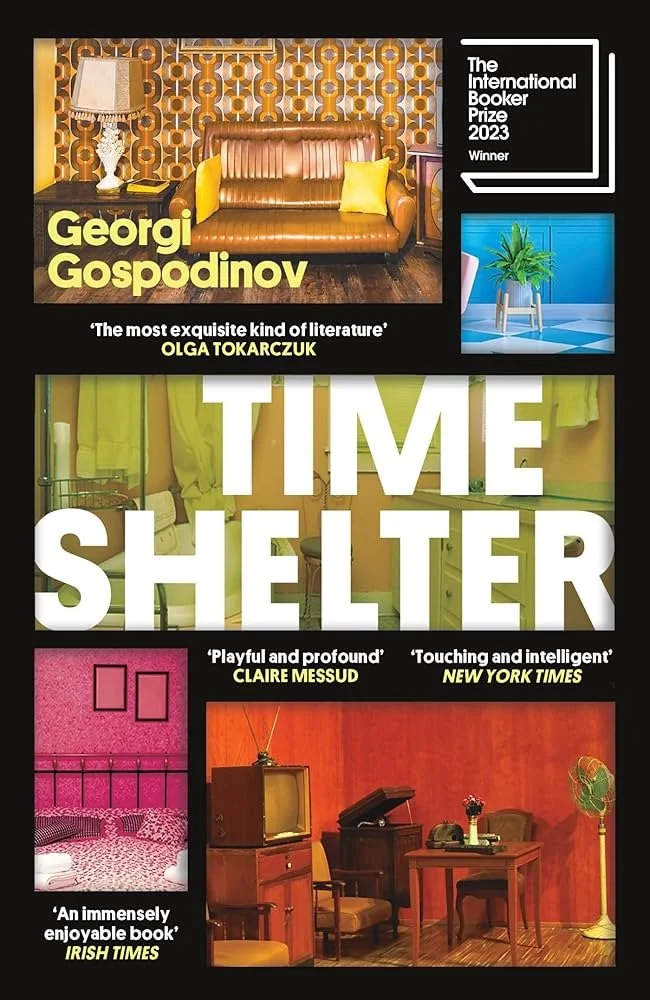
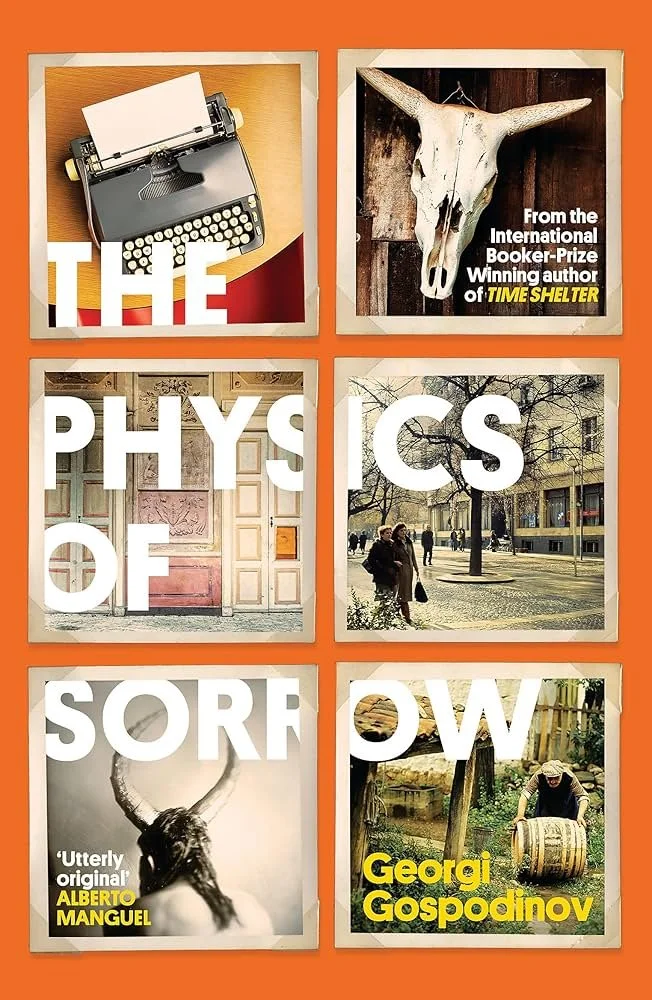
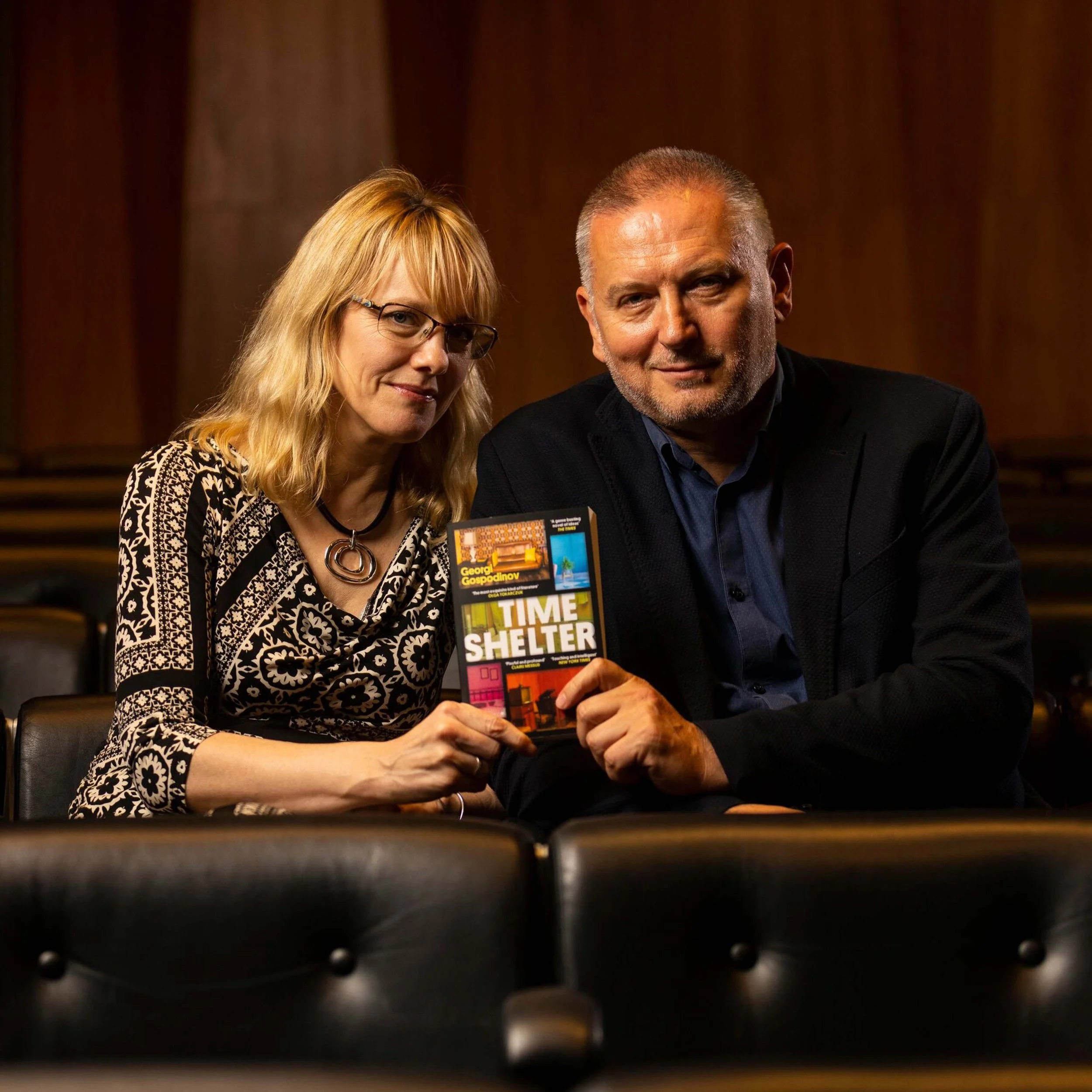
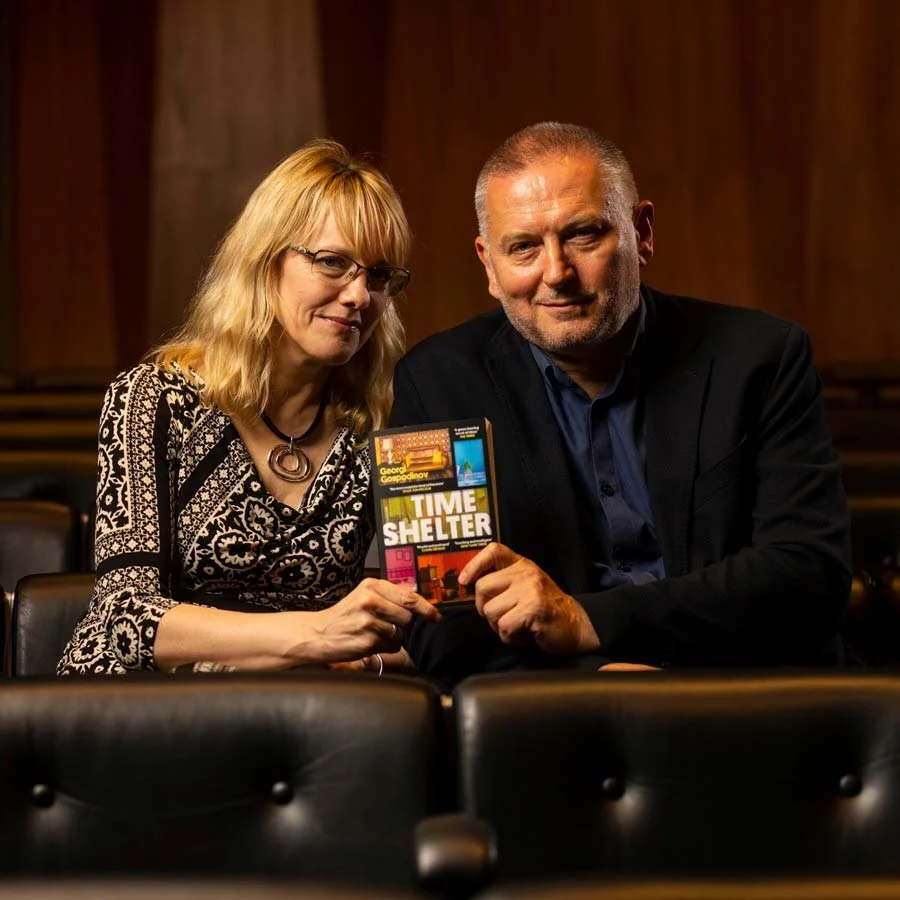
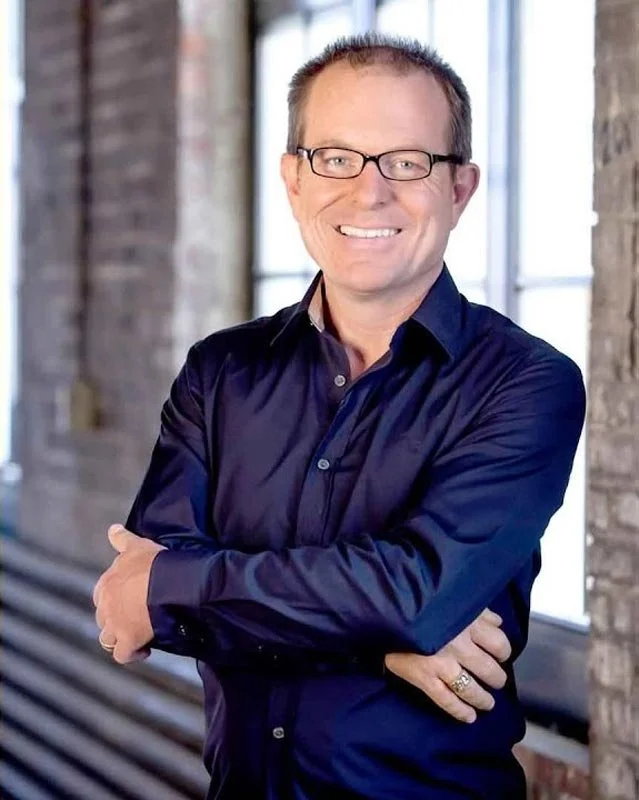
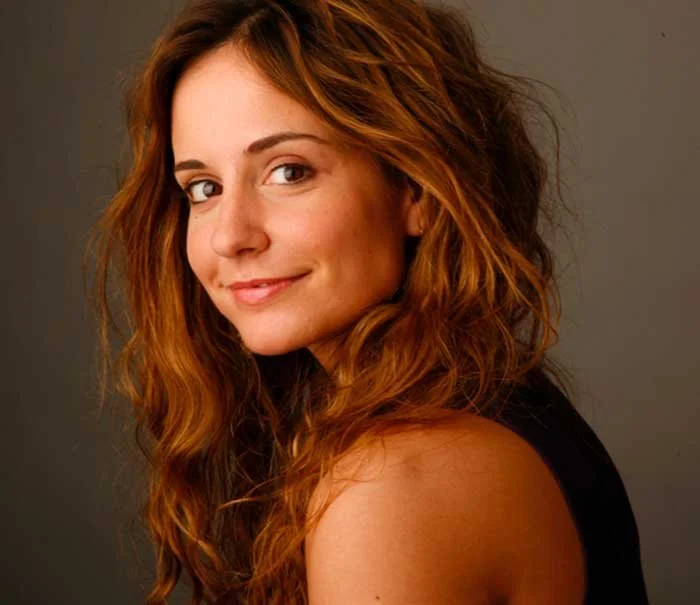
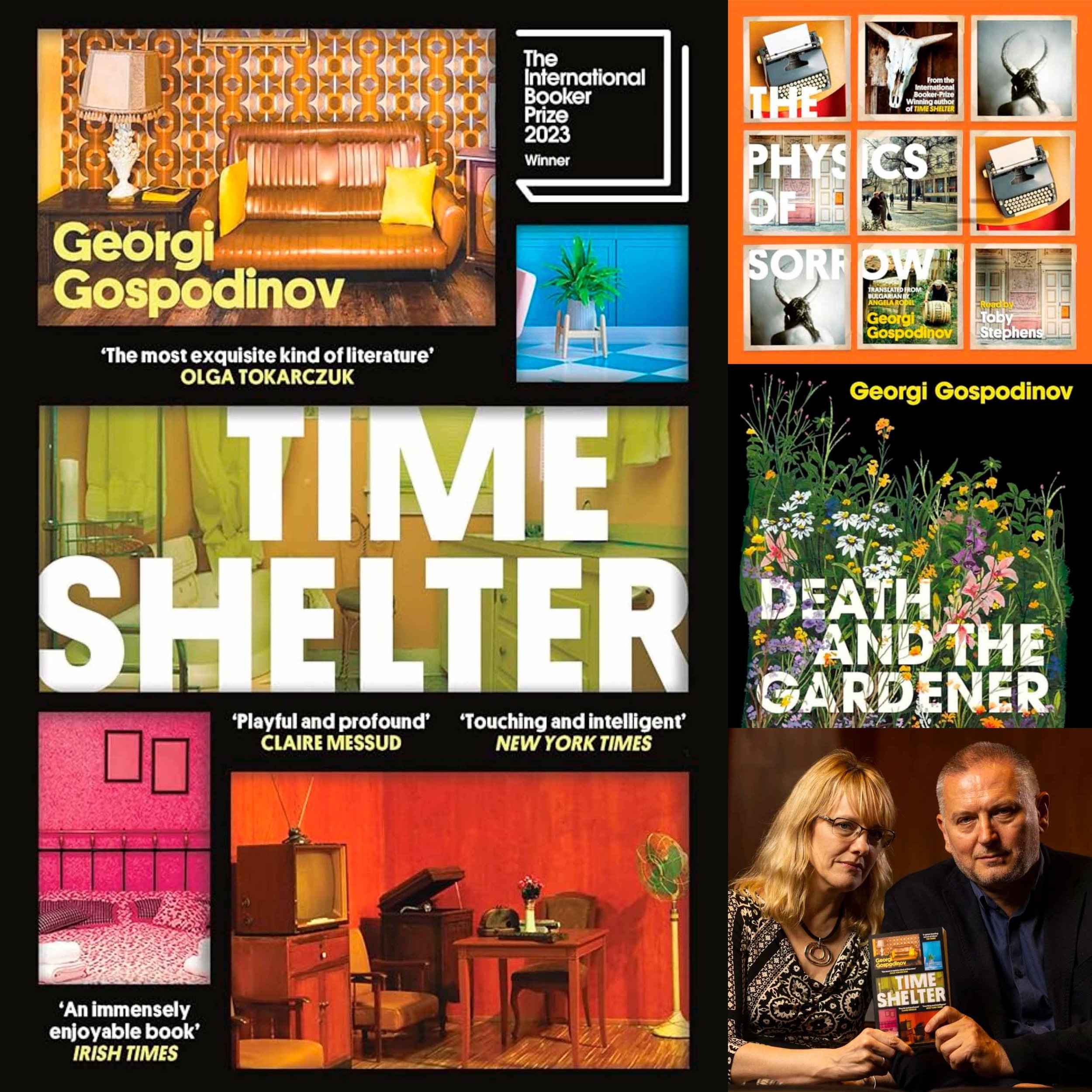
Today, we have a conversation about time, memory, and the bittersweet geography of human sorrow. Georgi Gospodinov is widely considered one of the most daring voices in contemporary European literature. His acclaimed novel, The Physics of Sorrow, won the Jan Michalski Prize in 2016, blending ancient myth and quantum physics to chronicle the delicate realities of post-socialist Eastern Europe. Joining him is Angela Rodel, a brilliant linguist, musician, and translator whose profound artistic empathy carries the flowing cadences of the Bulgarian language into vivid English. Together, this extraordinary creative duo made history by winning the 2023 International Booker Prize for Time Shelter—the first book written in Bulgarian to ever receive the honor.
Time Shelter is a masterfully dark, funny, and prescient novel. It begins with an enigmatic psychiatrist opening a clinic that treats Alzheimer’s patients by meticulously recreating past decades to match their internal clocks. But the experiment quickly escapes the clinic walls, triggering a pan-European crisis where entire nations hold democratic referendums to choose which era of the past they will retreat into. It is a book that holds up a mirror to our own world, exploring what happens when a civilization faces a deficit of meaning and tries to weaponize nostalgia.
THE CREATIVE PROCESS
So we just talked a little bit about Time Shelter. Its publishing came at such a unique moment in time, I think, for all of us. As I was saying, prescient, as it published at the start of COVID. So I think that while this idea of stepping back in time might have seemed impossible to a lot of us, we all just go forward, go forward, don't have time to reflect. But with the shelter-in-place policies, we all experienced this collective, massive time experiment that you'd already been working on for years before, where the whole world just kind of decided to stop time. And so it was really strange. I think for a lot of people, it was the first time they ever stopped working. Some of us, it was the first time we questioned our lives. The empty streets, you know, suddenly so much stillness in the world, and a lot of people really liked it because they could start reading novels again, if they had stopped, listening to old Beatles songs or things they love, stepping back to watching the old films, and could just go anywhere where they wanted to in time and crawl back into that safe space. And that big realization a lot of people had. Like what are they doing with their lives always working, moving forward and maybe not in a sense living.
I'm wondering what it was like for you both. Georgi, how strange was that to see things played out in parallel tracks to what you imagined in fiction?
GEORGI GOSPODINOV
Yes, actually the novel was finished just before the COVID pandemic. I didn't know what would happen. And actually, the novel was published in Bulgaria on the first day of lockdown.
ANGELA RODEL
It was like March 13, 2020, or something like that. That was the Bulgarian pub date.
GEORGI GOSPODINOV
Actually all bookshops were closed, shops were closed, people were locked into their houses, they could order the novel via post. So it was really a dystopic situation. I mean the book was available to travel, but the people were locked. And it was the right time, actually, for this dystopian book. I mean that from the moment of its publication, Time Shelter changed from a dystopian novel to a very realistic one. That past coming to us like a virus.
But of course, I didn't know what would happen. And you are absolutely right, and I thought about this, that this pandemic actually was a kind of turning back into time. I mean all these movies and TV programs, all these Beatles songs, all these people just sitting in their rooms and checking their photo albums. I remember clearly that they started to repeat even football games. In Time Shelter, I have a football game from 1974, the first one we watched with my father, and I saw this football game again. And it was like, okay, actually I wanted to write a novel which could be like a предупреждение (preduprezhdenie)?
ANGELA RODEL
Like a foretelling, a little bit of a warning maybe.
GEORGI GOSPODINOV
Yeah, something like this. But actually I expected that what happened would happen, but maybe after ten years or something like this. But it happened immediately after the publication of the novel. I hope that it is not my fault, it is not because of the novel. It just happened.
THE CREATIVE PROCESS
You know what it is… ideas are like viruses. You put them into the world, or even before, they build like rumors. So it is interesting. You didn't expect that it could happen at once like that. In Time Shelter countries had to have referendums. With COVID and the threat of death, we had to act quickly.
But a lot of us, if we weren't facing imminent death or facing the grieving of loved ones—all those real things that we faced during COVID—it was this dream time for others, and people began questioning the systems we live in, like maybe we can start again? Maybe this is a chance to reset, as we saw the rewilding of our cities, all these things. Kind of amazing that you offered a parallel vision. And we should say that you really investigate all aspects of time and ask questions. You know, there is a good aspect of nostalgia. There is, as you say, this insidious aspect of nostalgia that doesn't include the possibilities for all. Like people want to go back to a time, but that time wasn't great for everyone. Just unfold that a bit and how you considered it from all angles.
GEORGI GOSPODINOV
Actually in the novel, there are a lot of things about nostalgia. I mean, there are different kinds of nostalgia. As a writer, I must say I am a quite nostalgic person. I think every one of us, every day, could go back to his or her past in the room of the past, and could stay there for an hour or two. And after that, it is important to leave this room and not to be locked inside, just to keep the door open.
What is dangerous for the past—I saw it maybe after 2016—the danger is that somebody is trying to invent our collective past and to pull the whole society into the basement of the invented past. This could be dangerous. Shortly, I wouldn't like my personal nostalgia to be turned into propaganda. That is very important to me. I would like to keep this nostalgia, which is part of the human condition. It is something normal, not to be treated as propaganda. And in the novel, we have these different kinds of nostalgia and so on. In the beginning, the idea of Gaustine making these clinics for the past was a really good idea. Actually, it could help the people who are losing memory, people with dementia, to make a balance between their inner time and the time around them.
If you remember only 1968, it is good to be in the room as 1968, to listen to music of this period, to have the smells of 1968, and so on, and so on, and so on. And this was a good idea, using nostalgia or using the past, for healing. But actually, yes, after that, when nostalgia becomes part of the societies, when the countries lose the future, when they face the deficit of the future, because that is the problem, they start slowly going back to the happiest time in their past. And actually, it is a trap, but the novel talks about this in the second part.
THE CREATIVE PROCESS
Yes. And it is also impossible to stop time because to stop time is to, in a sense, die. That is an atrophying of all of the senses. I mean, it feels like it is a vacation, it is like being a tourist, but you do have to get to the difficult business of living.
So I believe you have selected a passage that helps us hear the music of the language itself, which you are both involved in bringing to the world...
READ MORE [ + ]
Yes. I selected one short chapter from the beginning and one from the end of Time Shelter. I will read some lines in Bulgarian, then I will read this part in English. After that, Angela will read the next part.
“And so, Gaustine and I created our first clinic for the past.
Actually, he created it, I was only his assistant, a collector of the past. It wasn't easy. You can't just tell somebody: Okay, here's your past from 1965. You have to know its stories, or if you have no way of getting them anymore, then you have to make them up. To know everything about that year. Which hairstyles were fashionable, how pointy the shoes were, how the soap smelled, a complete catalog of scents. Whether the spring was rainy, what the temperatures were in August. What the number one hit song was. The most important stories of the year, not just the news, but the rumors, the urban legends. Things got more complicated depending on which past you wanted delivered to you. Did you want your Eastern past, if you were from the eastern side of the wall? Or on the contrary, did you want to live out precisely that past which had been denied to you? To gorge yourself on the past as if on the bananas you had dreamed about your whole life?
The past is not just that which happened to you. Sometimes it is that which you just imagined."
And now at the end of the novel, I want you to read it. Yes, yes.
“The less memory, the more past.
As long as you remember, you hold at bay the times gone by.
Like lighting a fire in the middle of a forest at night. Demons and wolves are crouching all around, the beasts of the past are tightening the circle, but they still don't dare step into it. The allegory is simple. As long as the flame of memory burns, you are the master. If it starts to die out, the howling grows louder and the beasts draw closer. The pack of the past.
Shortly before the end, times get mixed up. Because the cages have been opened, and everyone will creep out ... If it weren't for the days, where will we live, a poet asked, what was his name again. But the days are done ... The calendar has dismissed itself, there is only one day and one night and they repeat eternally ...
I remember, so as to keep the past in the past ...”
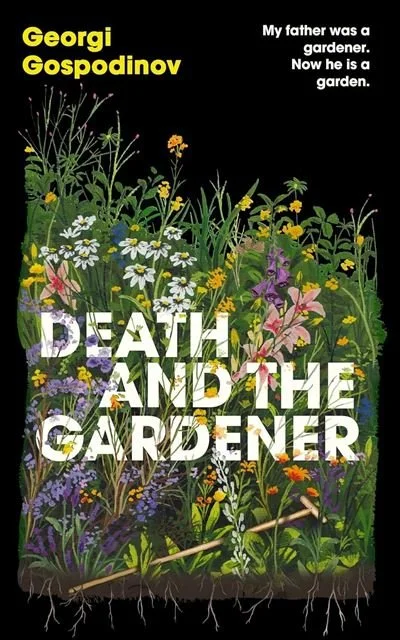
Yes, it's so concise and so dense. The visual imagery compressed with philosophical insights, and the idea is you remember to keep the past. It makes me think about so many things. When we talk about keeping time, sheltering ourselves from time, what you’re also saying is sheltering yourself from death, sheltering from the painful things. And, of course, this is also the subject of your latest book, Death and the Gardener. So I am wondering, how often do you think about death, and what do you think happens when we die?
Yes, I don’t think about death. I think about the last minutes of life. For me, this is the most important period. Actually, death is the end of the stories.
I mean, everything else is part of life. I spent one month in Death and the Gardener, and I wrote about the death of my father. And I spent one intensive month with him, and this was a month with the most intensive talks between us. I counted every hour, every minute, every second, every gesture, every word with him.
I tried to keep a memory for this, and that is why I was with my notebook. And actually, this is my first novel written only by hand because this is the only possible way to write a personal book.
And what I was thinking about it, you know, the last words of my father were very simple. They were like, “You should find my identity card because you will need it.” They were such simple words, and it was full of generosity to us who remain.
And actually, there was also another attitude to death. It was like, “Okay, death is something bureaucratic. The doctor will come. They will need my identity card. You should find it. You should sign some protocol.
That is nothing. It is not part of our life. It is a bureaucracy of death.”
And also what I learned from his attitude to death is that death will come, but let’s keep on the last minutes. Let’s keep on the funny side, even in this very unfunny situation. Let’s be stronger than that. Let’s talk. Let’s read some book. Give him my hand. That is the important thing.
So, what I realized writing this book is that actually, the most important thing is to keep the hand of the person who is passing away, to go with him to the door and then go back.
This is something that you could do. About death, death and time are connected of course. I mean we have our limited body and limited time and a very linear one. My father was a gardener, I think because also he knew that in the garden, in nature also, time is not linear. And there is some consolation in that when with our limited bodies we enter into the garden where time is circling, where time is endless in a way. And many, many other things about death, but as I said, dying and death are quite different things. And I prefer to think about the last minute of life.
I love that circular vision. It is one that you also refer to when you talk about different indigenous peoples who have a sense of the future or the past being played out before them, and each generation is teaching the other, and that their death is not a death, it is a continuation.
It is planting trees for future generations, so each death nourishes the life of another.
And I find it really moving what you shared about your father’s final moments because rather than dwelling on his own death, he was focused on helping you and making sure you had his identity card and everything you would need after he was gone. So it is like even at the end, his concern was for you, not for himself.
This final act of love and selflessness that I think really reflects the life he had lived. Someone who nurtured growth, not only as a gardener but by making life easier for those around him.
You know, we talk about bearing witness in writing, bearing witness to the meaning of one person’s consciousness as a way of speaking to all consciousnesses.
And Angela, you know, as a translator, you are also ensuring experiences of Bulgarian life through the voices of Bulgarian authors do not die, because it is a language that is not as translated as perhaps others. So you are bearing witness, you are planting those seeds further so that all these lives have meaning in ways that...
You know, because languages are also dying out, cultures, in a way... And it is a kind of really terrible thing when we think about ecosystems and the loss of biodiversity. When we lose a language, we lose a perspective on the world. And so I’m kind of rambling there, but what do you feel your responsibility is as a translator, and how do you make sure that that wonderful diversity of perspective, you know, stays alive?
Yes, no, I think that is a very important question, especially those of us who translate from other languages into English, which for better or worse, is sort of the hegemonic language of our time. Just, I mean, I have been in Bulgaria, what, almost... I have been learning Bulgarian for almost 30 years now, and just to see in that short, not even a human lifetime, how much English has come into Bulgarian, it is very...
There is a lot of colonization even in Bulgarian itself. So I feel like part of the calling of the translator is to preserve not only the language itself but, as you said, I guess we are all Sapir-Whorf fans here, that the language you speak does affect how you see the world. And I think, beyond the physical, you know, the language itself with its vocabulary and syntax, this idea that Bulgarian writers have a very specific manner of storytelling that I think is very fresh and very unusual sometimes to foreign audiences.
You know, Georgi is maybe an extreme example of this, but, you know, very fragmentary, not necessarily linear, a very black humor. But I think there are other writers as well that have a very specific Bulgarian flavor to storytelling that I think is also part of that linguistic culture that as a translator, it is important for us, because if stories are basically how we understand each other and ourselves, we need to also understand on the meta-level that there are different ways of telling stories and that is okay.
It doesn’t have to be linear start to finish. It doesn’t have to sound like it came out of an MFA program. It doesn’t have to follow a certain prescriptive model of how a story should be, and I think that is an important part of being a translator, especially into English.
For both of you, how do you feel that fits into the wider Slavic family and their individual musics? You know, how does it learn and inspire, you know, in our whole global family of languages?
Yes. The Bulgarian language is quite particular, quite specific. The Physics of Sorrow, the title Physics of Sorrow in Bulgaria, it means sorrow, in Bulgarian is, if your listeners try to pronounce it, тъга, тъга, yes, you will feel this “ъ”, which is a quite specific Bulgarian sound, “ъ”. And your Adam’s apple is moving when you are saying тъга. For me, this phonetic of the sorrow is very important because it looks like you try to swallow something that you...
A lump in your throat or something. Yes, yes.
Yes. Which you can’t say openly. And this is connected with our sorrows.
I mean, the language is not just of philology or a kind of synthesis and so on. The language has a much deeper meaning because the language is before us. I mean, it is more clever than us. When I am using the Bulgarian language, I am using the language of my parents, of my grandparents, of great Bulgarian writers back in the past. So using their language in a way. I love to put in my books some specific Bulgarian words. In Death and the Gardener, there are a lot of specific and typical words of my father. Some of them I invented, I think. And this is part of my writing.
I am coming from poetry, actually. I still write poetry. I published five poetry books before I started writing prose. So for me, the language, the school of the language was very important. I mean, when I am writing my novels, I am using my poetry way of thinking.
Yes, just from a linguistic point of view, I actually began studying Russian and then moved into Bulgarian, thanks to the music. And there are commonalities, I think, in Slavic languages. Like in English, we are very strict about tense. Like, if a tense shifts, it means something, whereas I think there is a flexibility about tense in Bulgarian. But I have talked to other translators from Slavic languages, Polish, Czech, and there is more of a stylistic freedom to play with, sort of out-of-timeness.
Or within a certain sentence or in even an individual paragraph, you can kind of mix the tenses. And it gives a sort of flavor of mastery, but also keeping the reader a little bit unsteady about the timeframe, which Bulgarian readers enjoy and feel is a sense of mastery. Whereas I think English readers are very confused and sort of distracted because it seems inconsistent.
So I think language families sort of have these stylistic approaches to how they talk about time, how they talk about other sort of fundamental human experiences. But then also, I think Bulgarian is sort of interesting and maybe somewhat different from the South Slavic languages because Bulgaria was part of the Ottoman Empire for 500 years, and there are lots of Turkishisms.
There is this whole—and I think this is probably true of Macedonian, of Serbian, to Bosnian to an extent—but it really is this whole other register that you wouldn’t find in, say, Russian, Ukrainian, or Polish. The best analogy I can make is that Bulgarians use those Turkish borrowings as very facetious, maybe how Yiddish sounds to American speakers.
Something that is a sort of little bit jokey register like, you know, shyster, like zaftig, something like that. But it is a very interesting, colorful layer of Bulgarian that I think not all Slavic languages have, which many authors like to play with.
Yes, it is that familiar, which is so nice because you draw a lot, talking about drawing from music, and music is hugely important to both of you. Angela, you know, you are also a singer, and Georgi, you are also writing for opera sometimes as well. But the inherent musicality of language anyway.
And you know, just as we go through our days, that music, we often forget about it. But there is a music that you can tune into when you go to different countries, and you must be so sensitive to this, Angela. But I also thought about things to translate because when you are talking about time, like the American sense of time is very...
I was born in America, but I have been living in Europe most of my life. So the sense of time is go, go, go. We know this, right?
Time is money. Time is money.
You know, live to work instead of work to live...
Nothing is more important than money!
In Bugaria it is slow, slow, slow.
You don’t have to tell me. You know, in France, in Europe, the pleasure of waiting is a thing, right? So how do you even translate that? Because sometimes that is foreign to other cultures where there is that commodification of time, and we are all kind of reaching towards that now. But, as you reflect upon it, our internal timing is so different, and that is also related to the language we are born into.
Yes, I mean, just being an outsider and having lived in Bulgaria more than 20 years now, I feel like that sense of time is not as urgent. There is not this sense of we need to be making something productive out of all of our time. The Western sort of American capitalist mentality is encroaching in Bulgaria, but I like to think that it is still much more humane than say where I come from in the States.
But I think that is also something interesting that you will see in Georgi’s work and other Bulgarian writers, like linearity isn’t that important. Like you can jump around, you know, it doesn’t have to be like you start here, you go there and you end up there. And I think that indicates an attitude towards time that many people, especially Georgi, but other writers in this region want to have.
You will see it in Olga Tokarczuk too, in some of her work as well, this sort of, we don’t need linear time. It is not necessarily an arrow, you know what I mean? So that cultural attitude I think comes up in the way that some narratives are constructed.
I think this way of storytelling that I love is connected with oral stories I have heard from my grandparents. It was very important, their way of storytelling. And actually, this is the Oriental way of storytelling, very close to Shahrazad, which starts one story, stops, makes side corridors, and continues on the next night, gaining one more day. And this was the way my grandmother told me stories. I used to live with her in my childhood, and actually all her stories were like magic realist stories, mixing everyday life with magic realism. She didn’t know Márquez, of course, and Márquez didn’t know her. But it was the way she was telling her stories.
And for me now, my stories, it is very important to have this idea that the trivial life is connected with the sublime in a very close relation, always. I couldn’t talk only about the trivial or about the sublime. They are connected, actually. They live together, one next to the other. And this was the most important lesson from the oral storytelling of my grandparents.
Yes, and it really comes across as this kind of cosmic consciousness. You know, certain metaphors you are really attached to, like the labyrinth. You would write about the Minotaur. You would talk of this interconnectedness, and I think this idea, you know, really in our mind and consciousness, all time happens at once, and you address that that is the truth of life.
It is not linear. I mean, that is not a truthful representation of how we experience the world, and it is kind of nice. I have to admit, I was also mainly raised by my grandparents, so they were a big part. And it is the best. It is the best experience because you are getting that multi-generational...
My grandfather was almost old enough to be my great-grandfather. And so you are always thinking about time from a young age because they are really telling you, and it comes across so beautifully. There is this beautiful simplicity about your writing and a directness, and that there is always a lesson. That is what I find.
You know, you spend a long time around older people, and as I have my whole life, they are always telling you a lesson through something quotidian. You are planting seeds in the garden. You think you are taking a walk, and they are telling you, you are going back in time. They remember, and they skip around all the time.
And so it is a kind of interweaving. There is no sense of the barriers, and I think that is something that your fiction opens us up to, that freedom that frees our mind, and it then starts our own dreaming process.
You mentioned Olga Tokarczuk, and she said beautiful things about your writing. She said, “Time Shelter is the most exquisite kind of literature on our perception of time and its passing, and it is written in a masterful and totally unpredictable style.”
And I love that nonlinear approach. You know, you have said you don’t trust novels that are written like a periodic table.
Yes, there is something like an epigraph in The Physics of Sorrow, saying by Gaustine, "I don't believe in purebred genres. I think the novel is not alien." And yes, this, my way of writing, it is not like to write something that you know what will happen on the next page or in the next chapter. I follow my intuition, my language. I try to follow the voice or to... Because we are working with unexplainable things. I mean, we are working with things that we couldn't easily find the word for. What interested me is some things that never happened, how the things that never happened shaped your life. So it is not easy to write about the things that never happened. But I would like to do this, and that is why I should follow my inner voice, intuition, the language and so on. I think that what I learned from poetry is to write my novels sentence by sentence. And every sentence matters and has to be written with a kind of rhythm. And yes, this is important. Maybe my novels are not good for Netflix or for some movies. But who knows if there is enough crazy director.
But I want to go into this, this longing. Going back to Time Shelter, we haven't yet discussed the actual decades that the different European countries considered their golden age that they wanted to go back to. You write about the sense of longing also in Eastern Bloc countries for the West, you know, during the Cold War. And how was it that you decided upon those golden age eras?
We know it is imperfect. The idea of a golden age is really imperfect. Angela, as you are translating not just Time Shelter but other books by Georgi, how did it make you reflect on the nature of time, your relationship to it and history? And what for you are your golden ages or your golden books? Those places where you feel safe, and this is how it is meant to be.
Yes. I think Georgi is absolutely correct in his diagnostic that everyone thinks the golden era is when they were young. So I would have to say the 1980s, you know, like for my own personal life as an American, but of course, there are many things that many other Americans probably would not agree with and would have other choices.
But no, when I was... It was really interesting going back to one of our earlier questions, the pandemic, because literally the Bulgarian book, he finished it pretty much the fall of 2019, and I had started the excerpt even before the book was done because there was a lot of excitement from publishers about this book. And then so finally, I was basically translating the book when the pandemic was starting, and it was so weird to be in this time capsule/time shelter working with this book that was really bringing forward a lot of these themes.
And to me it was so interesting. I guess the idea of a pandemic seems so medieval. I mean, we think of the Black Plague or The Decameron. It just... And it was so bizarre to be living in a modern version of that, and it really was. I think working on this book in precisely that environment was a very strange and interesting experience. And I was grateful that I had this to work on during that time, because I think when life just stops and everything freezes, a lot of people fell into depression or into despair because they didn't have their normal social... But I was lucky that I could just sort of dive into this text that actually helped address some of the anxiety that we were all feeling about what happens when time stands still, what happens when you have to go back to some contained, quarantined time, you know? So it was a very interesting experience.
It is interesting also because, of course, Georgi, you lived for, I think, 20 years under communism, right? And you said people are offering, under these communist or different kind of populist movements, the past as a potential future. But also embedded in that is the past when you were in your childhood, so that is really complicated. Just share your reflections on... Because I don't know what that experience is, although I think that we all experience a kind of control by whatever government we live under or whatever technocracy we are going into. But what was that like? How do you explain that to those who don't know? And why is this other strange thing, a nostalgia, as you posit, for some of those regimes? People are not completely remembering.
Yes, but the good thing is that in a way early childhood is not so connected with ideology. They couldn't easily influence the early childhood. I was living in a village with my grandparents, and it was something out of the world. But let's say it is not easy for the people to divide their personal childhood from the historical time. And that is what the propaganda uses because, if they promise you that you could be happy again, that you will have a great life if we go back to the past, usually you are thinking, "Okay, maybe it is true because in the 1980s with Angela we were happy."
So what is wrong if you go back to the 1980s? It is late communism for us. But the problem is that personal time is irreversible. You couldn't go back. You couldn't be seven years old again. The political time is reversible. It could easily go back. I mean, when you choose your childhood, you shouldn't choose your 1970s in the communist time. They are two very different things.
Because I remember clearly I was 17, 18, 20 years old when communism still existed, and I remember clearly many things like some simple things which are very important. Like the idea that I knew, and my parents knew, we knew that we were sure that we will never visit, let's say, Paris. We will never visit the Western world. We will never be at the concert of Stones or Beatles or something like this. And this is also part of the past. Reading stupid newspapers talking only about the secretary of the Bulgarian Communist Party, it is also part of this past.
Having a deficit of many, many things, having a deficit of freedom or even a deficit of the erotic, it is also part of the communist time. We just should divide two things, the personal past and the historical past. And yes, the second, it is really dangerous.
Yes, and that separation is really important. We have seen how the arts can be used as a bridge between the personal, sometimes appropriated for propaganda. You know, storytelling, music. They are tools of expression. But like any tool, you can use it to damage something or to create. So we must be really careful, I think, of the stories we tell ourselves, and we must be mindful again, once our stories leave our imagination and enter the world, that they are not used in ways they weren't intended.
Angela, you are a musician and an actor as well as a linguist. You have spoken about how translation is not a solo performance but a duet where a translator is finding your own inner music and how it aligns. Words don't map directly upon words. You have to find that living rhythm of a text. How does your background in music help you carry across some of these very complicated ideas and sonic phrasings?
You know, I think it is totally invaluable. I always like to tell the story that I went to London for a translators conference. We were all from like 12 different countries, and we were having a beer afterwards, and it is like every single one of us was a musician. So I think there is something to be said that people...
There is the meaning of the language, and then there is the sounding, the rhythm, the prosody, and I think it is just totally invaluable to have that training to be conscious of it, especially with Georgi because he is a poet. I mean, he started as a poet. His prose is very poetic. The sounding, the play is, I think, much of what makes his writing so exquisite. And so I feel like my musical training has given me a set of tools to be able to bring to the translation table as well.
And I think music also was a stimulus. If you want to sing convincingly, you have to really know the language. You have to be able to get into it and understand, not just the syllables, but like, okay, what is this? You know, especially folk music. What is this song saying? Why is this important to this culture? And I think that also has been a boon for me as a translator because it brings me very much into Bulgarian culture. Not only literary culture but the musical culture, the folk culture, the ethnographic history. So that has been very, very valuable in my career as a translator.
Yes, and of course through translation and of course through reading and the arts we can really live many lives, which I think is the wonderful thing. Because Georgi, you write that a person is not built to live in the prison of one body and one time. And literature helps us, I guess, ultimately escape that prison. What happens to society when it stops reading novels?
We will see. I don't know. I hope, I hope.
Otherwise you'd be out of a job. (Laughter)
No, I think the opposite. I think that we will continue to read novels, even to read more novels, more books, I mean, because there will be a kind of... Could I say this? Yes, yes, yes. From all of this reading of social media. And this is a completely different way of reading, actually. Even reading a book is a horizontal moving of your eyes and reading in a horizontal way. Reading networks, Facebook, TikTok and so on, is a vertical way, and everything you are moving with your finger, it is reading through the finger. Going down and disappeared.
But the horizontal lines of the book stay there, and the book is there, and you could go back to it. I think that there will be a kind of new nostalgia for the books, for the analog world. Books are from the analog world. And so I foresee a good future for the novels and the books.
But the novel is not just something that you need to spend two hours with to have some fun or something like this. No, it is not about this. It is about the novel producing at least two things. First, empathy, because it is not possible to read a novel without feeling empathy for the characters in the novel. It is not possible to write a novel without feeling empathy for the reader and the characters in your book.
And also it is a kind of slowing of time. I really believe it is a physical law. One day I will write something about this in a very scientific way. I really believe that telling a story or reading a book physically slows down time. And this is also very important because what we need now is to think how to postpone the end, saying it directly. How to postpone the end, how to postpone all these climates and wars and everything. And books are very good tools for us to understand the world and then to produce empathy, and third, in this way, to postpone the end. This is shortly saying.
Yes, and it also made me think because in Time Shelter, there is this epidemic. There is in life a real epidemic of Alzheimer's, but in your novel there is an epidemic of Alzheimer's, and as you know obviously in countries that have experienced or been at the brunt of propaganda, that there are two ways of misleading. You can have misinformation and disinformation and propaganda and the absence of information, and on the other hand, you can have this complete saturation of information such that you have a paralysis of too much information.
So now I think the statistics are that almost every year the amount of data that is being collected is doubling almost every year now with this. So on the one hand, you talk about an Alzheimer's epidemic where we remember nothing, and at the same time being so drowned in data where you can't believe anything. So I think that can also result in another kind of amnesia which creates a paralysis. What do you feel about that? And that is why the book is such a wonderful oasis of calm and slowness, and it also has a beginning and an end. How comforting and beautiful is that?
Actually, all these tendencies are connected with storytelling in a way. First, when we stop telling our stories, when we stop communicating with each other, we start to forget. I mean, telling stories is a way of making memory. It is true from Homer's epic prose. It is a kind of mnemonic technique telling a story about something using repetition, using the hexameter in Homer's case.
So memory is connected with storytelling, and memory is like a muscle, actually. You should exercise every day. You should tell your stories every day. When we stop telling our stories, if we decide that, okay, no need to talk about the Second World War, let's say. We talk a lot, there were such books, movies, so we will stop. It is a real trouble because memory stops the minute you stop telling stories about something. The memory disappears. Memory is something very volatile. It is like scents. It is like perfume which just disappears if you stop using it, putting it in the stories.
And but what is the problem now? We are talking too much. We are talking too much even through social media, but actually we don't have conversations between us. So we have a lot of words, but we don't have a real conversation. What is broken now, and it is a real danger, this is also a political danger, the conversation is broken. When the conversation is broken, society is polarized. It is very easy for propaganda to go there and to work what it wants to work. This is first.
The second is the situation is like a labyrinth. You know what the big trouble in the labyrinth is when you are in the labyrinth? It is not that there is no exit. There is an exit. There are a lot of fake exits. That is the problem. You could turn here or here, on this corridor, on this corridor.
So you have the illusion that everything is possible, that exits exist. Every social media promises you a kind of exit, a lot of information, but actually they are fake corridors. We are in the middle of a labyrinth that suggests many fake corridors. And what is the superpower of literature in this case? Now the superpower is that literature is like an antidote against propaganda. What I mean is, propaganda will explain the world to you easily in a two-dimensional way. It explains it easily, black and white and so on. Literature gives you a more complex explanation. Literature tells personal stories.
I mean, propaganda works with the collective, society, with the collective, also with collective Alzheimer's. There is something really dangerous, and it is not just metaphorical. It is not just a metaphor, this collective Alzheimer's we are facing in a way. It is always easy to use propaganda in societies who experience collective Alzheimer's. I mean, we face this oblivion. We constantly cross one and the same past.
I think that is so important because you write a lot about animals, the flies' perspectives, the birds falling out of the sky, facing these epidemics that are often human-caused because of our own technologies, it is having a very evident effect on animals that they can't navigate.
And animals are very, as you know, very focused. The Minotaur in... Well, this didn't exist, it is a story, but the Minotaur in the labyrinth just wants to get out. He will focus all his energy on getting out. But we humans, we get lost in the labyrinth, as you know, as we are so easily distracted. But we see whales being beached because of noise pollution. You know, we are losing our way, too. We just don't know the way technology is actually affecting our internal navigation systems, and we are just not quite smart enough about realizing what is most important.
Yes. Also talking about bodies and animals, I should say some words about the Minotaur, the main character in the novel, The Physics of Sorrow. You know, I believe that all of us are kind of Minotaurs in a way. The Minotaur actually has a human body and let's say, a malformation of the head. And what the Minotaur would like to have is just to look normal, is just to look like other people. This is the happiness defined for the Minotaur, for the different one, for the other.
The other is different and people hate it. The story of the Minotaur is the loneliest creature in mythology, but it is a story about how we make the other one, who is different from us, a monster. And sometimes we have guilt for the fact that he is different, that he has some malformation or some troubles. But as an alibi for our guilt, we would like to make this one a real monster, and it saves us from our guilt in a way.
And I believe for me, it is very important not to go all into this anthropocentric way of thinking that we have now, and that is why I suggest something in The Physics of Sorrow. I suggest, how about if we try to listen or record the stories of the bees, the stories of the fishes? Now we know more and more that they also have memory, even insects, bees and so on. Maybe they have their own stories as well.
And how about if we try to change a bit our point of view? Let's say taking some classical literature like The Old Man and the Sea by Hemingway. We are empathetic to the old man who is very exhausted trying to catch these big fishes. But how about if we tell this story from the point of view of the fish? Because the real tragedy is not for the old man. He survived. The real tragedy is for the fish who is dead and filleted for other fishes and so on. And what kind of story will it be? This is very important for us as human beings, to try to get into the stories of the other species. I could call this environmental empathy, and this is in a way non-anthropocentric empathy. And this is also important when we are talking about animals and bodies.
So Angela, as a translator and as a musician, and you also act and of course, you were married also to a poet, so how do you translate the silences, those nuances that are indicated in the shorthand among native speakers and native readers, but they are just kind of embedded. So how do you approach that?
I mean, I think you have to think about the lived experience that you are trying to communicate. I think that is true with music, how I am going to have an audience react in an emotional way, the way I would interpret a piece of music or try to play a certain character. And I think having lived in Bulgaria so long and having lived among Bulgarians so long, I need to think about, okay, what kind of language is going to...
I mean, it is never perfect. It is never one-to-one. And those are where the overall atmosphere of the text hopefully will give that sort of what do you call it, like an affective structuring, I think the philosophers like to call it. And then you fill it in with the actual language itself and the details.
But I think that sort of emotional atmosphere is sort of on a deeper level, and then you come with the sort of more realia and the actual language itself. But I think both of those layers are important because we want somebody who reads Georgi's novel in whatever language they are reading it in, you know, it is very funny, but it is not a farce, you know? You have to have this sort of feeling of the emotional attitude that then I think you can unfold within that linguistic, the sonic and the sort of cultural realia layers.
Yes. And Georgi, I think that that was brilliant too because of your selection. Well, for Bulgaria, you chose two golden ages, but then by bringing in all these golden ages for other countries, if they don't know, which a lot of people don't know Bulgaria's history, then they can make inferences from those histories and cultural touchstones that they do know. So as a way of submerging them, and also I think helping in the translation process, they can make those equivalences.
Yes, in the book. Yes.
Actually, it was the most difficult part of writing this book for me because I had to guess what kind of nostalgia will fill the people from Sweden, France, Romania. And because some happy countries like Sweden, they have too many decades that it is a problem to choose one of them. But for some other countries like Romania or Bulgaria, we had so many unhappy decades. So it was also difficult for us to choose which one we would like to live in.
Actually, Bulgaria's was... hmm, it was a really double choice to the nationalistic past, national past, patriotic past, and also to late communism. This combination is really dangerous. And I must say that in a way, what we are seeing in the late years, this combination is really in contemporary Bulgarian politics. But also it was very funny when I had readings in front of different audiences in different countries, and I always ask them, "Okay, let's make a small poll now."
And I ask them, "Which will be your favorite decade that you would like to go back into?" And we compare with what I suggested in the book, and many times they really chose the same decades. Because when you write this about the nostalgia of different countries, you should count many things.
It is not just the political situation in the 1960s. Also, you should count the popular culture. You should count, is it the decade that the voters now were like in their 20s then? Many things are important when you make a choice. Because it is a book also about how to make a choice and how to recognize that this future is not just a disguised past, that this future that they promise you is not just a secondhand future. The past who comes back. Yes.
And I want to jump in and think Georgi has said in other contexts that he actually used his translators from many of those countries as his sort of initial source for getting feedback. Okay, you know, what should I put for France? What should I put? So many of my colleagues had some input in his initial field research when he was talking about the referendums in other countries.
It was a question of research, but also there was a funny thing maybe Angela will tell about the 1980s. I mean, in popular culture, what happened in the 1980s in the United States, in the West, it comes to Bulgaria a decade later. And so we had some discussions because he talks about disco, because disco was very popular in Bulgaria, but in the 1980s. And I was like, "Georgi, disco is the 1970s." Like, it was very, very funny, and we really realized we had to finesse it, and I think we even slipped in another stealth clause so that there was one of... Luckily it was a direct conversation between two characters, and we could kind of finesse it to sort of frame it that, yes, you know, the 1980s were actually the decade of disco in Eastern Europe, in Bulgaria. So there were some interesting mismatches between the East and the West too that came up. Historical jet lag. Yes.
Like popular cultural jet lag.
So in this conversation we have touched on just some of the forms you write in, Georgi. Poetry, novels, you also write short stories, and I believe you have selected a story from your forthcoming collection to share with us.
Yes. Georgi's sort of greatest hits of his short stories that have come out in a number of collections in Bulgarian will be coming out in English in the UK and the US in October of this year, so we are very excited. Some of them for the first time, which is great. So they are very different.
I would say this is from the later collection, and he is sort of... I wouldn't say apocalyptic, but one of the themes in this later story collection is sort of humanity's destruction of the environment but in a very poetic way. And so I think this story called Eight Minutes and 19 Seconds is one of the works that sort of circles around this idea of sort of ecological apocalypse, if I can put it that way.
8 Minutes and 19 Seconds
The minute you start reading this, the sun may already have gone out, but you won’t know it yet. You’ve been granted a whole 8 minutes and 19 seconds before news of its death reaches you. That’s how long it takes for the light to travel. After that, it’ll get dark. Nine seconds have passed so far. What can you do? Jump up, grab the most important things, your phone, money, passport. Wait a second, where do you think you’re going? Drop that luggage now. Call your loved ones, they don’t know yet. Inform them of the end of the world and this gift of (now less than seven) minutes, which they have no clue was coming. Tell them to leave immediately if they’re nearby… to go where?... so you can be together… but seven minutes isn’t enough time. Better to stay wherever they are and hide under the table. Everything seems ridiculous. You don’t have any experience with the sun going out. It’s not like the power going out. Tell them you love them and that you’ll find each other in the darkness. What else? – you want one last taste of all your favorite things, but you only have time to grab a spoonful of cherry jam out of the fridge. The cat is hiding somewhere. It knows, too. You open the window. Outside, people are frittering away their last minutes of sun. You feel like screaming. God damn it, can’t you see that this light isn’t the same? But you don’t do that, either. And what will happen afterwards? Will the planets scatter, will the oceans overflow, will an eternal arctic winter fall? And will it happen immediately, or will we be granted a little more time? A few more minutes, an hour in the impenetrable darkness. Are you still there? Let’s count down the final seconds together – thirteen, twelve, eleven (I’m purposely writing them out in words to stretch out the time), ten, nine, eight, seven, six, five, four, three (hold tight and farewell, if we don’t see each other afterwards), two, one…
I think that is the kind of perfect short story. You know, what makes a good life? What has given your life meaning? The seconds are counting down, so who do you reach out to? Who do you think of? Who makes you whole?
Mm-hmm. The good life is to have a garden, to have some bees around the garden and to watch how your daughter or your granddaughter is just playing around you. What I love, what saves me usually is such small things. To sit in one afternoon in a happy loneliness. I call this happy loneliness in your room. And be, what to say? Pacified or not happy. Happy is a big word.
Being happy is what to say? It is something that I never could recognize. Once I was happy for six minutes. I think that usually we couldn't be happy for more time. It is a kind of epiphany. It is something very special to be happy. To have this happy loneliness and to know that in the other room there is a person you love, this is very important to me.
When I was a child, I loved afternoons because I was sitting in one room trying to sleep because all children, I don't know why, have to sleep in the afternoons. It was typical for this period. But laying in my bed at three in the afternoon, I could listen to how my grandparents were chatting in the next room. And for me, this is like the antidote to the apocalypses. I mean, if there is somebody who is chatting, who is telling some stories, the apocalypses could be postponed. That is the thing that makes me happy.
And Angela, what makes a good life? What has given your life meaning?
Yes, this is an interesting question because unfortunately my husband passed away not even two years ago, and that was a big lesson in what is really important in life. And I think it is absolutely what Georgi says, the people, the relationships, and just being in the now, appreciating that this might be the last bit of sunlight we have.
And we have to, I think, we can't live entirely like that, but there is something to be said about pulling back on our sort of maniacal forward thinking always, you know, thinking that we are going to have all this time in front of us, because you don't know. I actually am very into Buddhist meditation, and that is one of the things we meditate on is like you have to be in the now. Of course, you can't walk around meditating 24 hours a day, but this sense of really appreciating what is happening around you at that moment, because none of us know what is going to happen.
That is true. And you have given us that space to confront and ask ourselves what makes our life meaningful. Happiness, it is so interesting because you can't have continuous happiness, otherwise that would be like endless sweetness, eating only honey, but at some point in our maturity, we encounter sadness, and that helps us taste the sweetness, right?
You mentioned bees because I know that you had your grandmother who spoke to bees, I think, in like a language that they would understand. I love this openness to that and that image of the garden. Somehow it is imprinted on all of us, whether we are Christian or not, this sense of a Garden of Eden, a garden of imagination. I am wondering how have your thoughts about love changed over time?
Ah, love. It is also a big word. Sometimes I am afraid of it. But growing old, you recognize that love has many faces, that love has many layers. And in this last month, which I spent with my father, and after that, unfortunately also with my mother, I felt that this is a pure love. You know? It is something that is beyond time, that is beyond death. And this is also love.
Also, when my daughter was born, I thought this was the most important time, the most important day for me. And also when she was growing up, this was happiness and love at the same time. What is important for me in love is the idea to invent the person you are living with every day. To invent it, not to be just, "Okay, she is a part of my life," or "He is a part of my life." No, just to see with a different eye.
When my daughter was born, I wrote about this in The Physics of Sorrow, I was able to see for the first time how the snow is dropping, how the cat is meowing, right? All of this you could see for the first time through the eyes of the kid when born. And this is very important for love. Just not stop inventing the people next to you.
They are characters themselves in your book of life really. And so I love that. Yes, it is true when you see children, you can kind of almost see that point in the very young child's mind where they are deciding, as you say, to be born into the body of the human, because you have this in The Physics of Sorrow. They don't see that division. As you go back to your childhood, you know, really it is all in your body of work, this wonderful poem to memory, what are those smells and sounds that bring back your childhood? The essence of Bulgaria.
Yes, smells are really important for me because I am writing about memory. That is why smells are really important, because you know that they are one of the biggest unlockers of memory. The funny thing is that we don't have names for the smells. You couldn't say the name of the smell. You usually say it smells like fresh baked bread, or it smells like a rose. But we always compare with something else. It is very interesting to me.
And my character in Time Shelter is trying to reserve the smells, to record the smells, but we are even not able to record the smells. And they are really important ones. When I was in Brooklyn I felt this smell of asphalt in very hot weather. You could smell the asphalt which is melting a bit. And this is a specific smell of my childhood, and it transported me immediately into the 1970s.
So I think that smell is like a time machine. You could go back immediately when you smell something from your childhood. And yes, and also with other senses. I mean all five senses are very important to transport you back or to work with your memory. That is why in Time Shelter I am using something like a map of the smells that are important for transporting you back or to wake up your memory again.
Yes. And so this is all part of your education in the sensorial world and into the imaginative world that we kind of neglect. I want to talk a little bit about the teachers who have been important to you, but on these senses, of course music is hugely important to you. What does the music you love reveal about you? And how do you tune into different authors too, their music and their rhythms?
Yes. Actually when we won this Booker Prize with Angela, they asked me to make a kind of playlist of the music that was used in Time Shelter. I didn't know that there was so much music in Time Shelter. What I like, I like to listen to the songs from the time of my parents. I like to listen to songs from the year I was born, 1968. So I am a big fan of Beatles songs, of Doors songs.
But also, the novel Time Shelter is opened with Sarabande by Handel. I really love this kind of music, it is minimalistic in a way, repetitive, and circling like in a labyrinth. So Sarabande is this kind of music. Also, Für Alina by Arvo Pärt is this kind of music. Also the music from the 1920s.
One of the songs that I use in Time Shelter, Alabama Song, has its source in the Alabama Song from the 1920s made by Kurt Weill and Bertolt Brecht and performed by Lotte Lenya. You could check, you could find this song in some way on YouTube, and you will see how the sense of the time, the sense of the 1920s, also in a scary way, you could feel listening to this song. So the music, the sounds are both very important to me.
Yes, a lot of songs. A lot of songs appeared in Time Shelter, because I wanted to work with memory, because if you put somebody in the 1970s, you should put all the music, all the popular music from this decade. Even like songs like Hotel California by the Eagles. It is not a question of the quality of the song, it is a question of memory. It is a question of the hidden memories. It is a time machine, yes. And music and sounds.
And it is also because as someone who is so tuned into the inner lives of animals as well and they are very rhythmical in so many ways that we don't understand their sense of hearing. But we too are animals, and it moves our body. So our body may be old, but when you put that music on, there is something about it, and it may be so simple, but you flow into maybe the way your body was when it was young. You get into that rhythm.
And it is so interesting the way the physical body influences so much of what we think of as our thoughts, you know, originate in the body, then surface in the mind. You talked about sadness, you talked about it being located in the throat, and that word of sorrow, we translate as sorrow. Where is your happiness located? Where is your pain and regret located? Do you feel it there for... How do you think about that?
Yes, yes, yes. The pain is here, of course, in the throat. When my father passed away, I wasn't able to talk about that, even to start talking about it. I felt it physically here in the throat and also somewhere in the stomach. So it is a kind of... It is connected with breathing also. When you have deep sorrow and deep pain, it is not easy to breathe. It is not easy to talk because talking is also a kind of breathing.
And there is something so beautiful about the spoken word and writing that brings us back into the body. We always talk about humanity as though sometimes humans don't show that much humanity, in fact. You know, we have failures of humanity so often, and I think that that is really important to just be able to imagine yourself into other people's perspectives, other moments in time but also animals' view of life, which we are animals, of course.
I am wondering how you talk about mythology, and of course, mythology, these are all ways of understanding the world. How have your thoughts about the spiritual or God changed over time?
Oh, what to say, in my childhood I had this first idea about God, but this was very... hmm, it was very specific thinking, a specific idea. I will tell this story. The God in the Bible was kind of forbidden, not well received in Bulgaria, in communist Bulgaria. So my grandmother wrapped the Bible in the official newspaper, and always around 6:00 pm she started to read from the Bible. I was sitting next to her. I was six, seven years old, and she started to read in this way old people read, whispering, moving her finger through the lines.
And so, in this way, I listened to the whole Bible, and especially the Apocalypse, through her whispering. It was like this: "In the beginning, God... Now, there were four horses on the four corners of the world, then there was a fire and then there was da, da, da." And I used to listen to the whole Apocalypse through her voice, and even now, when I open the Bible, I could hear her voice, and I think it is very important. This is the voice, if there is a God, he should use this whispering.
I mean, the most important thing could be said in a whispering way in a very personal way. So this idea about God or the divine is connected with the place I come from, with the situation in those decades. Actually, I have always visited the cemetery with my grandmother, and I started learning to read really with the names written on the stones in the cemetery. And this is also a very important experience for me.
So in the village, it was a different kind of God. It was very familiar. It was a kind of God, if I could say this. And for me, this is very important because I really believe that important things happen in a very everyday manner and they could be said in a whispering way. And this comes from my childhood. Yes, there are a lot of pages about this in the books, but this was really important to me.
I think that is so interesting. I mean, it is a little poem. I should say each tombstone is a kind of poem. There is limited space, and that was your first introduction to reading. Already your curiosity is working, because I imagine the young Georgi saying, "Oh, that life. What gave that life meaning? Why was their life so short? Or this person, they lived a long time. They must have done a lot." You know, the storytelling process was already working in you.
Yes.
And ah, he was born here... And how come they died so far away from where they were born? Or she lived all her life in this village... So already I could see the storytelling machine going, and I can see how important your grandmother, your grandparents, your parents, all these whispering voices were to awaken that sense of wonder and dream.
One thing, going back to the Bible, which is so interesting, I mean, I think that we should all have a sense of the sacred, whatever it is, the arts or... I am not literal. But it is a beautiful thing that many collective artists, writers collaborated on the Bible, you know? It is a beautiful thing that a writer can create a dream that becomes a reality for people, that sparks a movement for centuries, that becomes an important ritual through people's lives and maybe the most important thing for them... and also starts wars.
But whatever the power of that. You know, they say in the beginning was the word. And that it was not one voice, it was collective of writers. And I think that that is a beautiful metaphor of what the arts can do to bring people together.
Yes, because when we are kids between five and 12, we have this ability, this superpower to talk with everything. I mean, with the cherry tree, with the dog. After that, we slowly lose this ability, unfortunately. That is why this period of my life is a very important source of writing and so on.
The first thing that I wrote down was a dream, a nightmare, actually. And it repeated every night, and it was a terrible dream, a terrible nightmare. And I tried to say it to my grandmother, but my grandmother stopped me because we believe that you shouldn't tell your nightmares because they will become alive.
And I didn't know what to do. And then I had this idea. I just learned to read and write, and I took a piece of paper and I wrote down this nightmare. The miracle happened. I never, ever had this nightmare again. Never, ever. I was six or seven years old. But I still remember this nightmare. So this is the price. I created a memory about this nightmare, but I was saved from this nightmare. Even now, 50 years later, I remember clearly this nightmare. I put it in one of my books.
Yes, this is what I learned, I think without even being able to formulate it when I was a kid, that writing has this power to save you from your nightmares, but also to create memory of this. And this was the first thing I ever wrote down. And after that, I started to keep notebooks.
It is a kind of beautiful alchemy that you can do. It turns pain into beauty. It turns something frightening into a memory you can hold onto. Those have been your personal teachers, but tell us a little bit about those teachers, those writers you mentioned, about Márquez or Borges, or the musicians even that kind of educated the whole person, the whole Georgi. Because I think...
...As we look to the future, I sometimes wonder whether we are giving young people that same kind of holistic education. Beyond knowledge and technical skills, what do you feel education should cultivate? What did those artistic teachers give you that you think we need most today?
Maybe to keep the conversation between us, to keep the storytelling. This is the way to transport memory to other people, to transport emotion. I believe it is even to keep this empathy intelligence. This is very important to transport our stories from one generation to another generation, to keep the connection between us, because what I am afraid of now is that we are losing a lot of cultural memory. Like memory about what you mentioned, Borges, or different kinds of music and so on.
It is like a stick between the generations. It keeps the generations connected. Without this base, we are going to divide, and this is the real end. So keeping the stick of literature is something... of culture, of course, it is something very important.
And if I should say one word, it will be: exchange stories with each other. Because I think in the beginning, we should remind ourselves that exchanging stories, talking to each other, was before we learned to exchange money or goods or something else. We started exchanging our stories, and money and many things appeared much later than this. So in the beginning was the exchanging of stories. And this should keep us until the end or postpone the end.
I think so. Because you have this in The Physics of Sorrow. You wrote, "I are, we am." It was part of that collective way that we understood each other. You talk about passing that stick of culture, and I know that earlier on, before the Booker Prize, you won the Jan Michalski Prize. Which, by the way, the Fondation Jan Michalski has also supported this project, The Creative Process, from the start, and so that is how I came to know your writing.
So what was that like, that kind of early recognition for a writer? You have of course gone on to win many other prizes since then, but how meaningful is it to be recognized and have your work acknowledged by other cultures?
Yes, the Jan Michalski Prize was one of the first prizes for my books because, before that, honestly speaking, it was very difficult to be a Bulgarian writer translated abroad because people didn't have a lot of knowledge about Bulgaria. We didn't have a big chain of writers translated and popular abroad. You know, we work in a room in lonely afternoons. This is the work of a writer. And when you receive this kind of recognition, you feel that your books, your thoughts are touching other people, and you are not alone in what you are thinking, what you are writing. So this is the good price of the prize. This is the goodness of the gift. They encourage you and they tell you that, "Okay, your thoughts are touching other people, so maybe you are not wrong in what you write and what you are thinking."
Yes, and so just, you know, up to that point, what was it like being a Bulgarian writer? What was the general reception you received from the outside world and, in general, their view of Bulgarian literature?
Yes, I should start from the beginning. People had some stereotypes of you. Ah, you are coming from the Balkans, so we expect you to tell these kind of Balkan stories with the fighting, wars and so on. I don't like this exoticizing way of storytelling. I don't like to sell exotic stories.
And when I received the Booker Prize with Angela, I had a small speech, I wanted to tell this, and I said it, that even if you are coming from a small literature, you have the right to talk about the big topics, the big themes. And this was very important.
After the Booker Prize, if I say in short what changed, it was easier for me to find a reader. Because people knew me, to have some appointment or find beautiful tomatoes in the shop because people were very glad in Bulgaria when we received this award, and people really were glad, and they stopped us on the streets and so on. But it became much more difficult to find a shelter for writing. And yes, that is the good and the bad thing.
But anyway, our books reached a lot of readers. So I love to have talks with audiences. In these talks, you feel that with your readers, you are a kind of temporary invisible society, and they know everything about you because they read your books. And this idea of the small invisible society that happens for one hour but after that it continues in a way, is very important. It is a part of the anti-apocalyptic strategies. It is a part of the conservation that, yes, we should build small societies like this. Because the next pandemic could be the pandemic of loneliness.
Yes, we do see that happening, and it is a sad thing. But yet it is wonderful because not only do they feel they know you, they feel you have known them, because I know this idea of afternoons is very important to you, and you have extended their afternoon. You have extended their time and given them a space to breathe and imagine and, in a way, brought them back to their childhoods or what that childhood felt like.
And so we have this thing called the Museum of Memory, and I would like to, if you could... You have unlimited space, so you can put anything you want in this memory: people, cities, countries, books, music. Just things you would like to put in your Museum of Memory, and how have they given your life meaning?
All books are a museum of memory. I mean, especially my books because I love to work with memory. My books are full of time capsules. I love to talk about time capsules and the lists of the things that we carry with us.
In your books Natural Novel and The Physics of Sorrow.
So what I can put in this Museum of Memory, I can put a garden from my childhood and some smells from this garden. I will put the first words from my daughter. And what else? I will put maybe something very small and a very trivial everyday object. I would like to put there one notebook. One notebook written full of notes in this museum. So maybe that is it.
And also your books, we want to lead people back to the books where your real museums of memory are. And then, more broadly, you talk about things we are losing, the knowledge that it is important to hold onto... If a cataclysm were to sweep away our civilization and we had to rebuild our world from scratch, let's hope that is not the next pandemic, but what knowledge is important for us to know and hold onto?
There is a scene like that in The Physics of Sorrow, a small boy thinking about the apocalypse and the Third World War, and he thought what he should leave for the people who will come in the world after the end. And he wrote a small note, and I would like to share it again. It was like, "If you meet a human person, you should open your arms and then close around his or her body, and people love to hug each other. It saves lives. People could cry. It is not dangerous. People love to cry. This liquid is not dangerous, only the blood is dangerous when the blood comes from your body."
Anyway, if I would say something to the people who will come after us, the next generation, it will be how important it is to hug each other literally and metaphorically. I mean, this is a chain. The hugs are like a small chain between people, and this is empathy. Actually, I would like these two things to survive: hugging and empathy.
And I must say they are always connected with culture and storytelling because by telling our stories, we create this empathy. If you tell me your story about your parents or your kids or something like this, I will feel empathy for you, and it will not be easy for me to go against you. Even if some ideology says, "Okay, you should kill her. You should make something wrong." No, I know this person, and she is like me. She could tell me about her childhood, her parents and daughter. You couldn't manipulate me to make something wrong to her. This is very important. So one hug, one story and empathy.
And finally, because technology is so forefront on our minds and thoughts of the future, what is the importance of the individual story, the individual human life? Because now there are young people growing up, they may be tempted, "Oh, it is so easy. You can have this machine write your story for you." So what is the importance of individual human storytelling?
Yes. What I know is that the personal story is really the universal story. I believe in personal stories, in personal storytelling, and you couldn't hear a personal story from artificial intelligence. I think even now, having a personal story is a really important part of the human condition.
Artificial intelligence or the machines don't have a childhood. If you ask about their childhood, they would not know what to tell you. They don't feel empathy and they don't have personal stories. So from this moment, having your personal story, thinking about your childhood, feeling empathy, are the main signs that you are a human being, and we should remember this.
Those are such important insights to remember and hold onto. So thank you, Georgi Gospodinov and Angela Rodel. Your writing has invited us to reflect on memory, time, melancholy, humor and all the strange ways that stories help us make sense of the world and find our place in it. Giving us a space to explore empathy, grief and our gardens of memory, you inspire us to do more with the life we are given. Thank you for adding your voice to The Creative Process
Thank you very much for this talk. Thank you.
Thank you so much for having us.