

There are two ways that I measure diminishment in the natural world, a world we all have the ability to see and sense no matter where we live. The first is ecological: a loss of vitality, complexity and stability. This can be studied and measured, but it can also be perceived by simply listening and noticing. Nature has a voice that sings in different registers and in those registers you can hear health or struggle, presence or absence. The second way I measured diminishment is in the human experience-- loss of beauty, of meaning, of pattern language these also become more available to us as we watch and listen take in what surrounds us.
In this episode of the Speaking Out of Place podcast, Professor David Palumbo-Liu speaks with Helen Whybrow about her book, The Salt Stones: Seasons of a Shepherd’s Life. Besides being a detailed account of the day to day, season by season life on her farm, where she and her family raise sheep, build a broad community, and maintain Knoll Farm, a center for activists, writers, artists and others to share ideas on how to promote healthier and more just ways of living together and in the environment, The Salt Stones is at base about the ways we are losing a sense of belonging, not only with others and with other forms of life on this planet, but also with the cycles of existence, of life and of death. Whybrow shows time and again that it is mostly a matter of developing ways of seeing and noticing what is all around us, and learning about and respecting the ways that generations of people and non-human animals have existed together in sustainable and mutually-dependent ways.
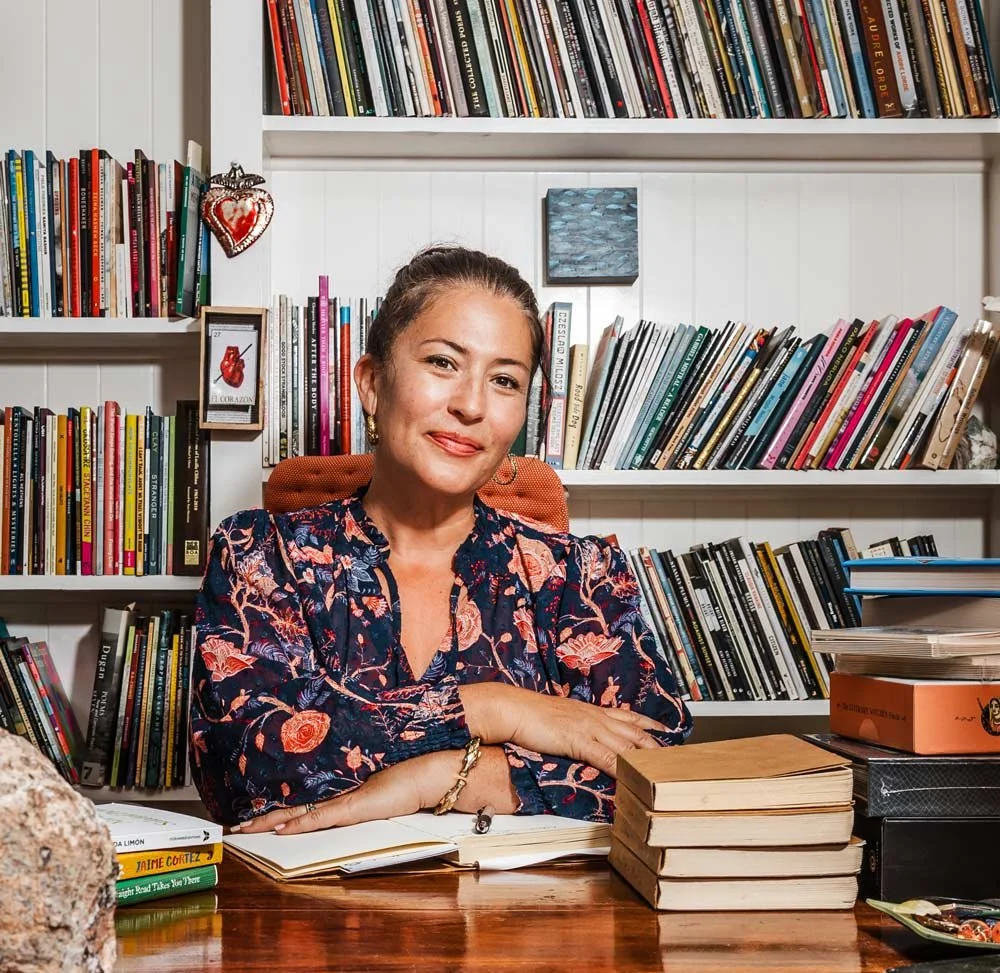
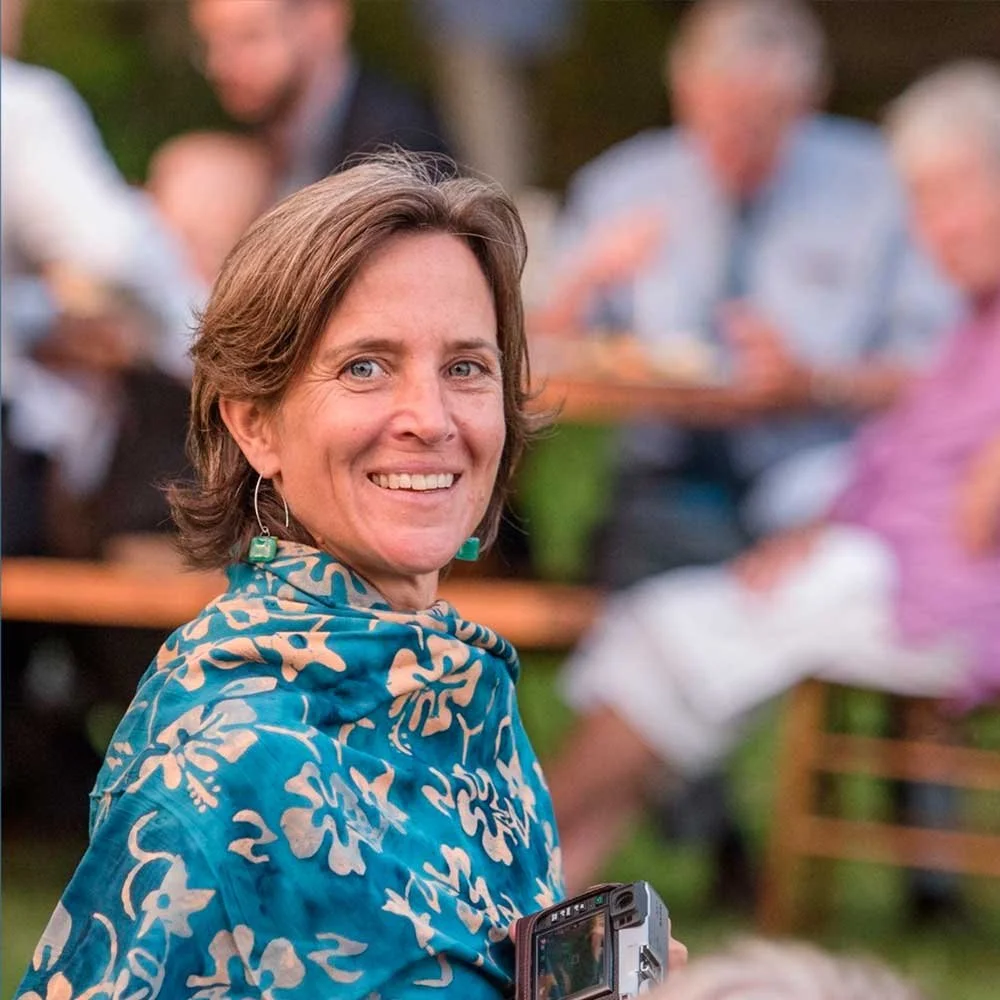
Helen Whybrow is a writer, editor and organic farmer whose book about shepherding, land and belonging, The Salt Stones, was longlisted for the National Book Award and chosen as a New Yorker Best Book of 2025. Her other titles include Dead Reckoning (W. W. Norton, 2001) and A Man Apart (Chelsea Green, 2015). She has a master’s in journalism and has taught writing at Middlebury College and the Breadloaf Environmental Writer’s Conference. She and her family farm and steward a refuge for land justice at Knoll Farm in Fayston, Vermont.
DAVID PALUMBO-LIU
Welcome to the podcast. I am delighted to have you on. The book is amazing, and there are certain key themes we will touch upon. What I love about it is that you approach these themes from so many different angles.
I would like to start with two questions. First, tell us a little bit about yourself, how you came to write this book and what the main story you wanted to tell was. Then, talk about this really incredible opening scene in the book where you are delivering two ewes. It struck me as an incredibly gripping way to get the reader into the text. It introduces two powerful entwined themes: life and death. Your book talks about the manners in which we live and die, how important it is to reflect upon these things and how your experiences as a shepherd helped you understand this in a very special way. So, generally, who are you? How did you come to write this book? What was the main impetus and the story you wanted to tell? And then let us talk about the cord.
HELEN WHYBROW
Thank you so much for those questions. A little bit about myself. I think what is relevant in relation to this book is that I grew up on a farm. I grew up very connected to a piece of land on the Connecticut River in the northern Connecticut watershed in New Hampshire. My two deepest, primal loves my whole life have been words and language on the one hand and land on the other.
I have always been fascinated by how land shapes identity, shapes culture and shapes us. And vice versa, how we shape land through our own caring for it, our regard or disregard. Those have been the studies of my life, both as a reader and a writer, and also as a practitioner. In my early thirties, I came to the second piece of land that I deeply fell in love with, which is where I live now. I have been here for 25 years. It is in central Vermont, a very mountainous piece of land.
This is where I have been quite obsessed with the idea of pastoralism and how sheep and grazing animals can actually become a tool for land restoration. We hear a lot about how grazing animals in many parts of the world have degraded the land. That is certainly true, and that can happen quite easily if the carrying capacity of the land cannot withstand all those little mouths eating all the vegetation. It leads to erosion, desertification and other problems of land degradation.
But there is also this incredible history of pastoralism in human culture. We have been in relationship with grazing animals since before we were farmers, for 13,000 or 14,000 years. We first domesticated wild sheep and goats in an area that is probably now Turkey by bringing these wild animals out of the mountains into the village. We kept them there to collect their fiber, tame them, birth their young and have milk and meat. Then we would walk with them back to the mountain areas where the pastures would support their life.
For pastoral peoples around the world, from ancient times to now, their animals are not just a source of meat or milk. They are completely interwoven into their sense of well-being, identity, culture, language, mythology, currency, exchange and understanding of the world. This has captivated me. I read a lot about it and experienced parts of it in places I traveled, so I really wanted to write about it. But I did not want the book to be abstract or strictly journalistic. I wanted it to be visceral, practical and rooted in my personal experience.
Many people call it a memoir, but it is not really a memoir in the sense that it is not about me and my life. It is more about my practice of being a shepherd, all the things it has taught me and what I think about as I move around with the sheep.
DAVID PALUMBO-LIU
That is a perfect description. I really like the way you said it is not your story, but your story is intertwined with everything you just mentioned. Actually, one of the passages I was going to read was about you describing the way sheep move through the land, and that is just amazing. But before we get to that, let us talk about the cord.
HELEN WHYBROW
The cord is the chapter that begins the book. It is actually one of the earliest pieces I wrote over the two or three years I was putting these stories down on the page. It is a story about, and I can read part of it if you like.
DAVID PALUMBO-LIU
I would love that.
HELEN WHYBROW
The setting is our farm, and I am there alone. My husband is traveling, and my three-year-old is asleep in the house. I very intentionally began and ended the book with lambing season because it is the essence of being a shepherd. It is the heart of the matter, where it begins and the most tense period of any shepherd's life.
I am out in the barn helping this difficult delivery of a ewe birthing twins. I have been out there a long time; it is snowy and cold. I will read just a little bit from the center of the story.
I step back from Blue, the ewe giving birth, stand up and rinse my arms. Her twins are jammed in the birth canal like tangled tree branches in a narrow stream during spring flood. The natural birthing position for a lamb is like a diver: head between front limbs, shoulders forward and streamlined for the sprint to air. When the arms are back, the shoulders are too broad for the opening. This is the problem with the first lamb. I think the second lamb has its feet over the first lamb's head, and its own head is somewhere farther back in the womb.
A breech or backward birth can be delivered, but there is a high chance the lamb will inhale fluid on the way out as the umbilical cord is stretched and breaks. Then it is unlikely to survive. When our daughter, Wren, was born, our midwife lifted her to my chest and Peter cut the cord near her belly. In my exhausted state, where images took on a strangely supernatural intensity, I remember thinking how thick the cord looked, like a sinewy tree root you find while digging. The kind that resists every effort of the spade, something muscular and undeniable.
A lamb's umbilical is as translucent and soft as a bit of milkweed down. I have never had to break or cut a cord. It always happens on its own as the lamb slips out of its watery home and onto the hay, becoming a creature of the breathing world. This astonishes me, that the cord that sustains life could be so thin.
Perhaps being a creature closer to the wild, a ewe would have to lick the birth membranes from the lamb and be on her way to leave little trace behind for predators to smell. The lamb's ability to get to its feet and follow its mom within a few minutes of being born is an evolutionary imperative. Would Blue die in the wild? Probably, yes. No doubt.
All these thousands of years that humans have been shepherds and helped ewes give birth have tweaked the evolutionary arc so that not only the easy birthers pass on their genes. A nomadic shepherd would have helped a birth so the whole flock could more quickly move out of the wind, get away from predators or find the spring grass. Only in the worst cases would they have abandoned a laboring ewe and unborn lambs to the wolves on Vermont hill farms like ours. Another live birth would have meant hope for a family that faced spring with little left but potatoes and cabbage in the cellar. The peaks surrounding our farm tell this story: Scragg, Stark, Mount Hunger. Sheep also meant clothing and blankets during the long period of history when wool was the primary source of cloth and every farm woman knew how to make homespun.
Those are the practical reasons, but I know there were and are more important reasons shepherds would do everything to assist a birth. This ancient, primal thing of caring for a flock is ultimately about human attachments.
Blue's eyes are weirdly white. Her breath is shallow. She rests her horns against the wall and goes still inside her womb. I trace shapes of the yet-to-be-born with my fingertips over and over, guessing their anatomy aloud. Front foot, nose, back foot. A lock picker in the dark. I have to be absolutely sure before I pull.
A faint noise comes from the doorway where a dim light spills from the barn into the sheep shed. Wren, who is three, has navigated the dark snowy path from house to barn in her dinosaur pajamas to find me. She comes around the corner tentatively with a worried look, then runs quickly down the steps with arms out when she sees me crouch there. I have only glanced her way. My face, I am sure, is a mask of concentration. Wren climbs onto my back and her cold hands find the warmth of my neck beneath my parka hood. Her two big boots dangling from sockless feet.
Since her father was away, at bedtime I told her, If you wake up in the night and I am not in my bed, look outside. If the barn lights are on, I am out there and you can come out. I will leave your boots by the door. I honestly was not sure she would figure it out, but I had not come up with any better options.
Are there babies? she whispers close to my ear.
Yes. Soon, I say.
I leave Blue and put Wren on a hay bale so she can watch. I drape my huge coat around her. I cannot take her back to bed. We are in this together now. The first time she saw a birth, she was two months old, strapped to my chest under my down coat as I worked to clear a lamb's airway, her tiny head so close to my hands that I was afraid of hurting her. She is old enough now to observe more closely. I wonder if I should warn her about how seeing blood can be scary, and how when a lamb is born it is normal for it to be wet and limp, sometimes coated with bright yellow feces that looks gross. And sometimes the lamb is not alive.
So that is the middle section of it.
DAVID PALUMBO-LIU
Wow. Much more to come after that. You chose the passage so well. It gives the listeners such a good sense of how you write because it is all about entanglement, entwinement and connections. The amount of information in a short passage of all sorts of different kinds, your personal relationship, your daughter, how you came to understand this, the history of birthing and ewes, it is all seamless. It creates a whole, and you develop a rhythm and environment such that you could pick the book up in just about any part and find something of that nature…
[ + ] READ MORE
Jean Giono is definitely one of those great loves of mine. He is not widely read anymore, but he was a very well-known French novelist between the World Wars. He lived in Val and wrote primarily about peasant life. He was very concerned with the disintegration of peasant life and the way rural life was becoming marginalized and difficult to sustain. He was a pacifist and sheltered a lot of people during the Nazi occupation. He was jailed for being a communist, which happened a lot at that time, but most of all, he was just a humanist. He was very concerned with how people and nature in rural southern France were surviving.
His writing is very alive to me in that way. It is very eccentric even, yet there is a physical presence I really appreciate. There is a little book called The Serpent of Stars that I discovered right around the time that birthing story happened when Wren was a little girl. It is about these shepherds who go into the Alps and perform a play. It is this elemental, mysterious moment where they all come together; somebody represents the mountain, somebody is the river and somebody is the cold. They act out their relationship to the place, and I loved that idea. The Serpent of Stars became a bit of a muse for me as I wrote this book. I have been privileged to be a nonfiction book editor for most of my adult life. I do it part-time because farming takes up most of my life, but I feel lucky to have been in conversation with a lot of great writers over the years.
There are many things you write about that seem both natural and miraculous, things someone unfamiliar with farming life would never think of. For example, you write that sheep not only eat to nourish themselves, they magically create the next year's movable feast as they go. Their hooves subtly and gently till the ground to disperse grasses and stimulate dormant clover and vetch to sprout. They make pockets for rain to collect in dry ground, open the thatch in cold ground and leave perfectly pelleted compost everywhere they go.
You talk a lot about movement as precisely life-giving. Tell us what kinds of things we miss when we only look at animals or vegetables simply as objects and commodities. I am thinking about how Marx talks about the erasure of human labor, how it takes the form of these fetishized objects. Something similar is going on in terms of how we are oblivious to the work nature does. You have a wonderful story about how you were dinged for advertising lamb.
I have to tell you this story; it illustrates what we are talking about. When our son was very small in Palo Alto, we went on a field trip to teach the children what it was like to forage. We were charged to go to a freezer trunk, take out frozen game hens wrapped in plastic, and hide them like Easter eggs for the children to find. This is exactly this idea that we just go to the store and buy it, entirely ignoring everything that goes into creating that life we consume.
One of the concepts at the heart of my life and writing is the idea of not just noticing but participating in one's surroundings. This act of participation is what creates intimacy and belonging. That is true in human relationships; being present for someone is a radical act of intimacy. With the internet, social media and AI, we are doing less and less of that in-person radical act of intimacy—literally showing up, participating in someone's life, making eye contact and asking what is happening for them.
I think the same is true of nature. Nature is infinitely complex; we will never fully understand this planet we live on. It is humbling to be out in the woods or pastures and make any attempt at understanding it. Instead of feeling discouraging, it feels incredibly joyful and full of wonder. I feel like I am an extension of this intricate intelligence, that my actions have reactions in nature and vice versa.
Regardless of how far someone gets from nature, even if you are an urban person spending all your days behind a computer, if you are put down on a healthy ecosystem versus a degraded one, you would feel the difference. You do not need training to feel the difference; it is in us as biological creatures. Being a participant and being curious about natural spaces is essential not only for the future health of the natural world but for our own health as well.
"There are two ways that I measure diminishment in the natural world, a world we all have the ability to see and sense no matter where we live. The first is ecological vitality, complexity and stability. This can be studied and measured, but it can also be perceived by simply listening and noticing. Nature has a voice that sings in different registers. In those registers, we can hear health or struggle, presence or absence. The second way you measure diminishment is in the human experience, the loss of beauty, meaning, pattern and language. These also become more available to us as we watch, listen and take in what surrounds us."
There are so many wonderful stories that open onto exactly these things. One I will pick is the story about the mother lamb, Lita, and her inability to feed her ewes. It illustrates one of the main points of your book: we have to understand how complex nature is, yet we are not clueless. Tell us about Lita and how you figured out what seemed to be a simple thing but actually taps into an elaborate set of dependencies.
My book covers 20 years, intentionally, so people would feel empowered realizing I did not know what I was doing either. I learned through mistakes and simply watching things happen.
The story about Lita begins early in the book. She is a beautiful, vigorous mother ewe with triplets. It is hard for a ewe to produce enough milk for three babies, but she was doing great. Then one day, I noticed she was getting thinner and ravenous. She was devouring food yet still shedding weight like someone on Survivor.
I started watching her, and the chapter becomes a study about rumination. Sheep are ruminant animals; they chew and re-chew their food many times to digest woody plant material into protein and milk. Lita was swallowing her food, but she was just spitting her cud out. She could not chew her cud, and I had never seen an animal do that. It was hurting her to chew because she had a split tooth in the back of her mouth.
That story helps me tell the importance of rumination and the relationship between the mother and the lamb. Through chewing their cud, they pass on information about what plants to eat, where to find them and the microflora of the soil. This microflora becomes the microflora of their gut, their milk, the lamb's immune system and eventually our immune system if we drink sheep's milk. It is an interconnected web of fluids, processes and microbes fundamental to life itself.
You dedicate the book to your mother, Mary Ruth Whybrow. She appears throughout, but has a whole chapter devoted to her that ties together your relationship with her and your thoughts about living in the world with others. Could you tell us about this chapter?
Our bodies hold memories too. As the mind's memory starts to go, the body's memory is often still intact. Even when she could not remember what day it was, she could shell peas, wash buckets or feed a bottle lamb. In those times, she seemed completely intact. In an agrarian society, we always had places for the old; they could sit on the porch and scan wool or weave blankets.
Our children are learning fewer of those competencies with their hands. What happens when we are old if we do not have tasks where memory is embodied? When physical work is replaced by conceptual work, people lose their sense of agency and identity.
"The idea of belonging, what it is, what it enables... has preoccupied me most of my life. My practice of being a shepherd is a large part of my ongoing inquiry into belonging, not just my own, but to understand what it means for all of us in this time of profound loss of the natural world."
For me, a lot of that longing comes from the natural world. Out in nature, I feel a fundamental sense of wholeness; the ever-present self-doubt writers have goes away. Our farm is a gathering place. We talk about it as a refuge and an anchor for people on the front lines of social and environmental justice. They need a place to take a deep breath, talk to one another and feel connected. Caring for those natural spaces is caring for people.
HELEN WHYBROW
I will end with this passage on belonging:
I never thought after leaving my childhood farm that I would ever find another place where I felt so at home, so connected to myself. Then I came here. Over the years living and moving with sheep over this hillside... I have begun to trace how belonging happens. It is not attached to particulars, not about finding any one place, one person, one thing that holds us. Belonging is more about the ritual and dedicated attention within us to something beloved that matters.
We are participants in our own sense of belonging. We make it happen with a mother, a daughter, a hillside, a life work, a way of being through deep commitment over time, curiosity and merging. Belonging is a two-way embrace. It requires unpacking your bags and discarding everything you were carrying that you no longer need. To practice belonging is an act of resistance against diminishment of ourselves and of the more-than-human world that offers all of us a home.
DAVID PALUMBO-LIU
Thank you so much for reading that passage. It opens up to a whole universe, as does your book, which is marvelous. Thank you for sharing your time and thoughts.
HELEN WHYBROW
Thank you so much, David. It has been wonderful.