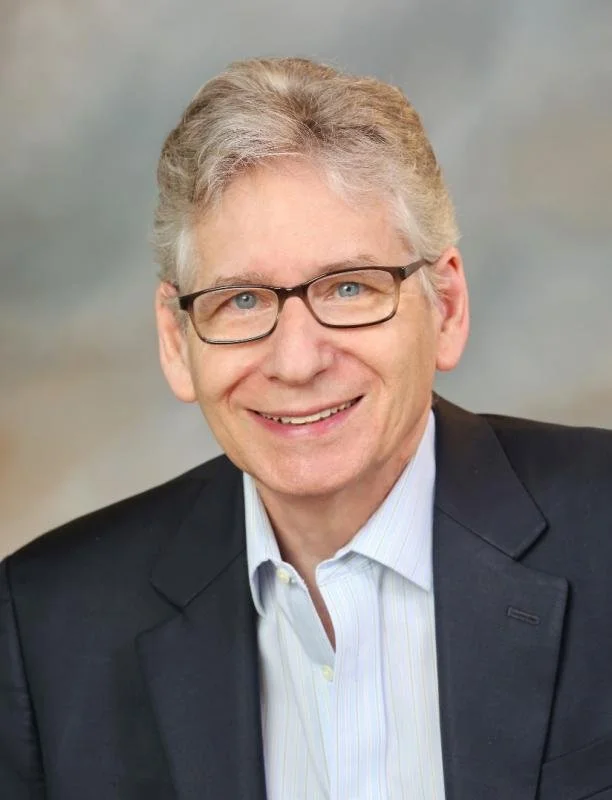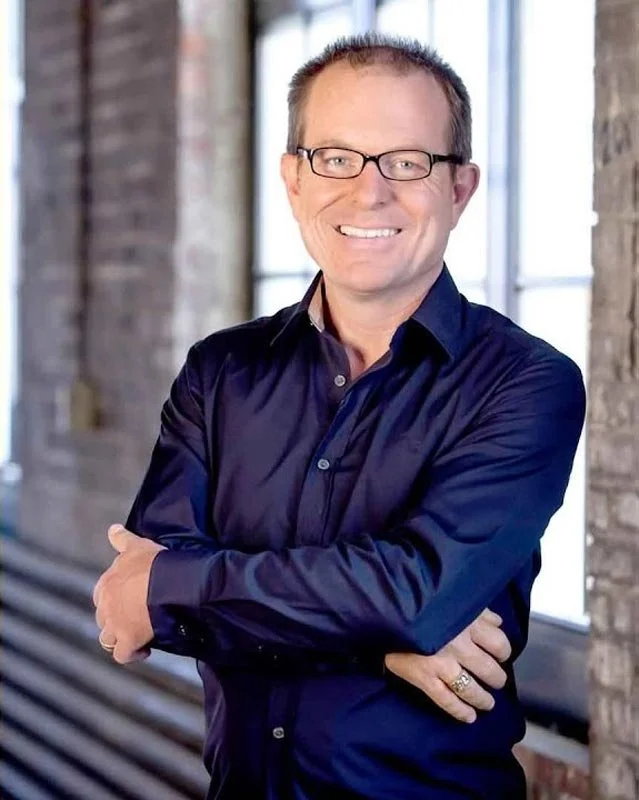


Alan Lerchbacker, Fmr. Former Shipyard CEO
And the youth really added so much value. So diversity, anybody that is against diversity, they are talking to the wrong guy because I think that it adds so much value to your company, especially if you show them that we are going to listen to everybody.
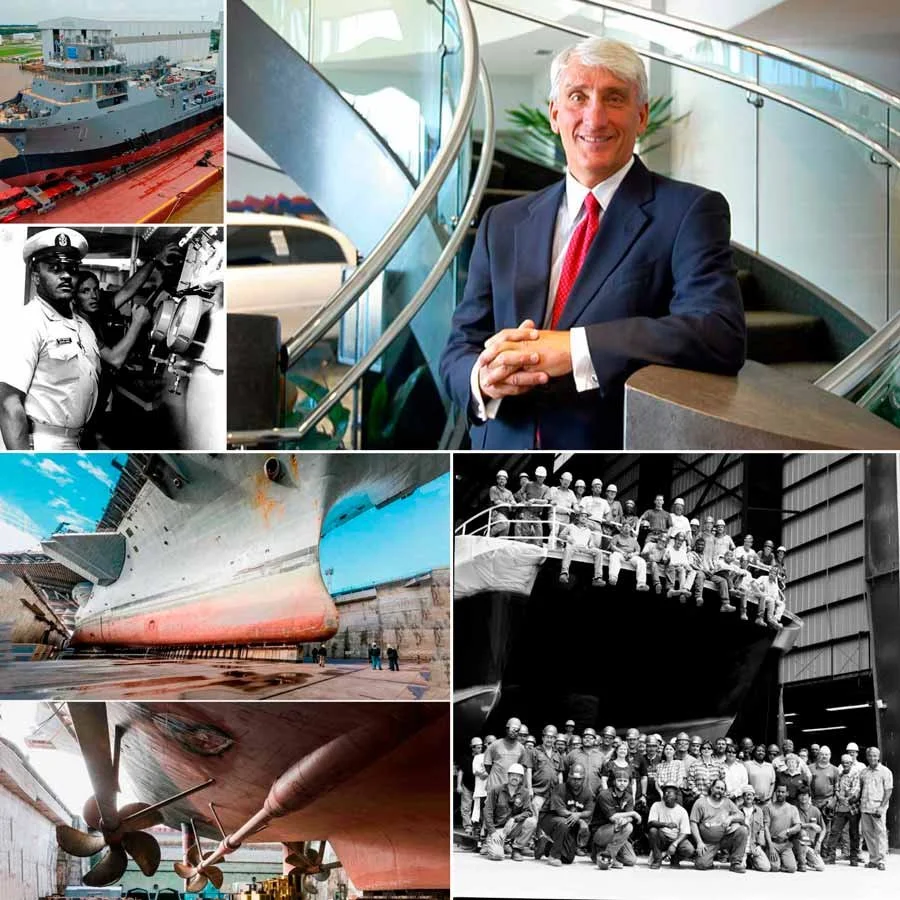
Alan Lerchbacker has spent decades operating at the intersection of engineering, disciplined executive leadership and high-stakes growth. As the first CEO of a then-small US shipbuilding operation–Austal, USA–he helped scale the company from a few dozen employees to over a thousand—work that placed him inside the complex realities of defense manufacturing, institutional partnerships and rapid organizational change. Now advising companies as a consultant, he brings a different perspective, one shaped as much by what did not go smoothly as by what did. In this interview, he reflects on the decisions, pressures and leadership shifts that defined that journey.
ALAN LERCHBACKER
Well, thank you very much, Mia and Bruce. It is great to be here. Very exciting.
BRUCE PIASECKI
So we are going to start with a quote that Alan kindly wrote to Mia and me about a month ago in anticipation of this podcast. He said something that I felt was wonderful about combining teams, growing talent, coaching that talent and transforming people for success, and that is the theme that we are going to pursue reviewing his career over the next 45 minutes. He says, "For me, it is not about building a blueprint for growing a company, but rather about understanding when to adapt, what to let go of and how to lead when the variables are not in your control. I love mergers and acquisitions. It is about the hunt for wonderful companies that are out there, being able to see how to combine and grow and coach and transform people for success." Alan, when you did your recovery of the Challenger pieces, did you know that already about yourself, or is it something that comes on in the other phases at, say, age 33 or 42?
ALAN LERCHBACKER
That is really where it started to build, going to the Naval Academy and then starting leadership aboard the USS John F. Kennedy. At 22 years old, being taken from EOD down into the engineering department and having 168 people you are responsible for really started the progression. And then when I got to the—
BRUCE PIASECKI
At age 22, you said. That is astonishing.
ALAN LERCHBACKER
Yes, sir. The Navy is not afraid to let young people get an opportunity to lead, and it was an incredible opportunity for me. It was a great ship and had some incredible leaders that I could learn from and who guided me.
BRUCE PIASECKI
So by 33, I heard that you were given the task of the Challenger recovery project, and that it involved 127 divers, 33 ships and over 3,000 people. Can you explain how that happened to you by 33, why you were selected, do you think, in retrospect, and what you learned from the Challenger experience?
ALAN LERCHBACKER
Yeah, it was the right place at the right time. Incredible tragedy, but I was at the command center in Norfolk, Virginia. I had responsibility for all the diving operations and salvage operations in the Atlantic. When that happened, I was actually playing basketball and I got called up to the admiral's office. He said, "Don't put your uniform on, just get up here." He told me about the Challenger and that I was going to get to go to Washington, DC, to meet another incredible leader, Captain Charles Bartholomew Blackbart. And we would then go down to Cape Canaveral and set up our command center.
I was a lieutenant commander, very, very junior. There was an Air Force colonel that was there on my team, along with several other senior people. When I went down there with Blackbart, he made it clear that although I was very junior, I was in charge of the recovery operation, and so he really set me up for success. As we pieced that team together, everybody was incredibly responsive. When you are doing something for the first time, it has never been done. We had never recovered anything that deep at that time. Working with NASA engineers, it was super rewarding.
BRUCE PIASECKI
Can you explain the military logic of recovering how many pieces you did recover? It is like a puzzle, and is the purpose of the puzzle to analyze the cause of the accident, or are there other purposes for security reasons?
ALAN LERCHBACKER
So there were several reasons. Obviously, we want to find out what caused the failure, identify the burn-through and other things. There were 85 major discrepancies from the parts that we brought back. And that was not us; we were bringing back the parts to the NASA engineers, and they would inspect those. They already knew that they had a 40 to 50% burn-through on every one of the rocket boosters because they recovered the rocket boosters, so they knew that was a phenomenon. But they had never launched below 32 degrees, and that morning it was 27 degrees. There were icicles on the bottom of the launch platform, and that added to how much burn-through there was. You could see burn-through three seconds into the launch.
BRUCE PIASECKI
Oh, wow. Interesting. I remember having breakfast with you about you suddenly being upgraded at SRF Guam, where you had more people and women to work with, over 200 sailors doing what you loved, which is fixing ships. And then three years later, you had 5,500 men and women in Long Beach. Looking at that leadership growth of you being able to recover in a disaster, fixing ships and then having larger teams, what do you want to tell the listener about why and how people were noticing your speed and analytical ability to give you all of these tasks? Why the rapid responsibility from 33 to 45? It is a tough question, but at this point, we are interested now that you have thought about it in a PhD.
ALAN LERCHBACKER
Well, it was really again, like we talked about, understanding how to read the room, getting people involved and realizing that if you are the smartest person in the room, you are in the wrong room. How I got to Guam was they had killed a 19-year-old apprentice and there were lots of investigations going on. I was told by the admiral, "Get to Guam and find out what happened." Every day I would report to the admiral what I found out. It took me about eight weeks to find out what happened, and every day I would report to the governor of Guam. I made sure the admiral knew what I was going to tell the governor, but I also made sure the governor knew that we were not going to try to hide anything. There was nothing to be hidden; we really wanted to get to the bottom of it.
So after eight weeks, I fly back to Hawaii to my command, and I walk in on the admiral. He is sitting there and he goes, "Lurch, you are going to go to Guam." I said, "No, sir, I just got back." He said, "No, you dummy. You are going to go back and run that shipyard. Those people love you over there." I think that is about having a great relationship with my leaders and the leadership and building trust with the people on Guam. It was actually the nephew of the governor of Guam and the son of the senior civilian at the shipyard who got killed, so it was an incredibly tragic time. There were seven other investigations that were going on, but I made sure that the people of Guam knew that I was there just to find out—not blame anybody, but find out what happened and make sure that we would never let that happen again.
BRUCE PIASECKI
So Alan, I think what you learned at Long Beach is particularly relevant because you made innovation happen at this BRAC closure, and there are still 150 BRAC closures in process. The Long Beach Naval Shipyard is a very important case study of employee engagement and creativity that exploded as the workers transitioned from micromanagement tasks to solving unprecedented workforce and environmental problems. What do you think of this paradox between efficiency and creativity? How did you create a tone and an atmosphere that gave psychological safety to this rapid onboarding of people at Long Beach? It is a question of voice, tone and action, I am sure. But if you have any thoughts on that, it would be very helpful. Then please explain why this is relevant to the rest of the next 20 years regarding the 43 million acres that you mentioned that the government is thinking about giving back. I do not think the public understands that yet.
ALAN LERCHBACKER
Right. So during the BRAC process, Base Realignment and Closure, the Secretary of Labor actually brought a $165 million check, presenting the check to us at Long Beach Naval Shipyard. The check was to be used for helping every one of the employees that wanted to retransition and learn a new job. So we placed 2,700 people in 11 months, and I also placed me. So that was an incredible opportunity. As I explained, our environmental team was about 30 people at the time of this announcement that we were going to have a closure. But what that meant was that we had 22 super sites that we had to clean up. So our team expanded from 30 to over 400 people.
The woman that led that, she was the head of our environmental division, and at the end of two years, they just took their licenses and went out in town and became an environmental consulting company. Just an incredible display of innovation, creativity and growth. The 30 original people were very trained in environmental, but the other 300-plus people that we added to that team were people we trained and that learned...
READ MORE [ + ]
…on-the-job training, learning about cleaning up.
The other thing is that with the BRAC for today, with the Big Beautiful Bill, I give it as an example. If the Native American tribes had decided we want to stand in line and take over the shipyard, they could have done that. They would have been first in line. And so I make presentations today. I am trying to bring together the tribes of America and our company, Featherstone, and what we are doing is I explain to them that when we get with them, they go, “Why would we want to own a shipyard?” And I said, “Well, what is it today?” Well, today it is part of the Port of Long Beach, and if the Native Americans had taken it over and renegotiated with the Port of Long Beach, they would have got somebody to develop it into the port. And today, since 1998, they would have been getting $1.2 million every week on that lease for the property that they leased back.
So it is not that you wanted to own and operate a shipyard; it is what is next for that property. And today there are 150 BRAC sites in different stages of progress, one through four. Stage four is really final, and it has been actually developed into what is next. But every one of those, and part of the Big Beautiful Bill is that the president wants to give back to the Native American tribes, so Native Americans 43 million acres. Thirteen million acres for mining of minerals and things that we need for manufacturing, and the other 30 million for energy and other things that we have going on.
So it is an incredible opportunity, and we are trying to figure out how best to work with the Secretary of the Interior to line this up. So knowing how the BRAC system works and how to make that transition was really helpful and set me up for getting ready for this.
When did you start Featherstone, and who is involved in it with you, like your brilliant deputies?
We started it in March of this year, so very, very recently. One of the members of the tribe came to see us, Eric Manesi and me, and Elliot Hasboro. Elliot is Native American, and he said, “Hey, I looked at this. I think the tribes would be very interested, and we should be the conduit to help coordinate the tribes’ efforts and the Secretary of the Interior.”
And I went, “God, it is a great idea.” So we hopped all over it, and that is where we just finished the website. We are just getting that set up. We have actually got a teaming agreement with CBRE on the real estate side because it is incredibly important that every one of these sites that we have the Department of the Interior declare a BRAC site, that we get that relationship, that we have an agreement with the developers and that the tribe is protected.
And the developers are also protected because that was one of the issues, is that the tribe did not want to have longer than a ten-year lease. Well, no private entity is going to put in billions of dollars to develop an energy site unless they have a 50-plus-year lease.
I will say. Yeah.
And so CBRE really helped us to work with the tribes to describe, “Hey, this is not we are going to lock in something for a hundred years. This can change.” And so that teaming with them and the tribes, this is so much fun right now. It is an incredible opportunity.
Everybody thinks, “Well, we are going to get rid of the EPA, and it will be so much simpler to develop the land.” But I can tell you that the Native Americans are very, very protective of their country. There may not be as many rules, but that is another reason we set up our company so that we could work with larger companies like CBRE to make sure that they understood that going forward we are still going to protect our environment and our land, but we may be able to get things done faster.
I mean, I do not know the details of that. Of course you wanted to make it an interesting economic proposition for those indigenous peoples that you are working with, but how are you also then protecting the rights of nature, minimizing pollution and also marine life and all these things? There are a lot of things to take into account.
There really are. We are on the tip of the iceberg there. If you look at the Port of Long Beach, and the combination of the Port of Long Beach and the Port of LA, which are right next to each other, that combination makes them the third-largest port in the world. I think they did that on a very, very high relationship and looking at the environment. So we want to do the same thing, although our country needs energy, we are looking at how do we get that energy with nuclear sites and other ways of doing it and protecting the environment while we are growing the data centers and energy sites that we need.
To sum up Featherstone, it sounds like you have created another enabling organization that allows you to utilize your knowledge of how to talk to the government, in this case the Secretary of the Interior, and how to talk to corporate giants. I have heard a presentation from CBRE, from their sustainability officer, about the data that they can collect about sustainability, energy and mining, combined with your experience of shipbuilding and operations. So you are the enabler in Featherstone. Tell us why you chose “feather,” which relates to the Native American, I think, and “stone,” because there is a certain creativity to that.
I have to give Elliot credit; he came up with that, with the light and the heavy, the feather and the stone, and that we are the mediator in the middle. Actually, I have four interns from the University of San Diego that work with us, and they and Elliot came together and came up with our logo. That will help me get that posted and up and operational.
Mia, before I turn it back to you, I would say that people are listening to Alan; he has this rare ability to be on the ground creating something new, and that attracts giant partners like CBRE. Even in the case of shipyard operations, when he was the first CEO of that Australian company, he teamed with General Dynamics and Boeing, right? Which enabled that associative power. So I think one of the lessons is to learn how to align and find the purpose with some big alliance partners. But I think you also always talk in your work about how to get on the right bus, and you always talk about evaluating that partner so that they continue your enabling abilities.
We have talked about his shipyard operations. We have talked about his latest project with Featherstone. I think there are plenty of other things to talk about, but let us turn it over to you for a minute.
I guess I am interested in some of those essential life skills. I mean, you are talking there, of course, about dealing with those giants, General Dynamics and Boeing, dealing with going to Guam or dealing with indigenous cultures and all their traditions, going back over seven generations. You have to keep the ancestors happy, too. There is a lot of situational awareness and adaptation awareness that comes into play, as well as spontaneity and thinking, planning, but also adapting in the moment for all these changing landscapes, not to mention climate change, which we have to be very mindful of. So how did you develop those essential life skills that have helped you with all this planning, trust-building, scaling organizations and just dealing with people?
Yeah, so the people part of it, my wife hates when we say superpowers. But one of the things that I really enjoy is to see people come together. When the Navy came out, just as an example of teaming, they needed a 50-knot ship. We knew at Austal that we were the only company in the world that could build the Navy a 50-knot ship. We already had a 42-knot ship that was 300 feet long, and it did all the things that the Navy wanted it to do. It is just that we had never worked on that large a scale. And so at the industry meeting, two of my friends, one was the leader of the Boeing team and another one was the leader of the General Dynamics team, joined up.
They actually invited me to come up to Bath Iron Works. When I got there, the CEO paired me with… I am sure he just wanted to get me out of his office, because here is this guy with a shipyard that has less than, probably at that time we had two or 300 people, and he has 4,000. But it was really helpful for us to see their operation and understand that they would not understand how to build the ship that the Navy wanted, because they did not build 50-knot ships.
The one concern when you team with somebody that big is, and you could see it, they were enduring us until they could figure out how to take our technology and learn to do it, and then just tell us, “Yeah, thank you very much, but we will take over.” Because they did not understand the aluminum side of building ships, that really helped us to build.
So when you team with somebody big like that, like Boeing, Boeing was going to be the integrator of all the systems. We always worked very closely with them. The General Dynamics team, once they saw that we did add a lot of value to what they were trying to do. But you just have to be careful when you are a small company like that. I warn other young entrepreneurs that are trying to team with larger companies, make sure that your technology is protected and you understand your position in relation to the larger companies.
Then you sold it to YYK. That was a pivotal moment for you, right? What did letting go feel like?
Wow. I mean, that first day, last day, and that was the last day, it is super hard for the entrepreneur. You do not know what is next. I will always be an entrepreneur. I will always look at… I am not the go-in-the-garage-and-develop-something entrepreneur. That is not the kind of entrepreneur I am. But buy and grow, that is actually what I do. I see a company and I understand what is a perfect target for us as far as mergers and acquisitions. It is somebody that started a company when they were 30, and today they are 60. Their family has seen how hard they had to work. The family is not interested in taking it to the next level. They are not interested, and they are tired. They have got a really good company; it is going in the right direction, and they are making money. It is just that they are out of energy.
That is a perfect company for us to engage and help them grow. I am really proud of how we work with those companies. A lot of them, they see they have a hockey stick. What I tell them is, “Let us own 60, you own 40. We will agree on a buyout of a multiple of EBITDA.” We work really closely with them. “And let us ride the hockey stick.” I really like the investors I work with because they allow us to work very closely with the families who have worked hard to grow the companies that we are looking to buy.
I think you have described some of the secret sauce of what you find as an attractive merger target. Let us talk now a little bit, if you do not mind, about the creative and financial people you surround yourself with, what I call brilliant deputies. You are the man who can see the opportunity, recognize it, pattern it and target it. You said at one point in your writings to us that you are not a visionary, that, “I need to have creative people around me all the time. My strength is when I see a good idea, I can see immediately where I might go and how to make us get there, which forces me to learn to listen to be sure I hear everyone.”
That is sort of a paraphrase in writing of what we just heard you say. How do you pay attention? How do you select those few key creative people and the financial people? You talk about people like Tim Schnurb, I think his name is, or Captain Jerry Tuttle. In all of your reflections, you always associate credit to someone that was right by your side. Any reflections, Alan, on how you are attentive to listen to these creative types and say, “I need you on my critical team,” and are they the first circle of your support as you go out to 5,000, 10,000 people? Any thoughts on how you select creative, brilliant deputies?
Oh, yeah, Bruce. There are several examples that you just met. Tim Scheib is my partner. He actually ran Bender Shipyard when I was running Austal. He was very influential in helping me get that job, and he and I are now working together. We are part of the mergers and acquisitions team. I would never do this without Tim because I am the outside guy. I am the guy that wants to talk to the congressman, talk to the senators, make sure that we are going in the right direction and meet with the Navy.
Tim is the inside-the-shipyard guy, running the shipyard, working with the people and really getting all the operations going in the right direction. He is by far the best shipyard guy I have ever met in my 30 years working in shipyards. Nobody is like him, and so I am so blessed to have him. He and I met when we were midshipmen, so we have known each other a long, long time.
And hearing about those people, you share shoulder strength with them, like you are part of the same line advancing the cause. You do not necessarily dictate the total story to them, but you give them a chance to be very transparent with you, like the Native Americans you are now working with at Featherstone, and to talk about expansion, growth and the disciplined process of that. I think we have in Alan a clear executive of leadership who can build, but is also attentive to the creative side of human nature.
I have two other questions, Mia, but I would like to pause for your questions. I have a question about speed and how to go from being reactive to faster than the competition, and then a question about China, but I think I should turn to Mia first to see what she wants to say about what is on her mind and her audience.
Yeah, speed and reacting to China, and also AI. Although the businesses you are involved in, it may be something to do with logistics, I am not sure how that comes into that, but that is something that we all feel pressurized by now. I mean, how do we compete? You are involved in data centers and different things like that, but how do we compete? That is something that we are all going through, an identity crisis at the moment regarding the future of work and all these things. A massive upgrade moment, so how do you make yourself and your companies future-proof?
Oh, well, future-proofing is really, really tough. There have been a lot of companies that have done really well at doing that. The vision at Austal was more about your sons and daughters 20, 30 years from now going to work at this shipyard. One of my guys came up and he had a sonogram of his son, and I asked him, “Could I have this? I will not hurt it.” We blew it up to be about eight feet high, and I put that on the wall. At one of the meetings, I said, “There is the future of Austal. That young man will work at this shipyard 30 years from now.” And that is actually true. It is looking at seeing how you reach out to people and get them to see that vision and then become part of it.
Now, Alan, Mia made reference to AI, because her audience is very interested in it. I noticed in looking at the current webpage of the company you were the first CEO of, that they create flexible, optionally manned or autonomous surface vehicles, and that you know a lot about the joint high-speed innovations and also the LTF combat ships. Can you give Mia a sense of how that world of innovation and AI is changing, through data analytics, artificial intelligence and machine learning, the number of Navy people you need on the ship, and how many of these advanced ships you began to push?
Well, there is a company, Sustas, here in San Diego, and they just launched their first two platforms. One they launched in Mission Bay in San Diego, and it went all the way across the Pacific with… it is unmanned. It went—
Unbelievable.
I know. If you see, I am a naval architect, naval engineer, and in the middle of their company are all these naval architects and naval engineers. There are these huge screens, and they are tracking their platform all the way. Actually, one of the Chinese ships came up and got very close to the ship, but did not interfere, and it went all the way to Japan and pulled into port. Today it is going around the Philippine Islands unmanned, pre-programmed. The other ship that they made, they took to Norfolk, and it came out of Norfolk and drove all the way over to Portugal unmanned and uninterfered with.
Technology is the future; that is why predictability is really hard. I actually started working with an AI company because I think it is so important to understand where it is going to go and what it is going to do. As part of teaching at Cal State San Marcos, my students brought in one of the senior people from a CX company. I had no idea what CX is. It is customer experience. I teach M&A. I am the M&A guy. He goes, “M&A is dead.” He indicated that with LLMs and LAMs, large action models, he said, “That is going to be dead in three months. It takes us six months to buy a company; that will be dead. So why would we buy the company? You have got to start to develop all the technology internally to the company that you have, because buying it is not going to work.”
Different models, yeah. One of the things I would like the audience to know about you, Alan, because you are humble and you have not mentioned it, is you know what the latest is in AI and innovation because you are both on the board of the US Naval Academy, and I understand you are also on the board of the National Medal of Honor programs, correct?
I am.
Are there other boards that you use as sort of sentinels of things to come?
Yeah. I have been asked to be an advisor to several DOD startups, and I think that is the way you can see the future and learn where it is going to go, is to become an advisor. I encourage entrepreneurs to find people with gray hair to help you. Because I am learning as much as an advisor as the companies I am advising. They understand the technology, they understand where it needs to go and I am there to help them about the partnerships, the sales and who to work with.
Just like Mia and Bruce said about getting on the right bus, make sure you understand who is on the bus and where it is going. I always encourage young entrepreneurs to try to have at least five to six advisors, and to start with advisors instead of a board. Because with a board, you have an obligation to listen to them. But with me as an advisor, I can give you advice. You can pay me for advice, you can listen to it or you can ignore it.
That is a key point in my experience, Alan. You do not have to have the legal formality of the board.
While we are on the topic, I mean, you are talking about defense and AI, and something that we think about—although we have people from the European Commission on discussing these things sometimes—militarized AI, a great arms race. It is a kind of slippery slope, but everyone is competing to get out in front of that. What are your reflections on that and how can we safeguard against the worst outcomes?
I know. Mia, I started the AI Society for the University of San Diego, and I am working with another professor at Cal State. And we have started the AI Hub and the AI Society there, and I think getting our youth to understand, just like you said, just like nuclear energy, there is the negative side of the nuclear bomb and then there is nuclear energy, which is one of the cleanest energies.
This is the same thing where I talked to several senators and congressmen. Their biggest concern, one of them is on the What Do We Do With AI committee, and where is it going to go? And they just do not know. I mean, how do you make a law about a technology that you are not even sure where it is going to go and it changes every three months?
So that is really a big... So my idea is that we have to teach the responsibility of technology to our youth, and that really should start in middle school. I do not teach there, so that is why I work with the high schools, but we have to push it all the way down to the middle school so the children are learning right away that, hey, this is a great technology.
It is a tool, and we have to be responsible about how we use it and when we use it. And that is why I got involved with the AI Societies, is to get it going so that we can have a national AI society to address issues just like you said. I think that is the vision I have for our AI society, is to go national and at all the universities and push it down to our younger people.
I think the last three answers, Alan, you gave a sense of how we can compete with China. You mentioned in your dissertation, which I hope you tell people about, that China now produces 23 million tons of ships annually compared to America's 100,000 tons of ships. Now, we might have ships that are very fast or autonomous or very capable, but the tonnage is significant.
And so by thinking about AI, by thinking about reaching the STEM fields early in people's educational careers, you are giving us hope that we can and should compete with that level of production. And I think you have also told us about the skills it takes to produce ships faster than we currently do, which is what you were known for.
Is there anything else you want to say about being creative as opposed to reactive and about China?
Wow, that is well—
Big open question...
It took my dissertation. So it is really interesting to see that we are starting to, let us work with other nations. So Fincantieri is here, the Italians, and Hanwha has bought Philadelphia Shipyard.
And if you saw that, it was just a... It is kind of eye-opening that they are building one ship a year, and in a very similar shipyard in South Korea, they build 20 ships a year. And so that is an incredibly huge gap, and we are building with technology from the 1940s and 1950s, and they have completely changed the supply chain to provide for the shipbuilding industry.
And so working with companies like Hanwha, Samsung. Samsung, I am working with Dr. Kwon at San Diego State University. He is the head of their naval architecture and naval engineering department, and he has teamed with Samsung.And Samsung, as they were here last week, and they want to build a marine center here to help our country improve shipbuilding.
And I think that you have to reach out to other companies and countries and start to work with our partners to make that happen because they are already doing it, and we have to benchmark with them.
Mia, Alan has been to 52 countries and fought in two wars, so I think you also know the international feel of war and the international aspect of travel.
I think one of the themes that I have detected in studying your work is efficiency with purpose, in that you kind of prove that results, both operationally and in terms of teams, come from aligning creative people and yourself to get somewhere needed fast, not just build fast. You know, and so you can build fast that way.
Well, I wanted to go further into just how we can make shipbuilding and green steel, how America can keep abreast of these latest technologies and eventually move towards maritime decarbonization.
You talked about how the field in China, I know that, of course, they have often taken technologies of renewable energies that were developed in America but have really scaled it out. What can we learn from them? What can we learn from our own technologies that are made in America and really implement that on scale?
Yeah, so how do we optimize the supply chain? How do we integrate the technology? That is really key. Right now we are using digital drawings, but AI can read—the company that I am working with in the Northwest, we can read every one of—there are volumes and volumes of the FAR, the acquisition regulations for the federal government.
It would take years to learn all the regulations. We have integrated that into our technology, and every time a specification comes out from the Navy, we can see everything. AI can read that, and things that would take three to five weeks, we can do in less than 30 minutes.
Wow.
That is the kind of transition that we have to come up with, and that is using it as a tool.
Sure, you can have somebody that has 30 years of experience with the FAR, but using AI and being very pointed in how we use it when those RFPs come out, requests for proposals from the government, if you know and you have got that AI loaded, you have got the FAR loaded, we can go through there, and we can give a bid.
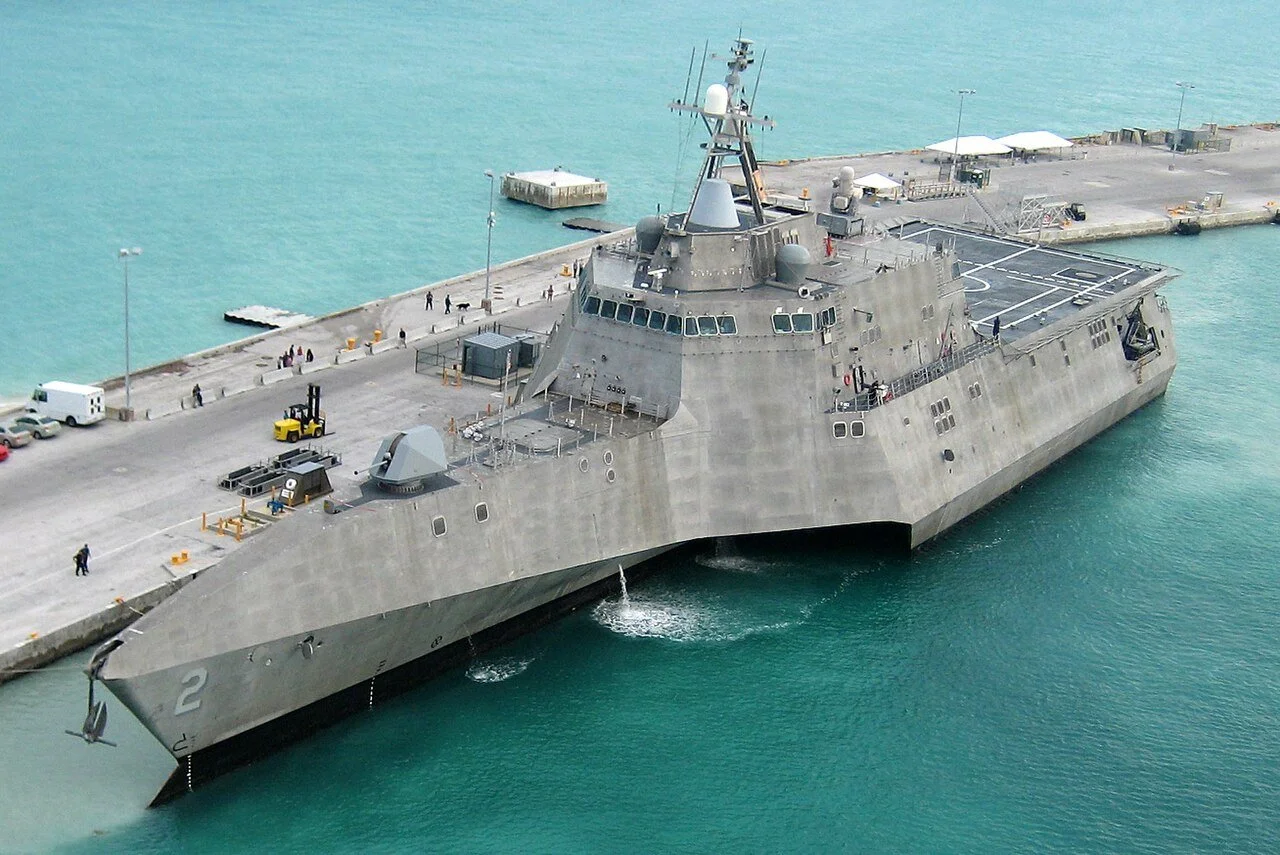
And like I said, in three to four to five weeks, and it actually took for LCS, like a littoral combat ship, that took a year and a half for us to get that bid in. And to say that we could have done it in less than a month with the technology that we have today. And I am being a little negative.
I think it could be done faster than that and come up with just the same kind of results, which is sad for me because I loved doing and working and designing that ship. But I also loved building it, and it gave us a great opportunity to do that.So we have to get there.
I imagine that naval strategy has really changed over your career. You know, the design of ships and shipyards has changed so much. I mean, what do you see as the greatest evolutions and things that we are going to see down the pipeline?
So I was just... I read Proceedings magazine, and one of the proceedings I just got done reading is Mao Gets Maritime.
And it is our view of where the Chinese Navy is going to go. And you start looking at, what are we doing over in Iran? I was the on-scene commander for the 1987 war in Iran, and so I understand the Straits of Hormuz. I understand what we are doing. Right now we are really trying to kill a fly with a sledgehammer. It is, you have got aircraft carriers over there, and it is a much smaller... In fact, they are almost inefficient over there.
They are doing a great job, I do not... But the projection is needed, but that is such a small area that I think what you just described, where maritime strategy is going to go, we are in the middle of defining that right now.
It is changing so much with autonomy, with the different weapons systems, laser systems that we have now developed at General Atomics and that we are working with the DOE and DOD to have. And hopefully, like anybody that has actually been in a war never wants us to have to go to war again.
And so yeah, hopefully, there will be deterrents rather than actually having to use them. And we will learn how to work together. I wish, I know our president was over in China, and I am sure he was having discussions about what was going on in Iran. And I think in answer to your question and to your audience, it is the same thing with Russia and Ukraine.
We have to learn how to work together in this, we are on an island. That is an island in space, and if we do not learn how to live together, we are going to lose. And I think that is why, again, it is so important to get education where we are all, not like this. Well, you cannot see it, but we are not all banging against each other. We are holding hands and working together.
So Alan, in your dissertation, you talk about a female journey worker in your study who stated, "I just think that women do everything. We pay more attention to detail. We can do what the guys can, and we are awesome." End quote. So shipbuilding remains heavily male-dominated. Do you want to reflect a little bit about how you are going to transact or how you want to educate for more diversity as well as gender diversity?
Thank you, Bruce.
So at our shipyard in Austal, when I went to Australia to visit their shipyard, there were no women in the shipyard. There were none. There were five ladies that worked in the office. And we will just leave it at that.
And so when the owner and founder of Austal came to the United States, and at that time, we probably had four or 500 employees, 30 to 40% of our employees were women. The owner said, "Where did you find all these women?" And I said that we are so fortunate that Boeing had a huge RIF and had to let employees go, and we were lucky. One of their employees came and then he started calling, and we were taking all kinds of employees.
I heard that the shrimp industry had gone in Mobile, Alabama. Shrimping in the United States was almost unheard of.And that is the Vietnamese. Vietnamese welders, Vietnamese women and men are incredible workers, and I was invited to visit their church, and the next thing we know, we have got 20, 30, 40 Vietnamese. That is how you have got it. You have to get out and go places that you never went before.
We had five high schools that we worked with, and we guaranteed if seniors worked as an internship with us, and I forget how many hours a week when they are seniors, that they would automatically be enrolled in our apprentice program at Austal. That was an incredible opportunity.
And what we found was that the younger people, arc welding or MIG and TIG welding, metal welding, was a video game for them. They hear it, they see it and they learn how to weld where it would take six months to teach somebody from a stick welder to a metal welder; they would learn it in less than 30 days.
And the youth really added so much value. So diversity, yeah, anybody that is against diversity, they are talking to the wrong guy because I think that it adds so much value to your company, especially if you show them that we are going to listen to everybody.
So, you know, what emerges from this is that you obviously have a strong sense of family and also building families and creating those atmospheres where people can do their best work. And so as you think about the future and the kind of world that we are leaving for the next generation, what would you like young people to know, preserve and remember?
So the Gen Z, they are taking a lot of heat about this. They do not do this and they do not do that. But what we find is if you lead them the way they would like to be led, and sometimes that is really hard, they are the most dedicated and faithful employees you will ever find.
And so we need to learn how to meet in the middle. I think everybody wants... We all lead the way we want to be led, and it is really more about leading people the way they want to be led and they need to be led, and everybody is different.
And so I think it is really important for leaders. Again, we talked about my wife is an introvert and she is an incredible listener. She has taught me so much about listening and I thought I was a good listener, and now I am a much better listener because she has taught me you really have to listen to the people.
And that is why every four to six weeks I would meet with everybody. It did not matter how many employees we had, whether we had 60 or whether we had a thousand, we would meet together, and if they stop asking questions, then you know you have a problem. And at Austal, they never, in my companies, they never stop asking questions, which is so much fun for me.
It is so rewarding.
So Alan, it is just an incredible journey, and we could really talk for hours. You know, I think what emerges, it is not just your life. It is not just like a blueprint for scaling companies. It is just this reminder that growth, I think, reshapes the people leading it and everyone along the pipeline.
So the systems, the structures and the strategies really matter. But over time, the harder challenge becomes the internal, building those families, knowing when to adapt, what to let go of and how to lead when the variables are no longer controllable. So you have given us a lot to think about.
So Alan Lerchbacker has spent several decades operating at the intersection of engineering, executive leadership and high-stakes corporate growth, both for the government and for private sector activities, and the Navy.
As the first CEO of a small US shipbuilding operation, he helped scale it to a company and a few dozen employees to over thousands, working that placed him inside the complex realities of defense manufacturing, institutional partnerships and rapid organizational change. He has talked at length throughout about using creative and financial people as his key deputies.
Alan is now advising companies as a consultant in other nations as well, and he brings his creative perspective, one shaped as much by what did not go smoothly in his experience as by what did. In the interview that you just heard, he reflects on decisions, pressures and leadership shifts that defined his journey from Guam to America to 52 different countries.
And we thank Alan for his time, his leadership and his willingness to train students full-time in business school and on the boards that he serves. Thank you, Alan.
Thank you, Bruce. This was an incredible honor, and I really loved the dialogue that we had. And Mia, so nice to meet you.