

The most important thing is the simplest and the hardest in a way. It is talk to the people that you think are your enemies. This is about shifting from a machine economy to a living systems economy. Now, I'm a great believer in genuine free markets, genuine free enterprise and the reason for that is that it mimics nature's processes of creation, and that's what we are shifting to with a circular economy. In our old linear economy, we extracted, we used up and then disposed of things as if the planet was a giant ATM machine, and we would just extract our money and it would never end. But of course, you can't do that because the planet is a living system and composed of living systems, and those living systems are what support us. We have grown so big and so powerful that in a dozen different ways and more, we are threatening the health of the living systems that support us and support life on the planet.
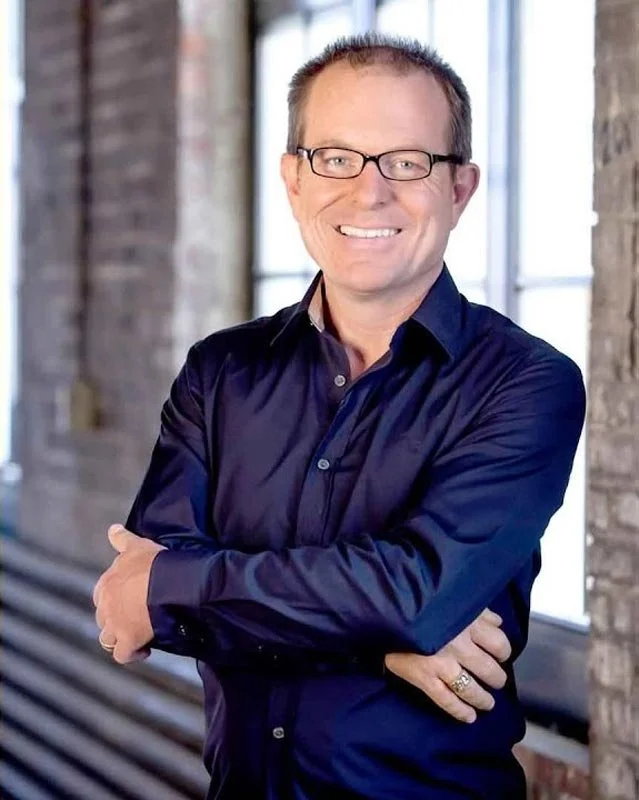
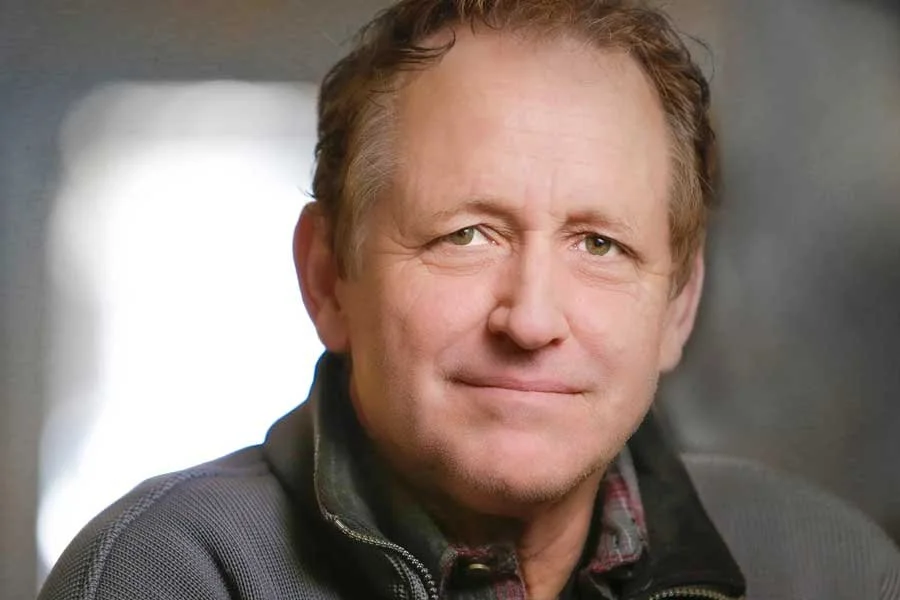
Bill Shireman is a policy innovator, a mediator, a man who has spent his career at the intersection of commerce and conservation. He is the President of Solution Citizen and the Curator of the EarthX Congress of Conferences. His latest work is The EarthX Guide to a Circular Economy, and out of that vision comes Circle America—a collaborative group dedicated to transforming how we live and do business. He believes that the transition to a circular economy is not merely technological. It is civilizational. Bill is a pragmatic idealist who has brought together capitalists, environmentalists, progressives, conservatives and community organizers—to find common ground. We explore his life, his ideas, and the future of our planet. Bill Shireman welcome to business and society and one planet podcast
BILL SHIREMAN
I am so pleased to be here. Thank you, Mia and Bruce.
MIA FUNK
Well, we're pleased to have you here and to learn from you. And Bruce, who's known you for, I believe going on 35 years, can sort of give a little bit of a background of what you've done.
BRUCE PIASECKI
I wanted to start, Bill, by mentioning that in addition to being three things at once—a skilled conflict mediator, a policy and corporate innovator and a builder of social enterprises, many of them—I wanted you to reflect a little bit on *Future 500* and before you went to Trammell Crow and EarthX, and most of our talk will be about the circular economy. I remember at least three massive results that you had as the founder and leader of *Future 500*, so I hope you give a new generation a sense of what that was. One is, I do believe that you created the most effective beverage container recycling program in the world many years ago, and I also believe you created the world's first corporate supply chain standards for sustainable forestry. I know less about what you did in California regarding federal taxes on carbon, but if you could talk a little bit about *Future 500*, then it makes more sense as to why you sort of went to Trammell, why you're his curator and why you're now doing Solution Citizen.
BILL SHIREMAN
That's a nice throughput, Bruce. And yes, so, you know, *Future 500* grew out of my work at Californians Against Waste. Now, I was the head of Californians Against Waste, which was and still is the leading citizen recycling lobby, certainly in California, and I think probably the most effective in the United States. At the time that I joined it, I was one of about 30 founders of the group. Initially, there were really five people that were primary. I was not one of those five that actually founded the organization, but I took on the executive director role after we had taken a bottle bill to the statewide ballot. I pushed in the traditional way, in a battle with the beverage companies, you know, beer and soft drinks, and the retail grocers and packagers and all the different companies that had aligned against a bottle bill, which is a five-cent deposit law on beverage containers. And we were in a traditional battle.
We were demonizing them; they were demonizing us. We were raising money to fight for the bill. They were raising money to fight against the bill. We did well enough in the state initiative that they were concerned that we would come back and do it again. So I mounted a campaign specifically to do that, to put the bottle bill back on the ballot. I had been listening to my opponents. I liked some of my opponents. I had learned, you know, we had debated one another and so on, and I really wanted to understand where they were coming from and why they opposed the bottle bill, both so that we could write a law that would minimize their opposition, really, you know, be smart about it and minimize the costs to the industry, and also so that there was a potential of our working out a deal of some kind. Now, the one who was really the breakthrough was Bill Coors at Coors Brewing Company. Coors was a fascinating company for me because Joe Coors, Bill Coors' brother, was a member of Reagan's kitchen cabinet during the Reagan administration. He was regarded by my community, which was mostly on the left, as an evil corporate titan.
And so I was advised, “Don't talk to Bill Coors. He's as bad as Joe Coors, and he's an opponent, and anything he tells you is suspect.” Well, I didn't think that was true. I had read what Bill Coors was writing about bottle bills. He sort of said that he felt that they were inevitable and that the industry had to get prepared for them. And so I thought, “Well, this is a guy I want to talk to.” So I called Bill Coors. He actually took my call, and we had a nice conversation. He invited me to come back to the brewery in Colorado, or I may have invited myself. I'm not sure. And I flew back and met with this really tall, you know, Midwestern force of nature who brought me into his office, and he pulled out a document called the *Closed Loop System*. The *Closed Loop System* was his own concept of how to do a bottle bill better.
And it happened to align very well with what I was thinking would be a very low-cost model for doing a bottle bill. So we became fast friends, and I secretly then had him as my ally in California as I was working to bring folks together. But he could not go public because when he would say something positive about bottle bills and deposit systems, the retailers who he depended on would get angry at him, and he would find that his brand was reduced in visibility in retail stores.
So I realized at that point the power of retailers in driving success. I began to meet with retail leaders in the state, and I met with another supposed enemy, Chuck Collings, who was the CEO of Raley's Superstores, the number three retail group, and he was the head of the California Grocers Association. He was also a religious right evangelical and regarded, again, by my left-leaning colleagues as evil because of that. But when I met with him, he was a delightful, open, honest, straightforward man, and he felt that his side had been unethical in their campaign against us, and he would prefer to work with us. And all I needed to do was solve his problem, as he put it. His problem was the cost of dealing with taking back these containers in his stores. So that became my marching order. I was going to find a way to craft the law so that it didn't impose a lot of new costs and mandates on retailers. And I did that by establishing more of a free-market approach to a bottle bill, where you put a deposit on the container. Retailers have an obligation to have a recycling center in or close to the store, but consumers are under no obligation to bring their containers back there.
They can do anything they want with it. They can put it in their curbside recycling program, and then the city gets the money. They can give it to the Boy Scouts or a charity, and they get the money. They can return it to a fully profitable recycling center where they get a much higher price, and they can make money.
They can throw it in the trash, and then somebody else will dig it out. You know, we created a system in California where people had every opportunity to pull these containers out, and we ended up establishing a recycling rate of around 80% ultimately under that bill. It was all self-financing.
It did not require any tax dollars because the unredeemed deposits could pay for the entire infrastructure, for the state organization, the state regulatory structure and to build an infrastructure for recycling in the state. So that was a great breakthrough, and it happened because we spoke to our enemies, we respected them, we listened to them and then we understood their power dynamics. Once the retailers came aboard, everybody else had to also come aboard because the retailers controlled the shelf space that the products were sent on. So that gave me inspiration to begin *Future 500* and then to do some of the things you talked about, Bruce, bringing Mitsubishi companies together with Rainforest Action Network and Greenpeace and establishing the first corporate procurement system for sustainable timber, which led to...
READ MORE [ + ]
...certification programs for sustainable timber, which really dramatically changed the entire industry of timber and timber production around the world. We haven’t saved all the rainforest, but we have certainly saved a couple hundred million hectares of rainforest through those programs, and much more is to come.
And Bill, I'm really glad that you started with that because we're going to now dig into where you came from, but it's very important for the listener to know as we get into the work of EarthX, the work that you're now doing at Solution Citizen and the new LinkedIn messages that you have, to know that you've done this for 20 or 30 years in the middle and bringing enemies together to achieve actual results that improve corporate and environment at once.
So thank you for telling that story, Bill.
Of course, of course. Happy to.
And I think it's really interesting because maybe you were a born activist. It seems like it's something, there are some things you learn, and there are just some things you know. But to just find out a little bit about your background, Bill, you know, you grew up, I guess, in California in the 1960s.
Already a great environment for this, I think, surrounded by the civil rights and environmental movements and showing this initiative and entrepreneurial spirit, I think, at a young age. I read that by high school you were debating Edward Teller on nuclear power. Is this...
I was.
Yes, there is no limitation, and sometimes they want people to debate them. They want to, you know, because then they question themselves, and then they doubt, and then they change, you know, if there's something compelling. So who instilled that early sense of environmental responsibility in you? What drove you to step into that arena so young?
Well, I, you know, I grew up in Silicon Valley. My parents moved there when I was five, so my growing up years were pretty much in Sunnyvale, California, and then working in Palo Alto and that region. And I noticed, of course, that the community that I was living in seemed to be a manufactured community. It essentially was all of the orchards of what was called the Valley of Heart's Delight, were pretty quickly being transformed into suburban sprawls of virtually identical homes and neighborhoods, virtually identical shopping centers and strip malls and so on. And I became very concerned about the destruction of nature, of what I saw as nature.
Now, an orchard is not nature, but to me, it was the closest thing to nature that I saw all around me, and they were disappearing so quickly, and that concerned me. Then I had a traumatic experience in my own life when my grandfather passed away. He was my favorite relative by far, and that just scared me.
That was just like to lose someone like that, so important to me, was really devastating to me. And I realized that everyone dies. I'm going to die. And then I looked around at the environment and I thought, “You know, and everybody else might die if we destroy the planet.” So I became a kind of a self-made environmental activist at that moment. And by the time I was ten, I was harassing my family to do all the different things that you had, 50 different things to save the planet.
Well, that's what we have to listen to, because I think that our young people are the most committed because it's their future and they see it. And I think that this openness to reach across the aisle...
You talked about reaching across to Coors or others. Because at UC Berkeley, if I understand, you were on the one hand registered as a Republican. Is that right? But you're campaigning with a Ralph Nader advocacy group on the other hand. So that's a long history of just understanding pragmatically that people, we can find a common ground.
Capitalist, activist, it doesn't matter. We all want this one planet we call home. So when did that, you know, come about, that awakening for you?
I think it was, I mean, maybe I was just growing up in an entrepreneurial spirit of sort in Silicon Valley. But, you know, before I was seven years old, I was starting little businesses, and I started one when I was seven, which was selling candy to the neighbors.
I opened up the atrium in our house, turned it into a kind of a little cafe, and sold candy, and then sold popsicles and beverages. And kids would come and they would hang out there, and adults would come and feed their addictions to sugar. And the kids even commandeered the school bus to make a special stop at my house, you know, each day so the kids could spend their school money on my candy. Not entirely socially responsible, but it was a way to make a lot of money, and that capitalized some other businesses as well.
But it also made me aware that, hey, you know, because I was selling this stuff, there was litter around the neighborhood that came from me. So my dad and I would clean up this litter, and that became a concern. Then my fifth-grade teacher taught that Oregon had established a bottle bill to clean up litter and to recycle containers, and that appealed to me in several ways.
First, I hated litter. I wanted to clean it up. Second, I was entrepreneurially oriented and understood how markets worked, and I thought, “This is a brilliant way to provide a financial incentive for a more circular economy.” So that's when that circular economy concept began for me, and I thought, “Well, now, that's the first step toward a more general circular economy.
I want to make that happen in California.” So that's when I decided that I absolutely wanted to make that a part of my life, that I would help to establish a deposit system in California, and that's what I did. So I went on to UC Berkeley. I registered as a Republican because, first of all, I was a little rebellious, and Pete McCloskey was the most visible Republican at that time.
He ran against President Nixon on an anti-war, pro-environment Republican platform. So I had an idol in the Republican Party that I could follow, and I became a Republican right away. I was a campus Republican at UC Berkeley, not very common, but even less common was I was also an ally of Ralph Nader. And Ralph Nader and I worked along with others to take back the CalPIRG chapter, his consumer group that had been established at Berkeley but had been taken over by the Trotskyists. And so, the Trotskyists had taken the group over. They were commandeering the money that students were paying for this, and Nader organized a campaign to take it back. I was very active in that, organized a group. We took over the CalPIRG chapter, and then I organized students for a bottle bill, also hiring a new executive director for CalPIRG, and we then went to the MassPIRG organization, a guy named Doug Phelps.
Together with Doug Phelps, we established the Fund for Public Interest Research, which was essentially a funding body to establish new CalPIRG and PIRG chapters in California first, and then all over the country. You know, that was the start of a whole group of organizations, now 20-some NGOs under the Public Interest Network banner run by Doug Phelps and some other great people, including for years the guy I hired as executive director, Jerry Skomer. And so those became products of the process of bringing people together from opposing sides, Republicans and Democrats, to toss out the socialists, I guess, and to establish a legitimate consumer and citizen advocacy group.
Mia, some of the things that Bill has always been able to notice are the extremes. You know, when he came to talk to our corporate affiliates at American University, one of his major points was that 15% of the MAGA people and 15% of the woke people are the most vocal and are dominating the debates when there are 70% of the people who are wanting to get something clearly done. And that's what Bill focuses on, is the necessary changes to get something done. So I think you heard that both in the Future 500 tale and his original upbringing in his family and neighborhood and then Berkeley. But let's move towards some discussion of how he's helped corporations and also how he's helped Trammell Crow. Are you interested, Bill, in talking a little bit about corporates not being productive when they're silent, and that you've often in your work talked about the need to voice markets, prosperity and consistent positions, so that when you have, as a corporate, an abrupt reversal or vague explanations or panic optics, that is a losing motive?
I think I'm trying to help the listeners understand why a Trammell Crow would come to San Francisco to say, “I got one of the biggest birthday events in the world. I want to make it bigger, I want to make it better.” So can you talk a little bit about what kinds of corporates you were finding you could help? You mentioned Coors, and you mentioned some others in the early days.
But I think to mention a few others that resist what you called at American University the two instinctive losing moves, which are doubling down on yesterday's understanding of ESG and diversity, and also retreating from yesterday's promises. Could you talk a little bit about how you help corporates, Bill?
Yeah. Well, with Future 500, we worked with quite a number of industrial and consumer and technology corporations to engage them with their stakeholders so that they would understand the stakeholders that they were dealing with who were often in opposition to them, and through that understanding, gain a human connection with them.
And once they have that human connection, then they can actually work out rational deals with them. The dynamic that I noticed in my campaigning, you know, early for the bottle bill was, of course, my tribe demonized our opponents. They were all evil. Everything they did was interpreted through the lens of, you know, the politically correct way to think, and political correctness was emerging at that time, and I thought it was an evil concept. But political correctness meant that you interpret any actions in the civic society through a Marxist lens of class conflict, and it's morphed over the years to some degree. But the politically correct way to look at Coors was as an oppressive corporate force, an oppressive capitalist force that was, you know, oppressing its workers and so on.
That was just the way you were supposed to interpret it if you were being politically correct. The reality was that once I began to meet with my opponents, suddenly I realized there was great diversity among my opponents, and that they weren't uniformly opposed to what we were doing. Many were going along with others. There were a few who were stalwarts, absolutely opposed to anything we were doing. They would create the social bonding with people who stood with them. But people wanted to be more reasonable. And so I found that once I entered into the opposition, half of the opposition wasn't even opposed. And, you know, a certain percentage of them would work internally to advance the ideas. Maybe not exactly as I found it, but they would. In working with my own allies and with corporations, we would introduce them to their stakeholders so that first of all, they would realize that the stakeholders were individual human beings, and second, that there was opportunity that they were leaving on the table before to ally themselves with these stakeholders, reduce the level of opposition, certainly reduce the demonization and then work out agreements that would be valuable.
So, one of the companies we worked with was Coca-Cola, and we established with Coca-Cola their very first corporate sustainability initiative called Citizenship at Coca-Cola. It was a globally distributed set of standards or metrics based on the Global Reporting Initiative at the time, and several other stakeholder criteria that essentially measured how well the company was doing from the perspective of their stakeholders.
It gave them critical feedback so that they would understand how they could nudge their operations and their practices so that they would be more in alignment with the stakeholders and be less likely to be in opposition to them. So that has morphed over time into a number of great initiatives at Coca-Cola from that and others. Then we worked with Southern Company. Southern Company at the time was 70% coal power based. It's a huge utility spanning several states in the South. And they had a great chairman, Tom Fanning, who really wanted to understand where his stakeholders were coming from. With him, we established an annual meeting and then more regular contacts between him and the highest-level environmental leaders as well as leaders in civic society, the religious community and others.
And we would all get together every year and have a conversation about the state of the utility sector and the state of the environment. Partly because of those conversations, Southern Company has completely transformed. Now, there are lots of other factors driving this, but it's completely transformed their sources of energy.
They're leaders in wind, they're leaders in solar. They have a nuclear plant. They have shifted in ways that the activist community did not expect. And the human connection from the very first meeting led one major environmental group, which had been planning billboards condemning Southern Company for its coal production, to cancel their campaign.
They had them all... we know what they looked like because they deployed them against another company. But they had a whole billboard and advertising campaign to target Southern Company, and they canceled it. They canceled it because now they had a better option. They knew the chairman. They had a working relationship. They could get something done without demonizing the company. You know, once you demonize a company, you are dead to them. You know? It's very difficult to establish. We encourage companies, and we've been successful in bringing companies together with those groups, but it's very difficult.
So it's a good thing that the group did not demonize the company because now they have a very good working relationship with them.
So Bill, you've worked with some of the largest corporations in the world, as well as created several not-for-profits to bridge activities. It might be a good time to talk a little bit, I believe, about Trammell Crow.
The first page reveals the scale of results in the last 15 years of EarthX.
More than 180,000 citizens have gone to EarthX, with 700 exhibits and 450 speakers who include the types of people Bill has talked about: environmental advocates, business leaders, artists, innovators, investors, policymakers, scientists.
So Bill's new goal, everyone should know, is just in 2026, when we get to this bold, audacious thing, is to help recruit to Circle America a quarter of a million people and to also educate at least 100,000 of them on the circular economy.
So when we begin to talk about the circular economy, please understand that that is the ambition that Bill shares with Trammell Crow, the Texas billionaire who hosts this event. So I just want to read a quote about you, Bill, and your new report so that the listener studies those 48 pages, which I believe you offer free?
Yes. Yes, we do. Yep.
So Trammell, the founder of EarthX, says of his curator, “When we launched EarthX, our vision was simple but ambitious: create a place where people who care about the future of our planet come together across sectors, ideologies and industries to find solutions to the scale of this challenge. I am grateful to my friend and mentor,
Yeah, and again, you address so many things in The EarthX Guide to the Circular Economy. I mean, changing mindsets, but there are so many things that you have to, you know, work with in industry, work with in political legislation, work with in individuals, because they also have to make a commitment.
It's an expense, too, if those options are not available for the people to adapt that recycle, reduce, reuse mindset if they don't have those options. You note that society compressed the natural life cycle into simply birth, growth, death, and so we kind of...
Confuse the liquidating of natural capital with actual prosperity.
So how do we convince those different sectors, these deeply entrenched systems, you know, how can we change that definition of growth?
Yes. Well, human beings, I think, understand intuitively when they're desecrating their environment that this is a bad thing, that this is something that we can't be proud of. And I think, you know, people across the board look at the destruction of nature negatively as something that we all want to avoid.
That is certainly true on the right. You know, the conservative movement is founded in that idea of conservation, of conserving what you have. That's what conservatives are all about. Conserve the wealth and the prosperity that the generations before you have accumulated. Conserve God's creation. This is what conservatives fundamentally believe in. And progressives fundamentally believe in expanding access to those benefits. So conservatives and progressives are like the protectors and the liberators of a healthy system, and a healthy community, which, you know, we used to have in our more nature-based tribal and early communities. About half of us are conservative to protect what we have, and about half of us are liberal progressive to expand those benefits to others. That's a nice combination. The problem is when you separate those, as we have in our media infrastructure and in our political infrastructure, so that they are separate tribes composed only of people who believe that. And when you separate conservatives from progressives, the conservatives become more power-centric and more abusive, and the progressives become more purpose-centric and virtue-signaling and impotent, and it is not an effective way to run a society. In fact, what it effectively does here is remove the governing majority and turn the society into one that is largely managed by political power brokers on behalf of themselves, not even on behalf of the special interests that they supposedly represent, but on behalf of themselves.
So this is a damaging situation. Now, a half a generation ago, I worked with Greenpeace and ExxonMobil separately, in separate processes, and we reached agreement in separate rooms on a price on carbon. The exact same language for a federal price on carbon agreed to by ExxonMobil and by Greenpeace, and I thought this was a great breakthrough because now we had big oil and big green on the same side.
Well, I couldn't have been more wrong. I was wrong for two reasons. First of all, the environmental community did not want to work with a company or a set of companies that they had demonized. They had so embedded the idea of the demon that they really couldn't get out of that mindset, so they couldn't work productively with the group, even though they agreed on a law that would help to transition us off of fossil fuel dependence as it transitioned companies off of that and into, you know, a new approach.
But the other reason, the main reason that didn't go anywhere, is because a revenue-neutral price on carbon, where people get the money back, where we eliminated taxes... we were going to eliminate employee-paid payroll taxes, so every working person would get a raise, and that money would be made up with a price on carbon. There's no big bucket of money to pass out to the political system to pay the tolls that are required to get you through the committees and get the support of the key leaders that are necessary to get a law passed. The only way you can get a law passed is if it is expensive, first of all, and relatively ineffective if it manages a problem rather than solving a problem, because there's much more money to be made in managing a problem for decades than in solving the problem and moving on.
So we couldn't get resonance on that at the time. And I thought, “Well, why is that the case?” And I thought, “Well, now I need to pull out my Republican credentials and begin to work with the major donors who can actually change things.” I was aware that it was Republican billionaire donors who had shifted the party on issues like marriage equality. They had made the contributions to the lawmakers that shifted their position on marriage equality that allowed that to happen.
So I thought, “Well, let's work with those Republican donors and see if we can also shift the party's position on climate and push it toward a solutions orientation.” So Trammell Crow happened to be one of a half a dozen of these large Republican donors, and the one that I struck up a really close friendship with, and that's how we met was to address that.
You've been there for 15 years, right? Bringing in all those exhibits and all those speakers.
Yes, and I'm sorry to say we have not successfully turned the Republican Party yet. But we have made substantial progress.
Let's not think about it as a party, but let's think about the diversity of it. So I do want to get to your 48-page study on the circular economy and your new goal. So what Bill has done is talked about a real historic shift where capitalism goes from a machine model of extraction and parts optimization to a living system model, which is based on trust, where trust is a currency, which is based on regeneration and based on looking at the company, the business in society.
So he and I share that view. And some of the specifics in the report are things like he advocates increased durability and the lifespan of goods, advocates for increased resource productivity, which is shared by the corporates as well as by the environmental groups.
So I think now that we understand that bonded one of the largest... to remind... So what Bill also has said, and I want to make sure we get this into the interview: trust is currency. There is innovation through natural constraint, just like you found in studying nature, resilience when we become adaptive, and as we heard in this interview, storytelling is part of the strategy.
So that kind of sums up where we've been so far. But I think it would be interesting to see that he also is an advocate for a healthier democracy, because there's a risk to business and a risk to the Republican way if you have regulatory whiplash or weaponized politics and uncertainty with how you spend your capital. So, Bill, are you willing to try and sum up this incredibly detailed 48-page report on the circular economy?
Yes. Yes, and you said it very well, Bruce. This is about shifting from a machine economy to a living systems economy. Now, I'm a great believer in genuine free markets, genuine free enterprise, and the reason for that is that it mimics nature's processes of creation, and that's what we are shifting to with a circular economy. In our old linear economy, we extracted, we used up and then disposed of things as if the planet was a giant ATM machine, and we would just extract our money and it would never end. But of course, you can't do that because the planet is a living system and composed of living systems, and those living systems are what support us.
We have grown so big and so powerful that in a dozen different ways and more, we are threatening the health of the living systems that support us and support life on the planet. So, how do we evolve? Let's look at nature. Nature brings every living system through the same phases that we as a human civilization are moving through. In a forest that is burned clear of vegetation, you have a phase of growth where a thousand different kinds of seeds emerge from the ground. A thousand defined potentials emerge from the ground, and the ones that take hold are the fastest-growing and most fertile. And so you have these dominant species that rise up here and enter into a growth phase. This is nature's industrial phase. It is nature's linear growth phase. But it only lasts a short time because very soon, that area of ground is fully covered with fast-growth species. At that point, in between those fast-growth big giants, we have the emergence of a variety of niches, of ecological niches, and in every one of those niches, more of those seeds that we saw earlier begin to grow and flourish.
There is a place for every one of them. And then those seeds and those organisms interact with one another, and there are emergent qualities that emerge from the forest. This, to me, is the phase of human civilization that we are moving into. We are moving from a growth phase into a diversification phase where every human quality begins to emerge and become more expressed. The industrial age was about conformity. It was about working in factory assembly lines and working in office cubicles and doing the same things and people being interchangeable with one another. And we lost a sense of ourselves and ultimately have lost a sense of connection with each other because we're all so isolated from one another. We are artificially extending the life of that growth phase, and that is to our peril. Because as we do, as we try to grow even more, we put off the innovations that can bring us to a more complex phase. I believe that we are on the verge of an explosion in innovation unlike any that we have seen before. We have all the tools to do that. We have the technologies to do that now, but that innovation needs to come from empowered individuals and small communities and small businesses. That's what nature teaches, and that's what we can do now. And it's an extension of and a more honest approach to a free enterprise system.
Just to cite a few of Bill's circular innovations. So everybody hears about Nvidia. Well, very few of the investors in Nvidia and those who benefited from that think of digital twins as optimizing factory design so that you reduce overbuilding. That's the way Bill describes them. He also talks about companies like Arm, where they've made microprocessors reduce energy use in all of our electronic appliances. He talks about Regen, which is a building entity of regenerative systems that produce food and restoring water. So in every case, even he talks about BioChosen, which transforms food waste into bioplastics.
So, there are specifics. So he works on rules like the extended producer policies of stacking them. He works on markets and money, and he also works on people. Bill, did you want to talk about running for public office?
Yes. Well, I am running for an office in California called the Board of Equalization, which nobody knows what it does, but it's the state's tax agency. There are only four districts in the state, six million voters for each district. And it really, honestly, and I don't think people can understand this, but I look at running for public office and public service as something where you give your service in order to advance the public's... Not to win office, not to gain power, but to advance a cause. So I'm running to advance a cause, and that is to test messages and test how we would apply a circular economy to the tax board. My advocacy is for shifting taxes from prosperity, that is from payroll and income and profits and the things that we want, to things like pollution and waste and speculation and so on. Because when you tax negatives, you get double or triple the value from your taxes, and you also reduce your taxes every year. Because if we tax income as we have, incomes tend to go up every year, so taxes go up every year. When you tax pollution, pollution goes down every year and your taxes go down.
So I like it as a Republican, it lowers taxes. I like it as a progressive because it advances social benefits. So that's what I'm running on, and whether I win office or not is of almost no interest to me. What my objective is to advance these ideas, and if advancing these ideas means losing an election, that's what it's for. That's what it's for. And if I win, then hey, I will use that as a way to advance the mission.
Yeah. And I think that your message is very strong, and it's a great test case. As you say, you grew up in Silicon Valley, and we know what happens there. It ripples throughout the country. So you test it there, and then you feel the reverberation. We don't know how fast it reverberates, but we all hear from it. So I do want to talk about, you know, you said there also, Bruce, the living systems. When thinking about Circle America, I mean, I really feel... I mean, I'm living in Paris. We're lucky to have a lot of these great initiatives already here in a member of the C40 Cities.
I feel like a lot of these gains or test cases can be done in the cities, not just in America, but, you know, around the world, and then we can feel that ripple effect. So as you look forward to 2050, gosh, it's coming up on us soon, you know, we'll have 70% of the world's population living in cities.
We need to really think about doing more to scale up some of these circular ideas within cities. So what are your thoughts about, not just the circular economy, but how that can be affected throughout infrastructures, you know, the access to the green spaces, transformations of waste management, transport, air quality, all of these things, which is part of having that circular city, which then can expand Circle America, Circle Earth, circle the world?
The easiest way to get there, the old way, which I think is extremely limited and we just can't go forward with, the linear way is to list out all the things you want to do in your city and then take them on as a project, each one of them. And that tends to be government-centric.
It tends to be very expensive. It tends to be always behind because the ideas you come up with in this year aren't implemented for another five or ten years, and by then they're out of date. The much more effective way to make this happen is through laws and markets and culture, and those are the three areas that Circle America is focused on. In laws, it is ensuring that we are generating feedback to drive adaptation. That means putting a price on carbon, putting a price on pollution, putting a price on waste, and taxing the deposit system. Simple, little, small—
Loops.
—that create the feedback that lead to adaptation.
And then you have 100 or 1,000 things happening in your community that respond to those price signals. So that's number one. Number two is using markets. Now, right now we have a global economy. It's very dangerous to have a globally interconnected economy with, you know, all the workers over here in Asia and all the, you know, consumers over here in the Western world and so on. That is extremely dangerous to any number of different disasters. Anyone who looks at ecosystems understands that an ecosystem that is just one ecosystem is vulnerable to total system—
Yes, biodiversity.
We need biodiversity. We need diversity in all respects. So we go to markets, and we are rewarding companies with what we call proactivism. We are rewarding companies as brand heroes when they take actions that sustain the world's ecosystems, when they take actions in the marketplace to say, “I'm only going to buy products from the ocean that are sustainably harvested,” for example, and products, you know, from food producers that use regenerative processes. That's what retail and consumer brands have the power to do, and consumers have the power to motivate them to do that. So that's number two. And then number three is cultural shift, and that means interacting at the local level with others, connecting people to each other, breaking through the industrial-era silos so that people are connecting, different kinds of people are connecting and creating solutions in their own communities. That is extremely valuable and helps to enrich society. So we're doing those three things with Circle America, reconnecting people at the local level, engaging them together to solve problems, and then rewarding the companies that are allied with them and rewarding the politicians that support the laws that bring these situations into place.
Once we have that we need to go to the local level and revise the systems of zoning and codes and so on that are industrial-era based that keep people away from commerce, away from production, that begin to empower people at the very most local level, home businesses, neighborhood businesses, and so on.
And we have model ordinances that we're developing for that purpose so that you can awaken innovation in your own city, in your own community. And so there's a phase to this work, and it really is bringing the economy and people alive.
Bill, tell people how they can get involved in a cooperative affinity group meeting, and is it electronic? Is it live? How does it—
You can get in touch with us by going to circleamerica.us and signing up, or by sending an email to Dusie, D-U-S-I-E, by the way, at solutioncitizen.org. So Dusie, D-U-S-I-E, at solutioncitizen.org. If you're interested in participating in the next phase of the circular economy and how we can work together to make it real.
Yes. Well, we have, first of all, every month we are going to be having a Zoom Circle America meeting on I believe, the first Wednesday of each month. And we have a leadership circle meeting on the third Wednesday of each month. So get in touch with us if you would like to be a part of those, and we will send you a pass so that you can participate and see if you want to continue on. And then next April 20 through 22 in Dallas, Texas, Circle America will be having a conference at EarthX where we will meet in person and report on our successes for the year and design our next phase of work. So we encourage people to put April 20 to 22 on your calendars, Dallas, Texas, and then to also join us on our monthly Zoom calls.
I do want to ask. You know, a lot of people are... we'll ask them some kind of memories of beauty and wonder of the natural world, because I think it's important you have so many, you know, learning from nature. But I do want to ask, you know, what do you tell people, young people or anyone, we're all experiencing it now, we're looking at possibly you know, the future of work that's changing.
We have AI, you know, people are really fearful. And people, you know, when they're afraid, they make bad decisions. It's hard for them to come on board with a circular economy if they're not sure about, you know, this economy. And so what do you say to them? And how can those two integrate, and how can we learn from this more collaborative, cooperative, as opposed to competitive economy?
Yeah. I'll tell you, it's challenging, but the most important thing is the simplest and the hardest in a way. It is talk to the people that you think are your enemies.
Talk to MAGA. If you're MAGA, talk to woke. But if you're in the middle somewhere, talk to others in the middle on the other side.
If you are a center-left person, talk to someone who is center-right and vice versa. And you will find that 70% of the people out there are really have ideas that are very complementary. They don't all agree on the same thing. They don't all have the same order in which they prioritize certain values, but they usually share those values.
They share one another's values, and they are the solution to each other's problems. So, engage across the aisle. And then when you find yourself angry, and I have to do this all the time, you know, human beings have two states. We have the angry, responsive state when we feel a threat, and then we have the thoughtful, civic state when we are settled and calm. We are in a political and media environment that profits by keeping us constantly fearful and angry. And that divides us, it weakens us... It takes away our agency and our power and gives it to essentially the status quo, which will ultimately take us down. When you see that you've been triggered, that you're angry and fearful, take a moment, be silent, listen to yourself, and the message from inside will be calm and engage. And then we can be a healthy democracy, a healthy civic democracy, a tyranny controlled by others or controlled by emotion.
And where do you go in nature, I think to find that? Where are those encounters with the natural world that bring you back to who you are?
I think everybody has a different way. Some people take a walk. Some people take a hike. Some people meditate. I like to meditate. I have a brief meditation, take, you know, a ten-minute little meditation that I do to quiet my mind. There are I've discovered sound baths lately.
There's meditation. There is mindfulness exercises. There is massage. There are what, flotation tanks where you isolate yourself. There are all kinds of ways to quiet the chatter to become calm. And once you do, at least in my experience, nature tells you it's okay, and you find that there are solutions that you can't imagine when you're fearful and angry. And it's an individual choice ultimately, you know, that you choose to do that. But in this age, with the cauldron that we are living in of triggers to fear we need to make that decision at the individual level. Then we will join together and be an expression of nature that we are.
I love that expression.
So what we've heard from so far is
Yes. And thank you,
And thank you so much for all of the work that you two have done in all of your different ways. And Bruce, for 35 years of partnership with you, I appreciate it.
My pleasure, Bill.