

I think that Jews have become extremely solipsistic in a way that is embarrassing. It's very much contrary to the way I was brought up, which was not to talk about yourself, which was to talk about other people and to serve other people. That was part of the heritage that I received from the Holocaust and from my family's background as refugees was, “You're not a refugee. You've got it pretty good. You live in America.” You get to go to the Ivy League school and you get to go on vacation.
We were very much exhorted against that and exhorted to serve other people and to try to do something good in the world. My family hated money grubbers. They hated everything that sort of Donald Trump incarnates. And so that's why this book is dedicated to the Palestinians as an act of hope and also of repentance, even though I haven't killed any Palestinians myself. But certainly it's done in my name. Certainly it's done with my money as an American. It's done with my political backing and diplomatic backing. And so I hope this will be one tiny little part of something that will make a change for the Palestinians.
Speaking Out of Place is produced in collaboration with The Creative Process and is made with support from Stanford University.
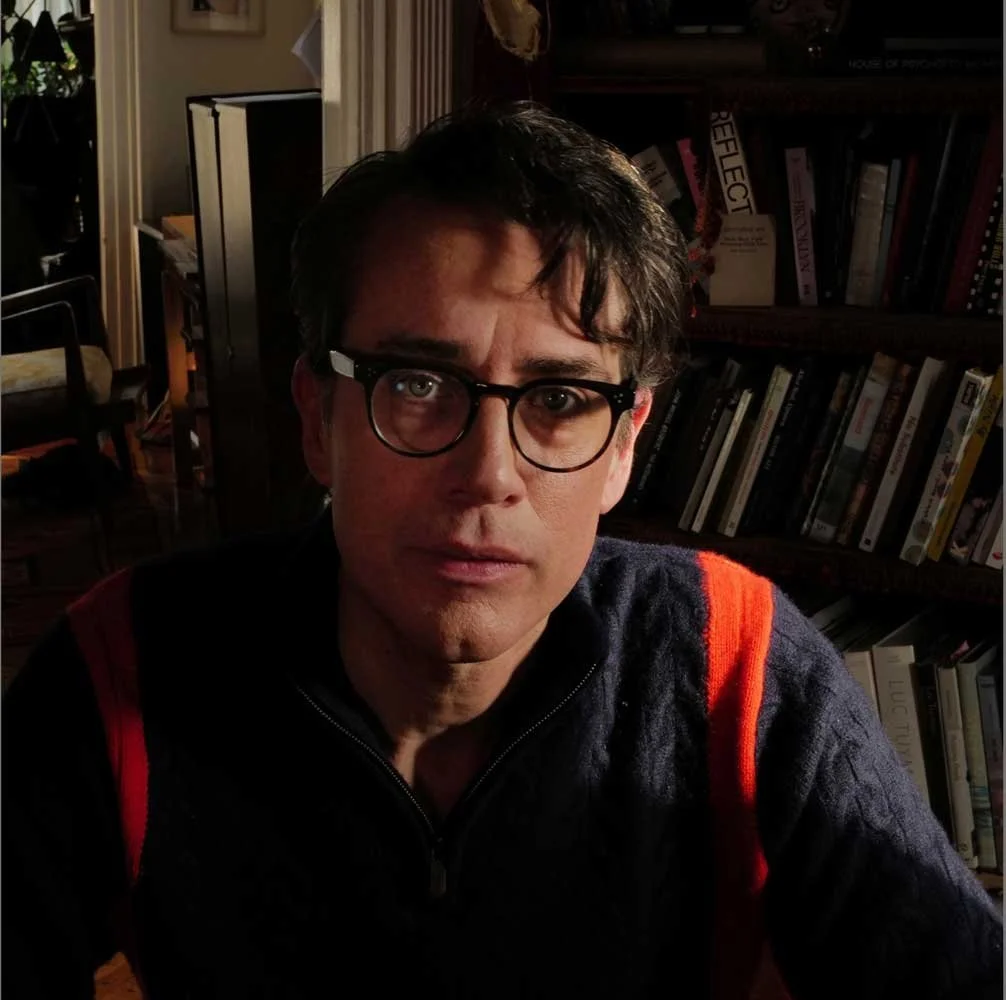
In this episode of the Speaking Out of Place podcast, Professor David Palumbo-Liu talks with Benjamin Moser about his new book, Anti-Zionism: A Jewish History. A book of immense historical and geographic reach, Anti-Zionism conveys its arguments through the lives of twelve Jewish anti-Zionists. From the 19th century Polish-Jewish rabbi Aaron Samuel Tamares to the contemporary photographer and activist Nan Goldin, we learn how Jews have fought against the reduction of the traditional, expansive notion of Jewishness open to and in service to the world, to a form of narrow ethno-nationalism, closed off to all how do not subscribe to its genocidal settler colonial logic. We learn how many of these figures foretold precisely the perpetual cycles of violence Zionism has unleashed. One of the reasons Moser wrote this book is contained in this statement. I offer it as a contribution to the movement by so many noble people who are working to construct an alternative vision of Jewish life, one that is free from racism, nationalism, and militarism. It is an attempt to say, especially to younger people, that we are not the first, and that we do not need to start afresh.
Benjamin Moser is the author of Why This World: A Biography of Clarice Lispector, a finalist for the National Book Critics’ Circle Award and a New York Times Notable Book of 2009. For his work bringing Clarice Lispector to international prominence, he received Brazil’s first State Prize for Cultural Diplomacy. He won a Guggenheim Fellowship in 2017, and Sontag: Her Life and Work won the Pulitzer Prize in 2020. The Upside-Down World: Meetings with the Dutch Masters appeared in 2023. He completed Anti-Zionism: A Jewish History at the Dorothy and Lewis B. Cullman Center for Scholars and Writers at the New York Public Library.
DAVID PALUMBO-LIU
This is such a rich and powerful book, and I am myself very appreciative as it is both a historical and literary sensibility, along with a deeply ethical orientation. The book consists of an introduction and the portraits of 12 Jewish anti-Zionists spanning different historical moments and geographic locations.
Wonderfully, I think the introduction is of a similar nature, wherein you figure as the anti-Zionist in question in dialogue, so to speak, with your grandfather via Theodor Herzl. But before we get to the introduction, I want to ask you a very basic question.
There's a very interesting sequence that one follows as one enters the book: the title Anti-Zionism, colon, then A Jewish History, and then the dedication to the Palestinian people, grant them the fatherland of their desire and make them citizens again of paradise, and then a set of quotations from the Hebrew Bible.
Could we move through those three elements somewhat deliberatively? And for me, they beautifully encapsulate so much of what the book is about. So yeah, the title is pretty on the nose, right? That's what the book is about.
It's about Jewish people who have been against Zionism for every conceivable reason, from the left wing, which is obvious, from the right wing, which is a little bit less obvious, from the obvious places of Europe and the United States.
BENJAMIN MOSER
But as well as I also wanted to include people from Latin America and from Africa and from the Arab world to give a real sense of the range of this thought and the fact that it wasn't just one party, it wasn't just one religious background, it wasn't just one orientation. It was all these people who said, “This is an absolutely terrible idea, and it's going to be a disaster.”
Now, as it turns out, if you're going to the epigraphs from that to the Jewish prophets, one of the most astonishing things, if you have any kind of Judaic literacy, which many people don't, particularly Zionists don't, because they actually don't like Judaism very much. That's traditional. That's gone back for 100 years.
They wanted to replace Judaism with race nationalism. The idea of Jewish supremacy or Jewish superiority is so anti-Judaic in a way because if you read any page of the prophets, and you can really open them to any page, that God has it in for us. God has a plan that includes castigation and complete desire to break what he calls the stiff-necked people.
He, the God of the Bible, the God of Judaism, that God is constantly humiliating the Jews, constantly punishing the Jews.So to go from that to say, “Oh, God thinks we're better than everybody else,” that's literally the opposite of the message of the Hebrew Bible. Listen, Aharon says, can Johnny read? But apparently not.
And then the third part that you ask about is the dedication to the Palestinians. I wrote a piece, you might have seen it, for Equator Magazine called We've Talked Enough About Ourselves.
I think that Jews have become extremely solipsistic in a way that is—it's embarrassing. It's very much contrary to the way I was brought up, which was not to talk about yourself, which was to talk about other people and to serve other people.
That was part of the heritage that I received from the Holocaust and from my family's background as refugees was, “You're not a refugee. You've got it pretty good. You live in America, you get to go to the Ivy League school and you get to go on vacation to Bora Bora, whatever.”
That wasn't something that in an America of easy money or of easy, well, you know, just privilege, what was later called privilege. It wasn't called that when I was a kid. But we were very much exhorted against that and exhorted to serve other people and to try to do something good in the world.
My family hated money grubbers. They hated everything that sort of Donald Trump incarnates. And so that's why this book is dedicated to the Palestinians as an act of hope and also of repentance, even though I haven't killed any Palestinians myself. But certainly it's done in my name. Certainly it's done with my money as an American. It's done with my political backing and diplomatic backing. And so I hope this will be one tiny little part of something that will make a change for the Palestinians.
DAVID PALUMBO-LIU
Could you talk about the introduction a little bit more? Because it extends what you were just talking about, and in particular, your relationship with your grandfather. But also you mentioned that you had thought of yourself at a certain point as being anti-Zionist, but then it really formed a solidity when you met Palestinians, that this was a transformative moment.
And in particular, also talk about the line that keeps on coming back over and over again. Don't you think that Israel has a right to exist? How did that also kind of cement, as it were, your resolve?
BENJAMIN MOSER
So my grandfather left Nazi Germany in 1938, and the one thing he brought with him that I still have, it's sitting right here on my desk, is this big blue volume of Herzl.
It's called Herzl's Zionist Writings, and it's a big book. It's something that even now, you know when you get in the hotel on the last night and you're like looking and all the stuff that you bought and you're like, “Oh, shit, should I have brought all this stuff back?” It's the kind of book you would probably think, “I'm not taking this book because it's heavy. It's going to put me over the limit and I'm going to have to pay extra baggage.” It's a heavy book.
But he drags this book all the way first from Berlin to Amsterdam, and then from Amsterdam to New York, and then from New York to Houston, where he spends the rest of his life. And then it exists in my grandmother's house and in my parents' house and in my house. And I'd never read it. It was a kind of souvenir and it was a thought about, oh, this is the Jewish story, right? We got persecuted and we got kicked out, but then Zionism comes along and now we have our own state and isn't that nice? I'm resuming, but that's basically the myth that I was brought up with.
And so I didn't know my grandfather. You said my relationship with him. I had no relationship with him because he died 17 years before I was born. And he had a very sad life. In fact, he was able to escape Germany, which was good, but the rest of it was just terrible.
And so that was my sense of Jewish history, and I think that when you look back at how simple that was, we have Hitler and it's terrible, and then Israel comes along three years later and everything's put back in the way it ought to be. And then I started questioning that. Just to give you and people listening an idea of my generation, I'm born in Texas in 1976. And that means I was 13 when the Berlin Wall fell. I was 14 when the South African apartheid starts being dismantled. It takes a minute, but it starts happening over the course of the early '90s.
At the same time, the Northern Ireland situation, which was one of the great unsolvable problems of the geopolitics, gets solved. Miraculously, it gets solved. And over that time, being from Texas, as you're living in California, you know that Latin America is very close. And at the same time, all these Latin American dictatorships fall.
Brazil and Chile and Argentina and Uruguay and Mexico. It all feels like democracy is on its way. Everybody's going to be happy. And at the same time, there's this Palestinian-Israeli thing, which is all these words that almost sound like they're written in ancient Greek, like the peace process and the two-state solution and Oslo and Yasser Arafat and Yitzhak Rabin, and it felt okay.
All these things are ugly historically, like a lot of historical things are ugly. But give us a minute here. We're sending somebody over there, and we're going to work it out. And there's two sides, and it's very tragic. But we're progressive people and we're reasonable, civilized people. We're going to work this out.
Now we know how that goes, right? But I think what we didn't know, and especially as Jews, but I think as Americans in general, and I think it's really important to tell people, younger people especially, that with the exception of Arabs, Muslims and then a few really well-informed regular folks, most Americans were Zionists in the sense that, did you think that Israel shouldn't exist?
No, of course, Israel should exist. Do you think India should exist or Italy should exist or Brazil should exist? Sure. Do these places have problems? Yeah. But give us a minute. We'll figure it out. And it was such a progressive time that to ask that question of does Israel have a right to exist seemed bizarre, it seemed racist, it just seemed weird.
And as I went into it over the years, my question wasn't that. It was like, how can we make this go away? How can we solve this problem? And that was a very typical thought of that time because we were caught in this logic of not really understanding what Israel actually is and what Zionism is, which is taking a bunch of white foreigners, Europeans originally, later other people come, but originally it's white Europeans who come to a non-white country, which is really important to emphasize, that had never done anything to the Jews.
The Palestinian people never harmed the Jews. And not only to settle in the country as immigrants, which is one thing, but to boycott these people, to destroy their economy, to push them out of greater and greater areas, culminating in an ethnic cleansing in 1967 that then goes on to the current genocide.
I'm just resuming 100 years of history in a very short way. But does that colonial settler state have a right to exist? And when you put it that way, and then you don't ask the other question, which is does Palestine have a right to exist? You get into a huge emotional can of worms that I think if you grew up Jewish believing in this fairy tale, it's just very hard to adapt.
And so I say in the book, not every anti-Zionist got there overnight. I certainly didn't. And it's not a purity test, but it's about realizing that you were lied to, realizing that you were manipulated. And it's very painful, especially because the people who did that often, I don't think, knew any better. But certainly somebody down the line knew something better, and they were lied to, and we were lied to, and it's very hard to take that on board.
DAVID PALUMBO-LIU
Yeah. This gets nicely to the next question I was going to ask you, which is that ultimately no state has a right to exist. People have a right to exist.
And that's one of the things that you get to in the book was that Zionism posed itself over and against all sorts of other ways that Jews could take part in the world. Socialism, communism, the Jewish diaspora. Could you talk a little bit more about how in attaining this kind of monopoly it tried to destroy other ways in which Jewish people could constellate?
BENJAMIN MOSER
Yeah. This is really important because the Zionist viewpoint, which is a viewpoint I was brought up with as well, was basically that it was Israel or it was Auschwitz. That was the choice. Nobody said it's Israel or Palo Alto, right? Which might be an optimistic way of looking at things, but in fact, Jewish history is a very long history.
There's all sorts of periods where Jews were persecuted. There's also a lot of periods where Jews weren't persecuted. And the same, by the way, is true of every other people. Not everybody gets a permanent get-out-of-jail-free card that lasts for 5,000 years. Every country in the world has had disasters and genocides and persecutions...
SHOW FULL INTERVIEW (15:00+) ▼
...And I think that what really stands out the more you learn about Zionism and the reason the rabbis are so offended by it, and I start with the example of Rabbi Tamares in Poland in the late 19th century and early 20th century, is that they have an explicit statement that everything about Jewish history is bad except for Zionism.
So they call it Shlilat Galut. It means erasure of the diaspora. And it meant that basically everything that the Jews had gone through, everything that they had achieved, everything they had suffered, everything they had won and lost, was basically nothing if it didn't serve Zionism.
And there's a line I quote in the book from A.B. Yehoshua, who was a famous Israeli writer, who says, “Any Judaism in the diaspora is masturbation.” If you're a rabbi working in a Jewish community in Poland, that's just incredibly insulting, and it's insulting not only from a religious perspective but from every other perspective.
Could you talk more about— You anticipate all my questions, Benjamin. This is great. I wanted you to talk about the book begins after the introduction. The title is The Sensitive Rabbi, Aaron Samuel Tamares. Tell us about him because, again, the other thing that readers here appreciate is there's not just the geographic reach of the book, but the historical reach is just astounding. So tell us more about Tamares.
Tamares is somebody I really— See, I love— I end the book with the word love because I say I write about the people I love, and I fell in love with Tamares. He gives you in his writings a sense of what it would be like to live in a little village in Eastern Europe before the Holocaust, before all this other stuff, and kind of what Judaism would have been like if you listened to this guy every week at your synagogue.
And he's this fire-breathing radical guy in this town of 600 people. I think half of them are Jews, so that means it's 300 people, and he's this great literary titan. You see somebody that you would imagine even in ancient Greece, like in this little city-state, and everybody would get together in the amphitheater and hear this speaker.
He's that kind of figure, and his basic contention is that Judaism is a pacifistic religion, that God has made Jews pacifistic for their sins to punish them and to keep them from being arrogant. And what's fascinating about him is that he says that you don't understand God's providence towards us, which is that it looks like we've taken a lot of shit through all these centuries. Okay, fair. However, where are these other people that persecuted us? Where is this count of some town in Germany or some kingdom in Arabia or somewhere? All these people that persecuted the Jews are gone. We're still here.
So clearly, if you look at the history, God is calling us back to the laws and the commandments as he has done consistently throughout history, and it looks like he's not preserving us, but here we are. So clearly, where are these other people? Where are the Carthaginians? Where are the Akkadians? Where are all these other people that gave us a hard time? So he creates this anti-Zionist theology that is fascinating because he does it through the texts and the scriptures and the commandments, and then he comes out at the same exact point that a communist radical in 1982 would come out. And so that's what I think is fascinating about the book is that all these people are very diverse and they all fear, they don't just fear it, they say it, that Zionism is a catastrophe.
Yeah. And one of the things that comes out is that they said so at, in some cases, great peril. And I want to talk about those that paid quite a high cost for their anti-Zionism. And we will get to Hannah Arendt later, but I wanted to ask you about people like Jacob Israël de Haan. Could you talk about him maybe and any others that you would like to give our audience as examples of people who not only spoke in these terms very bravely but did so knowing that it could very well cost them their lives?
De Haan is an absolutely fascinating figure, and he's actually the first chapter I wrote in the book. I've lived in the Netherlands for a long time. And he's somebody who, if you know about Dutch literature and Dutch culture, you know him. I mean, it's not exactly a household name, but you know, he was very famous because he was the author of the first gay novel in Dutch, which he publishes in 1901.
And which is a fascinating novel because it's also— it feels like it's Brooklyn in '98. It's not told out of this position of oppression or anything like that. It's just like these two guys have this thing, and they fall in love and they move in together and it doesn't work out. But it doesn't feel like it's a pioneering work, but of course, it is.
It's the very first novel in Dutch, and it's also one of the very earliest in any European language. So he writes this book, and he's a socialist, he's a journalist, he becomes a lawyer and this book is 1901. And after 1914 and the First World War breaks out in which the Netherlands are neutral, so they can travel and they don't have the same things that everybody else has, especially the Belgians in the case of the Dutch.
And he goes to Russia as a human rights expert, basically. And this is why he's honored by Amnesty International as one of their sort of spiritual forefathers. And he makes this report about human rights abuses in Russia, in the prisons, in a way that Human Rights Watch now or Amnesty or somebody like that would write a report about it.
But he's very disappointed with socialism because he finds socialism, like Tamares actually, he finds it violent. He thinks that they're going to try to overthrow the capitalist class, and he sees how that goes in Russia. Anyway, to make a long story short, he becomes an Orthodox Jew again and he becomes a Zionist.
And making this a very long story short, he goes to Palestine. He's the first Dutch Jew to go as a Zionist immigrant to Palestine. People have gone there before as visitors or tourists or whatever, but not to stay there as Zionists. And very quickly he realized this is a very bad idea.
And the reason it's bad is, first of all, there's a lot of Arabs in the Middle East, it turns out. Nobody knew that there were Arabs in Palestine. And I know. But the other thing is that he sees how the Zionists are trying to actually take over the Jews. They're trying to take over the Palestinian Jewish community, which is very small.
It's very important to remember that Palestine, it's 95% to 97% non-Jewish when the Zionist settlements began in the 19th century. He sees how corrupt they are financially. He sees how immoral they are from the religious perspective. He sees how aggressive they are, how quickly they resort to violence.
And he starts writing about this first in the Dutch and the Belgian newspapers, and then in English in the newspapers in London at the time that the British control Palestine. And to make a very long and very dramatic and very thrilling story short, they kill him. And he's the first Jew murdered by Jews in Palestine for political reasons.
There would be a lot more after him. And I find his story just unbelievably touching because I think it's symbolic of so many Zionists begin thinking this is a beautiful, idealistic thing, and then they come— And I include myself in that, embarrassingly enough, but I do. That's how I was brought up. It's thinking of this as this liberatory left-wing progressive thing, and then you go there and you realize how horrible it is.But he realized that 100 years ago.
Could you talk a little bit about how coming out of the Second World War... Because I'm a baby boomer, and this is basically how I was exposed to Israel, which is just Israel, and there's no such thing as Palestine or Palestinians. Why do you think this narrative, this ought to say this even besides the Holocaust, why did this narrative become so fully marked in people's consciousnesses in the '50s and '60s?
It's such a good narrative. It's really clear. It's like everyone was mean to the Jews, and now they have their own country and they're very happy. That's the narrative. And then there's all these other aspects to it. There's the biblical narrative that's very appealing to Christians.
There's the anti-colonial narrative, which is funny, but people forget, but you probably don't if you're from that generation that this was considered— Israel was considered part of the great liberation of the Third World. India is independent in 1947. Israel is independent in 1948. Ghana is in 1957, and then Algeria is in 1962. And the Israelis very deliberately played that up, even though it was literally the opposite of that. It was the establishment of a very brutal colonial regime. But I think that because it was so simple and also because people felt guilty.
I think it's really important to say people felt very guilty about Jews and about the Holocaust. And it's so funny that I feel like I am, again, I'm speaking ancient Greek when I tell people now that my family were Zionists, and they were also totally progressive liberal democratic people. They were pro-choice, they were pro-immigrant, they were pro-union, they were pro-gay, they were pro-XYZ.
They were from the Jim Crow South. My parents both grew up entirely under Jim Crow. So they were very anti-racist.This was a big part of who they were and who they thought of themselves as being. But I'll tell you something really shocking to me about Zionism to this day, is that everything about it is a lie. Every word, every story, it was all totally a lie. And I wouldn't say that about— We're down on America right now, and I don't need to go into that too deeply why we are sad about our own country, but would you say that the American Constitution, the American Revolution, that it's all bullshit? No. I don't think anyone would say that.
I think we would all say it was imperfect, but it did enunciate ideas like life, liberty and the pursuit of happiness, and the freedom of speech and the freedom of religion and the freedom of assembly and all this kind of stuff that we— I don't think we have to be cheesy and super patriotic to think that these were good things that we can be proud of and that we can dedicate ourselves trying to expand and work on.
Whereas with Zionism, every fact that you think is a fact is a lie. Everything. And that is really hard to digest.
Yeah. And in terms of the idea of Israel being a post-colonial rebel, today the version is they're indigenous people. And I'm going to thread this through in terms of the comment you made about people feeling guilty, and one of the great tragedies, of course, was the responsibility for denying Jewish refugees sanctuary, right? Turning Jews back.
And this is my segue into the Hannah Arendt chapter, which is one of my favorites because I'm very interested in Arendt, and the way that you use the Eichmann in Jerusalem story to unfold so many things, and this is where the horrible pronouncements of Ben-Gurion come out in a very strong way. So I want to give you as much space and time as you want to unpack whatever you want about the Hannah Arendt chapter, but I would really appreciate it if you talked precisely about this idea of which Jews got to go where and which Jews were not allowed, right?
Oh, big topic that I only touch on in the book, actually. There's a lot more to be said about that. This is something I'm quite proud of. When you're a researcher, you know that there's some stuff that is okay, but then some stuff you're like really proud of having discovered, and it might be a footnote, but you want everybody to know the footnote.
This is not a footnote, but I'm quite proud of myself, actually, if I may be allowed to pat myself on the back, that I think I've discovered something that nobody had ever actually written about before, which is a real mystery in modern literary history. Which is, why does the most respected philosopher in America, a German Jewish refugee whose reputation is totally impeccable, everybody knows from the '40s at least into '50s, that she's one of the great minds of this country, somebody everybody admires.
Why does she die a pariah? Why does she die basically an outcast from the Jewish world? And then people will say people didn't like the Eichmann book. All right, so what do they not like about the Eichmann book? She says it's the banality of evil. She says the Jews helped the Nazis kill, and they murdered themselves.
That's what she says in a letter. Or she says that the banality of evil, this is this phrase that nobody likes. She says Eichmann doesn't really hate Jews so much, blah, blah. All right, so you look at these things and you think the whole point of the book is Eichmann doesn't have to hate Jews because this modern machinery of mass murder doesn't actually depend on what you like or don't like.
These things happen. It's just actually you see the same thing in Gaza. These people, you have an endless supply of soldiers who will go in there and just murder people just because they're told to. That's the scariness, and we've seen that throughout the 20th century. The banality of evil, is it banal? Is it not banal?
Who cares? You think this doesn't justify what happens to her, and I think that very few people remember what happens to her, which is that she was brutally attacked for year after year about this book. So I thought, “Okay, why are they attacking her about this book?” So I went back and reread this book, which is I think a book that I think it's fair to say most people read this in college, right?
Maybe you've read it in high school. It's a pretty standard, maybe with Anne Frank, it's one of the two books that people read about the Holocaust. And so I thought, “Did I miss something here about why she's being attacked in this way?” And so I go back and read it in my mid-late 40s, and I say my age because that means that in the 25 years since I was in college, I've learned a lot about Zionism and about the Holocaust.
And then you read it, and you think, “Oh, I know exactly why she's being attacked, and I know enough about Zionism to know why they wouldn't say this is the reason that she's being attacked.” And the reason she's being attacked is that if you know the backstory, which she alludes to pretty clearly, but it's not too on the nose, so I think that's why a lot of people could miss it if you weren't really a historian to the fact, which is well known and well attested historically, that the Zionists collaborated with the Nazis in some cases.
It's not everybody, but enough, and that Eichmann actually admired Herzl. He even went to his grave, which is one of the most fascinating moments, interested in Herzl. The only book he'd ever read was The Jewish State, and then the only other book he read was another book about Zionism, that the Zionists invite Eichmann to Palestine, from which he is promptly deported by the British.
And then he then goes to Cairo and meets with the head of the Zionist intelligence agency in Egypt. All right, these are things that are in the book, but does this add up to something? If you throw in the quotes that I throw in, which are, I should emphasize, a tiny little sample of the quotes, that the reason they had to destroy Hannah is because she was pointing this out, which is that the Zionists and the Nazis not only worked together in certain cases but they shared a lot of views.
And the basic views that they shared was that the Jews were a foreign race who needed to get the hell out of Europe and go to Palestine. That was Eichmann's choice. It was called the territorial solution. The other solution was just murdering everybody, which is what ended up happening. But this was absolutely radioactive, and so they start this enormous campaign against her to just discredit her and to discredit this book.
She says somewhere they had said it was an evil book. Now they had to prove it was written by an evil person. So this is another sort of a second edition of the same thing we're talking about de Haan and a lot of other people, which is that they didn't physically murder her, but they never address the substance of the things that she's saying, which is so damning and so devastating. She says, for a Jew, the darkest chapter of the entire story is that Jews, in certain cases, assisted the Nazis. Now, what she says, which is much more nuanced than the way I am putting it here, is that not everybody knew they were assisting the Nazis.
Some of them were just trying to get along with them, and some of them thought, “All right, we're going to go along and register at the town hall or we're going to put on the gold star or we're going to go to the work camp.” Quote, unquote, work camp. So, but she says the whole point of the book is that intentionality doesn't really matter, but if you know the history of Zionist collaboration, you know what she's also alluding to.
Could you talk a little bit more about the way that, again, back to my earlier point, that Ben-Gurion has one line that says something along the lines of when talking about Jews that are killed, that individual stories aren't as important as the story of the nation, and certain types of Jews he feels were more acceptably excluded or denied sanctuary, even entrance into Palestine than others. Could you talk more about that?
This is one of the myths of Zionism. When I say it's all a lie, the myth is that it's there to save Jews. In fact, the reality, which is also fascinating when you write a book like this, is that because this is a hidden history in a way, this is stuff that people don't know. I didn't know any of this until I spent 20 years reading about it. But what one fascinating thing about Zionism is that these leaders, including him, who supervised the ethnic cleansing of Palestine in 1948, they're not very shy about saying exactly what they're doing. And you see this now when they say they're human animals, we're going to kill them all.
And then people on Twitter say, “No, that's not what Israel really is.” I saw this with Ben-Gvir the other day. He said something insane, and the American Jewish Committee said, “No, that's not the state of Israel.” And I said, “The guy is a minister and the head of the police and the prisons in the state of Israel, so I don't know who you're thinking is the state of Israel if it's not him.”
But Ben-Gurion was very clear about how he didn't want poor people. He didn't want old people. He didn't want people who didn't have certain ethnic backgrounds. And this was something that becomes very dark in the story of the Arab Jews because they considered them inferior because they're brown and non-European.
But in this famous line, he says that if all the Jewish children of Germany could be saved by going to England, but only half of them could be saved by coming to Palestine, he would save the half because the project is more important than the individual. So in other words, if half the Jewish children of Germany are killed, we're not talking about them staying home in their own houses.
We're talking about them being murdered in Auschwitz. That's okay. And the Zionists knew very well, more than almost anybody, because they had a good intelligence service even then. They knew exactly what was happening in Europe, and they deliberately withheld information and then tried to force people against their will to come to Palestine. But even more than coming to Palestine, to bring their money to Palestine.
Wow. I have exactly one more question to ask before, but before I ask it, I've selected just about everybody we talked about. So I want to give you the chance to talk about a couple people that we haven't talked about.
Somebody that I was really excited to discover—it's so funny how you discover these stories because they haven't been told, and certainly they've been told here and there, but they haven't been collected. Was a friend of mine who's a Brazilian novelist, posted something on Instagram a few years ago about her mother.
And her mother, she said, “Oh, my mother was this great journalist in Brazil, and she did all this work in Palestine.” And I thought, “What?” Because I know this woman. And I was like, “Really? Your mother was a Jewish anti-Zionist journalist in Brazil?” And I've spent so much time in Brazil. It's one of my second homes.
And so I just texted her on Instagram, and I was like, “Oh, really? Tell me more.” And anyway, then this entire story comes out about her mother, who was this tiny little—I think she's five feet or maybe a little under five feet tall, who basically, by accident, she's from a very rich Sephardic family in Rio, and she goes to study abroad.
This is the '70s, '73. She goes to study abroad in Florence. She's studying art history. She's a couple years out of college, but she's doing that thing that you do when you get out of college. You're not sure what to do, and maybe you're going to go travel or maybe you're going to do an internship or something.
So she gets to Florence. There's no job. There's no program. They just—it was a money laundering operation. You know, they just stole her parents' tuition. And she ends up in Florence, and she's like, “Well, here I am,” you know? And like these days, it's easy to get on a plane back to Brazil, but back 50 years ago, it was harder.
So she decides to go to Cairo because she's always been interested in her parents' background and everything. Anyway, again, making a long story short, she ends up there a couple of days before the 1973 Arab-Israeli war breaks out, and it turns out she's the only Brazilian journalist in the entire Middle East.
It's so funny. Now everybody's everywhere and everybody has WhatsApp and you can get on a train and whatever. It's very easy to get anywhere, even during wartime. But then it wasn't. And so through this, she starts just writing these dispatches from Cairo, and through this experience, she meets the Palestinians and dedicates the rest of her life in one form or another to the Palestinian cause.
But what's so interesting about her and what I really liked about telling her story is that she's a feminist for family reasons that are related to their background in the Middle East. She's very much aware of what people expect from her, which is to basically marry a Jewish guy and put on makeup and smile and raise the children for the rest of her life.
Which is why for one reason she goes to Europe and then to the Middle East. But also because she's writing about a third world question from a third world perspective. She's very self-aware as a Latin American. And so the way she reports on Palestine is very different from the way that someone from The New York Times reports on Palestine or someone from Le Monde.
And in fact, the trend, and this is still true to this very day, is that a lot of these newspapers in places like Latin America and Asia, they basically—nobody wants to go to Brunei, so what you do is you take the piece from The Washington Post_and you translate it into Portuguese and you stick it in the newspaper. And it's much cheaper that way. That was when you still had reporters. Now it's even worse because people just go on Twitter. They just look on their phones and they make something up. But so I love having a feminist third world perspective on this. I thought that was really interesting.
And then another, I loved going to South Africa to meet Ronnie Kasrils, who's this 88-year-old guy who was one of the great resistance figures. And so he tells his story, which is the story of apartheid. What does apartheid mean for a Jewish South African? And also the other story is why did Zionism in Israel and South African apartheid, they didn't just get along with each other in a way that diplomatic relations get along with each other. They were in love with each other.
That was warm. That was sugar and spice and all things nice. And that's the kind of story that, again, you know, when we come from a Eurocentric, America-centric background, those stories just don't register, and the same as the Arab Jews. So I tried to put all that in there to try to balance it and tell it as a world story because it is a world story, a global story...
CLOSING THOUGHTS (39:00)
...No, I love that chapter too because the name Albie Sachs pops up. I had the great honor of working with him when he came to Stanford for a few months, and so we got to know each other and Soft Vengeance of a Freedom Fighter is a great book. And he was here to give a number of talks and workshops, but he also was to give a major big auditorium speech. And he walked in and he said, “I have a speech, but I'm not going to give it because Nelson Mandela's on his deathbed.” And I did stories about Nelson Mandela. One of the stories he told was he was on the first court. He was named to the first court.
And the first case that came before them was a case against Mandela. And so he asked Mandela, “What should I do?” And Nelson Mandela says, “Do what you have to do. This is exactly why we have a court, why we have a democracy.” So he's just an incredible human being, so I liked that. So here's my last question. I wanted to quote you to yourself to begin the question. You said—
Uh-oh.
No, it's great. It's great. Ben, it's all good. Okay. “In writing this book, I aim to make such people feel less alone. I offer it as a contribution to the movement by so many noble people who are working to construct an alternative vision of Jewish life, one that is free from racism, nationalism and militarism. It is an attempt to say, especially to younger people, that we are not the first and that we do not need to start afresh.”
So talk about today, about the equation between anti-Zionism and antisemitism seems... That equation seems to be getting more and more frail, I think, and especially with people like Tucker Carlson weighing in and the ADL basically defending Elon Musk's Nazi salute. In some ways, so many people that you write about precisely foretold all these outrages. They were very explicit about how Zionism was going to destroy so many lives. And so people are catching on to that, and maybe we're not as alone as we were before. But talk about things today.
I'll tell you that when I started this book, it was meant as a contribution to another form of Jewish life and of Judaism, and meant to point to another possibility within a single tradition. Just as you might support Zoran Mamdani and not Donald Trump, but you could say both of these are in the American tradition. But you still think the American tradition is something worth continuing. But that doesn't mean that everything in the American tradition was rubbish, but it meant you're opposing one strain to another. It's loyal opposition in a way. But over the last years, as I've been writing this book, something much darker has occurred to me. It's just so deranging to see so many Jewish people applauding a genocide.
It's something I never thought I would see. It's certainly something I didn't want to see. Who wants to see that? But it's been—we can't deny, as many of us as there are, and I think it's more every day, but I think I've been forced to ask myself, is Judaism worth saving? Is it just another crazy religious nutcase thing that lasted longer than it needed to?
So I don't know. But to see these people, I just saw this thing, it was a couple weeks ago, but I saw these people applauding Netanyahu in Miami Beach. Now, you know, Jews in Miami Beach are like the wealthiest, safest people in the entire world. And they're applauding him in the name of their own victimization and all this. I just have real doubts, and I think it's hard for many of us to be in any Jewish spaces unless they're explicitly anti-Zionist.And not just soft Zionist, but like explicitly no. And it's a feeling, it's a new feeling, but it's not going to go away.Avraham Burg, who was the speaker of the Knesset, has spoken of a break that's more severe than any in 2,000 years.
And Yuval Harari, who's this kind of popular writer, he's spoken of a spiritual catastrophe for Judaism itself and said it can destroy all of our culture and all of our tradition for the last 2,000 years. And if you ask me, how are we going to come out of this? Honestly, on a bad day, I'm not sure I care. I also, even on a bad day, I realize I have to resist this feeling, and the reason I think we all do is because maybe this is idealistic, but I think anything as old as Judaism that goes so far back into human history and tradition and has meant so much to so many people, it's worth saving. I mean, and it's even just from a view of human culture.
Like, if you talk about, I don't know, is Chinese poetry worth saving or Indian literature or Dutch art, which is what I wrote my last book about? These things are things that belong to humanity, and I think that I just happen to care very much about the intellectual and artistic and spiritual and scientific traditions of humanity.
And so I've really committed myself over the last few years to the defense and the propagation of the Jewish tradition that I think that the anti-Zionists represent. And it's just honestly, it could be just I'm a really stubborn person. And I find it just pathetic that I'm going to hand over my own tradition to a bunch of terrorists and child murderers.
I don't think so. I'm not ready to do that. But as I also say in the book, the wound that is at the center of the book, which is the wound of Palestine, I don't know if it can be healed, but I also—I'm not nihilistic, and I don't want to abandon myself in that way. I don't want to give up. And I guess I could stay home and drink or kill myself.
But I think as long as I'm here and able to speak, and I'm lucky enough to have reached middle age and to have a platform. You're interviewing me. You're talking to me. People are listening to me. It might not be millions of people, but to the extent I can have any influence, then I feel that I owe it to my grandfather as well, to the victims of the Holocaust, to victims of everything, racism of every kind. I feel like I have to keep going. So maybe I'm an idiot. Honestly, I do wonder sometimes, but I'm still in the fight and I still want to keep it up.
No, I think that's—in some ways, reading your book, when I say certain words now, they seem paltry. I was going to say commendable, but that doesn't work either. And I was thinking about one of the things we talked about at the very beginning, the way that Zionism prevented Jewish people from constellating in other kinds of formations, and we talked about that. And words again that come to mind are for sure cosmopolitanism or universalism, but those words, I think, can also become very thin when they're misused and worn out.
But your book, I think, does an amazing job of giving them substance, right? And substance not through more words, but through the lives of the people you talk about. These are people that have a lot on the line, as we've mentioned, in giving thickness and weight and vitality to a belief system that is all-embracing, which is so commendable and exactly what we need now when we have so much, as you said, nihilism, people celebrating the destruction of so many things in the name of, when we talk about tech, here I am in Silicon Valley, in the name of emptiness.
Just this empty fluff that, that slop that comes to our lives over and over again. So I think your book and all of your writing really militates against this notion of sort of chintzy stuff, so to speak. I'm not sure if I'm even using that word correctly, but just—
Slop is the word.
Slop. Yeah. Slop. Yeah. So I want to thank you for this book. It is a remarkable book. Before Ben and I started taping the podcast officially, you divulged that it took you a very short amount of time, about two or three years to write this remarkable book, which is, again, as I said at the beginning, broad in historical reach and also broad in geographic reach. And to me, it's the book we need in terms of understanding what's going on now in Palestine and having... And this is one of the things I want to thank you for most perhaps, having the historical facts rather than the myths at our disposal. So thank you so much for being on the show, Ben.
This is absolutely my pleasure, and thank you for those kind words, and thank you for reading it, and thanks for caring about this subject, which I think is—I think it's something that concerns all of us.
It's not just about Jews and Palestinians, it's about everybody.