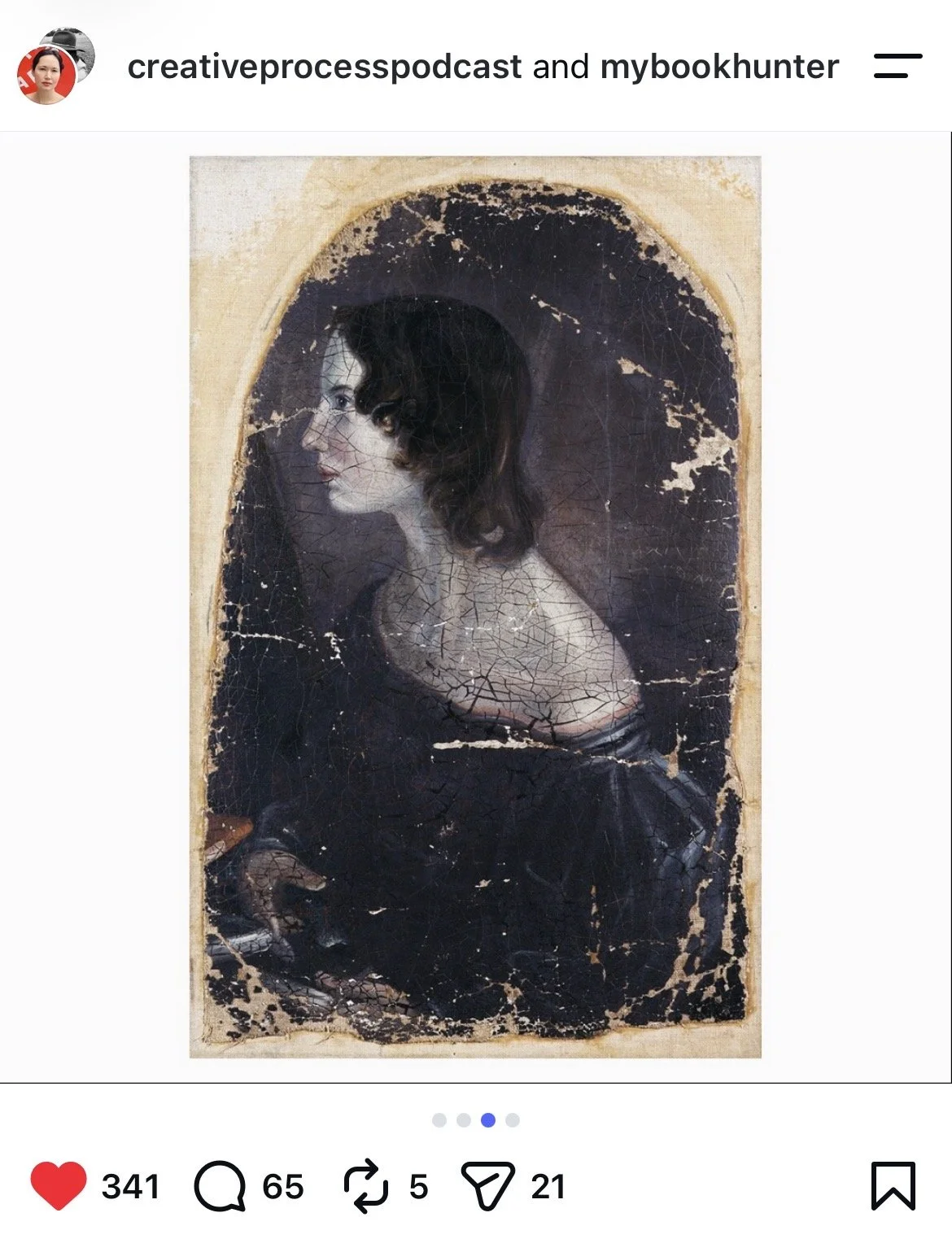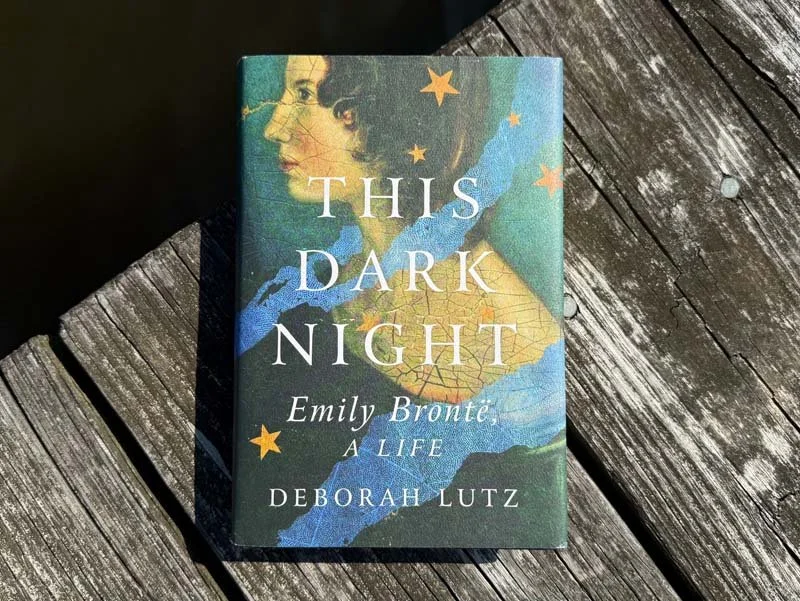


“One’s soul cannot escape a dying body if the feathers of pigeons or wild birds fill their bed or pillow. To hold someone back until a loved one arrives, a bag of pigeon feathers is thrust under the dying person. There were also birds of ill omen, like the robin pecking on the window signaling a coming illness. Swallows and owls told of a change in the weather. Charlotte describes, in a poem, other creatures signaling grave news, like the wolf, black bull, or the fantastical goblin hound, ‘Which will be a certain sign / That one beneath the roof must die / Before the year’s decline.’”
– Deborah Lutz, This Dark Night: Emily Brontë, A Life
Ominous. Moody. Ghostly. Sensual. Macabre. Riveting. Mysterious. Lyrical. Childlike. Genius.
Words that encapsulate Emily Brontë’s life, as well as this mesmerizing biography’s attempt at… catching a cloud and pin it down.
Everything is ominous in Emily Brontë’s short and blazing life: death of her mother, death of two older sisters at ages nine and ten, death of animals in the hills all around her, death in the church graveyard right behind her house. What this did to her psyche and imagination and indisputable genius in the birthing of poems and Wuthering Heights is still a powerful whirlpool whizzing at the center of her world.
Deborah Lutz circles this whirlpool with ferocity and dedication in this dark beauty of a book, following the clues and relics like a scent on the trail, amassing objects and notebooks and sketches with unrelenting curiosity and scholarly fervor.
Paradoxically, where Lutz shines the brightest is in her suppositions, what she infers from what is not known, what she believes may have been the explanation for such and such missing piece in Emily Brontë’s life story.
I left this luminous biography filled with even more questions, more desire to penetrate the cluster of mysteries beating like a heart inside the Brontë household.
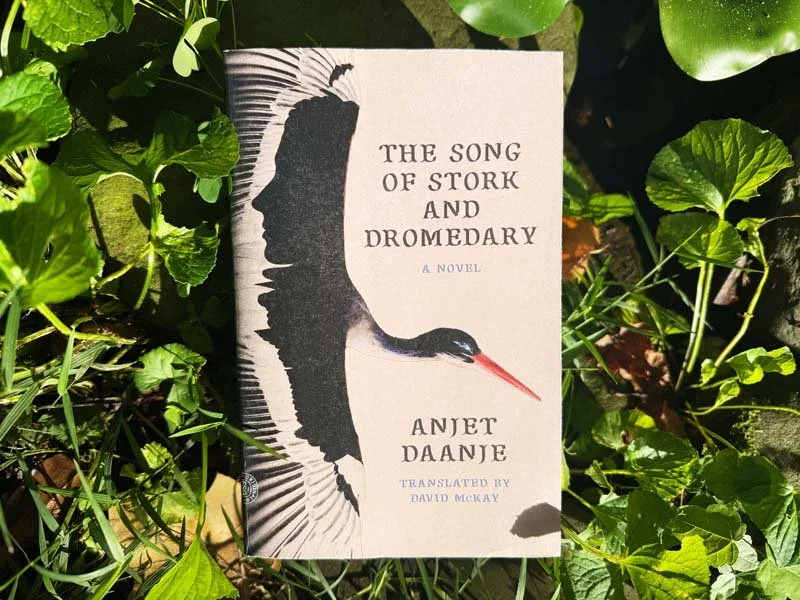
So I stepped right into Anjet Daanje’s The Song of Stork and Dromedary, where this other sublime and mysterious writer from the Netherlands does just that, summoning the spirit of Emily Brontë from across the centuries, not with relics but her own wild imagination.
And this pairing has been extraordinary.