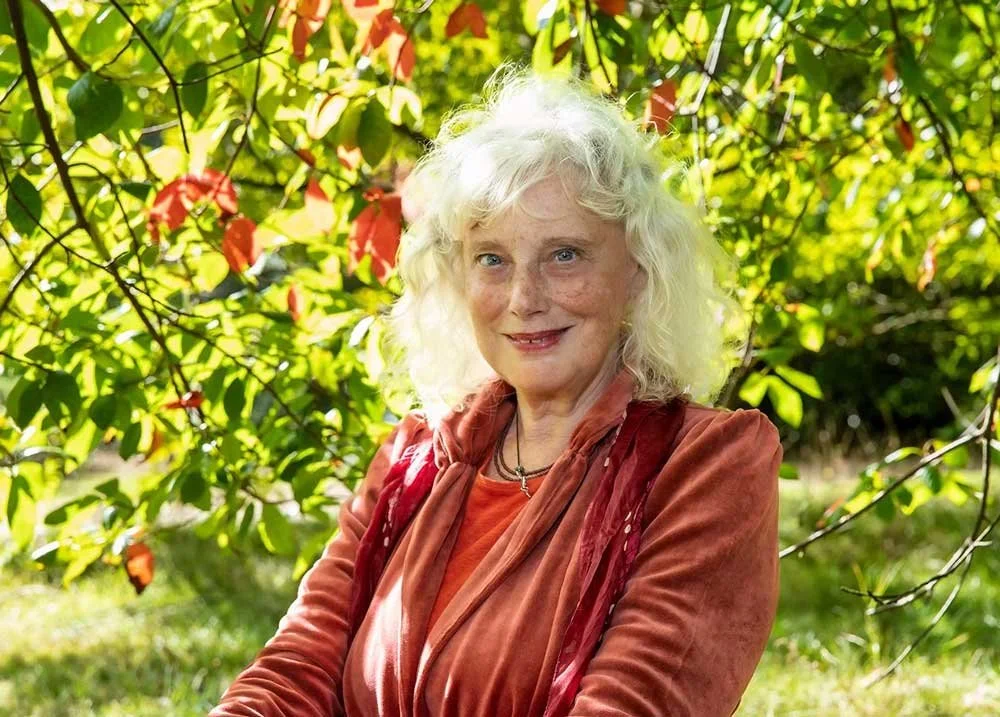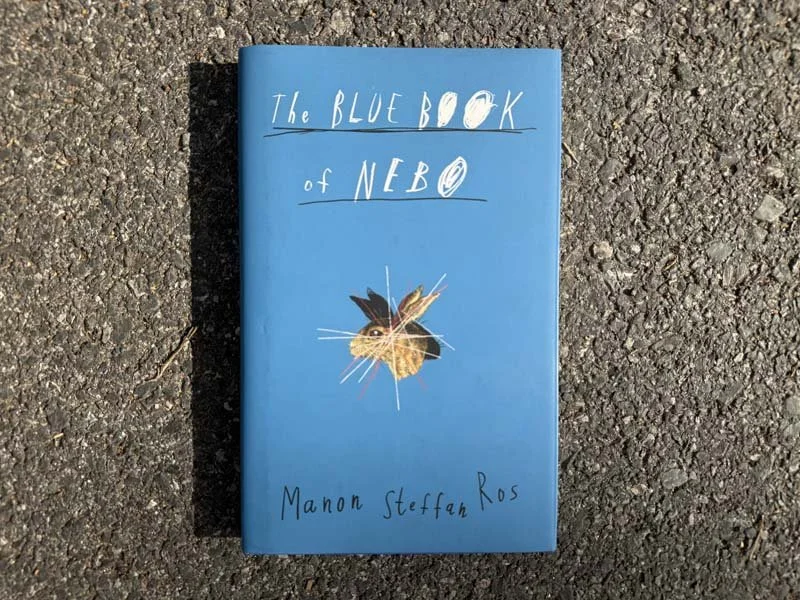


“There is a much overused Welsh word that has its own catalogue of twee memes and facebook posts- it's hiraeth, and is partly admired for the fact that it's untranslatable. Broadly, it describes a longing, for a person or place or object or idea or time, and sometimes just the non-specific, inexplicable sorrow in longing for something you don't quite know what it is. The Blue Book of Nebo carries a lot of hiraeth, I think, both for the pre-apocalyptic world and also for an indescribable future.”
– Manon Steffan Ros
Where do I begin with this one?
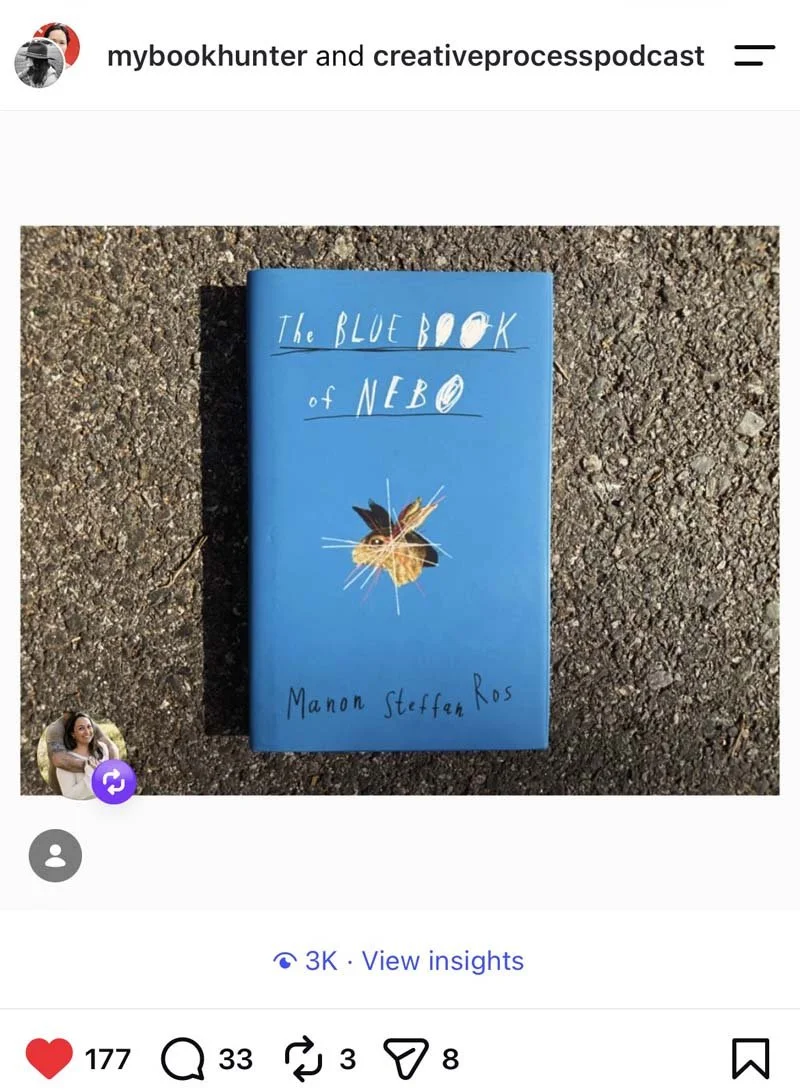
If Dog Stars met The Road, with less graphic violence and low-humming sense of dread, you would get something akin to this near perfect book of a post-apocalyptic world set on the coast of Wales.
Here, the End of the World feels almost pastoral and idyllic, as seen through the eyes of a teenage boy named Dylan and his mother Rowenna, as they take turns writing their thoughts about their life in a dark blue notebook. A book of parallel narrations, unaware of what the other is writing. Two lines never crossing, living under the same roof.
If there is violence in this new world, it is of a quiet, almost muted sort. It pops its head out of the ground in the form of a disfigured hare, an ailing toddler, an elderly couple unfit for the fight, a bird-less world, mementos of a teenage girl’s life frozen in time in her bedroom.
How do you long for something you’ve never really known? How do you long for something you’ll never have again? In Manon Steffan Ros’ delicate hands, in writing that is as stark as it is elegiac, catastrophe becomes the place where one can reclaim the land, the self, the Welsh language.
Catastrophe becomes the lava-black soil from which a mother and son can emerge, bristling against the odds, new to themselves and to each other, connected and all alone.
Another fleeting Welsh word comes to mind then for the profoundly moving experience that is this book: Cynefin. A deep, familiar and unexplainable sense of belonging to a place.
At the end of the world, you will find both sorrow and a home.