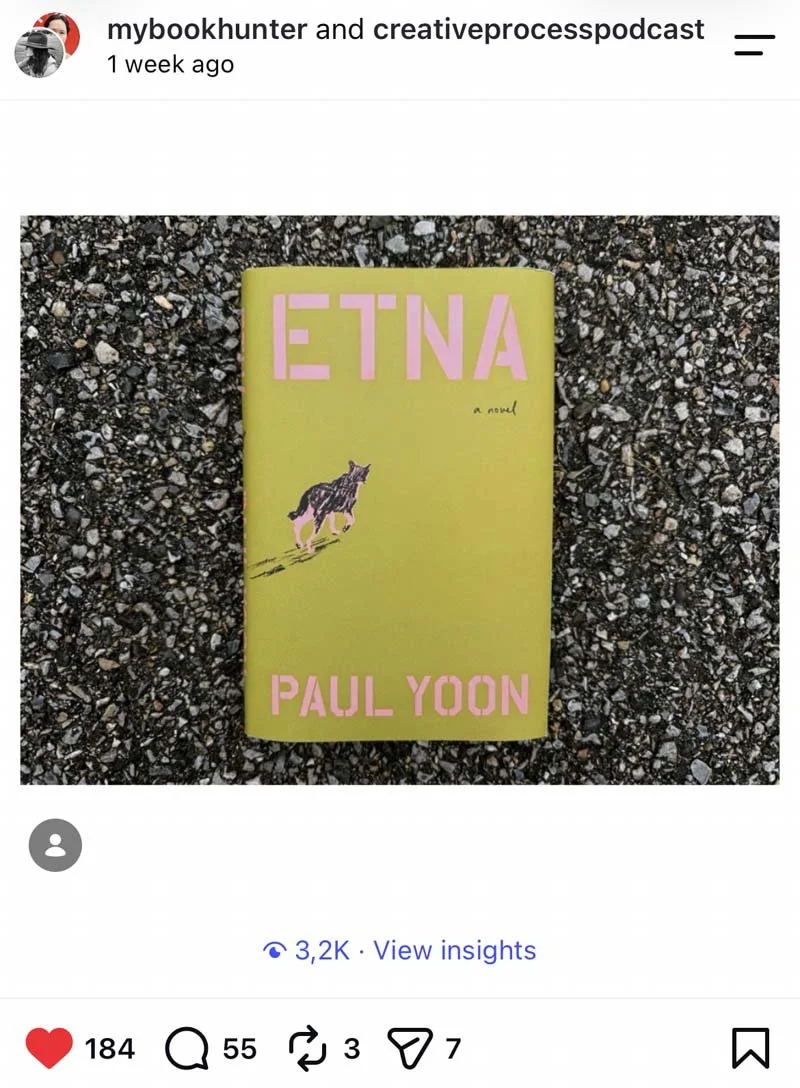


“I was born near water.
I was born on a farm where many other dogs and other animals were born and cared for and lived.
I would never learn what the farm was intending to do with me. Maybe nothing at all. Maybe I was supposed to grow old there.
Or maybe I was always supposed to leave. To go work somewhere else and be with a new family.
But it was home to me. My mother was there. My brothers and my sisters. An early memory: waking up to a den of pale noses surrounding me before our mother came, the silhouette of her face looming over us in the sky, the tall triangles of her ears pocketing the smell of the coast.”
— Paul Yoon, Etna
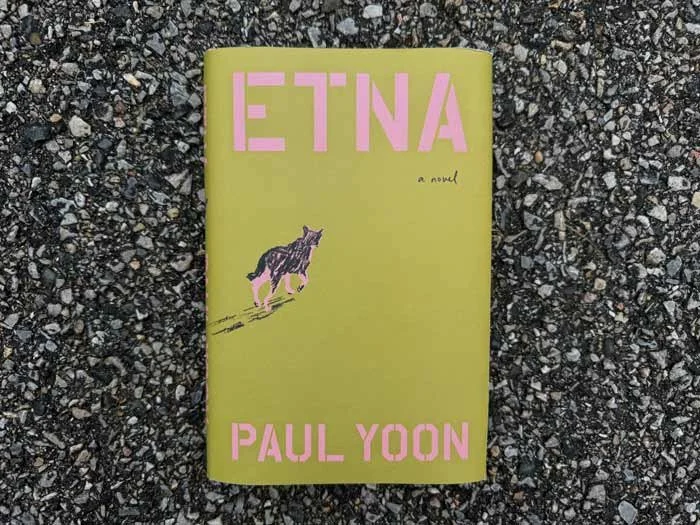
This one softly robbed me of my words.
I saw somewhere a reader say that this book had stunned her into silence. And I thought “yes, that’s it”.
“Etna” is subdued and quiet and devastating.
It is subversive and timeless, ink-dark bleak and dawn-pale hopeful. Like Cormac McCarty’s “The Road” but seen through the prism of smells and sounds, close to the ground. An exquisitely attuned canine brain. A different kind of Odyssey.
By inhabiting a military dog’s consciousness with infinite sensitivity and grittiness, Paul Yoon gives us a striking and almost newborn view of what a postwar landscape feels like, an unvarnished vision of humans being humans. For better and for unfathomably worse.
Leave your resistance behind and experience the broken world through the eyes of Etna and the dogs that he meets, each so beautifully named after a volcano, and you will be rewarded.
With a little bit of luck, you might just be changed.