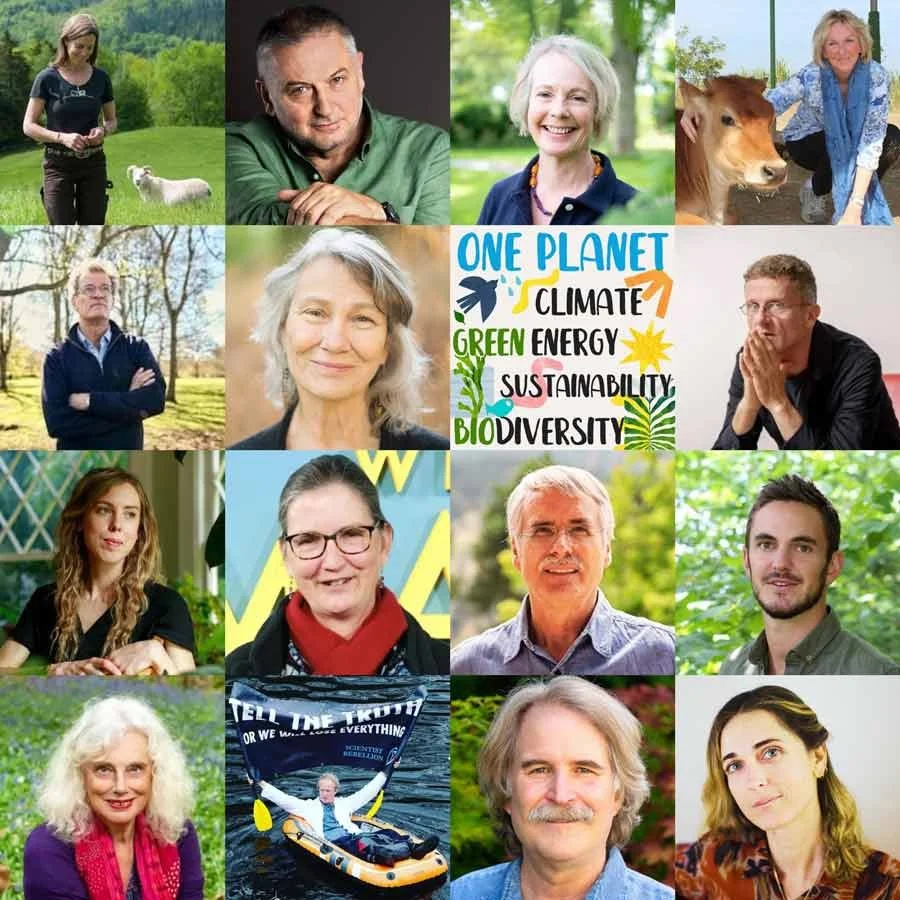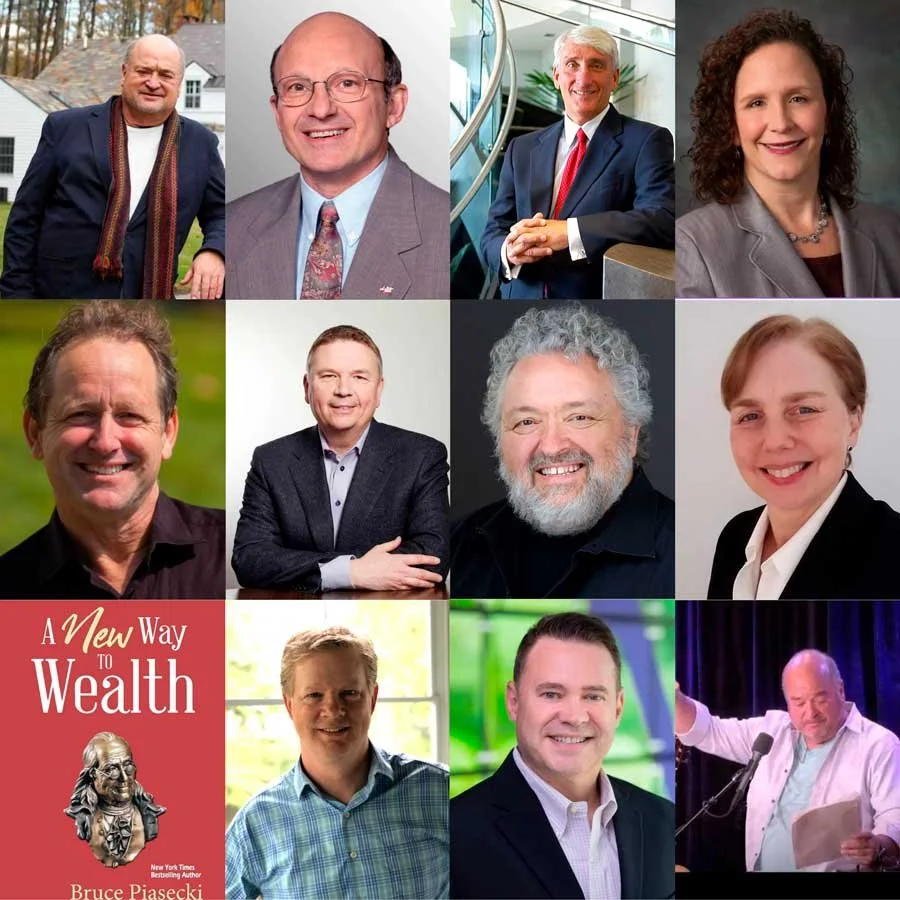


Today on Business & Society, we explore the shift from a linear machine economy to a living systems economy and the questions driving the next era of innovation. First, we hear from the architects of a new capitalism: authors, strategists and economists Bruce Piasecki, Bill Novelli, Bill Shireman and Julie Pierce. Second, we hear from defenders of the environment and the built world: sustainability leaders, life-centered designers and climate adaptation specialists Scott Tew, Gordon Lambert, Bruce Mau and Robin Phillips. Finally, we hear from those working directly with the Earth and today's workforce to make these changes real: agricultural leader Colin Steen and business executive Alan Lerchbacker. They are proving that profitability and ecology are no longer mutually exclusive.
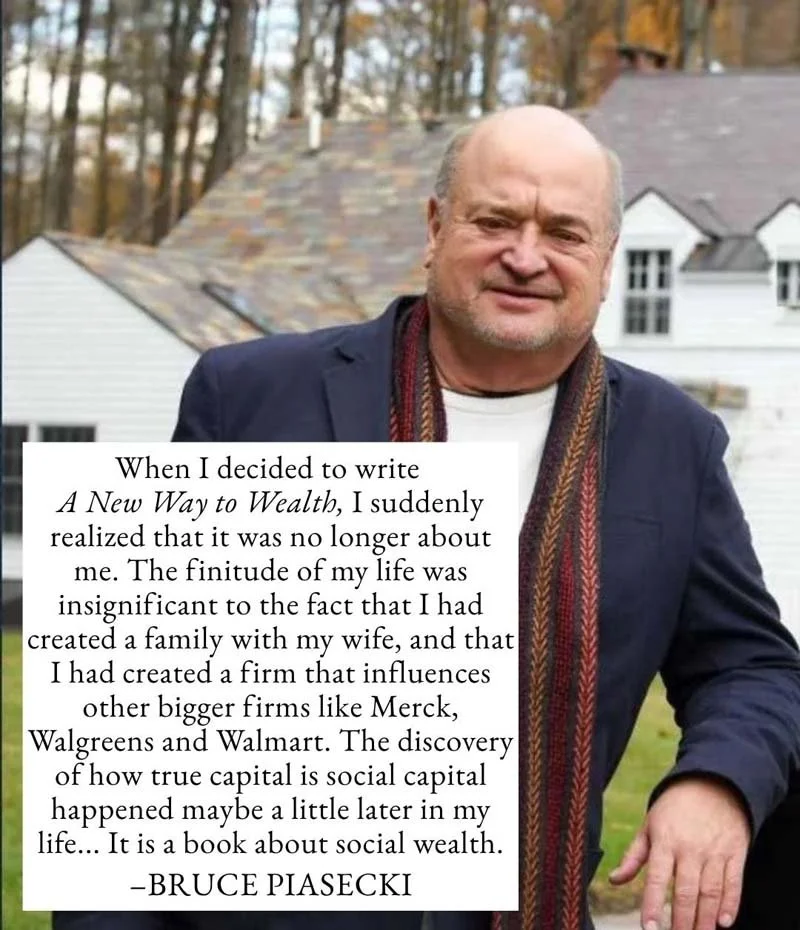
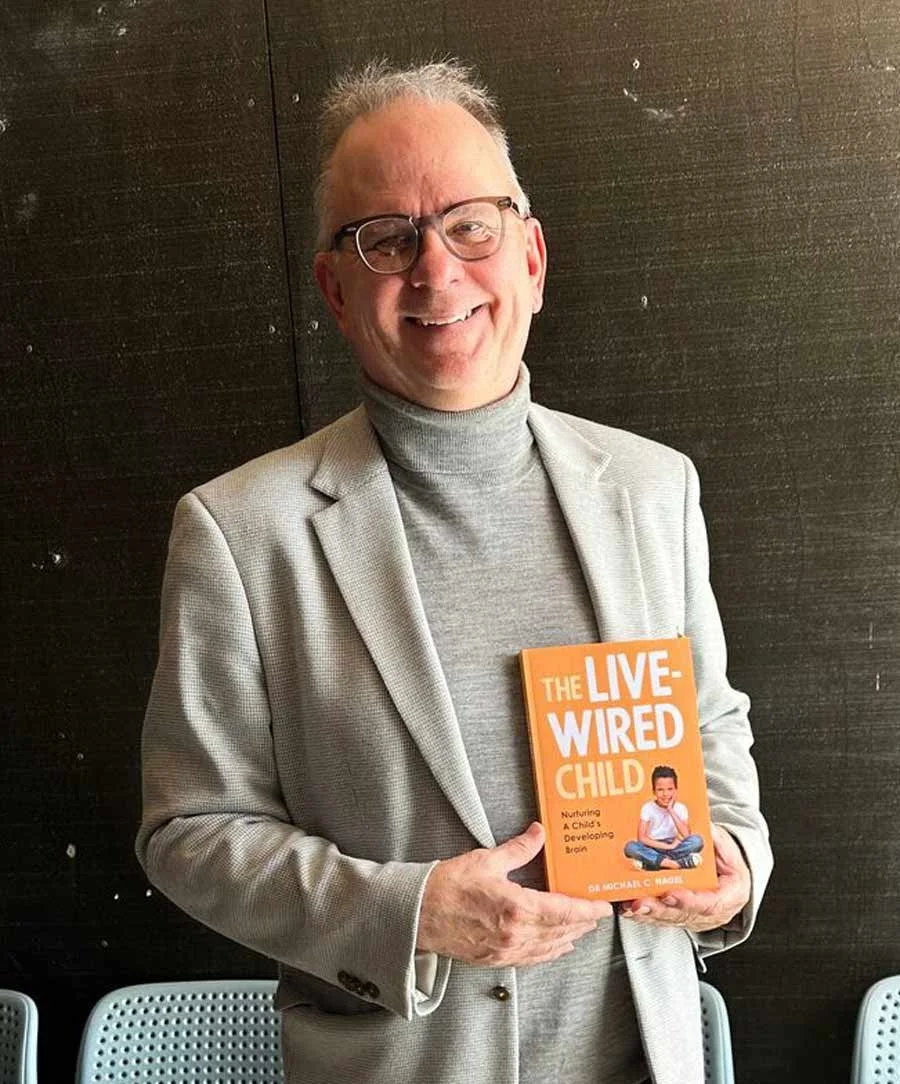
BRUCE PIASECKI
NYTimes Bestselling Author of World Inc. · A New Way to Wealth · Doing More with Teams · Founder of AHC Group
I wrote a book called World Inc. that was translated into ten different languages, and in that book, I argue for a vision of capitalism which is less destructive and less speculative. So I created a concept called social response capitalism. And it is broader than corporate responsibility, because if you can make companies tick on social response, they will change faster and advance the rules faster for social good.
So I define old school capitalism over the last 50 years, the kind that Milton Friedman defined, as speculative capitalism.It takes human talent, technology, distribution rules, channels of influence and tries to make more money than a competitor faster. That is speculative capitalism.
I believe in a world as we evolve towards nine billion people in a time of climate change, we have to morph more like a Unilever or more like a Toyota or Merck. These are companies that now compete on social needs.
BILL NOVELLI
Founder Business for Impact Program at Georgetown University
Co-founder Porter Novelli Global PR Agency · Former CEO of AARP
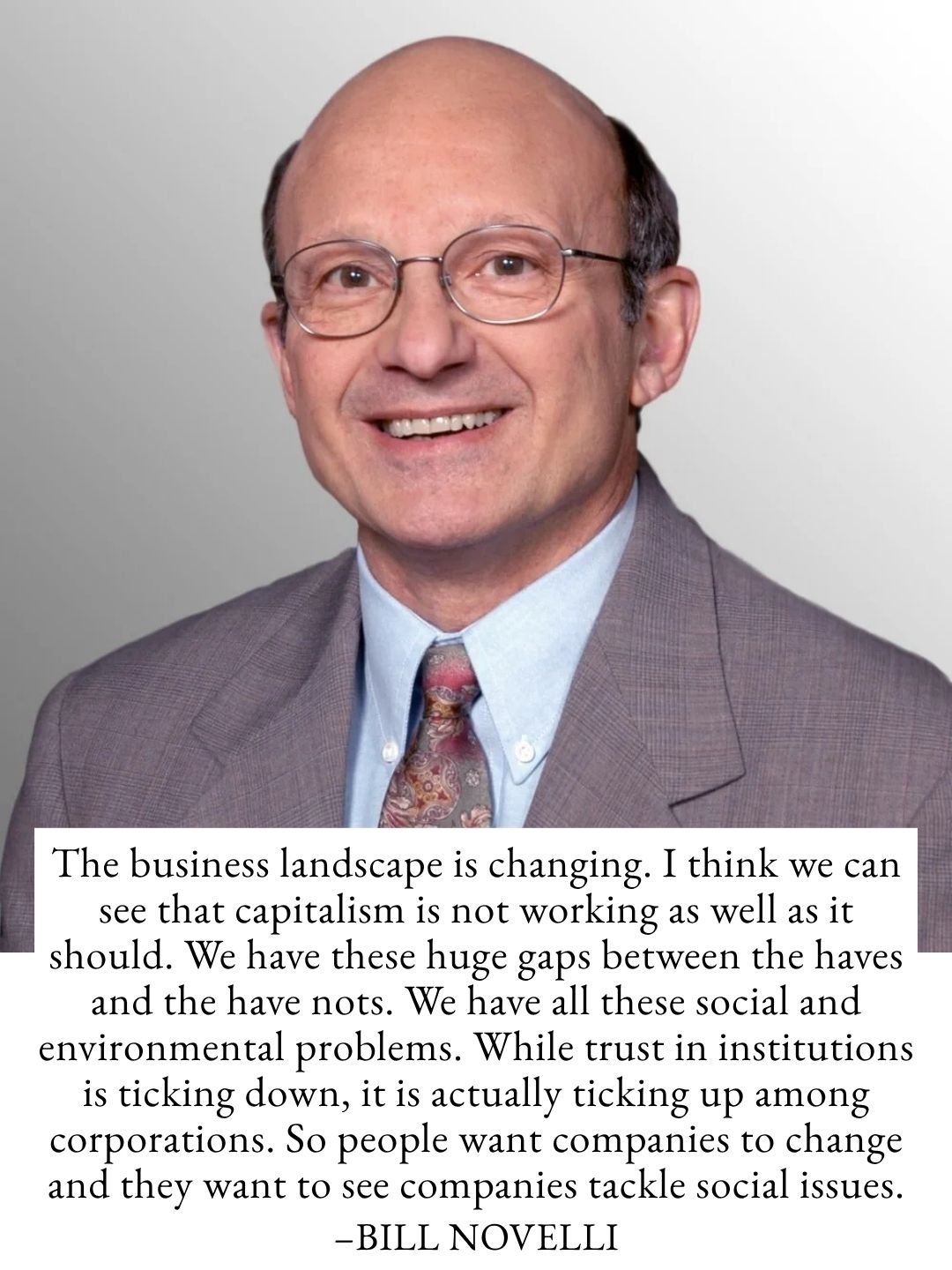
Well, the landscape really is changing. The business landscape is changing. So first of all, I think we can see that capitalism is not working as well as it should. We have these huge gaps between the haves and the have nots. We have all these social and environmental problems. So that is one way that landscape is changing very rapidly. But the second way is that people are demanding. Investors, employees, customers. And while trust in institutions is ticking down, it is actually ticking up among corporations. So people want companies to change and they want to see companies tackle social issues.
BILL SHIREMAN
President of Solution Citizen · Curator of the EarthX Congress of Conferences · Author of The EarthX Guide to a Circular Economy
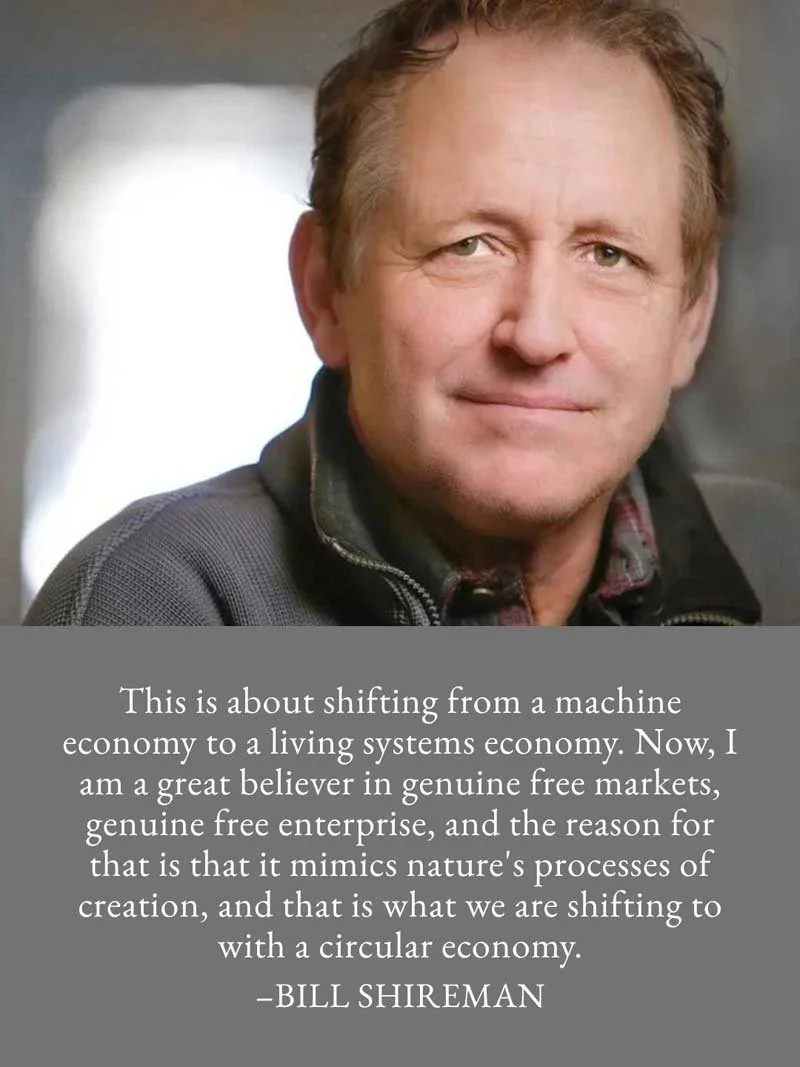
This is about shifting from a machine economy to a living systems economy. Now, I am a great believer in genuine free markets, genuine free enterprise, and the reason for that is that it mimics nature's processes of creation, and that is what we are shifting to with a circular economy. In our old linear economy, we extracted, we used up and then disposed of things as if the planet was a giant ATM machine, and we would just extract our money and it would never end. But of course, you cannot do that because the planet is a living system and composed of living systems, and those living systems are what support us.
We have grown so big and so powerful that in a dozen different ways and more, we are threatening the health of the living systems that support us and support life on the planet.
SCOTT TEW
Vice President · Sustainability · Trane Technologies
Managing Director · Center for Energy Efficiency & Sustainability
And there are lots of answers to your question. That is a couple of points that I would make. One is, is that I think that there are still a lot of myths about what is possible in terms of the impacts of climate change, including things like extreme weather events and heat waves.
Whatever the list might be, depending on the region, there is a lot of misunderstanding. Do we have the capabilities today to solve some of the issues, or do we have to keep relying on the incumbent historical technologies that we have relied on for generations?
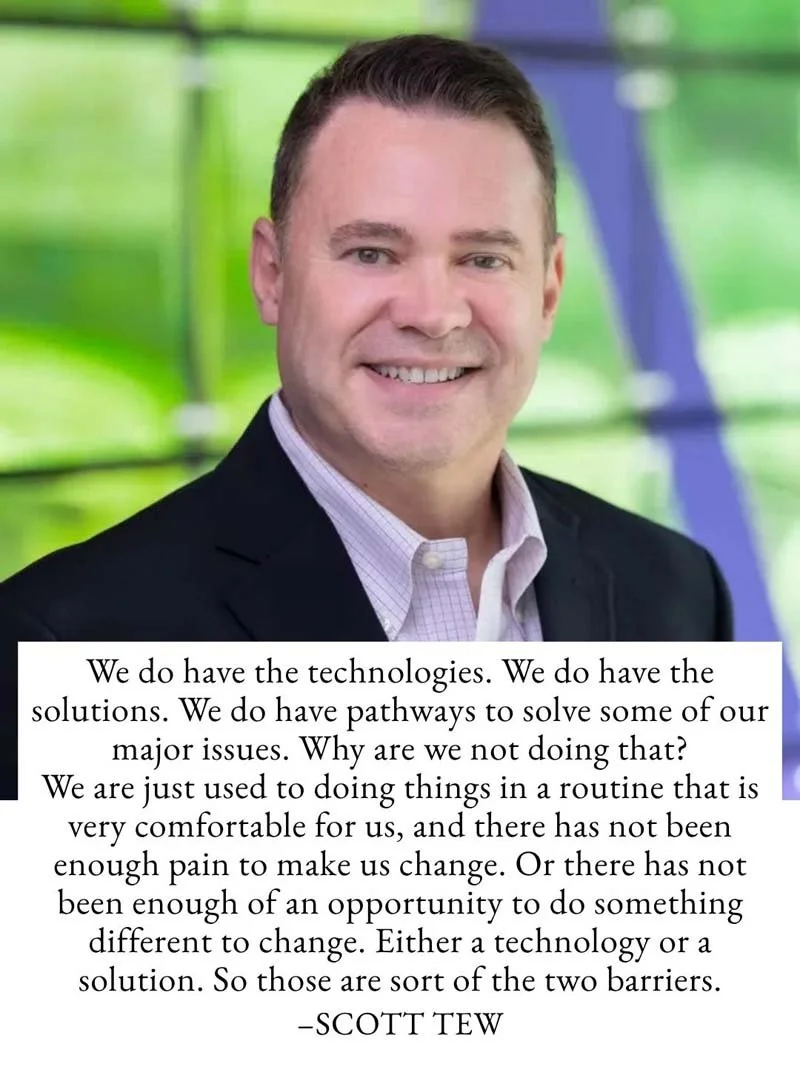
And the answer to that is, we do have the technologies, we do have the solutions. We do have pathways to solve some of our major issues. And so that brings me to my second point and answer to your question. And that would be, why are we not doing that? So I either have to think that there is just a lot of misinformation, so people are misinformed, or we are just lazy.
We are just used to doing things in a routine that is very comfortable for us, and there has not been enough pain to make us change, or there has not been enough of an opportunity to do something different to change. Either a technology or a solution. So those are sort of the two barriers.
And I know that may be a negative way of answering your question, but that is my viewpoint of why we are still depending on those incumbent technologies.
GORDON LAMBERT
World Economic Forum Global Council · Energy and Sustainability
Fmr. Member of Alberta’s Climate Change Advisory Panel
That notion of airsheds and watersheds, it was introduced as an education for folks, a point of situational awareness. And what I had to do was a term I will use as guided discovery. Where, even though I knew what the outcome of the dialogue needed to be, I needed these folks to take their understanding and their conversation to feel they own that outcome. So I knew the right outcome was to start managing environmental performance on a regional level.
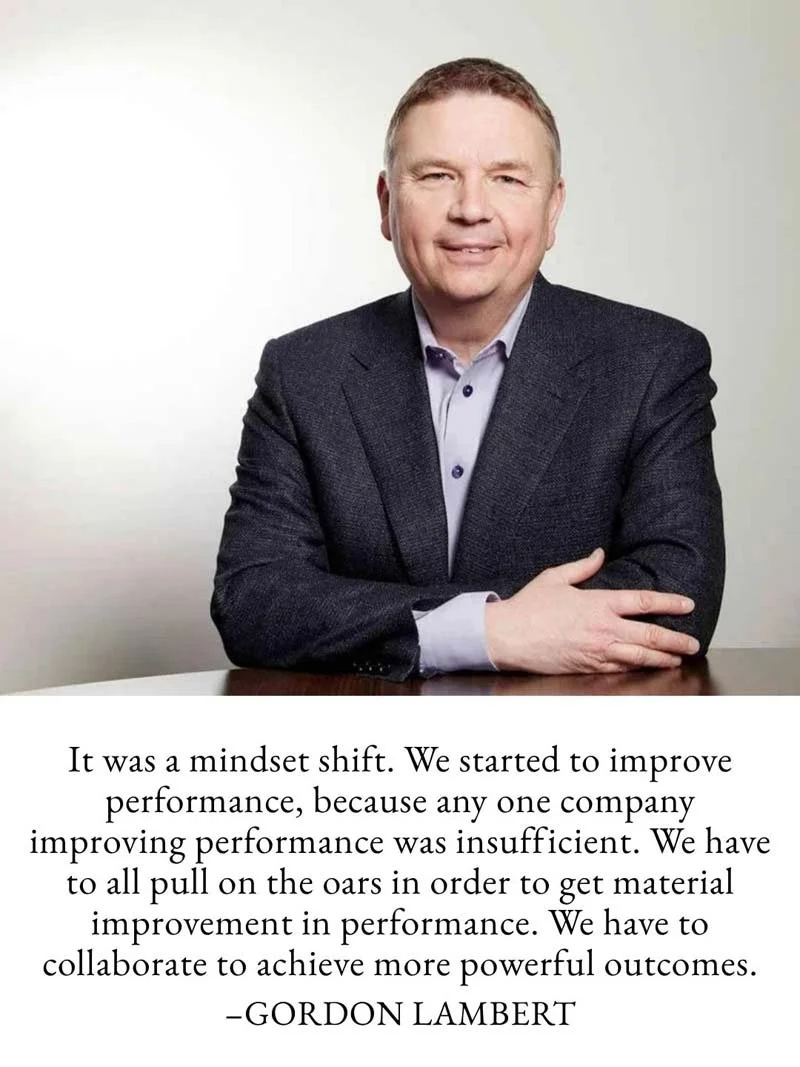
But if I just went to them and said, this is what we are going to do, to Bruce's point, they are all going to say, no, because nobody is telling us we have to, we are in compliance, our facility is just fine, thank you very much. No, I had to facilitate an understanding and situational awareness for them that made airsheds and watersheds become strategically compelling and important. It was a mindset shift. We started to improve performance, because any one company improving performance was insufficient. We have to all pull on the oars in order to get material improvement in performance. And so, hey, guess what? We do not compete on airsheds and watersheds. We have to collaborate to achieve more powerful outcomes.
JULIE PIERCE
Vice President of Strategy & Planning · Minnesota Power
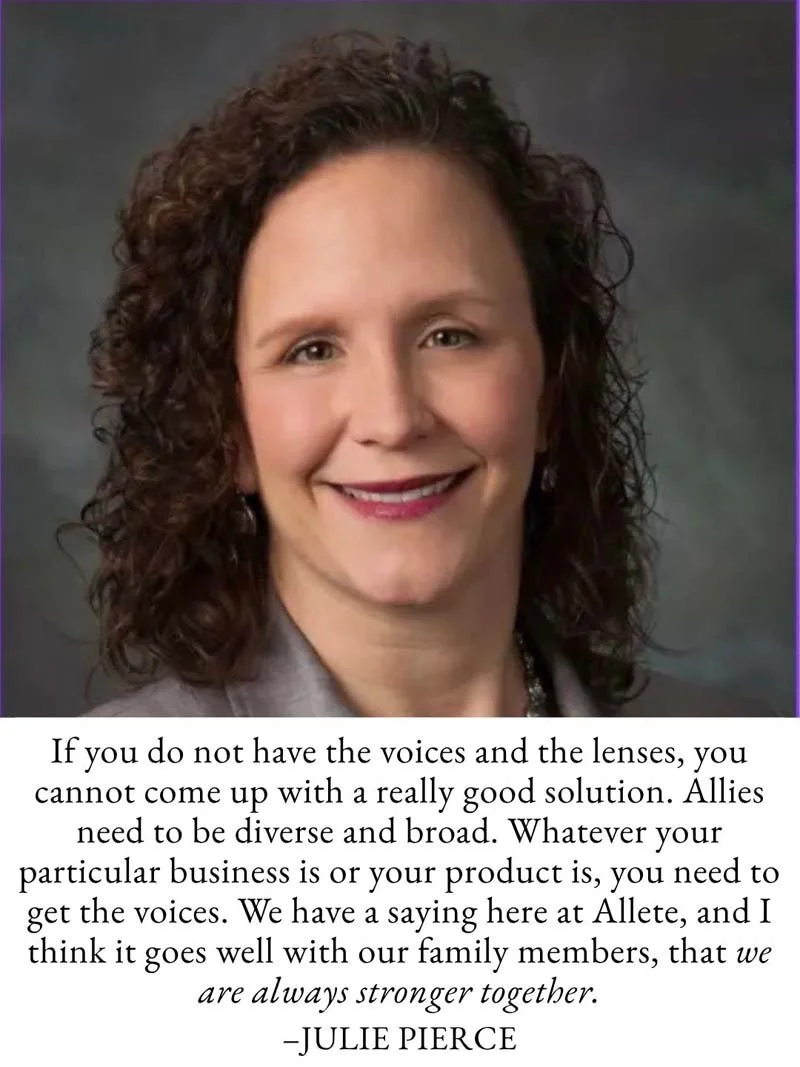
Great, great question, Bruce. And I think with any change management, it is about finding a diverse set of allies internally and externally to your business without having the voices and all the lenses, I call it on. These change questions that we have to deal with.
If you do not have the voices and the lenses, you cannot come up with a really good solution. I would say the allies need to be diverse and broad, they are in business and whatever your particular business is or your product is, you need to get the voices, and we have a saying here at Allete, and I think it goes well with our family members that we are always stronger together.
And when you are trying to go through change, and you are trying to figure out whether it is a strategy or a business solution. We are stronger together when we use each other's voices and we collaborate together. But it is really, I think, because we approach things with that mantra and with that mindset of how to get things done.
BRUCE MAU
Award-winning Designer, Artist & Educator
Co-founder & CEO of Massive Change Network
Author/Co-author of Mau MC24 · The Nexus · S, M, L, XL
And I discovered that the indigenous folks have a different cosmology. They do not put humans at the center. They put life at the center, and one of the guys said, 'We think that we are related to the rocks and the grasses,' which is actually what E.O. Wilson said, right? E.O. Wilson said, 'Rock is slow life, and life is fast rock.' So here you have the greatest life scientist in the last half century saying the same thing as the indigenous cosmologist, right?
So the spiritual cosmology and the science are coming to the same place, which for me really I mean, when I realized that I thought, wow, this is just an incredible, incredible situation that you have, you know, the science and the spirituality coming to the same place.
And that is what life-centered design is really about. Really to kind of put life into the center of the way we think. If you walked into practically any design university in the world today, any design school, we teach human-centered design.And, as Julio Ottino said, you are not going to solve climate change with human-centered design.
You are going to make humans as happy as can be. But you know, like the happiest humans in the world are not going to make climate change better. You have to think outside of humans but we still, the dominant really, the only teaching happening in design is human-centered design. It is the only model. And so we put the human back into the center of Copernicus's model. Copernicus said, no, no, no, it is not all about us.And we spent the last several hundred years proving him wrong. I was like, no we insist on, you know, it is that, it is all about us. And it is not, it is actually about life. And we are going to have to get that into the model. So imagine a city about life, how different that would be, right.Imagine a living city.
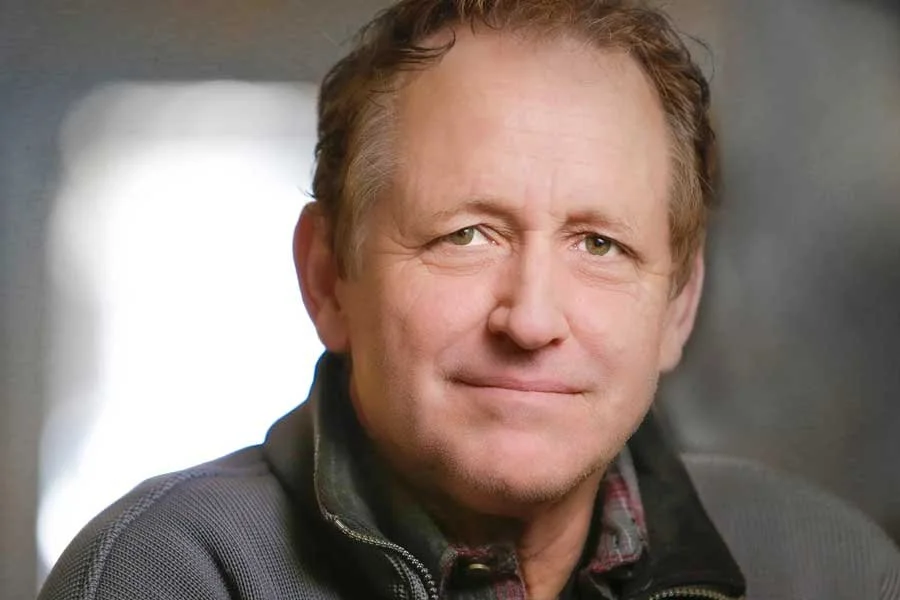
COLIN STEEN
CEO of Legacy Agripartners
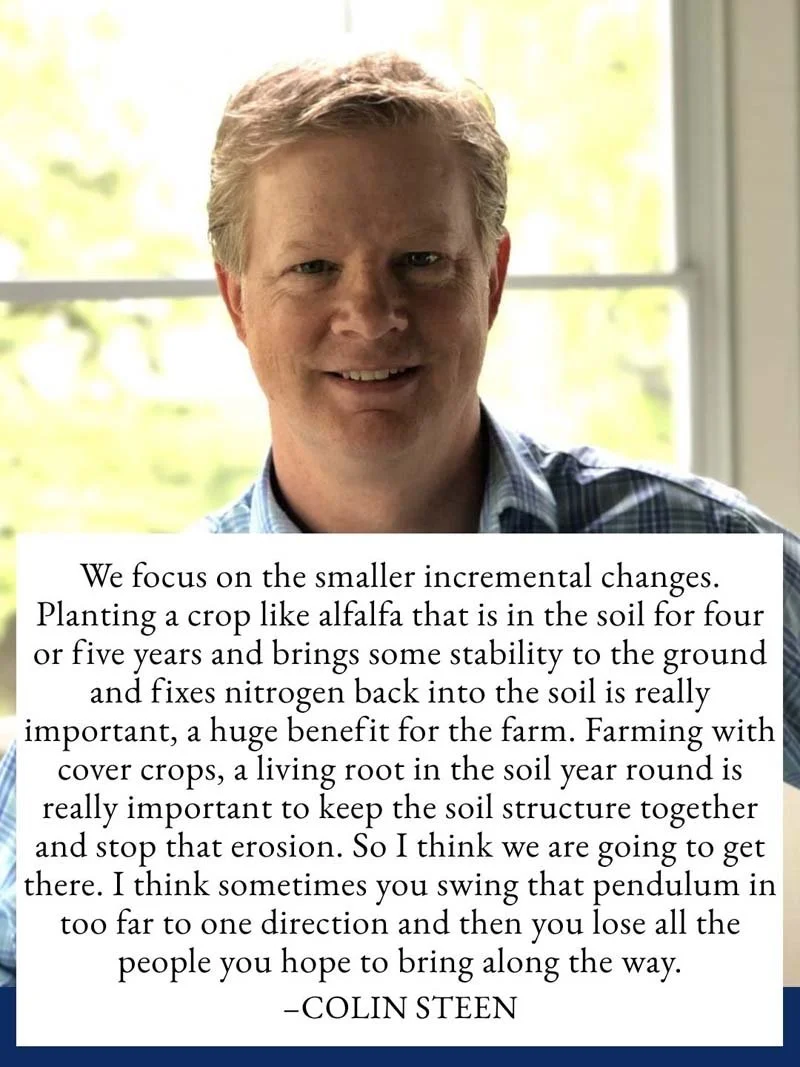
Yep. I agree completely. And I think one of the things that we are trying to do is just, again, I think some firms come out and they go to the farmers and say, "You have to change all these things right now. If you are going to cut out your fertilizers, cut out your pesticides, stop tilling your land." And the farmer's head explodes, right?
They are like, I cannot change all that. I still have to feed my family, right? I still have to make a living on this thing. So, we kind of focus on the smaller incremental changes and, you know, planting a crop like alfalfa that is in the soil for four or five years and brings some stability to the ground and fixes nitrogen back into the soil is really important, right?
So that is a huge benefit for the farm. You know, farming with cover crops, again, a living root in the soil year round is really important to keep the soil structure together and stop that erosion. And then it works better into no-till situations. So I think we are going to get there, just, right now I think sometimes you like swing that pendulum in too far to one direction and then you lose all the people you hope to bring along the way.
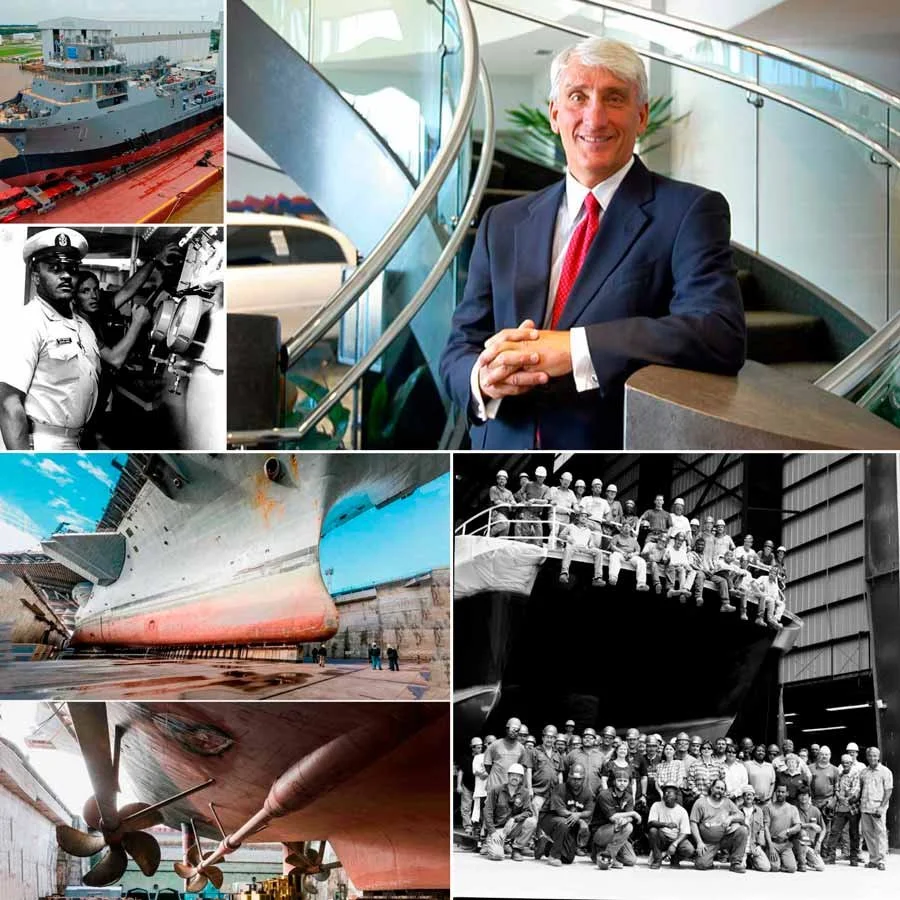
ALAN LERCHBACKER
Fmr. Shipyard CEO · Austal USA
President & CEO · F&A International
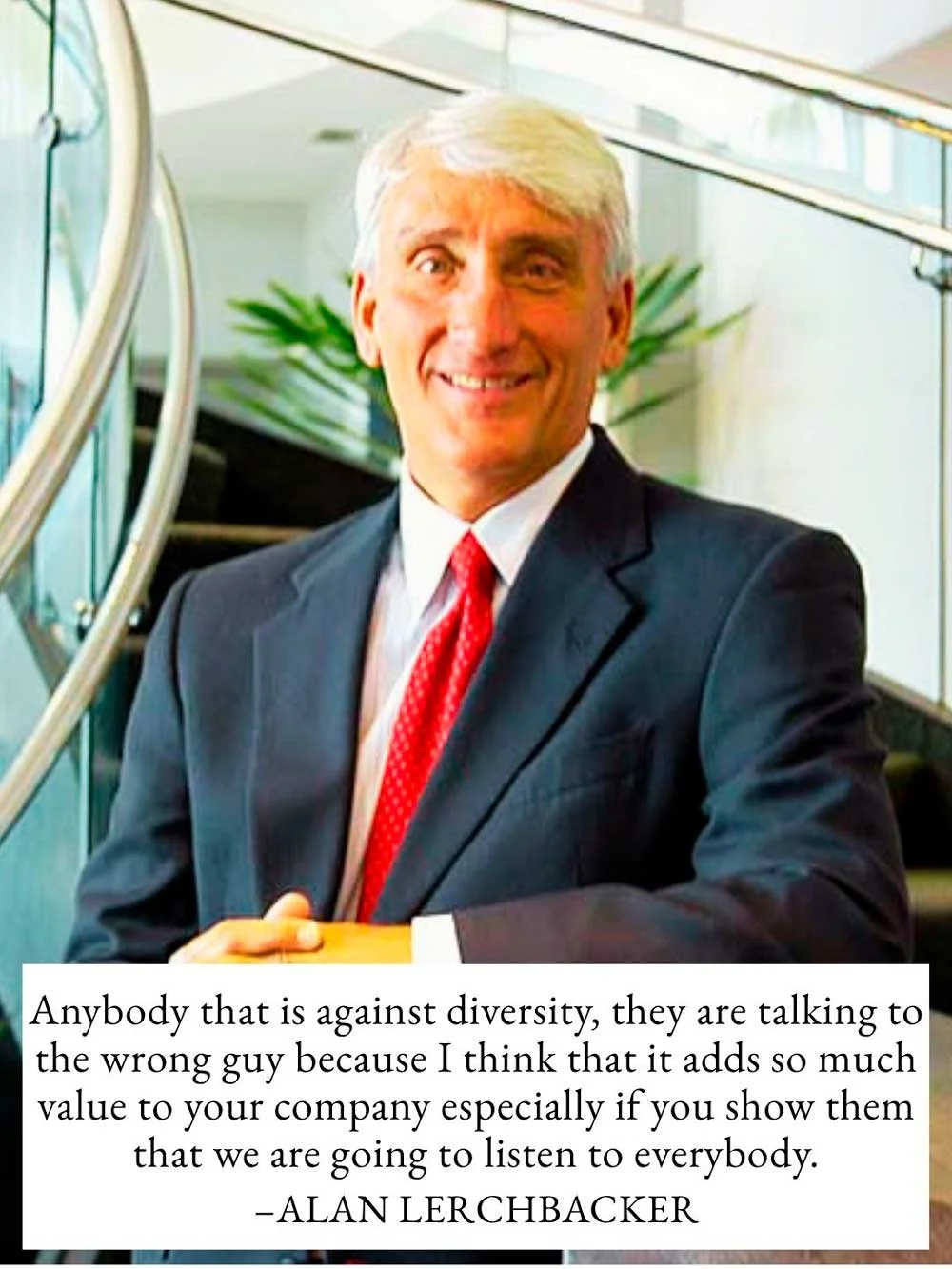
And what we found was that the younger people, arc welding or MIG and TIG welding, metal welding, was a video game for them. They hear it, they see it and they learn how to weld where it would take six months to teach somebody from a stick welder to a metal welder they would learn it in less than 30 days. And the youth really added so much value. So diversity, yeah, anybody that is against diversity, they are talking to the wrong guy because I think that it adds so much value to your company especially if you show them that we are going to listen to everybody.
ROBIN PHILLIPS
Retired US Army Officer with a Career in Current and Crisis Intelligence and Strategic Plans and Policy at the Pentagon
When I was in high school, I had a chance to go on a class trip to Greece, and this was 1979, I believe, and they had actually created copies of some of their statues and put the copies outside and brought the originals indoors into museums because pollution in Athens at that time was so severe that the acid rain was melting those marble statues because marble is limestone and acid will corrode. And you know, marble is basically a fossilized limestone. So, it goes back even that far that other countries were taking action already.
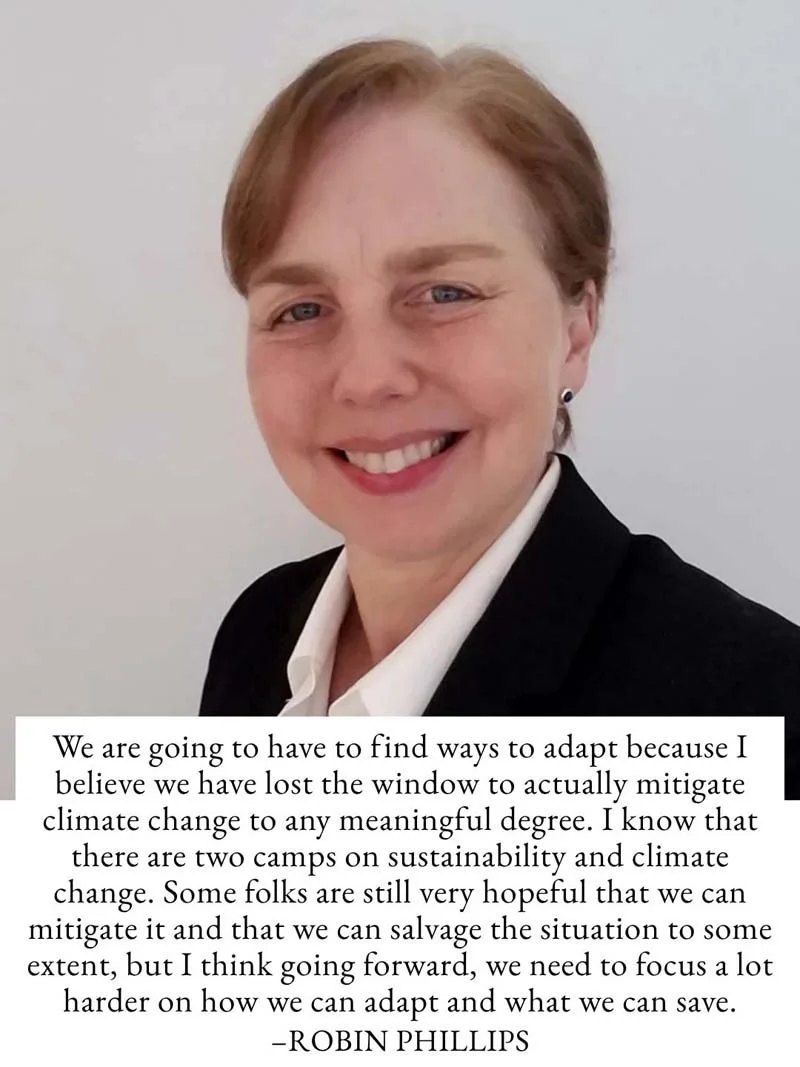
In the last quarter of the 20th century, and here we are ending the first quarter of the 21st century now, and we are lagging.We are lagging far behind in our actual actions, in climate change. And this is why I believe that going forward, we are going to have to find ways to adapt because I believe we have lost the window to actually mitigate climate change to any meaningful degree. I believe that we have lost that window. And I know that there are two camps on sustainability and climate change. And some folks are still very hopeful that we can mitigate it and that we can salvage the situation to some extent, but I think going forward, we need to focus a lot harder on how we can adapt and what we can save.
Well said. Yeah, I think the reason why I evolved into being an early environmentalist 40 years ago, and then played a role in trying to define what is competitive sustainability, is because that initial encounter with poverty and how one outsmarts poverty and scarcity through the creative process.
So that I do think that what is stunning about every man, every woman, is they have within them the ability to react to captivity and generate a few good options. They are able to invest in their family or themselves and in a sense remake themselves, right? That is what Benjamin Franklin and Marcus Aurelius is all about.
So I do believe that visualizing yourself is important, but I had a moment of sudden rightness when I decided to write A New Way to Wealth, and I was reflecting on my daughter, Colette. And I am so proud of a moment when she was 16 when she was playing competitive volleyball as a center. And I had asked if I could take her to this Adirondack lake where she and I used to swim a lot when she was ten to 16.And, at that lake, I asked her if she would come with me for a month before she went to college to do a book tour of Australia, and she happily said so. So we started having fun, and I threw a rock into this large lake called Moreau Lake, a beautiful, mirror lake in a sense, and the rock created some waves.
But the particular moment of sudden rightness was when my daughter threw it even further than I could and created a bigger wave. And I suddenly realized that it was no longer about me. The finitude of my life was insignificant to the fact that I had created a family with my wife, and that I had created a firm, and that the third concentric circle of that firm influences other bigger firms like Merck, Walgreens and Walmart. And so the discovery of how true capital is social capital happened maybe a little later in my life. I was very competitive to make back from what I had not in the beginning. But lately, my books—so A New Way to Wealth is a book about social wealth.