

Why do so many of us feel so compelled to say these things that we live with for so long and we avoid saying for so long? I think so many people spend years and years, decades and decades of their lives avoiding saying things that, in the end, we suddenly feel compelled to say. I'm not as old as Ivan, but I do feel now increasingly determined to say to the few people left in my life, people I really, really care about—and who I know care about me—that I love them.
It's probably true of many people, that we are not naturally courageous, and we have to be compelled to be courageous by limits on time or the sudden realization that we are about to lose everything. It's the emergency that provokes honesty. And I think, in this case, the emergency is really not the exterior world. It's not what is coming. Or rather, it is what is coming, but it's what's coming for all of us—which is the same thing that's been coming for all of us forever.
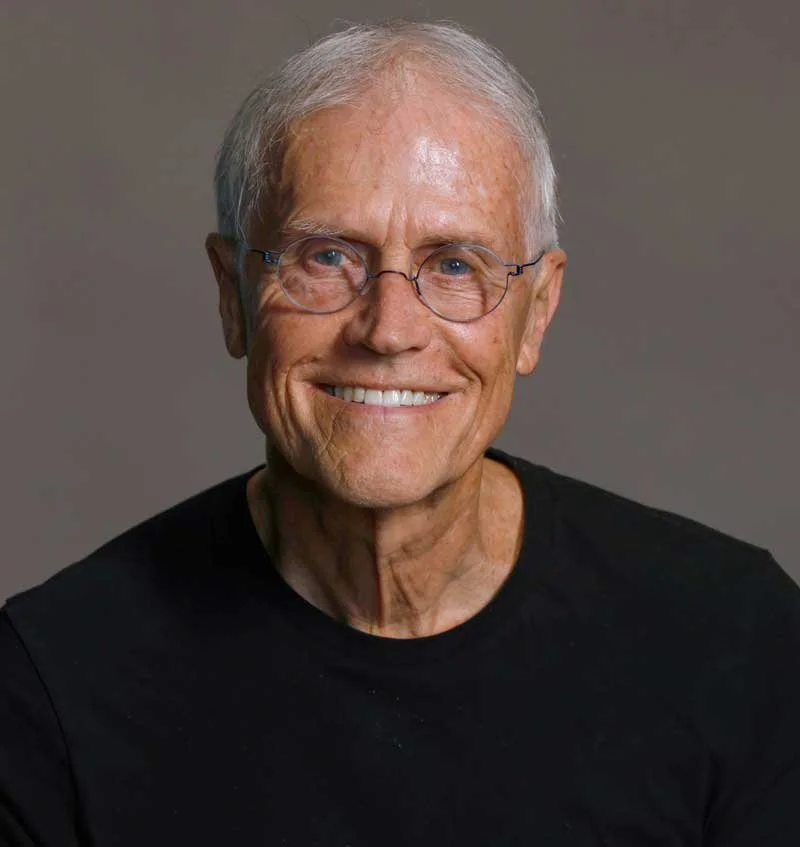
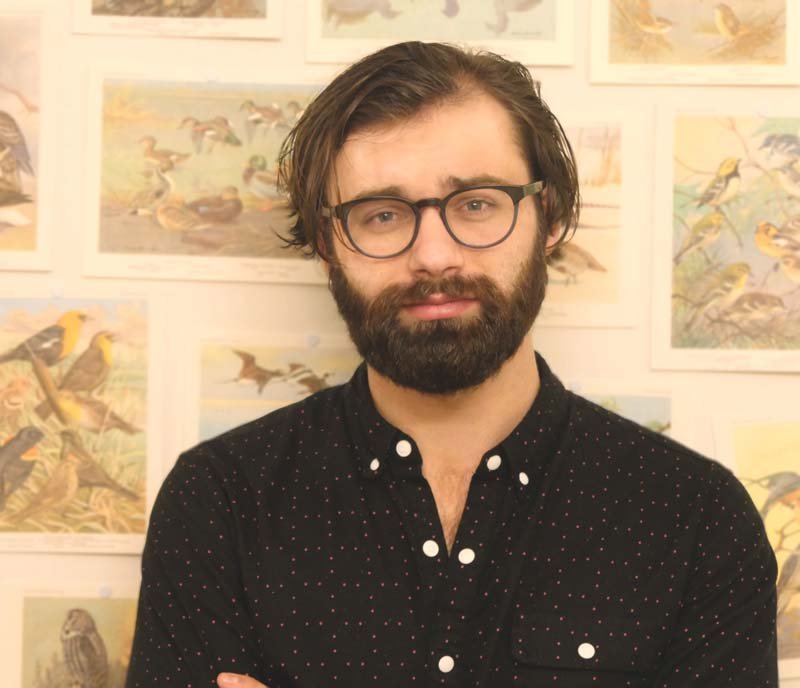
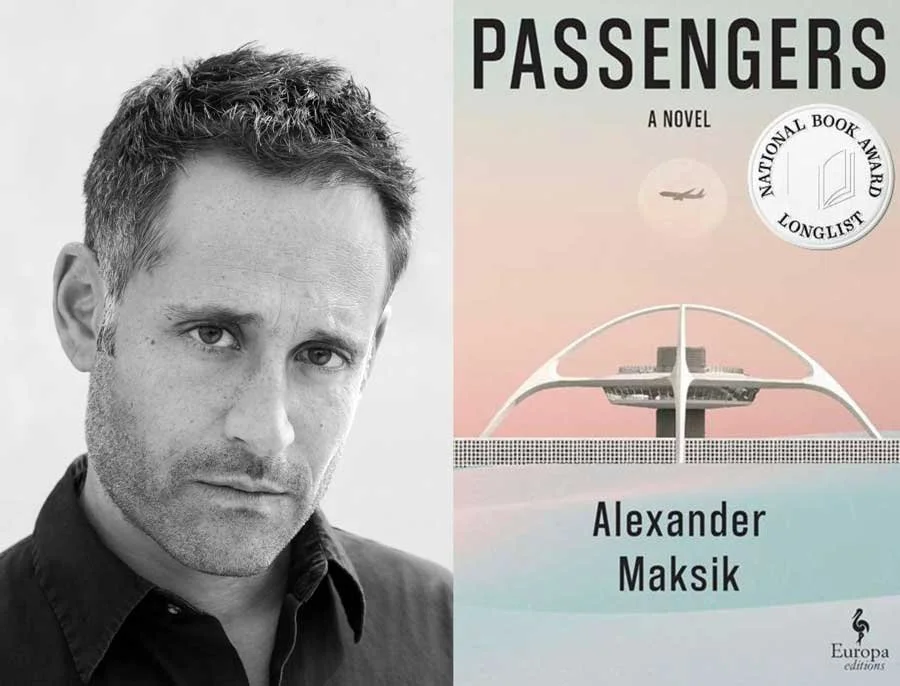
My guest today is Alexander Maksik, author of several acclaimed novels, including You Deserve Nothing, A Marker to Measure Drift and The Long Corner. His latest novel, Passengers, longlisted for the 2026 National Book Award, begins with a seemingly ordinary predicament: a father and daughter waiting for a delayed flight at Los Angeles International Airport. Ivan, in his 70s, hopes that a trip to Europe might bring him closer to his daughter,Nina, who is approaching 30 and has long kept her distance from him. But as the hours pass, flights are canceled, security tightens and the airport becomes an increasingly unsettling place.
What begins as a story about a complicated family relationship gradually takes on the dimensions of something much larger. At its heart, Passengers is a novel about the things we inherit from our parents, the things we struggle to say to one another and the possibility of finding love and understanding, even when the past cannot be undone.
Born in Los Angeles, Maksik has lived in Idaho, Maui and now makes his home in Paris. He is co-artistic director of the Can Cab Literary Residence in Catalonia, Spain. We discuss the places and people who inspire him and what it's like to live with roots in the air. Alexander Maksik, welcome to The Creative Process.
ALEXANDER MAKSIK
Thank you so much for having me.
THE CREATIVE PROCESS
So Passengers—it's a novel about love, death, sometimes the ways in which life happens to us while we're waiting to live and what we do with that one life that we're given. All these important questions: what it is to be a good father, what is love. Simple to ask these questions, hard to answer. But I'll start with maybe the hardest or the easiest. What do you think happens when we die?
ALEXANDER MAKSIK
It's funny to say this in a church, but I think that's the end.
THE CREATIVE PROCESS
Oh.
ALEXANDER MAKSIK
Yeah. I'm sorry not to have a more hopeful response to that question, but I do think that it's the end. The most spiritual answer—one I think that's probably been given a thousand times, but that is relevant to this novel in particular—is that we live on in our family, the people we interact with and the people we have some connection to.But it's cold comfort, I think, for most people. To me, I don't find it particularly sad, this idea that when we die, it is over. I really don't, and I find that as lovely and beautiful as anything else.
THE CREATIVE PROCESS
Philosophers, writers, artists or different people—we all experience many endings and many beginnings in our life, but we've been rehearsing, in a way. So maybe—I don't like to say it gives us comfort, but it lets us understand. I don't know what lies beyond, but I believe in the spirit. But I think that when we are writing or creating something, it's never out of whole cloth, and sometimes we ask ourselves: Where do ideas come from? What is that spirit that overtook me? What's that mood that entered a room? And if that's a ghost, I don't know if I believe in that. But there's a resonance, perhaps.
ALEXANDER MAKSIK
Yeah, I mean, I think there are a lot of ways to say the same thing. This idea of God, of the spirit, of ghosts and... To me, all of these things exist as a form of history. I hope, and I try to control this hope as a father.But I hope that whatever I teach my child will exist in her in some way or another, more good than bad, until she has a child of her own. And if she doesn't have a child of her own, then in the way that she is a friend to others and so on and so forth. But again, I hope I'm not struck down as we sit here in this church. But I just don't feel convinced that there's anything beyond our lives here.
THE CREATIVE PROCESS
So we should say, the topic of Passengers—how did that change that feeling, that perspective that you had on the terminal? The terminal of this airport or this life. It's a metaphor for this life we live, I guess. How did that go into the writing of Passengers?
ALEXANDER MAKSIK
Well, I mean, I think the fact that Ivan also, I believe, shares my idea that when he dies, that's the end of it—he feels an intense desire to communicate to his daughter just how much he loves her because there is no way to do it afterwards. And I think, as is true with so many older people, there is a sudden rush to communicate these things that matter most. And for Ivan, what matters most to him is the expression—both the feeling and then the subsequent expression or effort to express the way he feels for his daughter. And to what end? He's not entirely sure, and I think that's part of the problem.
Why do we feel so compelled, or why do so many of us feel so compelled to say these things that we live with for so long and we avoid saying for so long? I mean, I think so many people spend years and years, decades and decades of their lives avoiding saying things that in the end we suddenly feel compelled to say. I'm not as old as Ivan, but I do feel now increasingly determined to say to the few people left in my life, people I really, really care about—and who I know care about me—that I love them. That is an increasingly important thing for me to do. And yet I also don't want to oppress anyone with that expression of feeling.
THE CREATIVE PROCESS
Yeah, because in some ways they have so many things that divide them, and yet they are very similar in many ways, and they don't realize. That's the classic tragedy. They don't realize how similar they are in many ways. But because they are on different spectrums of age, the importance and urgency of that...
ALEXANDER MAKSIK
Yeah, though I would argue that they're not quite as similar as Ivan would like to believe. And that is another point of tension, I think: that he is convinced, and has been forever, or since she was born, that they were very much alike. Whereas Nina feels that's not the case. And added to that is her—at the very least, let's say, irritation—this anger, frankly, she feels. The way I think we all feel a sense of anger when people are determined to draw lines between us that don't exist. And I think her experience in the world is very different from his. And that is a source of pain,and it is increasingly a source of pain. I think in a certain way, Ivan has made a kind of religion of this connection. And I think she sees it as false. As something dishonest. And that's a very difficult thing, I think, for Ivan to endure, in the same way that it was difficult for so many years for her to endure this constant assertion of connection. And he asserts it almost as a point of spirituality. Like I said before, it's a kind of religion.
THE CREATIVE PROCESS
Yes. And I think that this would be a good point to set up that kind of conflict and Ivan's hope at the start of Passengers—what they hope, or what he hopes, will be a trip to Paris.
ALEXANDER MAKSIK
Yeah. Well, on the surface, he wants to take her to Paris and show her this iconic city, a city that meant a great deal to him when he was young. But again, I think underlying that is a desire to sort of reveal himself. To say, "I have not always been an old man. I was also a young man with dreams of my own and pain of my own and confusion of my own, and I want you to see that. And I want you to see that." I think what is not spoken is that he wants her to see it before he dies. He wants her to know him completely, which is a very, I think, common desire, and one that can be painful both for the person who wants to communicate the self and the person who is receiving it, especially if that person is a child or is the child of the communicator. As you will see in this opening passage, Ivan is concerned from the very first sentence of the novel with his desire to communicate. Rather, not the truth, but rather the desire to communicate what he imagines the truth to be. And he says:
Sitting in the terminal, waiting for his daughter, Ivan was trying to remember if any of it had ever been as he had promised her. Through the gray glass he could see a bullnecked woman in an orange safety vest slouching against a wall out on the tarmac. He watched her dip a rag into a bucket, and then press it against her face.
From the taxi on his way to LAX, Ivan had seen something peculiar in the yellow sky. It was to do with the quality of the light, the concentration of its color and also another thing for which he didn’t quite have the language. Or maybe it was only the heat—ninety-three degrees when he’d entered the frigid airport a few minutes after eight. Their flight was scheduled to leave at noon, when the temperature was expected to reach a hundred and six.
Nina would be at least an hour, probably two, so he passed the time trying to recall the precise quality of those disappeared years he’d gone on about for so long.
Ivan closed his eyes now and entered the apartment. Miserable midwinter. Early morning. There was the old aluminum coffeemaker that had often appeared to him as a device of war. A knockoff, he remembered, of a brand he could not remember. One of the first objects he’d bought at the beginning of that brief life. From his bed he could see it resting on the rusting hotplate, full to the line with water and coffee grounds and all screwed together ready for the heat.
The days were lean, yes, but nothing, and certainly no degree of poverty, had ever stopped him from being fastidious. His response to privation of any kind was always to assert control where he could. So, yes, he would have prepared it before he went to sleep, no matter how drunk he may have been, or how lonely.
At some point, he’d begun pissing in a wine bottle so that he didn’t have to cross the room or even get out of bed. And then one morning he had corked the bottle and pulled it under the covers. Now he could recall the relief of that warmth, and how quickly revulsion had given way to pleasure and then to pride in the economy of his discovery.
Was this true? Was it every bitter morning? He couldn’t be sure, though he was certain that many times when he did drag himself up, he found the water in the coffee maker had turned to ice. And he remembered now, wondering then, like a fool, like a child, why it was that the water in the pipes didn’t freeze, and the very moment he understood, jammed into the tiny tub, in his naked twenty-four-year-old body, holding the calcified sprayer like a pistol to his skull, that it was everyone else in the building, all those people who lived in the five apartments beneath his, who kept things warm, that he was the beneficiary of their rising heat, that without them down below paying their bills, living their lives the way lives were meant to be lived—with reason and clear purpose, with consideration and respect for a widely understood social contract—every drop of water within that building would have frozen solid.
So, had he been happy? Aside from the cold, from the frequent hunger, his humiliating youthful oblivion, the near-constant sense of displacement?
Well, there was his body, which had run so effortlessly, so dependably, so fluently, which had made it possible for him to live at the very top of all those stairs for as long as he had. And there was the elevation itself. He remembered looking out the window from his narrow mattress, seeing only sky and then the attendant sensation of flight. Apartment as hot air balloon, hanging above the clattering city, invisible far below. And the comfort of sitting up later, covers drawn to the waist, watching clouds shift shape and color, a cup of cooling coffee in his hands and a coat on and a wool cap, maybe blue, maybe grey, maybe black. So, there was pleasure, yes, an awareness of himself and perhaps a belief in the romance of his condition, of living a minor rebellion, a rejection of his origins, a feeling of power, of physical ease, all of this, yes, but whether he was happy in those years, he could not say. And probably, he thought, as he opened his eyes to check the time, he wouldn’t have been able to say then either.
SHOW FULL INTERVIEW (15:00+) ▼
That's beautiful, thank you. It's a funny thing. If we can be happier in hindsight, again, it's like a work of art. All the dreary moments, all the struggling moments, the poverty that looks great at this distance. I mean, even the pissing into the wine bottle...I have to wonder about the physics of that! (Laughter)
Because he had witnessed her first steps, and in a way he wants to bring on first steps. It's interesting that she feels that as a burden of him trying to share those parts of himself, and yet it depends on where you come from and what you've been born into. I know you've written about people who've had different traumas, big ones—their ancestors in the Holocaust or all these other heavy shadows that they don't like to talk about at all. And it's buried. The opposite side of that is a child who is curious: "You didn't tell me. You didn't tell me that." "I don't want to relive that." They don't even say that. It's just, "I drew a line." And that's their burden because they have to imagine.
Sure. Yeah, I think Nina is far more open to hearing stories that she's never heard before. She would like to know him. She doesn't recoil from that. She recoils from his constant insistence that they are spiritually connected, that they have some cosmic bond. Because none of that has anything to do with her as an adult, and there's something infantilizing about this insistence. And it also, it only gives Ivan the opportunity to say the same things again and again and again. Whereas when she responds, she responds with interest in aspects of his life, of his character that she's not familiar with, which is why she lights up when he starts talking about, for example, selling drugs in Paris. That is a detail that she was never privy to. And so here's a possibility. Here's an opportunity to see him as a stranger. And that's an exciting thing for—
It's nice that she has that curiosity because there seems—and this might be me painting with a broad brush—that you do encounter a number of people that it doesn't seem to enter into their mind that their parents are people.
Sure. But often that is because the parent refuses to allow that door to be open. And I think this is one of Ivan's many faults: he is so frightened of being seen as weak that he, up until midway through the novel, all through her life, has controlled his own image the way that a publicist might for a celebrity. And she's bored of that image. And she's bored,frankly, of that personality and that person and that rather one-dimensional version of a man who is just another human being. And I think that is one of many things that she kind of revolts against.
I understood that, but I had a soft spot for him.
Sure. So do I. Yeah.
And a willingness or a wanting to—we talked a little bit before we began this recording about the beauty in the ordinary.
And he wants to see the specialness. And I think that's really an important quality to have and to hold onto because otherwise, is the most important thing about you your books or the relationships? Is the most important part those very physical items of legacy that might also disappear into dust, right? Don't last that long necessarily. Or is it better to be known and loved by five, ten people, or by—
Oh, it's a very difficult question. I'm not sure I have an answer. I don't think it's one or the other. It is obviously immensely important to me to write well and to write the kinds of books that I want to write. But it is not so important as to utterly destroy all of my relationships in service of those books. And I like to think that they're both equally important. I think I used to believe that I had to sacrifice everything on the altar of art. It's a very, I think, sort of absolute philosophy of a younger person. I don't think so anymore, and I think this book is better for having softened in that regard. It is a book, I think, that is written out of love and is about love, as you say, in ways that other books that I've written are not. So I guess yours is a very difficult question to answer. But I would like to say all of it. We talked earlier about memory, and I think the memory is as important as the books. I don't, perhaps, derive as much immediate gratification from memory as I do from receiving a letter from somebody who's liked something I've written. But I wouldn't argue that the letter is any more important than a particular memory.
Yes, because you've discussed, before we were recording, about the difficulty of putting into words things that can't be spoken. And things that often go unsaid between people, and emotion as a thing that's always changing. So how could you fix it in a word? Which is another metric, but an emotionally twined one. So how?
But this is, to me, what I think writing is about. And what writing is for. It is taking this chaos of emotion and intense feeling, confusion, wonder, pleasure—all of it—and making it an object of some kind that is cohesive and controlled and comprehensible to strangers. That to me is why I write more than anything else. And it's not at all really an academic approach to art, and I've never felt like an academic. And I've felt far more as if I write because—this is a cliché, but I'm going to use it—I have to do it. I've never been able to stop myself from doing it, and I have abandoned so many things in my life, and this I have never been able to abandon. And it is not because I am particularly well-read or interested in literary theory, or I have some argument to make or some grand ambition to find myself listed among certain writers I admire. It is really because I don't know what else to do, and I feel a compulsion to do it.
And choosing that above all other mediums, you've chosen that as being the best expression of your spirit and thoughts and all the things, all of you. But why is that the medium that spoke to you? And you said you started other things, so were there other things, but they were incomplete?
I mean, this is always a combination of desire and the discovery that we have no talent. I think if I could choose, I would prefer to be, I don't know, a musician or a painter or something that feels a little bit more physical. But I have really no talent as a musician and probably less talent as a painter. And so I think when you're young and you want to be an artist,you scratch around and you find that you have a little bit of talent, and then you follow that talent.
I began reading when I was very young. I was a terrible student. Really, really struggled all through my academic career. But I could always read well, and I could always write well. And more importantly, I think it felt natural to me. It was a language that I understood and had an instinct for. And despite being really, truly—I'm not making this up—I was really a bad student, and I struggled in school, even in English classes. And yet there was a kind of incomprehensible logic to language. And it always felt easy to me. Not easy in that it wasn't difficult, but easy in the sense that it was a natural thing.
And storytellers, chatterboxes, silent people in your family?
Storytellers. I suppose both my parents were storytellers in their way, but not the way that you hear storytellers in an Irish bar, for example. It was just that there were books everywhere, and there was art everywhere, and art was always sacred. And books especially were always holy, and we were to treat them with respect, and they were always accessible. They were always there to be read.
So in your home, where would you go? I'm seeing the young Xander. Where would you go to dream, to play, to think these deep young writer's thoughts?
Oh, I don't know how deep my thoughts were. I mean, we moved to Idaho when I was 14. And I repeated ninth grade because I had more or less failed out of that previous school. And that's when I started reading Hemingway because Hemingway lived and died in the town where we moved, and I loved Hemingway from a very early age, those Nick Adams stories. And I went to Hemingway's grave, I went to the Hemingway Memorial. I read, a bit later on, A Moveable Feast, and I fell in love with all of it, the whole thing—the writing and the life and the writer and the history and the other writers and the life in Paris and all of it. I don't know why exactly, but I liked it. I think maybe because of the style. I've always been drawn to a cleaner, simpler, drier style, and maybe that was simply because I had trouble reading other kinds of writing. But I don't think I was having particularly deep thoughts. If anything—partly because I struggled academically and partly because, in retrospect, I didn't know it then, but I was struggling psychologically, probably with the beginnings of depression—I found some comfort in reading and in writing.
I am interested in Hemingway's writing, but I didn't read it as a man, so I don't know. But I'm just going to speculate. And I think the obvious reading is to live with the kind of courage that he didn't always have. But it seemed like on the page,oh, it's being thrown into what? Oh, everything. It's life. It's like you want—especially at that age.
Sure. Though I was never particularly... I guess I was preoccupied by various ideas of courage. But I was never particularly interested in what it meant to, quote-unquote, "be a man." I had no desire to put myself in dangerous situations, and I never wanted to kill a lion or box or do any—I was far more interested in living a kind of writer's life in cafes than I was a writer's life with a rifle in my hand.
Yeah, no, it's that lust for life and it's the moveable feast of it. It's like he wants to eat all of life. So in Passengers... (Sound of distant sirens.) we'll wait for that to—Well, it's like your book, isn't it?
Yeah. Who knows what's—
Outside the—
—emergency. Yeah, exactly.
So in Passengers, it is the end of the world, or there is a mirage of an end of the world and passengers all around them. But again, like humans, they're all about them. So we're supposed to, I guess, have a sense of panic on the outside. We get this mounting dread. But as I was reading from page one, because I guess I could guess the ending, I had a sense of calm the whole time. And I don't know if this is for other people, but I felt like they were dead.
Yeah, that was certainly intentional. Yes.
Yeah, they're dead. So I felt once you know you're dead, well then, all the struggle... It's likewise, once you have that realization, like you said, you know you're going to die, well then, it kind of takes the pressure off. Right? And I felt like this is their one last day, and they could have that intensity as well as the meanderings. It wasn't all about intensity. And it reminded me, the writer A.L. Kennedy told me about this voice technique–the Alfred Wolfsohn technique–he worked a lot with soldiers after World War II. And they would talk about going into the battlefield, their experiences in no man's land, where you'd hear the voices of other soldiers. They're dying. Their dying voice. And you know how compelling it was, like sirens. You couldn't help but want to go to them. And he wondered, why was it that they only wait to the last moment of their life to speak with their true voice?
Interesting.
And I thought, "Well, why is it?" And yet so often—
I don't know. I think in the case of Ivan and Nina—and it's probably true of many people—that we are not naturally courageous, and we have to be compelled to be courageous by limits on time or the sudden realization that we are about to lose everything. And it's a trope in film and television and in books, right? The emergency that provokes honesty. And I think in this case, the emergency is really not the exterior world. It's not what is coming. Or rather, it is what is coming,but it's what's coming for all of us—which is the same thing that's been coming for all of us forever. And I think all of these other people in the airport, so numbed, deadened by their phones, computers, iPads, whatever. All those wires winding around them. To me, that is as much the emergency as whatever's happening outside the airport. And that is what they are fighting against: the deadening of their minds, the sort of turning away from the natural world, the turning away from each other, the just giving up our identities, our brains, our souls to the forces that seem to control us more and more every day.
It's interesting because I always try to find beauty in places. But you said there were other strangers that they encounter in this novel. That's kind of how it's punctuated in its form. And while you talked about the deadening, I saw also—and it's obviously intentional—you put in how their encounter with Nina and Ivan kind of awakens them to something beautiful. And listen, we hear the church bell outside. We hear a moment ago the sound of the wind in the trees. Again, beautiful light coming through the church. And there are so many moments, sentence by sentence, where something that could be traumatic could be described. But within that configuration there's something novel, and I've never seen that world. So there are so many opportunities. So I was feeling beauty coming through all this, and not feeling them as deadened.
Well, that, of course, is my intention. And I think maybe it's always been this way. But it seems that tension—maybe it's because... I don't know. I don't know why, but I feel that tension more and more and more as I grow older. And maybe it's simply because I'm a father now and I wasn't before, or maybe it's the state of the world or because of the dire state the environment is in. I don't know why, but I feel it much, much closer to my blood than I ever had. And I think, I hope anyway, that the book is very much about this: the need to observe the natural world, to find beauty, as a way to, in some minor way, revolt against so many awful things that are happening in the course of a day in this world of ours.
Even as you talk about nature, because it's never... It's always bound up with survival when we talk about that. Tennyson has a great poem, "The Eagle": "And like a thunderbolt he falls." That's beautiful, but he's killing. And what he's describing, that's the kill shot—beauty and cruelty always together. So just to accept it, that's living. That is life; death is the other side. As I was reading Passengers, I always love—I said before we began recording that if it can bring me back a moment, bring me back, especially with something like this, someone who has died—somebody makes me remember the grace and beauty of them.
And it's kind of a flip side: Ivan and Nina were going to Paris, and I had many dreams of my grandmother after she died. We didn't have those last moments together, but it was fine. She came in dreams. And it's so simple, and this is what I feel like in Passengers. She came to me. We were walking along—we had done this in life with my mother and my grandmother. And just like the golden hour, a whole perfect day. We had many of these days. And it was in a dream,though, and I only realized—it seemed so long and it was so real, the sunlight like honey—and I realized, "Oh, you're gone." And so I had to turn and ask her, it felt so real, "Are you sad?" And she said, as though it was the silliest question,she says, "I get to have one more day with you." And I feel like that's what Ivan and Nina have. They didn't get to Paris,but Paris is in them.
Yeah. I agree, and while I said earlier that I think that when we die, we die, it isn't to say that I'm not moved by those very same experiences. And in many ways, that is as close to God as I have come, is that same experience of walking somewhere and being struck by a memory, often provoked by a smell or some sensation that you can't quite identify. And the smell, for example, makes someone appear before you. I had very similar experiences with my grandmother, with whom I was very close and felt a very strong connection. I see somebody who reminds me of her, or—often it's a smell for some reason—and there she'll be. I think in some way I've been writing about that experience for a long time. And it's very powerful and can be frightening and also immensely moving. And I think that's as close as I can come to the spiritual realm. And I don't feel impoverished for that. It is immensely important.
It's possible that so many of our senses—Rupert Sheldrake has an interest... Lots of people have, lots of Indigenous groups had, lots of people have these intuitions about how we're encoded in our biology; morphic resonance, he calls it. Some people think that's odd, but we know things without knowing them. And even talking about the unsaid, the weight of trauma or the weight of past joys, that knowledge is passed into you. Whatever made you a writer, that could be somewhere down our DNA. Sure. And that can also be spiritual, but we don't—these are all—
Yeah, exactly. I was going to say, I'm not much interested in identifying this thing that we're talking about as long as I understand it.
So those scents, let us get the specific grains. Scents, sounds, sights, touch. What are they that bring up, that call back the world of your childhood?
There are certain—for example, the Santa Ana winds, that feeling, that dry wind in fall especially for some reason. Even yesterday here in Paris, it was oddly mild, and there was a kind of softness to the wind. And it was suddenly too warm for the jacket I was wearing, and it reminded me almost immediately of being very young in California, which is a very strange thing because it's such a different place, such a different time, such a different environment, different home,different history, et cetera, et cetera. And I have that kind of experience pretty frequently.
And so then there are the different places because we're talking about having roots in the air. So Idaho and Maui, the biodiversity there. Even, I guess, some little seedlings of you are in Spain too—I don't even know the places.
Yeah. I mean, sure. I have traveled a lot and lived in many, many places.
To write about Liberia, to write about the Northwest and—
Yeah, I lived in the Pacific Northwest. That's true. But I have never even been to Liberia. But it's funny because that's a very different experience. Writing that book, A Marker to Measure Drift, was a very different experience. But interestingly, that book very much is about the way that people live inside of, through sensual memory. And I was thinking very much about that when I was writing that. But I don't know what it's like to be in—I've never been there.
So then as you were painting that—because we're talking about the sense memories, kind of—so you go to things that would evoke that resonance and traces of a low-t trauma.
I think, if anything, that every book I've ever written is about loneliness. And I'm comfortable saying that, whereas I don't know why exactly, but I'm not comfortable saying that everything I've ever written is about trauma. I don't know. Maybe it's because the word is used so frequently in contemporary culture and used so freely.
Okay. Let's not stick on the word trauma, because if they're of a piece with violence or they're of a piece with the inheritance, the histories that come—
Yeah.
—but you are evoking them. So when you're evoking other worlds or evoking histories and how they stay with you—the places, whether in your books or in your life—and how those things quite quickly call up that world to you.
I mean, I could go on and on. The ocean has always been particularly powerful for me as far as provoking memory. Interestingly, a lot of what is in this book, a lot of the memories that Nina is mocking Ivan about, are memories that have been important in my own life. And the breezes, the summer breezes that he's always going on about—yeah, I am vulnerable to those breezes myself.
I will say that I have always written from a kind of... Again, I struggle to explain this, but I said to you earlier that I don't feel in any way that I'm an academic. And that writing has been to me always a kind of visceral, physical thing. And I'm always trying to convey, communicate what that physical world does to me. And I think maybe because I was always struggling academically, and yet I felt such an intense response to the physical world, there was a tension there. I wanted to communicate this. I wanted to be able to say this feeling I have sitting by a river, for example, in Idaho, or staying on the beach until it gets dark in California or being in the wheat fields in Washington where I went to school, watching the sunset with my friends, somebody playing guitar very badly.
And the same—I lived in Australia for nearly two years, and that country is so full of very, very vivid experience, and so much of that experience is to do with the natural world. I spent a lot of my life as a surfer, and being in the ocean early,early before the sun rose. And the same again on Maui. A good friend of mine and I would wake up very early and meet and surf and watch the sunrise. And these are all so kind of mundane experiences, and yet they are, along with memory itself, as close to God as I can come. One of the first days back in Paris walking with my daughter to buy pain au chocolat and sitting by the river eating it together. Her first pain au chocolat. Her first time with her feet dangling above the Seine. This is all as beautiful and as valuable as any experience I have ever had, and I could go on and on. And it's not original. We are all sort of composed of these memories.
Well, it's those so-called non-original things that are exactly what speak to everyone. So I don't think we ever have to apologize.
Well, I mean, I think because I'm a writer, I'm particularly afraid of cliché. And when I talk about these things, I am aware that they are rather mundane, at the very least in my description of them.
But it's really interesting because I know you don't shy away from writing dialogue. And it's really the more complicated dialogue—not everyone. You can have flamboyant, sort of melodramatic Tennessee Williams characters that really exist well in that world. But generally, the things that hit to the core are about things not being said. It's all that salt-of-the-earth stuff that really works, so it does also work in audio, because then it seems it's from you. It's from your life. So, being a father—at the time you're writing this, I know that it was just slightly before the beginning of COVID. You're writing it during COVID. Also, it's the time you became a father. Also, the age difference—we talk about the divide between Ivan and Nina. Similar, maybe projecting yourself forward to that time.
Not quite so extreme, but yeah, similar.
Close enough. In terms of—you were not a young father.
Yes. That's correct. Yes, absolutely.
So some of those conversations—you might not get to have all those mature conversations with your daughter just because of being at a longer distance in your spectrum.
Yes. I don't think about that very often, interestingly. I understand why you would ask the question, but in my own relationship I don't feel that age difference, at least not now. I'm sure I will in the future. What I do feel is the passage of time, in a way that I don't know that I would have felt it were I a younger father. That rushing passage of time. I have nothing to compare it to. I mean, I look at her and marvel at the fact that she is yet that much taller, that much smarter,that much wiser, that much more interesting. Would I be as flabbergasted and stunned by those steps that every parent observes if I were 20 years younger? I don't know. I really don't.
But what has she taught you about beauty, about love, about joy and play?
Yeah. I mean, what she has taught me above all is that she is entirely herself, and I must respect that. And I know—maybe this is also true of all fathers-to-be, parents-to-be—but I had all sorts of ideas of how I would be as a father and what our relationship would be like. And our relationship is not as I had imagined it would be. And there is a real beauty and wonder in that also, that she is an independent creature, and I don't want to form her in some mold. I don't want to insist that she be like me. I want her to be herself. And it's very easy to say that sitting here, talking to you, but I also have to raise her. We have to raise her. And so how to do that exactly is a very interesting question: to both say, "You must say please and thank you. You must do X, Y and Z," while at the same time granting her as much autonomy as possible to become who she already is becoming.
And I think it was always a complicated proposition if you're taking the role of a parent seriously. Free-range childhood,that's great. I think freedom to discover to an extent. But now all of us, as you speak in an obscure, dreamy way about the different thresholds of our existential crisis that we're facing—one of them being AI or environmental crisis, all these things—raising your daughter, two writers, in an age where writing itself is becoming automated, where the human is being edited out of the equation. Like engineering our own obsolescence. And it covers every dimension of life. That's just one of them, so we're all facing the uncertainty, and so the pressure of being a parent. No pressure. But how do you square that with the idea of giving space for freedom and joy and self-discovery?
I mean, we are not free-range parents. I mean, we are in the sense that we want her to have as much independence as possible, but we are not gentle parents. Well, I would say we are gentle parents, but we are not subscribers to the gentle parenting philosophy. I think, like most parents, we don't spend too much time thinking about the future. We don't spend too much time sort of thinking of the ultimate ambition we have for our daughter or what the future will bring. It's difficult enough to get through a week. Her social life seems so increasingly complex, and we just try to be there for her as often as possible and be steady and unflappable.
No, it was more a question about AI and the crises out there.
Ah. I mean, who knows? Everything feels so unstable right now. Everything feels so unpredictable now. I just don't know what will happen tomorrow. And so I think we want her to be alive. I think that is, if we have to boil it down to a single idea, it is that. Which is why we moved here.
A full life.
But to be connected to the world, the immediate world, to the people on the street, to the stray dog, to the food, to the paintings we show her in museums, to the parks we take her to, the people she bumps up against every day. We want her to be alive.
I'm curious about America. It's the 250th year. We're talking about freedom—it's not for you to be political—
I'm happy to be political.
I mean, America as an idea. And America as a reality on the ground.
Yeah. I recently left the United States, for the time being. But I think it would be disingenuous, dishonest to say that we left out of a political stand. We left because we were ready for something else. And we wanted our daughter to be closer to the world. And that's vague, but it's really true. We wanted her to be sort of pressed up against a wider variety of people doing a wider variety of things, closer to the center of things. But even saying that makes me uncomfortable because there were plenty of people doing interesting things where we were. It's just a different kind of life.
You've spent a lot of your life out of America. So I get curious about that. But not getting into the polarization stuff. It's not that. Although, dramatically, you are setting Passengers at the end of the world, in an empire—
And it's very much a response to the Trump administration, to what has become of the United States. Though I'm very encouraged by the election results, I have to say. And I think it is, perhaps, I hope, a refutation of so many of the generalities that have been made about the United States. I mean, we'll see. We'll see what happens.
It's very interesting. I was so numb to a lot of rhetoric in politics, and I've just enjoyed the sincerity. I mean, well, let's wait and see. Let's see how they can get through with their certain policies. But it's been refreshing. I'm always waiting for something to rekindle those seeds of hope. I like to believe. And there's a lot to believe in right now.
So that's why. I mean, I think part of my resistance to the question about America is that it goes back to that lovely phrase you used before, this idea of roots in the air. I have never felt particularly... I'm not a patriot exactly. Nationalism in all its forms has always made me uncomfortable. The idea of being proud to be American or proud to be French—I do understand why some people feel that way, but to be proud of it, I don't know. I have nothing to do with it really. And maybe that's because I've moved so much in my life and because I've always felt slightly outside of wherever I have been,or have since I was quite young. I always feel as if I'm floating slightly outside the worlds I inhabit. And I know so many people who feel similarly. And I mean, I don't want to become too sort of philosophical about it, but the very notion of nations is such an odd thing to me.
Because there are so many wars. There are invisible borders no one can see.
Yeah. I don't mean to sound innocent or childish. I understand the importance and reasons behind nations. But I guess,more importantly, it's just never much interested me, the idea of being American or being French or whatever country we're talking about. And maybe there's a loss there. Maybe it's something that I have been denied or denied myself in some way, that I've never fully committed to a single identity.
Except writer.
Except writer, yeah.
You're an odd tribe. You find them everywhere, under every odd rock.
Yeah, but I'm drawn to people like that. So many of my friends have, in one way or another, a similar characteristic.
Yeah, that's avoiding the cliché. In a way, countries are clichés.
Yeah, of course.
But it's not a bad thing if it helps you identify certain good qualities, like religion, like... I know you're not a joiner of clubs.
No, that is for sure. I am not a joiner of clubs. And it's also—I am highly resistant to contemporary notions of identity.
**Interlude:** MÉLANIE FRANCÈS HUTSON (Literary Correspondent at _*The Creative Process* Podcast) ▼ CLICK TO READ
My name is Mélanie Francès Hutson. I'm a literary correspondent at
“All his life in those evenings, those early mornings, he had never walked for order, never looked to the sky for reason, never was he trying to synthesize. No, he went out for the transcendent turmoil of it, for the impenetrable, the inexplicable, the purely sensual, and later, after Nina was born, to look with his daughter, to stand beneath it together, to show her what serves no purpose, what has no meaning.”
–Alexander Maksik,Passengers
What a thrillingly, wildly sublime book this was.
(I take my blurbs very, very seriously, even though I shouldn’t. So when Lauren Groff, Adam Ross, Anthony Marra, Ben Fountain and Paul Yoon coalesced around this novel like a cluster of overactive atoms, my antennas went up. Way up.)
Ivan, a lonely homebuilder in his seventies, reunites at LAX with his somewhat estranged daughter Nina, a disenchanted massage therapist in her thirties. They are both set to fly off to Paris, in the hopes of rekindling their relationship.
As the hours pass, their flight is delayed. And delayed. And delayed. Normality unravels and Ivan and Nina start to feel as if they are trapped in David Lynch’s prefrontal cortex.
Passengers is one of the most affecting and eerie and propulsive and psychologically astute books that I have ever read. The father-daughter relationship is fraught and tender, spun with pitch-perfect dialogue and silent (mis)understandings. The looming sense of unease and dread hums like white noise throughout the airport, in hyperrealistic scenes and the inner monologues of strangers met along the way.
Alexander Maksik is absolutely genius at depicting a slow unraveling of norms, warping time like an elastic band, whispering in your ear that something is amiss, all the while holding his characters in his arms like a big protective wing.
Passengers is a stunning portait of what rises to the surface in crisis, what falls by the wayside, what clings to your neck like a nervous child. It is brutal in its revelations and breathtaking in its humanity.
Like Paul Yoon said, it is “pure heart-in-your-throat magic”. And now, back to the interview.
So when I look, I always try to identify the different themes. You said you're always writing from a sense of solitude, but a sense of searching for a connection within that solitude. And I look back at your novels—your very first, You Deserve Nothing, and also The Long Corner. Will Silver in You Deserve Nothing, he's a teacher in Paris. He doesn't seem to be able to live by the ideals that he preaches. Or Sebastian Light in The Long Corner, he's promising this creative utopia on a tropical island, but it's built on this cult of control. So again, you're not a joiner, you're critical of these things. That seems to be a recurring theme. So why do we get seduced, do you feel, by these charismatic characters? What does it say about us? We want to—
We're all, especially when we're young, searching for a guru of some kind or another, because we all want to be told what to do, what to be and how to behave. It doesn't seem complicated to me at all, really. We're all quite vulnerable, I think,especially when we're young. But I mean, I say that when we're young, but living on Maui, I encountered so many people who were decidedly not young, who had fallen under the spells of various gurus, cult leaders, yoga teachers, whatever. People are lost. And they wash up in these places looking for reason and meaning, and there are plenty of people who are happy to offer it to them.
It's funny you say that we're all—and I guess to some extent, we might on an individual level seek to find some kind of solace and understanding in a writer or fellow artist, our companions, our family and life. But I don't think it's all of us.
No, of course not.
Writers tend not to. What you said about being critical of language and critical of—
Yeah, no, I'm not looking, I don't think, anymore for a guru. Though I will say that around when my daughter was born, it became that desire to be healthy—I think it happens to everybody who cares about being a parent, especially if you're a bit older. And then COVID came, so I was more concerned about being healthy. And it was right around that time I started listening to podcasts about fitness and health. And for a while, that was all I was thinking about. How can I be healthiest—
You didn't go down one of those far-right rabbit holes?
No. I'm utterly allergic to far-right politics, no. But you could see how one thing leads to another. I did start thinking about how much protein I was eating, and I was a vegetarian for years. And I fortunately stopped listening to those podcasts, because like anything, after a while,there's only so much you can say. I only mention it because I became a kind of follower of some of these podcast hosts who became immensely wealthy, and I was listening to them and taking what they said for truth. And I suppose in a certain way I was vulnerable because I wanted to be healthy for my daughter. And so I followed them. And I don't think I was ever in any kind of danger, but it allowed me to think quite a lot about the way that if I had a different personality... And I've seen people who I think are less sure of themselves, in various ways, really become lost to these people, and to people much more dangerous than some guy with a podcast.
Speaking of your other novels, you had mentioned A Marker to Measure Drift, Shelter in Place. You write about the impossibility of escaping the past. Jacqueline, she's on a beach in Greece. She should be able to enjoy this, but she's psychologically trapped in Liberia's civil war. It's like we always carry it with us, can't let go. We can't cut that umbilical cord. Shelter in Place—Joe Marsh, he's trying to escape bipolar disorder. I mean, that's a pretty heavy situation. And the legacy, the quite recent history of his mother's violence. Why were you drawn to examining those extremes of experience?
I don't know. I just wrote them. I don't feel as if I make decisions to write a book. It's always been that way. And the book I'm writing now, for example, I just can't stop thinking about the book, but I could not tell you honestly that I made a decision that of all the books, this was the book I was going to write. It just is the book that I want to write at the time, and it always makes sense in retrospect.
I can sit here with you and say, "Well, I began writing Passengers around the time that I knew I was going to become a father, and then COVID, and then I saw Lahaina destroyed by fire, and I saw the Trump administration do what it did, and I saw the houses in California where I lived burn in the LA fires," and on. And it all kind of makes sense. And I can talk about my history at LAX and looking out the window and that sort of sense of separation between the natural world and the interior world, separated by a pane of glass. And I can tell that story and it makes great sense, and I'm sure I could write a good essay where I explain how I came to write book A, B or C. But it's just not the way it works.
But I just say, yeah, you catch hold of a voice. Sometimes it's first person, sometimes it's third person. But it seems almost like a first-person disguise. Why do you feel with those particular voices that you are comfortable inhabiting them? Because sometimes you might want to write a book about something, but there's no way in for you. You're curious yourself, but you want to see somebody else do it.
Yeah. I don't know. I think maybe if I had more control. I think of writers who have sort of dual careers, who write sort of literary fiction on one hand and then write detective novels on the other. I don't have that mind. I have ideas for books that I think would be immensely commercial. And I just don't have whatever it is to do it.
Because Passengers in its premise, it could be treated very differently. Not so much the in-between spaces, not so much the silences. More like there's a ticking bomb under the seat—
I just can't. I can't do it.
Yeah. I mean, Hemingway would've written Passengers very differently.
Yes, that's for sure. I don't know. It's always been this way, or has been for a long time.
So when you're writing Passengers or any of those other books, because it seemed the emotions were strong and up to the surface, I feel like they were meant to be moments of crying. I just wondered, I guess, when was the last time you cried,or when you're writing—you also read out loud—so what were those moments, whether the tears came or not?
I felt that certainly writing A Marker to Measure Drift. That was an odd experience because, like you say, sometimes a voice just sort of arrives, and I had her voice and character in my mind, and I could not shake it. And I really fell in love with that character, and that was quite an emotional experience writing that book. But I don't know if that's as a result of the novel I was writing or if it was a response to what I was preoccupied by in the days I was writing it. I don't know really what comes first, if the character provokes these emotions or if the emotions create the character.
Yeah, just being in a situation. It's the funny muscle memory of things you never experienced. And even you experience them just through books or art, and then suddenly it's part of your mythology. So you're writing about these existential crises out there looming. And so how do we, with the rapid advances in AI, how do we hold on to our humanity and human expression? It's affecting the way we communicate with ourselves and our own imaginations.
I guess I'm concerned about AI writing novels and making music and making art and so on. But I also believe so completely in the value of art and the value of art in all its forms. And maybe I can be fooled. Maybe someday I will read an utterly beautiful novel with extraordinary sentence after extraordinary sentence. And maybe that will have been written by a machine. But for the time being, I don't believe it. I'm going to keep writing books until people stop reading them. It's just something that I love. And it's very difficult, but I love it and I want to keep doing it.
And I am drawn to artists who feel similarly. Maybe it's a kind of zealotry or foolishness or stubbornness or some combination of all of these things, but I don't think about the business of publishing very often. I think almost entirely about writing. And again, it's not a sort of naive, innocent, wide-eyed approach. It's that the only way I know how to write is with that belief, the belief that it matters and that it is important. While at the same time, I'm not at all interested in knowing why it matters. In fact, I'm far more interested in art and artists who are not determined to explain the reasons for their work. I mean, you just have to choose something and you have to believe in it. I think part of this is I am so bored of cold, calculating, mean-spirited, flattened art. And I don't have any interest in it at all, and it seems to be a kind of trend,and I just want nothing to do with it.
So you talked about the natural world, and of course, we're very concerned about that. So which animals speak to your spirit, and even as you're writing characters, you imagine having that spirit of ferocity or discovery?
Not sure I've ever thought so directly about this, but I do love animals, and there are dogs, I think, in every book I've written. I love sea turtles as well, which is in part because I lived on Maui, and the sea turtles were always there. I mean,always. You can't swim, at least where we lived, in the ocean without walking past a sea turtle and bumping up against a sea turtle when you're in the water. And oftentimes they would rise up as you're sitting there waiting for a wave when you're surfing and take in a big breath. So I don't know. If I have to answer that question, I would say dogs and turtles.
It's interesting: one of the most social animals and one of the most solitary.
How interesting. Yeah.
And I love the fact that they don't ever know their mother, yet they swim 10,000 miles back to the same stretch of sand where they were born. For whatever, over 100 years, if they live that long. That's amazing to me.
What do you feel it means—because Ivan's tried to answer it a lot, we all try to answer it—what does it mean to live a good life?
CLOSING THOUGHTS (1:08:00+)
What does it mean to live a good life? I mean, far be it from me to be prescriptive, I think having something that you are passionate about and finding a way to pursue it throughout the course of your life, or a large part of your life, is one of the great privileges and is immensely important. I think that combined with being surrounded by people you respect, admire,trust and love—that combination is really all I think I could ask for in life. And right now it feels to me that I have that,and I feel very, very fortunate that I do.
It's important to know it when you have it, isn't it? Like, we forget, and we look back, like Ivan looks back and—
And he says, "Oh, I appreciate..." I mean, I am very lucky for a whole variety of reasons. And the best thing I can do with that luck is to appreciate it, whatever that means. But know that I am lucky.
And I think that your books do that for us. And I think, particularly with Passengers, as you said, that there's an appreciation and a gratitude going on. And it's not self-help—
No, because I hate that.
That's right. Yeah. But if you can come away feeling energized and come away saying, "Tell those people on the day that you love them. Don't hold it in. Don't hold onto petty things." It's not a simple thing at all.
So we're building this memory museum. So in your garden of remembrance, who and what would you put in your memory museum, and how have they given your life meaning?
My memory museum. I knew that I would struggle on this question. In my memory museum, I would put my grandparents and my parents and every house I ever loved, every room I ever loved, every library and bookstore and museum and every beautiful place I ever felt anything. Every friend. Everyone I've ever loved. And I think, more importantly, who loved me in return. And there are dogs in there, and cats, and trees, and fields, and trails, and oceans,and lakes, and rivers, and a lot of water. Hotel rooms, restaurants, meals, markets.
It sounds like—and now because we're in a church—a Garden of Eden. A little 21st-century Garden of Eden.
It should, right?
It's true. So then I do ask—this is broader because this is about education. Your parents are educators. So as you think about the future, the kind of world we're leaving the next generation, what knowledge do you think it is important to hold onto? It's important to know about—it's about if a cataclysm came and we had to have the seeds to begin again.
I think to begin with—I don't know if it's knowledge, but the wisdom to love, to deeply, truly love the natural world. And then the ability to speak as many languages as possible. I think if everybody possessed ten languages and a real appreciation for the natural world, we would be a lot better off than we are.
I think that's true. Translation has been a theme in this conversation, and it's hard—knowing another mind, knowing another culture that we weren't born into, it's so important, and also remembering all those other intelligences out there is the ultimate translation.
So, thank you, Alexander Maksik, for showing us the complexity and beauty in nature, in the ordinary, exploring freedom,the weight of our choices and the importance of small acts of patience and care when they're shared with those we love,and for reminding us we're all passengers passing through—and I think I hear your flight. I think it's finally come in. So,thank you for adding your voice to The Creative Process.
Oh, thank you so much for the time. It's been a real pleasure.