

We're looking at a lot of bad things in American history that we should have been thinking about over the past 50 years. What McCarthyism did, what it targeted with regard to the academic community—and that's really what I know the best—is that during the late 1940s and early 1950s, the focus of political oppression was on people who once were, had previously been near or were affiliated with the American Communist Party. It was focused on individuals who had once been in or near the Communist Party and who were refusing to cooperate with the witch hunt. That was it. That was what McCarthyism did. Today, what we're seeing is an attack on everything.
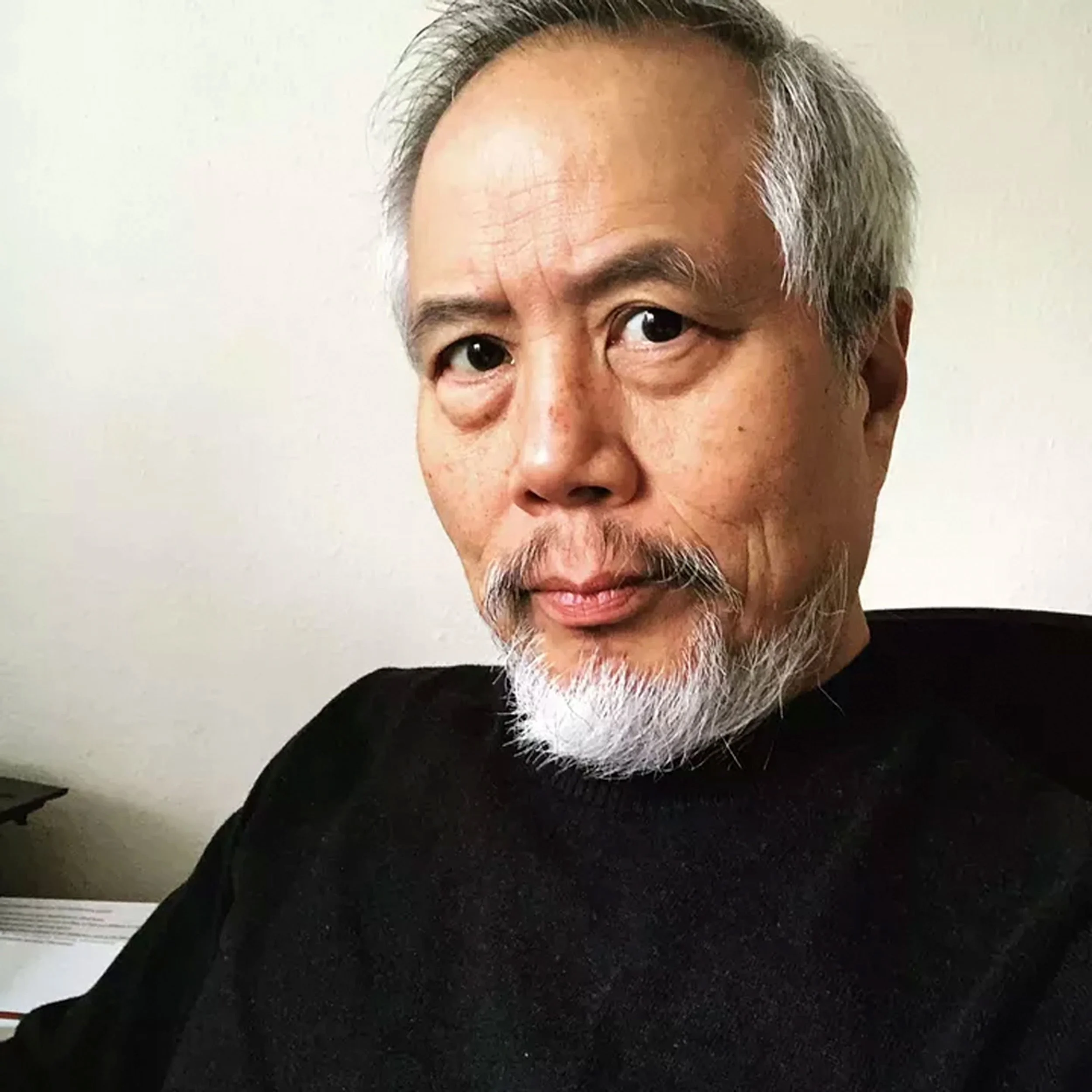
In this episode of the Speaking Out of Place podcast, Professor David Palumbo-Liu speaks with Ellen Schrecker, who has been referred to as “the dean of the anti-anti-Communist historians.” Well known for her classic studies of McCarthyism, today Schrecker explains how much worse Trump’s regime is than what we saw in the 1950s and 60s. A fierce defender of democracy, Ellen explains the central role education plays in creating a public culture and in maintaining democracy. Our conversation takes many paths, including an indictment of Capitalism, of the dominance of economistic thinking and values, of the ways university leaders are bending a knee to Trump. We talk about the value of the humanities, the importance of autonomous forms of education and mutual support such as we saw in the pro-Palestinian encampments, and one of the most remarkable differences between the days of McCarthyism—the phenomenon of mass protests like #NoKingsDay.
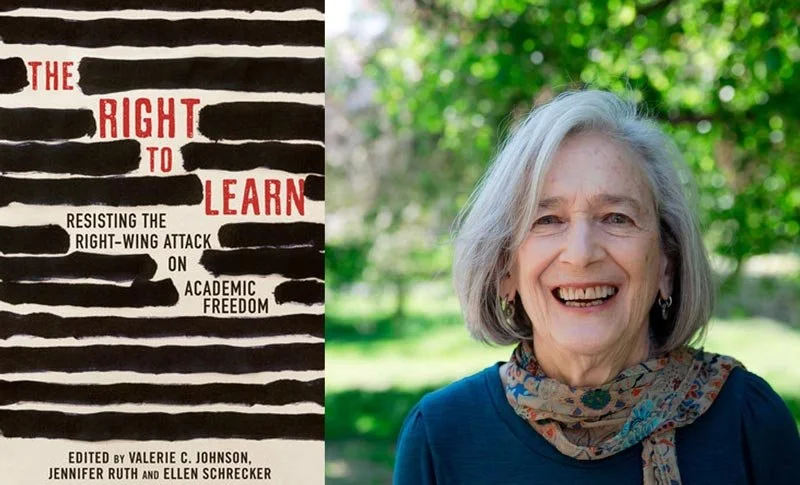
Ellen Schrecker is an American historian known for her research on McCarthyism, political repression, and American higher education. Among her books are The Right to Learn: Resisting the Right-Wing War on Academic Freedom (2024) edited with Valerie C. Johnson and Jennifer Ruth, (2024) winner 2025 Frederick Ness Book Award. American Association of Colleges and Universities; The Lost Promise: American Universities in the 1960s (2021); Many Are the Crimes: McCarthyism in America (1998); and No Ivory Tower: McCarthyism and the Universities (1986). A retired history professor from Yeshiva University, she is active in the American Association of University Professors and now serves on its Committee A on Academic Freedom and Tenure.
Speaking Out of Place is produced in collaboration with The Creative Process and is made with support from Stanford University.
DAVID PALUMBO-LIU
I'm so grateful for you to be here. Let's start with the present and get as clear a sense of the threats to education as possible. How do you see these attacks as consistent with a trend that we've seen at least as far back as the 1970s, but how is this so different?
ELLEN SCHRECKER
Let me start by answering the question that people usually ask me, because I've written so much, published so much and spent over 50 years looking at McCarthyism. People ask me to compare what's happening today to what happened during the late 1940s and early 1950s. I'm trained to start by saying I have a real, honest-to-God PhD from a major Ivy League school. I used to say we've got to look at the context. We've got to think about nuance. We've got to think about complexity. But no more.
It is worse. It's worse than anything we've ever seen. When people ask me to make a comparison to some earlier time in American history, I'm thinking these days of the prequel to the Civil War.
DAVID PALUMBO-LIU
Wow.
ELLEN SCHRECKER
I can't think of anything that isn't as bad. We have a horrible Supreme Court. The Supreme Court before the Civil War gave us Dred Scott. So we're looking at a lot of bad things in American history that we should have been thinking about over the past 50 years. What McCarthyism did, what it targeted with regard to the academic community—and that's really what I know the best—is that during the late 1940s and early 1950s, the focus of political oppression was on people who once were, had previously been near or were affiliated with the American Communist Party. It was focused on individuals who had once been in or near the Communist Party and who were refusing to cooperate with the witch hunt. That was it. That was what McCarthyism did. Today, what we're seeing is an attack on everything.
DAVID PALUMBO-LIU
Yeah.
ELLEN SCHRECKER
Everything. Within higher education and within society, all immigrants are under attack. Academics are under attack. LGBTQ people are under attack. Women are under attack. We are seeing within the universities not just people being fired because of what they say in public or in their emails to their dear friends; they're losing their jobs if they say something mean about Charlie Kirk.
DAVID PALUMBO-LIU
Yeah.
ELLEN SCHRECKER
But also we're seeing attacks on curricula. We're seeing attacks on DEI programs, which have almost entirely been eliminated. We're seeing a return to horrific racism. I'm just shocked by what people say today. It's horrific. Up until very recently, we've seen a lot of capitulation to these attacks. Now that's similar to McCarthyism. There was really almost no resistance. People say, "Oh, the good old days," but they weren't very good. Universities capitulated right and left, and of course higher education was almost completely segregated.
Nobody talks about segregation in the North, but take the biggest and most important public university, the City University of New York, and their City College in the middle of Harlem. They had maybe two or three thousand undergraduates in the 1950s and maybe a dozen Black students. So what we're seeing is an institution in the 1950s capitulating to this demand for loyalty, to eliminate supposed subversives who weren't willing to cooperate with political tests for employment that were being imposed, just like today.
DAVID PALUMBO-LIU
If I could just insert one thing in response to that. Of course, that was framed as the enemy from without, infiltrating the United States. And yet here we have Trump saying the problem is the enemy from within.
ELLEN SCHRECKER
But these were people who were also Americans. Actually, what is fascinating about the 1950s was there was probably very little emphasis on deportations. You know why? That was a period when there were fewer immigrants as a percentage of the total American population because immigration was essentially halted in the 1920s. There just weren't a lot of non-native-born Americans on the left to be deported. Who knew?
DAVID PALUMBO-LIU
Could you talk about how these attacks are intensely anti-democratic? Could you talk about the connection between democracy and education?
ELLEN SCHRECKER
Sure. Education turns out to be an essential component of a democratic system because people need to know something about the world they live in. They cannot behave responsibly if they don't have information about their society, about ecology. Think of all the problems you have to deal with regarding race and gender. If we are not well informed, how can we make decent decisions? How can we actually think about the common good?
DAVID PALUMBO-LIU
We don't know what it is.
ELLEN SCHRECKER
There is a Yale law professor named Robert Post who has written a very nice book about the relationship between education and democracy. He says that yes, participation in free speech is very important for a democratic society, but so is what he calls democratic competence, the ability to be a good citizen. And that comes from education, especially higher education. In a funny way, it's one of the few things that kind of trickles down. The right always talks about money trickling down, but knowledge and wisdom also can trickle down and help people understand the world they live in.
DAVID PALUMBO-LIU
Absolutely. In another conversation, Christopher Newfield was saying we as human beings have an obligation to know things instead of settling for the most easily or appetizing piece of information that you want to glom onto. Can we talk a little bit about the difference between the suppression of knowledge and the replacement of knowledge with misinformation?
ELLEN SCHRECKER
Which has been the case all the way through. McCarthyism was chasing a sort of caricature of what communists did. A lot of people during McCarthyism who had been in or near the Communist Party were victimized and targeted. McCarthyism did not target innocent liberals. This is the myth of Edward R. Murrow, but we shouldn't throw that myth out, it's useful. Nonetheless, most of the victims of the McCarthy period were men and women who, mainly in the 1930s and 1940s, had been in or near the Communist Party.
There was a very demonized view of communists circulating at that time. It was part of the anti-communist consensus that has led us into so much trouble in the past. In the academic community, there was this notion of communists as robots under the control of Moscow who indoctrinated their students and slanted their research in order to obey their masters in the Kremlin. Unfortunately, it's plausible. American communism has both negative and positive elements, and so to get that much nuance across to the American people is very difficult.
DAVID PALUMBO-LIU
Exactly. In a certain climate, the last thing you want is patience and deliberation. You want to save the country or defeat the enemies.
ELLEN SCHRECKER
"They're gonna go sink our ships." J. Edgar Hoover, who should have given this phenomenon his name rather than Joe McCarthy, pushed this scenario that had some plausibility so he could talk about communists on merchant marine ships sinking their ships in the harbors. That never happened. It never was going to happen. But it is true that members of a merchant marine union were communist leaders. The communists were very active in the labor movement because they wanted to support the workers. Where do you find the most politicized workers? Within the labor movement. What you have are these myths circulating, just like today with this demonized view of the snowflakes of color or radical Marxist lunatics like you and me.
DAVID PALUMBO-LIU
Yes.
ELLEN SCHRECKER
I hear it all over the American Academy. People who are saying these students prevent Zionists from speaking on campus but never talk about the administrations. They never let people who support Palestinian statehood get a word in edgewise or meet on campus.
DAVID PALUMBO-LIU
Exactly. I'm thinking about not only the caricatures and distortions about other people and their beliefs, but what about science? This is something that we thought would be impervious. We all want to be healthy, cure cancer and live a long life. But now we have this purposeful distortion and counter-information about vaccinations and climate change. It goes hand in hand with what you said at the beginning: it's so pervasive, it seeps into every part of our lives.
ELLEN SCHRECKER
Can I use a word that nobody used in the 1950s?
DAVID PALUMBO-LIU
Oh, please. Yes. I can't wait.
ELLEN SCHRECKER
It's capitalism. Where did the anti-climate change movement come from? Let's connect the dots. It came from the fossil fuels industry. Who was funding the attacks on universities? The Koch brothers. What did the Koch brothers do for a living? They were in the oil business.
READ MORE [ + ]
I at one point was going to do something on Lewis Powell. He was a very eminent Virginia lawyer who became a Supreme Court justice and gave us a number of questionable Supreme Court decisions, including the Bakke decision and the Yeshiva decision, which meant that people like you and me couldn't form unions. Anyhow, there he is, an extremely eminent lawyer in Richmond, Virginia. Now, what's the main industry in Virginia?
I want to say tobacco.
Yes. So there he is connected to a tactic that the tobacco industry used, which was creating anti-science, countering the view that tobacco smoking caused cancer by saying, "We don't really have proof," and questioning the science. That tactic began back in the 1960s and has been applied to climate change. It has a long and horrible history behind it. What it is, is groups within the capitalist system trying to increase their profits.
We had Naomi Oreskes on the program a while back with her book, connecting the exact rhetoric. "We don't know enough yet, give us more time." But we cause more cancer now. We could make a throughline from that into artificial intelligence, which to me is one of the reasons why I'm just dying to retire. Having a machine do your thinking for you and being pleased by that is a brave new world I can't imagine venturing into.
Luckily, I'm so technologically challenged I couldn't do artificial intelligence if it guided my hands over the keyboard, so I'm not pretending.
I was talking with a scholar who wrote a great book about avant-garde art and the way that curation and private collections take place. She says this is when the managerial class really comes to the foreground. The idea of the artist is this cerebral thinker who thinks great things and they're unique, while workers are interchangeable. It's almost Tayloristic. When we were talking about ChatGPT, she says, "I'm sorry, I'm going to go into my classes from now on saying I cannot participate in your de-skilling. I'm an educator, so we're gonna talk. We're gonna use blue books." Otherwise, she is complicit in this trend. They stop trusting themselves. They feel like they have thoughts, but they should defer to a machine one day, a dictator the next. I'm so glad you mentioned capitalism because today in my classes, students want to know about capitalism. They see the devastation before their eyes and they connect these dots. Can you talk about the connection between democracy, education and the sense of the public? There's an erosion of a sense of being together.
I think part of the problem is the capitulation of so much of higher education to this technological promise that somehow we will be saved by technology. And of course, there was COVID, which destroyed personal communication for many people. You and I can't really sit together and chat. I'm looking at myself on screen and I don't really want to be looking at myself. It makes us solipsistic, unable to process input from outside. Especially being a woman, we're trained to think about how we present in terms of stereotypes or expectations.
I'm thinking about entitlements, the things we paid into as part of a shared public obligation to take care of people. Education is part and parcel of all this. Years ago, I talked to June Cohen when she started the TED Talks. I asked her why she started them, and she said, "Because I realized people love to learn." But 15 minutes is the sweet spot. After that, they can go off and learn on their own. The capacity to learn is bringing something into the work with your energy that's unique.
Very much. I have been retired for maybe 12 or 13 years, and I do miss teaching. I miss that electricity that doesn't strike all the time, but occasionally you get a moment where all of a sudden a student is helping you learn. That dynamic is lost. How can I help somebody learn if that person is shopping online during class?
At Stanford, some people thought of imposing a ban on computers in class. Some students rebelled and said, "I pay X number of dollars in tuition, therefore I have a right to this." We didn't used to need them. People became perfectly well educated without these things. They are not present. A lot of it comes back to the idea of authoritarianism. One of the things that works well in the classroom is breaking that authoritarian posture by saying, "We're learning this together. I don't know everything." It is the chemistry of the class and their trust in each other. That's all eroded when you have this managerial atmosphere where you're there to get what Paulo Freire calls the banking model of education. I wanted to ask you about the capitulation of university leaders. It starts back in the 1960s and 1970s, but I've been really disturbed by how quickly university presidents have agreed to being blackmailed. What happened at Columbia and other universities was this notion of negotiating a deal with Donald Trump, giving up a limb and then him asking for another arm. When I hear presidents apologize and say we haven't done a good job, it really gets my goat.
Part of it is this notion of objectivity. Let's call it "both-sidesism." There is the crazy right, and then over here is the crazy left. They don't balance. People on the left actually want Palestinians in Gaza to live, and Benjamin Netanyahu wants them killed and cleansed. I don't think you should do that to other people. What we're seeing is a willingness to go along with that. That is a very insidious form of misinformation, to say that the left is much worse than the right. How many right-wingers have been fired because of their emails compared to you and me? What we're seeing is a culture of liberal authoritarianism where the David Brookses of the world are saying, "On the one hand, on the other hand." The administrators buying into that know perfectly well they're lying. Antisemitism wasn't rife on Columbia's campus over the past year; it was opposition to genocide in Gaza. One of the demands Trump has been making is to hire more conservative professors. You've been on hiring committees; we're not rejecting a lot of conservatives. They don't want to be college professors. A good, self-respecting conservative would rather join a hedge fund than make $3,900 a course each semester as an adjunct.
It throws the truth out the window. For the sake of political appeasement, you're going to give up your commitment to the truth.
And what we're also seeing is huge subsidies to these people. Charlie Kirk is not impoverished.
Here at Stanford, we have the Hoover Institution. At one point, Herbert Hoover actually gave the thumbs up or thumbs down to five different Stanford presidents based on their feelings about the New Deal. He built a system whereby Hoover fellows bypass the usual faculty appointment process. There are so many of these think tanks now attached to universities.
Money is a very powerful weapon, both positively and negatively. That's how political repression works in the United States. It's mainly not through criminalizing what we're doing, but taking the money away, taking the jobs away. That was certainly the case in McCarthyism, and it's the case today.
When you follow the money, it converts to a completely warped notion of value. When scarcity strikes fear, you start to think that people who have things must be better. There's a moral addition to it which makes people feel bad about being poor, when being poor has nothing to do with their capacity. It has to do with the capitalist system.
And you see this within the academic community. Some disciplines are more favored than others. Scientists can make money if they invent things that drug companies or tech companies want. But there are wealthy people who want to eliminate the humanities and the arts, which you didn't even see during McCarthyism. McCarthyism was occurring during this golden age where people looked up to professors. That's all gone. We've been impoverished culturally. Even the nuts running HUAC had some smattering that Shakespeare was important. It's a little scary because you think, what is our culture if we can't get beyond the screens?
The whole idea of cultural capital is gone. Our university leaders are managers, clothed in the language that they're fiduciaries.
They don't have the welfare of their universities in mind anymore. Universities used to produce educated people. Now they are producing credentialed people struggling to get an A rather than an A-minus. That is what is being valued rather than the ability to think.
It is gratifying to be in a classroom where students are able to express dissatisfaction or nervousness. This generation of students has lived under COVID, Trump and climate change. They've had nothing vaguely resembling a normal life. I see a lot of students grasping for things, and the humanities give them that space to not think in that other modality. Reading the ancients shows that nobody has figured it out perfectly, and we're all mucking around. That makes you feel a lot less lonely.
History is sort of the same way. People have had so many options and took this one rather than that one. It's the closest thing to scientific experiments in a human science. You know that when you have trade wars, people are going to suffer and lose their jobs. We've been there, done that, and we're doing it again.
I'd like to end on a positive note. You are a historian and a national treasure. What do you see today? The fact that most of the universities approached by Trump to sign this compact have said no way. Give us a sense of where we could go to history to read the possibilities for the present and the future.
What we're seeing again is unprecedented in that the power of the federal government is much greater and deployed in a much broader way. But during McCarthyism, there was no opposition. Nobody would sign a petition. I was in college during the 1950s. I was part of the silent generation. I couldn't find a group to join at Harvard except the Young Democrats, and I basically went to their meetings to meet boys. But now the kids are politicized. They're out there, they're worried with good reason. They're showing up at demonstrations and taking your courses. In the 1960s and early 1970s, as women began to look at their own lives and create women's studies, the powers that be were very inhospitable. But those classes had the biggest enrollments, and that's what saved women's studies. What we're seeing today is millions of people out on the streets. We're seeing opposition from below that we have never seen before. We're going to have a democratic socialist mayor in New York City. Is he going to be particularly successful? I don't think so, because the system is stacked against social justice. But people are going to go back out on the streets if it gets too bad. That gives me hope. It's knowing that you are not totally subordinated to this right-wing world. People who are secure enough need to get out there and make their voices heard to provide backup for all the people who are suffering. I figure I'm 87 years old. I can barely toddle over to my computer. I'm not going to be able to go and chain myself to the ICE office, but at least I'm doing what I can do. Everybody who can do something should. If it's not them, it's their grandchildren.
Exactly. The encampments were incredibly powerful. Students were teaching each other topics and books, screening films and bringing in guest lecturers from unions. It gives me a huge amount of hope. I got to meet Chandler Davis and Natalie Zemon Davis in Toronto. One of the reasons Chandler went to prison was he wasn't giving up names. Natalie had been one of the authors of a document. I was having lunch with them in February, and Chandler asked how long I was in town because on Thursday they were demonstrating outside the Israeli embassy. Natalie added that they had done it every Thursday for the last 13 years. I went out there, and I was the youngest person there. That gave me hope. After all they've been through, they were still so devoted to Palestine and to freedom.
DAVID PALUMBO-LIU
Thank you so much for being here. It's been such a delight.
ELLEN SCHRECKER
It's been lovely, and I've been wanting to meet you for so long. This is a treat for me too.