

This question is of, all right, if we are a sanctuary city, how and why do ICE agents and other federal agents, including Border Patrol, have the power that they do to undertake these forms of detention and disappearance?
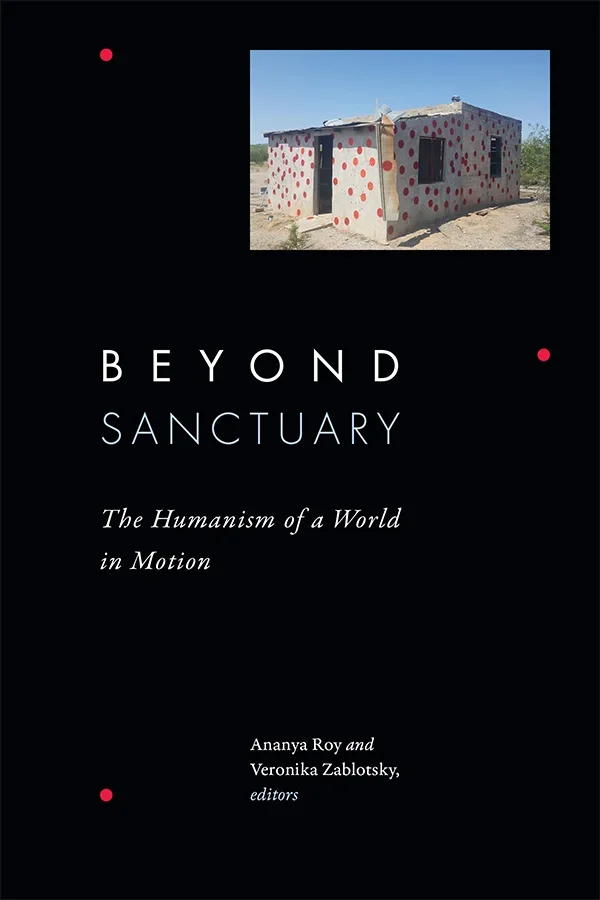
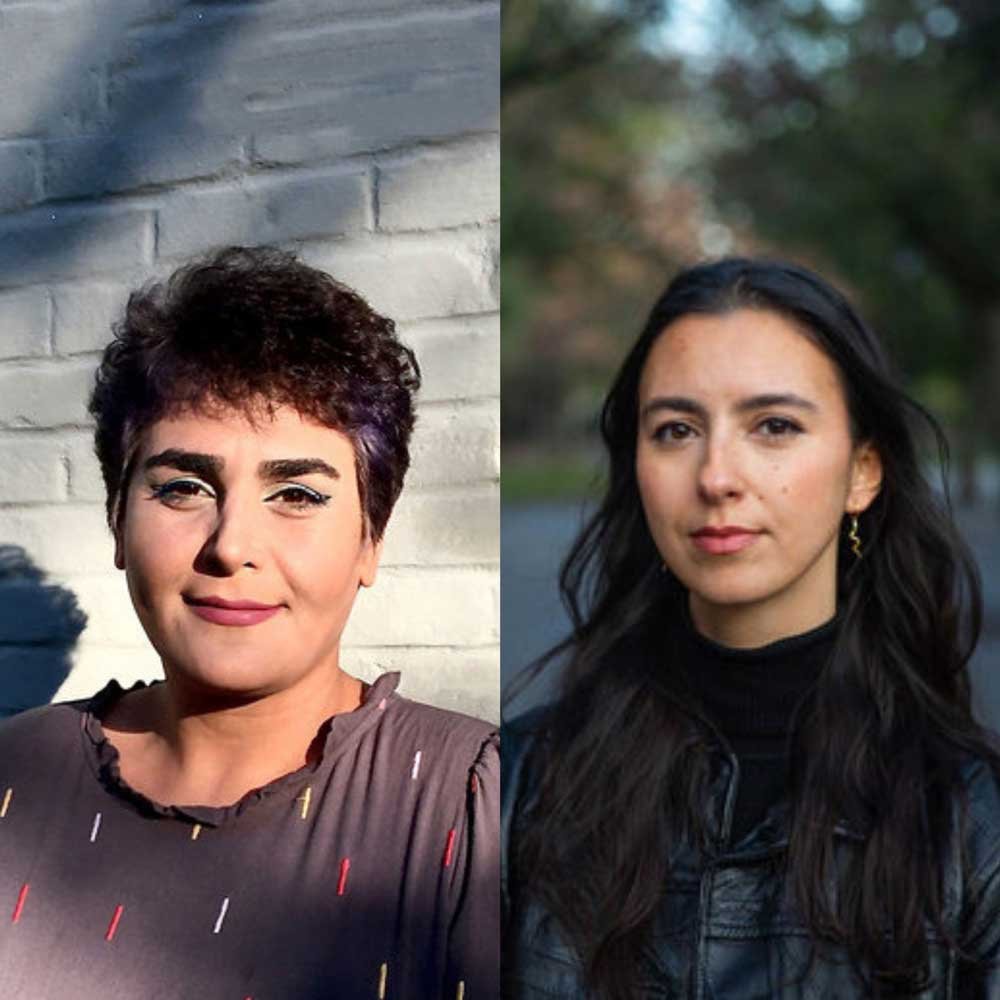
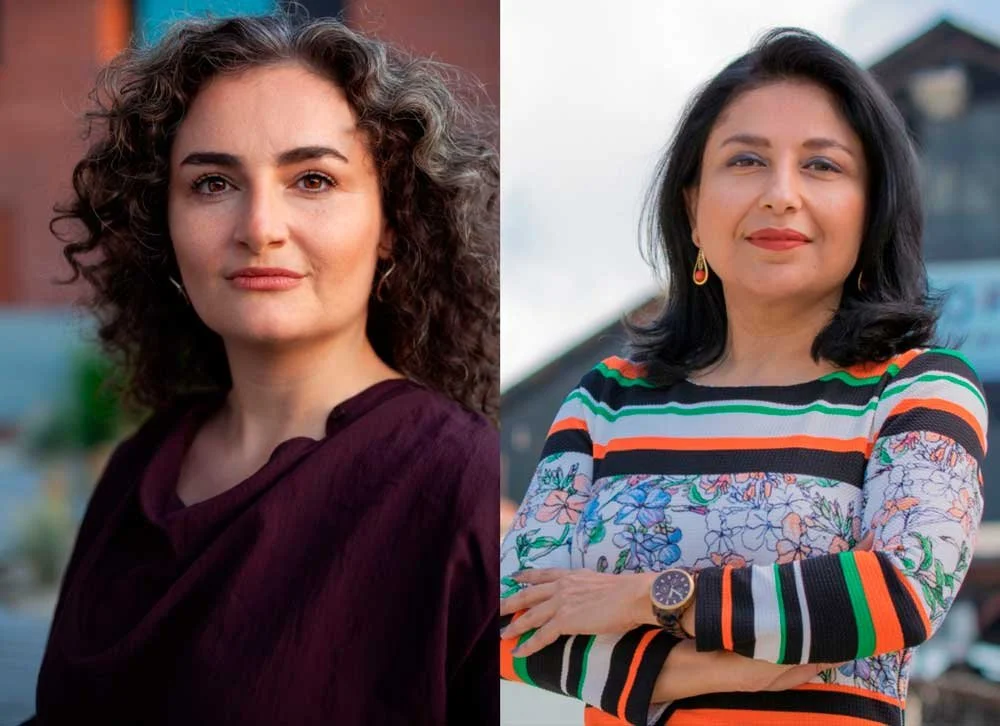
In this episode of the Speaking Out of Place podcast, Professor David Palumbo-Liu talks with Ananya Roy and Veronika Zablotsky about their co-edited volume, Beyond Sanctuary: The Humanism of a World in Motion, which was based on a Sawyer Seminar they convened at UCLA. The essays collected in this book are international in scope and interdisciplinary in nature. What links them is a commitment to show that the idea of sanctuary all too often forgets its radical histories and possibilities, and lapses into a liberal humanism that not only does not solve the problems of refugees, migrants, and exiles, but even form obstacles to real and just solutions. Importantly, the many of the essays put the idea of “humanism” into question. Most impressively, we find case histories of ordinary people building sanctuary spaces organically well outside, and even in defiance of, liberal sanctuary structures and practices. The book is accompanied by digital materials on the Sanctuary Spaces website which are designed for classroom use and self-study.
Speaking Out of Place is produced in collaboration with The Creative Process and is made with support from Stanford University.
Ananya Roy is Professor of Urban Planning, Social Welfare, and Geography and the Meyer and Renee Luskin Chair in Inequality and Democracy at the University of California, Los Angeles. She is the founding Faculty Director of the UCLA Luskin Institute on Inequality and Democracy at UCLA, which advances research and scholarship concerned with displacement and dispossession in Los Angeles and elsewhere in the world. Working with social movements, the Institute seeks to build power and abolish structures of inequality, within and beyond the university. A scholar of global racial capitalism, Ananya’s research has focused on urban transformations and land grabs, global circuits of financialization, postcolonial development and projects of poverty management, and most recently the problem and promise of sanctuary. In comradeship with unhoused communities, her current research is concerned with racial banishment and counter-geographies of refusal and rebellion in Los Angeles.
Veronika Zablotsky is a political theorist with an interest in interconnected histories of migration and empire; feminist and postcolonial studies; transnational social movements; Armenian diaspora studies; and postsocialism in the SWANA region. She teaches in the Department of Philosophy at Freie Universität Berlin and held visiting professorships in politics and gender studies at universities in Germany. Previously she served as Andrew W. Mellon Postdoctoral Fellow in the Sawyer Seminar “Sanctuary Spaces: Reworlding Humanism” at the UCLA Luskin Institute on Inequality and Democracy. She holds a PhD in feminist studies, politics, critical race and ethnic studies, and history of consciousness from the University of California, Santa Cruz. Among her co-edited publications are the anthologies Decolonize the City! (Unrast, 2017) and Transforming Solidarities (Adocs, 2025). At the University of Pennsylvania she co-founded the Critical Armenian Studies Collective. She also organizes with the scholar activist collective Abolition Beyond Borders (www.abolitionismus.org).
DAVID PALUMBO-LIU
So welcome to the program. It's great to have you here. Perhaps one way to start is to discuss the title of the book. It's one of those books that has a title that does so well in conveying an essential argument in very few words, so the title of the book is Beyond Sanctuary: The Humanism of a World in Motion, and each of those words is significant in a powerful way to your argument. You talk about the significance of the title in the introduction to the volume, so why don't you share those remarks with our listening audience? How does this title work to capture what you had in mind?
VERONIKA ZABLOTSKY
Sure, I can go first. Thank you so much, David, for having us once again. It's a real pleasure. The anthology itself came out of a collaborative effort that resulted in a long-standing conversation among both the conveners of a Sawyer Seminar at UCLA that was initiated by Ananya Roy as its principal investigator and also as co-principal investigators, Leisy Abrego, Gaye Theresa Johnson and Maite Zubiaurre, who also are authors in the book. And the title of that collaboration, that conversation as a Sawyer Seminar was Sanctuary Spaces: Reworlding Humanism, which was the working title for the book as well until we realized in conversation with our editor at Duke University Press, Elizabeth Auld, that perhaps this was a little bit too academic. So Ananya and I started thinking and brainstorming how else we could encapsulate the gesture of sanctuary spaces in a way that also points beyond it.
So we landed on Beyond Sanctuary: The Humanism of a World in Motion because on the one hand, this relationship to sanctuary as a lifeline, something that cannot necessarily be let go of as a demand and at the same time something that is so severely politically, ethically compromised and limited in the context of a settler-colonial imperial project that is the United States, in the context of sanctuary as also a mode to affirm sovereignty of the state as the one to decide on the exception and so on. So we wanted to trouble that, and perhaps Ananya can say more on sanctuary as a problem of the West since that originated with her as an articulation of the problem itself, and to think beyond it in the abolitionist key that the project then pursued to think of beyond sanctuary as you could also say sanctuary everywhere, which is the title of another book.
Or other ways to think beyond this exceptional logic of sanctuary and the humanism of a world in motion we retained because humanism really emerged as one of the maybe more contentious questions in our conversations around sanctuary. Do we entirely discard that aspiration? Do we decolonize the human? Do we actualize it through decolonial solidarity and struggle? And this is also a position that we ended up taking as the editors and not necessarily all authors I think agreed or all participants in the Sawyer Seminar agreed. And the world in motion is a way to think beyond the project of settlement, immobilization, detention and forced mobility, and to just acknowledge that really migration is the default, motion mobility is the default. It just should be self-determined, emancipatory, collective and autonomous rather than governed or punished. And perhaps, Ananya, you could elaborate or fill in the many gaps I think I left here in this account.
ANANYA ROY
Veronika, that was beautiful, and I wanted Veronika to start because really when we were struggling with the title, Veronika came up with the idea of Beyond Sanctuary. And as she noted, I think that very much encapsulates sanctuary as both promise and problem. The couple of points I wanted to add is that our focus on sanctuary spaces at the Institute on Inequality and Democracy at UCLA and then in the Sawyer Seminar started in the days following Trump's first inauguration. And I at that point became a student, if you will, of sanctuary programs and policies to better understand how and why there was this renewed demand for sanctuary cities and jurisdictions, how and why faculty and students were gathering at universities insisting that our campuses be declared sanctuary.
And I think it became immediately clear to me how limited sanctuary jurisdictions were in their protection for undocumented migrants, for criminalized migrants and how in many ways it was a consolidation of local police power. Precisely the prerogative of the state, as Veronika noted, to grant sanctuary and to grant very meager forms of protection. So that became this larger project then of thinking with scholars who were thinking not just about sanctuary programs and policies, but really thinking about the long history of the sanctuary movement and situating that in the yet longer histories of fugitivity and marronage and so forth. So in the book, we pay a lot of attention to what we've come to call migrant movements, by which we mean a world in motion, as well as the demands of those cast out into the world.
And of course, it is quite the irony that the book appeared in the world, was published, right? During the second Trump presidency, and at a time when Los Angeles in particular has been under occupation. And where questions of sanctuary and the limits of sanctuary have become painfully obvious. So this question of, all right, if we are a sanctuary city, how and why do ICE agents and other federal agents, including Border Patrol, have the power that they do to undertake these forms of detention and disappearance? And the fact that these battles are playing out in the courts also suggests that so much of the sanctuary debates have been about federal authority versus local or state authority, completely bypassing what we think to be the much more central issues at stake. And then we can talk more about humanism, but as Veronika noted, that remains sort of a key point of contention in the book, and we hope it's a generative contention.
DAVID PALUMBO-LIU
When she mentioned that, when you reiterated it, you anticipate my last question, or second to last question, which is one that we'll get to in due time. But I wanted to ask you, because you do this also in the introduction, you lay out a long narrative of how sanctuary came about in different guises and different times. So there's a spectrum. I'd like to ask you both, what are the more acceptable forms of sanctuary, the things that you think have at least elements in them that should be retained, have the ethos and the ambition that you would want to retain, as you say, and the other ones that are entirely or nearly entirely counterproductive, obstructive and actually detour us away from what sanctuary could and should be?
ANANYA ROY
So I can get started with that, and Veronika, I hope, will share some of the ongoing work that she's been doing in the context of Europe on sanctuary, and a genealogy of sanctuary that comes out of various religious traditions, institutions and practices. I think that the sanctuary movement of the 1980s is important for us to take stock of…
READ MORE [ + ]
So in the US context, in the more recent histories of sanctuary, I think that was a key moment. And for me, it's a moment that marks the ways in which sanctuary workers, many of whom were criminalized for their participation in sanctuary work, articulated a sense of transnational obligation and responsibility that took account of US imperialism, particularly in relation to Central American refugees and asylum seekers who were fleeing violence in places like El Salvador, Honduras and Guatemala.
And I should say my partner's family is one of many families that fled El Salvador in the 1980s and then moved to Los Angeles and sought asylum here. And that sort of long struggle for the family, right, was directly shaped by US imperial intervention that then, of course, sets undocumented or illegalized migrants up as the cheap labor force of California.
So the sanctuary movement that also then in California results in the San Francisco City of Refuge ordinance, but in places like Tucson, Arizona, really manifests itself in a set of what Susan Coutin has called the civil initiatives endeavors, that to me is really worth noting because that is not about humanitarian reason. It's not about hospitality. It is about accepting responsibility for imperial violence.
And I think the other thing that I've been thinking a lot about recently, particularly in relation to the occupation in LA and the judicial battles over sanctuary. So when I first started writing about it, I thought about sanctuary in relation to the Fugitive Slave Act of the antebellum period. And what's interesting about that is that the battle was similar to today's battles, right?
Does the federal government have the authority to send in federal commissioners, federal troops to federalize things, local troops, in order to capture fugitive slaves? And what then does that look like? And what then is the punishment for those who are seen to be complicit in this?
But also, as historians have noted, historians like Manisha Sinha and many others, that struggle between the northern states and the federal government also set the stage for renewed abolitionist uprising. It strengthened the Underground Railroad, right? And it set into motion a key form of rebellion that was ultimately going to be important for emancipation and Black reconstruction.
Really good. I would also probably begin with that moment that Ananya also began with of the sanctuary movement in the 1980s Southwestern United States, which really is that pivotal moment when sanctuary practices become criminalized.
But then those trials that Susan Coutin, a scholar at UC Irvine, writes about are then turned strategically into a platform for public truth-telling and intervening in kind of more mainstream debates about the role of the US in Central and South America, and the responsibility to counter forms of injustice that are enacted through different forms of imperialism, including border imperialism, which really places an obligation to respond to refugees and migrants as truth tellers of these conditions of injustice.
What Ananya just gestured towards is that interestingly, almost simultaneously on the other side of the Atlantic in Europe, sanctuary in the sense of a kind of faith-based or church-based institutional practice of taking in people to protect them from imminent deportation orders emerges also in the 1980s.
And since I've returned to Germany in 2020, I began to accompany the sanctuary movement in Germany, and I conducted interviews with some of its kind of key protagonists who were around when for the first time sanctuary was starting to be publicly practiced again in West Berlin, specifically in the 1980s.
And what really struck me was finding that similarly to what we know or had learned about sanctuary practitioners, sanctuary workers in the southwestern United States. Also here, it was from the onset understood as a political practice of solidarity with refugees and migrants as historical moral responsibility that then became increasingly depoliticized into a kind of exceptional form of almost charity that must be depoliticized in order to be tolerable, to be a practice that does not threaten kind of the overarching structure that ensures that sanctuary remains this humanitarian gesture, that it really goes beyond that in practice.
And also historically, Ananya talked about the Underground Railroad, and also this is something that sanctuary as a practice, as an idea, as a discourse really connected to from the very beginning.
One of the interesting publications, I'm just going to show this very quickly, I just happen to have it right next to me, is movement literatures from movement participants, people like Renny Golden, Michael McConnell, drew that connection from the onset.
So sanctuary as the new Underground Railroad, an indirect continuity of abolitionist struggle in the Americas. And then we also have, for me, very important scholarly interventions, recontextualizations of abolition as a kind of practice of self-liberation also of Black and Indigenous communities.
I just want to mention the Indigenous historian Aimee Villarreal, whom we also cite in our introduction, who offers a counter-narrative of what she calls Indigenous and African sanctuaryscapes of rebellion, mobile and intertribal sanctuary placemaking in the Americas.
So sanctuary not only as a gesture of protection and solidarity but one that is created and taken and mobilized by communities who are resisting also displacement and dispossession.
And then also the political theorists Lia Haro and Romand Coles of the anti-colonial genealogies of practical abolition, and think of marronage and fugitivity as forms of Black fugitive sanctuary.
So we're also widening what sanctuary can signify, and we also paid a lot of attention to our role as academics and researchers in thinking through these histories of uprising and anti-colonial struggle.
These are the versions that I certainly sign on to. But let's for our audience debunk the liberal humanistic version of sanctuary that's been essentially institutionalized, and I'd be interested to see how in the US and in Europe they might have similar kind of mirror images or not. So maybe Ananya could talk a little bit about your notions, and then Veronika could fill us in on what's happening in Europe and see if there are overlaps and what are the most insidious forms and benignly insidious or insidiously benign versions.
Yes, all through the book, we talk about sanctuary as a problem and promise, but it can also be understood as a liberal ruse. And Nick De Genova, in the interview that Veronika and I did with him for the book, talks about the ruse of asylum.
So I think if we are to talk about the liberal humanitarian infrastructure of sanctuary, I think we have to think about the ways in which the asylum system, whether it be in Europe or in the US, was never meant to grant people asylum, right?
So it becomes a system of not only deportability but of waiting, right? Becomes an apprenticeship in subordination, right? It becomes a form of disciplining. And part of this is borders that are deadly by design, be it the Mediterranean or the US-Mexico border. But the point is not that everyone crossing that border dies, right?
The point is that those who make it have been disciplined, right, and have been incorporated into the system of subordinated, racialized labor and subjecthood. So I think that therefore, we have to think about what that liberal ruse does. It also means that we have to think about all these humanitarian technologies that are meant to make detention and separation more tolerable.
I hold an appointment at UCLA in urban planning and in social welfare, and the role of social welfare in these infrastructures, right, of humanitarian carceral management and containment of subordinated populations is crucial. So this is not to say that making a detention center or a refugee camp slightly more hospitable is not important, but clearly that must be understood as a liberal ruse.
I think similarly, and Naomi Paik does this in their work, and their work has been very influential for us, is to point out the ways in which sanctuary policies, including the ones in LA that go back to the late 1970s, have always separated out criminal aliens from non-criminal. And that designation of criminality is related to a whole set of dehumanizing racialized practices, including around who belongs to a gang, who doesn't, right? So it goes hand in hand with all of the forms of racialized and racist policing that we're well aware of.
Sanctuary not as an antidote to that, but very much in keeping with these liberal forms of policed propertied order in our cities.
Yeah, and it falls back on these naturalized assumptions. I had Silky Shah on the show, and she's part of the Detention Watch Network, and she said the whole families versus felons thing doesn't account for the fact that the state is constantly expanding the reach of what a felony is.
And just parenthetically, we had 12 students at Stanford take over the president's office, and they've all been charged with felonies, and they're being asked to pay what Stanford has estimated the damages being nearly three hundred thousand dollars.
So the expansion of felonies shows that the state is working it from both angles, both the carrot and the stick, so to speak.
And I really liked what you picked up from Nick's observation with the psychic damage, because I can see a liberal saying, “They're just being assimilated into America,” right They're just being taught how to get along in the world. But yes, at the cost of freedom, essentially, which is something that Rinaldo Walcott brings up very nicely in his essay. But Veronika, could you add your own thoughts on this issue of the liberal ruse, sanctuary ruse?
Sure, yeah. This really brings me back to 2014, 2015, when increasing numbers of refugees started to arrive in the European Union from civil war-torn Syria, primarily at the time. And I'm just going to maybe focus on the example of Germany, just because I know this context the best, being based here.
There was a brief moment in which the mainstream government discourse turned to a kind of pretense of welcome and hospitality towards people on the move who were seeking asylum, essentially.
And this has been a decision that really animated a lot of volunteerism and a lot of civil society mobilization in a very liberal key of kind of collecting donations, clothing, even taking in people in private homes temporarily because there was no infrastructure of hosting or housing so many people. And over time then, this really turned into the opposite of a very hostile, antagonistic and increasingly restrictive migration asylum policy.
That moment still continues to raise a lot of questions for critical scholars of migration and also migrant justice organizers who I think take that as a case study in what goes wrong when we limit demands to a liberal politics of inclusion that is predicated on the kind of position of the host being still in charge of deciding who gets to be allowed to stay as a guest and who must leave and cannot belong. So again, a very racialized class politics, of course, as Ananya also pointed out, similarly here as in the US.
And at the same time, it has set a precedent for what might be possible at a kind of larger societal scale if perhaps these moments are leveraged to really bring about a liberatory or a more emancipatory political project that just hasn't necessarily materialized.
But yet, because you asked us about the limits of a liberal framework of sanctuary, this has really illustrated also what Ananya pointed out about the asylum system not being designed to really grant asylum, but more to deter and to deny asylum, which is of course Nick De Genova's argument as well.
And we see that in full effect, in full force, at least since the COVID-19 pandemic, which has been a moment at which asylum policies were completely suspended, at least in Europe, but also in the United States and North America more widely. And that has essentially continued just with a kind of interruption of the mass displacement of people from Ukraine moving towards into the European Union.
Yeah. No, the whole oddity of liberal accommodation was brought forward very concisely to me decades ago in Germany, the notion of the guest worker. Right? And this person said, “We don't usually make our guests work.” To be truly hospitable, you don't send to labor for you, and that's the condition of your hospitality. I didn't get a chance to read every single essay, but I did want to comment on a couple that really grabbed me, and one is the article entitled “Camp to Commons”.
What I particularly liked about it is it's a case history which shows how people have evaded, reimagined, repopulated these particular spaces of liberal institutionalized beneficence and organically reinvented them to be homes. They've created their own sanctuaries in a particular way. I'd love to hear both of your comments about that essay, and if you could flesh it out for our listeners. I can't do it justice, but I'm sure you can.
We divided up our editorial roles. We are both familiar with both chapters. Do you want me to start? I know you were the lead editor on this, but I'm also happy to start.
Okay. I'll jump right in. I think that this—I'm so glad, David, that you are spotlighting this chapter because it speaks precisely to the ways in which people come to occupy the interstices, if you will, of the liberal humanitarian infrastructure that we were just discussing, and so literally living within a containerization and containment, if you will, of refugee populations in Europe, and not only transforming the containers into living spaces and into collective living spaces through informal markets, bars and other forms of inhabitation.
And I will say that this question of inhabitation is also on my mind because it's a closing chapter of Nasim's The Time Beneath the Concrete, and I've been thinking a lot about that chapter in inhabitation and sort of its arguments around global migration and so forth.
And just to insert to the listeners, we did interview him for the podcast, so please, I'm just promoting his episode, which is an incredible book.
So that book came out a little bit after Beyond Sanctuary, but I feel like these books are very much in conversation with each other.
Clearly we see a politics and practice of inhabitation, but I think the other piece of this work that Maria and Haris have been doing for a while in Athens is the ways in which then this politics of inhabitation exceeds the boundaries of containment and containerization, and how migrant/refugee populations then join in solidarity, right, with residents who are squatting in buildings, and what these squats look like and what they mean.
And I think they erode this distinction between who is host and who is guest. It undermines these European notions of cosmopolitanism and radical hospitality. So in the introduction we talk a little bit about Derrida's work and the limits of it, and I think that these squats that we've seen in cities like Athens challenge precisely these policed, propertied city-making forms and also, I think, emphasize a shared condition of precarity.
Yeah, that was really already perfectly encapsulating what I think this chapter does so well. I want to add maybe just a couple of small additional points, which is kind of some of these squats or these kind of shared housing infrastructures have been really inspirational. So places like City Plaza Hotel or the former City Plaza Hotel in Athens that then became this multi-year project of living together and organizing collectively kind of reproductive labor of what does it mean to live together in this large multi-story hotel.
It has really been quite instructive to migrant justice organizers all over Europe and beyond in terms of what's possible because of all of the political learning that took place within these communities of struggle who come together across really wide differences, linguistic barriers but also very different expectations of what such a community should look like, how it should run.
And there's so many lessons for us in terms of maybe renewed visions for a decolonized democratic practice of solidarity. Of course, notably also going beyond what Ananya also noted, that host-guest dynamic or really displacing that dynamic, and to think about what we also owe to each other as people who are connected across vast post-colonial, neocolonial geographies of exploitation that make living in the Global North really precondition that affluence on the exploitation and dispossession of populations in the Global South that then are on the move. So it's a form of redistribution as well. It's a political project. It's decolonial infrastructure that inspires solidarity practices beyond the immediate.
Many of these squats end up being impermanent, so City Plaza Hotel is no longer, and yet it really remains that moment in maybe what Ruth Wilson Gilmore would call abolition geographies, that moment that really inspires practical abolition in the context of sanctuary politics, if you will, as a politics of solidarity.
Yeah. Your comment actually gets me to my second essay that I wanted to foreground, but before I get to that, as you were speaking, Veronika, I was thinking about how a lot of these cases in a way become, as you said, become lessons for us because ultimately, given the state of the environment and the climate crisis, we're all going to be having to learn to live together, right?
This is inevitable, and one way or the other. So the other essay I wanted to mention is Sharad's, "An Oceanic International in Catastrophic Times," which I think really beautifully picks up on exactly the points you were making. I liked it because of its expansive revision of space and transit and different modes in which catastrophe takes place.
I think this is another way that your volume really sensitizes us to the different ways in which violence insinuates itself.But it also rehabilitates and expands and reimagines a key term, which is what I'd like you also to focus on, which is the international. I was struck by how ambitious your volume is.
It's truly international in so many different ways. So your selection of different topics and contributors is, in a way, its own sort of reinvention of the international. So could you both talk about that, that article too? Veronika, do you want to go first or do you want me to go?
So I think this precisely—readers might be surprised to find this particular chapter in a book on Beyond Sanctuary that is supposedly focused on the North Atlantic. But precisely, we wanted to think partly about—wanted to think with oceanic studies and to think precisely about oceanic studies also as a methodology. For example, in one of our Sanctuary Spaces convenings, we are in conversation with Françoise Vergès. And I think that really the work of Vergès, the work of Sharad Chari allows us to think about a world in motion, not just in relation to more familiar militarized borders, but in relation to oceanic studies and oceanic histories, right?
So I think that is one key piece of this. I think the other part of this is to think precisely from different nodes, if you will, of the periphery, and therefore to think about, and I know, David, you've done so much work on this, to really think about what planetarity might mean right? In relation to, again, a world in motion and in relation to sanctuary.
And I think Sharad's insistence on thinking from Durban, but what Durban means in these world histories of labor and capital accumulation is crucial. And then finally, this question of uprising and struggle. And so uprising and struggle, yes, in relation to the various movements we've already talked about, sanctuary movements, the Underground Railroad, but particularly this chapter and Vanessa Thompson's chapter, I think, forces us to think about what uprising and struggle might look like in relation to capitalist extraction. And in the case of this chapter, it is partly about the Black proletariat, if you will, but it is also in relation to formations such as Third World lawyering.
So in many ways we are, I think, invited in this chapter to think simultaneously about the Third World as a formation, but also about the Black proletariat, the Black global proletariat and how these might come together and how particularly oceanic studies allows us to bring these together.
Yeah. Thank you so much for this question. I think also Sharad's chapter is so beautifully written also. It just really opens up kind of our thinking in ways that I think also speak to contemporary struggles of internationalist labor organizing. For example, different union efforts to prevent the delivery of weapons in the context of the ongoing genocide in Gaza, which is coordinated across kind of vast imperial geographies.
And we've seen some instances where workers in different industrial harbors, I wouldn't be able right now off the cuff to name the key locations, but really kind of shut down entire ports that would've been transit hubs for these shipments to also pressure, of course, governments to suspend these weapons deliveries at a time when this type of internationalism is really existing in oceanic or subterranean ways because it is absolutely undesired and there's a lot of efforts to suppress this kind of solidarity, of course, and to criminalize it.
So this is really crucial and inspiring to think with and then also, of course, resonates, as Ananya already mentioned, with other chapters in the book. I also want to mention SA Smythe's chapter, which thinks through the post-colonial geographies of the Mediterranean or the Black Mediterranean as they put it, and of course, then in conversation with other scholars who formed notably the Black Mediterranean Collective.
There's an anthology, a very important anthology, thinking through that particular maritime border space, border region as not only the deadliest border zone there is currently, but also a geography of anti-colonial struggle, in particular Black anti-colonial struggle and solidarity. This question of the international just as a framework for the book in general that thinks around the Atlantic, but also in terms of planetarity, of course, as an aspiration.
This is really also one of the ambitions, I think, of Beyond Sanctuary is to forge a conversation that I think is necessary and that in some ways is taking place, but yet I think needs a little bit of a push sometimes to connect abolitionist struggle in the Americas with also its resonances and aligned struggles in other places such as Europe, and of course the ambition to reimagine the West or to think the West otherwise really begins from these internationalist abolitionist projects and geographies.
Other authors in the book, such as Vanessa Thompson, who has now moved from Germany to Canada to take up a faculty position at Queen's University, is an instrumental activist-scholar who not only in her work advances this agenda of a kind of internationalist abolitionist conversation, but also really in practice and we've done a lot of organizing, a lot of work together here on this side of the Atlantic, so to speak, in trying to translate across and to create kind of spaces of learning and encounter. And sometimes I think we need these moments where things feel possible in practice to keep on doing this work.
Yeah. No, I'm really glad you mentioned that because I'm imagining that having had this seminar, you developed this amazing network of people and ways of collaborating that will far outlast the particular seminar or even the book, but you've laid in place these kinds of shared possibilities, as you said.
I just have two more questions, and one is the highly anticipated humanism one. So let me get to that by way of sanctuary, because as I work with Naomi Paik and others on the Campus Sanctuary Network, and it grew tremendously. I think we have over 1,800 members now. But one of the first issues that we had to tackle was the idea of sanctuary, that word, and as you point out and you cite Naomi numerous times, she really has the notion that sanctuaries are for all and for everything, and so I'm underscoring the everything.
And I've found Rinaldo Walcott's essay particularly useful in this because he says he seeks to uncouple freedom from democracy, and he goes on to say, "The critique provided is not one in search of a space, a gap, or position to enter liberal humanism, but rather one that demolishes this edifice." So I want to talk about demolishing edifices for a bit.
Let's talk about how we do this and put it together with how we might put in place some other notions of sanctuary. And the reason I want to center on humanism is that it falls back on the notion, the practice actually, that to discard and criminalize populations, first what you want to do is dehumanize them.
But in so doing, you... if your notion to restore it is to humanize them, and often when I talk to people like Susan Abulhawa about Palestine, she says, "I hate this discourse about humanizing Palestinians. We're humans already. Let's just drop this whole operation." But my concern is when you continue to have that sort of restorative rehumanization or even an appeal to the human, it contains it in some ways.
And I like Naomi's notion of sanctuary for all and everything. So let's move into this non-human world. How do you see that as being helpful or maybe a step too far?
So I want to say that, as we've discussed a few times now, that the contention around humanism is really central to the book, and precisely because what is at stake is how we position sanctuary in relation to the long arc of liberation and freedom. And I think absolutely Rinaldo Walcott makes this brilliant move in that chapter, untethering freedom from liberal democracy.
I wanted to also think about this in relation to a couple of things. So we recently had a convening around the book with some of the UCLA authors and some of the LA movement folks and some of our UC colleagues who are in the proximity of Los Angeles. And the opening session had Saree Makdisi and João Costa Vargas. And I think those two chapters also really frame this question of humanism, right?
And in particular, the chapter by Vargas insists that we think about the limits even of conceptual frameworks like genocide, that if we take anti-Blackness seriously, right, we have to recognize that the framework of genocide is not sufficient to explain what is happening to a set of people who have already been subjected to social death and actual death, right? Killing the dead.
And I think that is really crucial, of course, for how we think about Palestine, how we think about the unending structure of anti-Blackness in the US. But it also therefore means, as you pointed out, that humanization is not the repair that we might think it could be. And in the closing convening of the Sanctuary Spaces seminar, Saidiya Hartman in conversation with Sarah Haley, Aisha Finch and Tiffany Lethabo King made this argument, right?
That there was a Black feminist refusal, if you will, of humanism as something that we recover and that we hold onto as a way of restoring freedom and subjectivity and identity.
So in the introduction to the book, we then work with David Scott's ongoing conversation with Sylvia Wynter's work to think about an embattled humanism. So not even a reparative humanism, but an embattled humanism, and to think therefore about what that might look like, and I would argue that might also allow us to think about the human and more than human world, and that is precisely what Charles Sepulveda does in the essay on social death.
Yeah. To invite us to think about sanctuary as radical relationality, but a radical relationality that is not just a set of human relations, but is very much about the more than human world, and what does it then mean for us to think about being in kinship with the earth and the more than human world. I will say that I really struggle with what that might mean.
Mm. I struggle with the idea of kinship very much and what it might mean to think about kinship in ways that are not heteropatriarchal and that are not human-centric. But I think that this is precisely the invitation and challenge that Tongva scholars are presenting to us in occupied Los Angeles, and that I think has been really a key thread for the book.
Great answer. I really love Sepulveda's essay. It was all that you say and more. Veronika?
Yeah, I think Ananya touched on so many of the kind of key conversations we've been having. I'm also thinking of Kyle Mays's chapter in the book, "Dispossession and Its Aftermath," as a scholar of Afro-Indigenous histories of solidarity and also futurity, and someone who is inspiring also our thinking around abolition on stolen land, which was the kind of opening theme of this kind of ongoing endeavor of trying to think through what that might mean to bring together really Indigenous claims to sovereignty and decolonization with abolitionist struggle of, yeah, thinking beyond the human of liberal humanism and to maybe together through struggle, in liberation struggle, move towards freedom without necessarily discarding that ambition or utopia that Wynter also holds up as a possibility at least.
So I'm going to end with the conclusion, which makes a certain amount of sense, and it's by Gaye Theresa Johnson and Leisy Abrego. And in their conclusion, they do a masterful job of looking back at the process of pulling the book together and updating the volume actually since the inception of the seminar to the book.
But the one moment that really sticks out in my mind is that long italicized passage where Gaye talks about being in the classroom or the lecture hall and it's 600 people, and confessing to the class that for that first time in her life as a teacher, she feels confounded and afraid. And that just leapt out for me.
It resonated so much, not only in terms of teaching but also in terms of activism. And just coincidentally, yesterday I taped a show with Rod Ferguson and we spoke a lot about fear and fearlessness, both in terms of this moment in the academy but also in terms of the world. So I would like to ask you both about how this book, which dares us to imagine and rehearse a leap beyond sanctuary, has helped you in the classroom and in being in solidarity with your students, who are, of course, baffled and troubled as well.
But as Rod and I both discussed yesterday, and I'm sure you did too, the students have created amazing pedagogies in the encampments out of the institutional spaces and been models for us in being fearless because, of course, the most precarious ones are the ones usually speaking out the most ardently and energetically, which is also fascinating.
And so Rod and I talked a lot about courage too. So talk about how this book is really useful in having these discussions in the classroom. Because one thing that I think you do so wonderfully, and you do in the conversation in the podcast, is we're real—this human, humanism, sanctuary, asylum, all... we're just stuck with language.
We can't wriggle our way out of it, but we have to put pressure on it in ways that help our students understand that it's a process. And I think it helps us be humble. That's the other word I would add beyond fearlessness and courage, is just to be humble. We're trying to figure this stuff out, and I think that's a really important pedagogical model, and I think that the volume does that really wonderfully.
So could you both talk about any one of those things that I threw out? I threw a lot out at you. I didn't imagine I was going to go on for so long, but this is the way the book works on me. It always leads me to think more about other things. But I'd love to invite you to each comment in any way you want about the book and education.
David, thank you for that wonderful, generous question. So there's so much to say, but I'll just say a couple of things. One, I feel both the possibility and the weight of the book at this moment at UCLA, which I see to be a besieged public university and one that is not a sanctuary, but a sacrifice zone.
My God, yeah. That our universities today have become sacrifice zones, and we don't need the fascists for any of it. The liberals will suffice.
So there is the moment at hand, but you and I were talking earlier about how your book, Speaking Out of Place, has been so important for the work we're doing at the institute, and really it's this sort of longer arc of liberalism that actually has me much more worried than what is called the returns of racial fascism.
Robin D.G. Kelley and I have another Mellon project at the moment called Housing the Third Reconstruction, and Robin very optimistically has been thinking about the Third Reconstruction while I keep returning to Dylan Rodríguez's idea of white reconstruction. And I think that, so thinking about this moment as white reconstruction, not as a unique moment, but as the returns of racial fascism, the returns of multicultural white supremacy, which I think really undergirds the anticipatory obedience that we're seeing in our universities.
Like, we're going to offer up not just those who've been organizing in solidarity with Palestine, but let's just offer up DEI and everything. And all the stuff that really we were never invested in. Like, that is what we were—oh, the irony. Yes.Like, y'all think I'm going to put my body on the line for DEI? Like, come on.
I've been teaching Histories and Theories of Urban Planning this quarter, which is the required course that all of our master's and doctoral students have to take. It's 80 grad students, and it's been an extraordinary, uplifting experience because the classroom, as Gaye and Leisy point out in that final chapter, is such an important space.
It's not a safe space, it's not a sanctuary, but it is a space of collective inquiry. And to me, what's been important there is to think about how students might think of themselves, right, as organizers, not so much as organizers and activists, but as scholars, and why that scholarly endeavor might matter.
So what does abolitionist scholarship teach us, for example, about the moment at hand? What does Du Bois' Black Reconstruction, right, teach us about what abolitionist planning might be at this moment and the long history of abolition democracy?
And I say this because I think this work of organizing knowledge, which has been the work of the institute, has really underpinned sanctuary spaces. And we do that work not just with university scholars, but with movement and encampment scholars, which is the book we're racing to finish this year called We Live in Public. And I've been thinking a lot therefore about what these forms of public scholarship might mean.
And I think that while the book Beyond Sanctuary is very much sort of a university press book, unapologetically so, it is very much inspired by the various forms of public scholarship and public knowledge-making that have always been a part of movements. So for me, the classroom is both in the besieged public university, but the classroom is also beyond the university.
It is a form of what Robin D.G. Kelley calls Black study, that we are in the university, but we're not of the university. It is a form of undercommoning. And I think in particular, we have to think about what various forms of speaking out of place might mean, but also how that is a collective endeavor. And the classroom therefore is that crucial space of collective inquiry.
Wonderful. Veronika, you have the last word.
I think I'm just in awe of all of these incredible initiatives that Ananya has spearheaded, led, kind of opened our imagination to, and it was such a privilege to be able to work so closely with you, Ananya, on this book, and also as part of the convening and all of these brilliant people that kind of gathered around to think together on how to do this work in the ways that you just beautifully elaborated.
And I think we are so fortunate to have scholars who really do this work with integrity and with so much generosity and humility that inspire others to also think in more capacious ways of how can we be in the university but not of the university? What can an abolition university look like?
How do we accompany movements and learn from movement-based scholars without necessarily reproducing hierarchies and knowledge production? This kind of very corporate, neoliberal, extractive dynamic where activist scholarship is really at risk of flipping into a kind of either informancy or counterinsurgency.
And how to do that ethically, I think requires both the work of reconstructing also the institutions of learning while also teaching and mentoring, but also continuing to learn in dialogue with movements. And I think we have some models for that can be instructive.
I'd like to mention, of course, Leisy Abrego's work on accompaniment, which I think is brilliant and so instructive on thinking of how to journey alongside and contribute to struggle without necessarily facing the fact that institutionally, the university is a settler-colonial occupying force that is not benevolent and not necessarily in the service of liberation.
But if something liberatory happens within it, it's almost despite its best efforts, and how to do that from within is really something that the institute under Ananya's leadership has, I think, inspired many of us to think more ambitiously how we might do that.
Of course, research partnerships are another way of doing that, and you have imagined so many ways that this might become possible with the activist-in-residence programs that you've built.
Also, our own convening, the Sanctuary Spaces Sawyer Seminar, had virtual residency, so even at a time when we couldn't physically come together, we found ways to invite artists and activists to be in conversation with us, despite the inadequacy of these virtual infrastructures that we are now also using to talk to each other, of course, and how to do that in a way that evades capture.
Despite the fact that this is really set up to also surveil movements and curtail the change that we're hoping to see, we must continue trying. As my final words, I just want to thank both of you for allowing us to continue doing this work together.
I mentioned earlier in our discussion that I congratulated you both for creating this community that's not going to fade or dissipate, but is going to take different forms, different combinations of things...
So the potential is there as long as our will is and our imaginations are. So I would like to invite you both to come back whenever you want and to talk about anything. It's the one open space I have in my life, I think, and the fact that I can broadcast it out and share it in classroom and organizing. Love to have you both come back again together or separately.
Again, Ananya sort of casually mentioned, “Oh yeah, I have another initiative going on.” I thought, “My God, does this woman sleep?” And they are, they're all so exciting projects. So thank you both for being on this show, and thank you for all the work you do, and I look forward to being in touch with you in the future.
Thank you so much, David, for having us. This is really an honor to be in conversation with you.
David, thank you.
Honor goes both ways.