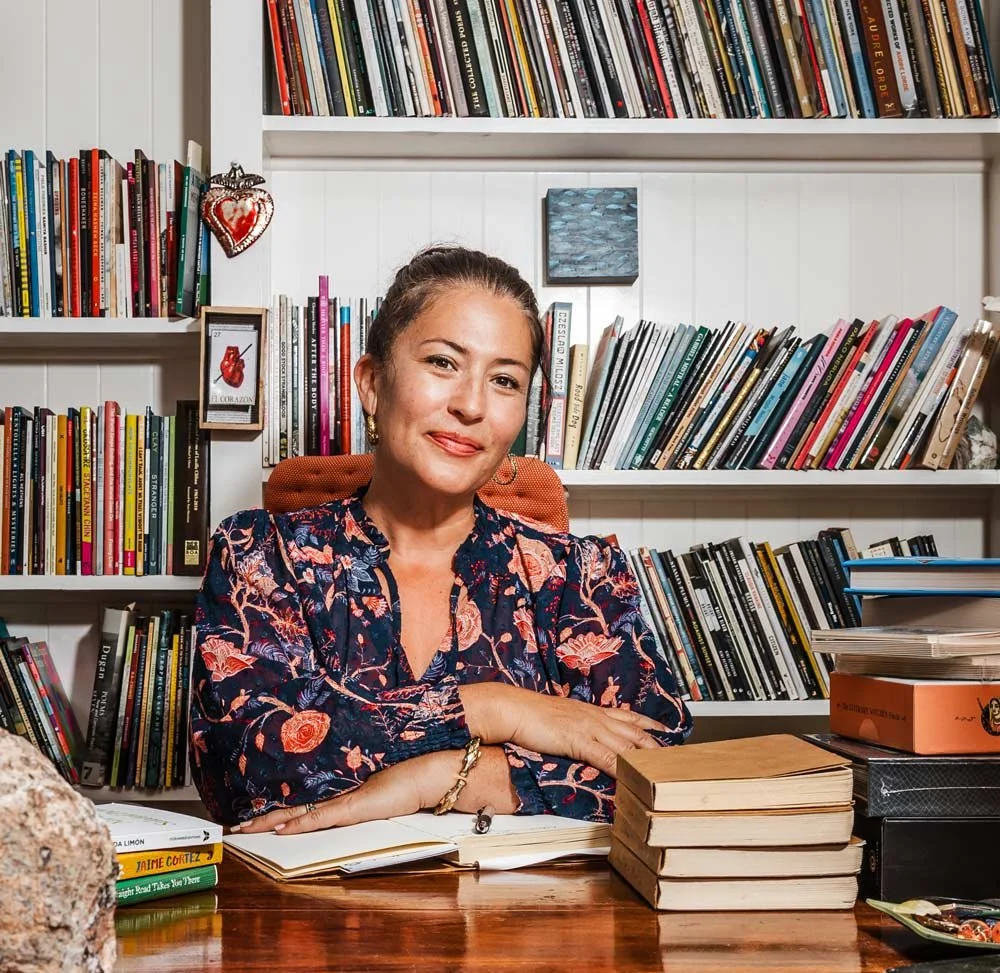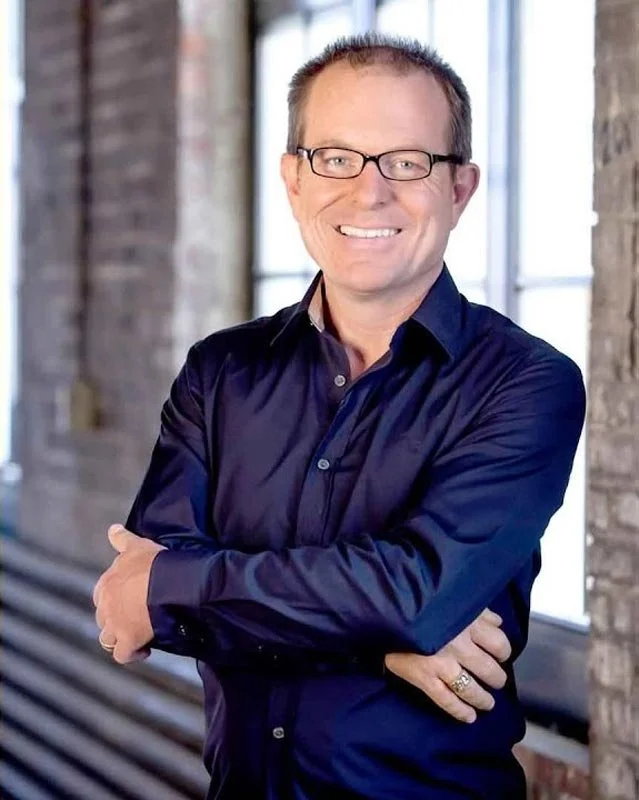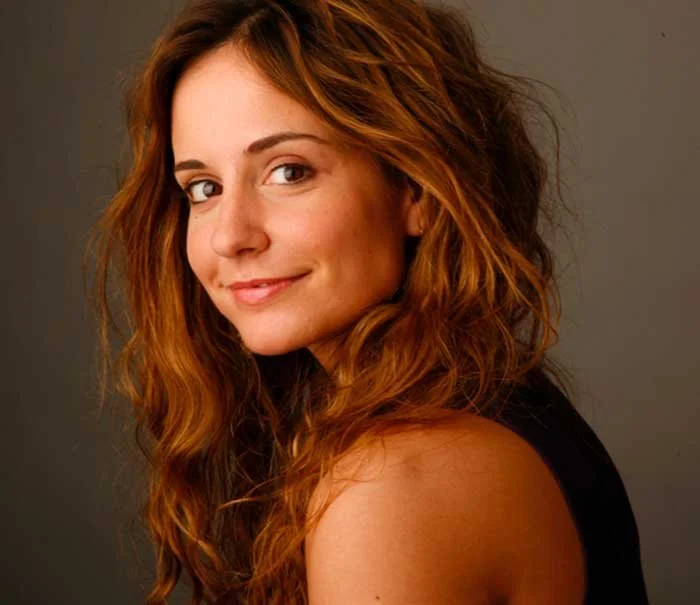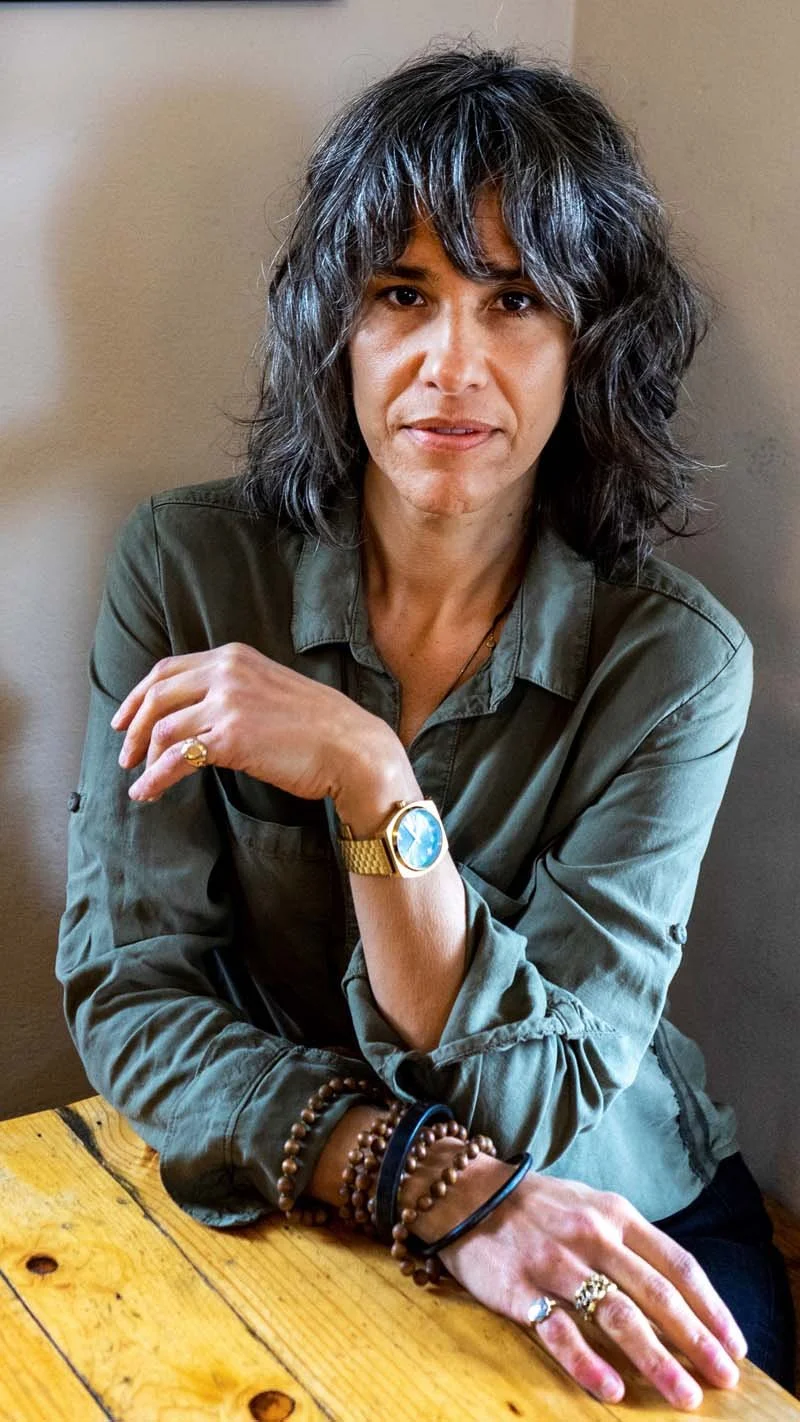


Emily Jon Tobias is an American author and poet, freelance editor, and writing instructor. She is an award-winning writer whose work has been nominated for the Pushcart Prize, along with other honorable mentions, and has been featured in various literary journals and magazines. Her debut collection MONARCH: STORIES (Black Lawrence Press, 2024) won multiple awards and received recognition from organizations like the American Book Fest International Book Awards, the Story Monsters Royal Dragonfly Award, the Foreword INDIES Book of the Year Award, the Eric Hoffer Award, and others. In 2024, Emily became a proud mentor in the PEN Prison Writing Mentorship Program. She holds a Master of Fine Arts in Writing from Pacific University Oregon. Midwestern-raised, she now lives on the coast of Southern California where she is writing her debut novel. @EmilyJonTobias
Where were you born and raised? How did it influence your writing and your thinking about the world?
I was born in Denver, Colorado, but I am a Midwesterner at heart, through-and-through. When I was a baby, my mother took me to Wisconsin and raised me there on her own with the help of my beloved grandmother who still guides my work in spirit today. My mother and I were deeply bonded and enmeshed because of how my father abandoned us. She inspired my creative nature. My best friends during childhood were imaginary. I built worlds for them in my mind. The way my mother nurtured my love for stories and books, creativity and words, at such an early age helped me to feel safe during traumatic times. How she chose to stay in the Midwest with me during childhood was pivotal. The values of hard work and family along with the essence of authenticity are key Wisconsin qualities. These built me into who I am as a writer. My work often deals with how adolescence — its trials and traumas, joys and heartbreaks — shape character. Often, the scars that my characters work to mend happened in formative years. In this way, the essence of the Midwest is central, not only to how I build landscape, but also to the terrain and bodies of my characters.
What kind of reader were you as a child? What books made you fall in love with reading as a child?
As a young reader, I fell in love with poetry first and foremost. I would get lost in the romance of deep, even dark, feelings that were ignited in me. Poets helped me emote. I remember as a young child being moved to tears by poets like Sylvia Plath and Pablo Neruda. I was an incredibly lonely kid. I was swathed in fear from betrayals and abandonments that happened when I was just a baby. Beyond my mother’s arms, I think I was always searching for a place to belong. Books became my refuge. In my early teenage years, writers like Jack Kerouac and Hunter S. Thompson absolutely blew me away. I wanted to live their lives. Meanwhile, authors like Gabriel Garcia-Marquez and Isabelle Allende helped me to get lost and still stay contained, an escape from the terror of adolescence. My sense of self was entirely shaped not only by what or who I read, but by how I read—with an eagerness, a hunger, with a soul-searching, dreamy desire to be anywhere other than within myself. Childhood trauma causes shame, as so many of us know. Writers who created characters that said to me, "I am a mess. I am just like you. You are safe here between these covers," became saviors for me.
Describe your typical writing day.
As a writer, I am an explorer. I do not outline, and I try to give my generative stages the freedom of discovery by not editing as I generate. My characters only uncover themselves to me if I am willing to stay the course with them. Now, this is not always comfortable for me given my nature to want to control, but like any solid relationship, trust takes time. It is no different with my work. I have learned to trust the process and allow characters to present themselves to me over time and through the writing. I am a cyclical writer who writes in concentric circles, spiraling toward the heart of the story, as if peeling back the layers of an onion with each draft. I begin when an image arises from a spontaneous feeling created by sensory input. Often, this happens with a memory, a photo, a song, a scent. The image has an entire universe embedded in it. I see the whole piece. Then, I must write through each layer. I never work in a linear fashion in either time or space. In this way, I can say I am a vertical writer rather than horizontal. The linear narrative logic, both emotional narrative logic and sequencing sets of logic, must be attended to in revision. My process takes an enormous amount of patience and trust. It can feel confusing and messy. I delight in the moments of breakthrough, when a character gifts me with their transformation in ways I did not expect. The more I practice, the less daunting the work becomes. Developing a relationship to my work and process has become more fulfilling than the outcome or end result. As long as I am willing to stay patient, my work is an ally. If I push or force, manipulate or coerce, I am in for a very troublesome rocky ride. Revision stages are consumed with the mechanics of craft. The tightening of the reins that craft allows is essential to making sure readers can digest my work which is often dark, lyrical, or abstract.
Tell us about the creative process behind your most well-known work or your current writing project.
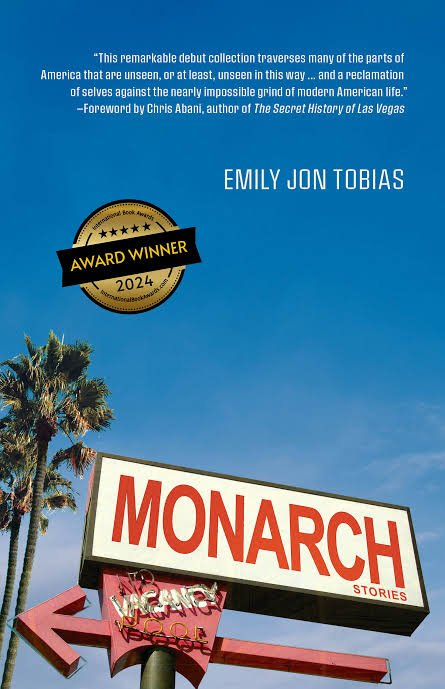
My debut story collection MONARCH was published by Black Lawrence Press in May, 2024. The stories were almost entirely written during my MFA program at Pacific University Oregon. At that time, I was advised to explore every angle of craft I could. I was reading voraciously, of course, and wildly inspired by short form fiction writers like Lucia Berlin, Melanie Rae Thon, Junot Diaz, Kimberly King-Parsons, Grace Paley, Lydia Davis, Stuart Dybek, Roxane Gay, Carmen Maria Machado, and many more. The stories I wrote were acts of exploration. Honestly, I had no idea a collection was forming, but I was writing endlessly, between six and twelve hours daily, to feed my hunger for craft. Midway through the program, my advisor at the time suggested that we work to finish the story collection. A story collection? How could it be? Sure enough, we had a book. Stories were connected. A through-line appeared. At this stage of emerging as a writer, the work really guided me. My mentors helped me see what I was creating and often knew before I did what I was doing. This was a period of developing my relationship to my own process. The stories were symptomatic of that journey.
During this time, I was in my early years of sobriety. New to recovery, I was just learning to care for myself in the absence of drugs and alcohol. In retrospect and through reflection, I have learned that writing MONARCH helped me heal in those early years. My discipline for writing, the way I learned to investigate my work through the lens of each character, how I was taught to unwind character psychology, all played a huge part in a rapid transformation of my own character. This year in October, I celebrated ten years of sobriety. The collection I wrote at two years could not exist at ten. The project will stand alone.
Currently, I am writing my debut novel titled The Whiskey Milk Trick. I have matured as a woman in recovery and as a writer. My process is the same as when I wrote MONARCH, but the way I relate to how deeply I must excavate is different. I am gentler with myself now. I respect the time it takes for characters to emerge and begin to trust me as their creator. I am in no rush. My hand is lighter. I have learned to listen to the characters and the work with more spaciousness. Because of this, I feel less like I am working in the dark. There is balance between me and the project. I delight in the discoveries with a firm grasp on the reins of craft. I do not drag the work, and the work does not drag me. There was a time while writing MONARCH when I wanted to quit writing altogether. I was so depleted by how much I fought my process. Now, with the way the relationship has changed and expanded, I have found a deep love and appreciation for my characters and how the project is being created through me.
Upload a Photo(s) of Book(s) You've Written: [Cover] MONARCH_STORIES_by Emily Jon Tobias.jpg
Do you keep a journal or notebook? If so, what’s in it?
Yes, I keep a small spiral lined notebook with me at all times. Writing pen-to-paper began as a ritual a decade ago when I was going through intense healing. The notebook was filled with daily feelings, thoughts, curiosities, fears, prayers, mantras, doodles, or whatever came through me on each given morning. I am sure that those messages to myself have somehow made their way into my creative work, but my journal is not a tool I use. Rather, I use the freewriting experience and handwriting to open my channel, if you will. To practice connecting to the flow of energy that involves writing. These days, I use the notebook less. By nature, I am highly disciplined and can become dependent on the very rituals that work to free me. To balance this, I try to loosen my grip on redundant activities. I do, however, love remembering that my tiny notebook is always waiting for me when I have something intentional to offer it. I have never, to this day, gone back to read any of the writings in my notebooks, now filled and stacked in a bookshelf in my closet. Someday, I will burn them, mandalas in the wind.
For my creative work, ideas often come to me at the most surprising times like while driving or in my sleep, almost always when I cannot access a notebook. In moments like these when the subconscious reaches for my conscious mind, I will jot down one word notes any way I can—on a napkin, in my phone, a piece of scrap paper—just so I can trigger a memory of the image or idea with that word. I have learned that what is meant to be written will resurface organically. This returns to that idea of trusting my relationship to my process. Most times, the trigger word is not necessary and the idea or image will resurface in my conscious mind when I sit down to write it, even weeks later. I love these little miracles.
How do you research and what role does research play in your writing?
For my current novel in progress, I use research to verify details in time and place given that some of the book is set as early as 2015. Research has become important to the project in creating stages that feel authentic to the characters' surroundings. I quite enjoy making sure that my maps are accurate, that street names make sense, for example, that time sequencing is logical. Research helps ensure that narrative logic remains intact. When history is involved, it is important to me to ensure that props used on stage are true to life. Landscape must be verifiable to feel real. As writers, when dealing with place under the umbrella of landscape, we are dealing with the story of space, so the finest physical details are critical in creating the tone and feeling for a character's particular place of belonging such as culture, neighborhood, or community.
Which writer, living or dead, would you most like to have dinner with, and why? What would you ask them?
Toni Morrison because she is the queen of all forms of craft. No one embodies mastery of soul in style as brilliantly as she does. And I can only imagine the stories she could tell about her life living in radical acts of art while sharing a meal. If I could have dessert with a different author, it would be David Foster Wallace just to thank him.
Where do you find inspiration outside of books and writing?
Yes, in fact, all my work is inspired by image and visions, so any art that ignites my sensory body to create image can become a starting point. In terms of an auditory sensory experience, music is central to my work. For me, music is deeply connected to memory and the process of emoting, so when writing the energy of nostalgia for a particular character, I will often tap into what music they need. While it's true that music and lyrics often make their way into my prose at the line level, the feelings music inspires are always central to my characters. I do not ritualize listening to music while I write, but sometimes, depending on the character at play, I will have music playing in the background during a writing session. More so, music creates the rhythm that becomes the heartbeat of a character. To find out which music is needed, I have to ask the character. Most times, the answers are very clear.
Photographs are usually the visual sensory experience that creates characters and their scenes. I love using old photos that my father took on film during my childhood. One glance at these photos will almost always create an entire world with a depth of emotion, dialogue, and color. Each photo carries its own essence, and I can easily write from sitting with the feeling a photo produces in me. When I write, I always have photos in front of me. These are switched up every few days to keep the energy fluid, moving, and transforming.
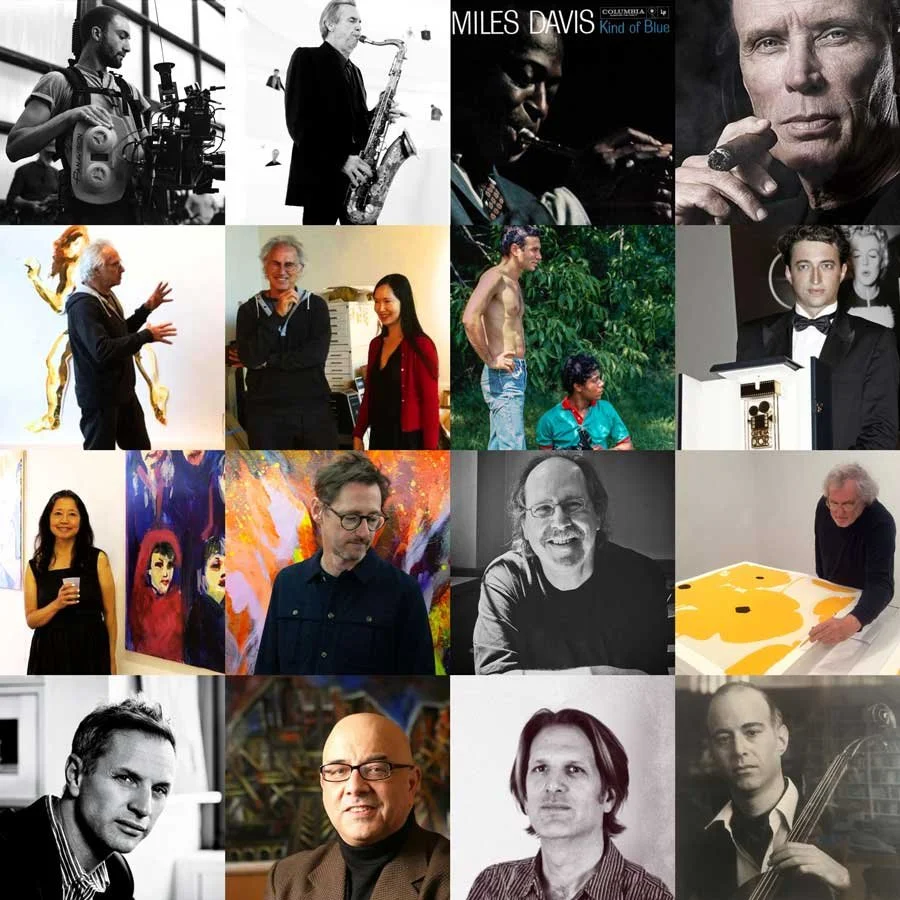
Do you have any questions for Mia Funk (artist, writer and founder of The Creative Process)? Or any reflections or creative responses to her paintings?
You are such an expansive artist working in many mediums, which really inspires me given how focused I am on only one. Do any of your mediums feel more like home than the other? How do you choose which medium you will use to express yourself? Further, do you consider your work and expression of self? What does your process look like? Is your process the same across all mediums? I am fascinated by artists like you who can cross over into all these forms.
Your nightscapes are particularly moving to me. These paintings remind me of my meditations that run frequencies of energy through the body in a circuit. I feel as if the canvas is the body. Do you consider body as landscape? These nightscapes, so rich with color and light, feel abstract but the feelings the pieces enliven in me have boundaries. The experience is within the lines while the painting is infinite. My feelings are singular, unique, definable, and clear in witness of the series. The way I feel when consuming them is more concrete than the painting itself. From the boundaryless to containment within the body, I am able to embody these works and rest there. Yes, quite like meditation.
What are your hopes or concerns about the role of AI in creative expression?
Because AI is here to stay whether we like it or not, it's important that we are intentional with how we relate to it, especially as artists. I believe we are at a critical time of entraining the technology for the future. Now is the time to decide what energy we will bring to the table when relating to the new technology. If we bring love and truth to it, this is what will be reflected. AI cannot replace the heart of a human in art. AI can, however, amplify the energy that is used in relation to it. In this way, it can be a co-collaborative tool. The heart of creativity that is purely human is in our emotional body, our sentience. AI is not designed to replace this. If we bring these qualities into all of our relationships, including our relationship with technology, those qualities like compassion, empathy, love, and creativity can multiply. The heart of art, the artist's process, and our feelings and intentions cannot be replaced. In this way, the creative process cannot be replaced by AI because it is rooted in the human body: heart, mind, and intuitive centers. The quality of sentience is critical to our creative process as artists which is something that AI does not embody. The key, in my view, is the way we choose to relate: to ourselves, one another, technology, nature, and the global network that is our world. This is our time to choose.
Tell us about some books you've recently enjoyed and your favorite books and writers of all time.
Recently, my favorites are All Fours by Miranda July, Night of the Living Rez and Fire Exit by Morgan Talty, Horse by Willy Vlautin, Creation Lake by Rachel Kushner, Martyr! by Kaveh Akbar, We Were the Universe by Kimberly King Parson, and MADWOMAN by Chelsea Bieker.
My favorite books of all time include Love in the Time of Cholera by Gabriel Garcia Marquez, A Manual for Cleaning Women by Lucia Berlin, Beloved by Toni Morrison, any works by Alice Walker, Graceland by Chris Abani, Drown by Junot Diaz, Difficult Women by Roxane Gay, In the Dream House and Her Body and Other Parties by Carmen Maria Machado, The Safety of Objects by AM Homes, On the Road by Jack Kerouac, and Fear and Loathing in Las Vegas by Hunter S. Thompson. Stuart Dybek is my favorite short story writer of all time. Any of his stories teach me how it's done, but his collections The Coast of Chicago and Childhood and Other Neighborhoods changed my world as a writer.
Exploring literature, the arts, and the creative process connects me to… my own channel with whatever unseen force binds us all. Call this God, the divine, nature, spirit, Atman, higher self, creativity, the light, or any other name, the process of creation and engagement with others' acts of art is what makes us evolving human beings. Without this, we are stunted. I have always been a transformer. Cycles and revolutions are in my nature. The arts help me change, grow, and endure enough to expand. The exploration also connects me with others—artists, writers, musicians, creators—with history, with memory, with the sacred place in me that can never be taken, manipulated, destroyed, or depleted. Most importantly, I am connected to community, to all that ever were or will come to be. This connection is the primary element of my life-force.