The Creative Process
  • Interviews · Podcasts
  • WRITERS
  • ART
  • 🌱🌍Climate
  • FILM·TV
  • MUSIC
  • AI·TECH
  • STEM
  • Team
  • PODCAST RANKINGS Universities & Culture Centers Display Options > Physical Exhibition > Projections | Soundscapes | Screen Elements Literary Magazines
  • CONTACT
  • ARTS, CULTURE & SOCIETY CLIMATE CHANGE + SUSTAINABILITY BOOKS & WRITERS FILM & TV PHILOSOPHY & IDEAS AI & THE FUTURE OF HUMANITY SPIRITUALITY & MINDFULNESS SOCIAL JUSTICE & ACTIVISM ART CREATIVE WRITING EDUCATION MUSIC & DANCE THEATRE POETRY LGBTQ+STORIES FEMINISM & WOMEN’S STORIES ONE PLANET> CLIMATE CHANGE & BIODIVERSITY TECHNOLOGY & INNOVATION FUTURE CITIES STORIES POEMS MUSIC MANDARIN, FRENCH, SPANISH...BILINGUAL CHANNELS LOVE - What is love? HEROES 10 MINUTES OR LESS SEASONS 1-6 EXCERPTS
  • PODCAST RANKINGS
  • Creative Works
  • OTHER VOICES STUDENT STORIES PEOPLE & PLACES LIBRARIANS & EDUCATORS' STORIES ARTIST SPOTLIGHT Creative Works HUMANITIES SCHOLARS LIBRARIES GLOBAL WARMING & SUSTAINABILITY RAISING VOICES OF COLOR LGBTQ+ VOICES NATIVE AMERICAN & INDIGENOUS VOICES INTERNATIONAL VOICES DANCE Submit Your Creative Works (LOVE) Young Artists & Writers

The Creative Process

  • /
  • Interviews · Podcasts/
  • WRITERS/
  • ART/
  • 🌱🌍Climate/
  • FILM·TV/
  • MUSIC/
  • AI·TECH/
  • STEM/
  • Team/
  • FAQ/
    • PODCAST RANKINGS
    • Universities & Culture Centers
    • Display Options
    • > Physical Exhibition
    • > Projections | Soundscapes | Screen Elements
    • Literary Magazines
  • CONTACT/
  • 24 CHANNELS/
    • ARTS, CULTURE & SOCIETY
    • CLIMATE CHANGE + SUSTAINABILITY
    • BOOKS & WRITERS
    • FILM & TV
    • PHILOSOPHY & IDEAS
    • AI & THE FUTURE OF HUMANITY
    • SPIRITUALITY & MINDFULNESS
    • SOCIAL JUSTICE & ACTIVISM
    • ART
    • CREATIVE WRITING
    • EDUCATION
    • MUSIC & DANCE
    • THEATRE
    • POETRY
    • LGBTQ+STORIES
    • FEMINISM & WOMEN’S STORIES
    • ONE PLANET> CLIMATE CHANGE & BIODIVERSITY
    • TECHNOLOGY & INNOVATION
    • FUTURE CITIES
    • STORIES POEMS MUSIC
    • MANDARIN, FRENCH, SPANISH...BILINGUAL CHANNELS
    • LOVE - What is love?
    • HEROES
    • 10 MINUTES OR LESS
    • SEASONS 1-6
    • EXCERPTS
  • PODCAST RANKINGS/
  • Creative Works/
  • Other Voices/
    • OTHER VOICES
    • STUDENT STORIES
    • PEOPLE & PLACES
    • LIBRARIANS & EDUCATORS' STORIES
    • ARTIST SPOTLIGHT
    • Creative Works
    • HUMANITIES SCHOLARS
    • LIBRARIES
    • GLOBAL WARMING & SUSTAINABILITY
    • RAISING VOICES OF COLOR
    • LGBTQ+ VOICES
    • NATIVE AMERICAN & INDIGENOUS VOICES
    • INTERNATIONAL VOICES
    • DANCE
    • Submit Your Creative Works (LOVE)
    • Young Artists & Writers
  • /

The Creative Process

EDUCATION

The Creative Process

  • /
  • Interviews · Podcasts/
  • WRITERS/
  • ART/
  • 🌱🌍Climate/
  • FILM·TV/
  • MUSIC/
  • AI·TECH/
  • STEM/
  • Team/
  • FAQ/
    • PODCAST RANKINGS
    • Universities & Culture Centers
    • Display Options
    • > Physical Exhibition
    • > Projections | Soundscapes | Screen Elements
    • Literary Magazines
  • CONTACT/
  • 24 CHANNELS/
    • ARTS, CULTURE & SOCIETY
    • CLIMATE CHANGE + SUSTAINABILITY
    • BOOKS & WRITERS
    • FILM & TV
    • PHILOSOPHY & IDEAS
    • AI & THE FUTURE OF HUMANITY
    • SPIRITUALITY & MINDFULNESS
    • SOCIAL JUSTICE & ACTIVISM
    • ART
    • CREATIVE WRITING
    • EDUCATION
    • MUSIC & DANCE
    • THEATRE
    • POETRY
    • LGBTQ+STORIES
    • FEMINISM & WOMEN’S STORIES
    • ONE PLANET> CLIMATE CHANGE & BIODIVERSITY
    • TECHNOLOGY & INNOVATION
    • FUTURE CITIES
    • STORIES POEMS MUSIC
    • MANDARIN, FRENCH, SPANISH...BILINGUAL CHANNELS
    • LOVE - What is love?
    • HEROES
    • 10 MINUTES OR LESS
    • SEASONS 1-6
    • EXCERPTS
  • PODCAST RANKINGS/
  • Creative Works/
  • Other Voices/
    • OTHER VOICES
    • STUDENT STORIES
    • PEOPLE & PLACES
    • LIBRARIANS & EDUCATORS' STORIES
    • ARTIST SPOTLIGHT
    • Creative Works
    • HUMANITIES SCHOLARS
    • LIBRARIES
    • GLOBAL WARMING & SUSTAINABILITY
    • RAISING VOICES OF COLOR
    • LGBTQ+ VOICES
    • NATIVE AMERICAN & INDIGENOUS VOICES
    • INTERNATIONAL VOICES
    • DANCE
    • Submit Your Creative Works (LOVE)
    • Young Artists & Writers
  • /
Speaking Out of Place: Getting Our Political Voices Back

Speaking Out of Place: Getting Our Political Voices Back

Interviewed by David Palumbo-Liu

One of the first steps toward creating an enlarged concept of our humanity is to develop an enlarged concept of our relation as human beings to politics.

Speaking Out of Place: Getting Our Political Voices Back
The Creative Process Podcast - Arts, Culture and Society

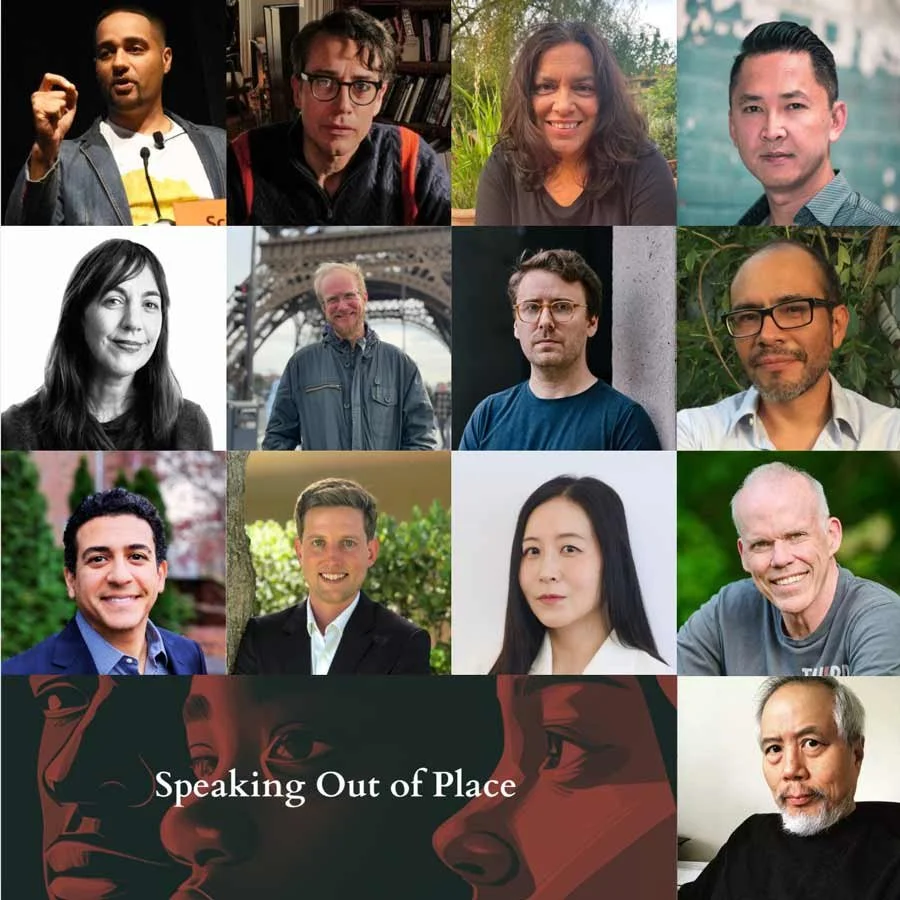
That need to reclaim our voice often starts in the very spaces where we feel most silenced. We live in an era where institutional decay and asymmetrical class power have made social consent seem almost irrelevant to the ruling class. To understand how we change those incentives, we have to look at the systems designed to silence us, and the movements successfully disrupting them. Today, we hear from scholars and educators rewiring our institutions—Jesse Hagopian, Eunsong Kim, Tim Hewlett, and Sara Ahmed. We turn to the authors documenting the human cost of these systems—Benjamin Moser, Viet Thanh Nguyen, and Yuri Herrera. Finally, we hear from journalists, researchers, and legal minds analyzing climate delay and political dysfunction—Ben Franta, Bill McKibben, Ben Tarnoff, Liza Featherstone, and Aziz Rana.

Speaking out of Place is produced in collaboration with The Creative Process is made with support from Stanford University.

DAVID PALUMBO-LIU
Louise Hewlett Nixon Professor of Comparative Literature · Stanford University
Host of Speaking Out of Place
I am going to read just a short passage from the introduction to the book, and I begin with a quote from other people, from James and Grace Lee Boggs, from a book called Revolution & Evolution in the Twentieth Century. 'One of the first steps toward creating an enlarged concept of our humanity is to develop an enlarged concept of our relation as human beings to politics.' The book really talks about how we might reimagine this relationship, both to politics but also to each other. And I continue, 'One way we have lost a sense of being together and of being potent political actors is through the delegation to others of our responsibilities. We have given them our voice, and the people to whom we have given our voice are some of the most irresponsible on Earth.'

By the same token, we have become used to thinking we have no right to have an opinion that does not register on the very limited menu of possibilities that has been set before us. We have also lost a sense that we have a right to determine the nature of our relationship to place on multiple scales, from our homes and neighborhoods, to our towns and cities, to our countries, to the international sphere and to the planet. Somehow, we have accepted that we depend not on each other but on the very few people who rule us. We need to shift the focus back to the people and care wisely for our precarious world, because our leaders have proven themselves both uninterested in the most pressing needs of the planet and incapable of imagining what we need to do.

The book chronicles how people have stood up and regained their voices, and also some of the topics where their voices are most urgently needed. Speaking Out of Place is produced in collaboration with The Creative Process and is made with support from Stanford University. I alone am responsible for its content. Let us talk about teachers, unions and signs of people taking the power into their own hands.

JESSE HAGOPIAN
Activist · Educator · Author of Teach Truth: The Struggle for Antiracist Education
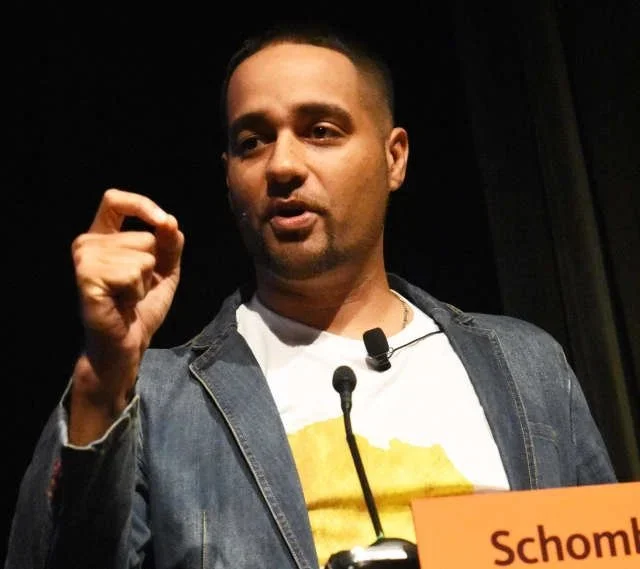
Unions at their best are an incredible force that can help transform our society to make it more equitable. I really wish that all of the left would understand the centrality of the struggle for education and supporting educators' unions. I will start with that and then get more specific about the union.

There are so many ways that we are under attack right now. Donald Trump is attacking trans people. He is attacking immigrants and migrants. He is attacking Palestinians and wanting to ethnically cleanse Gaza. He is attacking education.You name an area of our society and it is under attack from him. This can be very disorienting to everybody and to the left, raising the question: where do we start? How do we begin to build a fight back and a social movement that can challenge him and stop his blitzkrieg?

There are so many places that we can put our energy in, but I would argue that the place where we will get the most return is organizing in education. I say that because these truth crime laws are broadly opposed by majorities of people in the United States. Book bans are wildly unpopular. There is a broad basis of support. Education brings together tens of millions of people who are very concerned about what is taught in the schools. We are talking about millions of students, tens of millions of parents and educators.

Teachers' unions are the biggest in the country. Educators are the most unionized workforce in the nation. When you put all that together, you are talking about people who are discussing and debating ideas, who have so much in common and have common interests. If the left took education as seriously as the right does, we would have a major uprising in this country that can push back on Trump around trans issues because schools serve trans students that he is trying to demonize. It can push back against his anti-immigration policies because he has now made it clear that ICE agents can raid schools, and we can push back against those policies and his education policies. The teachers' unions can play a huge role in that we have a democratic organization that is in every school building.

DAVID PALUMBO-LIU

I know this is a big task because it is a big argument, but it is so important. What is the main argument of your book?

EUNSONG KIM
Author of The Politics of Collecting: Race & the Aestheticization of Property
Associate Professor · Department of English · Northeastern University
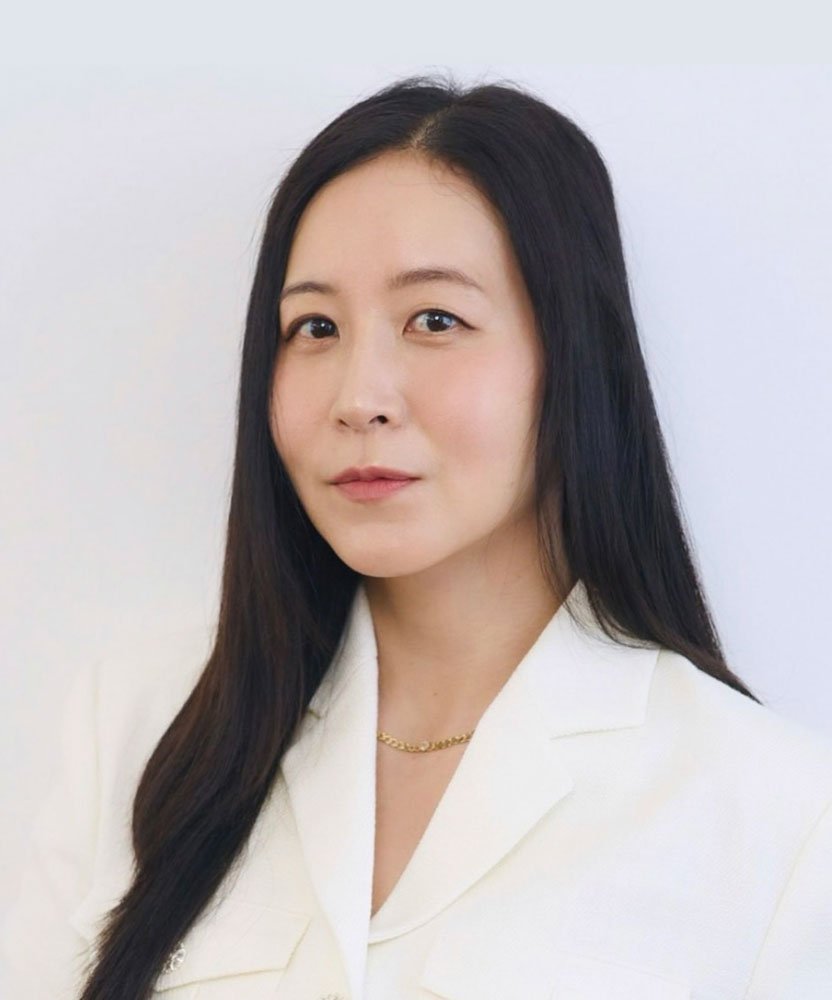
The main argument of my book is I look at the site of the personal collection or the museum in the United States or the development of the personal collection museum and the rise of philanthropy. I think through the ways in which you do not have the rise of the museum form and the poetry archive without the acceleration, the mutations of racial capitalism and settler colonialism.

A friend and a scholar I admire, Jarret Drake, says he does not study museums. He studies slavery and he studies fascism.I would extend that and say I am not studying the museum. This is not a case study of the museum form. I am really thinking about the ways in which art spaces, in particular cultural spaces, the space of poetry often advertises itself to be an exceptional site, a site that is removed from the world. It is in those very spaces that you can so clearly see the ways in which the trenchant dynamics of racial capitalism but also colonialism manifest.

BENJAMIN MOSER
Pulitzer Prize-winning Author of Sontag: Her Life and Work · Why This World: A Biography of Clarice Lispector · Anti-Zionism: A Jewish History
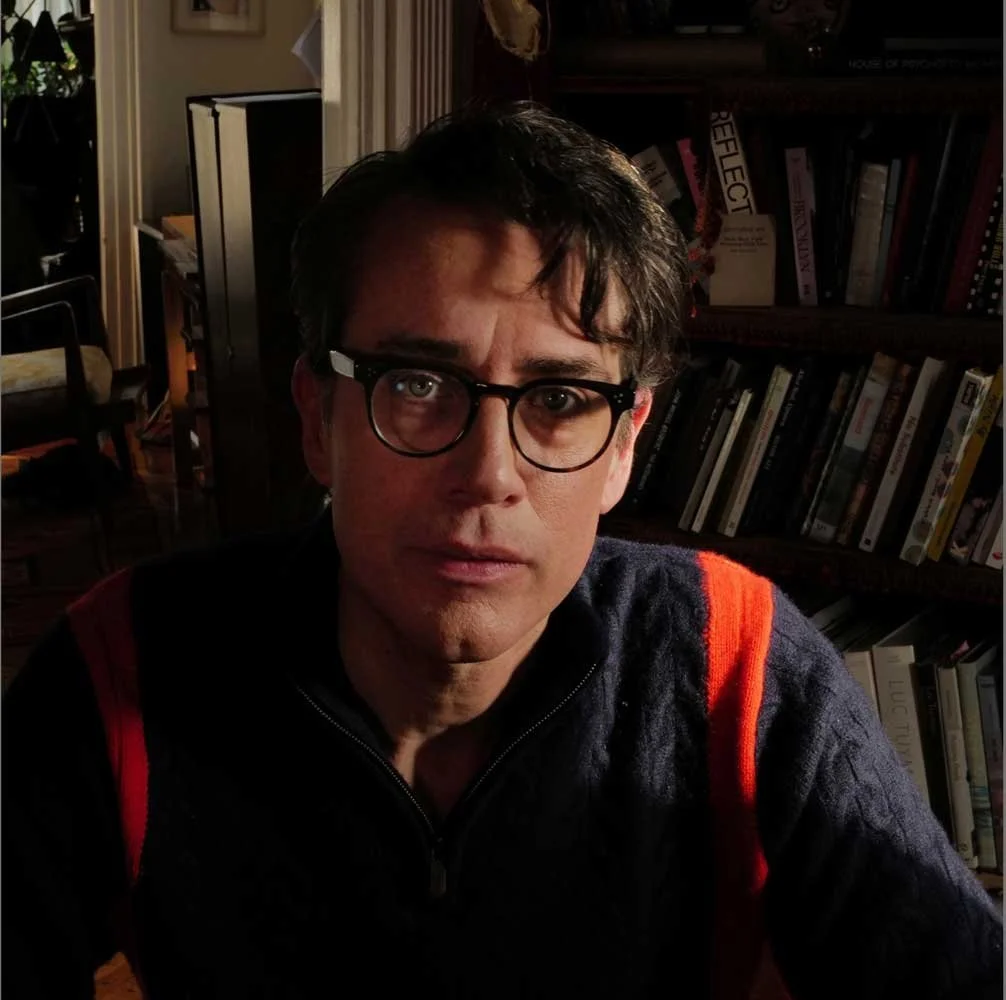
I think that Jews have become extremely solipsistic in a way that is embarrassing. It is very much contrary to the way I was brought up, which was not to talk about yourself, which was to talk about other people and to serve other people.That was part of the heritage that I received from the Holocaust and from my family's background as refugees was, 'You are not a refugee. You have got it pretty good. You live in America, you get to go to the Ivy League school and you get to go on vacation.' We were very much exhorted against that and exhorted to serve other people and to try to do something good in the world.

They hated money grubbers. They hated everything that Donald Trump incarnates. That is why this book is dedicated to the Palestinians as an act of hope and also of repentance, even though I have not killed any Palestinians myself. But certainly, it is done in my name. Certainly, it is done with my money as an American. It is done with my political backing and diplomatic backing. I hope this will be one tiny little part of something that will make a change for the Palestinians.

DAVID PALUMBO-LIU

These days with our U.S. Congress completely dysfunctional, it was really moving to me when you listed all those bipartisan bills for climate change when people were working together that this strategy killed. Could you talk about some of the damage these tactics did to decent pieces of legislation?

BEN FRANTA
Founding Head of the Climate Litigation Lab
Senior Research Fellow at University of Oxford’s Sustainable Law Programme
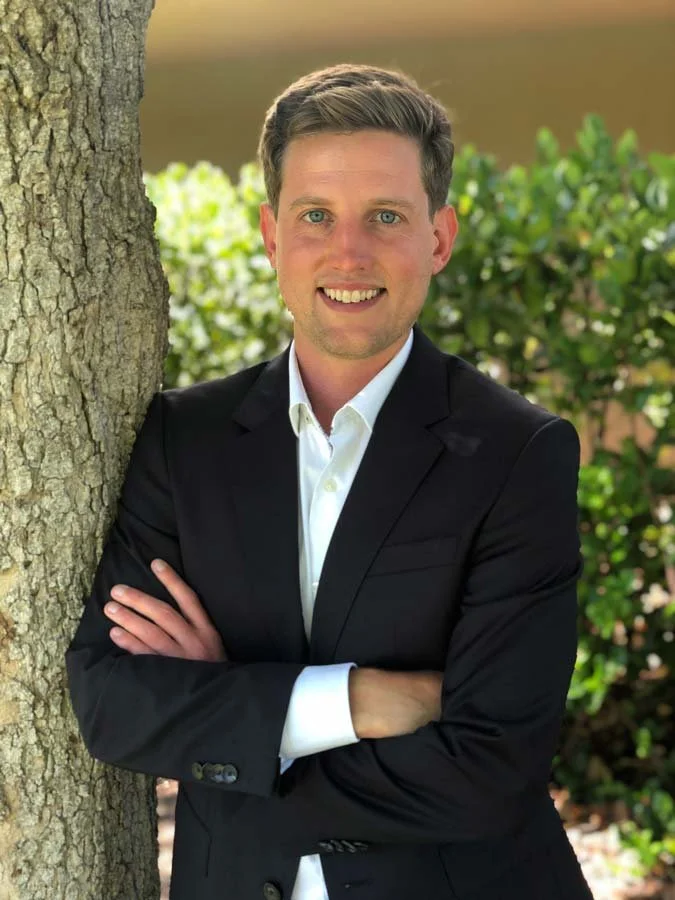
From the very beginning, the climate policies that we think of as being cutting edge have been around as ideas for over 30 years. Things like a carbon tax were proposed in 1993 in the United States and it was killed through this combination of this is way too expensive and we do not even know if climate change is happening. None of the policy discussion today is very new. I think that is one of the really important things to keep in mind that the longer we wait, the more emissions occur, more global warming occurs and more damage is done that cannot be reversed.

The industry knows that. We know they know that because of their internal documents from even the 1970s and the 1980s. Some of those documents talk about what needed to be done to avoid really severe global warming and they concluded that the industry needed to start moving away from fossil fuels right away in the 1980s in order to avert severe global warming. The industry knew that and yet it continued to intentionally delay progress. They used deceitful tactics for decades, fully knowing enormous catastrophic damage, even in the industry's own words in their internal documents, they use the words catastrophic damage that would be put onto the world as a result. I cannot think of a bigger instance of corporate malfeasance at a massive scale.

DAVID PALUMBO-LIU

The industry is so good at patching together band-aids. Greenwashing and deferring action is a slow death sentence. Can you talk a little bit about how universities can be complicit in greenwashing?

BILL MCKIBBEN
Co-Founder of 350.org · Founder Third Act · Author of The End of Nature
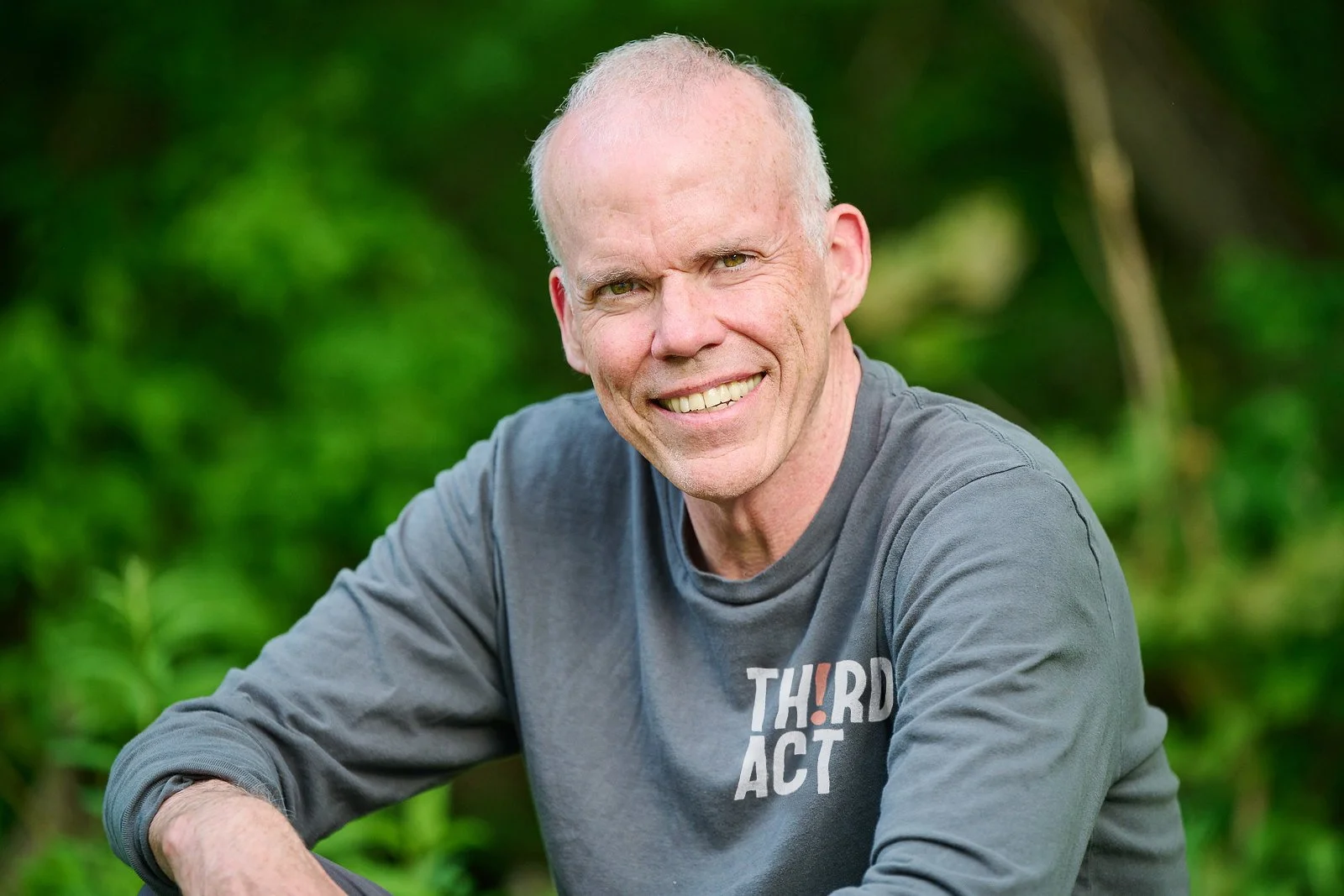
Let me say briefly, at this point, outright climate denial is almost impossible unless you are Donald Trump or somebody.There have been too many fires and too many floods and too much heat, but the new form of effective denial is delay.Science tells us now that we have to move very fast to have any chance of dealing with this. Instead, the fossil fuel industry is doing everything they can to preserve their business model a few more decades, even at the cost of breaking the planet, which clearly will be the cost. This is another one of these cases where the facts make clear what we need to do.

As Al Gore said a long time ago, those facts can be inconvenient. In this case, inconvenient for the industry in question and also inconvenient for the investment manager at the university who is going to have to spend a few weeks rebuilding the portfolio. On the list of things that we have to do to cope with climate change, this falls on the easy end of the spectrum and on the highly effective end of the spectrum. This should be over and done and we should be on to the next part.

DAVID PALUMBO-LIU

So, in the climate crisis, you have governments framing certain things in certain ways, but then you have the general public that seems psychologically willing to accept this framing. How do you try to reframe it or break the frame and substitute something else? Tell us a little bit how you arrived at the kinds of protests and tactics that your group is advocating and enacting.

TIM HEWLETT
Co-founder of Scientist Rebellion · Climate Activist · Astrophysicist
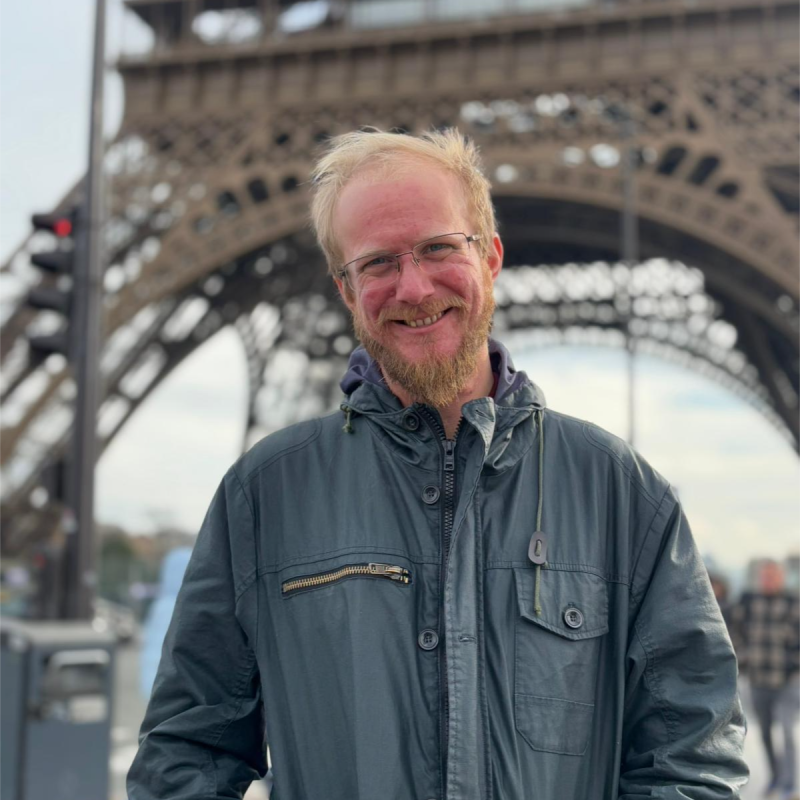
It is a great question. It is a really difficult issue because it gets to the heart of so much of what it is to be human apart from anything else, that we want to believe that there is hope. We want to believe people when they say that they are on our side and they are acting in our interests. We have a tendency to turn a blind eye if it is easier than the alternative.One of the ways that you can try to disrupt that relationship is through direct action.

If you see senior people, academics and scientists who are quite privileged, they do not need to be going out directly and defending their lives in a way that some protesters perhaps do. It has an additional psychological effect where they say, 'Wow, if even these people are on the streets, then things must be serious. There must be something I do not get about this.' That is one of the ways that you can start to break through.

I do not think that there is one approach or one way of doing this. One of the things that we tried to do when we set up Scientist Rebellion was to instill a culture and a set of systems. That would mean that anybody who was affiliated with the group would be supported in any non-violent approach that they took to make the point that almost anything is justified in response to this, if you are trying to do good.

DAVID PALUMBO-LIU

You have this quote that I will read to you: 'Society is not a factory. It encompasses children, the elderly, disabled, the geographically stranded, the very categories of life that markets define as surplus.' In trying to impose a cyborg logic of optimization, Elon Musk discovered that humans were not programmable units and that the public sector's role is precisely to provide goods that the private sector cannot or will not. Make the point that so much of his business is feeding off of public subsidies, public funds and et cetera.

BEN TARNOFF
Journalist · Co-author of Muskism: A Guide for the Perplexed
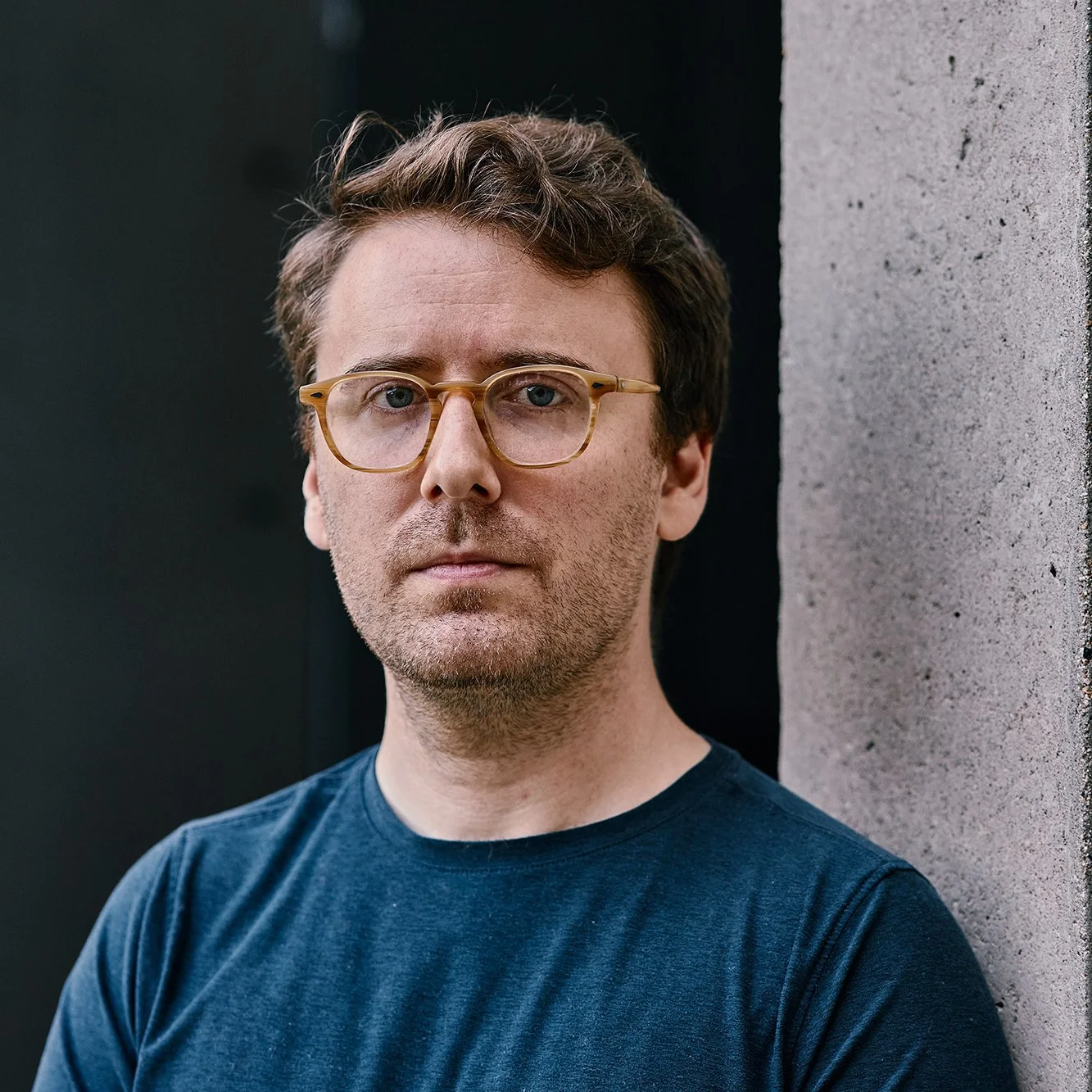
Elon Musk is foiled by the institutions of social provision at the heart of the American state. That is perhaps too optimistic a view because the other element that Quinn Slobodian and I have been discussing quite a bit is the extent to which not only Musk, but a large portion of the American ruling class seems increasingly disinterested in the question of social consent. If you think about how Donald Trump did not even try to manufacture a case for the war on Iran, in contrast to George W. Bush going into Iraq. It was a ridiculous case, but he tried to make it. Trump did not even seem to make an effort.

This is where we think about the relative thinness of the social contract within Muskism. What is it offering people at the end of the day? We are increasingly inclined to see that thinness as symptomatic of this broader trend within the American elite, which is that in a situation where people do not seem to be particularly politically organized, in which the working class has more or less ceased to exist as an organized force, maybe social consent does not need to be purchased at the same price as it had been before. Class power has become so asymmetrical that there is not a counterparty that you need to satisfy in the same way.

Maybe you can get away with things you could not in the past. For instance, if you think about the depth of cuts to Medicaid that were introduced in the One Big Beautiful Bill Act, you would only introduce those types of cuts if you really had no fear of pitchforks. That is a somewhat darker view of the question of social consent, which is that for at least some figures, and certainly those close to Trump, perhaps it does not really matter anymore because class power has become so asymmetrical that there is not a counterparty that you need to satisfy in the same way.

DAVID PALUMBO-LIU

Could you get us started, Viet, by talking about these two different aspects of ICE, the international dimension, the ideological one, its state operations and fascist ideologies, but also how we can break it by ways other than simply direct confrontation, but through storytelling and through different kinds of creative ways of changing the narrative?

VIET THANH NGUYEN
Pulitzer Prize-winning Author · The Sympathizer · The Committed
To Save and to Destroy
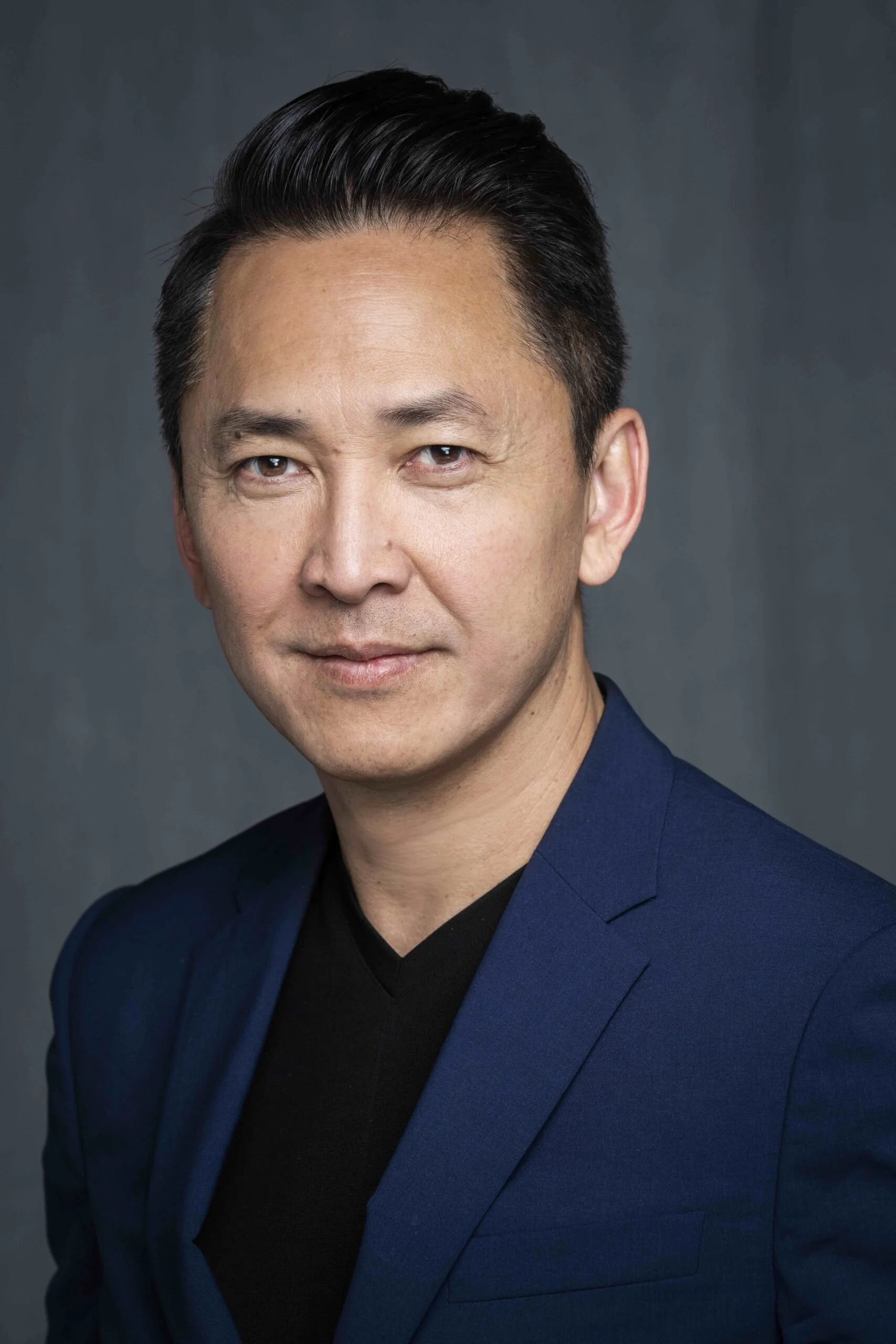
You can see how important storytelling is to fascism, to MAGA and to ICE. The construction here is of the United States being invaded by people who are not deserving to be here, culturally and politically for sure, but couched in this language of legalization and who has done the right thing to be here. That type of narrative is seductive to a lot of people, not just white people but to a lot of other people as well, and it is yoked to many other narratives around what is the United States, what is American power, what is going to benefit American power and what is going to erode American power. There is a tremendous amount of phobia around who constitutes the other or the others to the United States, and it goes way back to the origins of the country.

Deportations and invasions are a feedback loop in the greater Americas. The United States is responsible for a lot of that circulation, but once gangsters manifest themselves in the United States, it appears in the American consciousness as if they came out of nowhere instead of coming out of a system in which the United States has a lot of responsibility.Narration is so important here for us to be able to tell this story about the roots of the violence and who these criminalized people are.

There are actual criminals and violent people, but how these narratives of criminalization are done, and of course, how we narrate the power and the violence of the United States as something that is supposed to be legitimate, when in many ways it is oftentimes illegitimate in terms of how multiple Democratic and Republican presidents and administrations have forced American will onto Central and Latin America, producing the very problems that then average Americans have no idea what to do with.

DAVID PALUMBO-LIU

What do you see happening in the United States and in Mexico now in terms of history?

YURI HERRERA
Author of Signs Preceding the End of the World · Season of the Swamp · Kingdom Cons
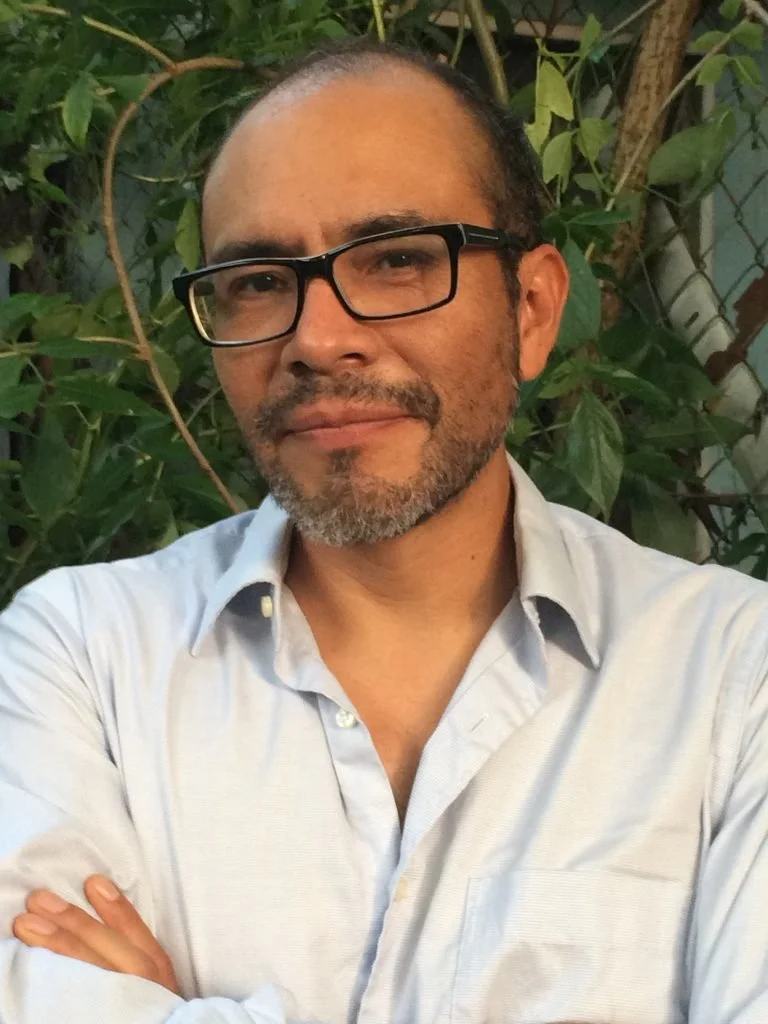
What I would say is Donald Trump did not invent racism, did not invent these concentration camps or did not invent cruelty. He is shameless right now. Barack Obama, with all his flare and all his coolness, was horrible to the migrant population of the United States. He built those cages that Trump is using. There are many differences, but one very important difference is there was at least a certain illusion of decency, and what we have now is a political class, in which I include most of the media and most of the universities, that have accepted that.

Cruelty and indecency is the way to go to reaffirm a certain imaginary place of the United States in the world and the expendable people. To recreate this dream is that people that have been expendable all along, people of color, migrants, women and the people who apparently cannot defend themselves, what I hope we are going to see a lot more is people defending themselves.

It has happened in different cities when you have these terrorists from ICE kidnapping people, that you have seen communities coming out to help the migrants because they see what is happening. ICE is not going after criminals. They are going after people in hospitals, in courts, people who are absolutely trying to regularize their documents in their workplace. They are going after people who are doing what a regular citizen does, work and take their children to school and go to court to try to work out their papers.

This is also part of something else that has to do with the genocide in Palestine, with the invasion of Venezuela, with the happenings in Africa, which is the disappearance of a certain common law in the world. That is why Trump says, 'I do not have to obey anyone. I just have to obey my own morality.' When a person who has been found guilty of rape and who has bankrupted businesses many times, who has been an outspoken racist, says, 'The new order depends on my own morality,' it is very clear what we are facing. That should give clarity when resisting and when rebelling against them.

DAVID PALUMBO-LIU

What is a feminist killjoy? The second question is, why did you choose the form of a handbook?

SARA AHMED
Author of The Feminist Killjoy Handbook · No is Not a Lonely Utterance
Independent Queer Feminist Scholar
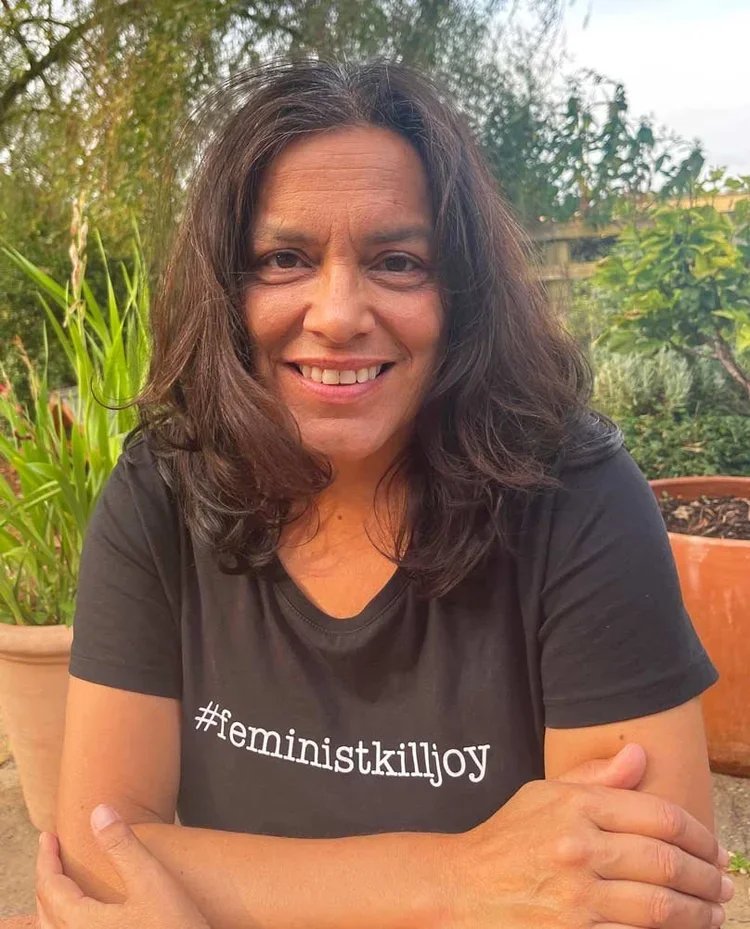
The feminist killjoy, in a way, begins as a stereotype of feminists. It is miserable feminists who make misery their mission. In reclaiming that figure, I am following on from many other acts of political reclaimings of terms that maybe begin their lives as insults or smears, as well as stereotypes. I think of the word queer. The term is used to dismiss feminism as motivated by misery or by the desire to cause misery. In reclaiming that figure, you are not agreeing with the idea that feminists are miserable. Luckily, I do not think that is the case rather what we are saying is, well, if feminism causes misery, if talking about sexism or racism forms of power, inequality, violence causes misery, then that is what we are willing to cause. That is why in the book itself, I wrapped the book around these kinds of killjoy commitments. One of the primary ones is simply, I am willing to cause unhappiness. Because so many forms of social inequality and social violence, in effect, hard to speak about, hard to address, hard to make real even. Because as soon as you name them, you are treated as if you have brought them into existence.

DAVID PALUMBO-LIU

Even the word vision has been institutionally contaminated, but let us bracket that to imagine what kind of world are you trying to build?

SARA AHMED

That is such a big question. Beautifully big question.I think it is true. Abolition as well. It has been a very important part of the work that I have read about abolition to challenge the presumption that it is simply about negation or destroying something and thinking about what you are making and what you are creating. In the process of trying to bring something down, these are not two separate actions.They are two different aspects of the same action. I think that is very important. What I really wanted to show in the handbook is how much creativity and inventiveness comes out of the difficulty of getting through the story I mentioned of the student who is no longer in the university. She could not have a career. The door was shut. That is what she said. I heard the door when she said that I heard it shut. That means that was shut because she tried to stop the harassment from happening to somebody else. The door was shut. When she said no, she ended up with nowhere to go. That is one of the institutional mechanisms, you are more likely to progress if you say yes. It is a reproductive mechanism, which is why feminist culture knows so much about everything. We can explain how it is that institutions keep being reproduced in the same way. What then do you do? Where do you go if your no has nowhere to go? You have to find other ways of getting the nos out.

DAVID PALUMBO-LIU

Let us start with you telling us, how did it happen?

LIZA FEATHERSTONE
Journalist · Essayist · Author · Teacher · Columnist Jacobin Magazine · New Republic
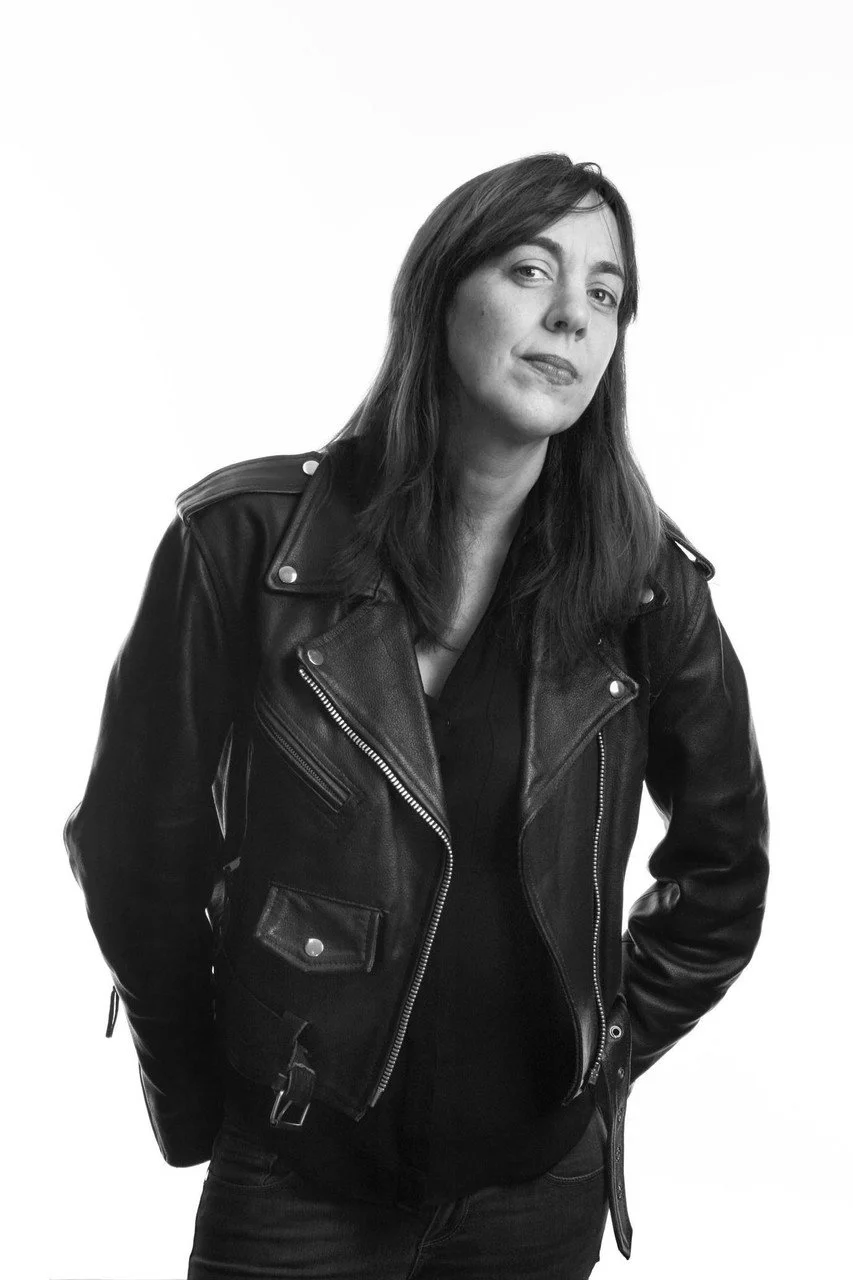
The big victory was that in New York State we have passed the Build Public Renewables Act which mandates and requires the New York state power authority to build its own publicly funded renewables. Renewable energy, wind and solar. This was a long, hard fought victory.Around that same time, Julia Salazar, a member of Democratic Socialists and a very serious socialist organizer, was elected at that same time. Julia Salazar came into office with a slightly better legislature. At the same time, Alexandria Ocasio-Cortez to Congress that year.

All of these events started to expand people's sense that winning things was possible,winning things through organizing. Alexandria Ocasio-Cortez also did a tremendous thing by articulating the vision of the Green New Deal. If you remember, before that time, the right and even the mainstream could easily pose the struggles of working class people in opposition to environmental causes. The idea that those two things were almost naturally in tension. It was a pillar of mainstream discourse that the right was particularly good at capitalizing on, but that was easily taken up by the mainstream.

The Green New Deal as a concept really challenged that and allowed many people to much more concretely picture how we could design an economic future that could work for everyday people and also for the planet at the same time. It also took the environmental movement out of this place of just simply fighting on really small terrain, just one butterfly species at a time, which is that kind of work is so important. But Alexandria Ocasio-Cortez herself used a great phrase when she first started talking about the Green New Deal, a solution that is at the scale of the problem. The Green New Deal was really the first time that a U.S. politician in office had articulated a vision of a solution that was at the scale of the problem.


DAVID PALUMBO-LIU

So you mentioned, it has these weaknesses. What are the weaknesses?

AZIZ RANA
Author of The Constitutional Bind: How Americans Came to Idolize a Document that Fails Them · The Two Faces of American Freedom
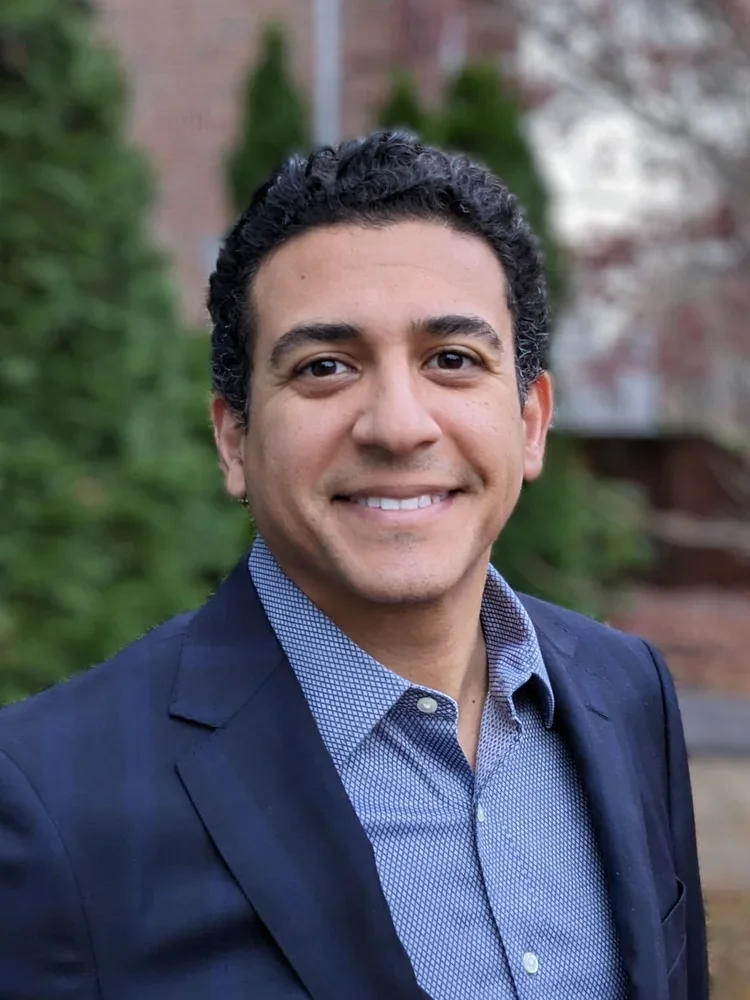
You have the example of Republicans winning the presidency, despite losing the popular vote, also dramatically overrepresented in the Supreme Court because you have such a small court, the justices serve for life. There are no meaningful term limits. Most places in the world, you have term limits. Donald Trump loses the popular vote in 2016, and yet is able to get nominated and confirmed three justices when Democrats have only been able to get nominated and confirmed five since 1968.

All of this is a structural context that essentially facilitates some of the worst tendencies within the overarching system. Then we can work through what those tendencies are, which is there is a defense. Racial liberalism is really key to national identity.This idea of inclusion for all, but that mid-century compact really was not focused on thinking of race as a structural flaw within the terms of American life. Instead, it was premised on viewing the United States as incomplete liberal, requiring only minor forms of amelioration, and in the context of this system.

Even at moments where there might be a desire for more full throated forms of social change since the 1960s, it has been very difficult to get those addressed. The civil liberties story. Yes, you have a commitment to civil liberties, but you also have background social conditions in the country where the last 50 years has seen the rise of an intense form of mass incarceration that really limits and constraints protections for individuals. You also have had throughout really the Cold War and the Post Cold War period, intense forms of violence perpetrated against disfavored populations.


DAVID PALUMBO-LIU

I asked that question nearly every episode. When I had Nicolas Mirzoeff on again, he quoted John Berger's notion of undefeated despair. Then Robin D.G.Kelley has a line success without victory, and there are many different variations of it, which is that, small victories or small successes that do not necessarily amount to a total victory, but just day by day, leaving possibilities open. Small victories like having somebody wave to you in a neighborhood that would not usually recognize you. All those things leave possibilities open and I think it is important.

Berger's expression is so meaningful because we have to acknowledge our despair. It would be foolish for us to tough it out. Imagine that. Well, it does not count. Of course it counts, but it is a despair that then feeds into it even more profound commitment, I think precisely because you recognize it. That is where the undefeated part comes in, you recommit. So it is not defeated, it is still alive, but it is cognizant of the enormity of the task.
To hear more from each guest, listen to their full interviews.

November 02, 2026/ Interviewed by David Palumbo-Liu/
creative process podcast, creative, creativity, Mia Funk, The Creative Process, David Palumbo-Liu, Jesse Hagopian, Eunsong Kim, Benjamin Moser, Ben Franta, Bill McKibben, Tim Hewlett, Ben Tarnoff, Viet Thanh Nguyen, Yuri Herrera, Sara Ahmed, Liza Featherstone, Aziz Rana, Speaking Out of Place, Social Justice, Climate Action, Feminism, Political Power, Storytelling, Direct Action, Civic Engagement, Democracy
.sqs-block-summary-v2 .summary-block-setting-text-size-small .summary-excerpt p { font-size: 10px; }
  • Science in Resistance: Direct ...
  • EMMY VAN DEURZEN on Existential ...
  • /
  • Interviews · Podcasts/
  • WRITERS/
  • ART/
  • 🌱🌍Climate/
  • FILM·TV/
  • MUSIC/
  • AI·TECH/
  • STEM/
  • Team/
  • FAQ/
    • PODCAST RANKINGS
    • Universities & Culture Centers
    • Display Options
    • > Physical Exhibition
    • > Projections | Soundscapes | Screen Elements
    • Literary Magazines
  • CONTACT/
  • 24 CHANNELS/
    • ARTS, CULTURE & SOCIETY
    • CLIMATE CHANGE + SUSTAINABILITY
    • BOOKS & WRITERS
    • FILM & TV
    • PHILOSOPHY & IDEAS
    • AI & THE FUTURE OF HUMANITY
    • SPIRITUALITY & MINDFULNESS
    • SOCIAL JUSTICE & ACTIVISM
    • ART
    • CREATIVE WRITING
    • EDUCATION
    • MUSIC & DANCE
    • THEATRE
    • POETRY
    • LGBTQ+STORIES
    • FEMINISM & WOMEN’S STORIES
    • ONE PLANET> CLIMATE CHANGE & BIODIVERSITY
    • TECHNOLOGY & INNOVATION
    • FUTURE CITIES
    • STORIES POEMS MUSIC
    • MANDARIN, FRENCH, SPANISH...BILINGUAL CHANNELS
    • LOVE - What is love?
    • HEROES
    • 10 MINUTES OR LESS
    • SEASONS 1-6
    • EXCERPTS
  • PODCAST RANKINGS/
  • Creative Works/
  • Other Voices/
    • OTHER VOICES
    • STUDENT STORIES
    • PEOPLE & PLACES
    • LIBRARIANS & EDUCATORS' STORIES
    • ARTIST SPOTLIGHT
    • Creative Works
    • HUMANITIES SCHOLARS
    • LIBRARIES
    • GLOBAL WARMING & SUSTAINABILITY
    • RAISING VOICES OF COLOR
    • LGBTQ+ VOICES
    • NATIVE AMERICAN & INDIGENOUS VOICES
    • INTERNATIONAL VOICES
    • DANCE
    • Submit Your Creative Works (LOVE)
    • Young Artists & Writers
  • /

The Creative Process

The Creative Process: Podcast Interviews & Portraits of the World’s Leading Authors & Creative Thinkers
Inspiring Students – Encouraging Reading - Connecting through Stories

The Creative Process exhibition is traveling to universities and museums. The Creative Process exhibition consists of interviews with over 100 esteemed writers, including Joyce Carol Oates, Hilary Mantel, Neil Gaiman, Viet Thanh Nguyen, Tobias Wolff, Richard Ford, Junot Díaz, Marie Darrieussecq, Michel Faber, T.C. Boyle, Jay McInerney, George Saunders, Geoff Dyer, Etgar Keret, Douglas Kennedy, Sam Lipsyte, and Yiyun Li, among others. Artist and interviewer: Mia Funk.
Reclaiming the American Dream with DAVID PALUMBO-LIU – Stanford Professor, Author & Host, Speaking Out of Place
Dec 27

Dec 27 Reclaiming the American Dream with DAVID PALUMBO-LIU – Stanford Professor, Author & Host, Speaking Out of Place

Speaking Out of Place - DAVID PALUMBO-LIU on Reclaiming Our Political Voices - Highlights
Dec 27

Dec 27 Speaking Out of Place - DAVID PALUMBO-LIU on Reclaiming Our Political Voices - Highlights

 
Interviews - FEATURED
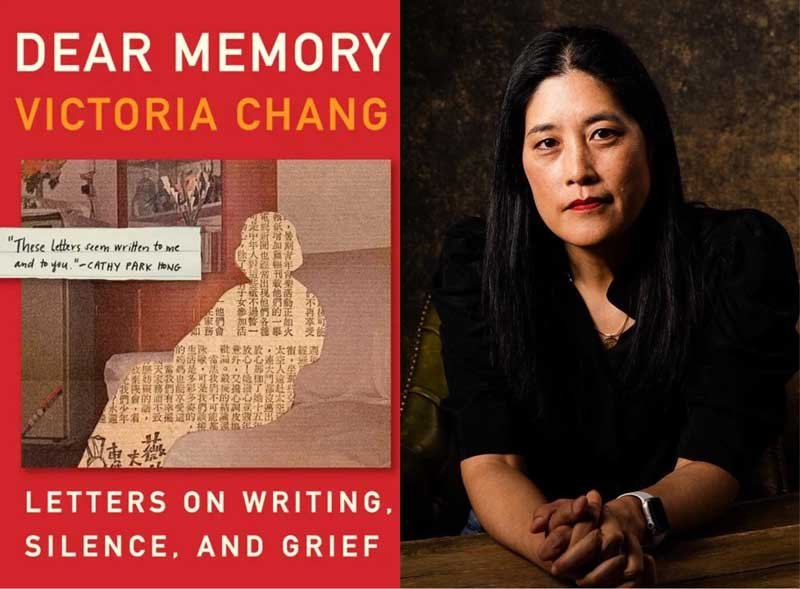
Dear Memory: Letters on Writing, Silence, and Grief

VICTORIA CHANG · Poet · Memoirist · Obit · Dear Memory · Tree of Knowledge

I think different cultures and families also have different ways of communicating, and I think what it tells us is words speaking don’t actually—it’s not the whole picture. You know, we put so much emphasis in American culture of, “Hey, speak up. Talk louder.” I mean, the number of times I heard that growing up, even in my student evaluations when I was in elementary school: “Oh, she’s very quiet. She doesn’t talk much.” And that was always positioned as a bad thing and a negative thing. And so I think that it’s kind of baked into this culture of you will be or are a real human being if you actually use your mouth and your words.

I think Tree of Knowledge was an exploration of what do you do now that your parents are both gone? And what’s left, and what are you supposed to do with the rest of your life? And I think that whole book was an exploration of those ideas and thinking through that.

Read more →
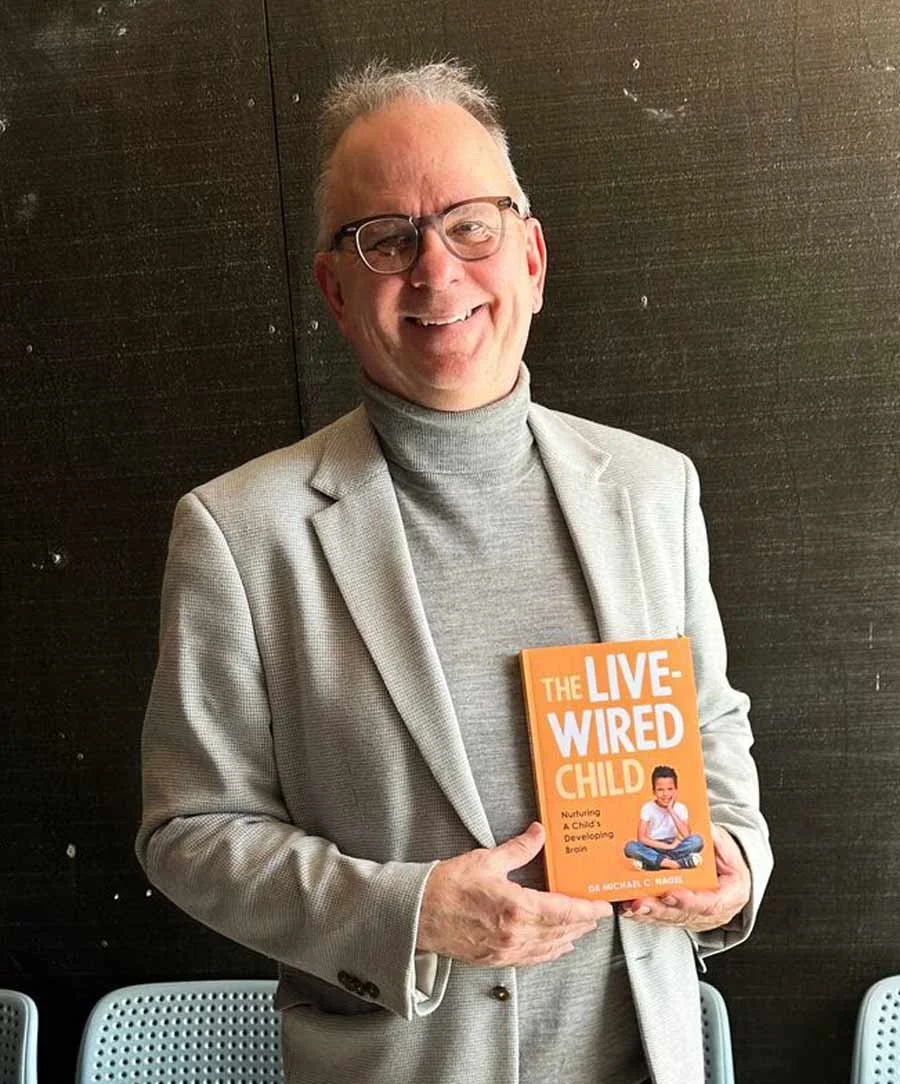
Protecting Human Development in a Digital Age

MICHAEL C. NAGEL · Educational Psychologist · Author of The Livewired Child: Nurturing A Child's Developing Brain · The Livewired Teen

So all the stuff that we can gather, the information, it's all wonderful, it can be very helpful, but we don't live a disembodied experience. Our lives are not curated by the data we collect. Our lives are a product of the experiences we have with real people in real time. I think we devalue the beauty of humanity and the capacity for human beings to create and generate so many things of their own volition. I also think that when you create a world where so many things are happening around you and you cannot keep up, that's a great precursor, particularly for children, for stress.

Read more →
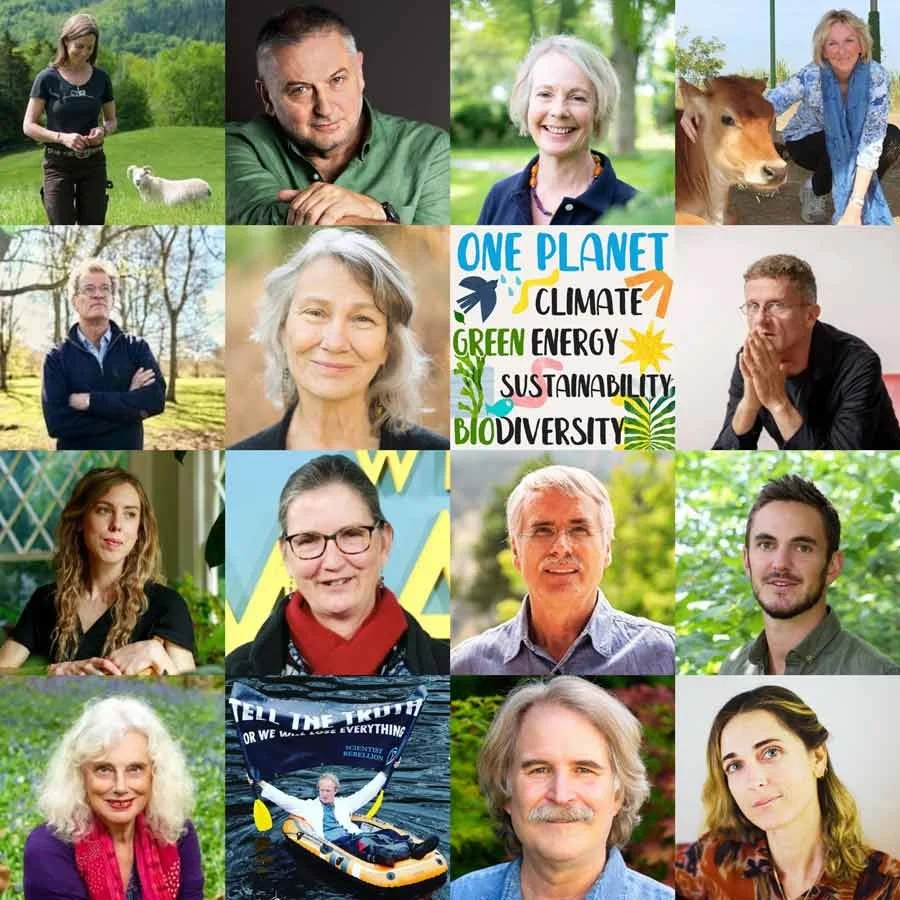
The Circle of Life
The Circle of Life

Artists, Writers & Scientists Share their Stories

We explore environmental empathy with Ingrid Newkirk, Chiara Barzini, Erica Berry, Yann Martel, Georgi Gospodinov, Emmy van Deurzen, Jane Madgwick, Caroline Thompson, Helen Whybrow, Tom Crowther, Kristin Ohlson, Tim Hewlett, Kevin Trenberth, Carlo Ratti and David Montgomery.

Read more →
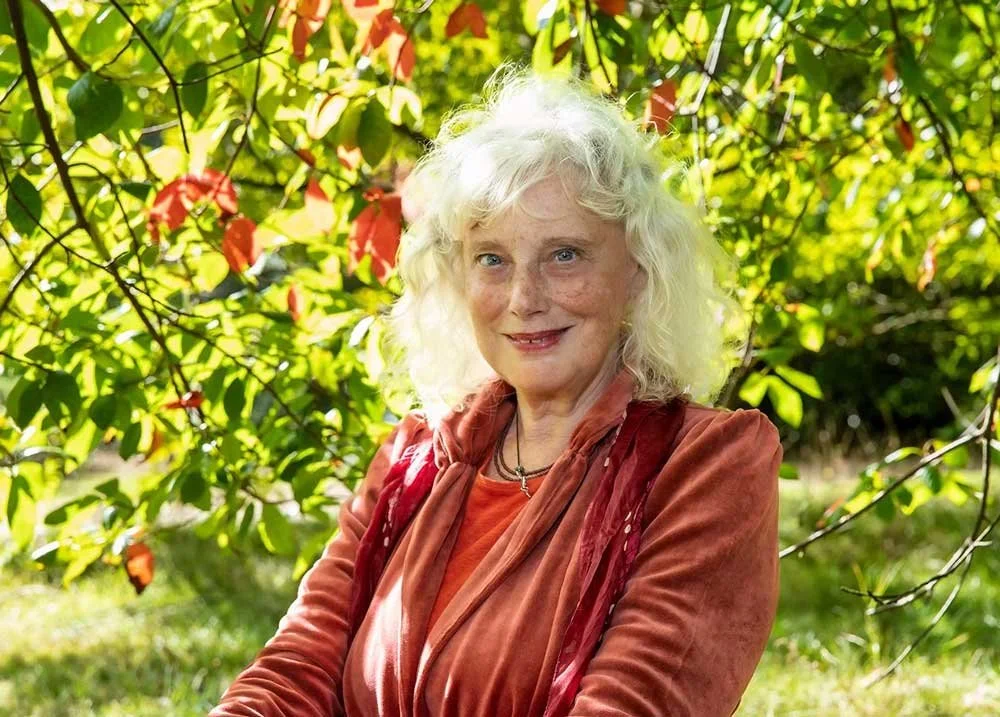
Beginning to Live: The Art of Existential Freedom

EMMY VAN DEURZEN · Pioneering Existential Philosopher & Psychologist
Author of Beginning To Live · Existential Counselling & Therapy in Practice

As a psychotherapist, I've worked with thousands of people over my 53 years of practice, and I have had to learn to love each and every one of them. There is something about opening your heart and stopping judging and arguing, and listening again, inquiring until you find what is most lovable about another person, and that is a very difficult thing to do. We're all inclined to reject one another, even the people we love. It is very difficult to systematically seek to accord the other respect, your attention, your care, your capacity for appreciating and valuing what is good in them and what is possible for them in the future.

Read more →
The Nature of Memory

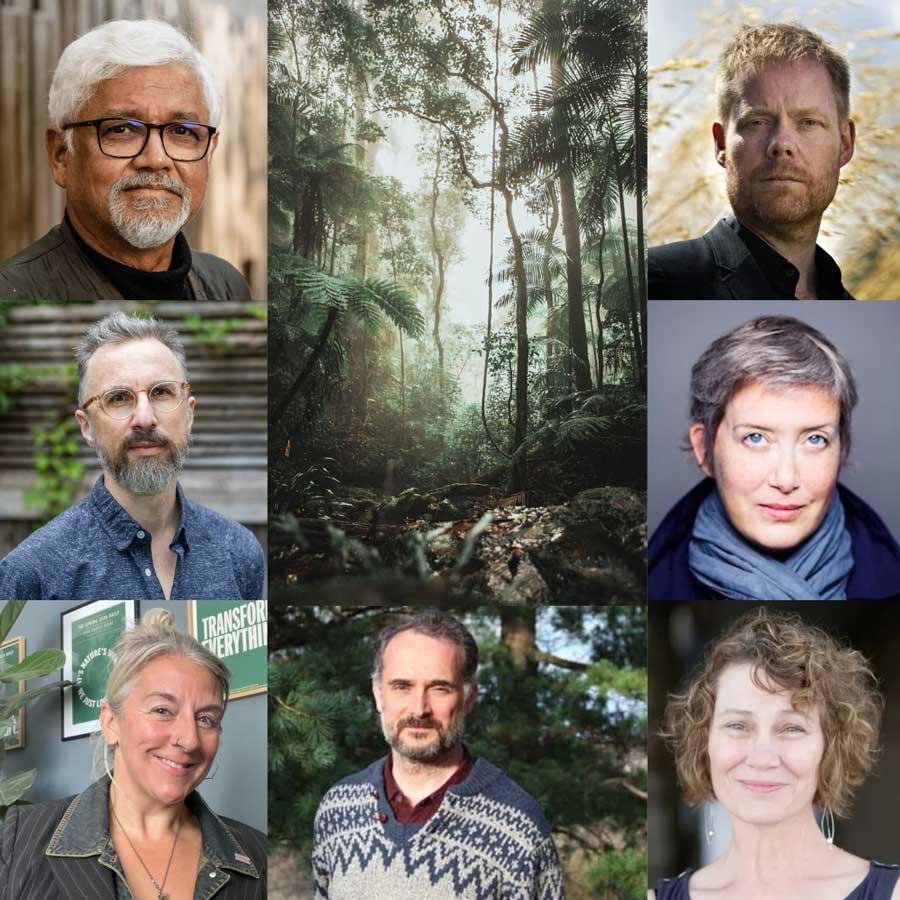
We explore the landscapes of childhood and how memory shapes our view of the natural world with Max Richter, Amitav Ghosh, David George Haskell, Kristin Ohlson, Dan Werb, Eiren Caffall and Claire Potter.

Read more →
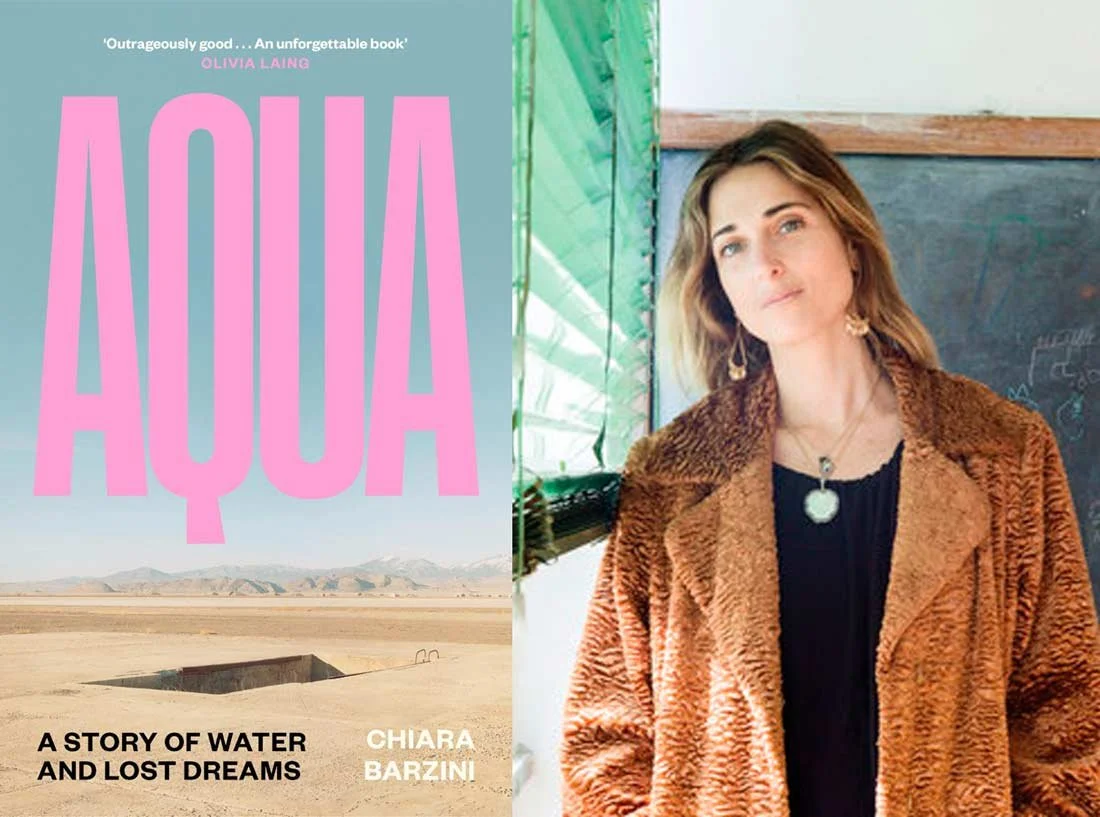
AQUA: A Story of Water & Lost Dreams

CHIARA BARZINI · Screenwriter · Author of Aqua · Things That Happened Before the Earthquake

I think first of all that in order to have disillusion, you need to have illusion and I really want to sort of take a stand in the name of being a delusional person, you know? I do think illusions are necessary to our sense of creativity, and we need to fall in love with extreme projects, and we need to have ideas that are sometimes unsustainable. We need to dream big in order to be creative and feel alive. The illusions that are a part of Aqua are larger illusions. They're illusions that have to do with my adult life. They're connected to nature and the presence or absence of water, the illusion that we can keep sustaining a city even though the water has run out.

Read more →
WONDER: Childhood · Memory · Listening to the Earth

Artists, Writers & Scientists Share their Stories

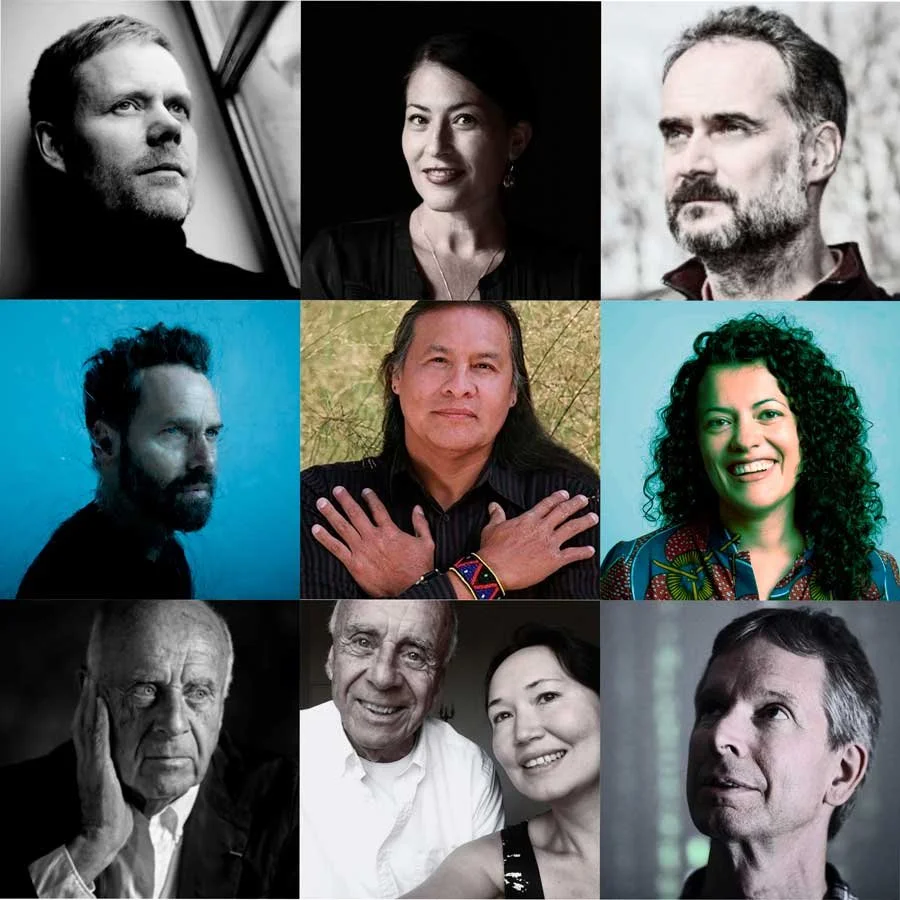
Ada Limón, Max Richter, Dustin O’Halloran, David George Haskell, Donald Hoffman, and Ralph Gibson, reflect on beauty and the memories that give their life meaning.

Read more →
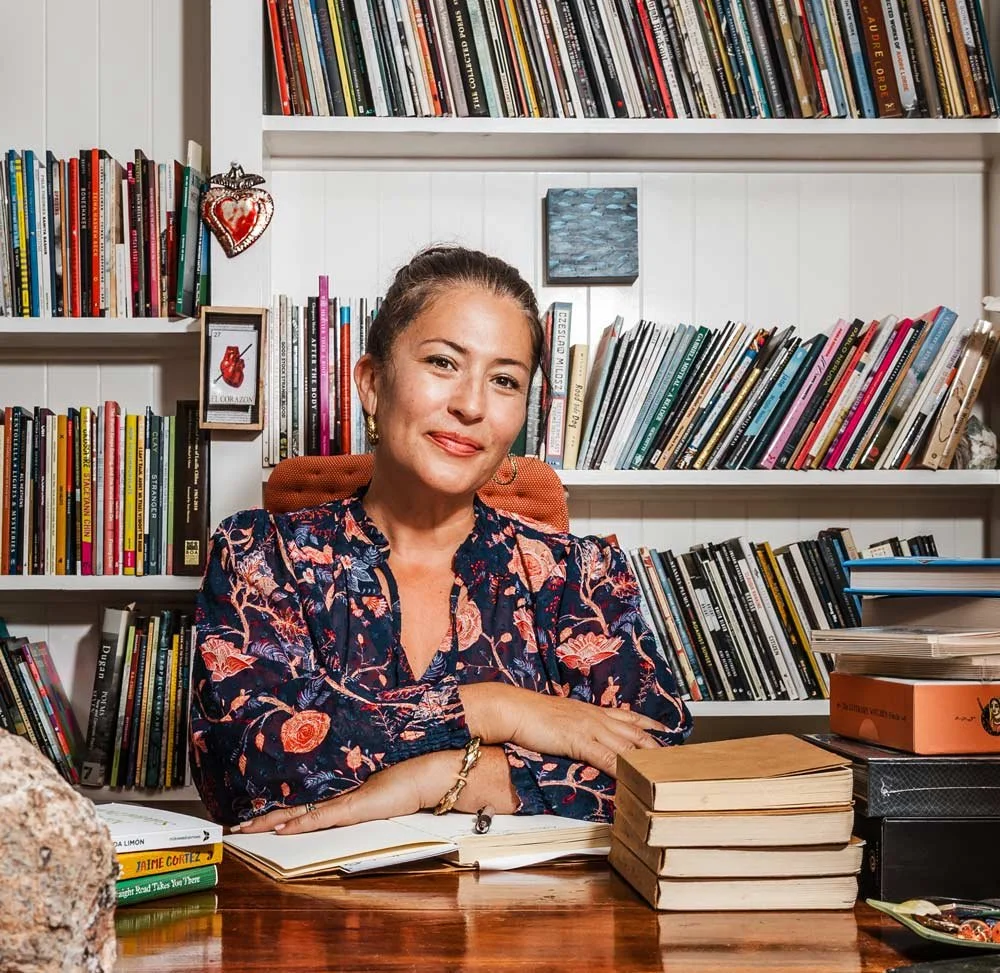
Interconnectedness, Startlement & The Power of Poetry

24th US Poet Laureate ADA LIMÓN
Author of Startlement · Against Breaking: On the Power of Poetry · The Hurting Kind

It’s always very interesting that we have to make a case for art because we don’t have to make a case for fast food. Like, we don’t have to make a case for all of these sort of things in our lives that we do not need, and yet we have to make a case for beauty? We have to make a case for the soul? We have to make a case for humanity? We have to make a case for singing back the wounded world? That to me is fascinating.

Read more →
Life and Art at Lincoln Center

Celebrating the Performing Arts with Chief Artistic Officer SHANTA THAKE

Lincoln Center is multiple stages. I think probably over three dozen stages across 16 acres. It is a vast canvas in and of itself. And then we have this beautiful plaza that leads to this beautiful campus, and that’s the visual I think that most people have when they think of Lincoln Center is this beautiful fountain in the center and these three gorgeous buildings.It’s New York’s biggest plaza, and it feels very vibrant and beautiful. In the summer, we really take that plaza and we transform it into a dance floor. So this idea of also interrupting what people’s notion of Lincoln Center is because it’s a space that is very aspirational, which is a great thing.

Read more →
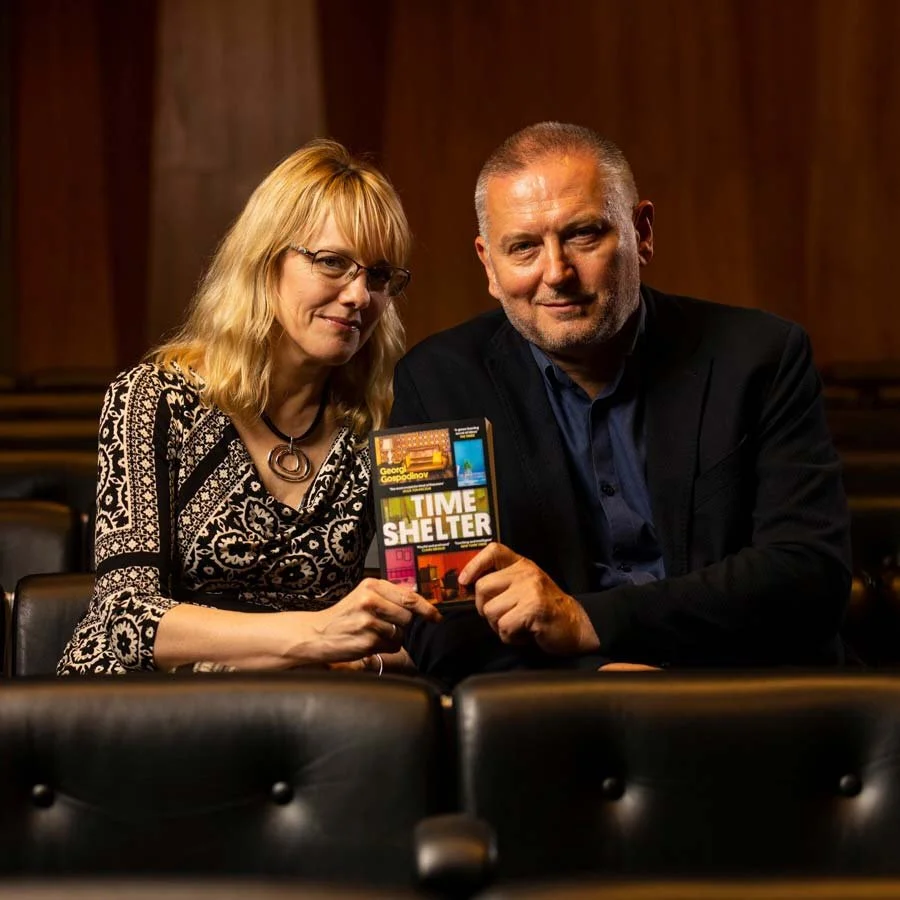
Time, Memory & the Art of Translation

GEORGI GOSPODINOV (Author of Time Shelter · Death and the Gardener · The Physics of Sorrow) ANGELA RODEL (Translator · Musician · Exec. Director · Fulbright Bulgaria)

We are in the middle of a labyrinth which suggests to us many fake corridors. What's the superpower of literature? Literature is like an antidote against propaganda. Propaganda explains the world easily in a two-dimensional way.  Literature gives you a more complex explanation. Literature tells personal stories.

Read more →
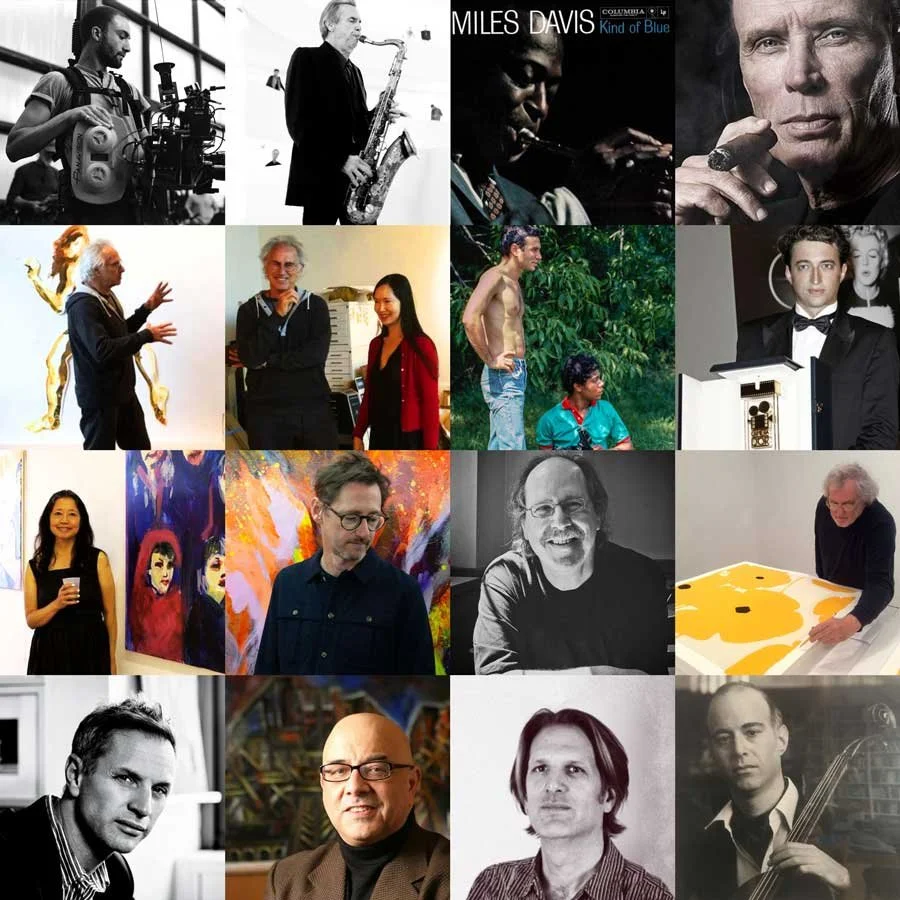
What is the Role of the Artist?

Artists on Creativity · Improvisation & the Search for Meaning

Peter Weller, Chayse Irvin, Lee Jaffe, Eric Fischl, Adam Moss, Anthony White, Dickie Landry, Bruce Evan Barnhart, Benh Zeitlin, Richard Sennett, Donald Sultan, Gloria Pacis, Paul Levinson and Julio Ottino share their stories.

Read more →
The $7.5 Trillion Gamble on AI Domination & The Future of Humanity

NACHO DE GREGORIO · Author of TheWhiteBox

 I'm a believer in this technology. I believe that the cheaper it is, the more people will use it. So, even if we assume that models will get smaller for the same level of intelligence, the demand to actually have more compute is going to be enormous. And the reason why you want to have the compute close to you is not only in terms of performance. As a national security threat, I'm not saying this will happen, but it could happen that China or US or whoever decides to stop exporting compute to the rest of the world. If that happens today, Europe has zero AI at the scale of data the data center.

Read more →
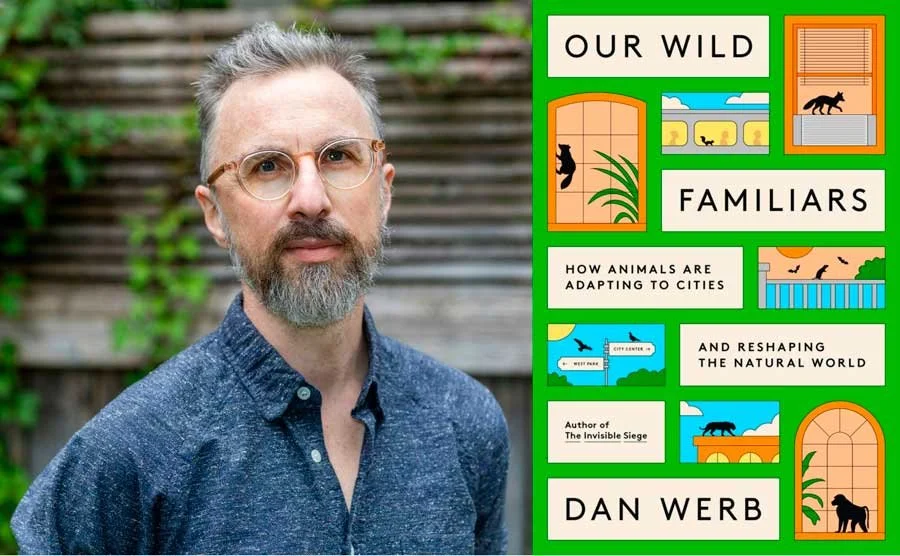
How Animals Are Adapting to Cities & Reshaping the Natural World

Epidemiologist · Musician · Author of Our Wild Familiars

So synanthropes are animals that have adapted to human-modified environments, and the Greek translation essentially is together with humans, so synanthrope. And they're a fascinating subset of wild animals that they're all around us, but we don't really notice them. And so in this new book, I was excited about writing something that had to do with the natural world. I was excited about writing something that touched on climate change and the way that the world was changing, but maybe not with such a sort of dirgey approach or funereal approach. Something that actually explored the wonder of the world as it is and as we experience it around our communities in our cities and towns. And I had come across this word synanthrope in the research for my last book, The Invisible Siege, which was about the rise of coronaviruses and the long scientific journey to find cures for COVID-19, and it just kind of stuck with me. There is this connection, of course, between wild animals and viruses and lots of questions about the origin of SARS-2, the virus that spread COVID-19 and caused the pandemic. And while that's touched on in the book a little bit, the vast majority of what I was excited to write about was just what these animals are doing in our cities. How is it that wild animals, raccoons, coyotes, all kinds of birds and animals as fragile as bats… These are not just insects and earthworms and things like that. These are very large predators that have nevertheless found a way to survive among us. And that in and of itself I think is just an amazing story and what I explore in this book.

Read more →
Taking Back Control in the Age of AI

It is an ordinary human impulse to find a reflection of ourselves in the machines we build. But what happens when the lifeless begins to talk back, to paint, to compose and to simulate our emotions? How do we hold on to what makes us human? Siri Hustvedt, C. Thi Nguyen, Bayo Akomolafe, Jonathan Yeo, Laura Eason, Max Richter, Ralph Gibson, Catherine Curtin, Liad Mudrik, Jacob Ward, Chris Dercon examine the power of imperfection, imagination, intuition, and how to avoid getting lost in the machine.

Read more →
Featured
How Do We Protect Democracy?

Writers, Philosophers & Thought Leaders Speak Out

How can we be more engaged global citizens? How do we fight for truth and protect democracy in a post-truth world? What influence do billionaires have on politics, journalism, and the technology that shapes our lives? Deborah Cahn, Daniel Susskind, Carlos Moreno, Lee McIntyre, Julian Lennon, Darryl Cunningham, and Arash Abizadeh on the future of democracy.

Read more →
Elon Musk · Putin's Russia · Murdoch's Fox News

The Lives of Billionaires Comic Artist & Author DARRYL CUNNINGHAM on Making Complex Subjects Simple

No one should be a billionaire because it's damaging. There's a certain level of wealth that's damaging to a country. Billionaires have so much wealth that they have enormous political power, which is undemocratic. There should be a ceiling on wealth. I have nothing against people becoming millionaires or even multi-millionaires. But multi-billionaires are incredibly bad for all of us. If you have so much money that you can buy an entire political party, that's a thing that shouldn't exist.

Read more →
Art, Creativity & Intuition

Filmmakers, Musicians & Artists discuss their Creative Process

Where does our intuition come from? How are lifelong creative partnerships formed and what role do friendship and personal connection play? How do our personal lives influence the art we make?

Read more →
Voices for the Planet

Scientists, Activists, Farmers & Filmmakers Speak Out

PETA Founder Ingrid Newkirk, Cave Diver Jill Heinerth, IPCC Lead Author Joëlle Gergis, Director of the European Commission’s DG for Energy Paula Pinho, Co-Founder of The Best Bees Company Noah Wilson-Rich, Ecologist Carl Safina, Founder of The Ocean Agency Richard Vevers, Founding Father of the Circular Economy Walter Stahel, Founder of Advocacy Group F Minus, CEO of Legacy Agripartners Colin Steen, President of Source Global Neil Grimmer

Read more →
JULIA CHRISTENSEN
JULIA CHRISTENSEN

Neuroscientist · Fmr. Dancer
Author of The Pathway to Flow: The New Science of Harnessing Creativity to Heal and Unwind the Body & Mind

The state of being in flow and seeking out that state, sort of disappearing from the here and now... it must have been something that has been part of human cultures for many millennia. We know that, for example, dancing can bring you into these states. And we know from many anthropological works that people dance themselves into trance, a type of flow. So, there is that flow in this scientific sense of a state of well-being. And we will speak about what that does to our brain and our broader wellbeing, but also the flow in what cues enter into our senses. So that would be a scientific field that looks at brain synchrony, physiology synchrony, these waves that we see that sort of connect with us.

Read more →
Art & Empathy
Art & Empathy

Filmmakers, Writers & Artists on Connecting through Creativity

How does art change the way we see and experience the world? Art has the power to offer transformative experiences, but what about the lives of artists who give so much of themselves? How can we balance creativity and personal well-being while still making work that is true and meaningful?

Read more →
The Art of Writing
The Art of Writing

This episode explores the enduring power of storytelling to shape our world and illuminate the human experience. Writers Neil Gaiman, Ada Limón, Jericho Brown, E.J. Koh, Marge Piercy, and Max Stossel discuss creativity, resilience, and the power of words to heal and bring people together.

Read more →
Connecting with the Earth

How and when will we transition to a clean energy future? How have wetlands become both crucial carbon sinks and colossal methane emitters in a warming world? What lessons can we learn from non-human animals about living in greater harmony with nature?

Read more →
Technology, AI, Art & Culture

Artists, Philosophers, Economists & Scientists discuss the Future

How can we shape technology’s impact on society? How do social media algorithms influence our democratic processes and personal well-being? Can AI truly emulate human creativity? And how will its pursuit of perfection change the art we create?

Read more →
What Does It Mean to Live a Good Life?

Artists, Writers, Visionaries & Educators Share their Stories

How can the arts help us learn to speak the language of the Earth and cultivate our intuitive intelligence? What is the power of mentorship for forging character and creative vision? How can we hold onto our cultural heritage and traditions, while preparing students for the needs of the 21st century?

Read more →
Navigating Our Environmental Future

Have we entered what Earth scientists call a “termination event,” and what can we do to avoid the worst outcomes? How can we look beyond GDP and develop new metrics that balance growth with human flourishing and environmental well-being? How can the 15-minute city model revolutionize urban living, enhance health, and reduce our carbon footprint?

Read more →
ARASH ABIZADEH
ARASH ABIZADEH

Professor of Political Science · McGill University
Author of Hobbes and the Two Faces of Ethics · Assoc. Editor · Free & Equal

There is a tremendous tension between healthy democracy and deep economic inequalities. I don't think that, in the long run, democracies can survive in a healthy way unless we address the problem of economic inequalities. If we have individuals who are living day to day, on the one hand, and we have other individuals who are billionaires in our societies, on the other hand, it will be very difficult for us to have a genuine democracy.

Read more →
DANIEL SUSSKIND
DANIEL SUSSKIND

Economist · Oxford & King’s College London
Author of Growth: A Reckoning · A World Without Work

We have a choice to change the nature of growth. How we can have growth that is more respectful of place, doesn’t cause as much damage to the environment, doesn't lead to as large inequalities in society, doesn’t disrupt politics, doesn't undermine the availability of good work? We ought to pursue this morally enriched GDP measure which better reflects what we really value and care about as a society.

Read more →
JOHN PATRICK SHANLEY

Academy Award · Tony · Pulitzer Prize-winning Writer/Director
Doubt starring Meryl Streep, Philip Seymour Hoffman, Amy Adams
Moonstruck · Wild Mountain Thyme · Danny and the Deep Blue Sea · Joe Versus the Volcano

I knew Philip Seymour Hoffman for several years. We went on vacation together. He produced a play of mine. Before we did Doubt, we worked in the same theater company together, and he was, you know, very committed to excellence. And so he could become impatient with anybody who was not committed to excellence, and that could make him a volatile person to deal with. Phil cared. He cared a great deal. And he worked really hard. They're very committed. Like with Viola Davis. Viola had done a decent amount of big work before Doubt, but she was not recognized yet. And she was careful. You know, she certainly wasn't throwing weight around. She was, I'm the new kid on the block, and I'm just here to work and be serious and do my job, keep my head down, and get out. And pretty much that's what I was doing too, you know, because I've got Meryl Streep, I've got Philip Hoffman, who I was friends with, but Phil's not an easy guy to be friends with or was not easy to be friends with. He's a very prickly person prone to getting pissed off about things that you might not expect. And then Amy Adams was somebody who, you know, tried to get along with everybody and Phil would say like, 'You just want everybody to like you.' So, you know, you're in the middle of that group, and you just, you don't want to put yourself in a position where you're trying to prove something. You have to let them...they're very, very smart people, and they're going to figure out whatever it is that you're doing. They're going to figure out whether you are in any way trying to handle that. And that's not going to go well. And so I didn't do that.

Read more →
DAVID RUBIN
DAVID RUBIN

President of the Academy of Motion Picture Arts & Sciences 2019-2022
Casting Director & Producer

What an academy was meant to be, going back to their founding, really is a group of people with a certain degree of passion and expertise and knowledge that want to get together and share. That's what I think academies are all about. So the fact that I've been helpful in spurring the Academy onto becoming a more international and global enterprise is a source of great satisfaction to me

Read more →
ALAIN ROBERT
ALAIN ROBERT

Famous Rock & Urban Climber
"The French Spider-Man”
Known for Free Solo Climbing 200+ of the World’s Tallest Skyscrapers using no Climbing Equipment

First of all, yes, I need to know what I will be climbing, whether it's on rocks or whether it's on buildings. And then there is physical preparation. And regarding the mindset, it's more something that became a bit automatic over the years because I have been free soloing for almost 50 years. So it is pretty much my whole life. So that means that for me, being mentally ready, it's kind of simple. It's almost always the same mental process, meaning, I can be afraid before an ascent, but I know myself actually very well. And I know that once I am starting to climb, I feel fine. I put my fear aside, and I'm just climbing.

Read more →
BEN SHOFTY
BEN SHOFTY

Functional Neurosurgeon · Professor · University of Utah

When you think about the evolution of the human brain–just like other animals that have specialized in speed or keeping warm or gathering food–I feel our brain sort of specialized being creative and flexible and being able to generate different solutions to a given problem. To me, this is probably the most fascinating thought process that happens in the human brain. And what I do in neurosurgery–and my subspecialty is called functional neurosurgery–we don't deal with disorders in which there's an anatomical abnormality inside the brain. We deal with disorders in which there is an abnormal connection or abnormal circuitry inside the brain when there's an issue with the way the brain functions. There's no tumor. There are no abnormal blood vessels or anything like that. And that gives us an amazing opportunity to really investigate how different circuits and different areas inside the brain work.

Read more →
SCOTT DOORLEY · CARISSA CARTER

Creative & Academic Director · Stanford d.school
Co-authors of Assembling Tomorrow: A Guide to Designing a Thriving Future

Today, someone is putting the finishing touches on a machine-­ learning algorithm that will change the way you relate to your family. Someone is trying to design a way to communicate with animals in their own language. Someone is cleaning up the mess someone else left behind seventy years ago yesterday. Today, someone just had an idea that will end up saving one thing while it harms another.

To be a maker in this moment—­ to be a human today—­ is to collaborate with the world. It is to create and be created, to work and be worked on, to make and be made. To be human is to tinker, create, fix, care, and bring new things into the world. It is to design. You—­ yes, you!—­ might design products or policy, services or sermons, production lines or preschool programs. You might run a business, make art, or participate in passing out meals to the poor. You may write code or pour concrete, lobby for endangered species legislation or craft cocktails. Wherever you fit in, you are part of shaping the world. This is design work.

– Assembling Tomorrow: A Guide to Designing a Thriving Future

Read more →
STEPHEN REILY
STEPHEN REILY

Founding Director · Remuseum
Fmr. Director · Speed Museum · Attorney · Co-Founder & CEO · IMC Licensing
The opportunity is that we have never had a public that is more passionate and obsessed with visual imagery. If the owners of the best original imagery in the world can't figure out how to take advantage of the fact that the world has now become obsessed with these treasures that we have to offer as museums, then shame on us. This is the opportunity to say, if you're spending all day scrolling on Instagram looking for amazing imagery, come and see the original source. Come and see the real work. Let us figure out how to make that connection.

Read more →
Was Stanford Firing 23 Lecturers in Creative Writing Really Necessary?

A Conversation with Lecturers & Students

Recently, twenty-three lecturers in the highly successful Creative Writing program at Stanford were summoned to a Zoom meeting where they were first praised, and then summarily fired. One of the most surprising aspects of this purge is the fact that it was carried out not by top-tier university administrators, but by tenure-track faculty in the program. It was they who decided to brutally terminate their colleagues. On this episode of the Speaking Out of Place podcast Professor David Palumbo-Liu speaks with two of the lecturers who have been told they will leave Stanford in nine months, and one of their students, a published novelist. They explain the devastating nature of this act and share statistics and histories that show this was not at all necessary.  Expediency for senior faculty trumped the survival of a carefully developed and nurtured community of creative writers.

Read more →
JACQUELINE GOTTLIEB
JACQUELINE GOTTLIEB

Professor of Neuroscience & Principal Investigator at Columbia University’s Zuckerman Mind Brain Behavior Institute

I came to neuroscience from a humanistic perspective. I was very interested to find out who we are. What do we know? What do we think we know? Why do we think we know certain things? How do we see things? How do we perceive them? Ultimately, the question behind curiosity is what things we find interesting in our environment. The way I think about eye movements is that they really are trained in some largely subconscious process.

Read more →
MEAGHAN OPPENHEIMER
MEAGHAN OPPENHEIMER

Screenwriter · Exec. Producer · Showrunner
Creator of Hulu's Tell Me Lies · Queen America

Often when people write or make movies about romances with young adults, I think they are very flippant about it and don't take it seriously. But I think that those friendships and romantic relationships are some of the most important ones because they really set the stage for the rest of our lives. If your first relationship is incredibly toxic and damaging, it can take you years to  figure out that that's not normal, and that that's not actually how relationships are meant to be.

Read more →
EUAN NISBET
EUAN NISBET

Earth Systems Scientist · Royal Holloway University of London

I am a Christian and I have strong Muslim and Jewish friends as well as great respect for Hindu beliefs. I grew up in Southern Africa and I am well aware of the depth of some Indigenous beliefs. I think that having belief systems does give you a very different perspective sometimes. Now, in Christianity, the concept of the shepherd, human beings are here and this is our garden, our garden of Eden, but we have a responsibility. And if we choose to kick ourselves out of the garden, there are consequences. And that's precisely what we are doing. The garden is there, it's lovely, and we can manage it, and it's our job to manage it. We can manage it properly. We can respect it. It's for all creation, and it's very explicit that it involves all Creation. And that's a very fundamental biblical law that you have to respect all Creation. And if you don't do that, then the consequences—you’re basically throwing yourself out of the garden of Eden.

Read more →
RENÉE BERGLAND
RENÉE BERGLAND

Literary Critic · Historian of Science · Educator
Author of Natural Magic: Emily Dickinson, Charles Darwin, and the Dawn of Modern Science

There is a stronger connection between Dickinson and Darwin than the proximity of history. Or the universality of literature. They both understood natural science and the natural world in ways that seem strange and somewhat surprising in the 21st century. Their 19th century attitudes to nature and the study of it are so different from ours that when we trace their stories, a vanished world begins to emerge. The more I consider these figures together, the more I feel their world and my world. come alive. Darwin and Dickinson illuminate each other. By reading them together, we can start to understand the interconnected relationships that animated 19th century poetry and science.

Read more →
FRANK TRENTMANN
FRANK TRENTMANN

Professor of History at Birkbeck, University of London · Author of Out of the Darkness: The Germans 1942 to 2022

The environmental crisis, Gaza, the war in Ukraine—all of those don't make sense if you don't have a sense of history. History and the humanities have come under huge pressure. We've seen falling student numbers, and that's a real shame because history continues to be a source of intellectual inspiration and curiosity that not only makes us wiser and more reflective but also creates the dynamism and creativity we need to confront our present and future challenges. I hope that among the young generations, there will be people inspired by history, people that have the ambition to research and write about the past.

Read more →
LISA EDELSTEIN
LISA EDELSTEIN

Actress · Artist · Director · Producer · Writer
House M.D. · Girlfriends’ Guide to Divorce · Little Bird · The West Wing · The Kominsky Method

I have always thrown myself into everything, and that includes terrible things, because I want to have the whole experience. Even if I know it's going to hurt for better or for worse, that has been how I've lived my life. And so it's given me a lot of information and allowed me to play a lot of different roles and understand a lot of different points of view. I think part of the beauty of being in a long-running television show is that, in season one, you're playing the role they wrote. By season two, they're writing the person you're playing. You start to build your voice, and they start to merge, and so by the time you get to season three, you're much more like full human beings having this dialogue.

Read more →
APRIL GORNIK
APRIL GORNIK

Artist · Environmentalist
Co-founder of The Church · Arts & Creativity Center
Co-director of Sag Harbor Cinema Board

I've chosen my work because I've loved the outside world. I love the things outside of myself. I love what isn't immediate to me. And I love projecting onto that as a way of kind of trying to reach the distance between my inner self and the vastness. To try to do that in a way that makes other people feel inspired by it, not be chided for not taking care of it. It's not something that I intend to be a message per se. I'd rather people look at the natural world and see the heartbreaking beauty of it and sense its fragility and its impermanence and their own impermanence and fragility and then have a response to that rather than say, you know, you have to act, you have to do something. I would hope that would inspire action rather than to cudgel them with a directive.

Read more →
JULIAN LENNON
JULIAN LENNON

Singer-songwriter · Photographer · Documentary Filmmaker
Founder of The White Feather Foundation
Executive Producer of Common Ground

I thought, wow, how are they going to bring this across in a way that isn't shoving things down people's throats? It's presenting information in a way that is creative, but also in a way that drives your curiosity into understanding, number one, why are we in the position that we're in? And number two, how can we fix this? What can we do to change all of this? And so, I initially got involved as an executive producer on Kiss the Ground, and I was blown away by how that film came out at the end. How well rounded it was, the flow of the film, the storytelling, and really feeding me information that I didn't even know previously. And so also watching that become a platform around the world was jaw-dropping. I mean, the fact that the belief and the understanding and the wisdom that came out of that project has touched so many hearts, minds, and souls around the world, that people are really single-handedly almost making change for the better around the world. Now, when Common Ground was presented, I did love that concept because Kiss the Ground had been very much a broad approach and about America, for the majority, really, and Common Ground was a much more...I mean, we're still dealing with the same subject matter obviously, but I think it felt great to come from a more personal aspect." 

Read more →
logo-white-space interviews podcasts.jpg
Featured
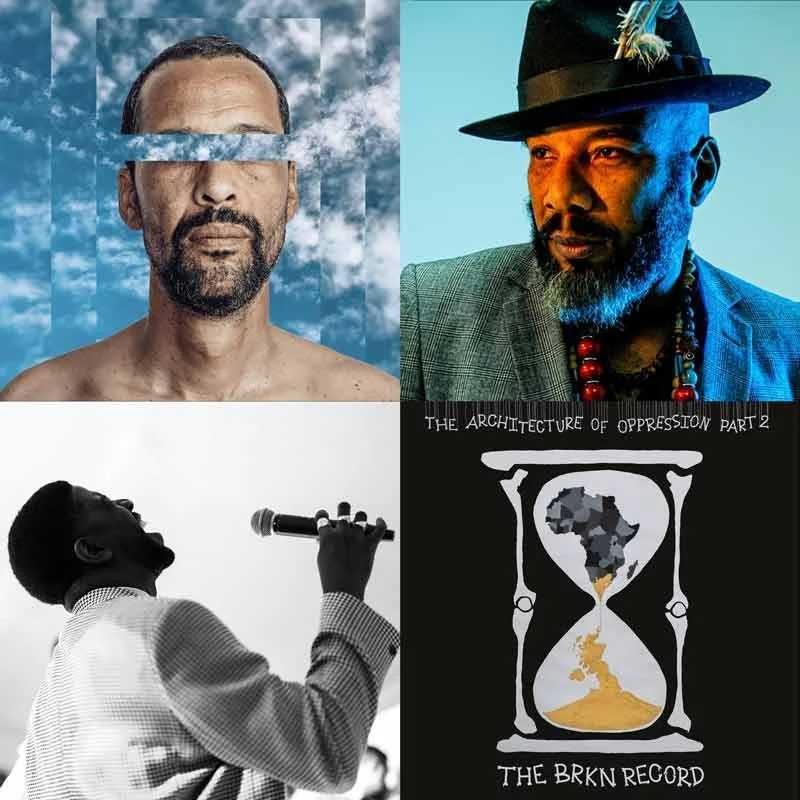
The Architecture of Oppression

Jake Ferguson · Anthony Joseph · Jermain Jackman

I think as humans, we forget. We are often limited by our own stereotypes, and we don't see that in everyone there's the potential for beauty and love and all these things. And I think The Architecture of Oppression, both parts one and two, are really a reflection of all the community and civil rights work that I've been doing for the same amount of time, really - 25 years. And I wanted to try and mix my day job and my music side, so bringing those two sides of my life together. I wanted to create a platform for black artists, black singers, and poets who I really admire. And it was a no-brainer to give Anthony a call for this second album because I know of his pedigree, and he's much more able to put ideas and thoughts on paper than I would be able to.

Read more →
PRIYAMVADA GOPAL · FRANÇOISE VERGÈS

on the Recent Elections in Britain and France

I would say what we can celebrate is the incredible mobilization of the young people. They went everywhere, they knocked on the door, they mobilized. This was an incredible, incredible mobilization. So that was extraordinary because it showed real mobilization and an understanding that the National Rally was a real threat. We knew that if they came to power, the first people who would be targeted would be people of color, and that was absolutely clear.

Read more →
S. D. CHROSTOWSKA
S. D. CHROSTOWSKA

Author · Historian · Curator
Utopia in the Age of Survival: Between Myth and Politics · The Eyelid · Marvellous Utopia

I like to think of utopianism as “effective social daydreaming” because utopia is associated with consciously imagining societies. Our imagination is always involved in creating reality. The opposition between the two, reality and the imaginary, is not a stark one; they're porous.

Read more →
RICHARD BLACK
RICHARD BLACK

Author of The Future of Energy · Fmr. BBC Environment Correspondent · Director of Policy & Strategy · Global Clean Energy Thinktank · Ember

The fact is you've got a lot of industrial and political muscle now coming behind clean energy, especially from China, which is the leading country deploying wind energy, solar, and the leading manufacturer and user of electric vehicles. "We have petrostates in the world. China is the first electrostate." And China is on its way to becoming the world's most powerful country. So, where China leads, the rest of the world is almost certain to follow. Yes, there are massive air pollution problems in China, of course, but I think it's more than that. It's also about seeing that this is the future that the world is going to have. And if these goods are going to be made anywhere, well, the Chinese government clearly would like them to be made in China. And they've set out, you know, industrial policies and all kinds of other policies for, well, at least a decade now, in pursuit of that aim. It's interesting now to see other countries, India, for example, and the United States now sort of deploying muscle to try and carve out a slice of the pie themselves as well.

Read more →
CHRIS CARLSSON
CHRIS CARLSSON

Writer · Organizer · Activist
When Shells Crumble · Shaping San Francisco · Critical Mass

The novel When Shells Crumble begins in December 2024, when the US Supreme Court nullifies the popular vote in the Presidential election and awards the presidency to an authoritarian Republican, who proceeds to demolish democracy and install a fascistic state that hastens ecological havoc. The novel is much more than your usual dystopian tale—it focuses on how to resist political cynicism and defeatism, and rebuild on planetary wreckage. It is a world-building project filled with wisdom, sadness, and joy. We specifically put this fictional text in conservation with his brilliant non-fiction work, Nowtopia, which offers a radical redefinition of “work” that restores dignity and value to their proper places.

Read more →
On the War & Famine in Sudan

with Dr. Osman Hamdan & Umniya Najaer

The ongoing conflict in Sudan has pushed millions to the brink of famine, threatening to devastate an entire generation. Despite the severe humanitarian crisis, global awareness remains limited. Today learn about the long history behind these events, the people and groups involved, and the roles that foreign governments and international organizations like the IMF have played. Importantly, we learn how civil society groups are bringing a form of mutual aid and support to the people of Sudan where the national government, warring factions, and international humanitarian organizations have utterly failed.

Read more →
HENRY AJDER
HENRY AJDER

AI/Deepfakes/Synthetic Media Advisor · BBC Presenter
Adobe · Meta · European Commission · Partnership on AI · House of Lords

I would like to preserve a real sense of empathy and humility, which comes with understanding that the world is messy, that people are messy, that defects and imperfections exist, that things don't always necessarily kind of go the way you want, even as much as you wish they could. Imperfection is part of life and I guess my concern is that AI-generated content, which smooths and perfects a version of reality to precisely what you want and forces you or makes you feel pressured to represent yourself in this absolutely perfect way, fundamentally gives you no room for error and kind of detaches you from the reality of growth and life and and how people work. Empathize with other people. Everyone has their challenges. Things don't always have to be exactly perfect to how you want them to be or how other people want them to be. And that involves having some humility about yourself as a messy creature, as we all are. I hope that's retained, but I do see this kind of move towards this sort of smoothed and shaped reality that AI is enabling, potentially creating more of a disconnect between that imperfect, messy, but also quite beautiful world. This sort of polished but ultimately plastic version of reality increasingly is becoming the default for some people over the kind of fleshy, messy human side of things.

Read more →
PAUL AUSTER
PAUL AUSTER

Writer · Filmmaker 1947-2024

What happens is a space is created. And maybe it’s the only space of its kind in the world in which two absolute strangers can meet each other on terms of absolute intimacy. I think this is what is at the heart of the experience and why once you become a reader that you want to repeat that experience, that very deep total communication with that invisible stranger who has written the book that you’re holding in your hands. And that’s why I think, in spite of everything, novels are not going to stop being written, no matter what the circumstances. We need stories. We’re all human beings, and it’s stories from the moment we’re able to talk.

Read more →
JEFF OLSON
JEFF OLSON

Co-founder of the Largest Bike Share System in North America · NYC’s CitiBike
Co-founder of re:Charge-e: Wireless Bike & Scooter Docking Stations
Author of The 3rd Mode: Towards a Green Society

The key number for people to remember is one to 150 for the cost and energy that it takes to charge a single electric car, our system could charge 150 bikes or scooters in public space that then people have access to. So the question from an equity standpoint, from really achieving our climate goals standpoint is, do you invest in getting one person mobile and maintaining maybe the current lifestyle that goes along with those cars? Or do we make some changes and invest in 150 to 200 people being mobile with the same energy? Clearly, we think the answer is more people moving more often, more sustainably. And we have to make that shift or we're never going to hit the 2030 goals. They are probably not even in reach, you heard the Secretary-General say just last week. And even 2050 seems a long way to go if we're still investing in technologies that only essentially help the 1 percent that already have the resources. It's the larger population that we really need to reach.

Read more →
LEE McINTYRE
LEE McINTYRE

Philosopher · Author of On Disinformation: How To Fight For Truth and Protect Democracy · How to Talk to a Science Denier

One thing people don't realize is that the goal of disinformation is not simply to get you to believe a falsehood. It's to demoralize you into giving up on the idea of truth, to polarize us around factual issues, to get us to distrust people who don't believe the same lie. And even if somebody doesn't believe the lie, it can still make them cynical. I mean, we've all had friends who don't even watch the news anymore. There's a chilling quotation from Holocaust historian Hannah Arendt about how when you always lie to someone, the consequence is not necessarily that they believe the lie, but that they begin to lose their critical faculties, that they begin to give up on the idea of truth, and so they can't judge for themselves what's true and what's false anymore. That's the scary part, the nexus between post-truth and autocracy. That's what the authoritarian wants. Not necessarily to get you to believe the lie. But to give up on truth, because when you give up on truth, then there's no blame, no accountability, and they can just assert their power. There's a connection between disinformation and denial.

Read more →
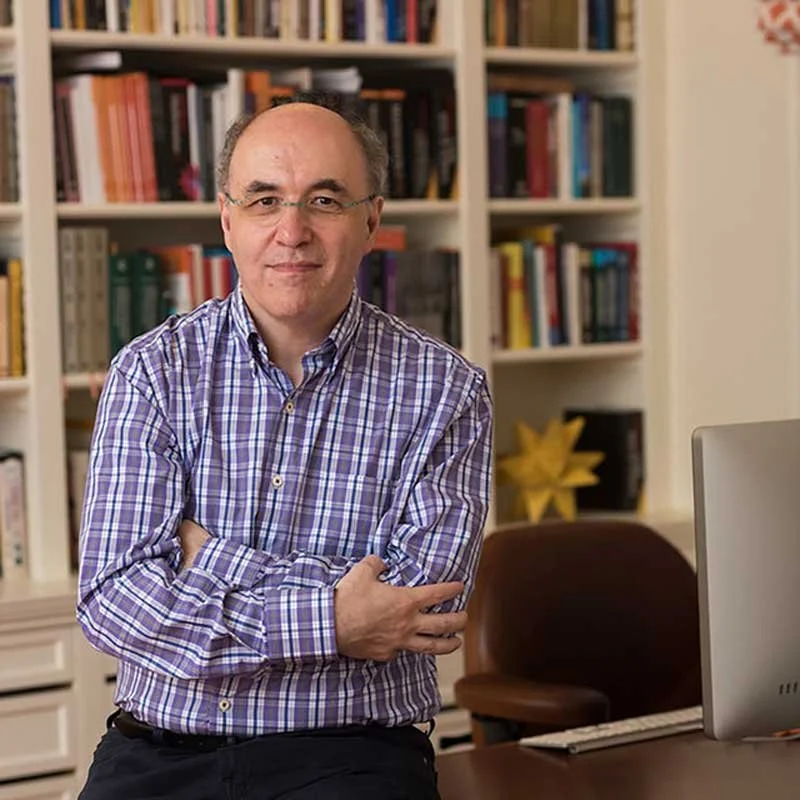
STEPHEN WOLFRAM
STEPHEN WOLFRAM

Computer Scientist · Mathematician · Theoretical Physicist
Founder/CEO of Wolfram Research · Creator of Mathematica · Wolfram|Alpha

I think as there is more automation, there is more kind of emphasis on this question of our choice. The story of the development of things tends to be what do humans decide that they care about? In what direction do they want to go? What kind of art do they want to make? What kinds of things do they want to think about? There is in the computational universe of all possibilities, there is sort of infinite creativity.

Read more →
KEITH FRANKISH
KEITH FRANKISH

Editor of Illusionism as a Theory of Consciousness · Cambridge University Press’ Elements in Philosophy of Mind
Author of Mind and Supermind · Consciousness

What I like about the sort of view I have is that it represents us as fully part of the world, fully part of the same world. We're not sealed off into little private mental bubbles, Cartesian theaters, where all the real action is happening in here, not out there. No, I think we're much more engaged with the world. It's not all happening in some private mental world. It's happening in our engagement with the shared world, and that seems to me a vision that I find much more uplifting, comforting, and rewarding.

Read more →
PAUL HAWKEN
PAUL HAWKEN

Founder of Project Regeneration & Project Drawdown
Author of Regeneration: Ending the Climate Crisis in One Generation

We and all living beings thrive by being actors in the planet’s regeneration, a civilizational goal that should commence and never cease. We practiced degeneration as a species and it brought us to the threshold of an unimaginable crisis. To reverse global warming, we need to reverse global degeneration.

Read more →
ROBIN PHILLIPS
ROBIN PHILLIPS

Retired US Army Officer with a Career in Current and Crisis Intelligence and Strategic Plans and Policy at the Pentagon

We need to work together to handle the migrations that will inevitably come because of climate change and loss of human habitat and loss of agricultural lands. The wisest nation going forward will be the one that can maintain its population through allowing immigration and thinking about where you can draw folks that are coming from stressed environments and they need a place to land and you're losing population. Why should you not accept those people and encourage them to fill the roles that you need them to fill and settle in the areas where you are being depopulated because of falling fertility by choice?

Read more →
ABRAHM LUSTGARTEN
ABRAHM LUSTGARTEN

Senior Reporter at ProPublica · Filmmaker · Author
On The Move: The Overheating Earth and the Uprooting of America

Living in California, I've just come to accept the unsettledness of this era we're moving into. And I think that's really how I see the future. You know, we're living in an era of disruption, and there are others I talk to and write about in the book who also muse about the possibility of a more nomadic future. That maybe home isn't a permanent place with deep roots but is a transient place with shallow roots or two places that you alternate between. In addition to a lot of other dramatic changes that the book is about, a change in our sense of home and our sense of place is a part of this story.

Read more →
MATTIA MAURÉE
MATTIA MAURÉE

Interdisciplinary Composer ·  AuDHD Coach
Host of the AuDHD Flourishing Podcast

So for me, just removing a lot of the shame and then a lot of the energy that I was wasting trying to fit myself into a neurotypical process or framework or way of thinking or being. So, you know, some people call that unmasking, just kind of removing. I was wasting a lot of energy, basically trying to be someone else and function in a different way. And then just beating myself up internally for not being able to do that. And throughout my healing journey, as I really realized, Oh, that's actually what's happening. Like there's not actually anything wrong with me being able to...That's why it's called Love Your Brain. It's not just, you know, tolerate your brain. Or, fine, you can work with this brain that you have. It's like, no, I genuinely love the weird experiences that my brain can give me and the incredibly rich, deep experience I have of the world. Like I experience nature so deeply and so intensely. I have really strong connections with animals. I have really great intuition, which I think is just from picking up all this sensory data and putting it together. All these experiences that I get to have, but I don't get to have those experiences if I'm just trying to make myself be something else, which I think is most people who are late diagnosed, I feel like that's their experience. It's just like I've been trying to be someone else for so long. It's exhausting. And then you don't have the energy then to be creative, the carving out the time, making the time to actually create.

Read more →
DANA FISHER
DANA FISHER

Director · Center for Environment, Community, & Equity
Author of Saving Ourselves: From Climate Shocks to Climate Action

I call myself an apocalyptic optimist. In other words, I do believe there is hope to save ourselves from the climate crisis that we have caused. However, I also believe that saving ourselves will only be possible with a mass mobilization that is driven by the pain and suffering of climate shocks around the world. A generalized sense of extreme risk can lead to peaceful and less-peaceful mass mobilizations at the levels needed to stimulate an AnthroShift. Only a global risk event (or numerous smaller events that are seen as threatening social and economic centers of power) will motivate the kind of massive social change that is needed. In other words, without a risk pivot—be it driven by social or environmental change—an AnthroShift that is large enough to respond adequately to the climate crisis and open a large enough window of opportunity postshock is improbable.

Read more →
ESHA CHHABRA
ESHA CHHABRA

Author of Working to Restore: Harnessing the Power of Business to Heal the Earth

The term regenerative business started coming into the lexicon in 2017, 2018. And regenerative means to regenerate, means to bring life into something. To sustain means to keep the status quo. And regenerative looks at things from a very holistic lens. You know, it's like if you're going to run a regenerative farm, it's all the different components of the farm and the ecosystem ideally come within the ecosystem.

Read more →
RAPHAËL MILLIÈRE
RAPHAËL MILLIÈRE

Asst. Professor in Philosophy of AI · Macquarie University
I'd like to focus more on the immediate harms that the kinds of AI technologies we have today might pose. With language models, the kind of technology that powers ChatGPT and other chatbots, there are harms that might result from regular use of these systems, and then there are harms that might result from malicious use. Regular use would be how you and I might use ChatGPT and other chatbots to do ordinary things. There is a concern that these systems might reproduce and amplify, for example, racist or sexist biases, or spread misinformation. These systems are known to, as researchers put it, “hallucinate” in some cases, making up facts or false citations. And then there are the harms from malicious use, which might result from some bad actors using the systems for nefarious purposes. That would include disinformation on a mass scale. You could imagine a bad actor using language models to automate the creation of fake news and propaganda to try to manipulate voters, for example. And this takes us into the medium term future, because we're not quite there, but another concern would be language models providing dangerous, potentially illegal information that is not readily available on the internet for anyone to access. As they get better over time, there is a concern that in the wrong hands, these systems might become quite powerful weapons, at least indirectly, and so people have been trying to mitigate these potential harm

Read more →
DANNY CAINE
DANNY CAINE

Bookseller · Poet · Author of How to Protect Bookstores and Why · How to Resist Amazon and Why · Picture Window

The thing that unites my poetry and the nonfiction writing is my main obsession as a writer. It's the question of, how do you live meaningfully in late capitalism? As corporations and global capitalist forces take over the world, what does it mean to try to have a meaningful human life? Bookselling captured my imagination and my heart as soon as I started working at the bookstore because I could see the potential for this great, amazing community-oriented work.

Read more →
NEIL JOHNSON
NEIL JOHNSON

Professor of Physics · GWU · Head of the Dynamic Online Networks Lab

It gets back to this core question: Why AI comes out with what it does. That's the burning question. It's like it's bigger than the origin of the universe to me as a scientist, and here's the reason why. The origin of the universe, it happened. That's why we're here. It's almost like a historical question asking why it happened. The AI future is not a historical question. It's a now and future question.

Read more →
BEN GOLDFARB
BEN GOLDFARB

PEN/E.O. Wilson Literary Science Writing Award-winning Author

The creation of roads is this process that's sort of innate to all beings. We're all sort of inclined to create and follow trails. We just do it at a much vaster and more permanent and destructive scale. I think we need to reconceive how we think about roads. Roads aren't just symbols of movement and mobility and freedom for us. They're also preventing that mobility in basically all other life forms.

Read more →
ROBERT PIPPIN
ROBERT PIPPIN

Author of The Culmination: Heidegger, German Idealism, and the Fate of Philosophy
Modernism as a Philosophical Problem
· Hegel’s Idealism

Philosophy is both an academic discipline and also something that everybody does. Everybody has to have reflective views about what's significant. They also have to justify to themselves why it's significant or important. The nature of justice itself, and the various opinions that have been written about in philosophy about justice, can get to a very high level. So there's this unusual connection between philosophy and human life. We've inherited from the middle ages, this incredible tradition that's now developed into a chance for young people to spend four or five years, in a way, released from the pressures of life. The idea to pursue your ideas a little further in these four years you have, exempt from the pressures of social life, allows philosophy to have a kind of position unique in the academy. In confronting what the best minds in the history of the world have had to say about these issues, the hope is that they provide for the people who are privileged enough to confront philosophy a better and more thoughtful approach to these fundamental questions that everybody has to confront.

Read more →
BERTRAND PICCARD
BERTRAND PICCARD

Psychiatrist, Explorer, Aviator of First Round-the-World Solar-powered Flight
Founder & Chairman · Solar Impulse Foundation: 1000+ Profitable Climate Solutions
UN Goodwill Ambassador for the Environment

So this is why I prefer to speak with a really down to earth language. So maybe the people who love nature are going to say, “Oh, Bertrand Piccard, now he is too down to earth. He's speaking about profitable solutions. He's speaking to the industries that are polluting,” but we have to speak to the industries that are polluting and bring them profitable solutions, otherwise the world will never change, or humankind will never change. And don't forget one thing, what we are damaging is not the beauty of nature. What is being damaged is the quality of life of human beings on Earth because we can still have beautiful things to see, but if we have climate change, if we have tropical disease in Europe, if we have heat waves, floods, droughts, millions of climate refugees, life will be miserable, even if nature is still beautiful.

Read more →
NINA LUZZATTO GARDNER

Adjunct Lecturer in International Law, Johns Hopkins SAIS
Director of Strategy International, Corporate Sustainability Advisory Firm

My father made me think very much in terms of what kind of planet we are leaving to our children? And what should we be doing in terms of being custodians of this planet? And that we should not be using up all the resources, but actually trying to conserve them and make the world a better for the next generation.

Read more →
JOSEPH LEDOUX
JOSEPH LEDOUX

Neuroscientist · Musician · Author
The Emotional Brain · Anxious · The Deep History of Ourselves

The Four Realms of Existence: A New Theory of Being Human

We've got four billion years of biological accidents that created all of the intricate aspects of everything about life, including consciousness. And it's about what's going on in each of those cells at the time that allows it to be connected to everything else and for the information to be understood as it's being exchanged between those things with their multifaceted, deep, complex processing.

Read more →
INTAN PARAMADITHA
INTAN PARAMADITHA

Author of The Wandering · Apple and Knife
Editor of Deviant Disciples: Indonesian Women Poets · Co-ed. The Routledge Companion to Asian Cinemas

The Wandering is a choose your own adventure novel, and the reader is situated in the shoes of this brown woman from the Global South. She's 27 and in a way, she is stuck with her life. She aspires to be middle class, but her job doesn't allow her to achieve this social mobility. In her condition, she makes a deal with a devil, a reference to the story of Faust and Mephistopheles, finally getting a pair of red shoes that will take her anywhere. But that means she will never be able to find home—that's the curse of the shoes. The title in Indonesian is Gentayanga, which is a word used to describe ghosts who exist in a liminal state.

Read more →
MAX COOPER
MAX COOPER

Electronic Musician · Fmr. Computational Biologist

As technology becomes more dominant, the arts become ever more important for us to stay in touch the things that the sciences can't tackle. What it's actually like to be a person? What's actually important? We can have this endless progress inside this capitalist machine for greater wealth and longer life and more happiness, according to some metric. Or we can try and quantify society and push it forward. Ultimately, we all have to decide what's important to us as humans, and we need the arts to help with that. So, I think what's important really is just exposing ourselves to as many different ideas as we can, being open-minded, and trying to learn about all facets of life so that we can understand each other as well. And the arts is an essential part of that.

Read more →
CLAYTON PAGE ALDERN
CLAYTON PAGE ALDERN

Neuroscientist turned Environmental Journalist
Author of The Weight of Nature: How a Changing Climate Changes Our Minds, Brains, and Bodies

I want to be wowed by the world. I want to gaze at it in awe and wonder. And I think when we take a step back and begin to appreciate the complexity of the interactions around us. We're taking note of a very porous between the self and the rest of the world. We are literally observing our enmeshment in our environment. And it's that kind of a reference frameshift that I think is going to help us move out of some of the darkness. My mother is an artist, and I think growing up surrounded by her practice exposed me to the creative process and is probably that which afforded me a certain sympathy for those tools and those modes of exploring the world later in life.

Read more →
AYÇA ÇUBUKÇU & ADOM GETACHEW

On Imagining a New Left Internationalism Outside the Legacies of the Settler State

In this episode on Speaking Out of Place podcast, Professor David Palumbo-Liu and Azeezah Kanji have a conversation with critical political theorists Adom Getachew and Ayça Çubukçu on the colonial construction of the international system and its organization around the institution of the nation state. The conversation covers and uncovers so many aspects of the hidden colonial history behind the constitution of this system, but also the resistance and creative appropriations by Black, Indigenous, and colonized peoples, allowing us to imagine possible liberatory futures beyond the forms and strictures of the colonial present.

Read more →


CLICK FOR MORE

PODCAST INTERVIEWS

squarespace