SPEAKING OUT OF PLACE
🎧Listen on Apple Podcasts | Spotify
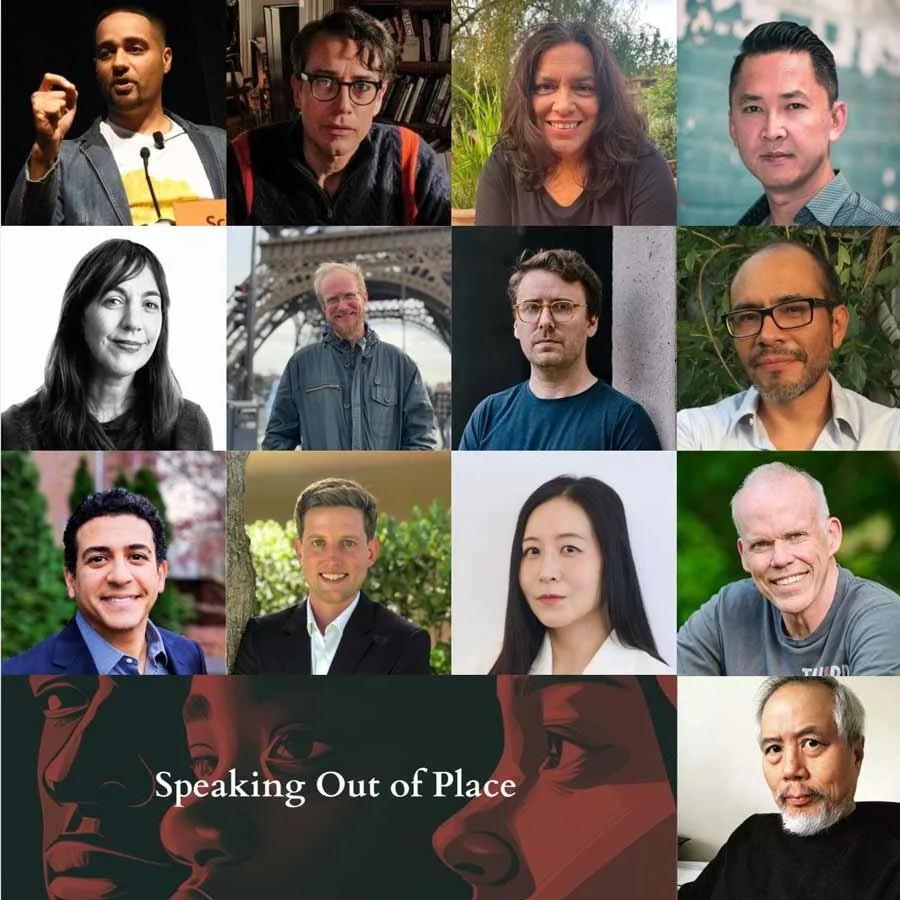
Today, we hear from scholars and educators rewiring our institutions—Jesse Hagopian, Eunsong Kim, Tim Hewlett, and Sara Ahmed. We turn to the authors documenting the human cost of these systems—Benjamin Moser, Viet Thanh Nguyen, and Yuri Herrera. Finally, we hear from journalists, researchers, and legal minds analyzing climate delay and political dysfunction—Ben Franta, Bill McKibben, Ben Tarnoff, Liza Featherstone, and Aziz Rana.
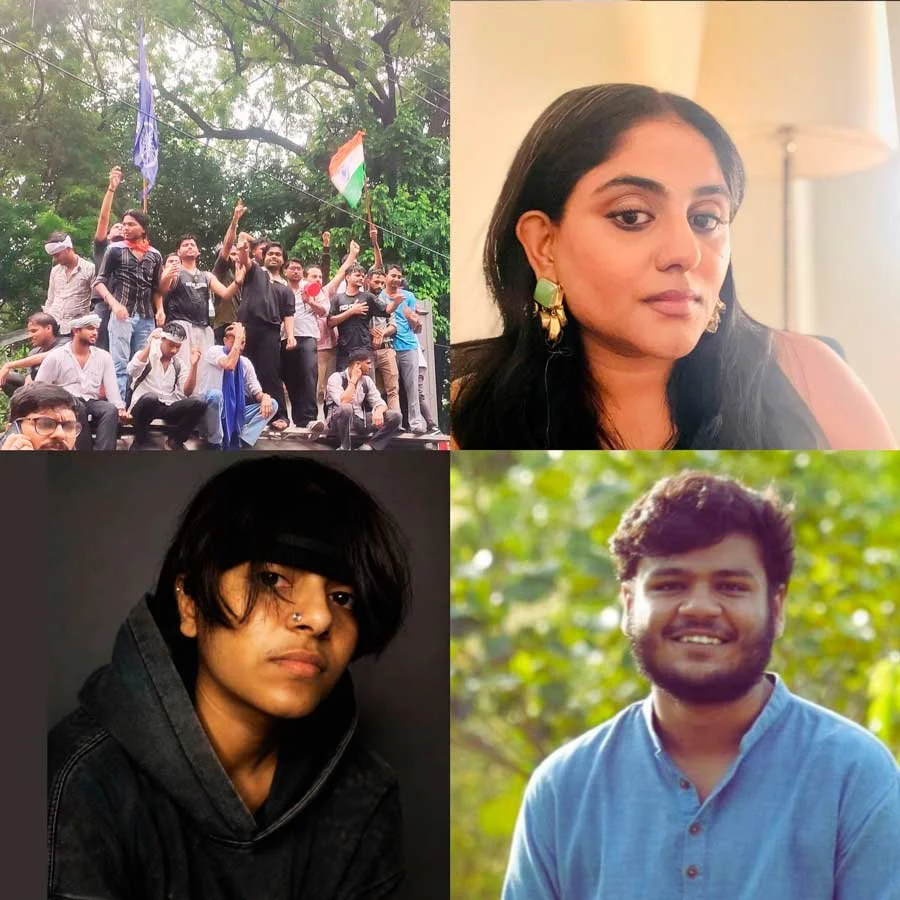
I think one of the things that we have to acknowledge and repeat over and over again is that the general narrative that there has been no resistance or protest to the current regime is absolutely untrue. People in India have been protesting and protesting consistently across the country. What we've seen is a lack of media attention. But what you've also seen is a kind of violent, disproportionate crackdown by the state, accompanied by a legal regime that now makes it absolutely possible to disappear anyone into the legal system.
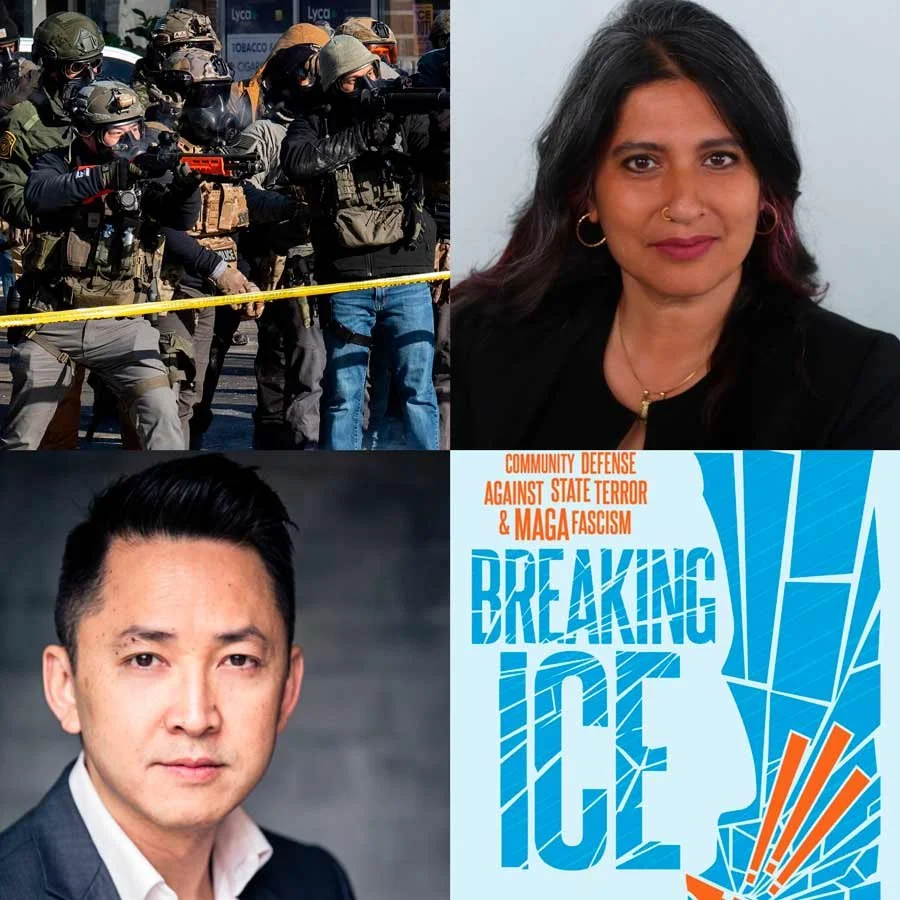
Community Defense Against State Terror & MAGA Fascism with SONALI KOLHATKAR & VIET THANH NGUYEN
You can see how important storytelling is to fascism and to MAGA and to ICE. And that type of narrative is seductive to a whole lot of people, not just white people but to a lot of other people as well, and it's yoked to many other narratives around what is the United States, what is American power, what is going to benefit American power, what's going to erode American power. So there's a tremendous amount of phobia around who constitutes the other or the others to the United States, and it goes way, way back, obviously, to the origins of the country.
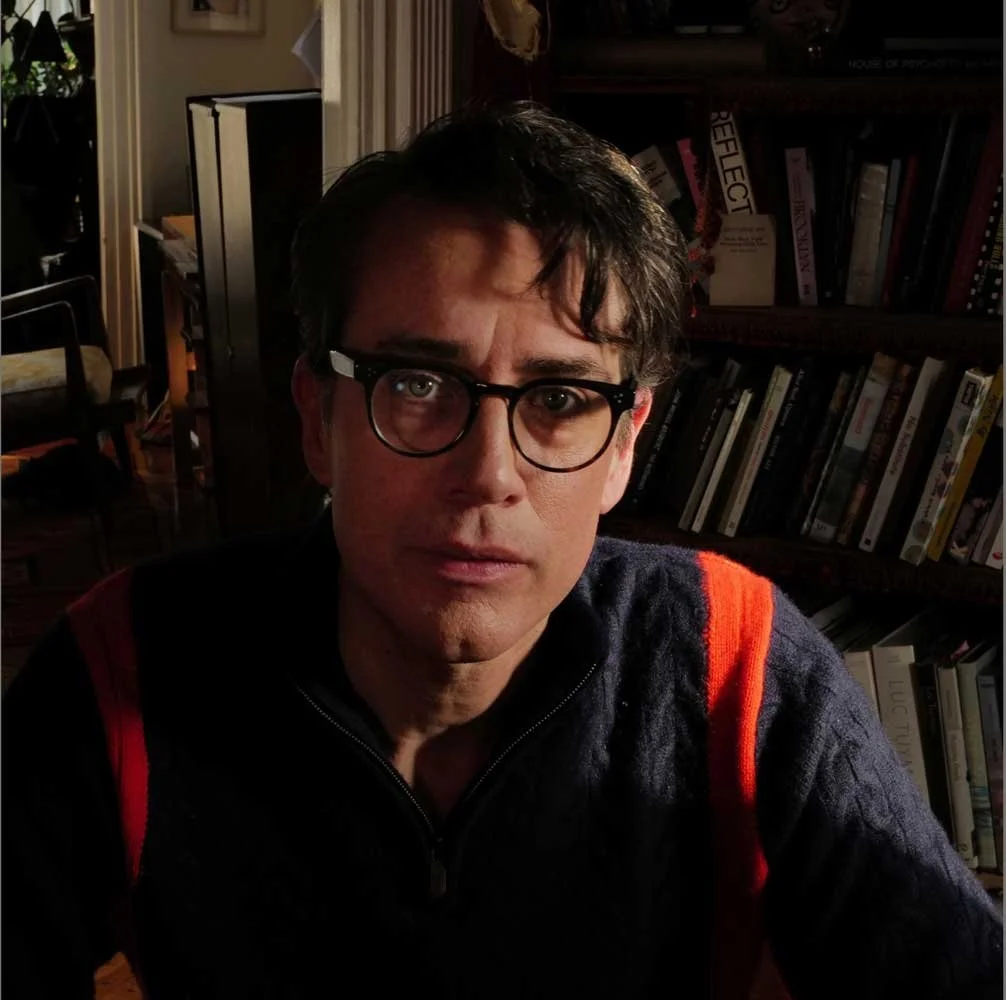
BENJAMIN MOSER · Pulitzer Prize-winning Author of Sontag: Her Life and Work · Why This World: A Biography of Clarice Lispector · Anti-Zionism: A Jewish History
I think that Jews have become extremely solipsistic in a way that is embarrassing. It's very much contrary to the way I was brought up, which was not to talk about yourself, which was to talk about other people and to serve other people. That was part of the heritage that I received from the Holocaust and from my family's background as refugees was, “You're not a refugee. You've got it pretty good. You live in America.” We were very much exhorted against that and exhorted to serve other people and to try to do something good in the world. And so I hope this will be one tiny little part of something that will make a change for the Palestinians.
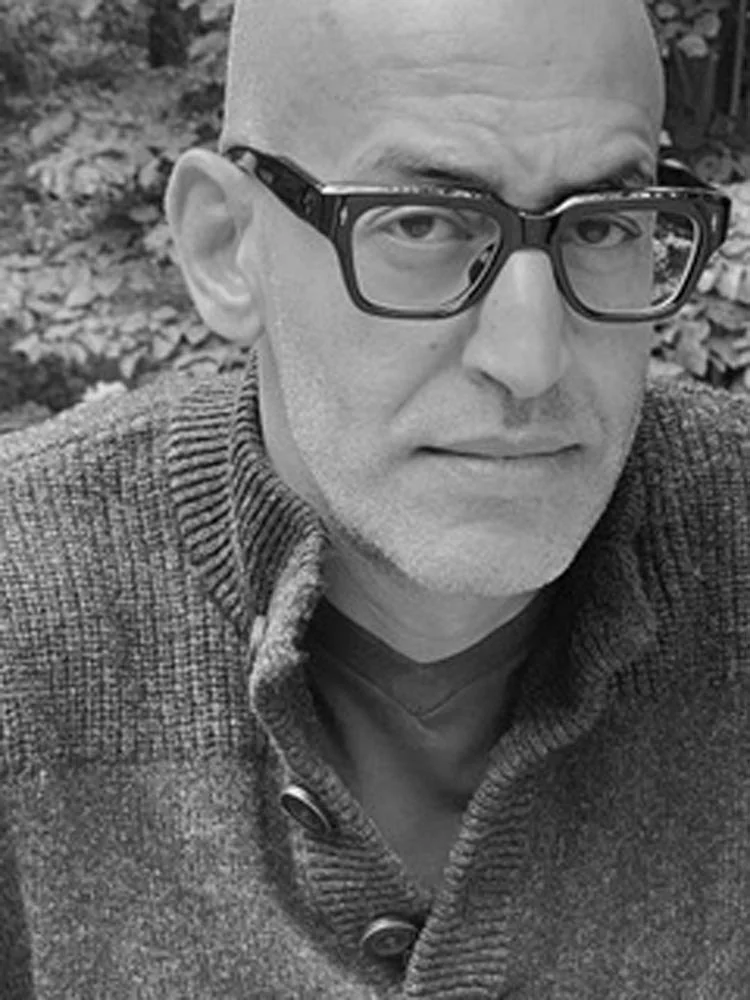
A Conversation with FEISAL G. MOHAMED
The words on the page give us a sense of loss. The blank space also gives us the sense of the loss that we don't know and can never know. The sense that there has been an absolute destruction. Absence has been imposed on places where there were lives and a culture that was vibrant and rich. That sense that this is a genocide for which there is much evidence and that we have watched unfold in real time and that we have seen, we have had it, the evidence crowding in upon us at every moment.
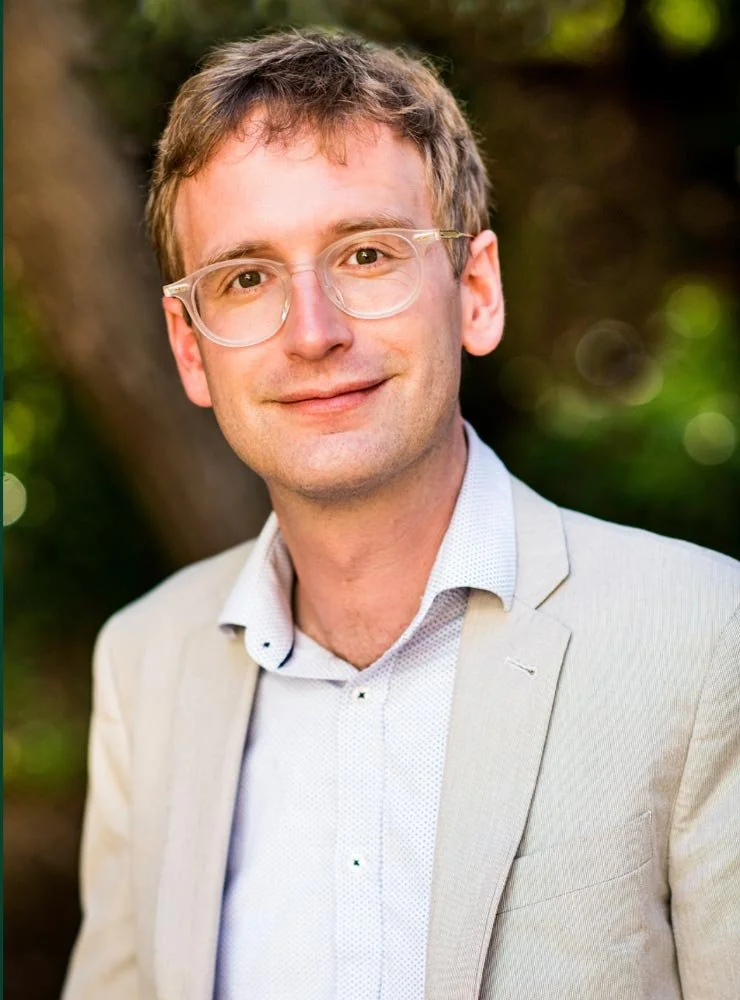
A Conversation with ADRIAN DAUB
What Silicon Valley calls governing is detached from and disinterested in human nature and normal life. Even when it comes to normal life with technology and the internet, it is fixated on privilege and hierarchies for their own sake. And whatever intellectual ambition it possesses is easily seduced by ideologies that support these privileges and hierarchies.
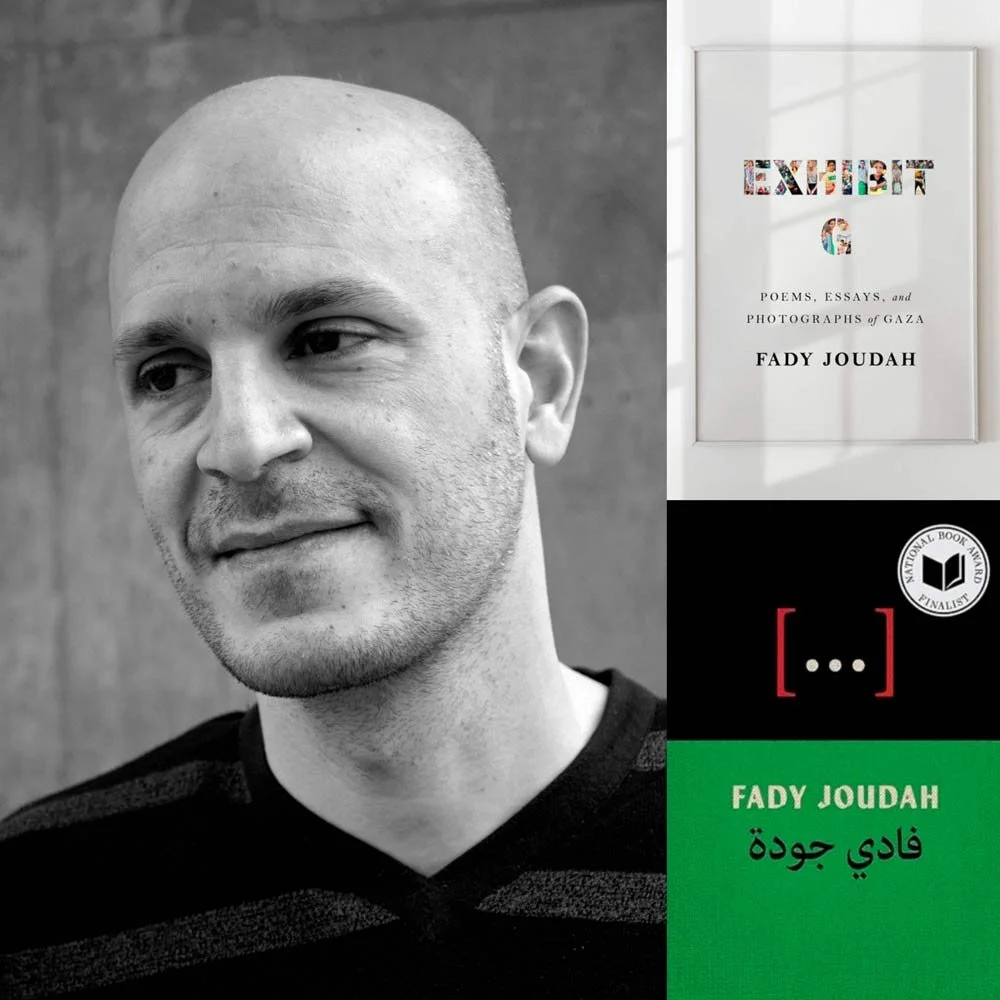
FADY JOUDAH · Palestinian American Physician · Poet · Translator
What is enough childhood for a people to stay alive? What is enough childhood for a people to stay alive? What image of childhood is enough for a people to stay alive?
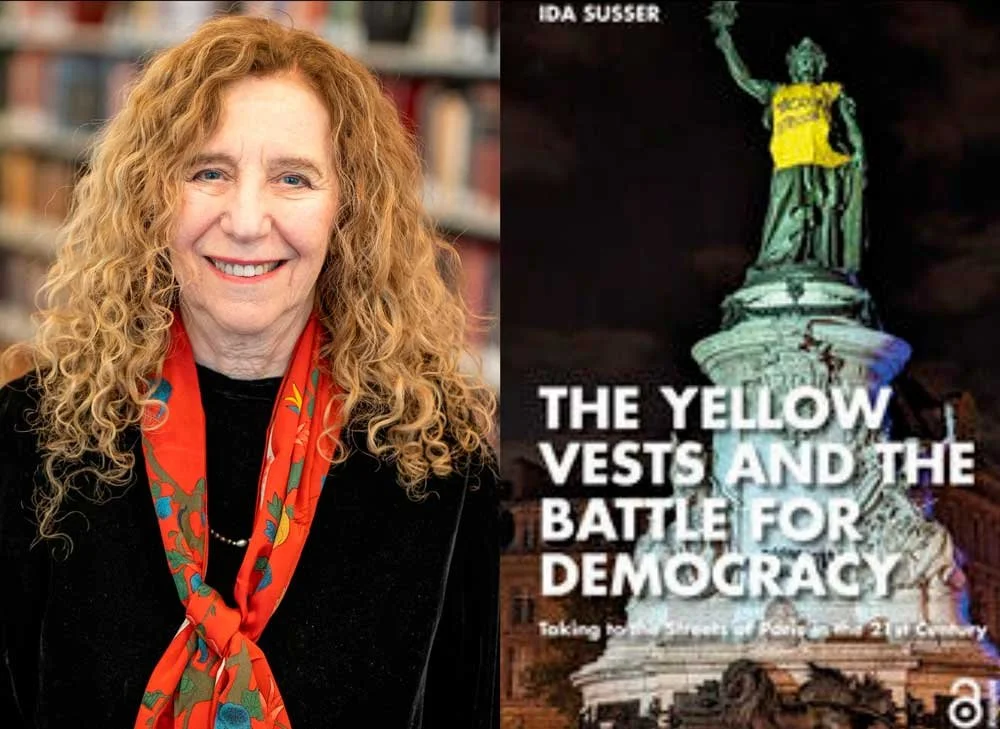
A Conversation with IDA SUSSER · Author · Anthropologist
In Paris, when these same people, who had friends who were their police, came to Paris and found themselves tear gassed and shot with LBDs and losing their eyes and feet, and coming back with red all down their faces and blood everywhere, and they began to understand that the violence is beyond legal. And so they began to understand what was happening in areas, what we might call the ghettos or the poor areas of Paris, where Black people or people of color were being harassed by the police.
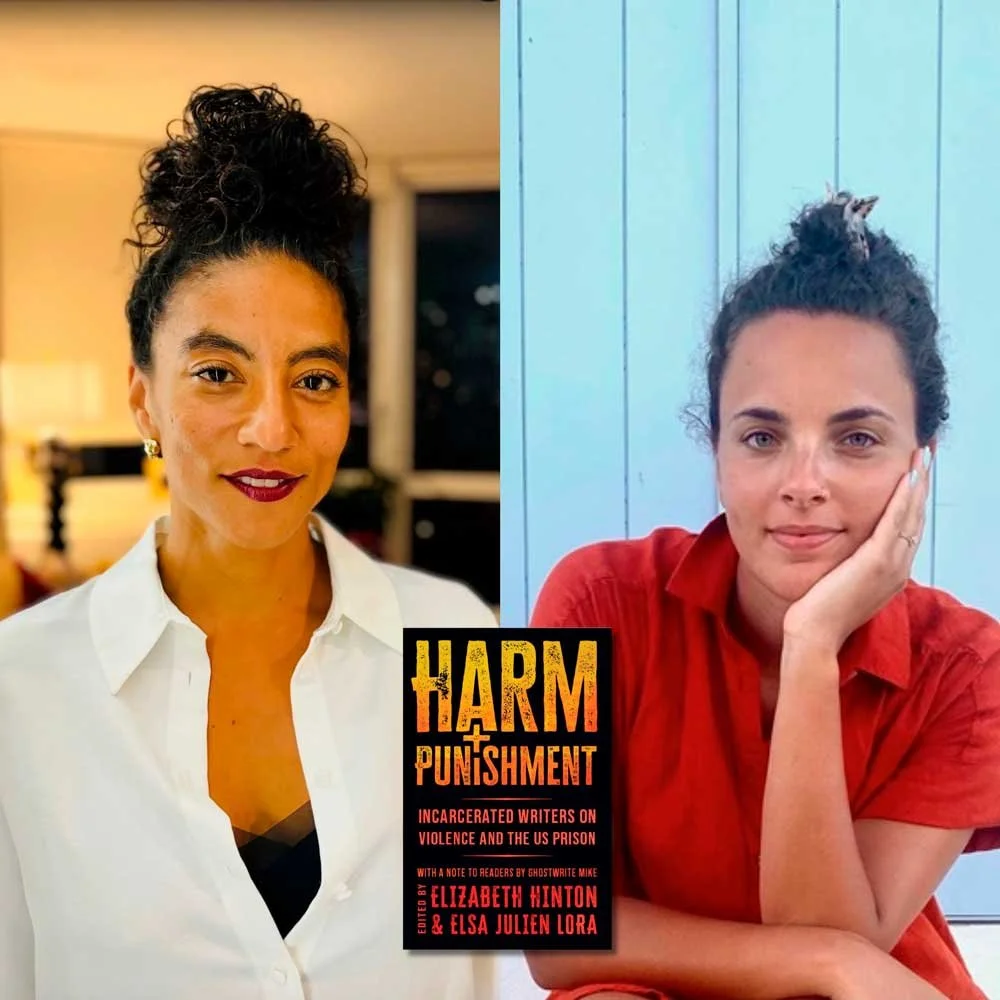
ELIZABETH HINTON · Founding Co-director · Hutchins Center’s Institute on Policing, Incarceration & Public Safety · ELSA JULIEN LORA · Historian
When we look at police brutality, when we look at violent conditions, you can't break a cycle of violence with more violence. And the prison is, if not the most profound and devastating state sanctioned and institutional expression of violence, it is a violence incubator.
AMITAV GHOSH · Author of Ghost-Eye · The Shadow Lines · The Hungry Tide · Sea of Poppies · The Great Derangement: Climate Change and the Unthinkable
Imagining with precision is a very fundamental part of my work. When I sit down to write about anything, whether it be The Hungry Tide in the Sundarbans, or let's say The Shadow Lines, or Ghost-Eye. It's very important for me to get the topography right, to get the outlay of the streets or the house exactly right so I can actually picture all of that in my head. It's very important for me to have a sort of pictorial sense of what I'm seeing and what I'm writing about. Before I can write about it, I need to see it, as it were. So that's absolutely fundamental to my craft. That's just how I go about it. Like the Sufis say—behind the apparent reality is a hidden or ba- reality.
I guess that's always been something of great interest to me. How do you square these two realities and make them come together on a page? And really that is what, in some sense, the work of the imagination is. We know that we're in the grip of an intensifying planetary crisis. We can see signs of it everywhere.
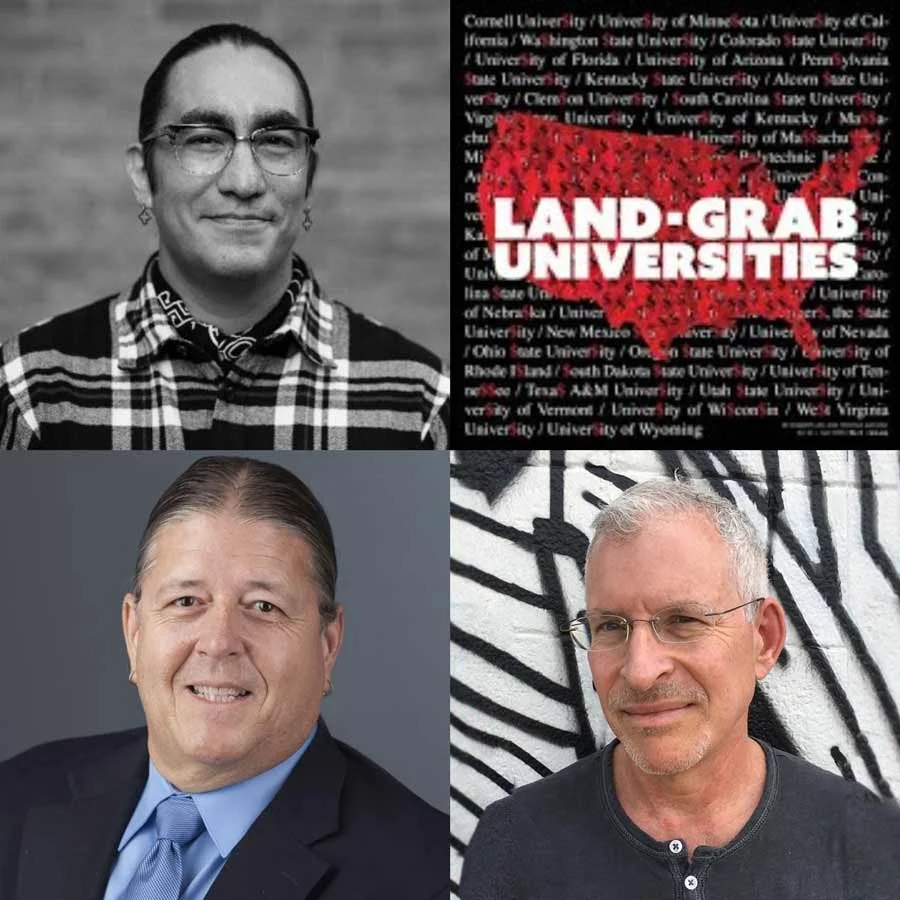
TRISTAN AHLONE · ANDREW HERSCHER & ROBERT WARRIOR on Dispossession, Indigenous Futures & the True Cost of Higher Education
I think in terms of the Land-Grab project: looking at that history and really beginning to learn more about the history of education in the United States—and especially Indian education—a lot of that was new to me. So, our project that we did about two years ago, building on Land-Grab, was our Misplaced Trust investigation at Grist. We wanted to go back to those universities and start looking at not just the history of how they got their finances, but looking at the present to understand how dispossession and extraction are ongoing.
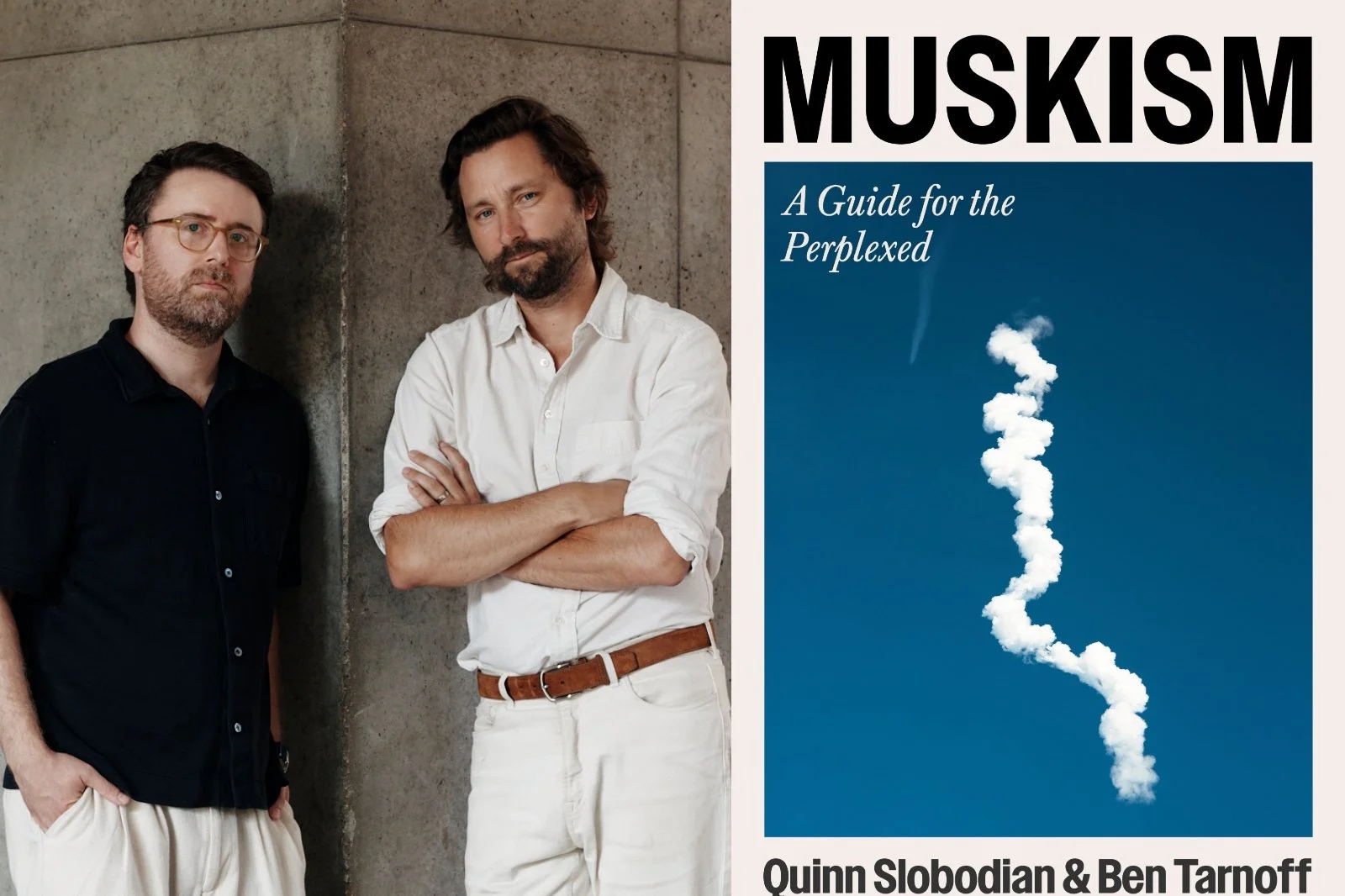
QUINN SLOBODIAN & BEN TARNOFF on why understanding Elon Musk’s computational worldview is essential for protecting the public sphere and fighting back against cyborg conservatism
Musk interestingly has this way of excluding the majority of the population from consideration, what he variously calls non-playing characters or NPCs, which is a category from video games, or sometimes bots, vampires. And this is a much more stark version of insider and outsider group creation than even hierarchies of race because it takes this one step further by taking very seriously the idea that other people are not only not human, but they in some way don't even exist, which is the literal reading of Musk's adoption of Nick Bostrom's simulation theory, which is that most people are simply programmable parts of a simulation, and only a small number of people are actual players.
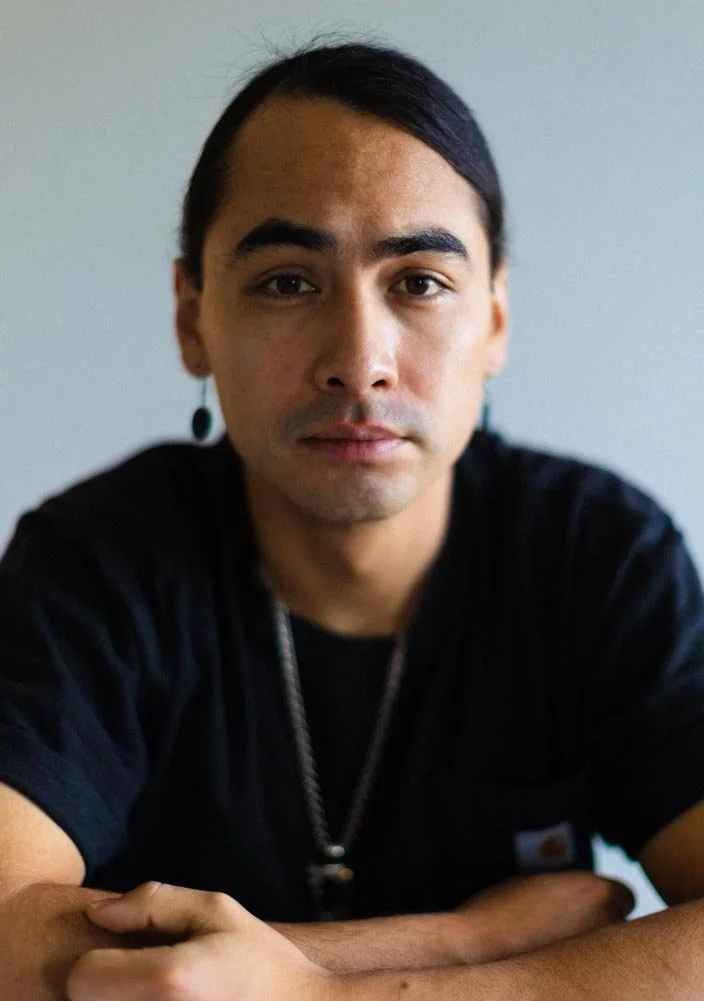
JULIAN BRAVE NOISECAT · Author of We Survived the Night · Oscar-nominated Filmmaker · Champion Powwow Dancer
Everything from the title to the words and style all the way up to the structure I'm working with, I describe them as forms from my own culture... that come from my own people.
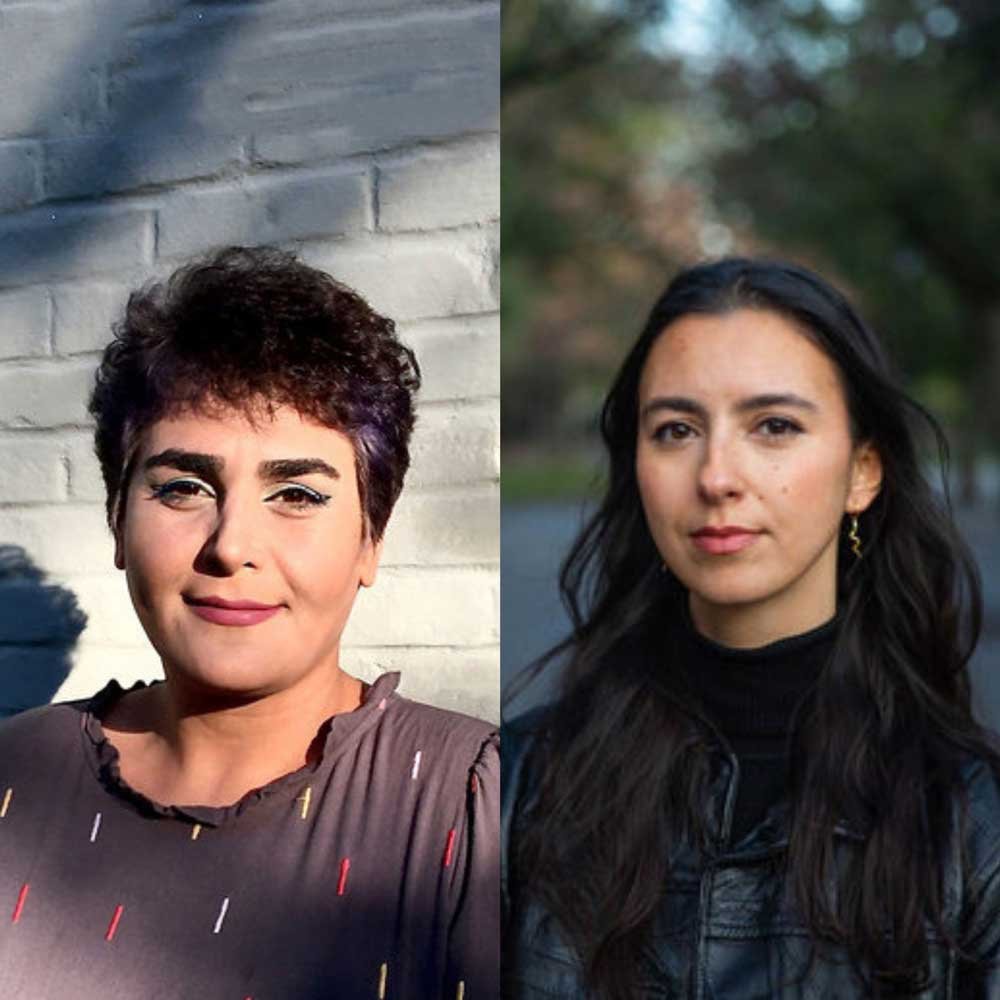
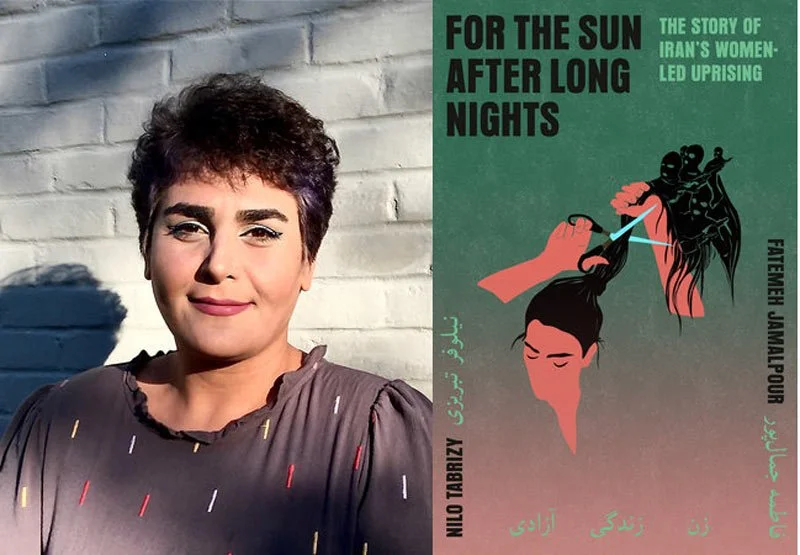
Iranian Journalists FATEMEH JAMALPOUR & NILO TABRIZY
Imagine losing your internet access just as airstrikes begin in your city, severing you from loved ones and the outside world. Jamalpour and Tabrizy authored a book on Iran's women-led uprising and continue to report on the lives of ordinary Iranians, civilian casualties and infrastructure damage.
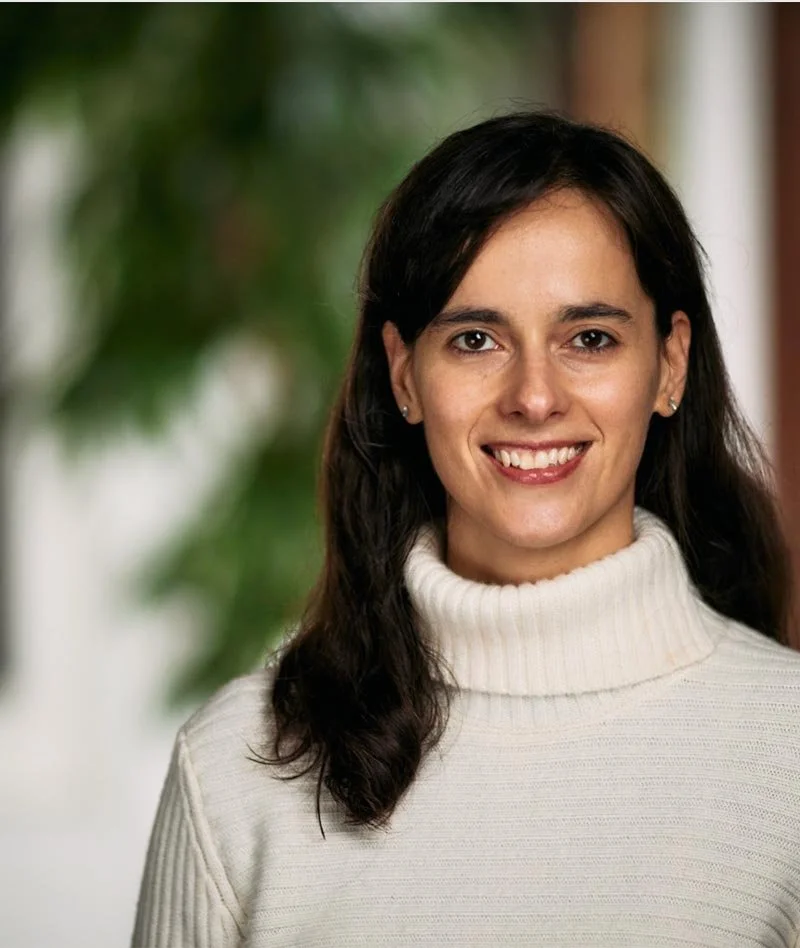
CARISSA VÉLIZ · Author of Prophecy: Prediction, Power & the Fight for the Future · Privacy is Power: Why & How You Should Take Back Control of Your Data
Algorithms are deciding whether you are eligible for a loan, a job, an apartment or insurance. They determine what you see online, who reads your social media posts and who connects with you on dating apps. They may even decide whether you get arrested or go to jail. Your very life hangs in the balance of prophecies.
If you are unlucky, a prediction will be what kills you. Forecasts can determine your place on a waiting list for an organ transplant or whether you get medical care in an emergency. Policymaking hinges on predictions. War and peace and whether someone lives or dies are decided based on forecasts about the strength of an adversary, the impact of a mission or the identity of a person. And yet no one has asked your permission to make those guesses. No governmental agency is supervising them. No one is informing you of the prophecies that shape your fate. Prophecies are the grounds on which fights over the future take place.
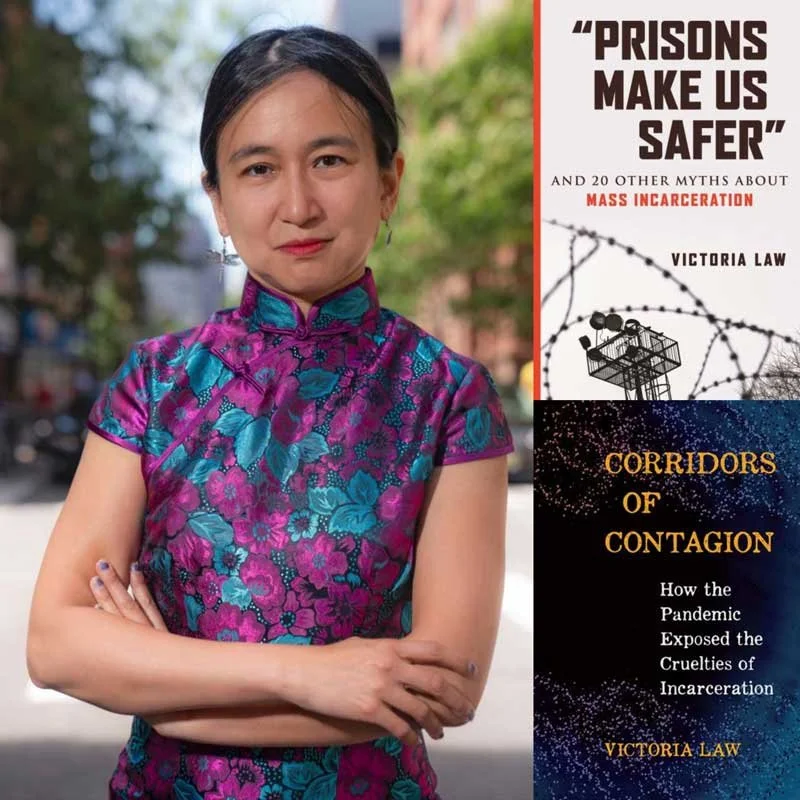
VICTORIA LAW · Journalist · Author of Corridors of Contagion · Resistance Behind Bars
The United States has this mentality that if somebody is serving a prison sentence or if somebody is in jail, they somehow deserve whatever happens. Whether it is medical neglect, whether it is abuse by staff or the other incarcerated people, whether it is terrible food, whether it is not being able to communicate or see their family members and loved ones. What happened in 2020 is that being incarcerated became a possible death sentence. Because we saw that prison deaths jumped 77% compared to the previous year where there was not a pandemic in the United States.
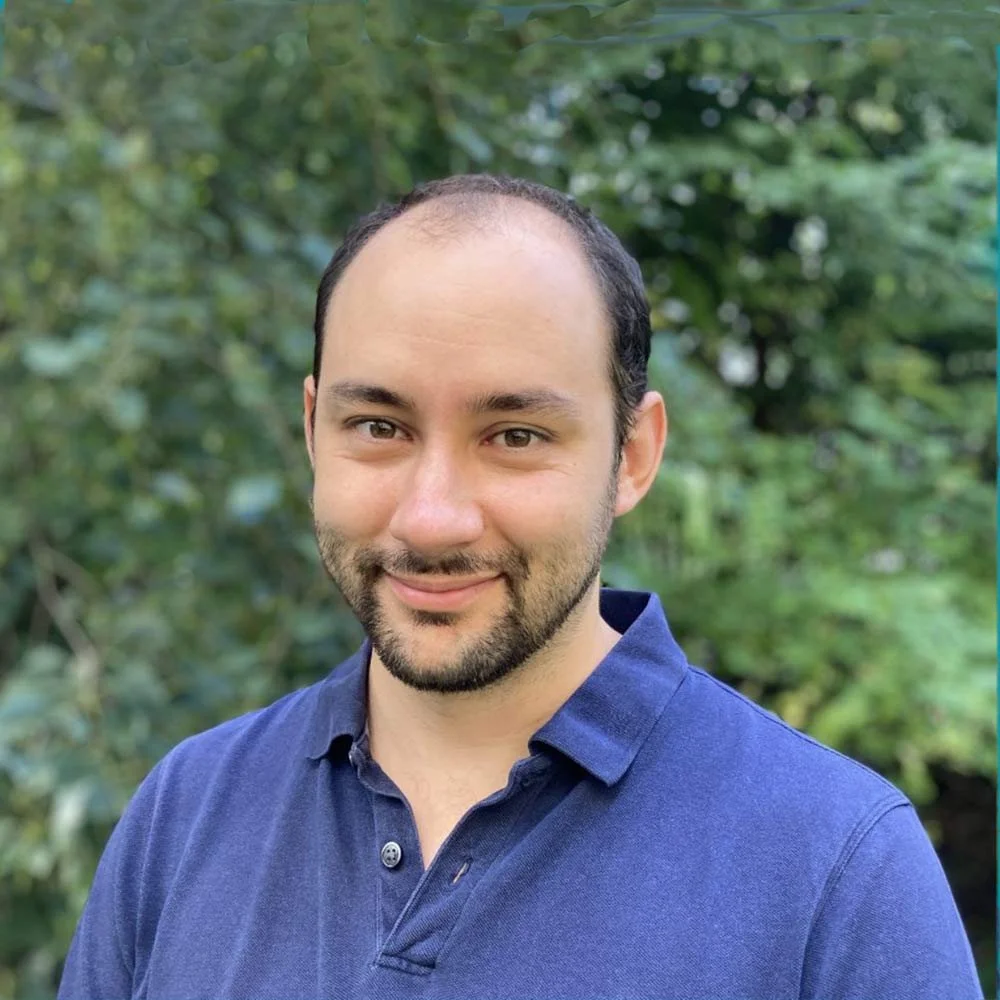
FERNANDO RACIMO · Scientist-activist · Author · Professor of Ecology & Evolution · Globe Institute · University of Copenhagen
By pretending like science is neutral or apolitical, we're really feeding a particular discourse which serves whatever political structures are in place right now, whatever status quo is in place right now. Science can never be apolitical because it's a human activity, it's practiced in society with others, with human and more-than-human beings.
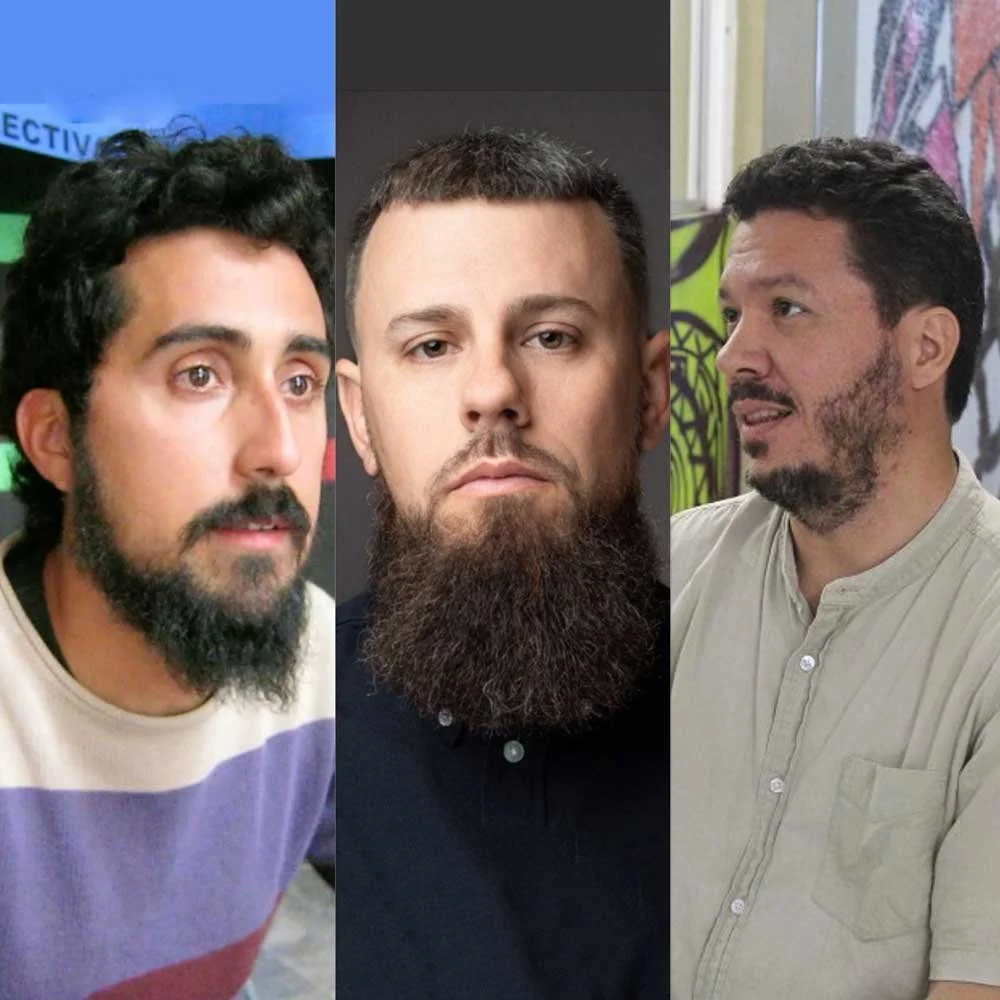
A Conversation with ANDERSON BEAN, SIMÓN RODRÍGUEZ & EMILIANO TERÁN
I guess we can start with what happened on January 3. The United States carried out a direct military operation against Venezuela. US forces bombed targets in and around Caracas and other areas. They struck the electrical grid, killed over 100 people and abducted Venezuela's sitting president, Nicolás Maduro, along with his wife, Deputy Cilia Flores. Within hours, Trump declared that the United States would run Venezuela until a safe transition was completed. The United States Secretary of State Marco Rubio underscored this regional warning by saying, “If I lived in Havana, I would be worried.” Trump threatened other countries too, Colombia and Mexico, showing again that this wasn't about democracy—it was about submission.
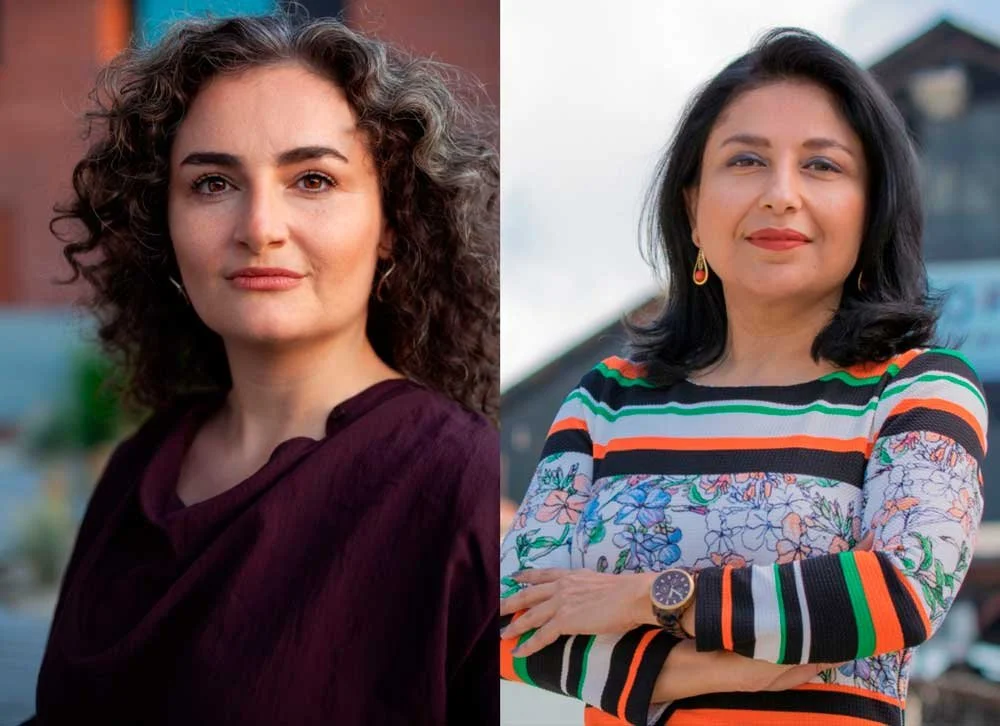
A Conversation with ANANYA ROY & VERONIKA ZABLOTSKY
This question is of, all right, if we are a sanctuary city, how and why do ICE agents and other federal agents, including Border Patrol, have the power that they do to undertake these forms of detention and disappearance?
Scholar · Journalist · Activist THEA RIOFRANCOS
Biodiversity and territorial rights of indigenous and other land-dependent peoples. That those two values of rapid, urgent climate action, which I completely subscribe to, and the value of protecting and allowing to flourish non-human life, our ecosystems, our water systems, our soil systems and the peoples who are primarily indigenous, though not exclusively, that steward those non-human relationships and cultivate them and are immersed in them in their own livelihoods and cultural practices. And the idea that these two sets of really important phenomena that have deep significance and are both harmed by extractive capitalism in lots of intense and durable ways, the idea that there would be a fork in the road that either we have to choose climate action or we choose the protection of life.
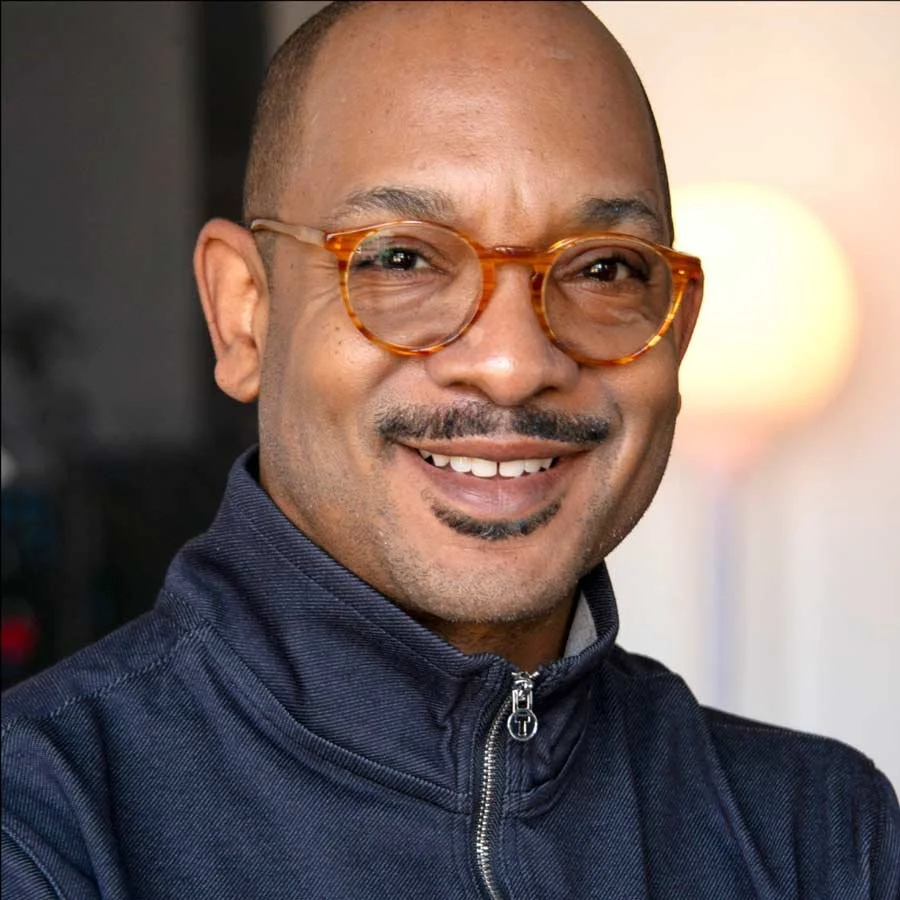
A Conversation with RODERICK FERGUSON
I think when we're talking about institutionalization, we're really talking about the period after the epic protests that would go on to establish the interdisciplinary fields, especially ethnic studies and gender studies and the protests that were taking place among queer and trans folks post-Stonewall. To use Judith Butler's phrase—there's a real psychic life of power that happens at that moment, and that's always intrigued me. Because it's one thing to say that this stuff is external, but when it sets up shop inside of us, we crave the recognition. We don't think that we've achieved anything unless it is authorized and celebrated by the institution on its terms.
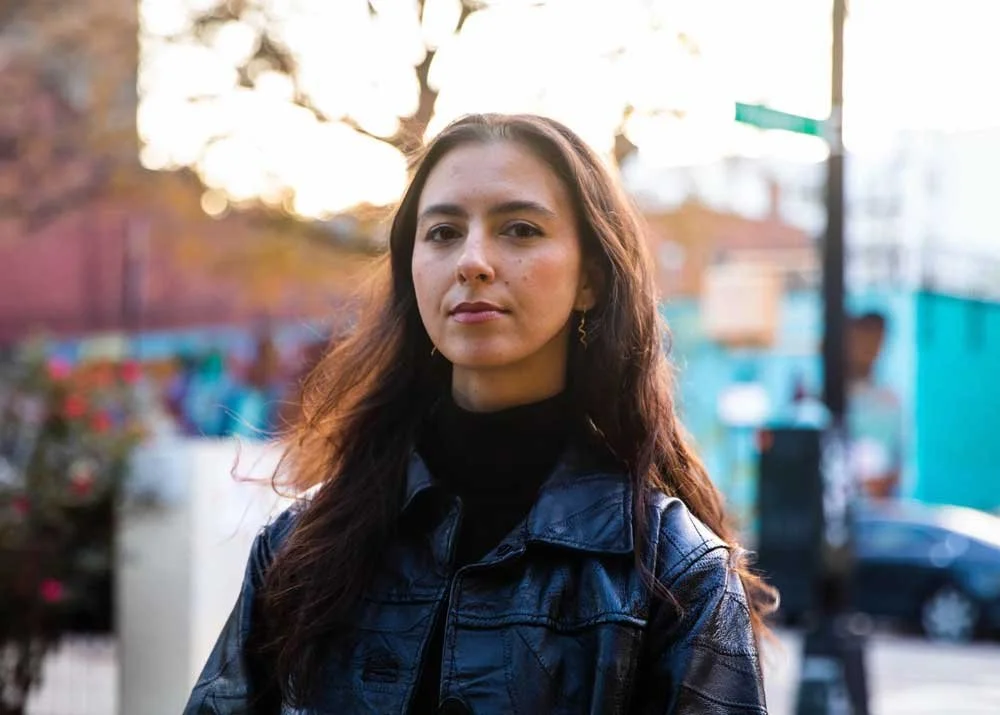
A Conversation with NILO TABRIZY
This interview complements another episode I did with her collaborator, Fatemeh Jamalpour. Ms Tabrizy tells us about her work in Visual Forensics, which she used to complement Ms Jamalpour’s reporting on the ground. The two pieces together form a vivid account of the uprising, and the repression that preceded and followed it. Nilo draws on other examples of Open Source reporting during the #BlackLivesMatter protests and in Palestine. Like her collaborator, Nilo Tabrizy also explains the ways this reporting was for her deeply personal.
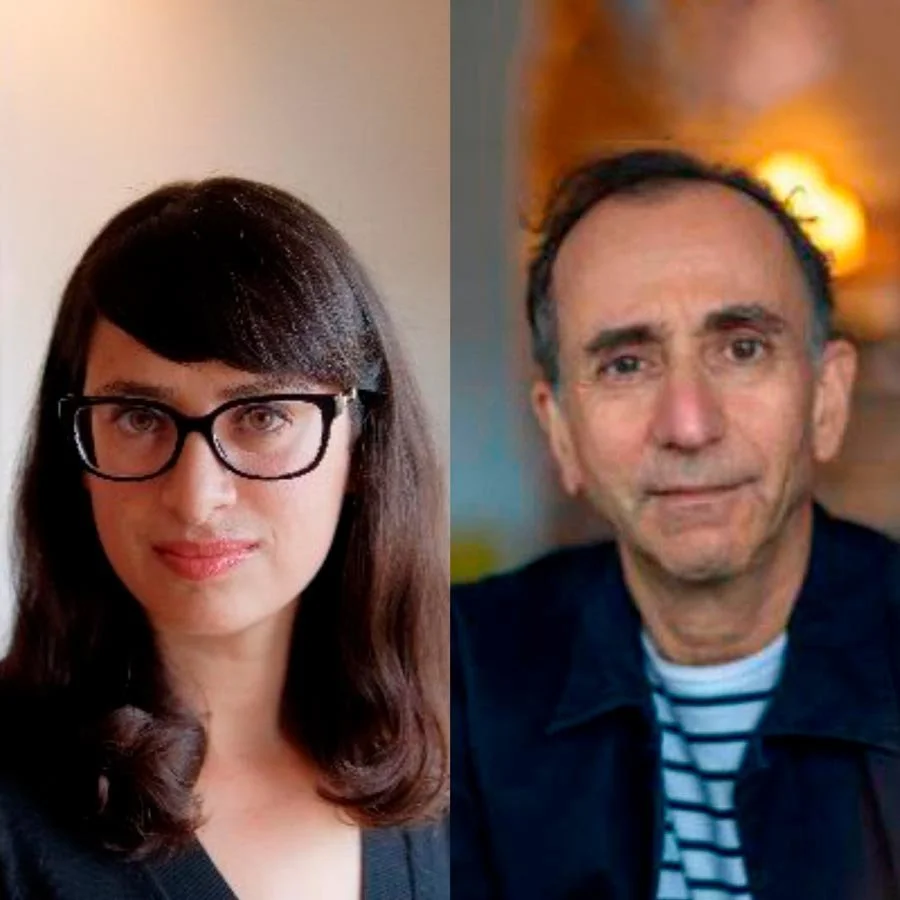
A Conversation with NICOLAS MIRZOEFF & PRISCILLA WATHINGTON
I think politics is now the meeting of the visible and the unspeakable. Unspeakable in that what is visible is so awful as to be beyond ordinary words. Unspeakable in that what is visible is forbidden to be said. What has been sayable about the unspeakable? It has been poets who have found ways to make language do what it should not have to do.
Associate Professor of Geography · University of Washington
Cofounder · Anti-Eviction Mapping Project
There were very different histories of land, housing, race and technology in San Francisco and in Romania. I became interested in those very different histories and how they led not just to different types of housing tensions, but to different struggles more generally—different erasures of the past and different ways that the past itself was getting evicted from historical memory. So that is the premise or the context, grounded in ongoing commitments to justice and racial justice in the midst of technological transformation. It is also grounded in really wanting to understand the sort of deeper layered histories that lay the groundwork for the present.
TAMARA KNEESE · Director of Data & Society Research Institute's Climate, Justice & Technology Program · XIAOWEI WANG · Artist · Writer · Organizer · Coder
I think increasingly more and more of us are aware of these tiny silicon wafers that power everything from our watches to our phones, to these data centers... semiconductors are, I think of it as alchemy in a lot of ways, chemical alchemy, and they require vast amounts of water, resources, electricity, energy, and especially chemicals to turn a silicon wafer into essentially this very tiny, tiny circuit.

A Conversation with Scholars SERHAT TUTKAL & HEVIN KARAKURT
I prefer to be considered a particular person, although I’m from Nowhere. Where I come from doesn’t exist. This creates a confusing situation since logic dictates that everyone come from somewhere. It looks like I defy logic. I come from Nowhere. It has been told to me many times, by many authorities, and government officials, and all sorts of serious people… Strangely, I don’t have a language. People where I’m from speak in a nonexistent language. I speak some existing languages, but I cannot call any of them my native language. As a result, I have no language of my own. To me, every language is a foreign language. Every word I utter is borrowed. I have no words of my own.
Journalist FATEMEH JAMALPOUR
Then I started to write about the interrogation sessions. I knew that writing is jumping over the death row. I knew they couldn't shut down my mind. I had all these notes about returning and the interrogation sessions because I was facing the whole ideological core of the regime. We realized that to tell the full, human side of the story of our people, we needed a book.
Historian ELLEN SCHRECKER
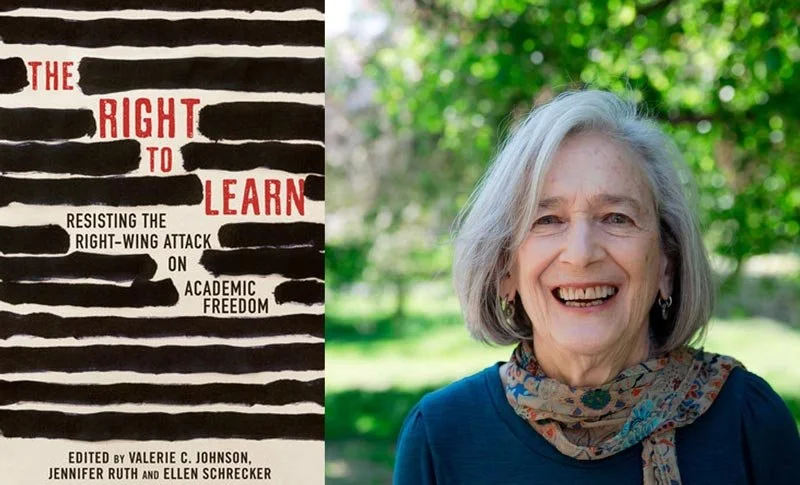
What McCarthyism did was focused on individuals who had once been in or near the Communist Party and who were refusing to cooperate with the witch hunt. That was it. Today, what we're seeing is an attack on everything. Within higher education, within society, all immigrants are under attack. Academics are under attack. LGBTQ people are under attack. Women are under attack.
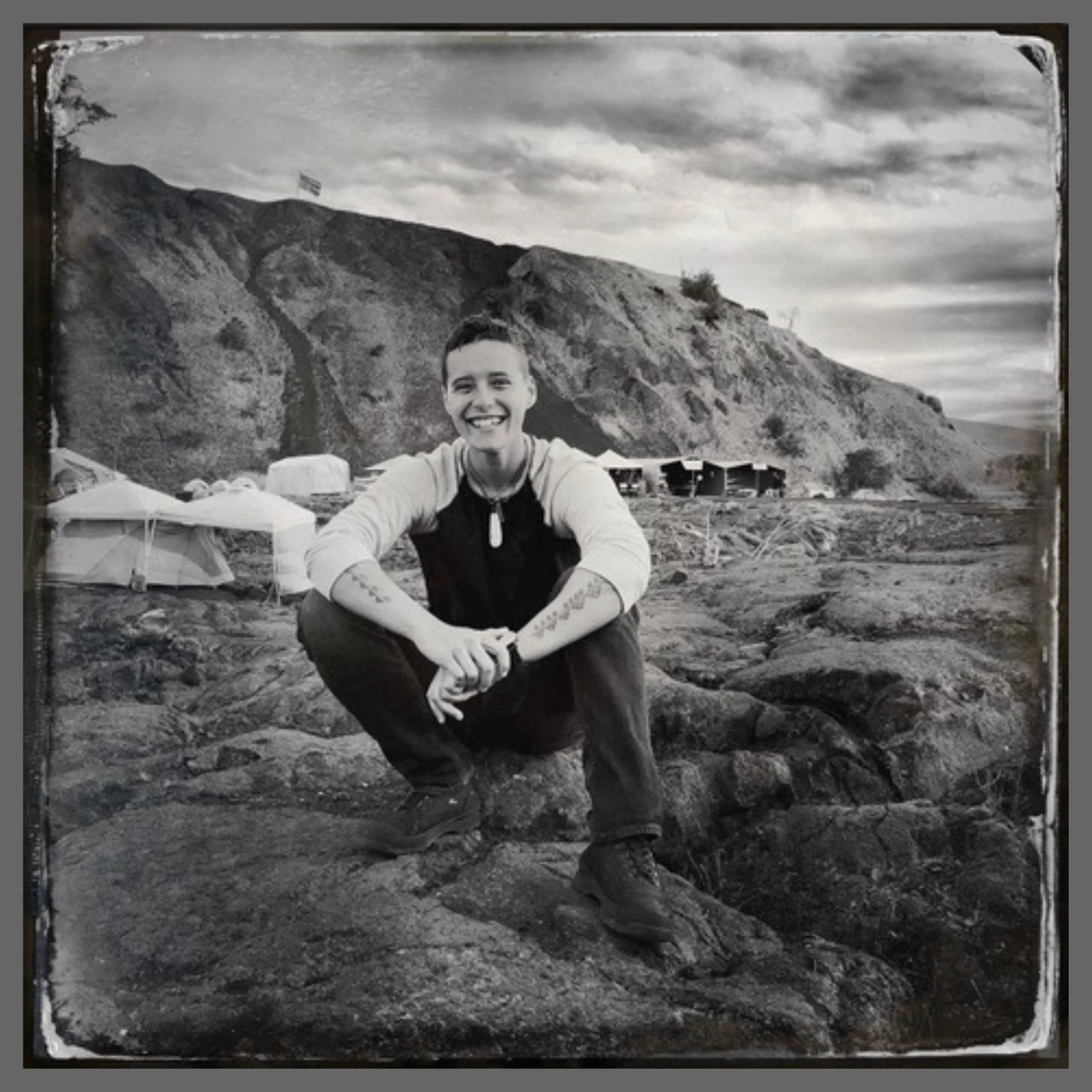
JAMAICA OSORIO · Kanaka Maoli Wahine Poet · Activist · Scholar
I have no conception of how we could have allowed / A world quite like this to exist / Where somewhere thousands of miles away and yet close all the same / A beautiful Palestinian child could be dancing / while her grandfather sings a song written long before the birth of our occupiers… of these overlapping worlds / They are both mine / To know / and to hold / I dare not look away
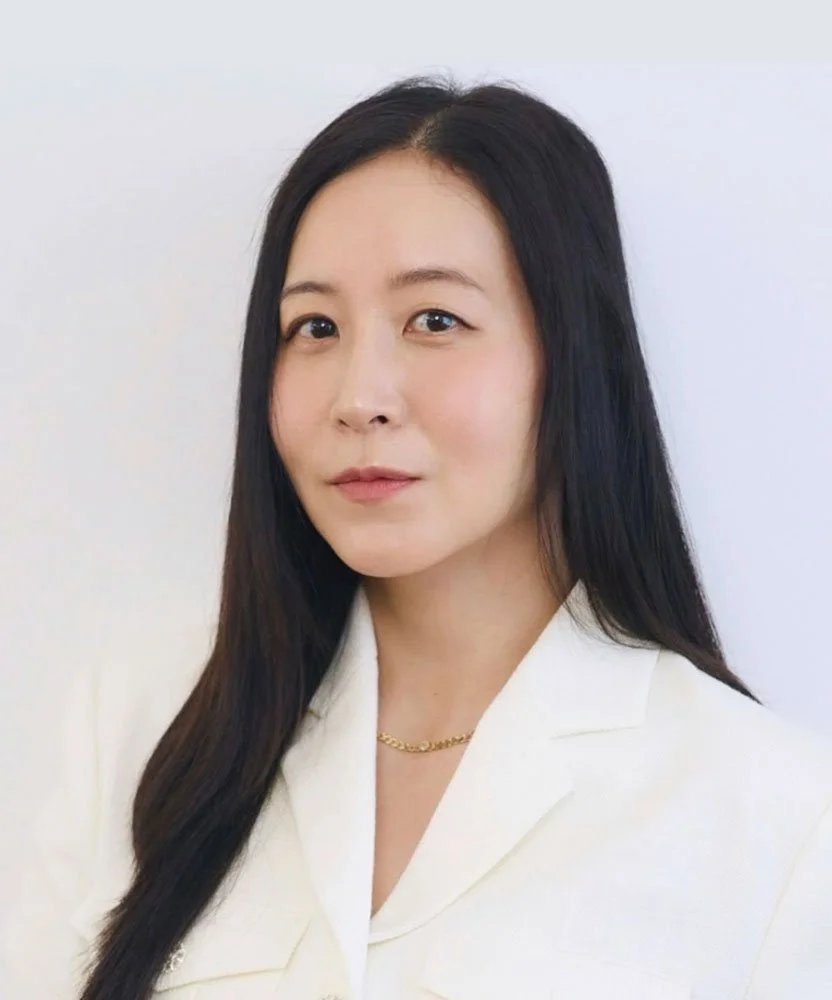
EUNSONG KIM Explains How Our Great Art Collections are Based on Debasing and Erasing Labor
I think through the ways in which you do not have the rise of the museum form... without the acceleration, the mutations of racial capitalism and settler colonialism. I'm really thinking about the ways in which art spaces, in particular cultural spaces... advertise themselves to be an exceptional site, a site that's removed from the world, but it's actually in those very spaces that you can so clearly see the ways in which the trenchant dynamics of racial capitalism, but also colonialism manifest.
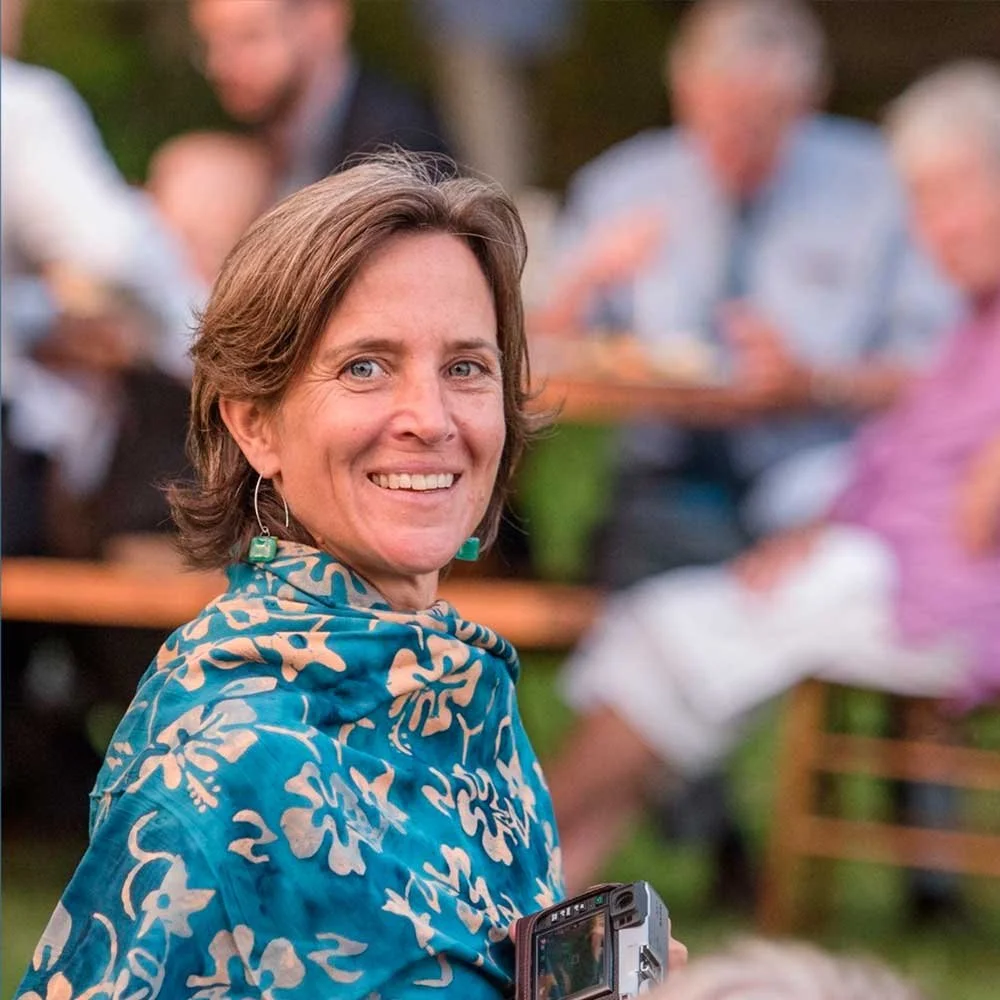
HELEN WHYBROW
Writer · Shepherd · Organic Farmer
There are two ways that I measure diminishment in the natural world, a world we all have the ability to see and sense no matter where we live. The first is ecological: a loss of vitality, complexity and stability. This can be studied and measured, but it can also be perceived by simply listening and noticing. Nature has a voice that sings in different registers and in those registers you can hear health or struggle, presence or absence. The second way I measured diminishment is in the human experience-- loss of beauty, of meaning, of pattern language these also become more available to us as we watch and listen take in what surrounds us.
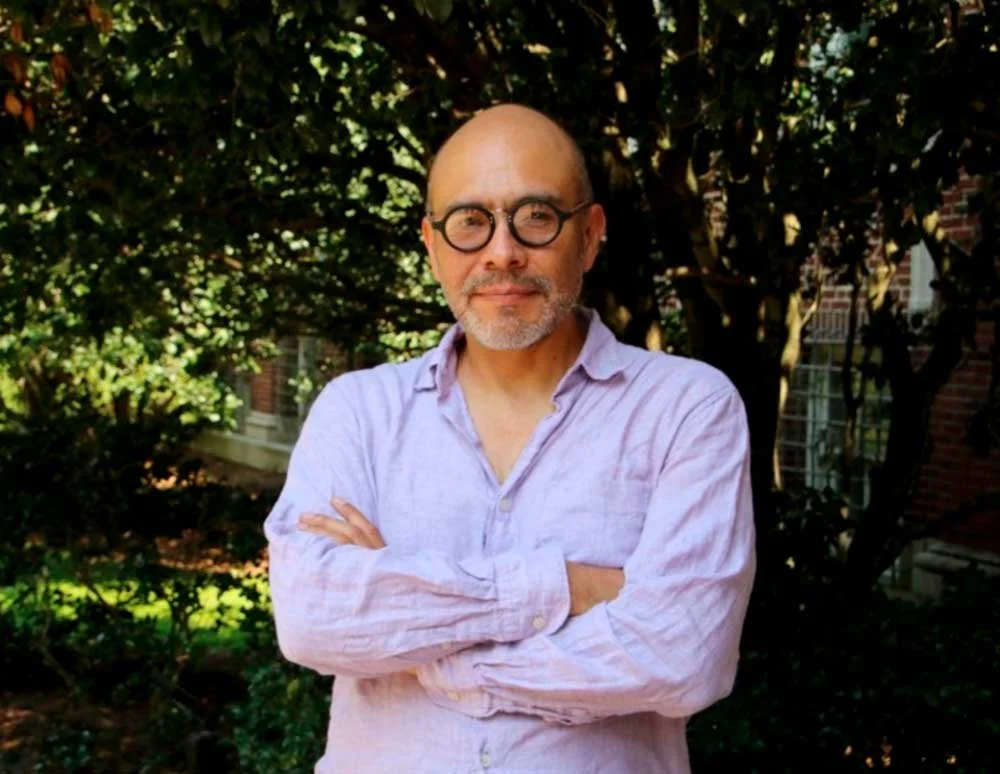
YURI HERRERA on Benito Juarez and Today's Political Crises
Benito Juarez is a really important figure in Mexican culture, politics and history. He is probably the most respected figure in that sense in Mexico, only akin to what Lincoln is in American culture. Juarez was an orphan in the state of Oaxaca who spoke a variant of Zapotec, an indigenous language. He was sent to a seminary and was going to become a priest, but in his own words, he felt repulsed by the way the priests were manipulating the people in Oaxaca.
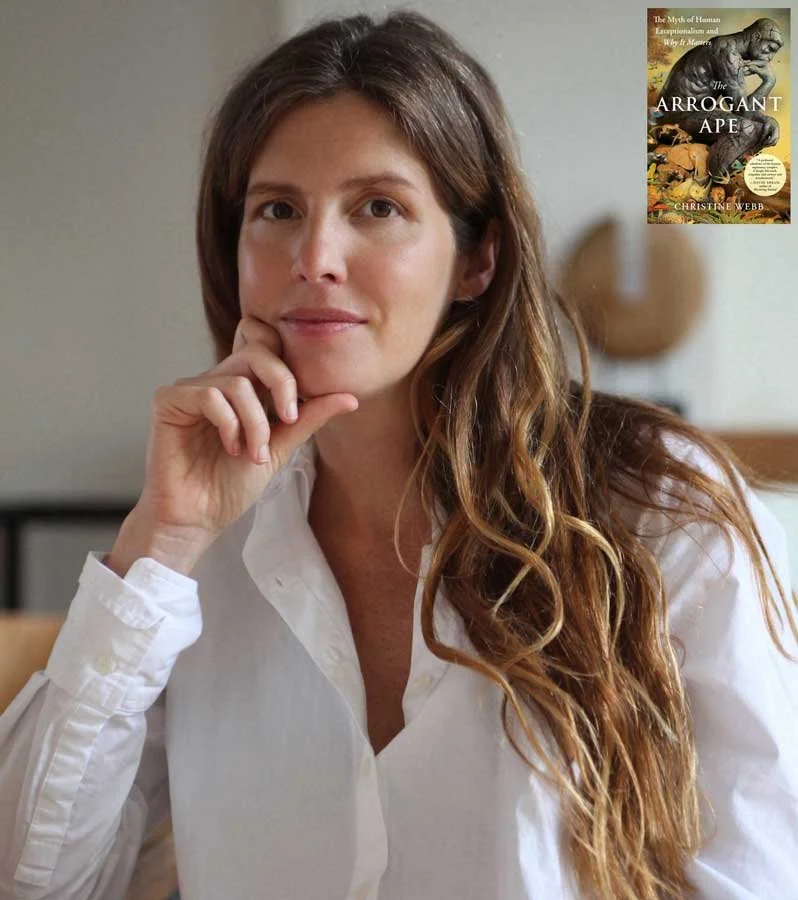
A Conversation with Primatologist CHRISTINE WEBB
There are many ways in which I think human exceptionalism has seeped into the sciences, but one of the many ways is through the methodologies we use when we compare the intelligence of humans and other species. In particular, in my field, I’m a primatologist by training, comparing the cognitive abilities of humans with the abilities of our closest living relatives, the great apes. Many times, those studies compare the intelligence of captive chimpanzees who are living in highly restricted, manmade environments. Often, these chimpanzees have been separated from their biological mothers at birth. They're often separated from the group during testing. They're subjected to very human-centric experimental paradigms, like playing with plastic puzzle boxes or computer touchscreens, and we're measuring how they perform on these tasks.
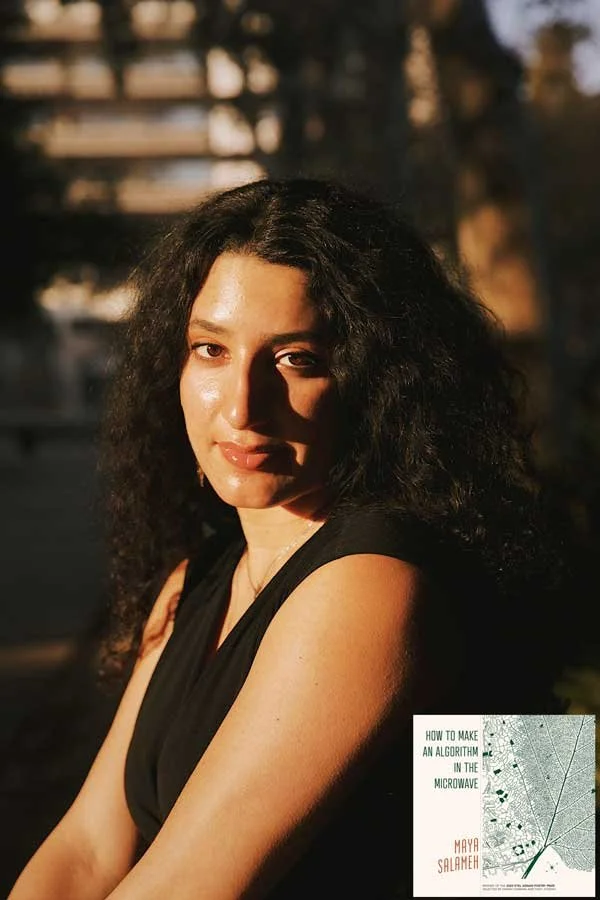
A Conversation with Poet MAYA SALAMEH
Poetry is like one of the great loves of my life, and I think it's probably the longest relationship I'll ever have. I read a lot of poetry. I also wrote these short stories even when I was pretty young, like in second grade, and the stories kept getting shorter and shorter. My family used to go to Damascus in Syria and Lebanon every summer for three months until 2011, when the Civil War broke out in Syria. In 2015, we made our first return after that gap, and my father and I went to Lebanon for two weeks. It's the first time I felt that I belong. To the extent that was true or not, I'm obviously irrevocably American. I speak broken Arabic. I don't think I could ever live in Lebanon or Syria. But for what it was worth at 15 years old, it was a life-changing trip. I wrote my first official poem on the plane back to San Diego from that trip, and I feel that was a formative moment for me. I felt that I had a story to tell and wanted to put it to paper in the form of poetry.
In 2015, we made our first return after that gap, and my father and I went to Lebanon for two weeks. Being back in one of my two homelands as a more fully formed person and not like a young child, I thought, "Wow, this is the first time I've been in an Arabic-speaking Arab place as a teenager."
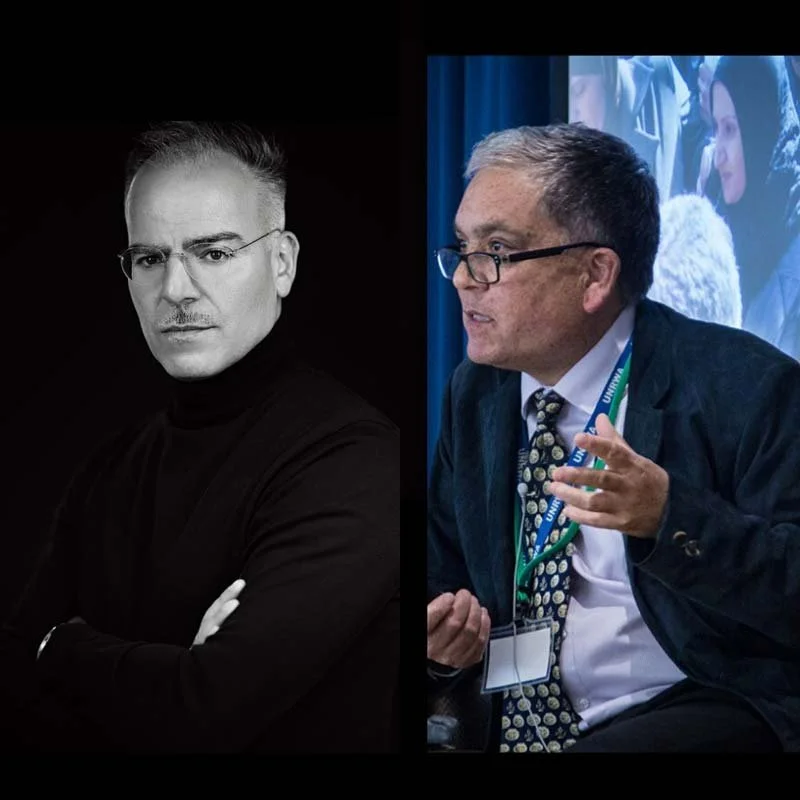
A Conversation with ARDI IMSEIS & CHRIS GUNNESS
When one looks at the relative power imbalance between the Palestinian people on one hand, including the paramilitaries that are clearly existing in Gaza, and the Israeli armed forces, they have been bombarded from land, sea, and air. They have been starved and are being starved. They have been chased from pillar to post by the hundreds of thousands, up and down this very small strip of land.
All of it can be attributed to a scorched-earth policy of these Israelis to destroy every aspect of civilian life that we are all familiar with: schools, homes, roads, religious buildings, governmental offices, hospitals, medical centers, and so on. The idea is not new by any means. Anyone familiar with Israel's settler colonial endeavor in Palestine, particularly around 1947, 1948, and 1949, will know that scorched earth tactics are a policy.

in Sam Altman's Open AI
A Conversation with KAREN HAO
My book is called Empire of AI because I'm trying to articulate this argument and illustrate that these companies operate exactly like empires of old. I highlight four features that essentially encapsulate the three things you read. However, I started talking about it in a different way after writing the book.
The four features are: they lay claim to resources that are not their own, which is the centralization of resources; they exploit an extraordinary amount of labor, both in the development of the technology and the fact that they're producing labor-automating technologies that then suppress workers' ability to bargain for better rights; they monopolize knowledge production, which comes when they centralize talent.
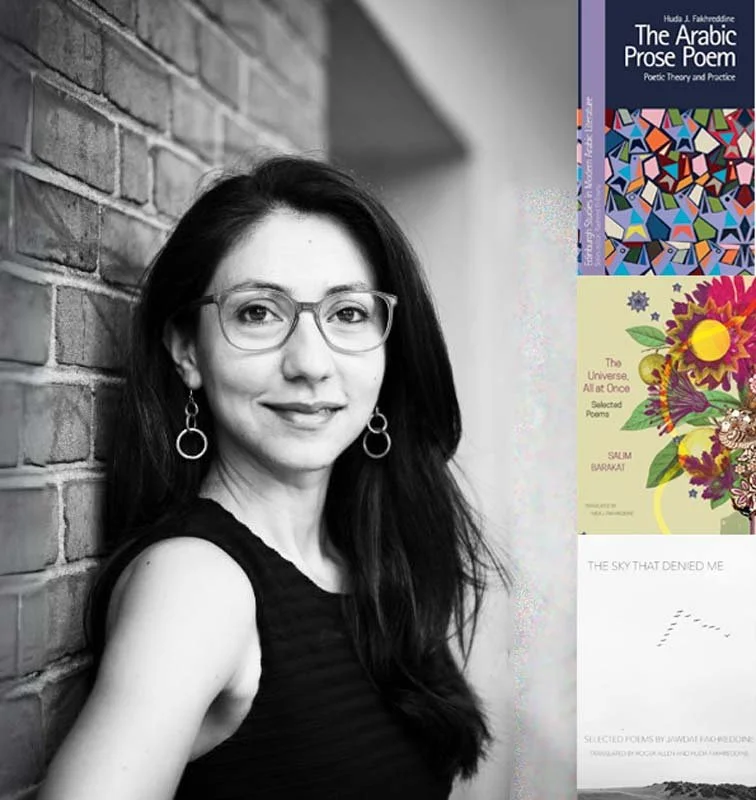
A Conversation with HUDA FAKHREDDINE
Writer · Translator · Associate Professor of Arabic Literature · University of Pennsylvania
I'm Lebanese. I grew up in Lebanon during the Civil War, and I came to the United States as a graduate student with the intention of going back. I never wanted to stay here. I really thought that my life would happen in Beirut, in a city that I loved and hated in the healthiest of ways. My investments, both literary and intellectual, were rooted there. I came here as a graduate student and joined the PhD program, and then the events continued to unfold there, making life more and more of a risk, building a life in a place like Lebanon. The most important counterpoint in my life was meeting my partner, Ahmad Almallah, who is Palestinian. So immediately, my life became the life of a Palestinian by association. Of course, the past two years—almost two years—have been surreal. I sometimes don't believe that we're going through what we're going through because, as security concerns have become something we think about at home, when we walk from home to campus or my office, I'm constantly anxious to open my mail because often there are things that will require a lot of energy, time, emotion, and are emotionally taxing. There’s a lot of rage now in many aspects of my life, but all that aside, my personal experience—both professional and personal, and at home, familial—are not exceptional. Many other people are experiencing intimidation, silencing, and feeling cornered, censored, and oppressed just because they took a stand—a very decent, normal, basic human stand against genocide.

A Conversation with Author MALCOLM HARRIS
One day, I woke up with this concept of oil being tied up in our lives in ways that we don't talk about. It’s sort of a value-theoretical approach to climate change and the climate crisis. Something that's impersonal and goes to the root of our entire social metabolic structure.
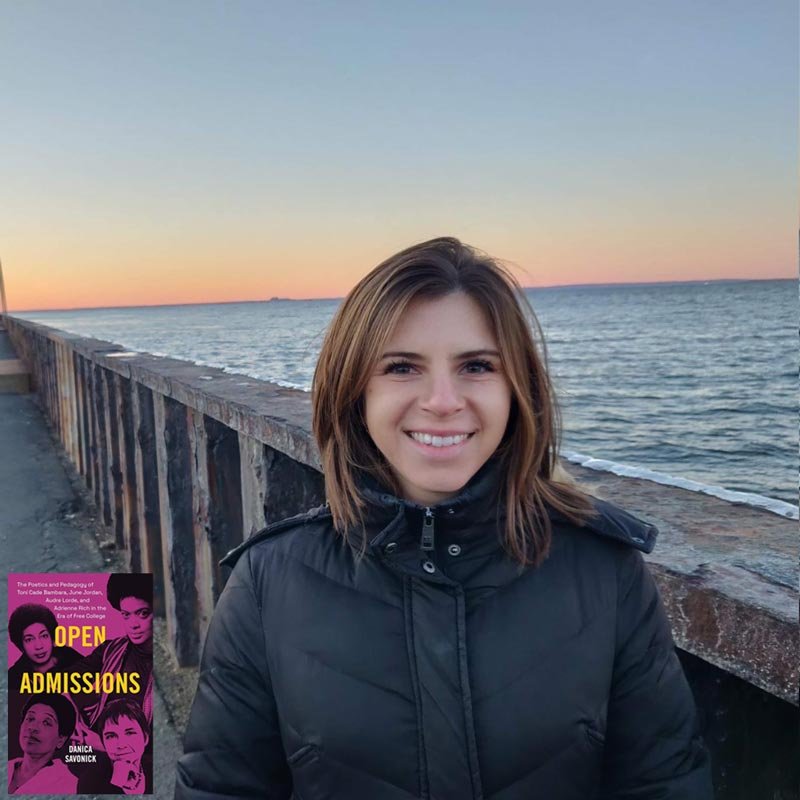
A Conversation with DANICA SAVONICK about her book Open Admissions: The Poetics and Pedagogy of Toni Cade Bambara, June Jordan, Audre Lorde, and Adrienne Rich in the Era of Free College
As I was reading Hooks and Freire, a colleague recommended Adrian Rich's essay "Teaching Language in Open Admissions." It was in that essay that I first read about her experiences teaching at CUNY during open admissions, learning that she taught alongside June Jordan, Audre Lorde, and Toni Cade Bambara. Eventually, that essay led me to their archival teaching materials. I was really excited because I found in those materials concrete teaching methods, things they were doing in their own classrooms that I then started trying in my classrooms as well. I also really liked their educational philosophies, thinking about what it means for college to be free and the fact that they were teaching during this revolutionary era. What would that look like today? What would it mean? What could free college bring to our society? What does free college make possible? All of those things coming together led me to the project.

Race, Gold, IQ & the Capitalism of the Far Right
A Conversation with QUINN SLOBODIAN
The origin was really trying to make sense of that 2016-2017 moment and to ask whether the alt-right was, as we were being told, a return to the 1930s, a kind of awakening of the sleeping beast of white supremacy armed in the streets in the United States. There are many explanations, but I decided to take this kind of curious route in with the distorted readings and reinterpretations of the works of people like Ludwig von Mises and Friedrich Hayek. As a scholar of comparative literature, I wanted to write a revision based on Crack-Up Capitalism.
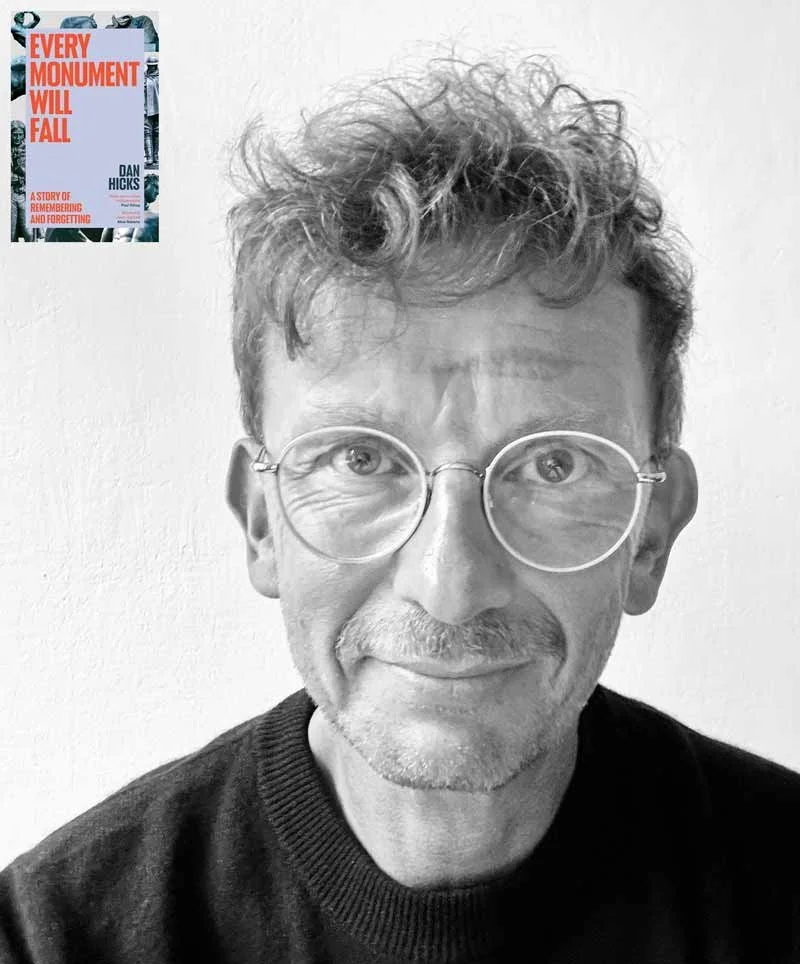
A Conversation with DAN HICKS on Remembering & Forgetting
I work in between archeology and anthropology in this field called either historical archeology or contemporary archeology. At the heart of that is the relationship between objects and humans. How do we write about the past or the present in terms of listening to human voices or evidence from things where maybe human voices have been erased or haven't left as much of a mark on the written records as others? Wrapped up with that, though, is always the risk of dehumanization, of the treatment of human lives as if the boundary between a subject and an object is one that is permeable, not in a sort of positive way, but in a more sinister way. There is a long history of people being treated as things.

Grupo Auto Defensa’s Courage & Love
A Conversation with DANIELA NAVIN, JEANETTE DE LA RIVA & MAXMILLIAN ALVAREZ
I think the community came together more when we started getting those notices about people being swept up by these supposedly ICE agents who are just covered up. So that was the thing that made us come out there and start defending everyone who doesn't want to come out to defend themselves.

A Conversation with WENDY LIU
Abolishing Silicon Valley means freeing the development of technology from a system that will always relegate it to a subordinate role, that of entrenching existing power relations. It means designing a new system that isn't deluged in the logic of the bucket. It means liberating our worlds from the illegitimate ring of capital. Perhaps this sounds unfair to capital. Perhaps I sound like I'm not grateful enough for everything that capital has given us, but we don't owe capital anything; the things we attribute to capital were built by workers. People can labor and sometimes die in a process. Their contributions are unrecognized in death as in life. So don't thank capital. It doesn't deserve our gratitude, and it doesn't need it. Thank the people who created everything that capital always takes credit for. Capital is a means of accounting for wealth ownership, not its creation. And that means it's perpetually shrouded in a fundamental untruth; we can leap the swamp of capital behind and start over with something new.
In this episode on Speaking Out of Place podcast Professor David Palumbo-Liutalks with Wendy Liu. Ever since its publication, Abolish Silicon Valley—How to Liberate Technology from Capitalism has proven to be more urgent and insightful. Today, he talks with author Wendy Liu about how developments like AI and LLM, further erosions of intellectual property, and increased invasions of privacy make the case for abolishing Silicon Valley even more important. They talk about how abolition is critical at a time when more and more the private sector has come to eviscerate the public good. Turning to the genocide in Gaza, they discuss the ways Capital has enlisted technology in deadly and horrific manners. They end with a meditation on the commons and how one can live with fewer commodities and find value in common projects to make life more valuable and worthwhile outside of the logic of the market.

Conversation with Journalist MEL BUER
From my perspective, it just seemed like a way to terrorize a neighborhood and intimidate the people living there, and intimidate the city in a way that they've been trying to accomplish for the last six weeks, and it wasn't fun. So were there orders? There were no orders to disperse.
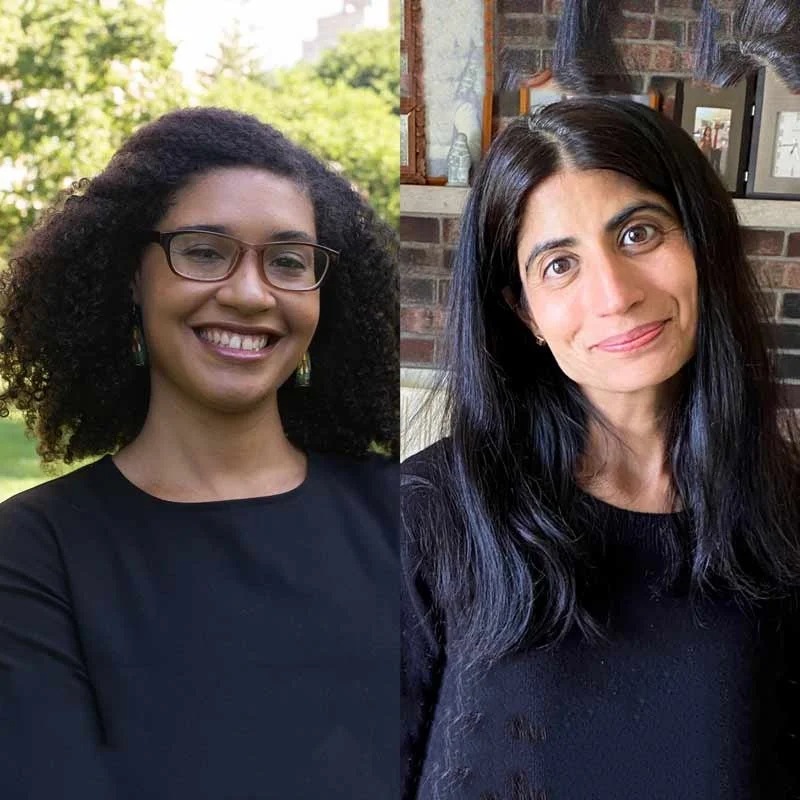
A Conversation with Human Rights Activists GABRIELLE APOLLON & POOJA BHATIA
There were two major periods during which Haitians began to arrive: in Springfield, in 2021 and then again in 2023. They really revitalized the economy of Springfield and they made it feel a lot livelier. I think that there were two things. One is that there was the feeling, like the vibe; it just became a lot more energized. A lot of immigrants would come, and they would rent and, in some cases, buy these magnificent old houses and restore them. They basically brought them back to life. The other aspect of the revitalization came indirectly through income tax revenues. Just last night, the Springfield City Commission had a meeting.

A Conversation with BECCA LEWIS
I think I've always been interested in the far-right end of technology, or I should say for several years that’s what I’ve been studying. However, I kept feeling that gender was understudied in these elements. When I was studying the alt-right online, the focus more than anything else was frequently on white nationalism and the racial dynamic. The scholars whose work really inspired me, like sociologist Jesse Daniels, showed how the racial dynamic was always interconnected with the gender dynamic. As I started following breadcrumbs and looking at certain figures, it became clear that gender was at the heart of their worldview, and there was no getting around it. There were absolutely elements around race and immigration and all sorts of different topics, but in many ways, gender was the core of the worldview, and everything else emanated from there.
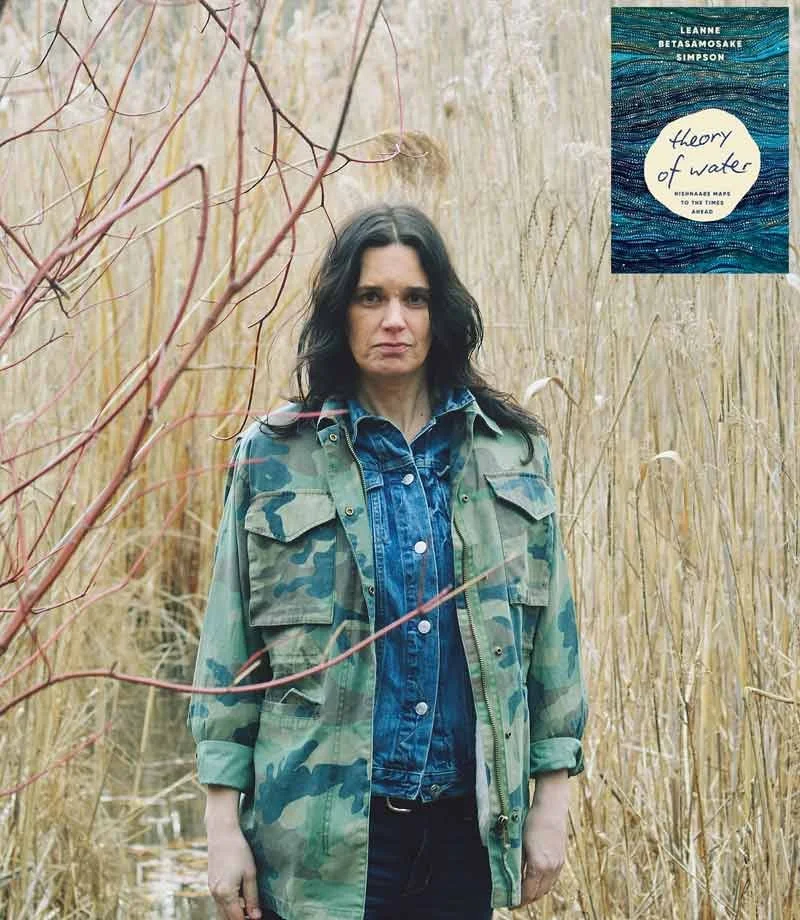
World-Making, Life-Giving & Indigenous Internationalism with LEANNE BETASAMOSAKE SIMPSON
So I think that part of colonialism for Indigenous peoples has been this idea that Indigenous peoples aren't thinking peoples and that we don't have thought on a kind of systemic level. One of the things that I was interested in doing is intervening in that because I think Indigenous people have a lot of beautiful, very intellectual, theoretical contributions to make to the world. A lot of our theory is encoded in story, but a lot of our theory is also encoded in land-based practice. You can't learn about it from reading books or from going to lectures. You have to really be out on the land with elders for long periods of time.

A Conversation with MANIJEH MORADIAN & PERSIS KARIM
I think one must frame what happened in Iran recently in the context of what is happening in the larger Middle East, which is that Israel and the United States principally are orchestrating a kind of regional shift in their power that can only be seen in light of what happened, and it continues to happen in Gaza and the wider Palestinian Territories, which is that Israel is, by virtue of signaling an aggressive move towards Iran, suggesting that it will continue unabated to exercise its will throughout the region, and that it also is interested in destroying Iranian support for Palestinian rights in the region.
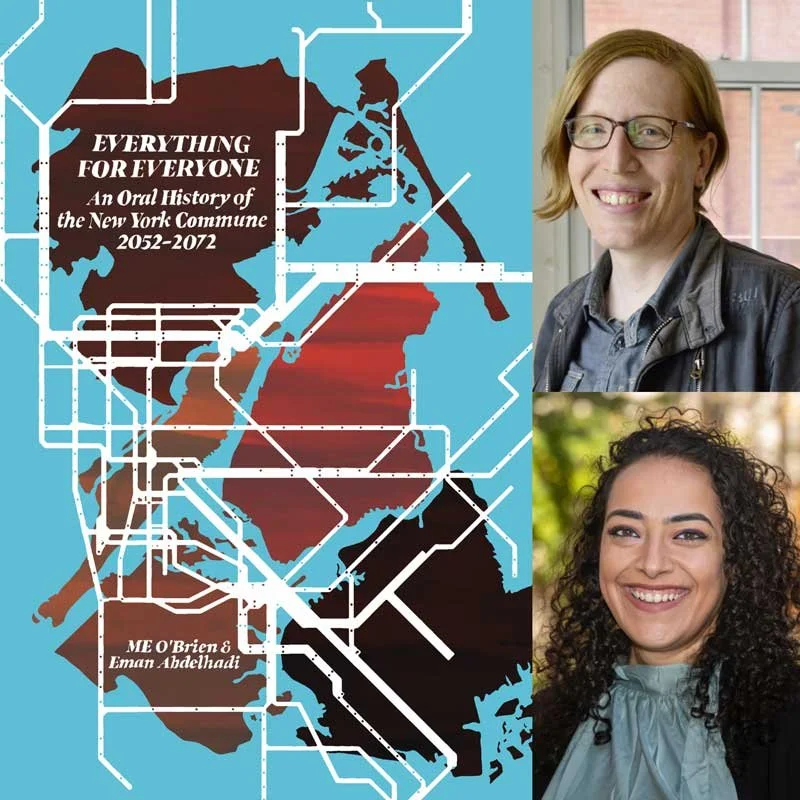
A Conversation with M. E. O’BRIEN & EMAN ABDELHADI
The book is a speculative fiction novel that imagines a transition out of capitalism in the nation-state in the next few decades, but it is composed of a series of fictional oral history interviews. We imagine ourselves in the future, and we are writing a book to celebrate the 20th anniversary of a food riot that launches the New York version of this kind of revolutionary transition. We are conducting various oral histories with different actors, some who participated in the revolution and some who grew up in the new social form, which is the commune. The book consists of a series of 12 interviews that we trade off as interviewers. It was actually Michelle’s idea to write the book. She had written a fictional oral history interview for an online magazine and invited me to create a whole novel of these interviews. We both have a relationship with oral history as a form of research and engagement with the world. I conduct life history interviews for my sociological research, and Michelle ran a New York Trans Oral History project, which is a great archive that people should check out. It has 200 interviews, so we both have experience in this field. We are both science fiction fans, friends, and comrades. I have spent many years discussing politics, the future, and the left. The book is a culmination of all these elements, representing an intersection of various facets of our lives as scholars, as well as our friendship and comradeship. We pitched the book to Common Notions, presenting a general outline of the world and brief paragraphs about each character we thought we might write about. They encouraged us to proceed, and the rest is history.
A Conversation with AZIZ RANA
In the US, we have this idea that exists as a kind of popular cultural sense. The country has basically had the same constitution—a document ratified in the 1780s, and it has really been in effect since then. However, one of the things that's distinctive about the US Constitution is that it is perhaps the hardest in the world to formally amend. It is incredibly difficult to change the actual terms of the text, even during times when we've had pretty profound changes to the language. Here, we can think about the Reconstruction period with the passage of the 13th, 14th, and 15th amendments.
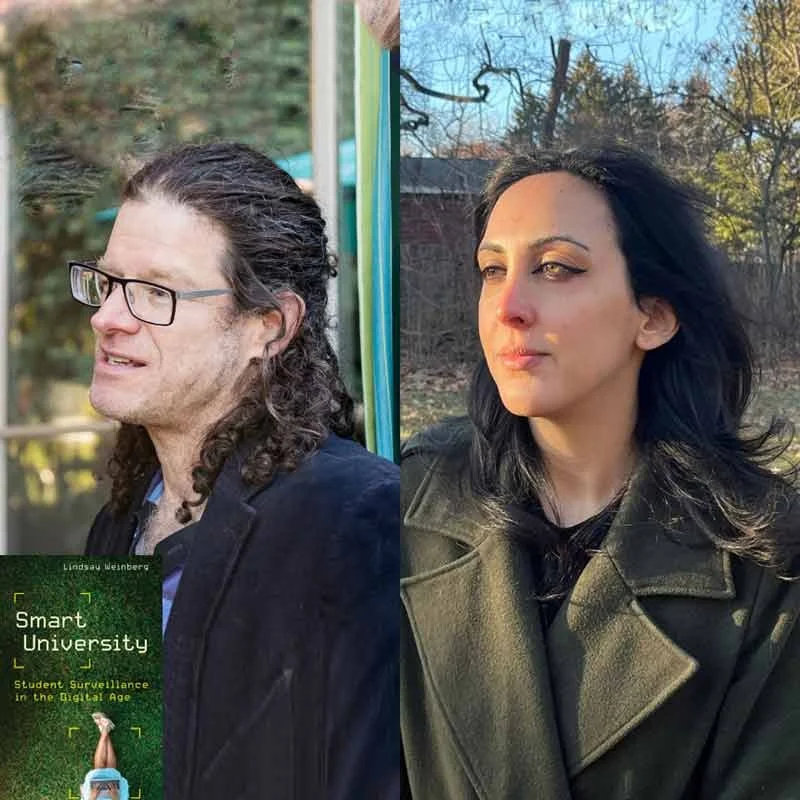
A Conversaton with LINDSAY WEINBERG & ROBERT OVETZ
Under the guise of “personalizing” education and increasing efficiency, universities are increasingly sold on AI as a cure to their financial ills as public funds dry up and college applications drop. Rather than maintain that education is an essential public good that needs broad support, universities are looking to technology in ways that are changing the nature of education in dangerous and destructive ways. As Lindsay writes in the book, Smart University: “Higher education is becoming increasingly synonymous with digital surveillance in the United States. Advanced network infrastructure, internet- connected devices and sensors, radio frequency identification (RFID), data analytics, and artificial intelligence (AI) are being celebrated as a means of ushering in the age of “smart universities,” one where institutions canrun their services more efficiently and strengthen the quality of higher education using digital tools. However, as this book demonstrates, these tools have a darker side. They allow public universities to respond to and perpetuate corporate logics of austerity, use student data to reduce risk of financial investment in the face of dwindling public resources, and track student behavior to encourage compliance with institutional metrics of success. Surveillance of student behavior forms the foundation of the smart university, often in ways that prove harmful to students— particularly those who are already marginalized within the academy.
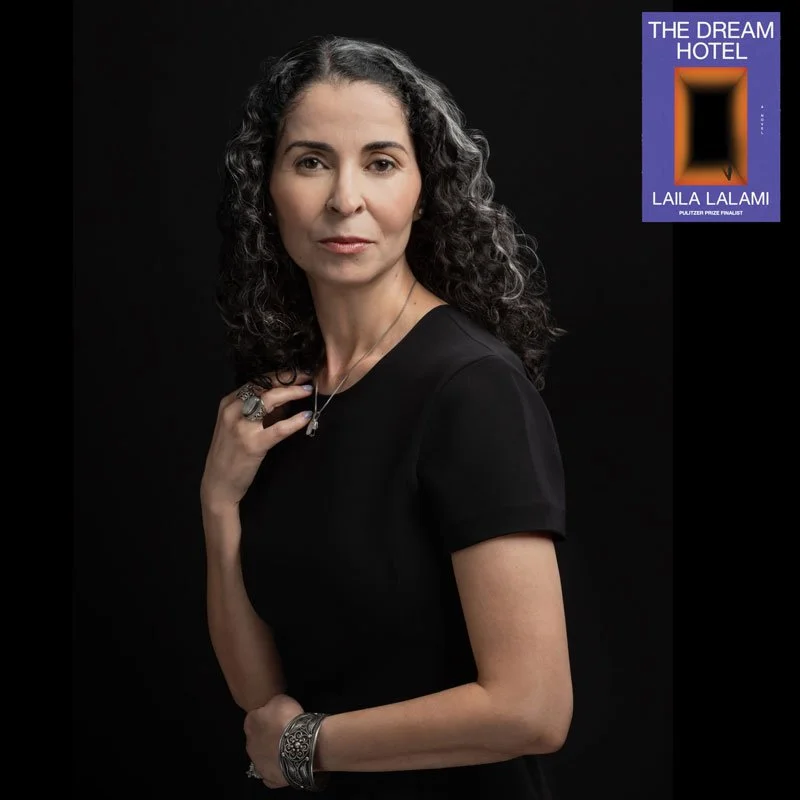
A Conversation with Author LAILA LALAMI
on Dreaming Beyond the Algorithmic State
What happens when the state, with the pretext of protecting public safety, can detain indefinitely certain individuals whose dreams seem to indicate they may be capable of committing a crime? Set in a precarious world where sleep-enhancing devices and algorithms provide the tools and formulae for making one’s unconscious a witness to one’s possible waking life, this novel touches on a myriad of political, philosophical, and moral concerns as they particularly connect to issues of gender, race, ethnicity, privacy, and the security state.
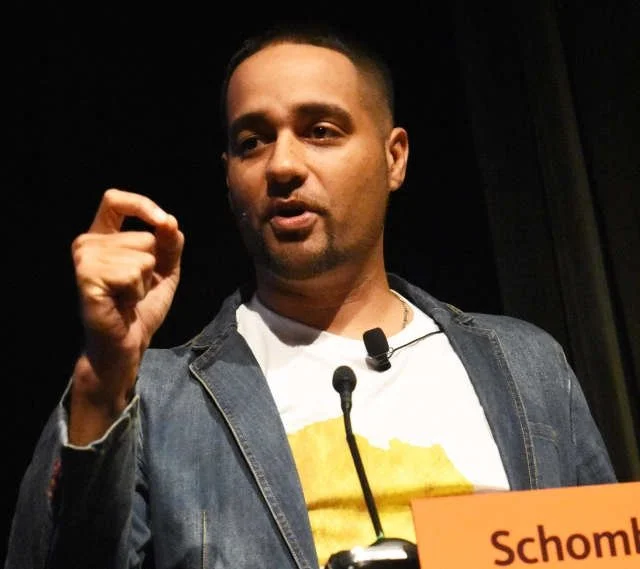
JESSE HAGOPIAN on The Radical Healing of Organized Remembering
In this episode on Speaking Out of Place podcast Professor David Palumbo-Liu talks with activist and educator Jesse Hagopian about his new book, Teach Truth: The Struggle for Antiracist Education. They talk about the assault on public education that takes the form of criminalizing the truth itself. They note both the powerful corporate forces behind this movement and what they are afraid of, and also discuss the many instances of people fighting back to name, amplify, and mobilize the truth together.
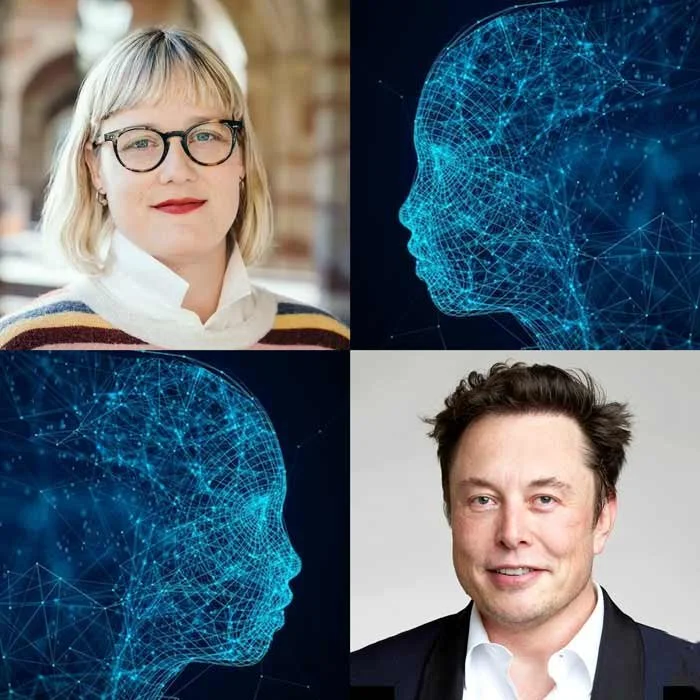
& the Sociopathology of ELON MUSK with SARAH T. ROBERTS
AI is reliant on executives and business managers to direct machine learning to promote their brand and low-level, out-sourced, and poorly paid content managers to slog through masses of images, words, and data before they get fed into the machine. They talk about the cultural, sociological, financial, and political aspects of AI. They end by taking on Elon Musk and the DOGE project, as an emblem of how Silicon Valley executives have embraced a brand of tech rapture that disdains and destroys democracy and attacks the idea that people can take care of each other, independent of sociopathic libertarianism.
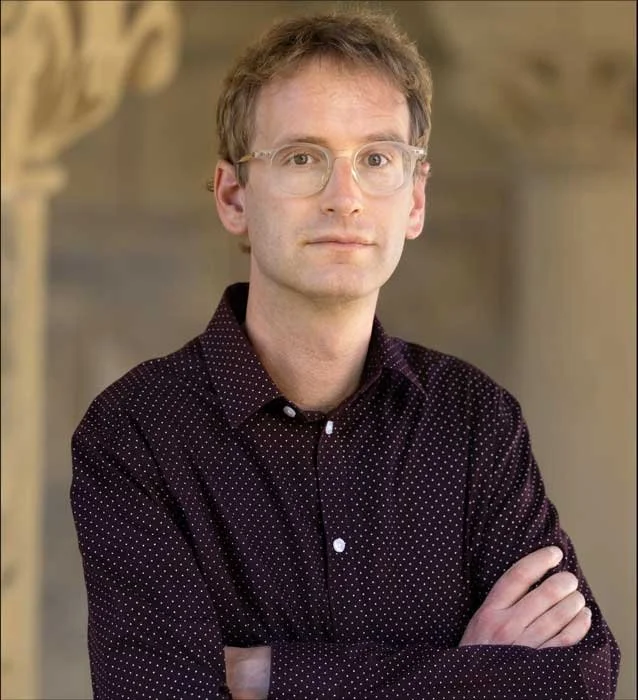
In this episode on Speaking Out of Place podcast Professor David Palumbo-Liu talks with Professor Adrian Daub about the recent elections in Germany, where we saw a surge in votes for the Far Right AfD party, which is now the second most powerful party in the country. They discuss the significance of this rise in popularity and the ways the elections reveal a number of shifts in German politics as the various parties stake out positions that align with not just a center-right orientation but, more dangerously, a far-right one. They speak of the parallels to the recent election of Donald Trump to the US presidency, and what it says about the entrenchment of both neoliberalism and a faux populism based on xenophobia and not serving the actual material interests of everyday people.
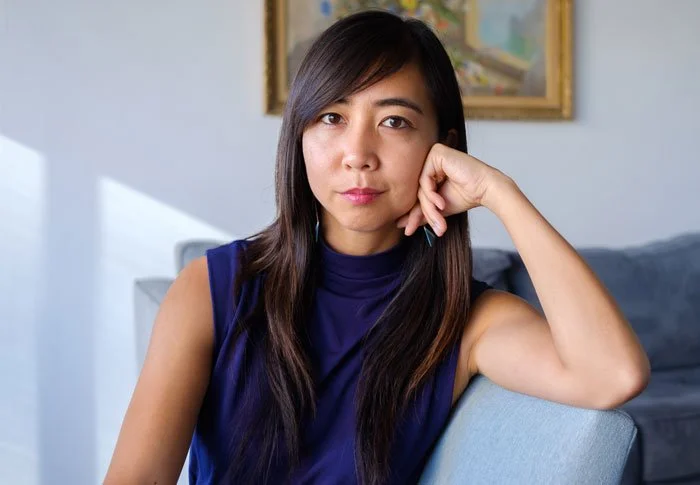
& the New Southern Question with EVYN LE ESPIRITU GANDHI
A discussion about the fascinating personal stories of refugees that have moved between these spaces, disclosing complex and often contradictory notions of belonging and loyalty. They also talk about her current book project, which tackles the idea of southern regions such as South Korea, South Vietnam, and the American South, as each mourning lost images of the nation.
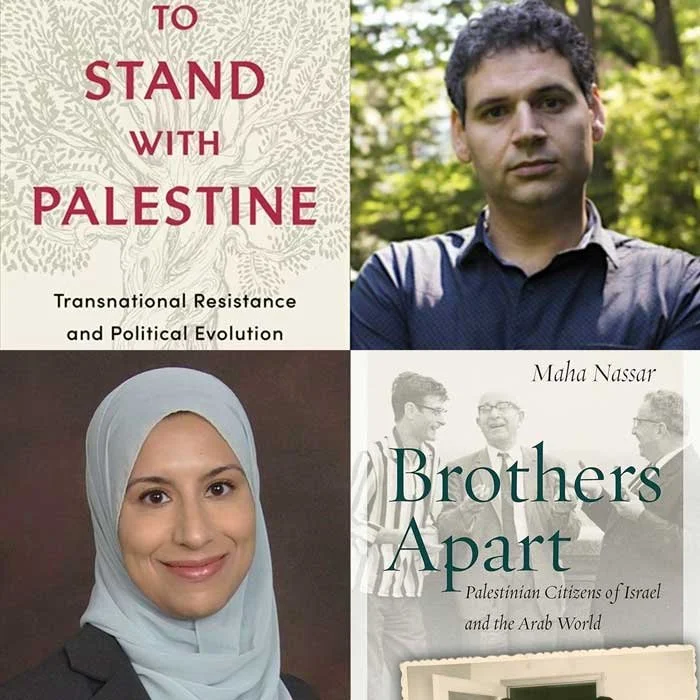
A Discussion with MAHA NASSER & KARAM DANA
An examination of two studies offer a fascinating account of the historical and present-day formation of transnational Palestinian identities and the way that these complex histories inform today’s struggles for Palestinian liberation and rights by both Palestinians and non-Palestinians. They talk about the importance of language, the arts, and especially poetry, as well as contemporary cultural forms. They take on the violence of settler colonialism, neoliberalism, and capitalism and the importance of finding paths of solidarity while never losing sight of what is distinct about Palestine and Palestinians.
with TAO LEIGH GOFFE · Author of Dark Laboratory: On Columbus, the Caribbean, and the Origins of the Climate Crisis
We manage to create a poetics out of that which wishes to destroy us and the planet. How else will we be able to live in ‘the after’? We must reassess what a problem is. Living is not a problem, as Audrey Lorde reminds us. I would add that dying is not a problem either. Decomposing is essential to the natural order and cycle of life. Living at the expense of others is a problem.
The Deadly Consequences of the Liberal Conscience
A Conversation with Omar El Akkad
It is “not what one does or believes or supports or opposes, but what one is seen to be.” Moving from the scale of the individual to that of entire industries and political parties, we talk about the terrible consequences of this attitude with regard to Palestine, and beyond.
Parenting Toward Abolition
A Conversation with MAYA SCHENWAR & KIM WILSON about what inspired them to commission a wide range of amazing activists, artists, scholars, and organizers to write whatever came to their minds about the topic of parenting and abolition. The result is a rich mosaic of unique insights expressed in diverse forms, but each one touching deeply on the interdependency of living beings and the importance of caregiving in all its forms. It is this commitment that leads us always to imagine an abolitionist future for ourselves, and all children.
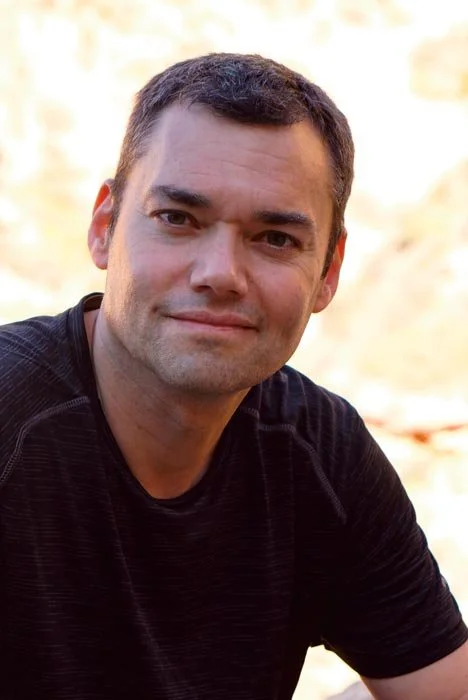
A Conversation with PETER BEINART:
Many Jews treat a Jewish state the way the Bible feared Jewish monarchs would treat themselves: as a higher power, beholden to no external standard. Again and again, we are ordered to accept a Jewish state’s ‘right to exist.’ But the language is perverse. In Jewish tradition, states have no inherent value. States are not created in the image of God; human beings are. States are mere instruments… The legitimacy of a Jewish state—like the holiness of the Jewish people—is conditional on how it behaves. It is subject to law, not a law in and of itself.
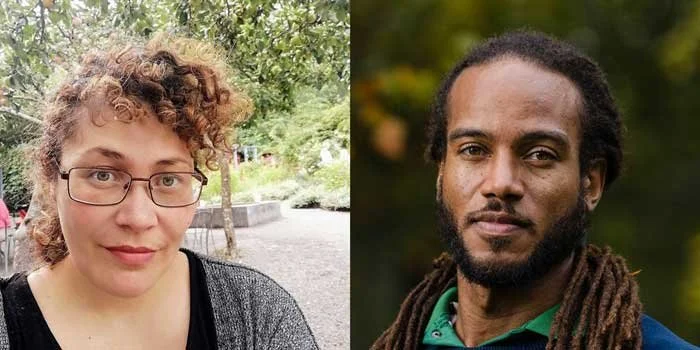
A Discussion with Azucena Castro & Malcom Ferdinand
Ferdinand discusses the “double fracture”—the environmental division of humans from their connection to the biosphere, and the colonial division instantiated by white supremacism and patriarchy. He insists that we not see these two phenomena as separate, rather as intimately connected. This double fracture makes any attempts to solve either environmental violence or colonial violence ineffective. In her foreword to Ferdinand’s Decolonial Ecologies, Angela Y. Davis writes that as she read the book, she “recognized how perfectly his conceptualizations illuminate the frameworks we need for both philosophical and popular understandings of our planetary conditions today.” The conversation covers how art, film, and poetry can manifest some of those frameworks, and Azucena takes us into a deep discussion of this and reads two poems in Spanish and then in English translation and has Malcom gloss them for us.
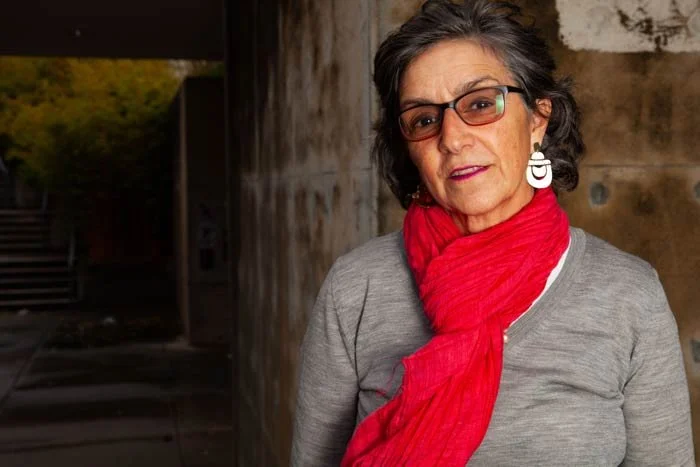
A Conversation with Persis Karim and Roya Ahmadi on a new documentary film, The Dawn is Too Far: Stories of Iranian-American Life. The film captures the lives of young Iranian-Americans who come to the San Francisco Bay Area around the time of the Iranian Revolution, and find themselves involved with, and helping to shape, a vibrant, international culture of politics and art.
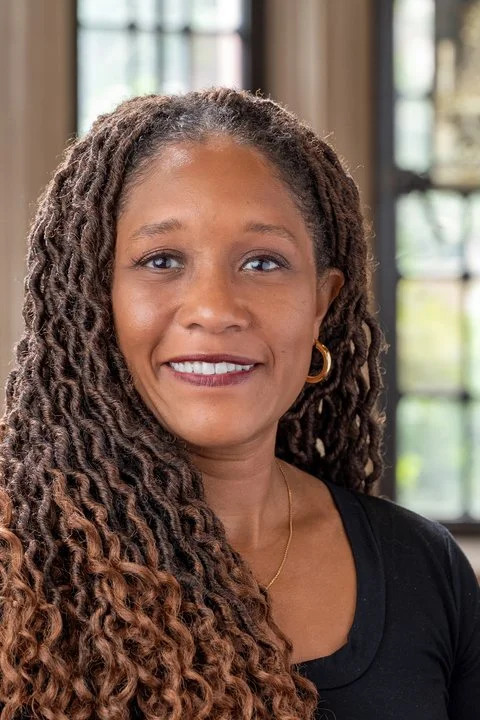
A Conversation with Christen A. Smith on the Work of Black Feminist Beatrix Nascimento
Beatriz was a critical figure in Brazil’s Black Movement until her untimely death in 1995. Although she published only a handful of articles before she died and left only a few other recorded thoughts, her ideas about the symbolic relationship between quilombos (Afro-Brazilian maroon societies) and black subjectivity encourage us to re-imagine the meaning of Black liberation from a transnational, Black feminist perspective.
A Conversation with HUDA FAKHREDDINE & ANTHONY ALESSANDRINI about the unique manners in which literature can disclose the human significance of the historical and ongoing genocide in Palestine. Such revelation has to fight at least two things—the sheer brutality and inhumanity of this violence, and the active silencing of Palestinian voices by institutions that, ironically, profess to champion the humanities. Here, once again, we find a pernicious instantiation of the Palestine Exception. Despite these efforts to censor and silence, Huda and Tony delve deeply into the power of Palestinian poetry through translations and readings of some of the most remarkable literature in the world.
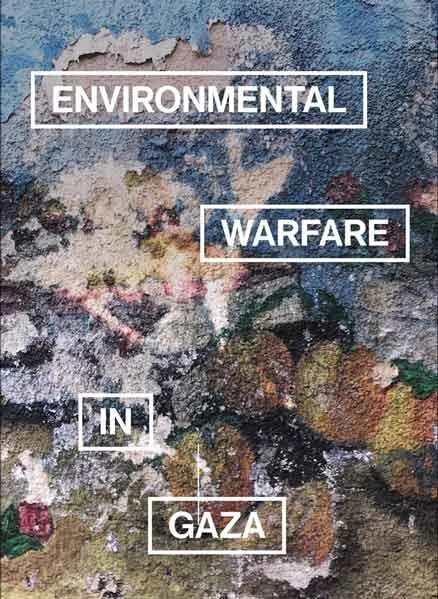
A Conversation with Shourideh Molavi
In this episode on Speaking Out of Place podcast Professor David Palumbo-Liu talks with Shourideh Molavi, who discusses the ways in which Israel has waged a protracted war on both the people and environment of Gaza. Linking this war to its colonial precedents, Molavi explains that, as a researcher for the Forensic Architecture project, she combines technologies like satellite imaging with on-the-ground stories from Palestinian farmers to produce a powerful form of witnessing and testimony to Israel’s war. She connects the trauma felt by the environment and the trauma felt by the people. She also tells of the new and powerful forms of resistance and resilience that take place at the nexus of nature, landscape, and the Palestinian people.
One Year Later—The True Cost of Israel’s War on Gaza & the West Bank
A Conversation with Prof. Sophia Stamatopoulou-Robbins & Dr. Jess Ghannam
In this episode on Speaking Out of Place podcast Professor David Palumbo-Liu talks with Sophia Stamatopoulou-Robbins and Jess Ghannam, who comment on a devastating new report authored by Stamatopoulou-Robbins. This report, “Costs of War,” reviews data gathered in Palestine since October 7, 2023. In that year alone, the report finds that the US has spent at least $22.76 billion on military aid to Israel and related US operations in the region. The number of direct deaths, but also so-called “indirect deaths” (and such a term forces us to project such deaths well into the future due to Israel’s massive destruction of the infrastructure and environment necessary to sustain even the barest forms of life), leads this report to claim that “the scale and rapidity of Gaza’s destruction … is unprecedented, not only in Palestinian history, but in recent global history.” Today we review but a small portion of the information that supports this terrible claim.
with Naomi Paik & Ashley Dawson
In this episode on Speaking Out of Place podcast Professor David Palumbo-Liu talks with scholar-activists Naomi Paik and Ashley Dawson about the close connection between abolition and environmental activism from below. How are the twin projects raising profound questions about borders, carcerality, enclosures, and the separation of humans from each other and all other forms of life, including supposedly “inanimate” objects? How can we create “sanctuary for all” in a radical rethinking of notions like “the commons”?
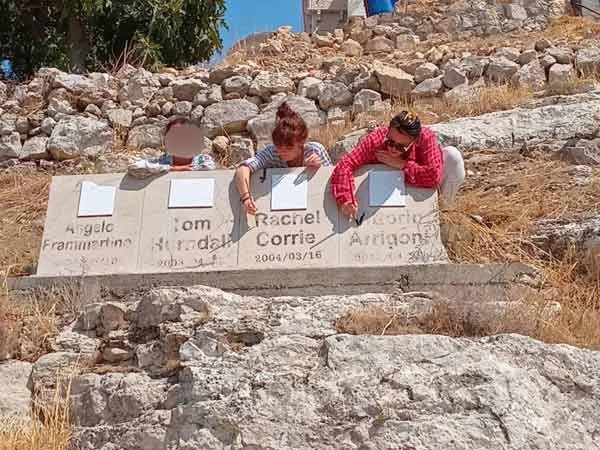
An Interview with Members of the International Solidarity Movement
In this episode on Speaking Out of Place podcast Professor David Palumbo-Liu talks with three international volunteers from the International Solidarity Movement. They are all involved in the effort to save the Masafer Yatta region in the Occupied West Bank.
While it has been a common practice of psychological warfare for the IOF to place military firing ranges near villages, neighborhoods, outside Palestinian hospitals, and prisons as a persistent reminder of its power and the possibility of lethal force in every space, the case of Masafer Yatta is exceptional--people’s actual homes are bulldozed, land confiscated, livestock stolen, and people often driven to live in caves. Palestinians face physical attacks, including indiscriminate shootings, from Israeli settlers, military police, and the Israeli Occupation Force, who each act in collusion with each other, and enjoy near immunity.
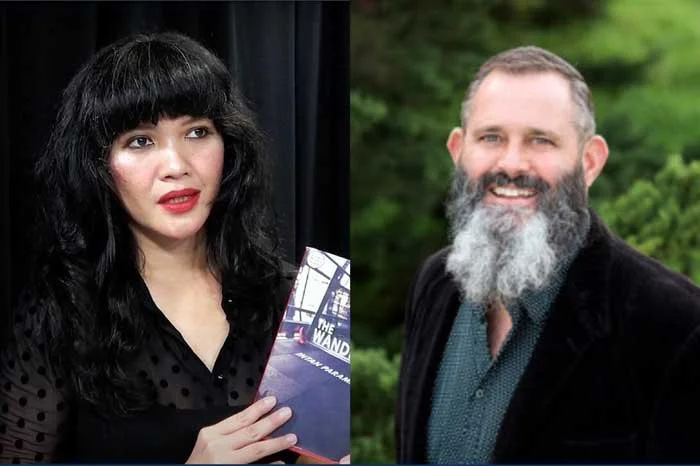
A Conversation with Intan Paramaditha and Michael Vann
Today, Sunday morning, October 20, former general Prabowo Subianto is being sworn in as Indonesia’s new president. In this episode on Speaking Out of Place podcast Professor David Palumbo-Liu and Azeezah Kanji talk with Intan Paramaditha and Michael Vann about the road leading up to this inauguration, beginning in the 1960s with the Suharto regime. Prabowo is a strong-arm authoritarian figure with a bloody record of human rights violations, yet he has remade his image as a cuddly, elder populist figure. We spend some time talking about how his regime is likely to continue, if not accelerate, aggressive and brutal economic development policies that have wrecked the environment and displaced Indigenous peoples. We talk a lot about how both the Indonesian media and some of its art world has been enlisted to promote this regime, and how decolonial feminists and others have taken on the task to both resist and present, and embody, other ways of being through listening to and engaging with voices from outside Jakarta and the liberal elites.
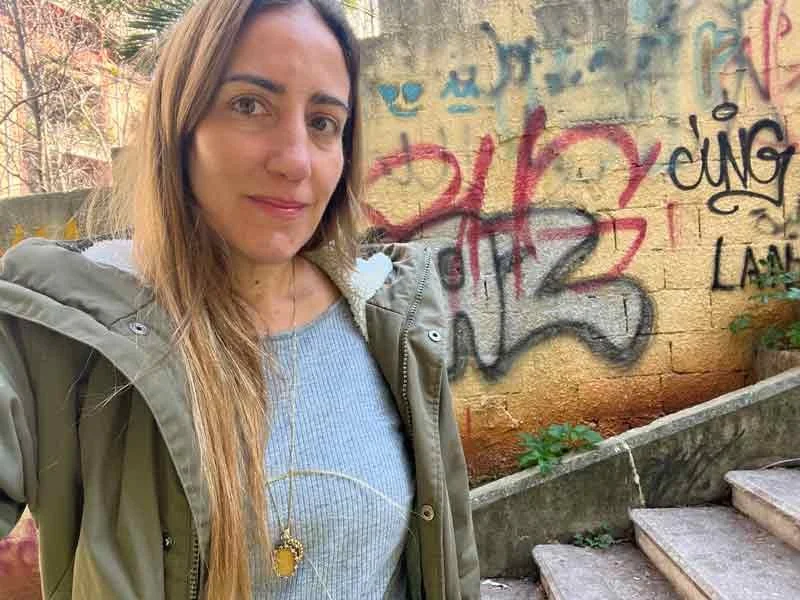
Ecologies of Resistance and Survival in South Lebanon with Munira Khayyat
In this episode on Speaking Out of Place podcast Professor David Palumbo-Liu talks with Munira Khayyat, a Lebanese anthropologist whose book, A Landscape of War: Ecologies of Resistance and Survival in South Lebanon examines what she calls “resistant ecologies in a world of perennial warfare.” Drawing on long-term fieldwork in frontline villages along Lebanon’s southern border with Israel, she examines war not only as a place of death and destruction, but also necessarily, as an environment of living.
We appreciate greatly that she was able to join us now, during the massive and deadly new war Israel is waging on Lebanon. Munira shows how this devastation is a continuation of wars Israel has waged against Lebanon for decades, but also how both the Lebanese people and the Lebanese landscape are resisting death and persisting in life. This episode is especially useful to those wanting to know more about Lebanon, as Professor Khayyat gives us an informative account of the intertwined histories of Lebanon, Palestine, and the State of Israel.

A Conversation with Lecturers & Students
Recently, twenty-three lecturers in the highly successful Creative Writing program at Stanford were summoned to a Zoom meeting where they were first praised, and then summarily fired. One of the most surprising aspects of this purge is the fact that it was carried out not by top-tier university administrators, but by tenure-track faculty in the program. It was they who decided to brutally terminate their colleagues. On this episode of the Speaking Out of Place podcast Professor David Palumbo-Liu speaks with two of the lecturers who have been told they will leave Stanford in nine months, and one of their students, a published novelist. They explain the devastating nature of this act and share statistics and histories that show this was not at all necessary. Expediency for senior faculty trumped the survival of a carefully developed and nurtured community of creative writers.

on the Recent Elections in Britain and France
I would say what we can celebrate is the incredible mobilization of the young people. They went everywhere, they knocked on the door, they mobilized. This was an incredible, incredible mobilization. So that was extraordinary because it showed real mobilization and an understanding that the National Rally was a real threat. We knew that if they came to power, the first people who would be targeted would be people of color, and that was absolutely clear.

with Dr. Osman Hamdan & Umniya Najaer
The ongoing conflict in Sudan has pushed millions to the brink of famine, threatening to devastate an entire generation. Despite the severe humanitarian crisis, global awareness remains limited. Today learn about the long history behind these events, the people and groups involved, and the roles that foreign governments and international organizations like the IMF have played. Importantly, we learn how civil society groups are bringing a form of mutual aid and support to the people of Sudan where the national government, warring factions, and international humanitarian organizations have utterly failed.
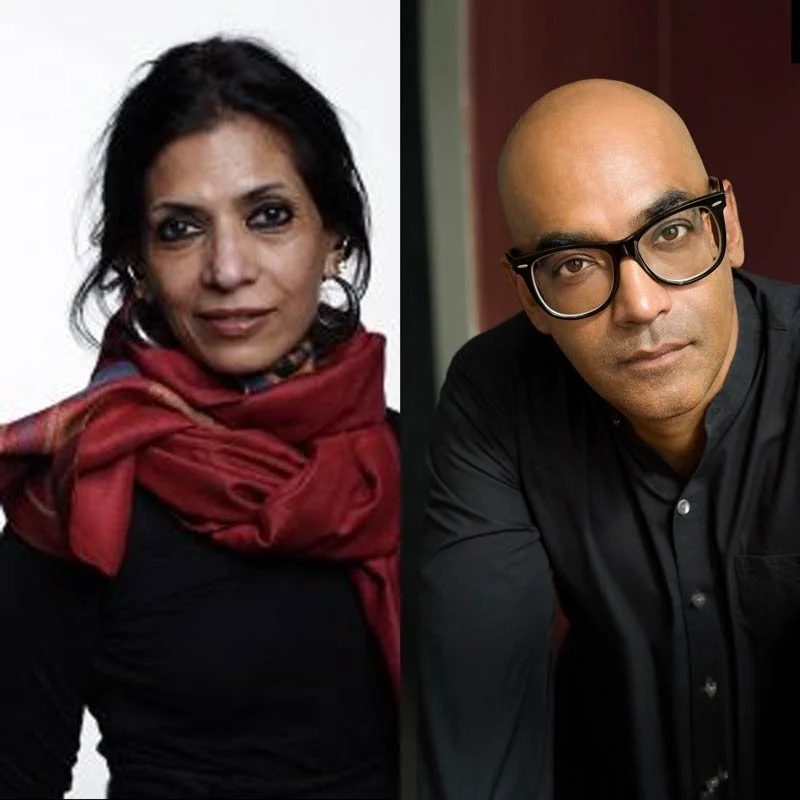
What Do the June 2024 Elections in India Mean?
I think that the 2024 national elections in India signaled a slowdown in its slide into authoritarianism, but did not halt it. The BJP (Bharatiya Janata Party) and the ways in which it secured votes merit analysis. In his June 4th victory speech, Narendra Modi's rallying cry was "Bharat Mata Ki Jai" (Hail to Mother India), a slogan promoted by Hindu nationalists. It objectifies and feminizes the state, linking control over women and control in general to nationalist assertion. "Bharat Mata" is also associated with "Akhand Bharat," or undivided India, the once and future homeland of Hindus. Modi did not show humility in his speech. Instead, he emphasized the exceptionalism of a third consecutive win, stating, "I believe that the country will write a new chapter of big decisions. This is the Modi guarantee." Nevertheless, he also talked about his government's efforts to weed out forms of corruption, which is ironic given the BJP's recent collusion in the electoral bond scandal.

Writer · Organizer · Activist
When Shells Crumble · Shaping San Francisco · Critical Mass
The novel When Shells Crumble begins in December 2024, when the US Supreme Court nullifies the popular vote in the Presidential election and awards the presidency to an authoritarian Republican, who proceeds to demolish democracy and install a fascistic state that hastens ecological havoc. The novel is much more than your usual dystopian tale—it focuses on how to resist political cynicism and defeatism, and rebuild on planetary wreckage. It is a world-building project filled with wisdom, sadness, and joy. We specifically put this fictional text in conservation with his brilliant non-fiction work, Nowtopia, which offers a radical redefinition of “work” that restores dignity and value to their proper places.
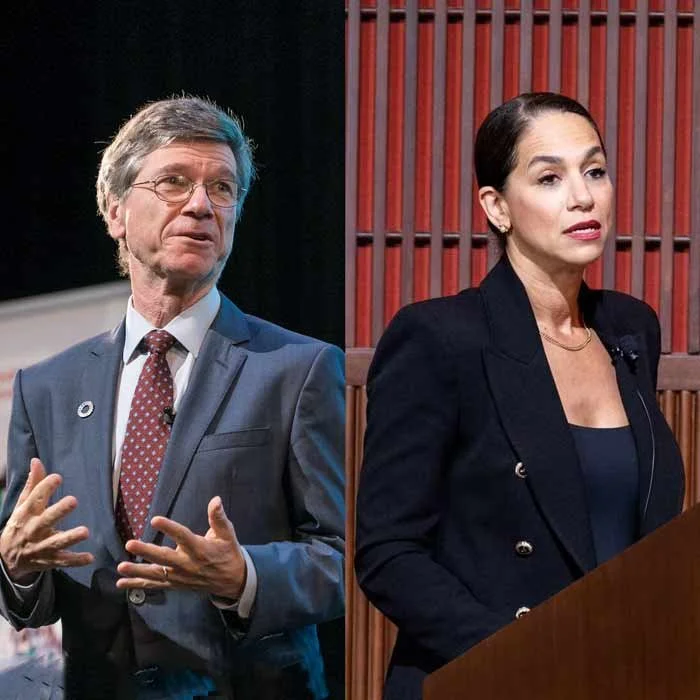
On Possible Futures for Palestine
We examine different stances toward a two-state solution, international humanitarian law, and the need to go beyond state-centric notions of justice and the recommendation that a people’s parliament might be a better way to approach the crises we see on a planetary scale.
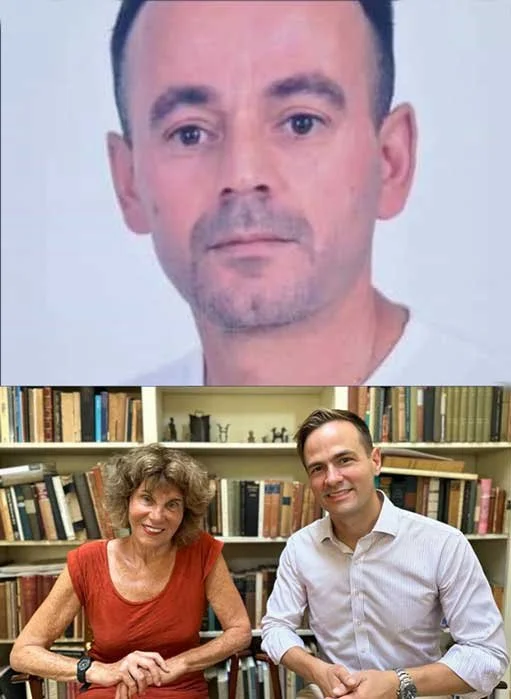
A Palestinian Prisoner’s Devastating Memoir
Publisher Judith Gurevich and translator Luke Leafgren discuss a remarkable first-person narrative by Nasser Abu Srour, a Palestinian political prisoner who in 1993 was given a life sentence of 215 years. His novel, The Tale of a Wall, tells of the author’s decades-long life in multiple prisons, moving through many historical periods and shifting personal and political lives. The one thing that is always present is the figure of the wall, that becomes his one constant companion. Gurevich and Leafgren tell how they came to acquire the text, and how they came to know this remarkable man through it. The novel itself is a stunning and moving contribution to our understanding of the Palestinan struggle for liberation.

A Discussion with NOURA ERAKAT · MICHAEL LYNK & MAUNG ZARNI
Following the recent International Court of Justice ruling on the Gaza genocide case, which found that Israel is plausibly engaging in genocide in Gaza, they explore the case and its implications, as well as the colonial backdrop of the international law behind it.
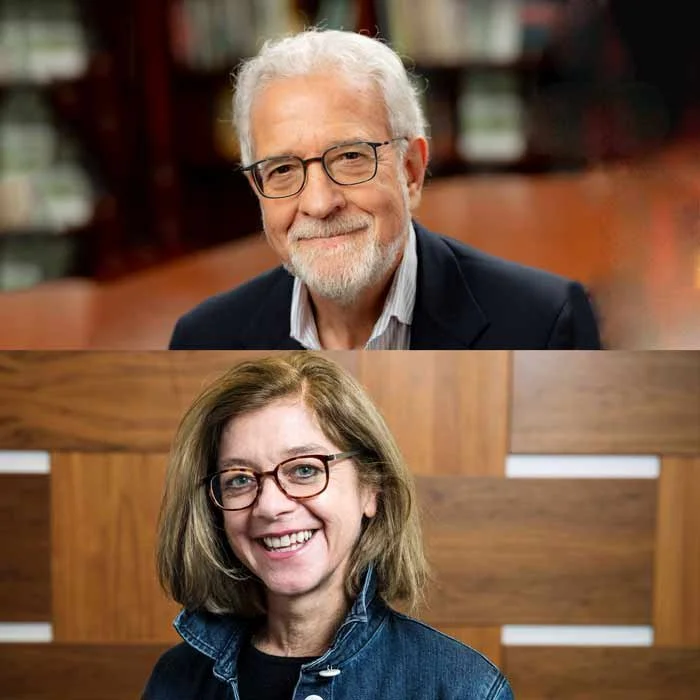
A Conversation with State Crime Expert PENNY GREEN & Holocaust Historian OMAR BARTOV
They discuss the applicability of the term genocide, the history of its framing, and ways of moving beyond genocidal dynamics. For weeks, hundreds of international law and genocide experts have been warning that the situation in Gaza is approaching or has become an active genocide, a conclusion very vociferously rejected by Israel and its allies.

Colonial Roots and Practices: A Conversation with FRÉDÉRIC MÉGRET · NEVE GORDON & NICOLA PERUGINI
As the devastation of Gaza is permitted to continue to unfold, and colonial violence also intensifies in the West Bank, we discuss the role and responsibility of international law in enabling and structuring mass violence, the enduring importance of colonial histories in shaping the colonial present of international law.

Linking Antifascist Solidarity & Solidarity with Palestine
Conversation with LEN and HWEI-RU TSOU, the Taiwanese activists whose main commitment, over a period of decades, has been to discover and disclose the involvement of Asian and South Asian anti-fascists in the International Brigade during the Spanish Civil War. Today’s conversation is perhaps one of the most unusual and unusually important ones we have had on the podcast. Not only do we discover their longstanding friendship with the celebrated anarchist David Graeber and his father during this journey, but we also hear them linking their anti-fascist work to their pro-Palestine activism, which included their participation in the flotillas of X and Y protesting Israel’s illegal blockade of Gaza. We hear Len and Nancy (Ruwei’s English name) draw the links between the anti-fascist struggle in Spain and the international movement for Palestinian rights. The conversation inspires and gives one hope about international solidarity in the past, and the present.
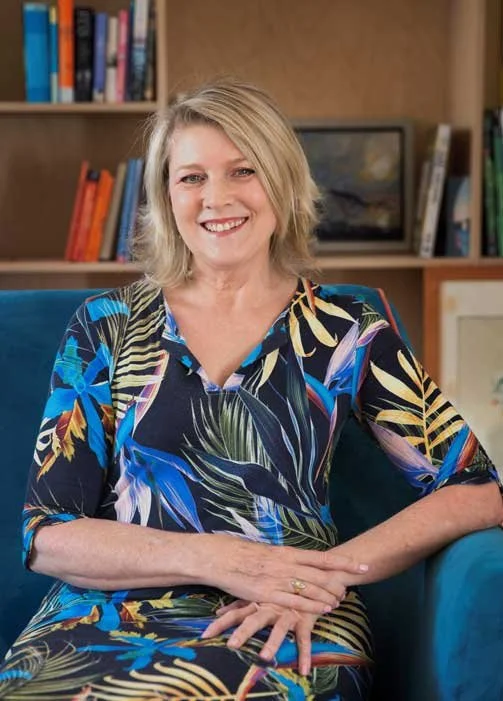
Working for Palestinian Liberation
Marthie Momberg’s interviewees are Israelis and South Africans who have followed different paths to become activists for Palestine. Momberg herself is a South African Jew, who slowly began to see the connections between South African apartheid and Israel’s own form of apartheid. The 21 voices speak about this connection, but about many other things as well, including gender, generational difference, race, human rights, and Zionism. Taped in December during Israel’s genocidal attacks on Gaza, which have brought millions onto the streets in protest across the globe, Marthie’s book serves as a vibrant reminder of the spirit of solidarity.
A Conversation with Political Theorist MICHAEL HARDT on his expansive study of a broad range of subversive movements across the globe. He shows us how the 70s were actually ahead of us in terms of confronting key issues and contradictions that remain with us today and shows what we can learn from them.
A Conversation with DR. HASSAN DIAB · MICHELLE WEINROTH & BERNIE FARBER
Former Secretary General of Amnesty International Canada, Alex Neva, described the prosecution of Hassan Diab as, “surreal and disgraceful.” Diab was sentenced to life, despite all of the evidence indicating that he could not possibly have committed it. He is currently facing re-extradition from Canada to France.
Authors of Solidarity Is the Political Version of Love
If you want to organize for the long haul, then you need to create a space where people can feel at home and feel like they can bring their full selves, their political selves, their spiritual selves, and their communal selves. There were times when this was very challenging and contradictory, but nevertheless, I think Jewish Voice for Peace has had so much longevity and has continued to grow because it centers the idea of building a home for people.
American Jews were interested and involved in Palestinian rights all the way back to 1948. There's this idea that it came about just now or in the 1970s, but actually as long as there's been a Nakba. As long as there's been Palestinian refugees, there’s been American Jews concerned with that, too. I would say that a lot of times these American Jews were very well informed and spent time in the region, and they came to these conclusions often not in the United States, but over there where they were talking to the Israeli left and meeting Palestinians and seeing a situation that they don't feel is ethical or sustainable.
Co-Editor of The Black Geographic: Praxis, Resistance, Futurity
Author of Contesting Race and Citizenship: Youth Politics in the Black Mediterranean
A Black geographic perspective for me was really helpful in trying to clarify how we can simultaneously understand Blackness as a global project, that is anti-national, that transcends borders, but that also takes on really specific meanings and practices in different places, engagements with Black geographies that are looking just beyond the framework of North America.
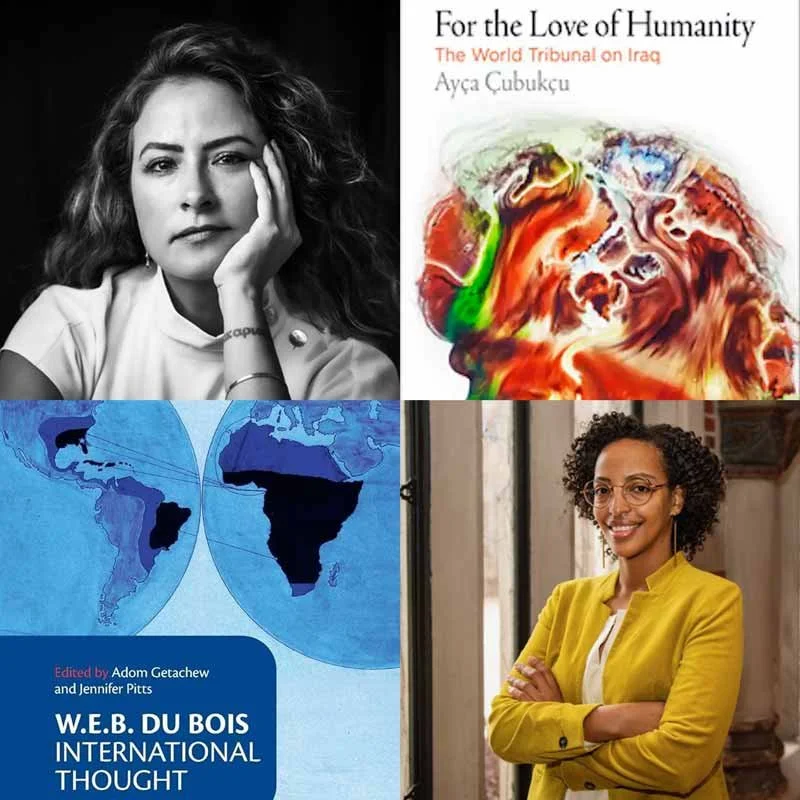
On Imagining a New Left Internationalism Outside the Legacies of the Settler State
In this episode on Speaking Out of Place podcast, Professor David Palumbo-Liu and Azeezah Kanji have a conversation with critical political theorists Adom Getachew and Ayça Çubukçu on the colonial construction of the international system and its organization around the institution of the nation state. The conversation covers and uncovers so many aspects of the hidden colonial history behind the constitution of this system, but also the resistance and creative appropriations by Black, Indigenous, and colonized peoples, allowing us to imagine possible liberatory futures beyond the forms and strictures of the colonial present.

Anishinaabe Legal Theorist · Philosopher
How might we learn about, learn with, and learn from our plant companions on this Earth? Plants show signs of communication and of learning. They produce and respond to many of the same neurochemicals as humans, including anesthetics. They share resources with one another, and when under threat, emit signals of warning and of pain. While Barrows and Calvo both urge us to listen to the Earth, during this conversation we discover that these two thinkers are often listening for different things. The discussion reveals fascinating points of difference and commonality. And in terms of the latter, the point both John and Paco insist upon is that we maintain our separation from other beings at our peril and at a loss.
Founding Head of the Climate Litigation Lab
Senior Research Fellow at University of Oxford’s Sustainable Law Programme
For 40 years, the American Petroleum Institute has hired economists to argue it would be too expensive to try and control fossil fuels and that climate change wasn't that bad. The same go-to consultancy firm has been involved in every major climate policy fight from the very beginning and hired by the fossil fuel industry, but what are the courts going to do? It's not just the historical deception. It's an ongoing deception.
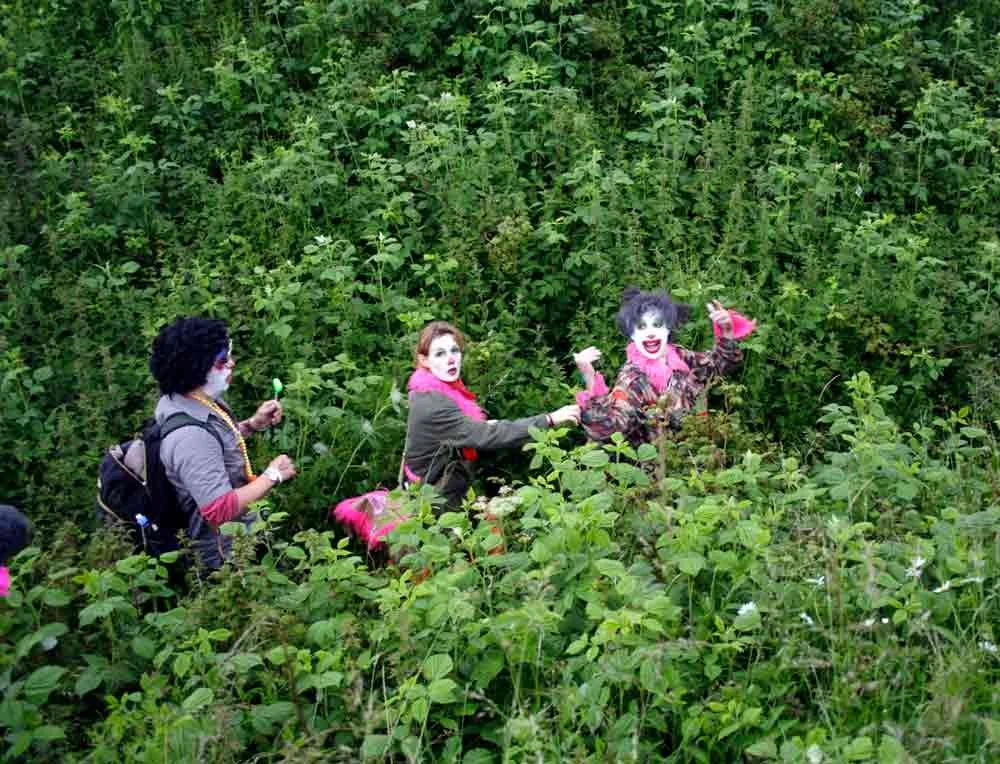
Artists, Activists & Anarchists Seize Wetlands from the French Republic
Authors of We are ‘Nature’ Defending Itself: Entangling Art, Activism and Autonomous Zones
the story of a 40-year struggle to preserve 4,000 acres of wetlands from being destroyed to make way for an airport
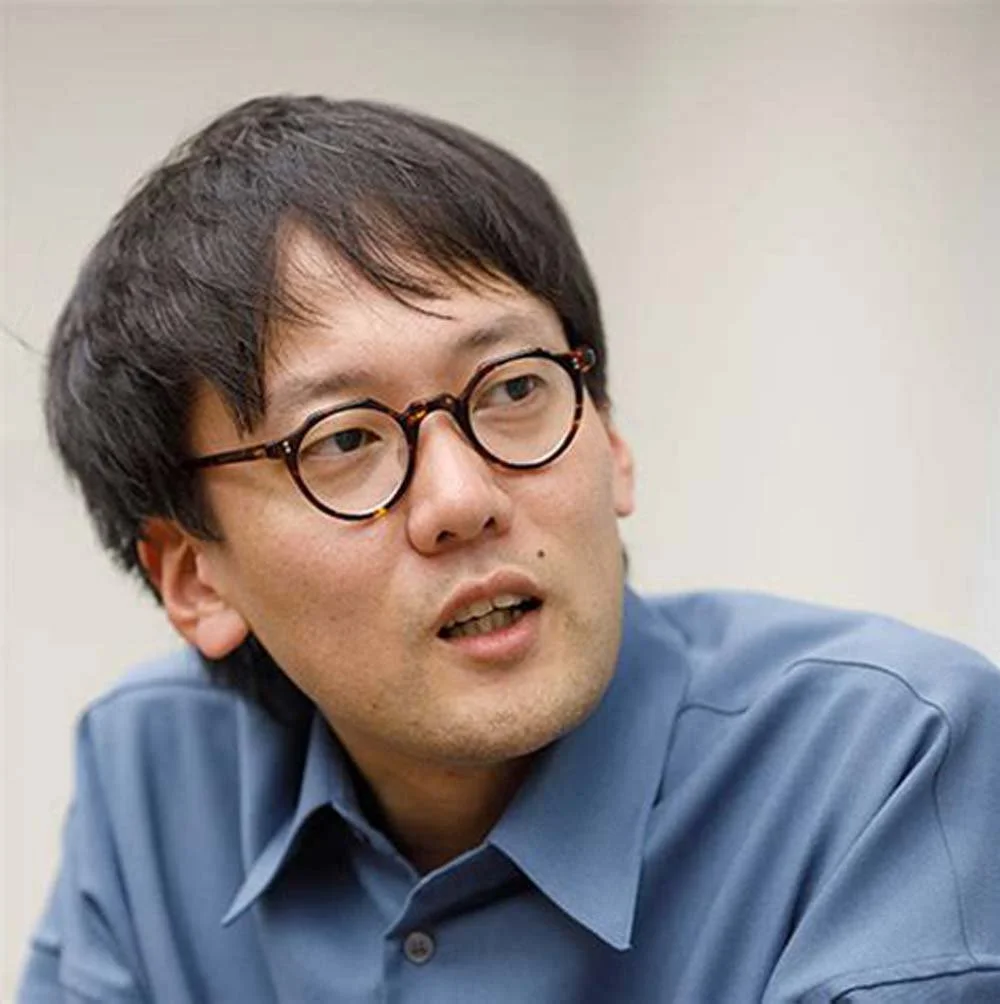
Author of Slow Down! How Degrowth Communism Can Save the World
Marx in the Anthropocene: Towards the Idea of Degrowth Communism
The Green New Deal presents itself as a kind of radical policy. If you look at the content, it's just simply the continuation of what capitalism wants to do. It's a massive investment in new, allegedly green industries, with the creation of more jobs with higher wages, but these are not the things that socialists or any environmentalists should be actually seeking because we recognize that capitalism is basically the root cause of the climate crisis and the misery of the workers. If so, I think it is high time to imagine something radically very different from business-as-usual capitalism.
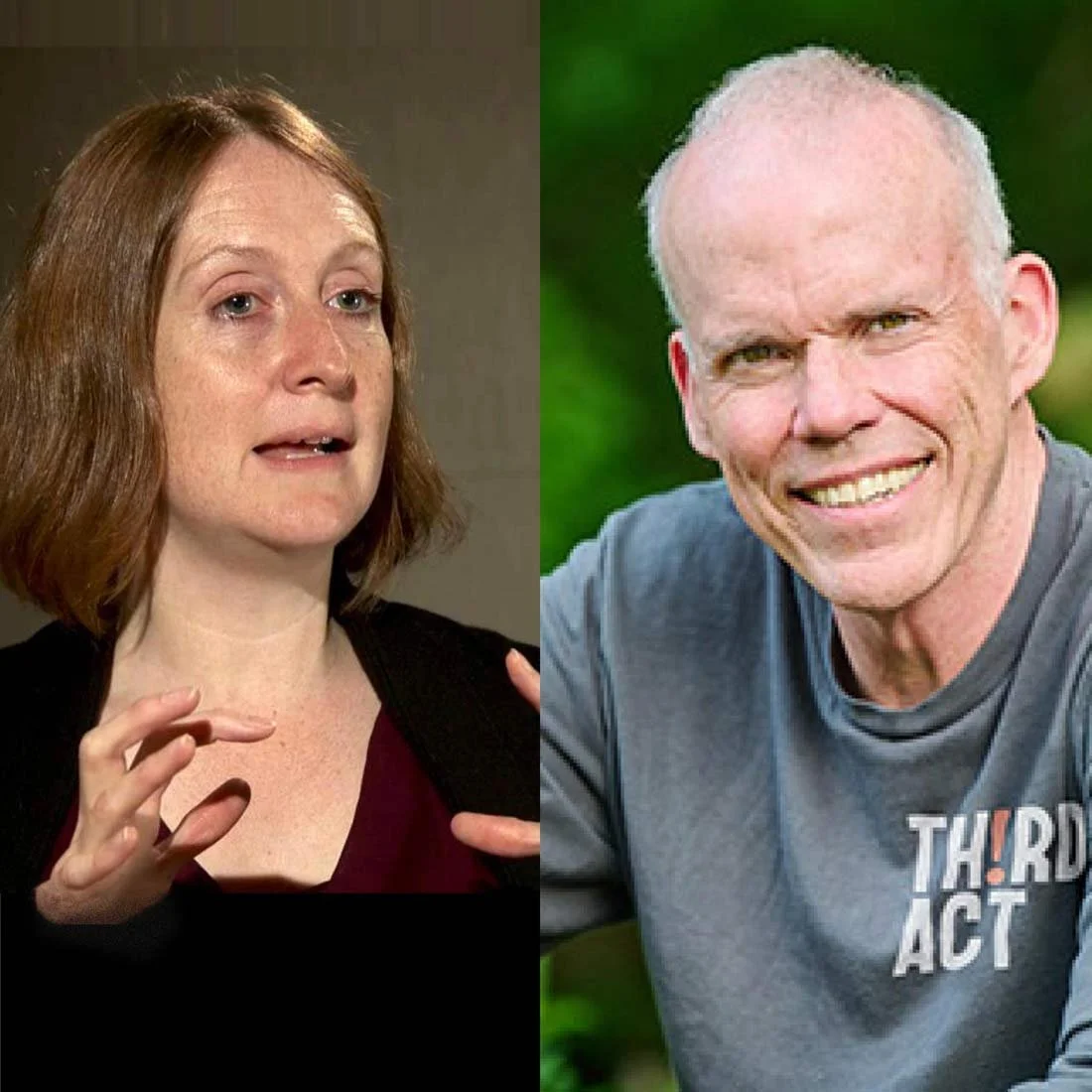
Co-Founder of 350.org · Founder Third Act · Author of The Activist Humanist
Viewed one way, we live in a very hopeful moment. Thanks to in large part the work of university scientists and engineers, we now live on a planet where the cheapest way to produce power is to point a sheet of glass at the sun. That is to say, we could run our Earth on energy from heaven instead of hell, and we could do it fast. The fast is the hard part here. The only difference between all the examples of the long victories of social justice activism that we're in now is that this one is a time-limited problem. If we don't solve it fast, then no one's got a plan for how you refreeze the Arctic once you've melted it. And so we have to move very quickly. Our systems are not designed to move quickly. It's the easiest thing in the world to slow down and delay change, which is all that the fossil fuel industry at this point is trying to do, and that means that it's time for maximum effort from all of us. The story to tell is that the planet is outside its comfort zone, so we need to be outside ours.

What is a day in the life for a Palestinian child in Gaza today?
As of last night, the current statistics - and we hate to use numbers describing the kind of tragedy that's fallen on Palestinian children, civilians, men, and women - but over 11, 000 people have been killed. Over 26, 000 have been injured. And of the individuals that have been killed, over 4, 500 have been children. Another 1, 000 children are unaccounted for because presumably they're buried underneath the rubble. And because of the situation on the ground in Gaza right now, we can't even get equipment or people to bring the dead out of the rubble. There continues to be fuel. The water, food, and medicine blockade in the last three days, there have been no shipments of humanitarian supplies coming into Gaza. It is absolutely earth-shattering and catastrophic, the amount of malnutrition and lack of food, water, and medicine that is being denied access to people in Gaza right now. There are over a million internally displaced Palestinians in Gaza right now.
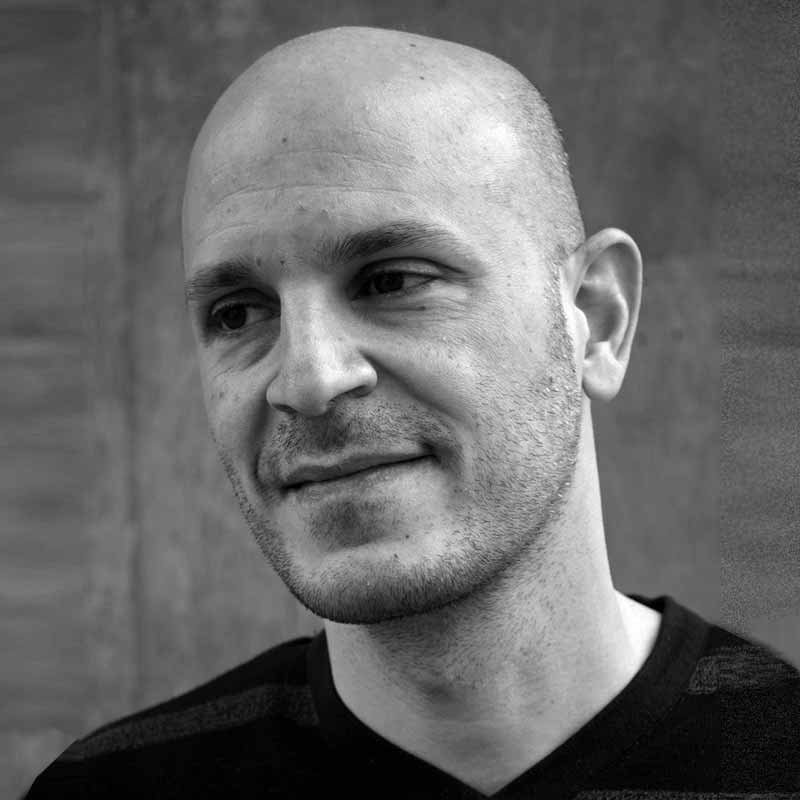
Palestinian American Poet & Physician
Fady Joudah’s poetry has always addressed the situation of the Palestinians in Israel, in the Occupied Territories, and in diaspora, managing somehow to capture both the political and the personal, and above all the courage and humanity of the Palestinian people. We speak in particular about his recent LitHub piece, “A Palestinian Meditation in a Time of Annihilation: Thirteen Maqams for an Afterlife.” We are honored that he made time in this period of crisis to speak with us.
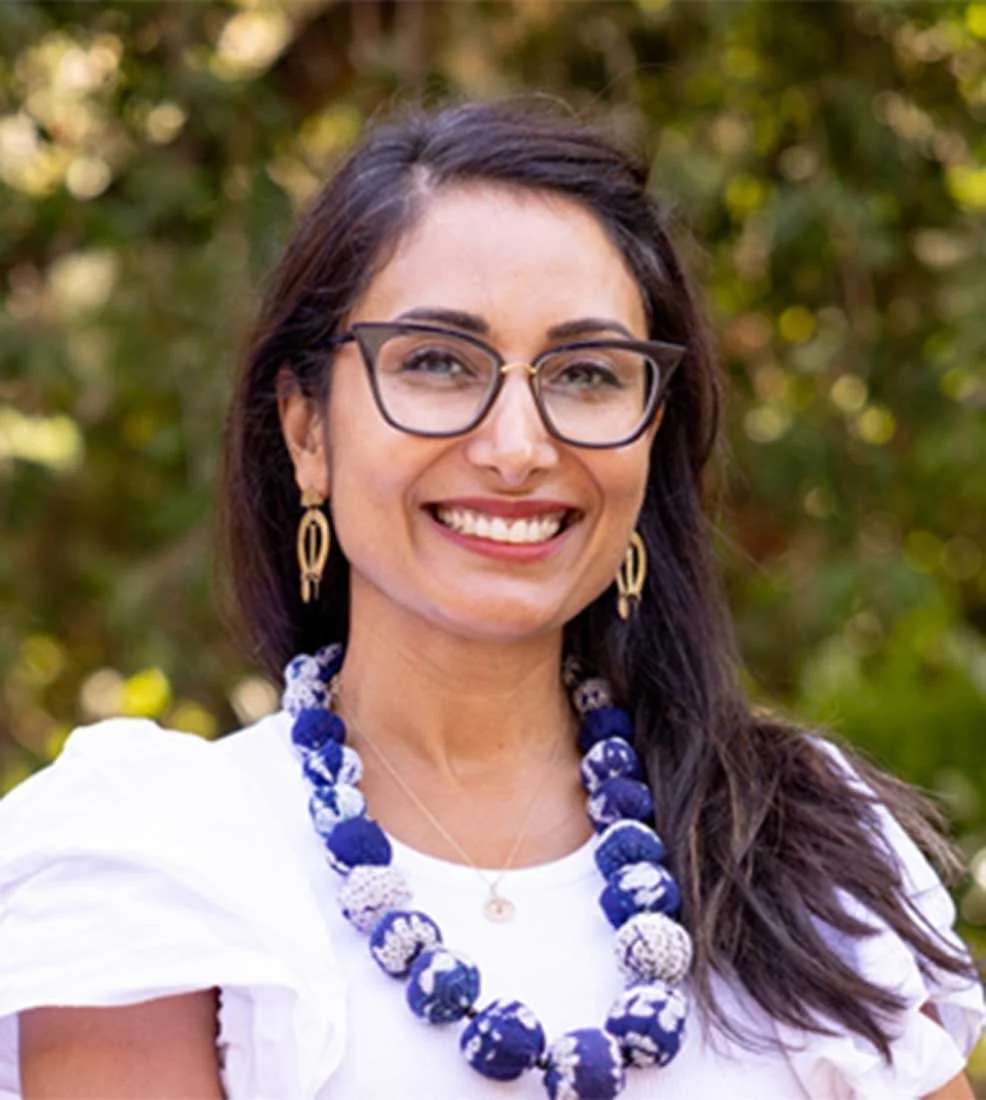
on how Uber, Lyft, Instacart, DoorDash and others use algorithmic wage discrimination against their workers
In this episode of the Speaking Out of Place podcast, Professor David Palumbo-Liu speaks with Professor Veena Dubal about how such companies have exported globally a technique of algorithmic wage discrimination that pays workers based on data to which they have no access. Owners dangle bonuses before workers but take away work from them as they draw close to achieving their targets; they use psychological tricks derived from video games to create a casino-like environment where the house always wins. Dubal urges us not to fall into the trap of competing against the house, but back to “good old-fashioned organizing.”
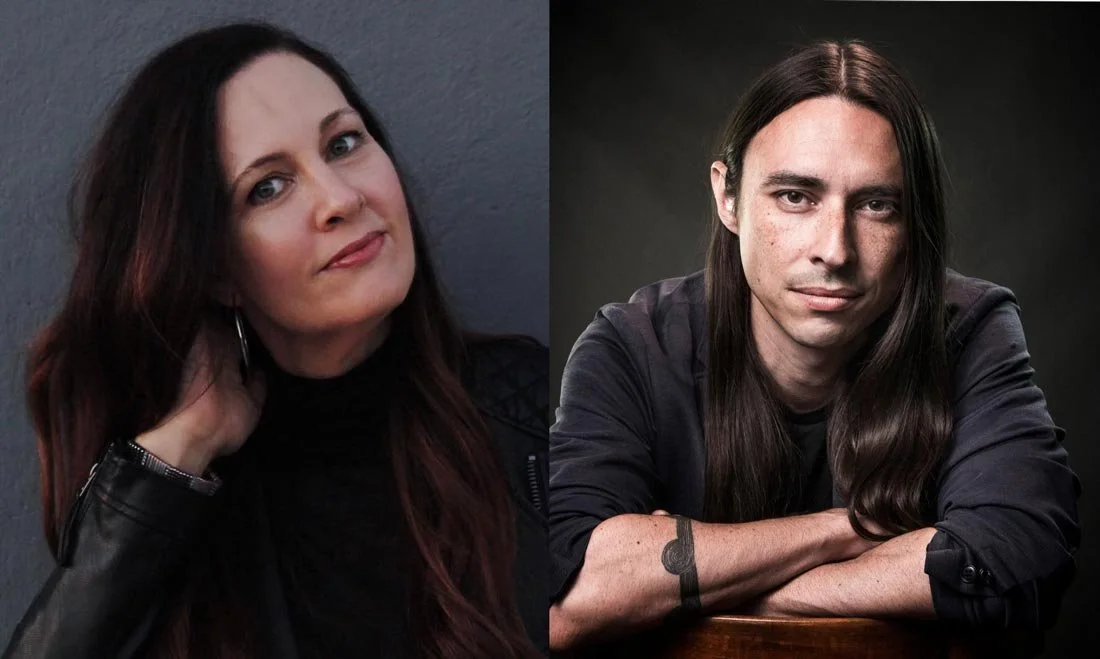
Discuss When “Natives” Aren’t: The Epistemic & Communal Violence & Re-storying
A lot of Pretendians lay claim to this identity of being Native American, and the universities have no problem with it whatsoever. It's indigenous people who fight against that settler colonial initiative to make this about diversity, equity, and inclusion, and not about indigeneity or indigenous rights. And so when students mark down Indigenous, they're accepted as an Indigenous person, and the university pats itself on the back for admitting yet another Indigenous person. And they happily add up those numbers that go into all sorts of reports to say, "This is how many Indigenous students we have at the moment. The numbers are rising, etc." And many of those students never attend any Indigenous events, but some do. Some will come to the support center for Native students. And some will really take on ownership of this idea that they are Native, when in fact they're not. And they actually know they're not. But let's say we have a person who's gifted intellectually. And they can get their heads around these stories. And they can get their heads around epistemic violence. And they become friends with people in the Native community. That's the beginning of their story. And that's the way in which academia produces these people.
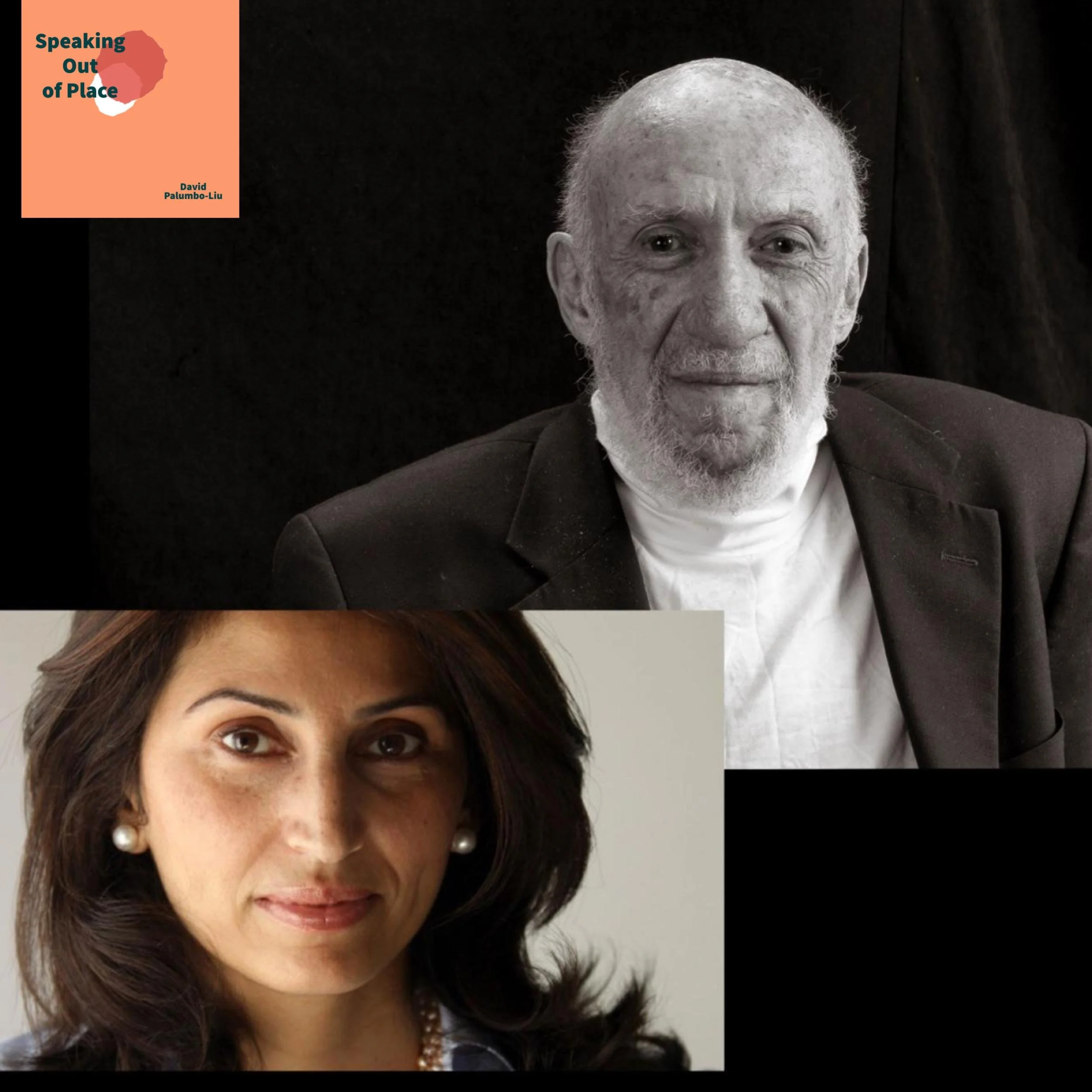
Voices of Solidarity with Palestinian People
This episode concludes with statements of solidarity with the Palestinian people from activists, scholars, and cultural workers from around the world. We begin with a powerful statement from the University Union of Professors and Employees Occupied Palestine. Next is activist and scholar Cynthia Franklin, a long-time champion for Palestinian and other Indigenous peoples’ rights. Next is celebrated feminist scholar, philosopher, and public intellectual Sara Ahmed. After Sara Ahmed we hear a statement from Michael Hardt, eminent political philosopher and writer. After him we hear from the award-winning poet, scholar and long-time civil rights and anti-Zionist Hilton Obenzinger.
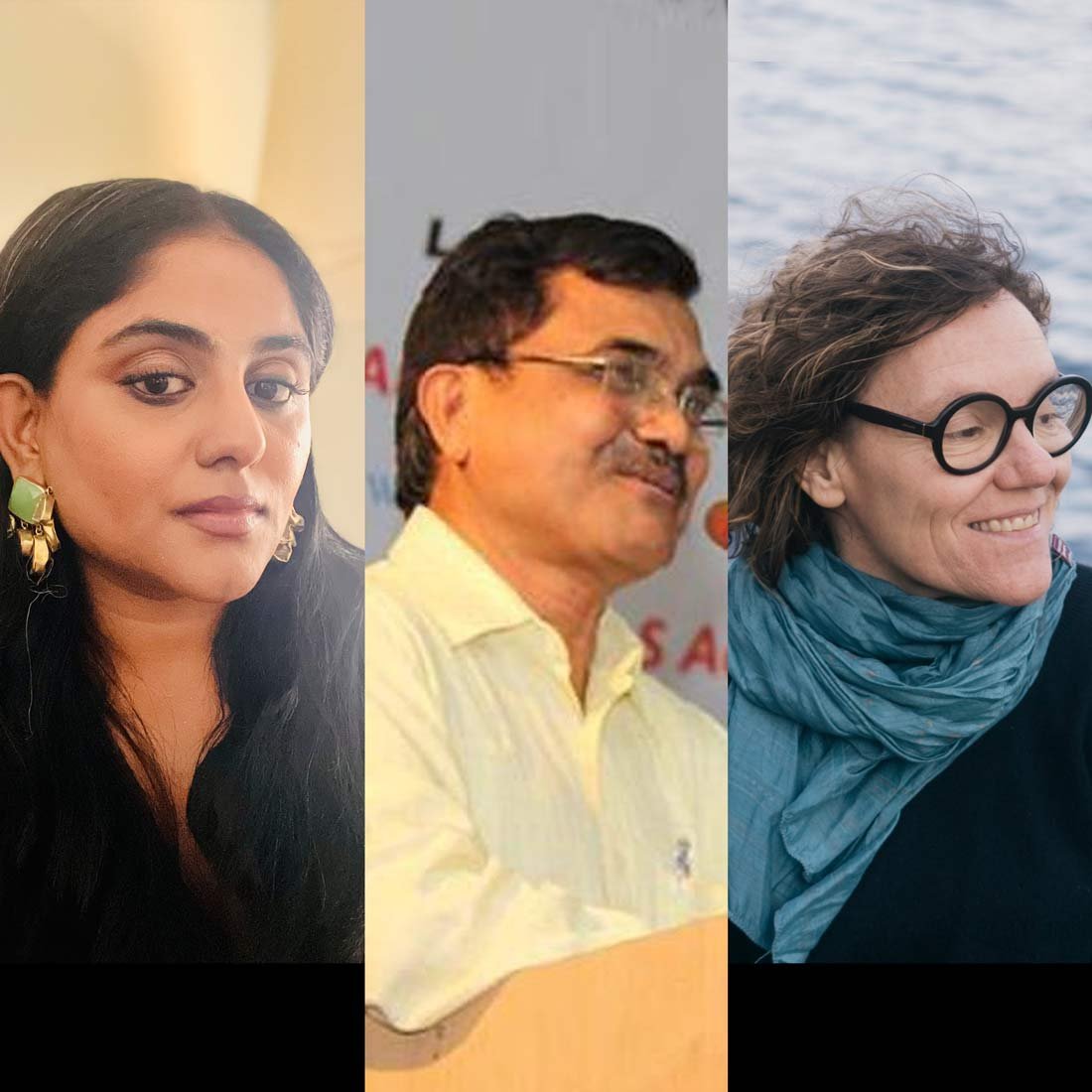
Speaking Out of Place: Voices of Resistance Emerge from Behind the Walls of India’s Security State
Professor David Palumbo-Liu and Azeezah Kanji talk with the founders of the Polis Project—Suchitra Vijayan and Francesca Recchia—about their new book, How Long Can the Moon Be Caged? Voices of Indian Political Prisoners. They are joined by the eminent Dalit intellectual, and former political prisoner Dr. Anand Teltumbde to lend his unique insight into the political situation in India and the realities of being a political prisoner there. The book combines deep historical research, documents regarding the current political situation in India, and a set of creative works from political prisoners conveying to the world their resistance and courage.
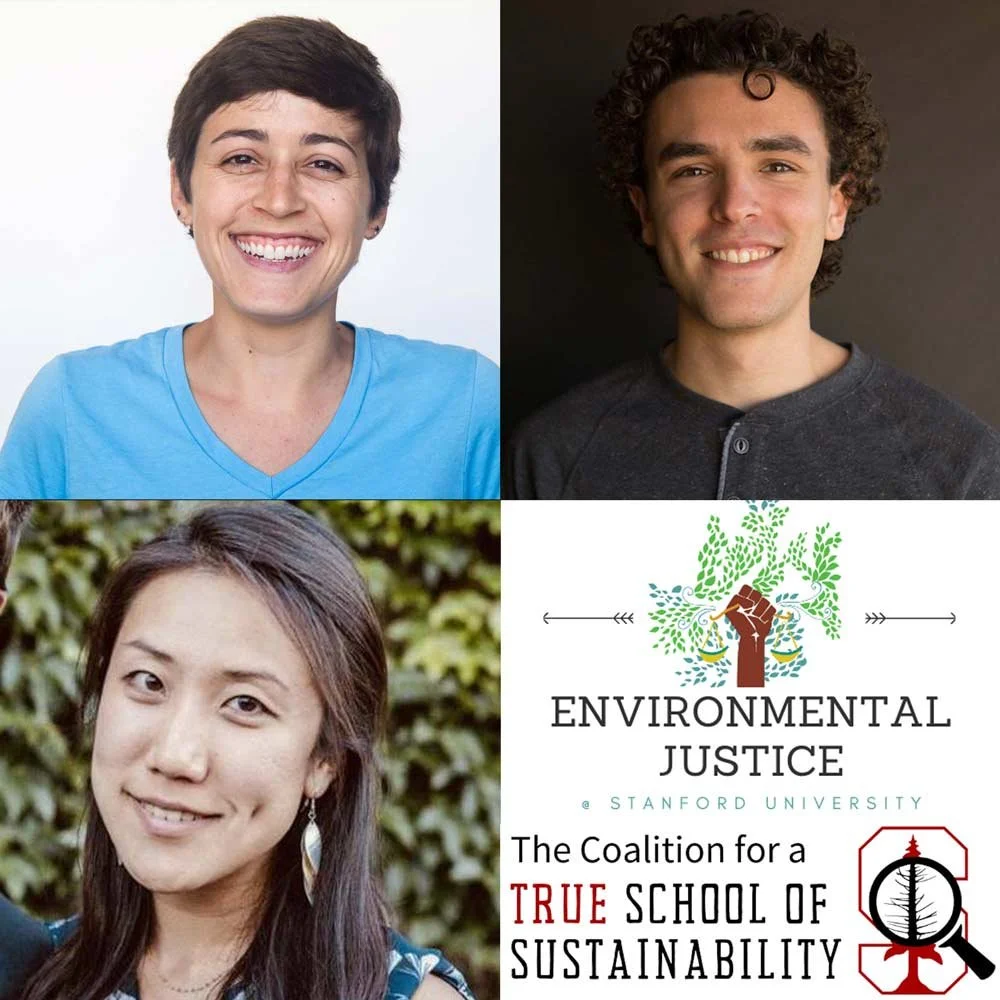
Coalition for a True School of Sustainability
In this episode of the Speaking Out of Place podcast, Professor David Palumbo-Liu speaks with June Choi, Yannai Kashtan, and Belinda Ramírez from the Coalition for a True School of Sustainability. Amidst great fanfare, Stanford University created the Doerr School for Sustainability, which immediately said that it would accept funding from the fossil fuel industry. June, Yannai, and Belinda are helping lead the movement of students pushing back to dissociate from such funds. David asks what drives them and sustains them in building a True School of Sustainability.

Journalist · Essayist · Author · Teacher
Columnist Jacobin Magazine · New Republic
We have passed the Build Public Renewables Act which mandates and requires the state's power authority the New York State Power Authority to build its own publicly funded renewables: renewable energy, wind, and solar. And this was a long, long hard hard-fought victory. And to say how it happened, we need to think back to the early Bernie days just after the Bernie Sanders' 2016 presidential campaign. Obviously, people were very disappointed that Bernie Sanders didn't win, but a lot of people were also very politicized by that campaign and by that moment. And so a lot of people were joining DSA (Democratic Socialists of America). At the same time, a lot of young people were becoming very aware and very anxious, disturbed, and deeply depressed by the climate crisis.

Author of The Feminist Killjoy Handbook
Independent Queer Feminist Scholar
You're more likely to progress if you say yes. It's a reproductive mechanism, which is why feminist culture knows so much about everything. We can explain how it is that institutions keep being reproduced in the same way. So what then do you do? Where do you go if your no has nowhere to go? And I think when you say no to the world, and you're pushed out by it, you still find your people. And that there's the world-making is in the people who find in the refusal of the institution a common ground.
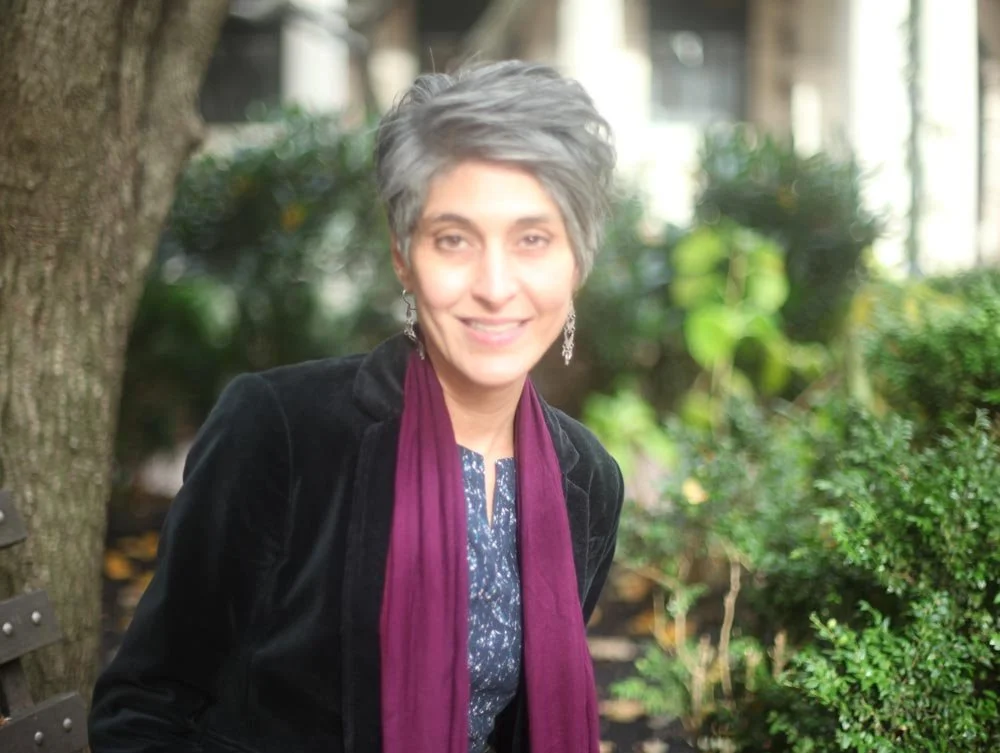
Author of This Flame Within: Iranian Revolutionaries in the United States
So you start having Iranian students coming in the late 1950s. The numbers increased throughout the sixties and seventies. Tens of thousands of Iranian students, more than from any other country, come to the United States to study. At the moment, in 1979, the moment of the revolution, there were 50,000 or more students in the United States. So it's by far the largest foreign student population here. In the 1970s, it became possible for less affluent students to come. For the first time, there were more government scholarships available to certain groups of workers in the oil industry, for example, to their children. They were not blue-collar, but more like white-collar office workers. Before that, it had been mostly wealthy families who could afford to send their children abroad and who had access to education in the first place, but when you have less affluent students coming to less expensive, smaller colleges. By the 1970s, Iran had become so repressive that young people were trying to leave. They want to leave, and some of them want to leave intentionally to become activists and join the Iran student opposition movement.
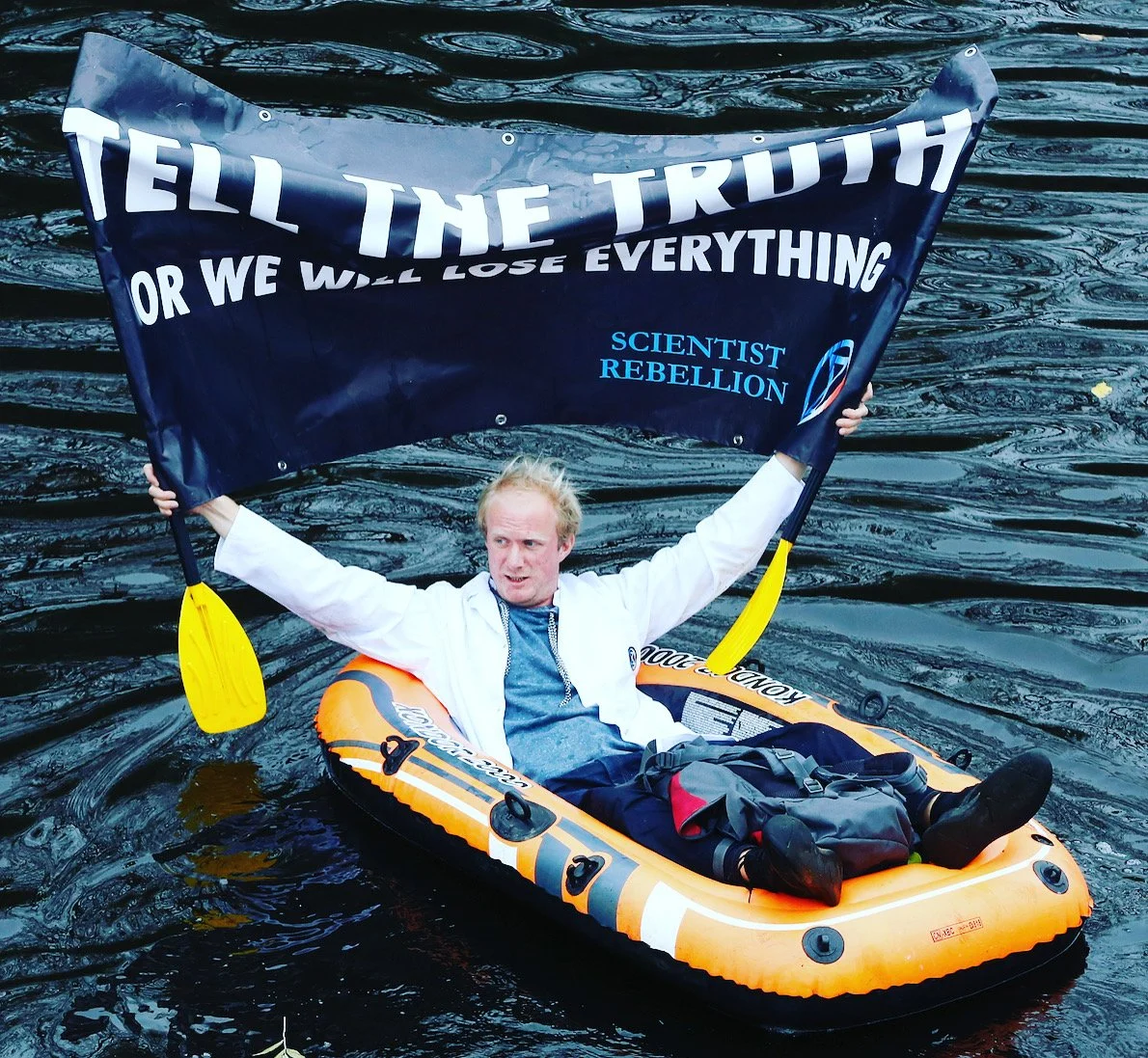
Co-founder of Scientist Rebellion · Climate Activist · Astrophysicist
I think the more pernicious aspect is the way that science as a set of institutions fits into a paradigm that is doomed from the outset. For instance, if you look at the framing of the science within the IPCC reports and how that informs the construction of policy related to the climate around the globe, well, it's foundationally dishonest. If you frame an entire report around the need to keep temperatures below 1.5 degrees or 2 degrees, and all of the efforts that societies are going to make to do that, and you omit from the public discussion the fact that we have no chance whatsoever of achieving those goals.
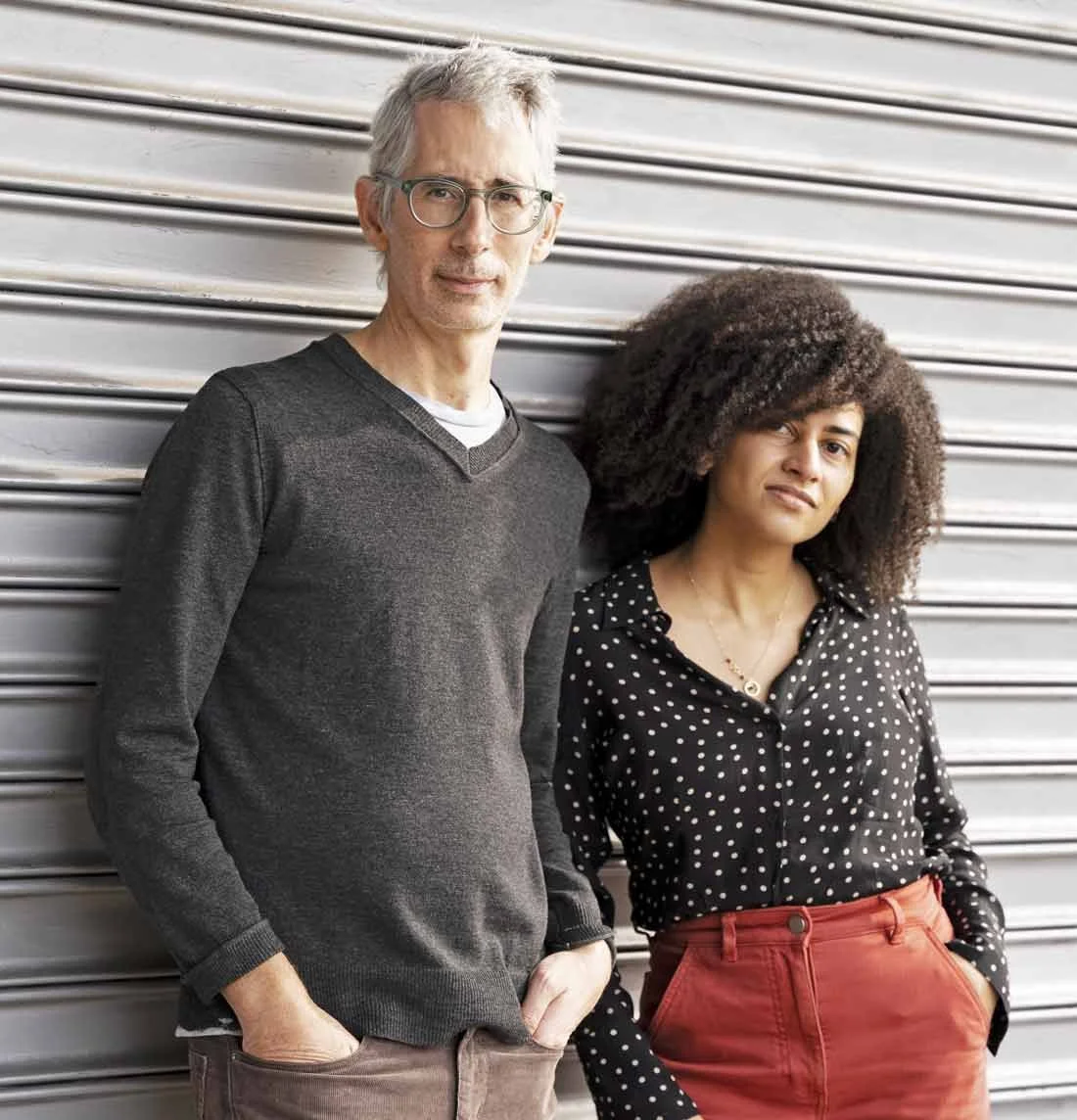
Co-Editors of Voices of a People’s History of the United States in the 21st Century
with contributions from Angela Y. Davis, Nick Estes, Colin Kaepernick, Rebecca Solnit, Christian Smalls, Viet Thanh Nguyen, Howard Zinn, Rev. William Barber, Bree Newsome, Kimberlé Crenshaw, Tarana J. Burke, Dream Defenders, Sins Invalid, Mariame Kaba, Naomi Klein, among others
We have to create alternative institutions to understand history. And to have conversations about how we can intervene because these conversations are increasingly being criminalized, and librarians are being fired and punished. Teachers are also being fired. Whole colleges are being taken over and certain courses are being labeled as not credit-worthy and being canceled. And while conversations around critical race theory and other topics are being declared illegal, there's a long history of book banning in this country. There's a long history of criminalizing dissent in this country, but I do think we all have to recognize that we're in a much more dangerous moment right now, where a new form of McCarthyism is emboldened and we have to speak out against that. - Anthony Arnove
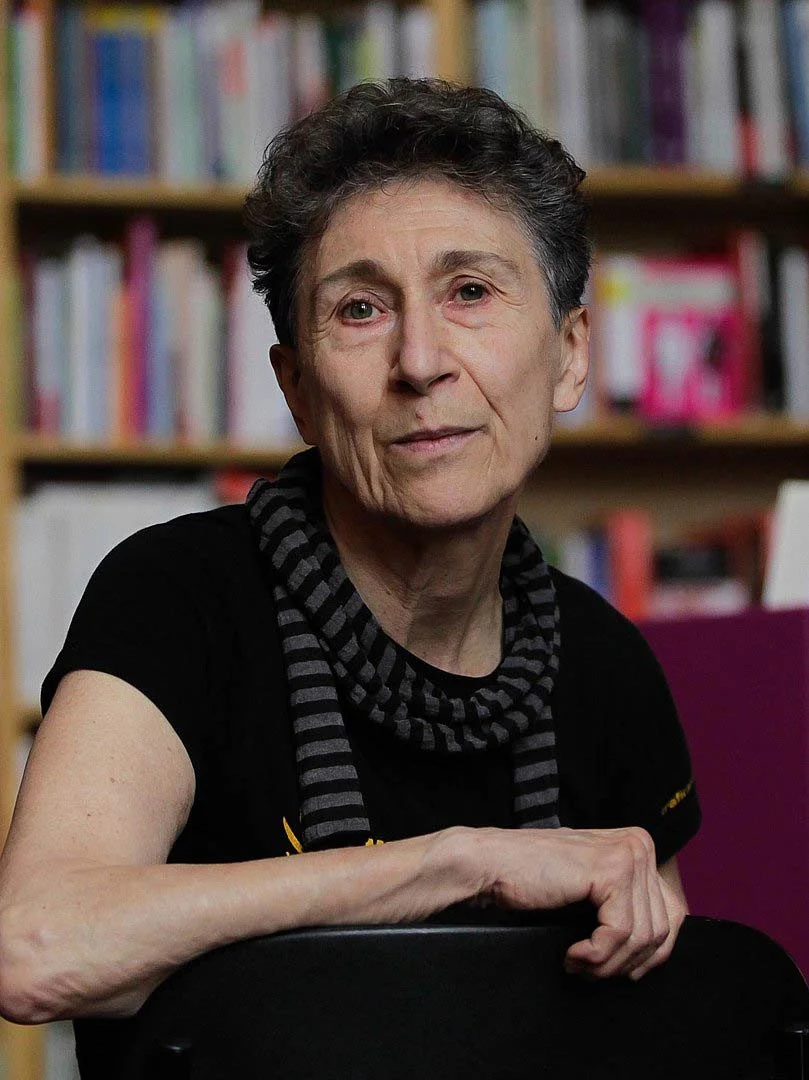
Scholar · Educator · Feminist Activist
Author of Caliban and the Witch
Re-enchanting the World: Feminism and the Politics of the Commons
When I came to America I had a shock. I never knew what it meant to be in a country that seems to have no history, being in a place where you feel like you are nowhere, you could have been dropped by a plane in a cultural, historical desert. In the United States, they're destroying historic buildings. They've paved over cemeteries of African slaves. They're changing the environment so that memory is destroyed.
Because you are placing yourself in a broader arc of time, I asked a woman from Guatemala: how can women keep fighting for so much power? And she said, "Because, for us, the dead are not dead." This gives them the courage to go on when everything seems to be lost. I think that this is the kind of struggle that we need to make against war, against the destruction of nature.
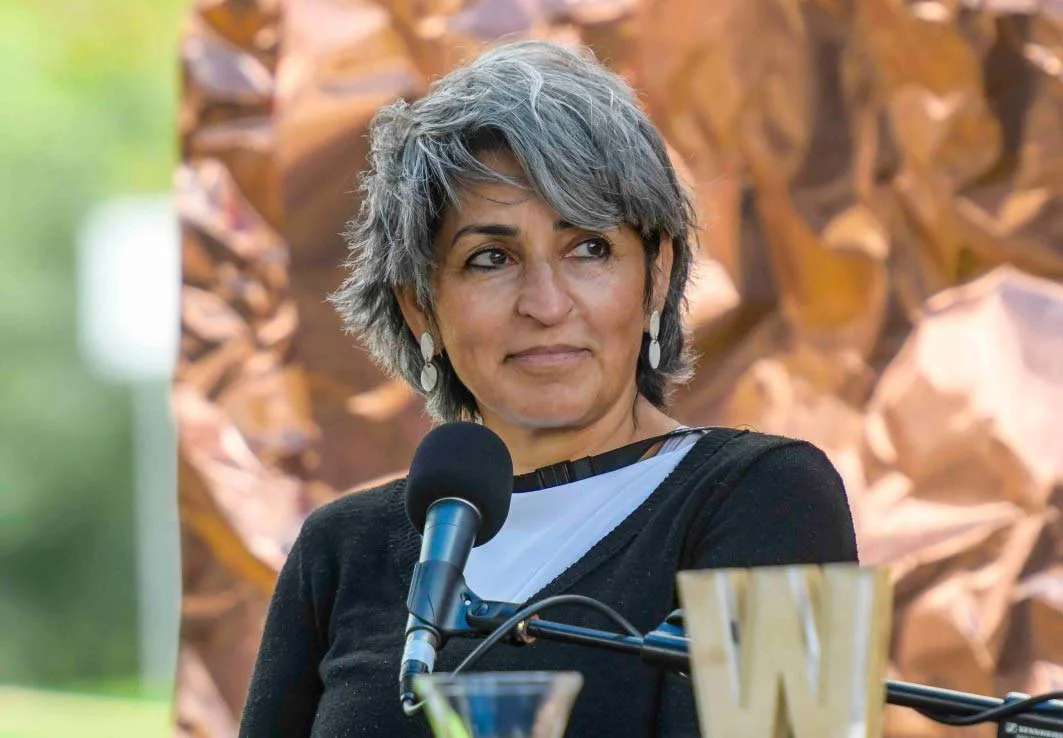
Novelist · Poet · Essayist · Scientist · Mother · Activist
Organizer of “Palestine Writes” · the only North American literature festival celebrating Palestinian Writers & Artists
Founder of the Children’s Organization Playgrounds for Palestine
Palestinians have been facing erasure for decades. There's the physical erasure of our villages, the names of our villages, the erasure of the word Palestine from the map, erasure of our identities. And now there's this kind of colonization of our narratives, of our stories, and our history. And Palestine Writes is part of a counterforce against this new form of colonization. The Zionist colonial narrative has always shifted with shifting wind, depending on what's in vogue at the time. Initially, it was a sort of romantic ending to Europe's genocide of its own Jewish population. And there was this epic myth of "a land without people for a people without land". And of course that was unsustainable.
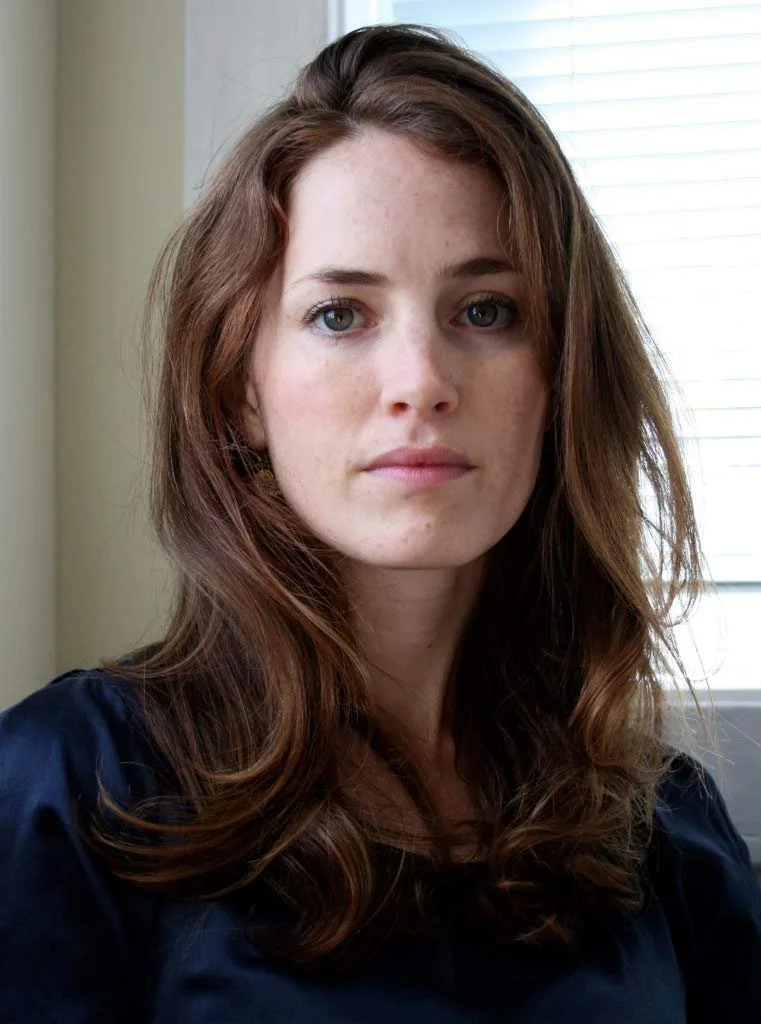
Author of The Playbook: How to Deny Science, Sell Lies, and Make a Killing in the Corporate World
They weren't able to employ scientists to not find a fingerprint of anthropogenic climate change. They weren't able to pull that off, and when they're not able to do that, what they do instead is create an arsenal of expertise who just create the illusion of disagreement, and they were so successful at doing that with climate change that it's remarkable because there actually was scientific consensus. There wasn't this giant rift in the scientific community, and for decades, they created an illusion of disagreement that we all bought. And they're able to do that using Stanford University, Rockefeller University, these names of institutions as well as individuals, but they're not actually publishing science. And so I think it deserves a kind of special carve out of all of the tactics because it really says: actually these systems are working pretty well. You're just not getting the right information. And they do that again through the media and PR firms and controlling the dialogues and press releases and journals, and especially their relationship with the media, is very, very privileged.
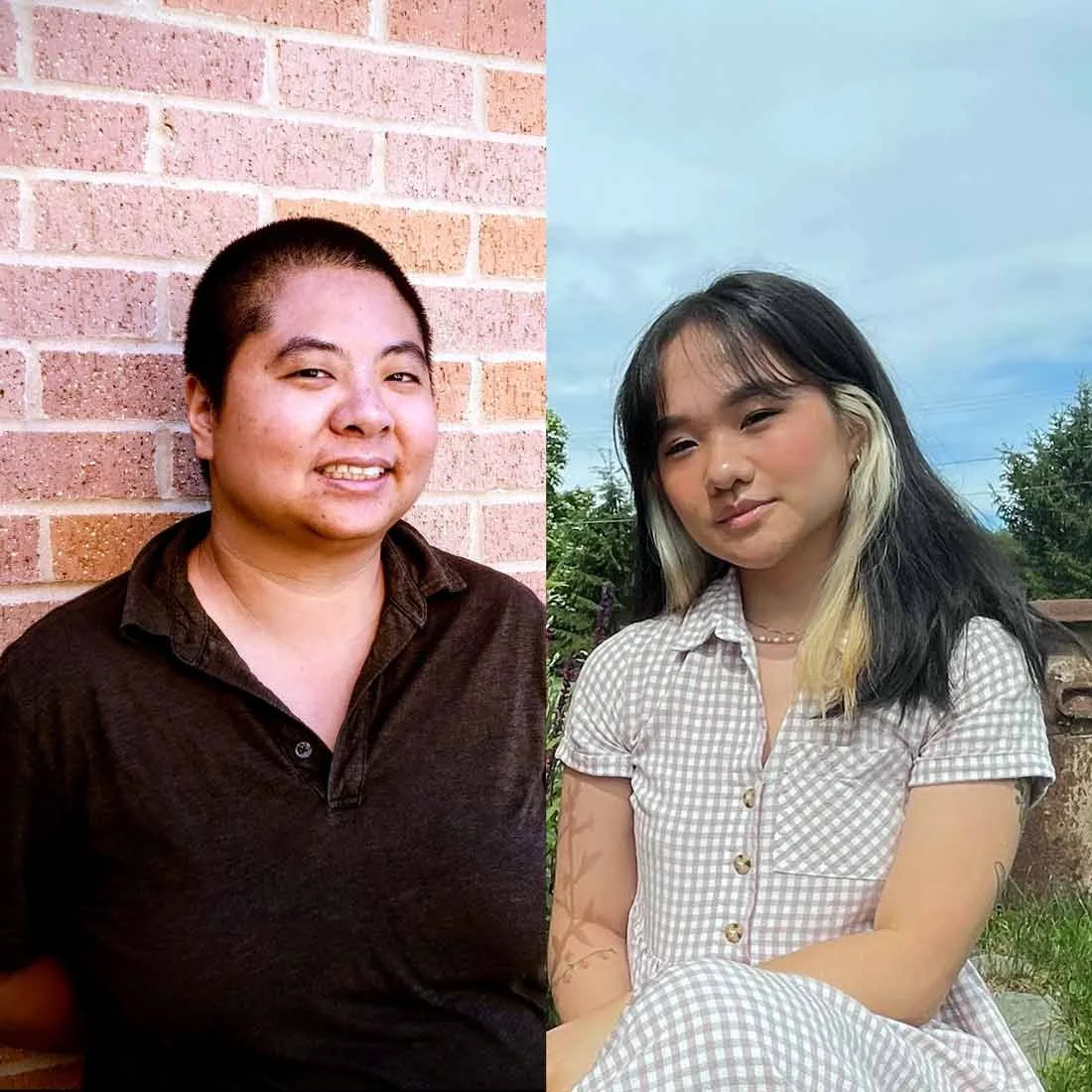
on the cancellation of the Asian American Literary Festival 2023
This August, the Asian American Literary Festival was to take place in Washington, DC.. The longstanding event had been on hiatus because of the pandemic, so this year’s event had generated a lot of buzz. Organized by the Smithsonian Asian Pacific American Center (APAC), the event had already garnered substantial investments and expectations from both national and international groups and states. Ching-In Chen is a poet who was curating a festival event featuring books by trans and nonbinary writers. Kate Hao is a program coordinator who was on contract with the Smithsonian for the festival.
Journalist · Activist · Public Intellectual
Author of We Gon' Be Alright: Notes On Race and Resegregation ·
Can't Stop Won't Stop: A History of the Hip-Hop Generation
This conversation focuses on the Supreme Court’s recent decision on affirmative action and presenting a ”true and historically honest confrontation with America’s racism.”

Activist · Professor · Podcast Host
Author of Speaking Out of Place: Getting Our Political Voices Back
To explore different worlds. That’s what literature has taught me. Reading has taught me how difficult it is to write well, to do something other than the mundane or the expected, so all those things point to a kind of human creativity and a human capacity to both create and also to learn. To learn about life in different ways and to pass on those lessons to other people. One thing I think great teachers do is embody what they talk about, the values that they profess, and the things they feel are important in their everyday lives outside of the literature. So when I become involved in politics or a cause, it’s a reflection of what I've learned through any number of things including literature. Literature doesn’t stand alone. Literature is part of the world.
Author of Narrating Humanity: Life Writing and Movement Politics from Palestine to Mauna Kea
Professor of English at University of Hawai'i · Coeditor of the journal Biography
I posit narrated humanity as a lens through which to study how narratives participate in struggles to conceive human being beyond juridical and narrative humanity. What I was thinking about was just the kind of narrative codes and conventions and genres that help us to understand who counts as human in ways that people who are fighting for human rights as a thing that you have to do, even as there are all kinds of critiques that can and have been made rightly so of human rights, but that you have to do it.

Author of The Cultural Betrayal of Black Women and Girls: A Black Feminist Approach to Healing from Sexual Abuse
Assistant Professor in the School of Social Work · Faculty Affiliate at the Center for Innovation in Social Work & Health at Boston University,
So many of us have experienced things along this vein, and when we know that, then the feelings of isolation can be interrupted with this understanding that many of us have been through these things. And if that person over there can experience joy, well maybe I can experience joy too, and maybe this is a different kind of harm and cultural betrayal. Sexual trauma and abuse as a collective community-level harm, that means community-level healing and personal healing.

Author of Natives against Nativism: Antiracism and Indigenous Critique in Postcolonial France
Associate Professor of French & Comparative Literature at University of Southern California
We know, of course, how colonized territories were settled. They were settled by the poorest, most marginal sometimes, criminal, surplus populations. There is that inbuilt fear, right? I don't want to narrate this in psychological terms, but I do think that there's a way we can understand how these discourses have worked. How is it that these discourses that don't actually make sense when you read them work? It's because they offer a solution. So it's not the fault of globalization in neoliberalism that you don't have a job. It's because of these people at the gates, right? So it just taps into these very primal kind of ways of thinking about threats to one's own well-being.
Activist/Author/Educators growing Global Awareness of Kashmir to Secure Human Rights for its People
It's a complex history. I think the key thing to understand about Kashmir is that it is a place that was never decolonized, and it was recolonized in what is a nominally post-colonial world. This is the 75th anniversary of the UN Security Council's recognition of Kashmir as an international dispute. And, along with Palestine, Kashmir is the longest-running unresolved dispute on the agenda of the Security Council.

Author of The Climate Crisis: Science, Impacts, Policy, Psychology, Justice, Social Movements
Professor of Psychology at UC San Diego · Climate Activist
Psychology has something to tell us about why so few people are really engaged in the climate struggle. There are different components to this. First of all, there is what I call epistemic skepticism in the book, which is to say, skepticism about the facts of climate change. The second thing is threat perception, that threat levels are not as high as they should be. And the third is that people are skeptical about the response. They don't think that they can do anything, or they don't believe that groups or even countries can make a difference. Epistemic skepticism: psychologically this means that quite a lot of people, for example, the United States, don't believe in the human cause of heating. And the reason for that is very much to do in fact, with the systematic campaign of misinformation that's been fostered by the fossils industry, systematically set out to confuse people about the scientific consensus. We should be very threatened by this. In fact, the youth, generally speaking, are anxious to some extent about it. In effect, Mother Earth is saying, "I can't deal with what you're doing to me, people. I'm putting up my temperature." And if you're not feeling anxious, then you're not paying attention. That's the right way to feel on Planet Earth.
Author of Environmentalism from Below (Haymarket 2024) · Extinction: A Radical History · People’s Power: Reclaiming the Energy Commons · Professor of English at the Graduate Center / CUNY and the College of Staten Island
The message is that indigenous sovereignty is connected to the preservation of biodiversity. And right now the statistics are really shocking on so-called protected areas, which currently constitute 17% of the planet. And the goal coming out of that Montreal conference for the biodiversity crisis last autumn is to roughly double that amount of protected areas, right? So the slogan was 30 by 30. 30% of the planet in protected area status by 2030. So we're really talking about massive expansion of protected areas. But within protected areas themselves, according to recent reports, only about 1% of the land actually has indigenous sovereignty. There are other arrangements like co-management, for instance, or indigenous people who are kind of encouraged to see their claims to conservation organizations with the guarantee that it will be protected and they'll have access of some kind. But, you know, as some of the indigenous activists who appeared at this conference and who are in the Decolonize Conservation! book said, they don't like the idea of co-management because it's essentially colonialism. They want control of their land.

Henry Charles Lea Professor of the History of Science & Affiliated Professor · Earth & Planetary Sciences · Harvard University
Co-author of The Big Myth: How American Business Taught Us to Loathe Government & Love the Free Market
I think the word consortium is a good word. It's not a conspiracy, although at times it takes on conspiratorial elements, but it's a kind of network or consortium of people who are working over a very long period of time, going back to the early 20th century to build an ideology that basically says we should trust the marketplace. That markets are not merely an efficient way of developing and delivering goods and services, but that they're actually playing a crucial role in protecting political freedom, protecting political democracy, and they build that story in order to persuade people that government regulation of the marketplace, whether it's to protect workers, consumers, or the environment - even though it might seem attractive superficially - what they're saying is: yeah, but don't be fooled by that because it will actually undermine freedom and democracy. And it's a very clever move because it takes what is initially a self-interested defense of the prerogatives of the privileged, the prerogatives of the captains of industry, and turns it into a seemingly virtuous defense of democracy. And, of course, who wouldn't want to defend democracy?
We’re pleased to introduce “Speaking Out of Place,” Professor David Palumbo-Liu’s new podcast, which carries on the spirit of his book of the same title, argues against the notion that we are voiceless and powerless, and that we need politicians and pundits and experts to speak for us.
In this episode, Palumbo-Liu is in conversation with scholar, activist, and poet Dr. Persis Karim, director of the Center for Iranian Diaspora Studies at San Francisco State University. Karim provides indispensable background information reaching back to 1979, explains the long history of gender apartheid in Iran and why today there has been an explosion of mass protests led by young women joined by tens of thousands of others, including rappers, educators, human rights workers, ethnic minorities, artists, children, and others. She also explains the tremendous gaps in Western media coverage and fills in missing information. She ends with a reading from her own poetry, and a plea to link these protests to all protests against authoritarian regimes.
Writer · Activist · Comparative Literature Professor
Students come in already knowing what they want to do. And so they've already excluded and taken out of consideration all sorts of options, which is exactly the opposite of what a university is supposed to do. It's supposed to give you a broad set of possible ways of thinking about life and training your mind and your talents. And so I like to open that up more for students.
THE CREATIVE PROCESS
& ONE PLANET PODCAST
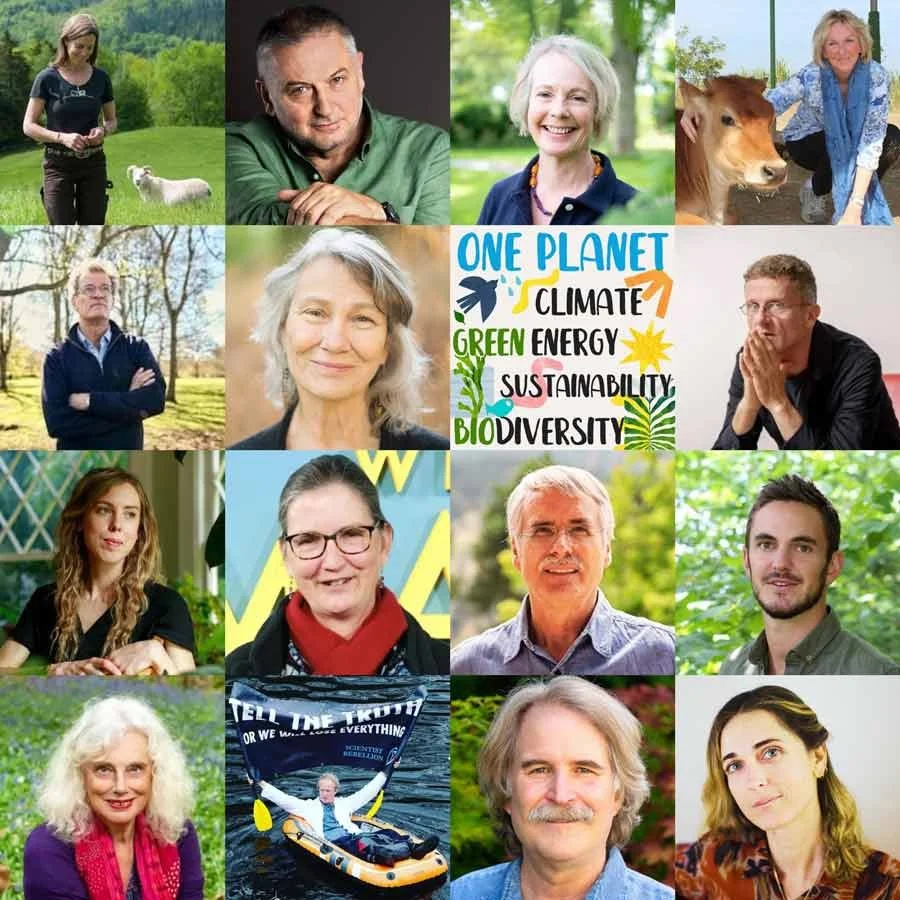
Artists, Writers & Scientists Share their Stories
We explore environmental empathy with Ingrid Newkirk, Chiara Barzini, Erica Berry, Yann Martel, Georgi Gospodinov, Emmy van Deurzen, Jane Madgwick, Caroline Thompson, Helen Whybrow, Tom Crowther, Kristin Ohlson, Tim Hewlett, Kevin Trenberth, Carlo Ratti and David Montgomery.
EMMY VAN DEURZEN · Pioneering Existential Philosopher & Psychologist
Author of Beginning To Live · Existential Counselling & Therapy in Practice
As a psychotherapist, I've worked with thousands of people over my 53 years of practice, and I have had to learn to love each and every one of them. There is something about opening your heart and stopping judging and arguing, and listening again, inquiring until you find what is most lovable about another person, and that is a very difficult thing to do. We're all inclined to reject one another, even the people we love. It is very difficult to systematically seek to accord the other respect, your attention, your care, your capacity for appreciating and valuing what is good in them and what is possible for them in the future.
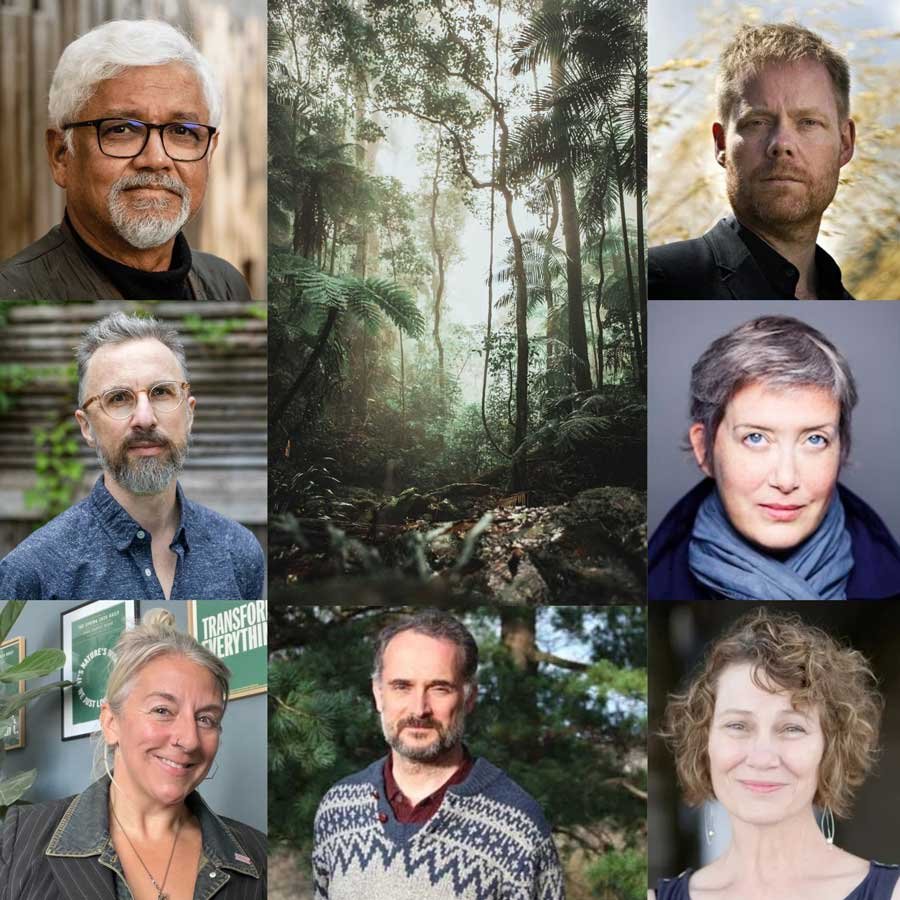
We explore the landscapes of childhood and how memory shapes our view of the natural world with Max Richter, Amitav Ghosh, David George Haskell, Kristin Ohlson, Dan Werb, Eiren Caffall and Claire Potter.
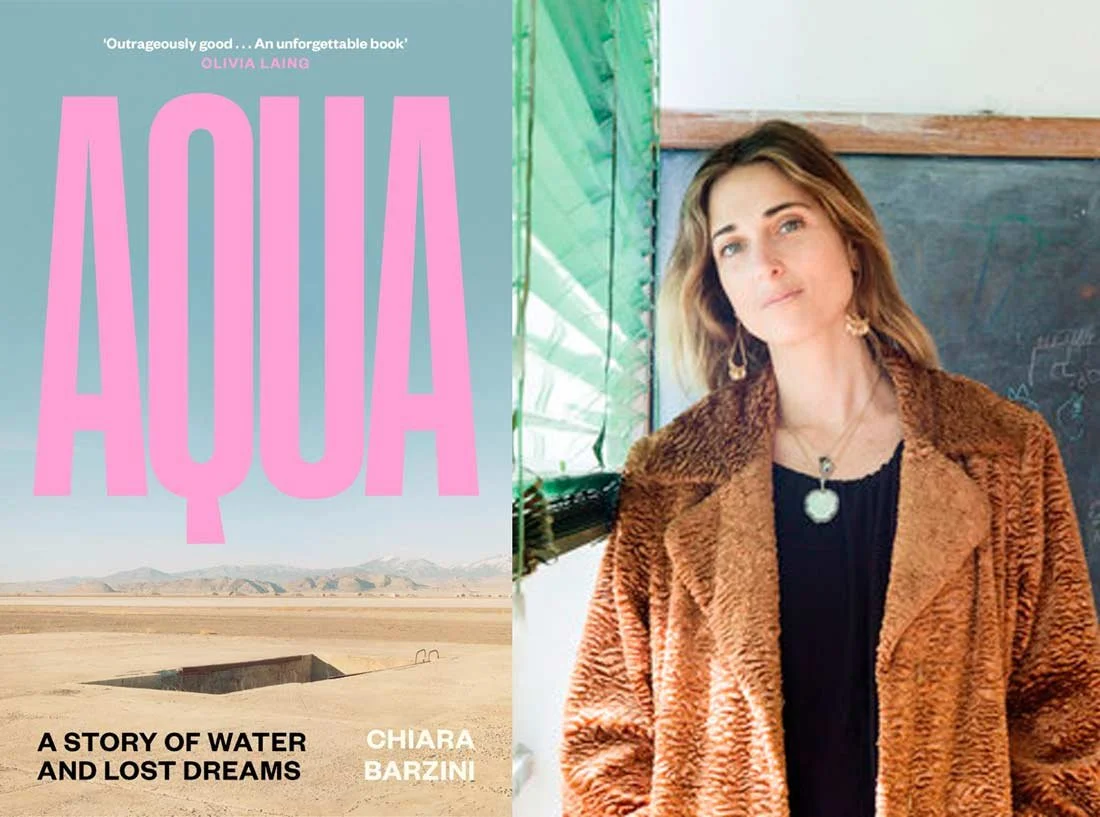
CHIARA BARZINI · Screenwriter · Author of Aqua · Things That Happened Before the Earthquake
I think first of all that in order to have disillusion, you need to have illusion and I really want to sort of take a stand in the name of being a delusional person, you know? I do think illusions are necessary to our sense of creativity, and we need to fall in love with extreme projects, and we need to have ideas that are sometimes unsustainable. We need to dream big in order to be creative and feel alive. The illusions that are a part of Aqua are larger illusions. They're illusions that have to do with my adult life. They're connected to nature and the presence or absence of water, the illusion that we can keep sustaining a city even though the water has run out.
Artists, Writers & Scientists Share their Stories
Ada Limón, Max Richter, Dustin O’Halloran, David George Haskell, Donald Hoffman, and Ralph Gibson, reflect on beauty and the memories that give their life meaning.
24th US Poet Laureate ADA LIMÓN
Author of Startlement · Against Breaking: On the Power of Poetry · The Hurting Kind
It’s always very interesting that we have to make a case for art because we don’t have to make a case for fast food. Like, we don’t have to make a case for all of these sort of things in our lives that we do not need, and yet we have to make a case for beauty? We have to make a case for the soul? We have to make a case for humanity? We have to make a case for singing back the wounded world? That to me is fascinating.
Celebrating the Performing Arts with Chief Artistic Officer SHANTA THAKE
Lincoln Center is multiple stages. I think probably over three dozen stages across 16 acres. It is a vast canvas in and of itself. And then we have this beautiful plaza that leads to this beautiful campus, and that’s the visual I think that most people have when they think of Lincoln Center is this beautiful fountain in the center and these three gorgeous buildings.It’s New York’s biggest plaza, and it feels very vibrant and beautiful. In the summer, we really take that plaza and we transform it into a dance floor. So this idea of also interrupting what people’s notion of Lincoln Center is because it’s a space that is very aspirational, which is a great thing.
GEORGI GOSPODINOV (Author of Time Shelter · Death and the Gardener · The Physics of Sorrow) ANGELA RODEL (Translator · Musician · Exec. Director · Fulbright Bulgaria)
We are in the middle of a labyrinth which suggests to us many fake corridors. What's the superpower of literature? Literature is like an antidote against propaganda. Propaganda explains the world easily in a two-dimensional way. Literature gives you a more complex explanation. Literature tells personal stories.
Artists on Creativity · Improvisation & the Search for Meaning
Peter Weller, Chayse Irvin, Lee Jaffe, Eric Fischl, Adam Moss, Anthony White, Dickie Landry, Bruce Evan Barnhart, Benh Zeitlin, Richard Sennett, Donald Sultan, Gloria Pacis, Paul Levinson and Julio Ottino share their stories.
NACHO DE GREGORIO · Author of TheWhiteBox
I'm a believer in this technology. I believe that the cheaper it is, the more people will use it. So, even if we assume that models will get smaller for the same level of intelligence, the demand to actually have more compute is going to be enormous. And the reason why you want to have the compute close to you is not only in terms of performance. As a national security threat, I'm not saying this will happen, but it could happen that China or US or whoever decides to stop exporting compute to the rest of the world. If that happens today, Europe has zero AI at the scale of data the data center.
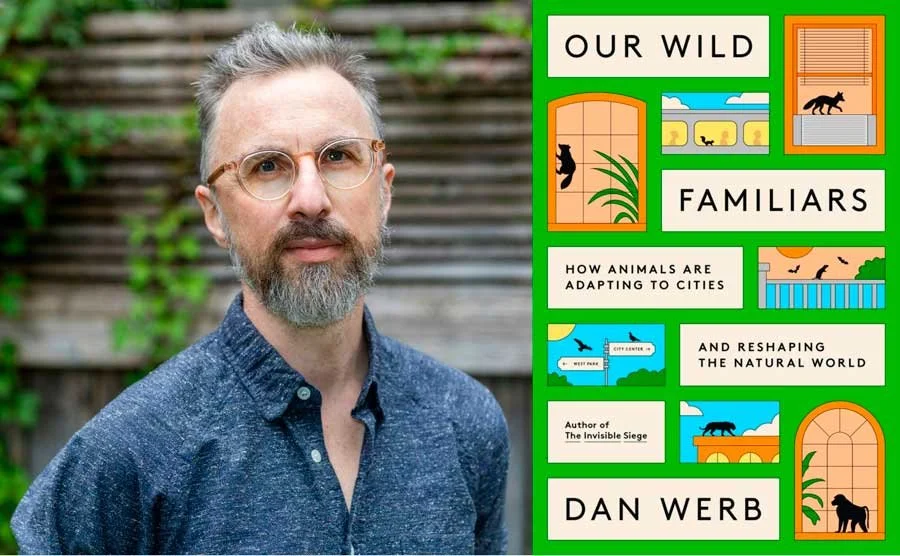
Epidemiologist · Musician · Author of Our Wild Familiars
So synanthropes are animals that have adapted to human-modified environments, and the Greek translation essentially is together with humans, so synanthrope. And they're a fascinating subset of wild animals that they're all around us, but we don't really notice them. And so in this new book, I was excited about writing something that had to do with the natural world. I was excited about writing something that touched on climate change and the way that the world was changing, but maybe not with such a sort of dirgey approach or funereal approach. Something that actually explored the wonder of the world as it is and as we experience it around our communities in our cities and towns. And I had come across this word synanthrope in the research for my last book, The Invisible Siege, which was about the rise of coronaviruses and the long scientific journey to find cures for COVID-19, and it just kind of stuck with me. There is this connection, of course, between wild animals and viruses and lots of questions about the origin of SARS-2, the virus that spread COVID-19 and caused the pandemic. And while that's touched on in the book a little bit, the vast majority of what I was excited to write about was just what these animals are doing in our cities. How is it that wild animals, raccoons, coyotes, all kinds of birds and animals as fragile as bats… These are not just insects and earthworms and things like that. These are very large predators that have nevertheless found a way to survive among us. And that in and of itself I think is just an amazing story and what I explore in this book.
It is an ordinary human impulse to find a reflection of ourselves in the machines we build. But what happens when the lifeless begins to talk back, to paint, to compose and to simulate our emotions? How do we hold on to what makes us human? Siri Hustvedt, C. Thi Nguyen, Bayo Akomolafe, Jonathan Yeo, Laura Eason, Max Richter, Ralph Gibson, Catherine Curtin, Liad Mudrik, Jacob Ward, Chris Dercon examine the power of imperfection, imagination, intuition, and how to avoid getting lost in the machine.
AMITAV GHOSH · Author of Ghost-Eye · The Shadow Lines · The Hungry Tide · Sea of Poppies · The Great Derangement: Climate Change and the Unthinkable
Imagining with precision is a very fundamental part of my work. When I sit down to write about anything, whether it be The Hungry Tide in the Sundarbans, or let's say The Shadow Lines, or Ghost-Eye. It's very important for me to get the topography right, to get the outlay of the streets or the house exactly right so I can actually picture all of that in my head. It's very important for me to have a sort of pictorial sense of what I'm seeing and what I'm writing about. Before I can write about it, I need to see it, as it were. So that's absolutely fundamental to my craft. That's just how I go about it. Like the Sufis say—behind the apparent reality is a hidden or ba- reality.
I guess that's always been something of great interest to me. How do you square these two realities and make them come together on a page? And really that is what, in some sense, the work of the imagination is. We know that we're in the grip of an intensifying planetary crisis. We can see signs of it everywhere.
How much of our consciousness is actually shaped by our bodies? We explore embodied cognition and the idea that we think with our limbs, breath and physical interactions, with Siri Hustvedt, Guy Leschziner, Daisy Fancourt, Helen Whybrow, Marie Nipper, Arash Abizadeh, David Linden, Bayo Akomolafe, Master Shi Heng Yi, Anil Seth, Robert Waldinger, Noelani Pantastico and Sean Curran.
Redesigning Our Relationship with Nature
We explore our changing planet, from melting ice in Greenland to the depleted soils in our farmlands. We’re joined by writers, advocates and visionaries to discuss environmental justice and the circular economy. Abrahm Lustgarten, Jon Gertner, Rebecca Tickell, Bill Hare, Rob Nixon, Euan Nisbet, Roland Geyer, William McDonough, Carlo Ratti, Jason deCaires Taylor, Jane Madgwick, Paul Shrivastava, Liza Featherstone, Osprey Orielle Lake, Ron Gonen, Louis de Jaeger, Kathleen Rogers and Yolanda Kakabadse.
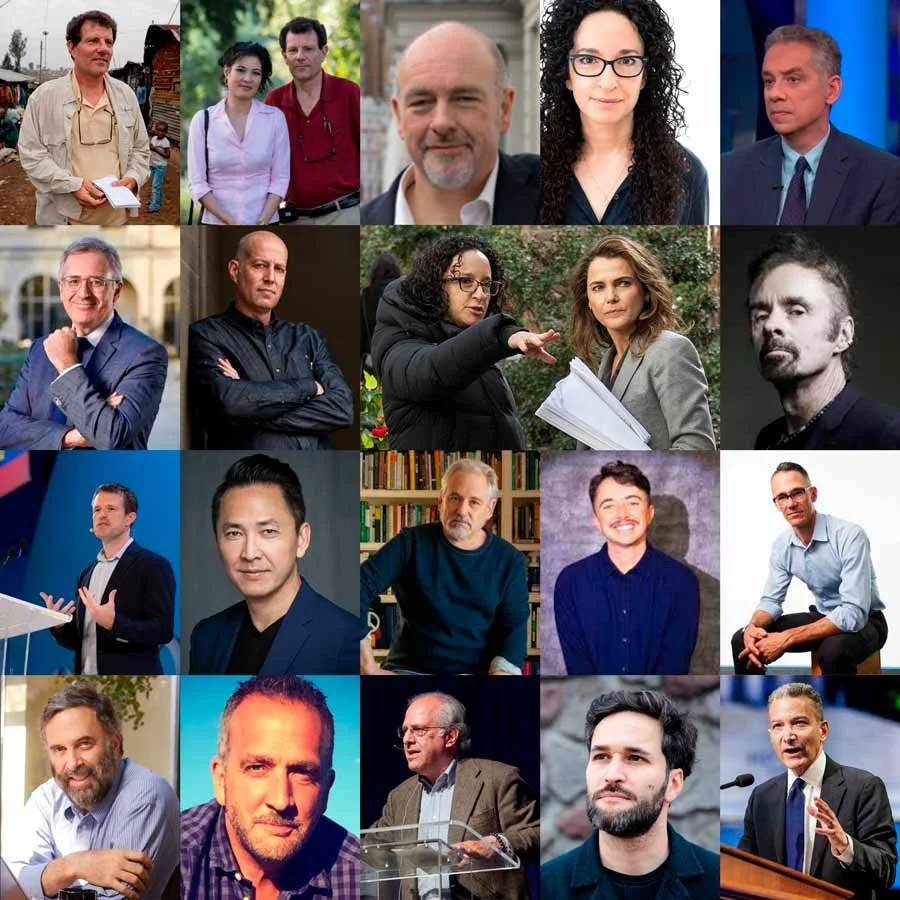
Journalists, Writers, Political Scientists, Economists, Filmmakers on Democracy & The Fight for Truth · We explore the collapse of journalism, the rise of spin dictators and how disinformation is the new censorship. As media consolidates, journalism remains an act of hope. Nicholas Kristof, Abrahm Lustgarten, Lee McIntyre, Richard Black, Richard Wolff, Jeffrey Rosen, Sergei Guriev, James Fishkin, Viet Thanh Nguyen, T.C. Boyle, George Pelecanos, Jacob Ward, Dean Spade, Debora Cahn, Daniel Susskind, Mike Davis, Michael Maren.
DR. KEITH SAWYER · Author of Learning to See: Inside the World's Leading Art and Design Schools · Explaining Creativity · Group Genius
I've discovered in my studies of creativity in general that creativity is not about starting with a brilliant idea and then following a linear path to an execution of your idea. What I see in art and design is a much more iterative, wandering, exploratory process where the ideas emerge from the act of engaging in the work.
Architect · Engineer CARLO RATTI
Director of MIT's Senseable City Lab
Curator of Venice Biennale’s 19th Int’l Architectural Exhibition
What we need to do is learn from nature. If you think about how nature progresses through trial and error. I'm really a fan of how we can do open designs that citizens can respond to, and use the feedback in order to create similar systems to what happens in nature.
QUINN SLOBODIAN & BEN TARNOFF on why understanding Elon Musk’s computational worldview is essential for protecting the public sphere and fighting back against cyborg conservatism
Musk interestingly has this way of excluding the majority of the population from consideration, what he variously calls non-playing characters or NPCs, which is a category from video games, or sometimes bots, vampires. And this is a much more stark version of insider and outsider group creation than even hierarchies of race because it takes this one step further by taking very seriously the idea that other people are not only not human, but they in some way don't even exist, which is the literal reading of Musk's adoption of Nick Bostrom's simulation theory, which is that most people are simply programmable parts of a simulation, and only a small number of people are actual players.
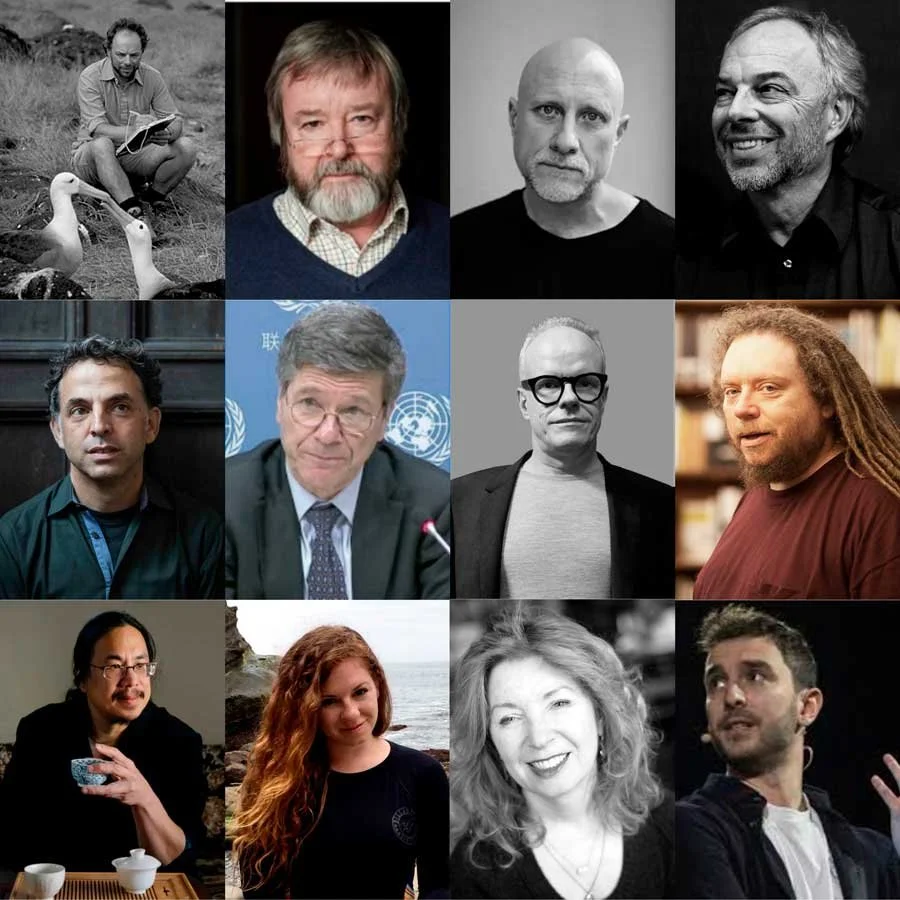
As artificial intelligence reshapes our visual culture and cognitive habits, we investigate the profound costs of offloading our reason to algorithms with Trevor Paglen, Jaron Lanier, Henry Ajder, Hans Ulrich Obrist, Antonella Wilby, C. Thi Nguyen, Carl Safina, Jeffrey Sachs, Etgar Keret, April Gornik and Iain McGilchrist.
Author SIRI HUSTVEDT Remembers Her Late Husband, PAUL AUSTER
Grief happens because you don't stop loving the person who died. The person doesn't exist in your reality anymore. The everyday is not colored and shaped by this other human being, but you don't stop loving the person. So grief is a particular kind of unrequited love. And probably without that dynamic relationship with this person, I would be someone else. And he would've been someone else. Paul died before me. But we were, I think, hugely important to the drama of becoming in our own lives.
Architects SALWA & SELMA MIKOU
Architecture should bring a true sensation of wellbeing. We were really lucky to experience that as children, and now as architects, we try to bring all that we learned into our practice.
Creativity is an infinite conversation. The impulse to speak and be heard is what keeps us tethered to each other and to the world. Max Richter, Andre Dubus III, Iain McGilchrist, Ana Castillo, Albert Serra, Daisy Fancourt, David George Haskell, C. Thi Nguyen, Cherien Dabis, Aimee Nezhukumatathil, Ami Vitale, April Gornik, Carter Burwell, Hala Alyan, Jericho Brown and Hans Ulrich Obrist explore creativity as a window into reality and a tool for connection.
We hear from Andre Dubus III, Etgar Keret, Paul Lynch, Megan Abbott, Katie Kitamura, Liz Moore, A.L. Kennedy, Siri Hustvedt, Yann Martel, Intan Paramaditha, T.C. Boyle and Ada Limón on finding beauty in chaos and how writing helps them make sense of the world.

A Conversation with Documentary Filmmaker REBECCA TICKELL
Today, we explore the work of a filmmaker whose lens is consistently turned toward the most critical issues facing our planet. Rebecca Tickell, in collaboration with her husband Josh Tickell, has created a powerful cinematic catalog of films that are not merely observations, but catalysts for change. They've taken on the complexities of our energy systems, the deep-seated problems within our food supply, and now, with her latest work, Bee: Wild, they explore the essential, fragile, and often unseen world of pollinators.
Their film Kiss the Ground sparked a global conversation about regenerative agriculture, leading to tangible shifts in policy and public understanding. Common Ground continued this exploration, unraveling the intricate web of our food systems. Now, with Bee: Wild, narrated by Ellie Goulding and executive produced by Angelina Jolie, Rebecca brings her characteristic blend of journalistic rigor, personal narrative, and solutions-driven storytelling to the urgent plight of bees, asking us to reconsider our relationship with the natural world.
Musician & Activist PLUMES
Mostly I’ll play in a minor key, something sad, which I think can work for an animal because they can sense the sadness, and they try to reassure me and comfort me. I chose love songs because I'm convinced they are very intuitive and they can sense what I am trying to say to them, and profess my love in a way. I think there's always a way to connect, and if you're being cautious and don't threaten the animals, something beautiful can happen.
FRED PEARCE · Environmental Journalist · Author of Despite It All
Observing the world and talking to people around the world, I find a huge amount of spirit and optimism and hope among communities around the world. That really helps. And it's fabulous also to see how nature recovers from almost the worst things that we are doing.

On Earth Day, we explore the Living World—a reality where we are not merely on a planet, but are a moving part of its metabolism. We travel from the High Sierras with Paul Hawken to the glowing forests of Costa Rica with Thomas Crowther. Guided by Paul Hawken, Merlin Sheldrake and David George Haskell, we explore policy and poetry with guests Paula Pinho, Hans Bruyninckx, Bill Hare and Alice Schmidt. Alongside Tiokasin Ghosthorse, Tom Chi, Erland Cooper, Rebecca Tickell and Britt Wray, we ask what happens when we stop trying to dominate and start trying to collaborate with the Earth?
CARISSA VÉLIZ · Author of Prophecy: Prediction, Power & the Fight for the Future · Privacy is Power: Why & How You Should Take Back Control of Your Data
Algorithms are deciding whether you are eligible for a loan, a job, an apartment or insurance. They determine what you see online, who reads your social media posts and who connects with you on dating apps. They may even decide whether you get arrested or go to jail. Your very life hangs in the balance of prophecies.
If you are unlucky, a prediction will be what kills you. Forecasts can determine your place on a waiting list for an organ transplant or whether you get medical care in an emergency. Policymaking hinges on predictions. War and peace and whether someone lives or dies are decided based on forecasts about the strength of an adversary, the impact of a mission or the identity of a person. And yet no one has asked your permission to make those guesses. No governmental agency is supervising them. No one is informing you of the prophecies that shape your fate. Prophecies are the grounds on which fights over the future take place.
TOM CHI · Physicist · Designer · Inventor · Google X Co-founder (Glass, Loon, Waymo) · Founding Partner of At One Ventures · Author of Climate Capital
In the book I spend a bunch of time basically teaching skills and frameworks of thinking. Not to indoctrinate, it's not a framework like an ideology where you need to believe exactly these things. This is a lot more about how does one use their minds effectively to solve problems that have been solved before. I work on things that have to do with investment and climate and the future of the economy and automation. The main things I'm trying to teach in the book are skills around creativity, critical thinking, community compassion and frameworks around how to go and use that on problems that should be relatively portable to a bunch of problems that are meaningful to you. The way that education needs to change is that people need to actively be working on things that truly matter to them so that over time they end up being able to go make that difference.