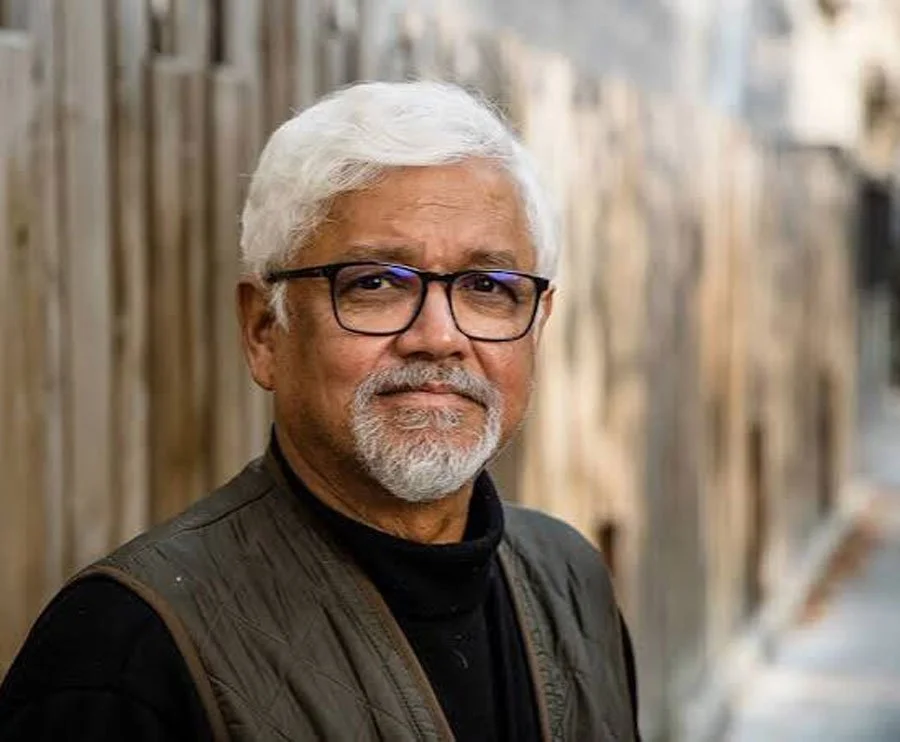


I think one of the things that we have to acknowledge and repeat over and over again is that the general narrative that there has been no resistance or protest to the current regime is absolutely untrue. People in India have been protesting and protesting consistently across the country. What we've seen is a lack of media attention. But what you've also seen is a kind of violent, disproportionate crackdown by the state, accompanied by a legal regime that now makes it absolutely possible to disappear anyone into the legal system. – Suchitra Vijayan
Here, I think there was a situation where there was general youth anguish over unemployment, over mostly economic conditions. So there was a general atmosphere of discontentment. And then also there was the fact that even after a degree you don't get a job, right? So unemployment. And then in the midst of that, there was a remark made by our Chief Justice, which was interpreted to mean that he was calling these unemployed youths of the country as cockroaches. – Raaz
Speaking Out of Place is produced in collaboration with The Creative Process and is made with support from Stanford University.
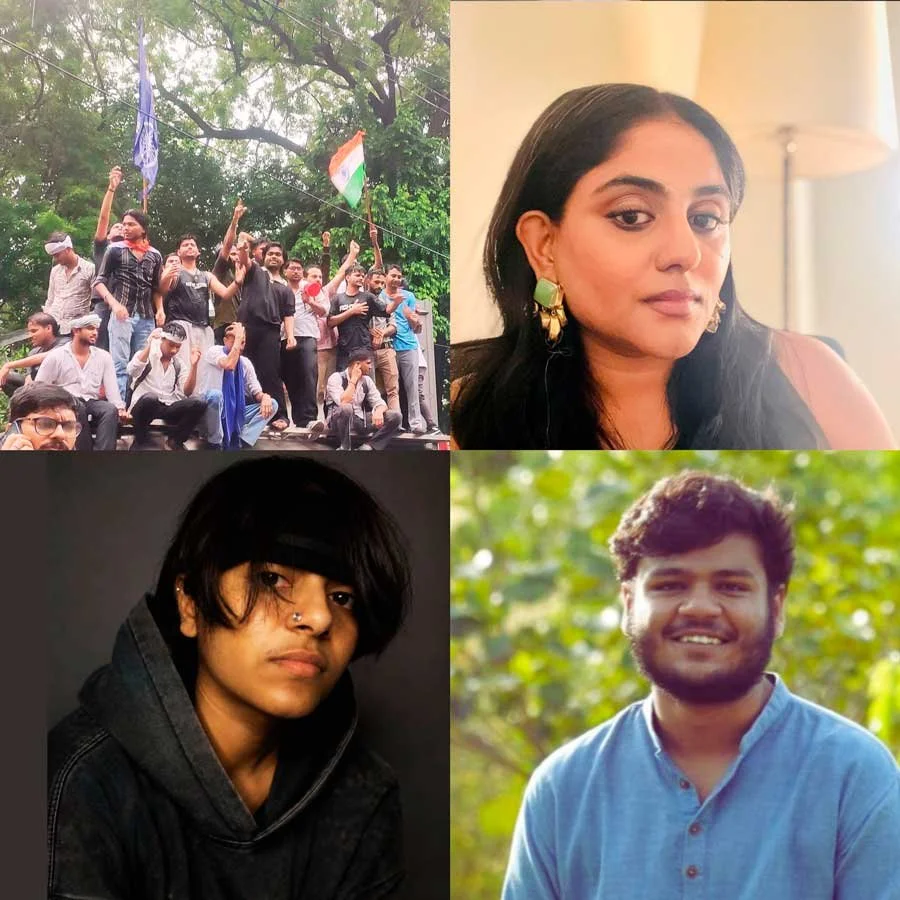
The so-called “Cockroach” protests that erupted in India this past July grew quickly, gathering around them a number of different activist groups and individuals from various walks of life. These protests were met with tremendous state repression and censorship. In this episode of the Speaking Out of Place podcast, Professor David Palumbo-Liu talks with Raaz and Sarthak, two student activists and organizers from Delhi, about the broad background to the struggles for education and a decent life, and how the fight has grown to encompass broad sectors of Indian society. Despite the attempts of the State and mainstream media to disappear these protests from the global mediascape, we learn how and why the protests and organizing has continued unabated, and what some of the key goals are. Along with Raaz and Sarthak, we are joined once more by Suchitra Vijayan, director of the Polis Project and seasoned activist and journalist, who was also there as the protests unfolded.
DAVID PALUMBO-LIU
Suchitra, could you start us on that please a little bit, the background?
SUCHITRA VIJAYAN
Absolutely. I think one of the things that we have to acknowledge and repeat over and over again is that the general narrative that there has been no resistance or protest to the current regime is absolutely untrue. People have been protesting and protesting consistently across the country. What we've seen is a lack of media attention.
So of course, the big protest, the real flashpoint was the CAA/NRC protest that happened in Shaheen Bagh in 2019 and 2020 before it was shut down. But even before that, going back a good decade, 15 years, what you're really seeing is communities across India in resistance.
You see this in Kashmir, you see this in the Northeast, you see the farmers' protest in Punjab, you see the student protest across... Of course, the most famous ones happen to be centered around Delhi because of the media coverage, but you've seen students protest across the country. There's been protest against the NEET exam, which is sort of the precursor for the current protest.
But in the south of India, in Tamil Nadu, NEET protests have been happening for a really long time. And what you've really seen is people and communities protesting state power, corporate power, takeover of their land, students resisting takeover of their campuses and all of this has been happening.
But what you've also seen is a kind of violent, disproportionate crackdown by the state, accompanied by a legal regime that now makes it absolutely possible to disappear anyone into the legal system. You have laws like the UAPA, the PSA and the recently implemented laws around digital security in terms of censorship. So what you're really seeing is a violent state crackdown, both physically when you're on protest sites, second, reduction of the space of protest and of course, a legal infrastructure that allows the state to act with absolute impunity and disappear those fighting the state into systems of carcerality for years if not decades.
DAVID PALUMBO-LIU
So since you're such a core part of the media response to this, talk about how the state is controlling the media and how different media sources are managing to get the word out and where we can look for those kinds of stories, along with the Polis Project, of course.
SUCHITRA VIJAYAN
I think one of the things we have to understand with mainstream media in India is that they have also become an extended arm of the state. For example, before Umar Khalid or many of the other student protesters were picked up across the country, the justification and the dehumanization for the arrests happened through mainstream media, where the mainstream media becomes the extended arm of the state.
They start parroting messages. They start playing information or disinformation. For example, one of the things that you found was that when Umar Khalid was picked up, before he was picked up, a news clip was played that was edited, which made him look like he was calling for violence. But in reality, that never happened.
When his lawyers go to court and say, “We need the original clip,” none of the major news organizations that ran this were actually able to provide it. None of them had the original talk. But what it really did do is repeat and replicate that. Where you do see resistance coming from is local and vernacular media.
You see the emergence of a new influencer culture. You see an emergence of a network of people that are coming out. We actually put out a report in the Polis Project, in which Raaz was also one of the main lead researchers, really looking at the media infrastructure, and you're beginning to see not digital institutions, but it's no longer just digital organizations like The Wire or The Scroll or other digital platforms.
But what you're really seeing is proliferation of the vernacular news, proliferation of the journalist as the YouTuber, the journalist as the influencer, the stand-up comedians and young people who are taking to these platforms as sources of trusted news. So that is really what you're seeing as, in some ways, setting the narrative. And of course, the protests in Jantar Mantar brought in Gen Z. So individuals have now replaced institutions as nodes of dissemination of information.
DAVID PALUMBO-LIU
And since you mentioned the Umar Khalid case, could you talk more about it, since our audience may not be familiar with it, because it leads in very well to today's topic?
SUCHITRA VIJAYAN
So Umar Khalid, of course, is just one of the many students and young people who were arrested post the 2019, 2020. So what you really had was the Shaheen Bagh protest that happened that emerged organically in India in 2019. And then in February of 2020, what you really see is hate speech that is being put out by BJP and right-wing politicians. While they put out the hate speech, which is the unleashing of a pogrom against the Muslims in parts of Delhi's neighborhoods. And again, you see the vast majority of the people destroyed, their homes destroyed are these Muslim communities. Now, this event is taken as the basis through various manufactured evidence.
The Polis Project put out a report called Manufactured Evidence two days before Umar Khalid was first picked up, which kind of talks about how the Delhi Police goes about manufacturing evidence against people like Umar Khalid and many others, and putting together an entire legal system and FIRs. There's something called the FIR 53 that also arrested a lot of other young people who were protesters, which made gathering a crime.
So all the information that they had, FIR 53 basically said that if you gathered for a protest, you then become criminalized. And really what they did was they used various laws and legislations to start targeting these activists. So it's not just Umar Khalid. There are many others. There's Gulfisha Fatima, there is Sharjeel Imam and others were picked up.
And what you really saw was a ripple effect of hundreds of other students who are nameless were also picked up. And what we've seen is that they've all been incarcerated under UAPA and various laws since 2020. Starting 2020, 2021 was when the arrests happened, and for over six years, all of them have been incarcerated. Umar, of course, is the most famous of the political prisoners, but really there's many who have continued to languish in prison.
DAVID PALUMBO-LIU
Raaz, let's talk about today. What were the circumstances behind the protests? What were your demands? What kinds of things were foremost in your mind when you began to launch these protests? How were you maybe inspired by previous ones, or how might you have invented things that were relatively new?
RAAZ
I think maybe we can just understand this protest in a few phases. This was somewhat different from the way that Shaheen Bagh started, where it was very clearly like a law that came out which targeted a specific community, and there was mobilization around that.
Here, I think there was a situation where there was general youth anguish over unemployment, over mostly economic conditions. The fact that the competitive exams in India are something that every middle-class family wants their child to just clear this exam, which is super competitive, and just get into a good medical college, a good engineering college. This is the aspiration, not just for middle-class, but even the working-class families.
There was a rising discontent. There were these paper leaks that were happening, so kids who spent years just doing this kind of, just preparing for these tests were not able to give them. Before that also, there were many issues around education in the 12th class exams and so on. So there was a general atmosphere of discontentment.
And then also there was the fact that even after a degree you don't get a job, right? So unemployment. And then in the midst of that, there was a remark made by our Chief Justice, which was interpreted to mean that he was calling these unemployed youths of the country as cockroaches. And there was a figure who came out, Abhijit Dipke, who just tweeted, “Okay, what if all the cockroaches came together?”
And this tweet kind of became really viral. It got a lot of traction, and then he made an Instagram page. This all started as a meme, basically, right? It was not supposed to be a movement. It was not the same as Shaheen Bagh, where students were coming, organizing. It was just general internet tweets, Instagram pages and all of that.
But then when the first thing that happened from the state was that when the Instagram page crossed some 20 million followers or something, the page got taken down. That was the first kind of state response, and that really got people further amplified. The second major thing that happened was that Abhijit Dipke took this movement from just an internet thing to on the ground.
And when he came on the ground, that was I think a very big... That was very unexpected I think also for us. We were used to seeing these things online, but he got on the ground. He was abroad at the time, so he came back to Delhi. He chose Jantar Mantar as the protest site. So Jantar Mantar is the centrally located spot in Delhi. It's the only designated protest site which is there.
Any protest anywhere else is supposed to be illegal. So even Shaheen Bagh was technically an illegal protest site because you don't have permission of the government to protest there. Now there's a very specific conversation to be had about designating certain spaces in the city as protest sites, but I'll keep that aside for now. So this movement came on Jantar Mantar.
There were some people gathering at this time, but the second major thing that happened was a very famous activist, Sonam Wangchuk, who had led a big movement last year for the statehood of Ladakh, one of the northern states who was also arrested. He came onto Jantar Mantar and went on hunger strike.
So this gave a very Gandhian flavor to the entire movement. It very much appeals to this kind of satyagrahi sentiment of this older man who was very revered, an educator, someone who's given a lot for the country and so on. So tailor-made for a very good media spectacle is what I'm going to say. Is that you have the right people, the right protest site, everything, a lot of talk of peaceful non-violence, et cetera, very Gandhian in its imagery.
But like we were talking about earlier, it's not that there haven't been protests in India in the past decade or so, it's just that they have been completely suppressed, not just by the media, but also I would say by the state, right? It takes nothing for the police to arrest students.
It was only a few months ago, like February, March, where there were workers arrested or workers who were striking in Noida, just a few kilometers from Delhi, and there were hordes of them arrested en masse, and there were students arrested. So the state has lost this ethos of, “Okay, we'll come into conversation with people.” It's gone straight to, “How do we clamp down on this?”
So on July 18, in the morning, they sent the police to basically abduct Sonam Wangchuk from there. It was done very shamefully. The police posed as doctors, and they pretended to come in, then they picked him up forcefully. They put him behind this white sheet to hide him, to hide his images. But of course, it was like his images were everywhere.
And because this was a meme which had so much following, it had so many eyeballs online, specifically the youth, the Gen Z was watching this. When that happened, that really ignited the fire. I think that's when the people really started gathering, was on the day he was abducted, which was on Saturday.
There was rising crowds on Saturday, Sunday and then July 20 was when the March to Parliament was called, and that was the day we saw an immense amount of police brutality happen, which gave another upsurge to the movement. So I just wanted to break it down into phases. Sarthak, you want to add something?
SARTHAK
No, I think what happens from the 20th onwards is what you're seeing is a sort of general atmosphere, a simmering tension within the youth being capitalized by this group called the CJP, the Cockroach Janta Party. And they do their due diligence.
They are on the ground. But they are also taking help of different student organizations already in DU. They're taking help of, you know, the All India Students' Association, SFI. Like, these are all student organizations that have been working in the colleges in Delhi and across India. These are the people that are actually holding the ground.
They are making sure that people are coming. They're making sure that within the protest site, there are activities that are happening. There's a sort of political education that is happening. When you are articulating your demands, when the people come who are resonating with the demands, you make the conversation go far beyond those demands because demanding the resignation of a particular minister, although symbolically however important it might be, and it is quite important because of the image that this government has portrayed itself within.
But a protest that centers around education cannot stop at the resignation of a particular minister because it's a systemic problem. It's not a one-person problem. It's not even a corruption problem. It is how the system is designed, and it is actively being designed in a way that is excluding people.
It's getting increasingly privatized. It's getting increasingly captured by the ideological wing of the present government, right? And where we should be teaching people logic and scientific thinking and all of those things, our biggest institutes are headed by people who are doing cow science and science around how can we use the urine of a cow. Which can be important maybe in some world, but that's not what the head of the Indian Institute of Technology should be doing…
SHOW FULL INTERVIEW (15:00+) ▼
...And that sort of sends a message to people that... And people have their own lived experiences. That's one thing that was really good about this uprising that happened, that it was focused on a very core issue of education, right?
Although the demands and the capitulate, like how CJP articulates it, it's quite different from what the people are feeling. That is a very important thing that we see here, emerging as the protest develops also, that CJP and their band of three or four people trying to make a political career out of this moment.
But at the same time, there are real people that are coming to the protest who have faced this education system that is not making them skilled. When they complete their education, it's not that they're finding jobs. The kind of jobs that they're finding, the kind of innovation that is happening in this country is creating opportunities that economists would term as distressed employment.
And that is being garbed as, “Oh, these are big capitalists that are giving you these jobs.” But these are not jobs in which you can make a life out of. Like you can do productive labor, you can feel fulfilled. You're more and more alienated. You're doing these menial tasks and that is what the youth of this country is told to aspire for, right?
So that is the context within which this is sort of happening. Like, yeah.
Thank you so much. I have a couple questions.
Could you give us what exactly is the unemployment rate and what's the unemployment? This is such a massive question, is one question. And the other one, I think your answer was really important because it's not just about employment, it's about life.
It's much more than simply getting a job. It's the quality of life, the quality of the jobs, the way you're going to use your energy, and I thought that your comments were wonderful that way. And then the other question I wanted to ask, you talked about the leaks. Who was leaking it? What was the purpose of the leak because people were having to retake the exams or they couldn't take the exams?
Who was doing these leaks? What was behind that? I was never quite sure.
David, I think one thing to understand is that the Indian education system is moving to making education a luxury and a commodity, right? And when that happens, various aspects within the system like examination, like coaching institutes, like even books for that matter, all of these things become sources where people, middlemen and all of these people can make money.
So when paper leaks happen, for us to understand why paper leaks happen, who is... This is not a criminal whodunit that you chase the person who's a big mafia that is doing this paper leak and you solve the issue. It's a question of this is how the system is designed, right? And then if you develop a system in which you have competitive exams that are so, so selective that you need to have a particular kind of coaching, you need to spend lakhs and lakhs of rupees to...
People send their kids away to distant lands to... There are these various places in India which are education centers. If you go and look at the hostels in which the kids are living, if you look at the lives the kids are living, you see why paper leaks become a very important emotional point, where you see the struggle that goes behind one year of just preparing for an exam.
Then for the paper leak to happen, then you see, okay, the kid had to live in a matchbox-sized room where the fans are not working and the kid has no other life except for just the books and the future is uncertain for him. And the only hope that person would have was to clear that exam and then finally get the social upward mobility that is promised through these exams, these very selective exams and the family is involved.
Yeah. The family has put so much money. You have to take care of your family and these examinations become a way through which you have, you get jobs, you get money. So that is at the crux of this issue, is to not understand this as this criminal activity of paper leaks happen, rather than understand this as paper leaks being a very natural externality of a system designed to exclude, right?
Thank you. Raaz, did you want to add to that?
Actually, I think to specifically name the system that Sarthak is talking about, this system that is quite engineering these multiple middlemen at every level, this can largely be attributed in recent years to the National Education Policy of 2020, which was brought by this government.
So the general trend that we see with the BJP government is of centralization. So the idea is that everything happening in the country, we just centralize authority completely, right? And when you do that, then you appoint your own kind of people or you have to have several layers of things because it's a massive country.
If you are holding one examination, the clear incompetence in the government. So that's not to be discounted. But yeah, so the NEP had a big role in centralizing educational institutes, the kind of purpose of education also. The other thing which Sarthak was hinting at was there is a big problem with privatization of education.
So if you see all the education laws which have been brought about over the past ten years have all had this inkling of, okay, how do we create human resource out of this particular education? There's not this idea of education for its own sake, for knowledge sake. There's not emphasis on critical thinking, critical reading, developing holistically as a human being.
These are not things that are even considered. And there's, of course, a lot of increase of the influence of this private capital into the education systems as well. So these were also demands that were being raised for student organizations at the protest, and NEP in particular was a big demand of the AISA, which also went on hunger strike at the protest.
To your second thing which you were asking about, the unemployment rate, as far as I remember, it was around 5.5 percent in June, this June. And that was a pretty high number, I think, in the past year or so. And overall, it's been around seven to eight percent since the past five or six years. I think COVID was a high point.
But even the thing with data unemployment, statistics and all, is because this data is relied upon by the government. But any journalists will tell you there's a big problem with the way statistics have been given and collected by the government. Further, there is this problem of when you're saying someone is employed, what does that actually mean, right?
Gig workers are not, even by the initial model of an Uber, a gig worker was not supposed to be employed. The company doesn't even consider them employed. But how they're considered contractual workers is a big problem. Like if you talk, I've mentioned the Noida workers protest. Like in many labor protests, the big issue is of contractualization versus permanent jobs.
So people just don't get permanent jobs, they're just kept on contracts forever. So all those kind of things don't really play into just a singular number given out, which is anyways faulty. But yeah, I think the systemic problem with education and employment and how we think about these institutions in the country.
Thank you. That's a great answer. Suchitra?
I think there are two things. I think one is, of course, the data itself being unreliable, and this is actually something that the current regime has done quite well in terms of gutting institutions and people who could collect data. So the institutions are, of course, the state-based ones which collect this data, and that data, not only across employment but across everything, is being now gutted.
So there is a focused effort to erase numbers and data. Second, there's an institution that usually can collect numbers, quantitatively verify them, is journalism. Today, we do not have beat journalists. Very few newspapers or even media organizations today have beat journalists who can cover issues based on a beat, and that's gone.
So what we're also seeing is a moment in which information erasure is happening across, which kind of unemployment numbers are one of that. But the number that we do know and then we can rely on is that India needs anywhere between ten to 12 million jobs a year. So the Indian state, the government, has to constantly create ten to 12 million jobs in a year.
Depending on who you listen to, India at this point in time is not creating any more than four to six million jobs. Again, the numbers on this, we do know that we need ten to 12 million jobs, but we are not creating it, but we do not know what the gap. And structurally, what you've done is the Indian public services, whether it is the schools, the access to education, public institutions like the IITs, the JNU... No matter how flawed, still provided a roadmap, an access to a better life, right?
There was this idea that if you did these right things, it's the same, the bootstrap if you had the... But not only do we not have boots, they've also, for all purposes, structurally amputated your leg and now expect you to bootstrap yourself. And I think that's really what's happening. And for a long time, this was an issue that was faced by people who came from severely marginalized communities or people who came from working backgrounds or people who did not have access to capital.
The reason why Jantar Mantar becomes important is that now this issue is also beginning to affect India's middle class. If today you're a middle-class person with access to material wealth and resources, despite investing in your child, the paths that were open to you for class mobility is no longer available to you.
And it's also understanding that what used to affect the vast majority of Indians, which did not make the news, is now affecting a group of middle-class Indians who did have it good for a long time, who are now beginning to face it. It's affecting vast swaths of the country previously almost lived in a bubble.
Yeah. This gets me to a question I really want to ask all of you, which is that anytime you have a mass movement that is gaining popularity and notoriety, so to speak, you're going to have a lot of people opportunistically latching onto it. You're going to have good allies, you're going to have bad faith allies, you're going to have various unions who are out there already that might be decades old and rather out of touch now seeking to glom onto this to re-energize.
So who do you see as the real allies and the ones that are sort of opportunistically seeking to ride on your coattails, so to speak? And how do you navigate both of those?
I think it's an interesting question. I don't think there's a general answer to that I can point to that this party's doing a good job or that party's doing, because there is effort from various aspects. As you said, for various reasons, maybe people have a certain interest. They have to make their own political career. Congress needs to make a comeback and all of these things are happening together. At the same time, what is also happening is now education has become an issue. Two months before, there was an amendment that was making the rounds, which was called the UGC Amendment Act, right?
Essentially, what it sought to do is to protect people from marginalized castes within university spaces, because we see an increasing number of suicide rates as well as discrimination rates across universities and these are public university, private universities, all kinds of universities, right? And you see a kind of response from the BJP, manufactured by the BJP, where it deploys its popular support.
It deploys its high people from high caste, people from capital-owning caste. All of these people stage a protest against that amendment that is brought. There's another act that is called the Rohith Act, which was an act that was formulated after the institutional murder of Rohith Vemula. Rohith Vemula was institutionally murdered in Hyderabad Central University.
Hyderabad, the city that the world knows as the Silicon Valley, the vaccine capital of the world and all of the big badges that you can have, right? And there you have a student who wants to just study and he's ousted from his hostel and he's sitting on a hunger strike and then he dies by suicide because of the entire state machinery clamping down on him.
And what happens after his death is that a group of activists create this Rohith Act, named after him, to tackle this issue of caste discrimination. Now, two months before the Jantar Mantar protest, when the amendments are happening, you don't see Rohith Act becoming mainstream, all right? You don't see education becoming mainstream.
But now that it has, for all the reasons that it has, like, there is obviously it being in Delhi, it involving people that are BJP's core voter base and all of those things. What we do see now is there is a critical reflection on what education means. Another thing what happens after the Jantar Mantar protest is CJP does this campaign called School Thik Karo campaign, where what essentially they're doing is they're going across all these state-funded schools and colleges and seeing the infrastructure of how kids are studying in our country.
And to no one's surprise, what you are seeing is that it's not good. The roofs are leaking, there are no teachers, the teachers who are there are not skilled enough, there are not enough students. So you see that. And on the other hand, Rahul Gandhi, who's doing these huge concert-like rallies with all the pizzazz, all the spectacles, doing a big presentation.
But what he's again talking about is how systemically education is not in the favor of the student. But again, in rhetoric, all of this seems great, but even in Congress-ruled states of Karnataka or Telangana, you see the same kind of clampdown happening on students when they're protesting. Yeah. Right. So the students and the general populace, I think, are left in this limbo of very few people that they could trust because they do not trust mainstream parties.
And one of the hopes as Gen Z that we had was when CJP was formed, that it would not follow suit. It would not follow the same old traditional path.
So I think this is a very controversial question, and the reason for that is because we are engaging in the very controversial act of united front politics. So the situation in India is that for 12 years you have had this party in power that has won by landslides in 2014 and 2019, and has really propped up this image of the way past authoritarianism, like squarely in fascist regime right now.
But also the leader of this party is extremely, is godlike figure, right? Completely undefeatable, like unchallengeable. Like that has been the status quo for a long time, and that's why 2024, when the elections happened, that was a very unexpectedly joyous moment. Even though they still came back into power, the margins were different than what were expected.
There was many things that happened. So you actually saw the resurgence of an opposition in 2024 after a decade. There was no opposition in India in actuality for over a decade, right? And then the reason for that also was in '24, you saw this kind of all the opposition parties, the regional parties coalesced around this Congress-led opposition alliance, and they managed to get some leeway in the parliamentary elections.
Now, CJP very much operating in the similar space of local. What we saw on the ground also was that sure, education was a big topic, but also there was a lot of anti-BJP, anti-Modi sentiment. Like that week, what was the most crazy thing for me was that you can now go in an auto ride to Jantar Mantar and talk loudly about how you think Modi is not doing a good job and, you know, make all sorts of fun of it.
You just talk very openly with the law of freedom of speech, which is not really, you haven't been able to do that. I remember when I was growing up, it was like this question of if not Modi, then who? Right? That was it. And now you have this entire young base coming out and saying, “No, we are anti-establishment.
This is the establishment we have known. This Hindutva politics, this leader, and we don't like it.” So basically right now the situation is that it's the BJP RSS camp and everybody else, and everybody else has, trust me, a whole range of political leanings there, right? There's the Congress alliances, there's the regional parties, there are the leftists.
There's many people there, and that's why it's a very controversial thing also, controversial politics also, because how much are we capitulating at some extent. But I would say one thing, because you asked this question of who do you think is infiltrating or riding on the coattails of these movements, I think even this idea of trans politics and given the way that CJP also started, this was in some ways the best it could have gone.
But I will say that it's not just the BJP, it's not just a single party, because the BJP came from the RSS, the Rashtriya Swayamsevak Sangh, which was a paramilitary and still a cultural organization that has been at the forefront of Hindutva politics for 100 years now. They have just so many smaller groups, right?
You have the Bajrang Dal, the Hindu Raksha Dal, you have ABVP, the student wing. Like all of these small groups which are operating all over the country and are really deeply penetrated into the social fabric. What we saw was that, for example, after Jantar Mantar, just to be clear for that, there was student protests in Jharkhand around the same issue of paper leaks, right?
And there, the main thing was that now ABVP, which is the student wing of the RSS, they started with the Jantar Mantar protests, they started with the cockroach protests, but then in Jharkhand they sat over there along with the left, right? So you saw it was a very bizarre thing of you have the left protesting in one camp and this Hindutva brigade, RSS brigade protesting in one camp.
So that is always there. Secondly, even while we were at Jantar Mantar, I remember I was there one night, all through the night, and there was basically a sit-in going on at a public road which was outside of Jantar Mantar, but that was I think where the real protest was happening. People were basically talking about when they think the BJP goondas, goons, will come to attack and disrupt the protest.
So there were videos making rounds of these Hindu Raksha Dal leaders saying, “Okay, by this date we'll come and we'll squash all these cockroaches away from here.” All these things were being said. So these are the elements. There's a lot of elements which are connected to the BJP, RSS also, which try to infiltrate, try to disrupt, try to opportunistically claim things against these very specific intentional political motives.
And so to combat this nexus is why this idea of opposition alliance and united front and all these things came up because at parliamentary level at least that's the only thing that's working. Now, whether Congress will bring any material change or not is not something I will comment on at this time.
So my take on this is that you approach everything in different segments. There's the ideological project, there's the political project, there is the moral ethical project and there is the narrative, right? So I think, I don't remember who said this to me and I think it's a very easy anecdote to follow.
You could disagree with Churchill and Stalin ideologically, but thank God they sent two territorial armies into Europe to bring down the Nazi regime, right? So I think that is my much larger view is that sometimes you might have to get two ideologically different people coming together to do a very particular thing to move something very specific.
Again, this is not on the ideological positions of these two figures as leaders of two armies, but really the decision to march two territorial armies into Europe to bring the Nazi regime was absolutely necessary. Without that, it could not have happened. So at any given point in time, to deal with a political project, you deal with a very narrow sense of equations, which is, if I need to push for this, who do I have to ally with in order for me to push this?
And I think the fact that it was a much broader coalition, it was BJP versus everybody else, as Raaz said. The fact that the umbrella had expanded, the pie had expanded, meant that there was strength in numbers. Are there people in these...
protests that I would otherwise sit down and have a conversation with, a meal with? No. Maybe not. But that strength in number then pushed the idea that this man was not invincible, that all political projects fail and everything can be defeated. And I think there is a generation that does not have that imagination and we've given them what that looks like on the ground. I wouldn't say we have given them.
They, people like Raaz and Sarthak, who have given that political imagination. So that wide umbrella of coalition as a political strategic move to get people, because after Shaheen Bagh, there was this sense that no matter how much you protested, it felt like something had to move and the ground has now shifted.
Next, there is the ideological project, right? Ideologically, would I ever work with somebody from the RSS or the BJP? No. Would I ever work with someone who thinks somebody else because of who they are based of religion, caste, class, is someone fundamentally different and needs to be persecuted, which is the core ideology of the RSS and BJP?
No. Will I ever work with somebody who's incited violence? No. That's an ideological, moral, ethical, because sometimes the ideological and the moral ethical have to coexist. So there are inherent red lines that you navigate when it's a much larger ideological project. So for me, I don't want to keep anyone out when we have an important moment that belongs to everyone and there are no perfect allies.
And I think the reason why the right succeeds is because the right does not care about perfect allies. And I think we should be very strategic and very narrow in who we choose to align with for specific acts, events. I think that's why strategy and tactics are different. We can, again, the alignment does not even have to be something that we openly say.
Hundreds of thousands of people turned up on the streets who came because something seemed to have shifted. Do they all agree on the same thing? No. I think even within Gen Z, if you ask them questions about something like India's reservation policy, even your most liberal of young person would not agree with it.
They would have a very negative view of India's reservation policy. So again, I might not see eye to eye on many things, but for the very specific moment of mobilization, I think it worked. Will it work again? We don't know. Depends on history, memory, context. And I think what India needs right now is a generation of young people who can understand that.
And I think we had that in the '70s and the '60s. I think around the '80s and '90s, we began losing that leadership, a leadership that can very clearly distinguish between the ideological, the political, the strategic, the tactical, the moral and ethical. And they all have to work together and you have to recalibrate these decisions every single day because the ground shifts.
And I think that's where I am, and I think it is a really important moment, and I hope for me, what would be the real victory is the emergence of a new group or new class of young people who will become political leaders, who will become leaders that we can then rely on in 20, 30, 40 years' time.
And I think there is a narrow moment in which that is possible and I think we've seen a lot of them emerge and I really hope they have the time and the space to really hone this. Because Shaheen Bagh also created a generation of young people, but many of them are now in prison. Not seeing them, we don't know what their potential is because it's been completely shut down.
So my hope would be to see the real victory, even if this moment fails. The real victory of the moment is what leadership can we produce that will sustain the struggle for the next 20, 30, 40, 50 years.
You anticipated my last question because I always like to end the podcast with what's your hope, what's your ambition. And I'm so glad that Raaz and Sarthak are on the program because you're giving us such a vivid picture of what's going on the ground. And I also know that you're also staying up late to be on the podcast, so I'm going to let you go with this last question. And I go back to Suchitra's, I understand the Stalin-Churchill thing.
Not perfect.
Yeah, I understand that. But I'm wondering what students really want. In other words, instead of the negative, we want to fight the Nazis or we don't want Modi, what's your positive vision for what you want to come out of this? And it could be very, it could be relatively amorphous. It doesn't matter, but whatever fills your hearts with, "This is what we want to see emerge out of this."
And you've already accomplished so much already, as you all explained to us. I don't like this term necessarily, but you've raised the consciousness of the country in an amazing way, right? About the educational system, the failures of the educational system, even the failures of its notions of what successful education is.
You've called all that into question in a very animated and vivid way. But you've also faced a huge amount of repression. What are you aiming for? What would you want to have come out of this as something that's almost non-negotiable? And again, it could be broad, it could be abstract if you want, but what motivates you at this point?
I think that there is a lot of struggle going on in this country. I think that a lot of people on the left, there is this idea that, okay, if you're always criticizing the government, why do you hate the country so much? Just leave and go to Pakistan. I may have my disagreements and critiques of India as a nation state, but I have a lot of love for the people here and I think the people here are diverse and it's just beautiful and the community is beautiful in very many ways and they are in struggle.
They are in struggle because we are living in a political economy that is in this weird semi-feudal sort of space. We're not fully capitalist, we're not fully out of feudalism, so we're always wrought with the issues of caste, whether it's inside the campus or outside. And simultaneously, our resources, our land are being looted by imperialist powers.
That is why when you talk about, "Look, India's GDP is growing so much. Wow." But when you look at GDP per capita, you look at wealth inequality, those indicators are massive. This is the most wealth inequality we've had in a century. This is pre-British Raj that those levels of wealth inequality were reached, right?
The political economy hits the most marginalized sections of the population first, but they come to everyone. They come to the middle class eventually. They come to the Hindu Savarna upper caste person eventually, right? The lower castes feel them first. The Muslims will feel them first. People in the peripheries will feel them first, but they'll come to all of us and at the end of the day, what we all want is just a good life.
We want education systems. We want to go to a classroom. I want to go to a classroom where I'm able to learn, right? I don't want to go to this class where I'm just being taught how to do rote learning and just pass the paper for my degree. I want to engage in critical thinking. I want to engage in questions about law and society and what we're doing as a country and how we can make lives for our people better.
What are the kind of development models that we should be pursuing to actually have development for our people and not just for capitalists or the capitalist families that rule the country. So all of these things, and I think these are also the repercussions that are being felt on the ground amongst the middle classes and the upper castes as well.
And that's why in Jantar Mantar, you landing on the ground, there's very little talk of the education minister. There was talk of everything else. Everything under the sun, right? People had a lot of grievances. People came with a lot of hope for changes. We want to solve these problems from the root. We want to solve these problems systemically.
And we want to have better lives. We want to have good education, good jobs, fulfilling jobs, fulfilling employment in that sense and security. There have been a few moments in the past few years, I think for me, I think it started with the '24 elections, but since then there have been a few moments where you've seen these resurgences of people on the opposition, of people opposing this authoritarian fascist regime come together, whether it's online, offline, whether it's journalists, whether it's different institutions.
There's a lot of work being done in these small, decentralized spaces that I think what this protest has done more than anything is to give a spotlight to those movements and it has actually brought forth a lot of people who are now... They might be famous on Instagram, but they're doing great journalism.
They're going on the ground in different places. They're reporting on things. Students have gone viral because they made memes, but then they started talking and you realize, oh, they have amazing politics. They have gone viral for that. So there are many new voices coming up like this, and I think that's the greatest thing that this movement has given us. So yeah, that's what I will say.
Yeah, I would just like to continue off of what Raaz said. I think what really inspired me during that protest was this idea of protest space bringing together people from all backgrounds. And when you bring people from all backgrounds, even if the leadership was not doing its due diligence to build solidarities, the people were building solidarities.
As Suchitra said, it might not naturally align with our politics or not align, but we are having a human connection. We are having conversation where it feels like a conversation. It doesn't feel like a comment section, right? Because again, at the same time when this is happening, the Indian internet was completely taken over by this.
That affects people in ways because especially if you are living in Delhi, because you're seeing something on the internet, then you're going to that protest site, which is the internet and then you come back and I think rather than we were having this thing of the internet is reality is internet sort of moment where it became surreal.
At the same time, you could see what that protest space offered was a sense of catharsis, where people who've, for the last 12 years, we can say, but even before that, the people have had very little of spaces in which they could vent what they are feeling, right? And that is something that emerged there.
But at the same time, a new kind of politics always emerges in protest sites. What was very beautiful about protests, the Shaheen Bagh protest, the CAA, NRC protest, is because it was a citizenship-based protest, amazing ideas on the idea of India, where people are talking about what India means to them, what does constitution mean to them, what do rights mean to them and all of those things.
These are new ideas that are emerging from students, from people, not just students, right? Everyone who's coming to that protest space and articulating these ideas. And that is what this government really hates the most. It hates ideas. It hates people having hope. All it wants is servitude or agenda setters.
Their propaganda stopped working in this particular protest. This is a common reality, material reality felt by so many people. And propaganda stops working when you deny people their material reality. And what I hope is our politics emerges from our own material realities. And when that does, we see that we are not the only ones with this kind of reality and we build more solidarities to have that hope, have those ideas and bring something new to offer rather than this weird election cycle, vote bank base, rhetoric, hate-spewing rhetoric and all of those things.
So I think that's essentially it. We want politics of a new kind that is not new, that it's isolated from the past. It derives from the past, is rooted in the present, but is moving towards the future, right?
CLOSING THOUGHTS (46:00+)
I just have one short question I remember I wanted to ask you to end with all three of you, which is what's the situation now? What's happening now? And what should those of us outside of India be paying attention to and how can we support you? So can you just give us a snapshot of what's going on now and what we should attend to and how we can support you?
I think the thing to keep an eye out for is that there are protests happening across the country for various issues, not just education issues. As we started this podcast with, is that it doesn't get the media attention, it doesn't get patronage. I have worked in the last few years with resistance groups that are creating protest art, protest music and all of those things that don't get patronage.
We are fighting the biggest political party in the entire world, which has money, which probably is the richest party in the entire world as well. There's a lot of state clampdown. I think on supporting people materially who are fighting on the ground, artists, reporters, all kinds of spaces that are emerging here. I think just helping us keep the narrative, helping us keep the stories that belong to us and are not manufactured.
I think I completely agree with what Sarthak said. I think what I always like to talk about, especially with comrades from abroad, is this idea that we are all in shared struggle against imperialism. At the end of the day, it all comes back to what do we mean when we say development? Development for whom, right?
Who are these massive highways that are being built in the name of development in villages where people only have bikes to ride on? What are these highways doing, right? A lot of it comes down to this model that the Indian nation has cultivated, where it's basically for all Modi's kind of strongman image in the country. When you see him abroad recently, it's just catastrophic, right?
You see him just bowing down to Israel, to Trump, to everyone. The Indo-US trade deal happening. The reason I'm bringing this up is because when the Indo-US trade deal happened, there was a lot of resistance from farmers' groups and farmers in India have been a very strong resistance force, as we have seen in the past five years, but also throughout history.
So in terms of shared solidarities, I think we are in a shared struggle against imperialism, against this kind of war economy that America kind of runs across the world, whether it's the Middle East or whether it's in South Asia and that is what eventually creates these economic conditions that oppress our people and that oppress all the peoples.
I think on the question of that, there are many protests happening across India, I think specifically focusing on the angles of development and economy and how resource extraction is functioning. I think that is very illuminating in understanding how we are all connected in this new globalized world.
Wonderful. Thank you. Suchitra?
What has happened post is what we saw was a very particular kind of violence and surveillance infrastructure that was put in place and tested in Delhi. Police report on this, and this is something that we've talked about for a really long time, is there's a global Israelification of policing.
There's a global Israelification of how crime is treated. And I think you saw that kind of come home to Jantar Mantar. Of course, it's been happening for quite some time, but at the heart of India's capital, what you saw was this very particular kind of deployment of Israelification of policing, surveillance and treating people as counterinsurgency targets.
Of course, the Indian state has done this in other parts, in Kashmir, in parts of Punjab, in India's northeast, especially in Manipur and other places. But that, I think, is something that post the protest got... There was a lot of reporting and I think that is something that we have to understand. And this is connected to the drastic expansion of data centers as funded by large AI corporations across the world.
There is a connection between large capital, surveillance infrastructure, Israel, India and generally what this means for protests and policing. There's a protest happening in Hyderabad where large swaths of lands have been given away to data centers. And there's that protest. So I think one, again, is for us to go back to the language and the narrative and also understand that soon after the protest, there was a backlash.
Students were picked up. There was a deal that was done where some of them were supposed to be let off, but it would be nice to see what happened in smaller cities where students did protest and the police did come down quite hard. We have to follow up those stories to see what happened to those students.
And I think finally, I live between Madras and New York, so for me, it feels like I am constantly straddling two different realities. It's like I come here and it's like Trump and ICE and I'm back in India and there's something else. If you had asked me this question five or six years ago, I would've said, "Put resources," you know?
But today, it's also impossible for us to send resources from the ground to India. The FRC means that you cannot donate. Any money that comes through can easily be classified as terror funding. So they've also cut out our capacity to materially resource people like journalists and writers. And then again, what does it mean for us to resource someone on the ground, right?
Then it immediately becomes the Soros Foundation led from outside. So honestly, I think there has to be a real conversation about what can those outside do? What does it look like now? Because the equations that we did before no longer work. There is a global struggle, but what does global struggle actually look like?
What do we mean by that? I don't have the answers for it because we've not had the time to sit and think and strategize what it means for, say, David, you and me to sit in these parts of the world, be deeply invested in what's happening, say, in Palestine or in India or other parts of the world, but really think through what infrastructures that we can put in place here that can help resistance in the United States, but also globally, right?
I think that is a conversation all of us should have. I think it's beginning to happen. I don't have the answers, but hopefully those are things and conversations that we can have more.
Actually, that's my idea for the next podcast. So you and I have to get together again. But all three of you, please accept my heartfelt gratitude, and this is my small little media platform.
Actually, it's not so small anymore. But it's open to you whenever you want. I would love us to have another set of conversations as things develop because all you've done has been so encouraging, inspiring and I'm just so impressed by all that you've done and I thank you for being on.