

One of the first steps toward creating an enlarged concept of our humanity is to develop an enlarged concept of our relation as human beings to politics.
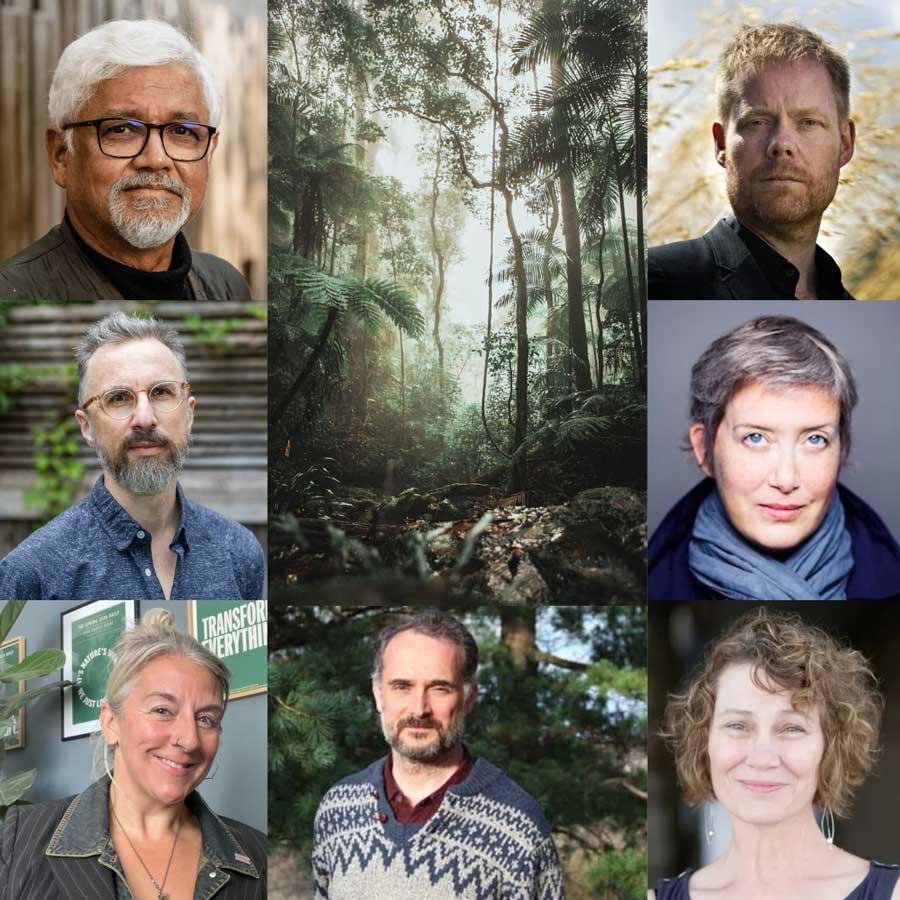
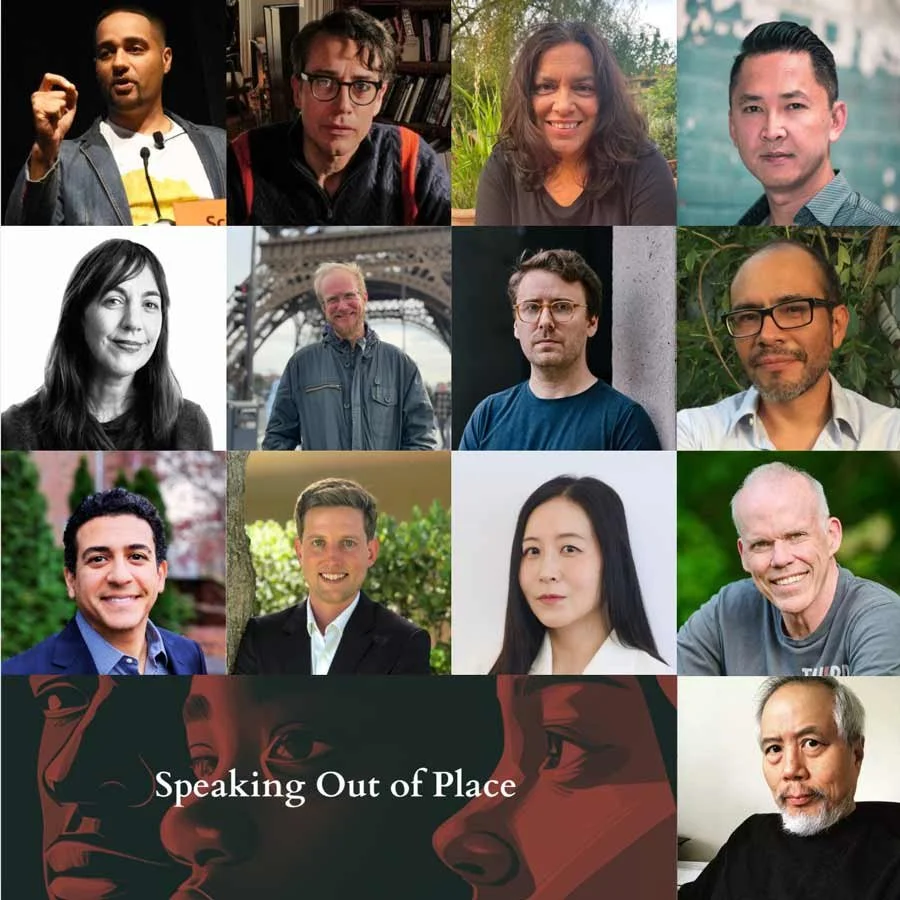
That need to reclaim our voice often starts in the very spaces where we feel most silenced. We live in an era where institutional decay and asymmetrical class power have made social consent seem almost irrelevant to the ruling class. To understand how we change those incentives, we have to look at the systems designed to silence us, and the movements successfully disrupting them. Today, we hear from scholars and educators rewiring our institutions—Jesse Hagopian, Eunsong Kim, Tim Hewlett, and Sara Ahmed. We turn to the authors documenting the human cost of these systems—Benjamin Moser, Viet Thanh Nguyen, and Yuri Herrera. Finally, we hear from journalists, researchers, and legal minds analyzing climate delay and political dysfunction—Ben Franta, Bill McKibben, Ben Tarnoff, Liza Featherstone, and Aziz Rana.
Speaking out of Place is produced in collaboration with The Creative Process is made with support from Stanford University.
DAVID PALUMBO-LIU
Louise Hewlett Nixon Professor of Comparative Literature · Stanford University
Host of Speaking Out of Place
I am going to read just a short passage from the introduction to the book, and I begin with a quote from other people, from James and Grace Lee Boggs, from a book called Revolution & Evolution in the Twentieth Century. 'One of the first steps toward creating an enlarged concept of our humanity is to develop an enlarged concept of our relation as human beings to politics.' The book really talks about how we might reimagine this relationship, both to politics but also to each other. And I continue, 'One way we have lost a sense of being together and of being potent political actors is through the delegation to others of our responsibilities. We have given them our voice, and the people to whom we have given our voice are some of the most irresponsible on Earth.'
By the same token, we have become used to thinking we have no right to have an opinion that does not register on the very limited menu of possibilities that has been set before us. We have also lost a sense that we have a right to determine the nature of our relationship to place on multiple scales, from our homes and neighborhoods, to our towns and cities, to our countries, to the international sphere and to the planet. Somehow, we have accepted that we depend not on each other but on the very few people who rule us. We need to shift the focus back to the people and care wisely for our precarious world, because our leaders have proven themselves both uninterested in the most pressing needs of the planet and incapable of imagining what we need to do.
The book chronicles how people have stood up and regained their voices, and also some of the topics where their voices are most urgently needed. Speaking Out of Place is produced in collaboration with The Creative Process and is made with support from Stanford University. I alone am responsible for its content. Let us talk about teachers, unions and signs of people taking the power into their own hands.
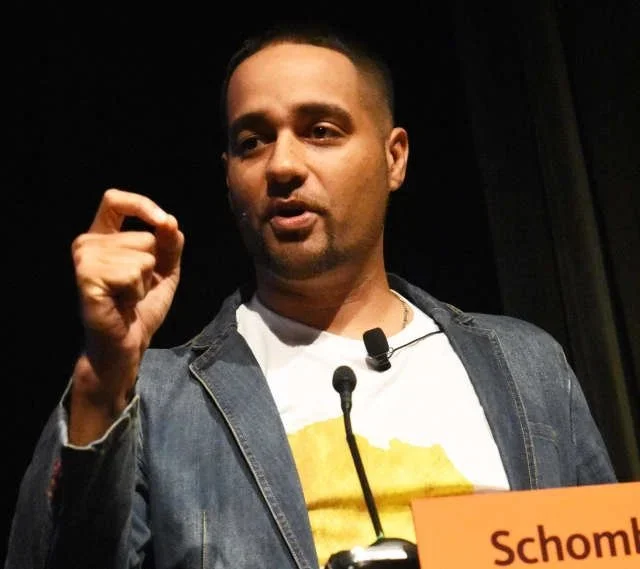
JESSE HAGOPIAN
Activist · Educator · Author of Teach Truth: The Struggle for Antiracist Education
Unions at their best are an incredible force that can help transform our society to make it more equitable. I really wish that all of the left would understand the centrality of the struggle for education and supporting educators' unions. I will start with that and then get more specific about the union.
There are so many ways that we are under attack right now. Donald Trump is attacking trans people. He is attacking immigrants and migrants. He is attacking Palestinians and wanting to ethnically cleanse Gaza. He is attacking education.You name an area of our society and it is under attack from him. This can be very disorienting to everybody and to the left, raising the question: where do we start? How do we begin to build a fight back and a social movement that can challenge him and stop his blitzkrieg?
There are so many places that we can put our energy in, but I would argue that the place where we will get the most return is organizing in education. I say that because these truth crime laws are broadly opposed by majorities of people in the United States. Book bans are wildly unpopular. There is a broad basis of support. Education brings together tens of millions of people who are very concerned about what is taught in the schools. We are talking about millions of students, tens of millions of parents and educators.
Teachers' unions are the biggest in the country. Educators are the most unionized workforce in the nation. When you put all that together, you are talking about people who are discussing and debating ideas, who have so much in common and have common interests. If the left took education as seriously as the right does, we would have a major uprising in this country that can push back on Trump around trans issues because schools serve trans students that he is trying to demonize. It can push back against his anti-immigration policies because he has now made it clear that ICE agents can raid schools, and we can push back against those policies and his education policies. The teachers' unions can play a huge role in that we have a democratic organization that is in every school building.
DAVID PALUMBO-LIU
I know this is a big task because it is a big argument, but it is so important. What is the main argument of your book?
EUNSONG KIM
Author of The Politics of Collecting: Race & the Aestheticization of Property
Associate Professor · Department of English · Northeastern University

The main argument of my book is I look at the site of the personal collection or the museum in the United States or the development of the personal collection museum and the rise of philanthropy. I think through the ways in which you do not have the rise of the museum form and the poetry archive without the acceleration, the mutations of racial capitalism and settler colonialism.
A friend and a scholar I admire, Jarret Drake, says he does not study museums. He studies slavery and he studies fascism.I would extend that and say I am not studying the museum. This is not a case study of the museum form. I am really thinking about the ways in which art spaces, in particular cultural spaces, the space of poetry often advertises itself to be an exceptional site, a site that is removed from the world. It is in those very spaces that you can so clearly see the ways in which the trenchant dynamics of racial capitalism but also colonialism manifest.
BENJAMIN MOSER
Pulitzer Prize-winning Author of Sontag: Her Life and Work · Why This World: A Biography of Clarice Lispector · Anti-Zionism: A Jewish History

I think that Jews have become extremely solipsistic in a way that is embarrassing. It is very much contrary to the way I was brought up, which was not to talk about yourself, which was to talk about other people and to serve other people.That was part of the heritage that I received from the Holocaust and from my family's background as refugees was, 'You are not a refugee. You have got it pretty good. You live in America, you get to go to the Ivy League school and you get to go on vacation.' We were very much exhorted against that and exhorted to serve other people and to try to do something good in the world.
They hated money grubbers. They hated everything that Donald Trump incarnates. That is why this book is dedicated to the Palestinians as an act of hope and also of repentance, even though I have not killed any Palestinians myself. But certainly, it is done in my name. Certainly, it is done with my money as an American. It is done with my political backing and diplomatic backing. I hope this will be one tiny little part of something that will make a change for the Palestinians.
DAVID PALUMBO-LIU
These days with our U.S. Congress completely dysfunctional, it was really moving to me when you listed all those bipartisan bills for climate change when people were working together that this strategy killed. Could you talk about some of the damage these tactics did to decent pieces of legislation?
BEN FRANTA
Founding Head of the Climate Litigation Lab
Senior Research Fellow at University of Oxford’s Sustainable Law Programme
From the very beginning, the climate policies that we think of as being cutting edge have been around as ideas for over 30 years. Things like a carbon tax were proposed in 1993 in the United States and it was killed through this combination of this is way too expensive and we do not even know if climate change is happening. None of the policy discussion today is very new. I think that is one of the really important things to keep in mind that the longer we wait, the more emissions occur, more global warming occurs and more damage is done that cannot be reversed.
The industry knows that. We know they know that because of their internal documents from even the 1970s and the 1980s. Some of those documents talk about what needed to be done to avoid really severe global warming and they concluded that the industry needed to start moving away from fossil fuels right away in the 1980s in order to avert severe global warming. The industry knew that and yet it continued to intentionally delay progress. They used deceitful tactics for decades, fully knowing enormous catastrophic damage, even in the industry's own words in their internal documents, they use the words catastrophic damage that would be put onto the world as a result. I cannot think of a bigger instance of corporate malfeasance at a massive scale.
DAVID PALUMBO-LIU
The industry is so good at patching together band-aids. Greenwashing and deferring action is a slow death sentence. Can you talk a little bit about how universities can be complicit in greenwashing?
BILL MCKIBBEN
Co-Founder of 350.org · Founder Third Act · Author of The End of Nature
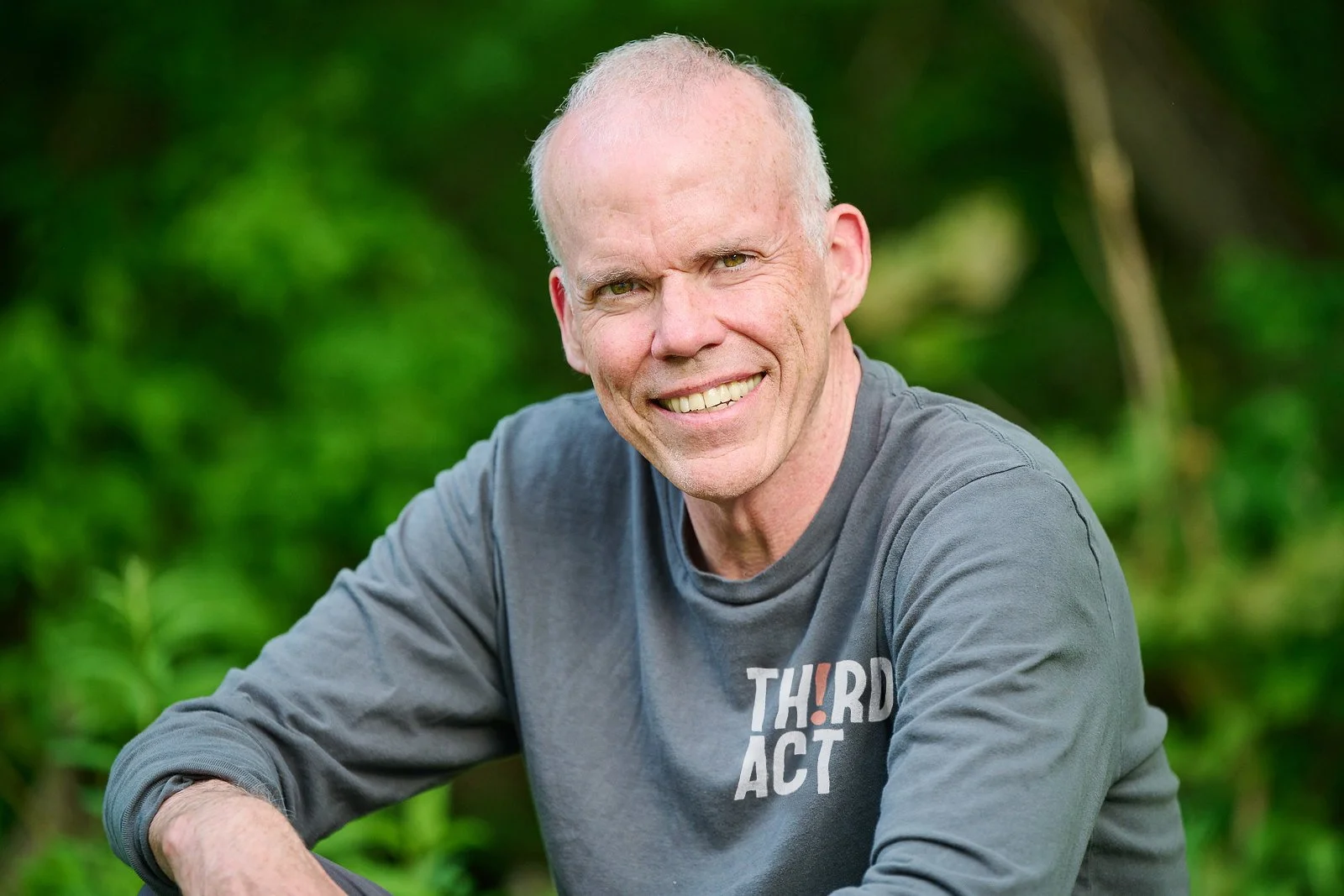
Let me say briefly, at this point, outright climate denial is almost impossible unless you are Donald Trump or somebody.There have been too many fires and too many floods and too much heat, but the new form of effective denial is delay.Science tells us now that we have to move very fast to have any chance of dealing with this. Instead, the fossil fuel industry is doing everything they can to preserve their business model a few more decades, even at the cost of breaking the planet, which clearly will be the cost. This is another one of these cases where the facts make clear what we need to do.
As Al Gore said a long time ago, those facts can be inconvenient. In this case, inconvenient for the industry in question and also inconvenient for the investment manager at the university who is going to have to spend a few weeks rebuilding the portfolio. On the list of things that we have to do to cope with climate change, this falls on the easy end of the spectrum and on the highly effective end of the spectrum. This should be over and done and we should be on to the next part.
DAVID PALUMBO-LIU
So, in the climate crisis, you have governments framing certain things in certain ways, but then you have the general public that seems psychologically willing to accept this framing. How do you try to reframe it or break the frame and substitute something else? Tell us a little bit how you arrived at the kinds of protests and tactics that your group is advocating and enacting.
TIM HEWLETT
Co-founder of Scientist Rebellion · Climate Activist · Astrophysicist
It is a great question. It is a really difficult issue because it gets to the heart of so much of what it is to be human apart from anything else, that we want to believe that there is hope. We want to believe people when they say that they are on our side and they are acting in our interests. We have a tendency to turn a blind eye if it is easier than the alternative.One of the ways that you can try to disrupt that relationship is through direct action.
If you see senior people, academics and scientists who are quite privileged, they do not need to be going out directly and defending their lives in a way that some protesters perhaps do. It has an additional psychological effect where they say, 'Wow, if even these people are on the streets, then things must be serious. There must be something I do not get about this.' That is one of the ways that you can start to break through.
I do not think that there is one approach or one way of doing this. One of the things that we tried to do when we set up Scientist Rebellion was to instill a culture and a set of systems. That would mean that anybody who was affiliated with the group would be supported in any non-violent approach that they took to make the point that almost anything is justified in response to this, if you are trying to do good.
DAVID PALUMBO-LIU
You have this quote that I will read to you: 'Society is not a factory. It encompasses children, the elderly, disabled, the geographically stranded, the very categories of life that markets define as surplus.' In trying to impose a cyborg logic of optimization, Elon Musk discovered that humans were not programmable units and that the public sector's role is precisely to provide goods that the private sector cannot or will not. Make the point that so much of his business is feeding off of public subsidies, public funds and et cetera.
BEN TARNOFF
Journalist · Co-author of Muskism: A Guide for the Perplexed
Elon Musk is foiled by the institutions of social provision at the heart of the American state. That is perhaps too optimistic a view because the other element that Quinn Slobodian and I have been discussing quite a bit is the extent to which not only Musk, but a large portion of the American ruling class seems increasingly disinterested in the question of social consent. If you think about how Donald Trump did not even try to manufacture a case for the war on Iran, in contrast to George W. Bush going into Iraq. It was a ridiculous case, but he tried to make it. Trump did not even seem to make an effort.
This is where we think about the relative thinness of the social contract within Muskism. What is it offering people at the end of the day? We are increasingly inclined to see that thinness as symptomatic of this broader trend within the American elite, which is that in a situation where people do not seem to be particularly politically organized, in which the working class has more or less ceased to exist as an organized force, maybe social consent does not need to be purchased at the same price as it had been before. Class power has become so asymmetrical that there is not a counterparty that you need to satisfy in the same way.
Maybe you can get away with things you could not in the past. For instance, if you think about the depth of cuts to Medicaid that were introduced in the One Big Beautiful Bill Act, you would only introduce those types of cuts if you really had no fear of pitchforks. That is a somewhat darker view of the question of social consent, which is that for at least some figures, and certainly those close to Trump, perhaps it does not really matter anymore because class power has become so asymmetrical that there is not a counterparty that you need to satisfy in the same way.
DAVID PALUMBO-LIU
Could you get us started, Viet, by talking about these two different aspects of ICE, the international dimension, the ideological one, its state operations and fascist ideologies, but also how we can break it by ways other than simply direct confrontation, but through storytelling and through different kinds of creative ways of changing the narrative?
VIET THANH NGUYEN
Pulitzer Prize-winning Author · The Sympathizer · The Committed
To Save and to Destroy
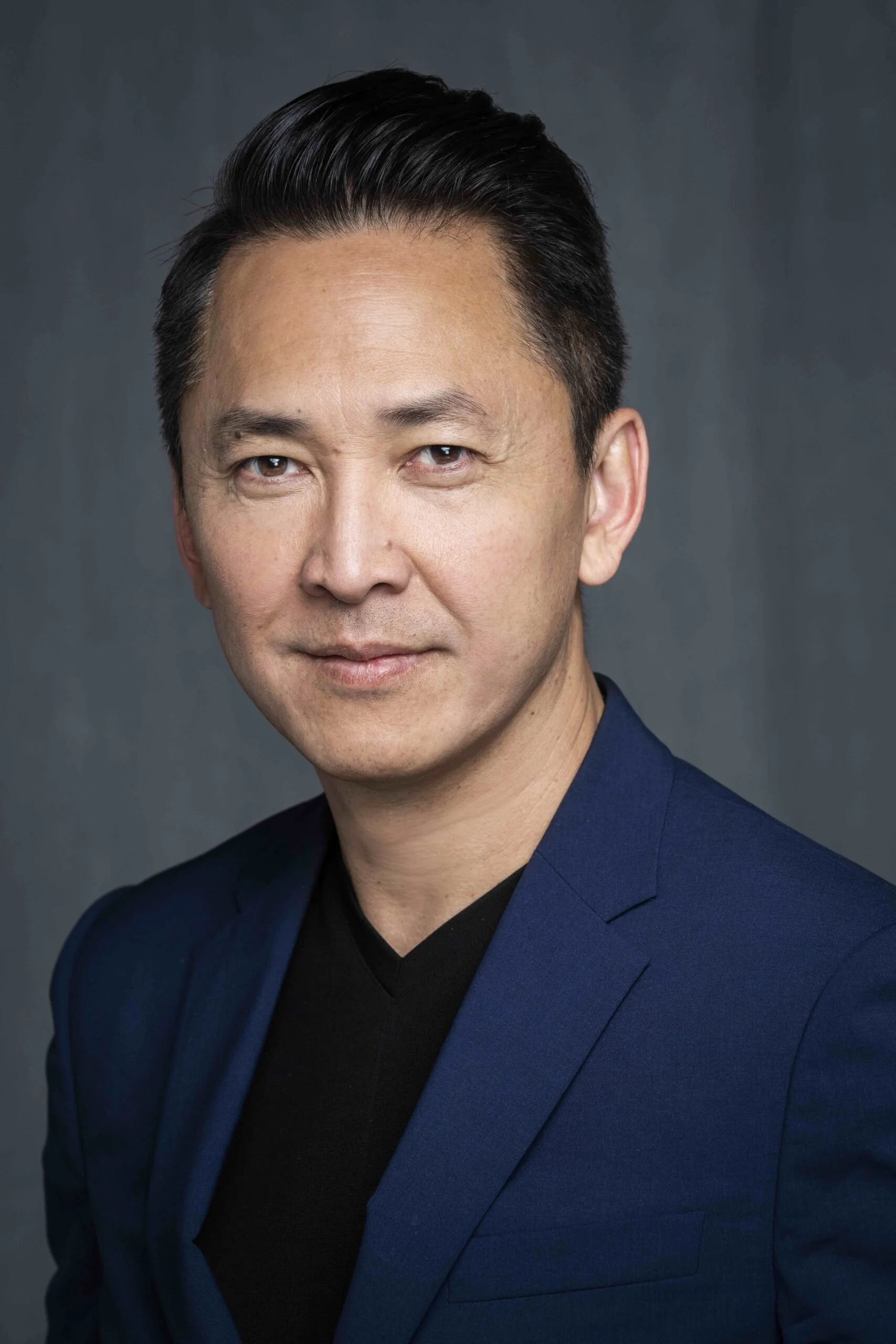
You can see how important storytelling is to fascism, to MAGA and to ICE. The construction here is of the United States being invaded by people who are not deserving to be here, culturally and politically for sure, but couched in this language of legalization and who has done the right thing to be here. That type of narrative is seductive to a lot of people, not just white people but to a lot of other people as well, and it is yoked to many other narratives around what is the United States, what is American power, what is going to benefit American power and what is going to erode American power. There is a tremendous amount of phobia around who constitutes the other or the others to the United States, and it goes way back to the origins of the country.
Deportations and invasions are a feedback loop in the greater Americas. The United States is responsible for a lot of that circulation, but once gangsters manifest themselves in the United States, it appears in the American consciousness as if they came out of nowhere instead of coming out of a system in which the United States has a lot of responsibility.Narration is so important here for us to be able to tell this story about the roots of the violence and who these criminalized people are.
There are actual criminals and violent people, but how these narratives of criminalization are done, and of course, how we narrate the power and the violence of the United States as something that is supposed to be legitimate, when in many ways it is oftentimes illegitimate in terms of how multiple Democratic and Republican presidents and administrations have forced American will onto Central and Latin America, producing the very problems that then average Americans have no idea what to do with.
DAVID PALUMBO-LIU
What do you see happening in the United States and in Mexico now in terms of history?
YURI HERRERA
Author of Signs Preceding the End of the World · Season of the Swamp · Kingdom Cons
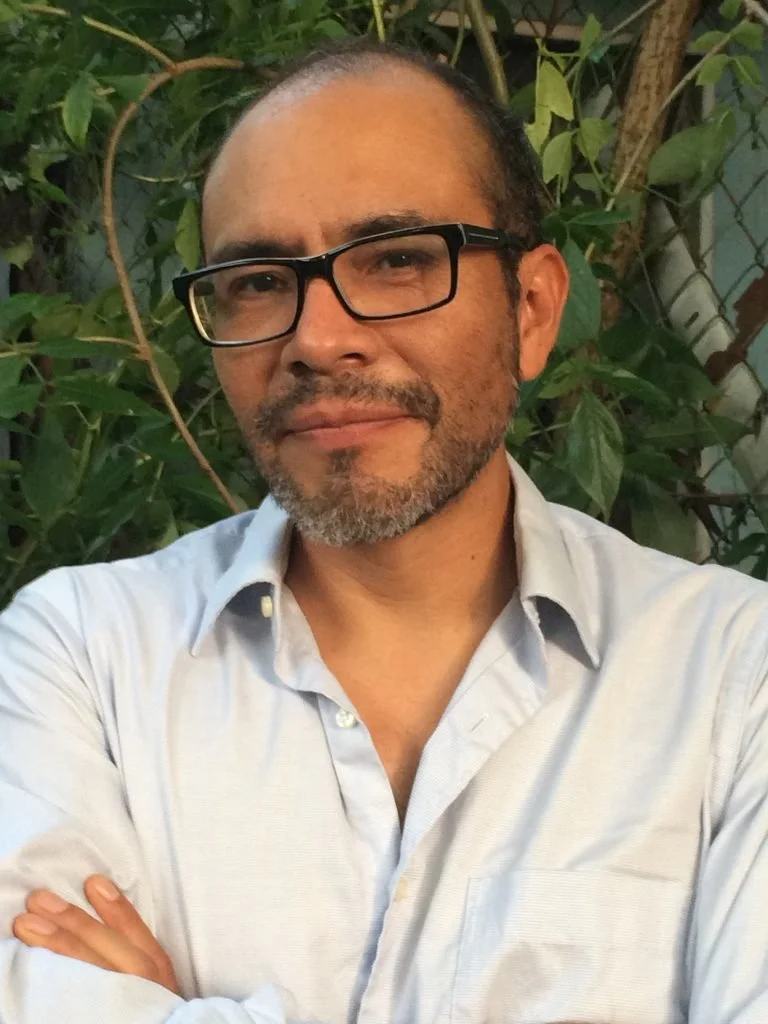
What I would say is Donald Trump did not invent racism, did not invent these concentration camps or did not invent cruelty. He is shameless right now. Barack Obama, with all his flare and all his coolness, was horrible to the migrant population of the United States. He built those cages that Trump is using. There are many differences, but one very important difference is there was at least a certain illusion of decency, and what we have now is a political class, in which I include most of the media and most of the universities, that have accepted that.
Cruelty and indecency is the way to go to reaffirm a certain imaginary place of the United States in the world and the expendable people. To recreate this dream is that people that have been expendable all along, people of color, migrants, women and the people who apparently cannot defend themselves, what I hope we are going to see a lot more is people defending themselves.
It has happened in different cities when you have these terrorists from ICE kidnapping people, that you have seen communities coming out to help the migrants because they see what is happening. ICE is not going after criminals. They are going after people in hospitals, in courts, people who are absolutely trying to regularize their documents in their workplace. They are going after people who are doing what a regular citizen does, work and take their children to school and go to court to try to work out their papers.
This is also part of something else that has to do with the genocide in Palestine, with the invasion of Venezuela, with the happenings in Africa, which is the disappearance of a certain common law in the world. That is why Trump says, 'I do not have to obey anyone. I just have to obey my own morality.' When a person who has been found guilty of rape and who has bankrupted businesses many times, who has been an outspoken racist, says, 'The new order depends on my own morality,' it is very clear what we are facing. That should give clarity when resisting and when rebelling against them.
DAVID PALUMBO-LIU
What is a feminist killjoy? The second question is, why did you choose the form of a handbook?
SARA AHMED
Author of The Feminist Killjoy Handbook · No is Not a Lonely Utterance
Independent Queer Feminist Scholar
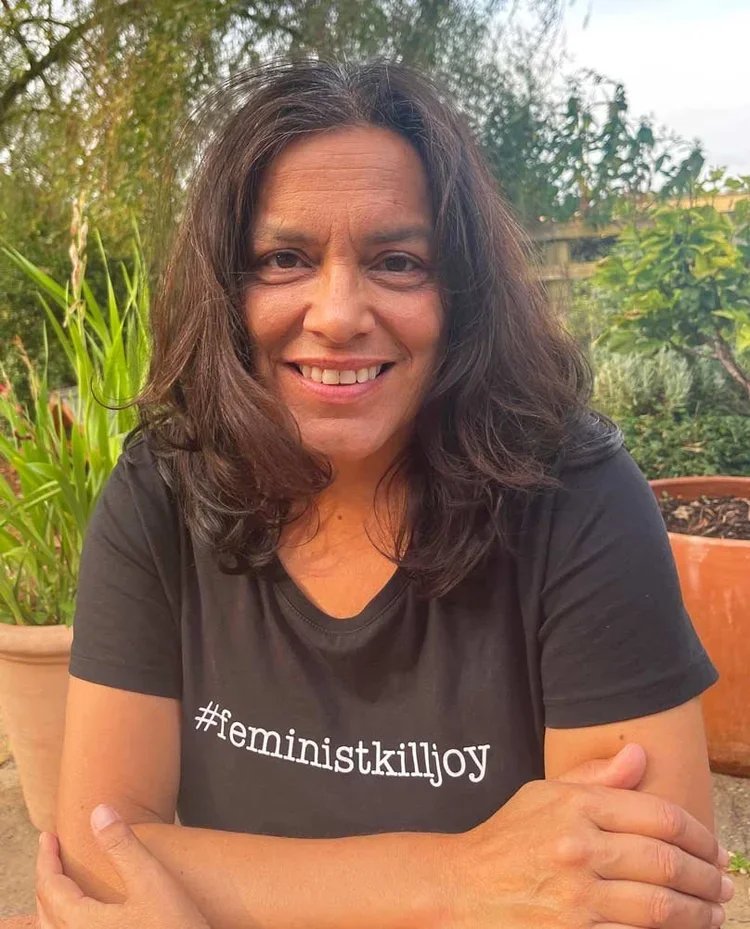
The feminist killjoy, in a way, begins as a stereotype of feminists. It is miserable feminists who make misery their mission. In reclaiming that figure, I am following on from many other acts of political reclaimings of terms that maybe begin their lives as insults or smears, as well as stereotypes. I think of the word queer. The term is used to dismiss feminism as motivated by misery or by the desire to cause misery. In reclaiming that figure, you are not agreeing with the idea that feminists are miserable. Luckily, I do not think that is the case rather what we are saying is, well, if feminism causes misery, if talking about sexism or racism forms of power, inequality, violence causes misery, then that is what we are willing to cause. That is why in the book itself, I wrapped the book around these kinds of killjoy commitments. One of the primary ones is simply, I am willing to cause unhappiness. Because so many forms of social inequality and social violence, in effect, hard to speak about, hard to address, hard to make real even. Because as soon as you name them, you are treated as if you have brought them into existence.
DAVID PALUMBO-LIU
Even the word vision has been institutionally contaminated, but let us bracket that to imagine what kind of world are you trying to build?
SARA AHMED
That is such a big question. Beautifully big question.I think it is true. Abolition as well. It has been a very important part of the work that I have read about abolition to challenge the presumption that it is simply about negation or destroying something and thinking about what you are making and what you are creating. In the process of trying to bring something down, these are not two separate actions.They are two different aspects of the same action. I think that is very important. What I really wanted to show in the handbook is how much creativity and inventiveness comes out of the difficulty of getting through the story I mentioned of the student who is no longer in the university. She could not have a career. The door was shut. That is what she said. I heard the door when she said that I heard it shut. That means that was shut because she tried to stop the harassment from happening to somebody else. The door was shut. When she said no, she ended up with nowhere to go. That is one of the institutional mechanisms, you are more likely to progress if you say yes. It is a reproductive mechanism, which is why feminist culture knows so much about everything. We can explain how it is that institutions keep being reproduced in the same way. What then do you do? Where do you go if your no has nowhere to go? You have to find other ways of getting the nos out.
DAVID PALUMBO-LIU
Let us start with you telling us, how did it happen?
LIZA FEATHERSTONE
Journalist · Essayist · Author · Teacher · Columnist Jacobin Magazine · New Republic
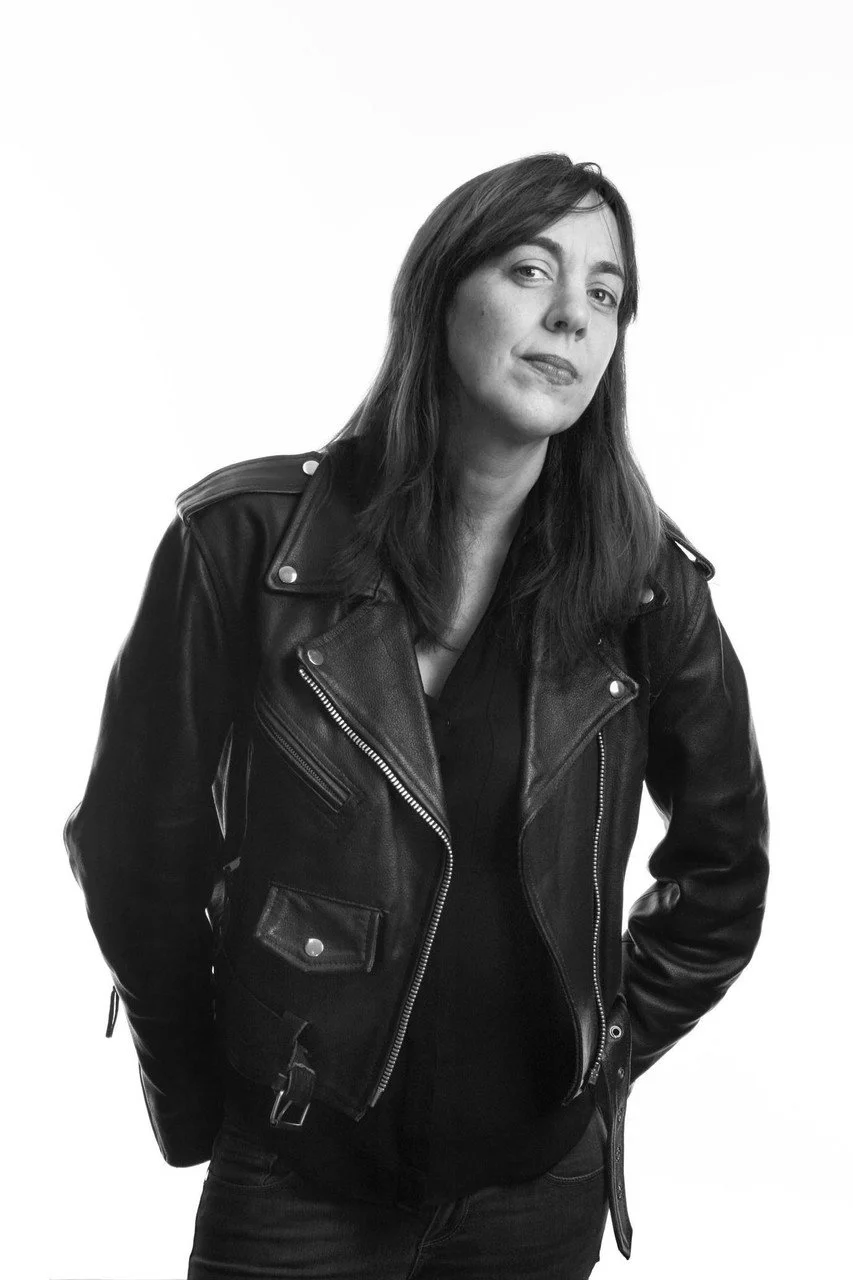
The big victory was that in New York State we have passed the Build Public Renewables Act which mandates and requires the New York state power authority to build its own publicly funded renewables. Renewable energy, wind and solar. This was a long, hard fought victory.Around that same time, Julia Salazar, a member of Democratic Socialists and a very serious socialist organizer, was elected at that same time. Julia Salazar came into office with a slightly better legislature. At the same time, Alexandria Ocasio-Cortez to Congress that year.
All of these events started to expand people's sense that winning things was possible,winning things through organizing. Alexandria Ocasio-Cortez also did a tremendous thing by articulating the vision of the Green New Deal. If you remember, before that time, the right and even the mainstream could easily pose the struggles of working class people in opposition to environmental causes. The idea that those two things were almost naturally in tension. It was a pillar of mainstream discourse that the right was particularly good at capitalizing on, but that was easily taken up by the mainstream.
The Green New Deal as a concept really challenged that and allowed many people to much more concretely picture how we could design an economic future that could work for everyday people and also for the planet at the same time. It also took the environmental movement out of this place of just simply fighting on really small terrain, just one butterfly species at a time, which is that kind of work is so important. But Alexandria Ocasio-Cortez herself used a great phrase when she first started talking about the Green New Deal, a solution that is at the scale of the problem. The Green New Deal was really the first time that a U.S. politician in office had articulated a vision of a solution that was at the scale of the problem.
DAVID PALUMBO-LIU
So you mentioned, it has these weaknesses. What are the weaknesses?
AZIZ RANA
Author of The Constitutional Bind: How Americans Came to Idolize a Document that Fails Them · The Two Faces of American Freedom
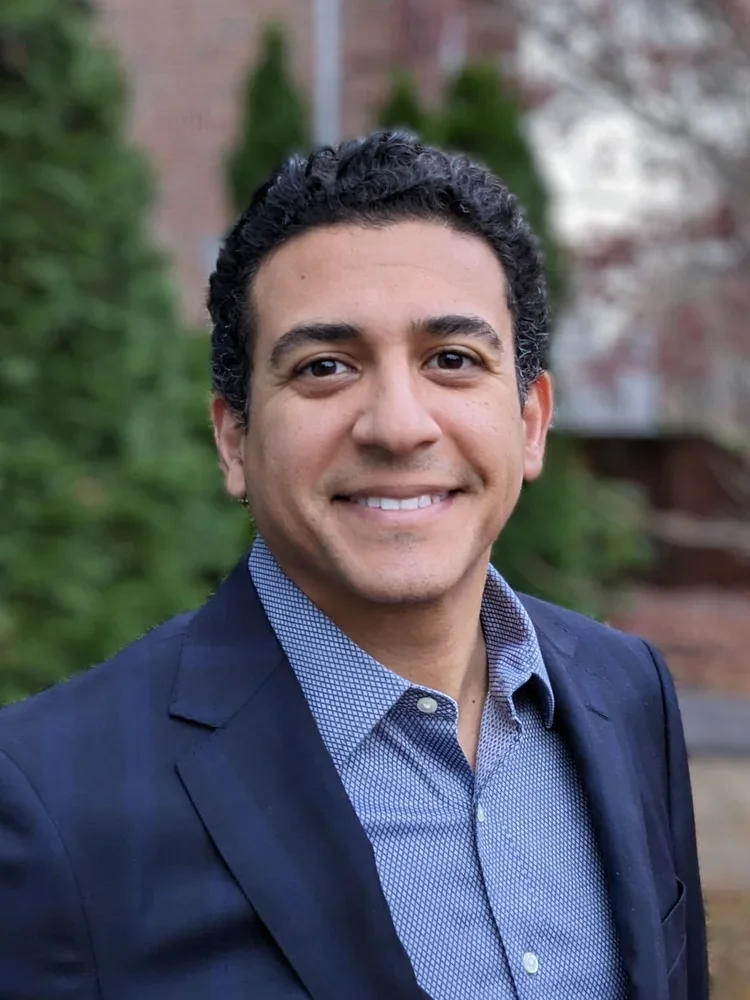
You have the example of Republicans winning the presidency, despite losing the popular vote, also dramatically overrepresented in the Supreme Court because you have such a small court, the justices serve for life. There are no meaningful term limits. Most places in the world, you have term limits. Donald Trump loses the popular vote in 2016, and yet is able to get nominated and confirmed three justices when Democrats have only been able to get nominated and confirmed five since 1968.
All of this is a structural context that essentially facilitates some of the worst tendencies within the overarching system. Then we can work through what those tendencies are, which is there is a defense. Racial liberalism is really key to national identity.This idea of inclusion for all, but that mid-century compact really was not focused on thinking of race as a structural flaw within the terms of American life. Instead, it was premised on viewing the United States as incomplete liberal, requiring only minor forms of amelioration, and in the context of this system.
Even at moments where there might be a desire for more full throated forms of social change since the 1960s, it has been very difficult to get those addressed. The civil liberties story. Yes, you have a commitment to civil liberties, but you also have background social conditions in the country where the last 50 years has seen the rise of an intense form of mass incarceration that really limits and constraints protections for individuals. You also have had throughout really the Cold War and the Post Cold War period, intense forms of violence perpetrated against disfavored populations.
DAVID PALUMBO-LIU
I asked that question nearly every episode. When I had Nicolas Mirzoeff on again, he quoted John Berger's notion of undefeated despair. Then Robin D.G.Kelley has a line success without victory, and there are many different variations of it, which is that, small victories or small successes that do not necessarily amount to a total victory, but just day by day, leaving possibilities open. Small victories like having somebody wave to you in a neighborhood that would not usually recognize you. All those things leave possibilities open and I think it is important.
Berger's expression is so meaningful because we have to acknowledge our despair. It would be foolish for us to tough it out. Imagine that. Well, it does not count. Of course it counts, but it is a despair that then feeds into it even more profound commitment, I think precisely because you recognize it. That is where the undefeated part comes in, you recommit. So it is not defeated, it is still alive, but it is cognizant of the enormity of the task.