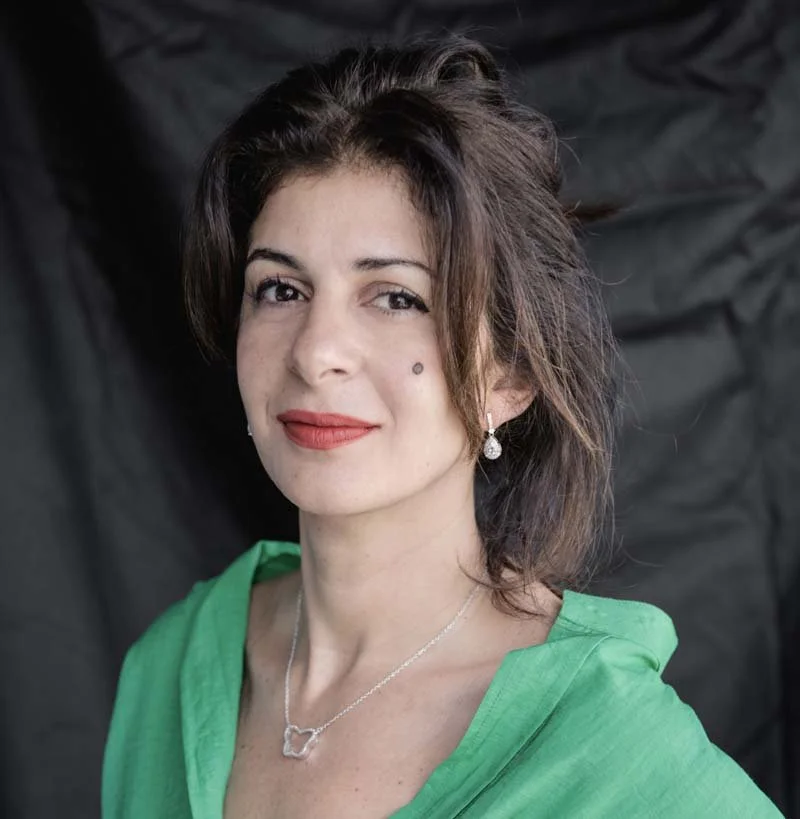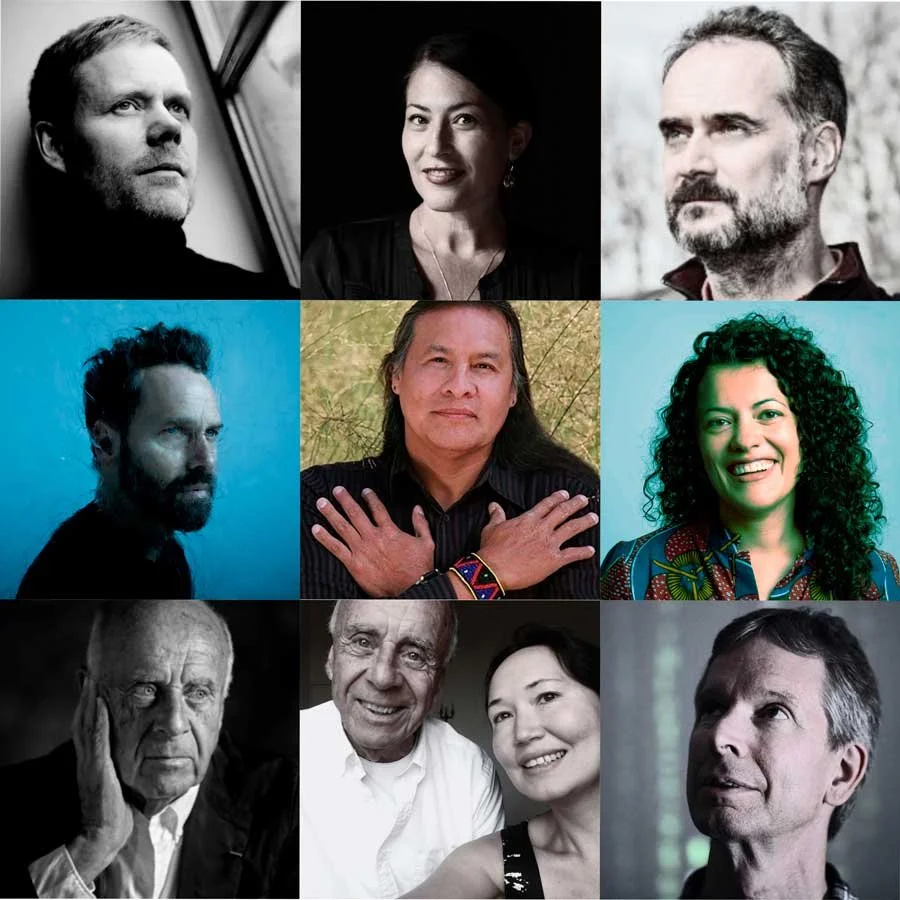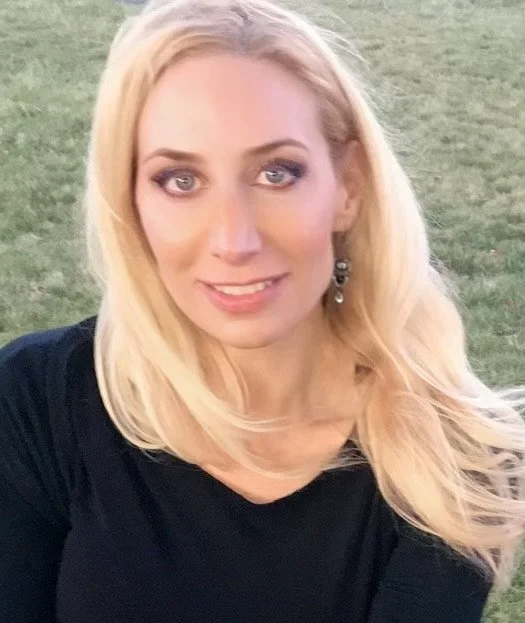


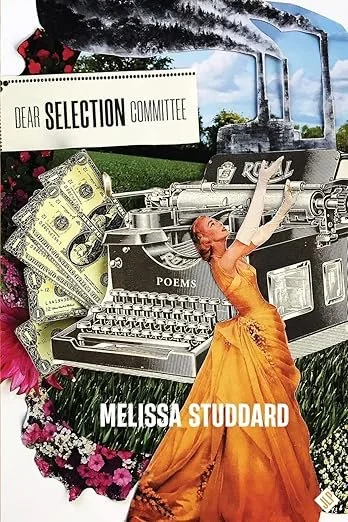
Melissa Studdard has had work featured by PBS, NPR, The New York Times, The Guardian, Ms. Magazine, the Best American Poetry blog, and the Academy of American Poets’ Poem-a-Day series and has garnered awards such as the Lucille Medwick Memorial Award from the Poetry Society of America and The Penn Review Poetry Prize. She has had works commissioned by the Aspen Music Festival, Wolf Trap, and Yale Choral Artists. With Kelli Russell Agodon, she co-hosts the YouTube poetry series Poems You Need. You can find her at @melissastuddard/
How do you think growing up in Texas influenced your writing and your thinking about the world? I grew up in the suburbs of Houston, Texas, and it inspired my writing. Place is important to me, and the South had a huge impact on my writing—both its rich storytelling tradition and the cultural attitudes, some of which delighted me, and some of which appalled me. The South has its own rhythms, as if the land itself had a drawl. The things I saw, almost daily—they are the kind of things that feed a writer’s muse. In the pet store, for instance, you might see a man who looks like someone straight out of ZZ Top—scraggly beard, straw hat, work boots, big belly, tall—like 6’6’’—carrying his adorable, pink-toenailed, pink-bowed poodle to the groomer. You don’t really even need to make stuff up when you live in Texas. All you have to do is look around. But—just to clarify, I do love to make stuff up too!
What kind of reader were you as a child? What books made you fall in love with reading as a child? I began to love reading through the voices of my parents and teachers. When I was in kindergarten, my teacher read passages from Charlotte’s Web to our class every day, and I was riveted by the plot and talking animals, but what stayed with me was something far deeper. I didn’t realize it back then, but what seeded and later flowered in me was the understanding that if Charlotte could save Wilbur’s life with messages spun in her web, that meant language, and writing in particular, could effect change.
Describe your typical writing day. I rarely plan, unless I'm required to for a commission. Mostly, I discover as I go, and most everything that happens on my page (or screen) is a delightful, mysterious, wondrous surprise to me. And I wouldn’t have it any other way. I also revise as I go. Maybe because I don't do a lot of planning, I'm a relentless tinkerer with what I've written and am writing.
Tell us about the creative process behind your current writing project. My current project is a collection of poems told from the perspective of the severed tongue of the mythological character Philomela. The manuscript is built so far from woven threads that include original tongue twisters, a glossolalia (speaking in tongues) series, opinions from a Greek-tragedy-style chorus that represents a flawed society, a noir-style narrative arc in which the tongue hires a (private) eye to try to find Philomela, another narrative thread in which the tongue adopts an abused child and tries to save other victims (such as Prometheus's liver and Frankenstein's monster), Sappho-style fragments, lyric meditations on pain and suffering, and redux poems that complicate various passages and translations of the original myth with blackouts and added or rearranged text material.
In a way, I guess the story of Philomela’s tongue is a kind of soul retrieval, with the tongue as a stand-in for the small, wounded parts of self—the splinters of heart, spirit, and mind—mind-that seem lost but are really struggling to survive. I want to invite them home.
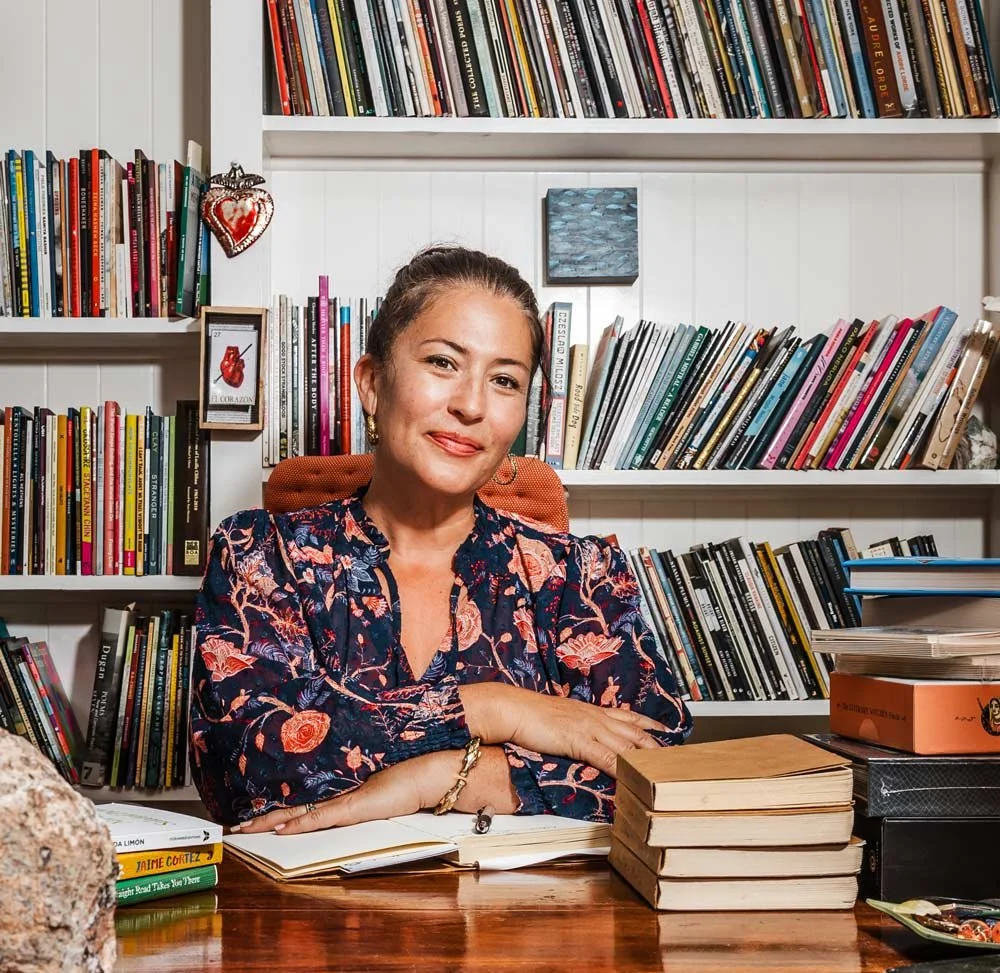
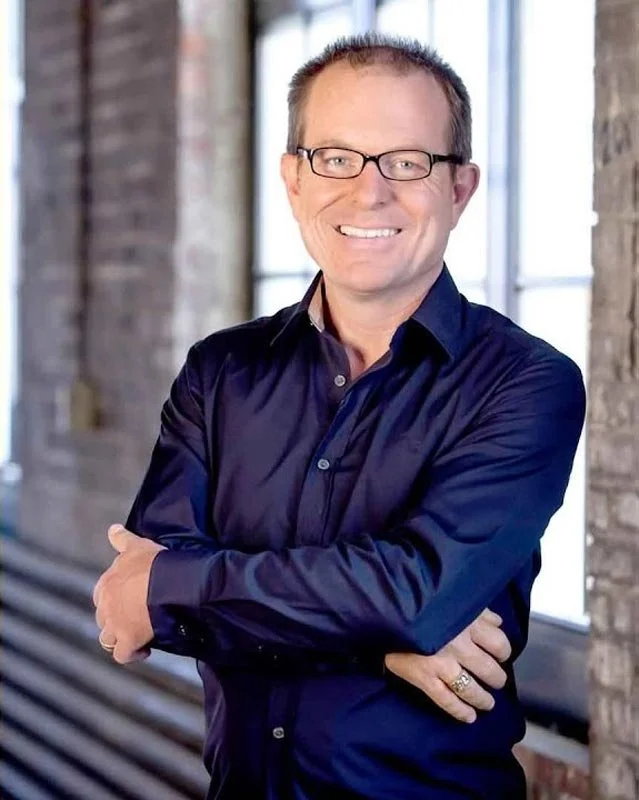
Upload a Photo(s) of Yourself (required), Your Handwritten Notebooks, Your Books, Manuscript Pages, Your Writing Desk, etc. (optional).: Melissa Studdard_Residency-min.jpg
Melissa Studdard's Desk-min.jpg
Do you keep a journal or notebook? If so, what’s in it? I keep two journals - a dream journal, which I believe helps create a more harmonious relationship between my subconscious and conscious regions of mind, and which feeds my creativity. I also keep an everything-goes journal, which includes quotes, observations, tender explorations of feelings, to-do lists, and anything else I want to jot down or explore.
How do you research and what role does research play in your writing? Because I write about things I’m interested in, research happens naturally in my scrolling, surfing, conversations, and reading. I try to only research intentionally when I can build a daydreaming buffer time between the research and the writing. Though I love being informed, I find I need the space for my own thoughts and ideas when I'm in the actual writing process.
Which writer, living or dead, would you most like to have dinner with? I would love to have dinner with Kelli Russell Agodon, which is lucky for me, because she is my best friend and one of my favorite writers, so I get to do this frequently, and it's always as fun and exciting as I think it will be.
Do you draw inspiration from music, art, or other disciplines? My boyfriend is a composer, and I love and am inspired by music. More often than not, I dance when I write. And I mean that literally. I dance and then run over to the computer and write down a line, and then dance and run over and write down a line. Over and over until a poem is done. Sometimes when a poem is rolling out too fast for me to run back and forth, I chair-dance in front of the computer and write, or compose the poem on my phone so I can write lines down while I’m dancing. I'm also inspired by visual art and have written many ekphrastic poems.
AI and technology are changing the ways we write and receive stories. What are your reflections on AI, technology and the future of storytelling? And why is it important that humans remain at the center of the creative process? Though AI can be useful, it doesn't have the nuances of emotion and personality that allow for unique, original creations. And, besides, humans need to make art. We need the act of creating in order to process how we relate to ourselves, our world, and each other. For me, the joy of making art is not as much about the result as it is about the process. Outsourcing artistic creation to AI would be as ridiculous as outsourcing eating. If someone told me that I could quit wasting my time eating and just receive my energy through AI, I would say an unequivocal no. I'll never give up chocolate for efficiency.
Tell us about some books you've recently enjoyed and your favorite books and writers of all time. I've been re-reading Leonora Carrington's 'What She Might Be'. There’s an incredible essay in it called “Female Human Animal” in which she engages the Descartes “I think; therefore I am” quote. She says, “But why? Is this some kind of pretense, Mr. Descartes? If I am my thoughts, that means I could be my anything, from pasta soup, scissors, a crocodile, a cadaver, a leopard, or half a liter of beer, etc.” She ends up shifting from examining thinking to examining feeling and goes on to say that “to be able to unchain the emotions, we must observe the elements that kept them in chains: all the false identities that we embrace through advertising, literature and the ultimate beliefs with which we feed ourselves from the time we are born.” To me, she is one of the most fascinating people who has ever lived. For one thing, she was an artist whose main decorations were books. She didn’t have art hanging in her home, not much anyway. She disagreed with the interviewers. She was mischievous and pulled outlandish pranks on people. She studied alchemy, wrote backwards, and was ambidextrous and could paint with both hands simultaneously. She was an incredibly devoted mother and friend, a major intellect, and her paintings made a mockery of the “tenuous line that exists between the real and the imaginary.” And she was a great, great feminist. I also love surrealist poets and writers, particularly from Mexico and South America.
Exploring literature, the arts, and the creative process connects me to a deep core, a godself that is both self and, at the same time, something more than the individual self. It’s not just within us; it’s part of the vast expanse of being, too. Some traditions call it the unmanifest. Some call it the soul or spirit. Science calls it nonlocality. Whatever one chooses to call it, I do know that art is one of the several ways to access it, and also, that anyone can connect to this deeper meaning by slowing down, trusting themself, and really paying attention.